

 English
 русский
 Español
 Deutsch
 عربى
 Français
 Português
Don't hesitate to send a message

Single jacket, EPDM rubber liner Features • 100% high tenacity polyester jacket, high-grade EPDM rub...
Content
Firefighting and industrial water-control operations depend on equipment that can deliver predictable performance under pressure. A hose nozzle is the final control point between the water supply and the target area, so its design directly influences flow management, operator safety, reach, spray quality, and response efficiency. The Pistol Grip Fire Multipurpose Hose Nozzle is designed to provide reliable control for firefighting, industrial cleaning, construction, water management, and other demanding applications.
Unlike a basic straight-stream nozzle with limited adjustment, this multipurpose model combines straight stream, fog spray, flushing, adjustable flow settings, and a practical pistol-grip configuration. It allows an operator to control the water pattern and flow without shutting down the hose line. This capability can help reduce response time, improve water-use efficiency, and support safer operation when conditions change quickly.
The nozzle is manufactured from lightweight, robust aluminum. This material offers a useful balance between durability and handling comfort. Firefighters, industrial operators, and maintenance teams often need to carry, position, and adjust nozzles for extended periods. Excessive weight can cause fatigue, reduce accuracy, and slow down response. The aluminum construction helps create a nozzle that remains strong enough for heavy-duty service while being easier to maneuver than many heavier metal alternatives.
Available with 1.5-inch, 2-inch, 2.5-inch, and 3-inch inlet sizes, the nozzle can be matched with a wide selection of hose systems. Connector options include Storz, NH, Russian, and British Standard configurations. This range of connection choices is especially valuable for international distributors, fire protection contractors, industrial facilities, municipal departments, and users who maintain equipment from different standards or regions.
With a flow range of approximately 150 to 700 liters per minute and a working pressure of 100 PSI, or 7 bar, the nozzle is suitable for many water-delivery duties. The available flow and inlet configurations allow buyers to select a version appropriate for the capacity of a pump, hose, hydrant, or fixed water-supply system.
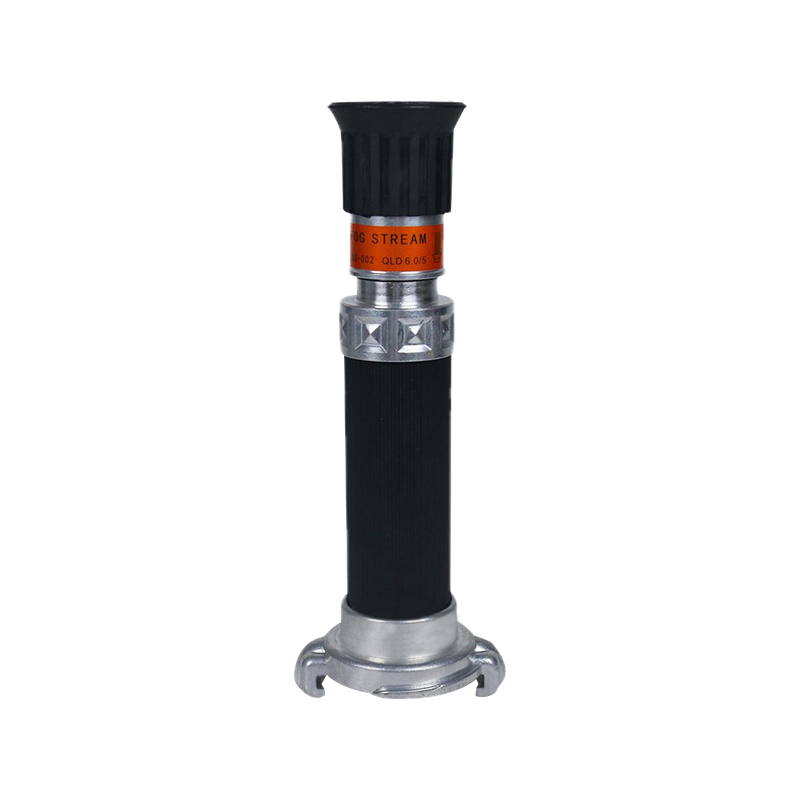
Pistol Grip Fire Multi-Purpose Hose Nozzel
A conventional nozzle may provide only one fixed stream or a limited spray adjustment. That type of equipment can be suitable for simple applications, but it may not offer enough flexibility when operators must move between direct firefighting, surface cooling, area coverage, and line flushing. A multipurpose nozzle is designed to address several operating requirements within one compact tool.
The Pistol Grip Fire Multipurpose Hose Nozzle is described as a constant-gallonage nozzle. In practical terms, the flow is intended to remain consistent when the operator changes between different patterns, while multiple flow settings provide additional control. This approach helps the operator select the required water delivery rate without relying exclusively on changes in pump pressure or hose configuration.
The principal operating patterns include straight stream, fog spray, and flush. A straight stream concentrates the water into a more focused discharge. This pattern may be useful when the operator needs reach, penetration, or a concentrated impact on a specific area. A fog spray disperses water into a broader pattern, which can support surface cooling, coverage of a wider zone, and general suppression tasks. The flush position helps clear debris or obstructions from the nozzle passage without requiring the operator to shut down the hose line.
The ability to change patterns while the nozzle is flowing is an important operational advantage. In a developing fire or industrial emergency, shutting down a line may interrupt protection at the moment it is most needed. A live adjustment system allows the operator to respond to changing conditions more efficiently. It can also simplify routine cleaning when particles or residue enter the water path.
Water flow behavior can change when a nozzle pattern is adjusted. A nozzle designed for constant-gallonage operation aims to maintain a more consistent flow across its available patterns. This can make water delivery more predictable for the operator and may simplify coordination with pumps and hose lines.
Consistent flow is useful for organizations that train multiple operators. When the nozzle response is more predictable, users can develop repeatable operating procedures. Training can focus on pattern selection, positioning, communication, and safety rather than requiring the operator to compensate continually for unexpected changes in discharge behavior.
Constant-gallonage operation does not eliminate the need for correct pump selection, pressure management, hose inspection, or system testing. Instead, it provides a controlled interface at the end of the hose line. The final performance will still depend on water supply, hose length, elevation, friction loss, connector condition, and the operating pressure available to the system.
The three-position slide valve provides a practical operating sequence for water control. It can be used to select different discharge conditions, including stream, spray, and flush functions. The operator can change the water pattern according to the task at hand, while the adjustable ring provides additional flow-control capability.
A slide-valve arrangement can be especially convenient in environments where rapid changes are common. Firefighters may need to move from a concentrated stream to a protective fog pattern. Industrial cleaning personnel may need to switch between a directed jet and a flushing action. Maintenance teams may need to clear a small obstruction before returning to normal operation. Combining these functions into one nozzle reduces the need to exchange tools during the job.
The controls should be operated smoothly and deliberately. Users should become familiar with the position of the adjustable ring and slide valve before entering a high-risk environment. Regular training helps prevent accidental changes in flow and ensures that the operator understands how each control position affects the discharge pattern.
Material selection is central to nozzle performance. Fire and industrial hose nozzles must withstand water pressure, repeated handling, vibration, impact, changing temperatures, and exposure to wet operating conditions. At the same time, they should not impose unnecessary weight on the person holding the hose.
The aluminum body used for this multipurpose nozzle is described as light and hard. Aluminum is widely used in portable firefighting and industrial equipment because it can provide a favorable strength-to-weight ratio. A lighter nozzle is easier to carry, lift, rotate, and aim. It can also reduce strain when an operator must hold a flowing hose for a prolonged period.
Durability is not determined by material alone. It also depends on casting or machining quality, wall thickness, surface treatment, internal passage design, valve construction, sealing components, inspection procedures, and final assembly. A well-designed aluminum nozzle can deliver dependable service when it is correctly used, maintained, and protected from severe mechanical damage.
The robust construction is valuable in situations where equipment may be transported between vehicles, cabinets, buildings, hydrant stations, construction areas, and industrial work zones. A nozzle that can tolerate normal handling and repeated connection cycles helps organizations reduce downtime and preserve readiness.
Heavy equipment can create a practical disadvantage even when it is highly durable. During a fire response, the operator must manage the nozzle, hose reaction force, footing, communication, and changing environmental conditions. In an industrial setting, a worker may use the nozzle for cleaning or washdown tasks over a long shift. Reducing unnecessary weight can improve comfort and maneuverability.
The pistol-grip form supports a more controlled hand position than a simple cylindrical body. It gives the user a defined point for holding and aiming the nozzle. This can be helpful when adjusting the spray pattern or directing the discharge toward a specific surface. The grip does not replace correct body positioning and hose-handling procedures, but it can make the tool easier to manage.
Ergonomic design is also important for distribution and service organizations. A nozzle that is easier to handle can be more accessible to a wider range of trained users. It may be particularly suitable for facilities that need portable water-control equipment but cannot dedicate large teams to every operation.
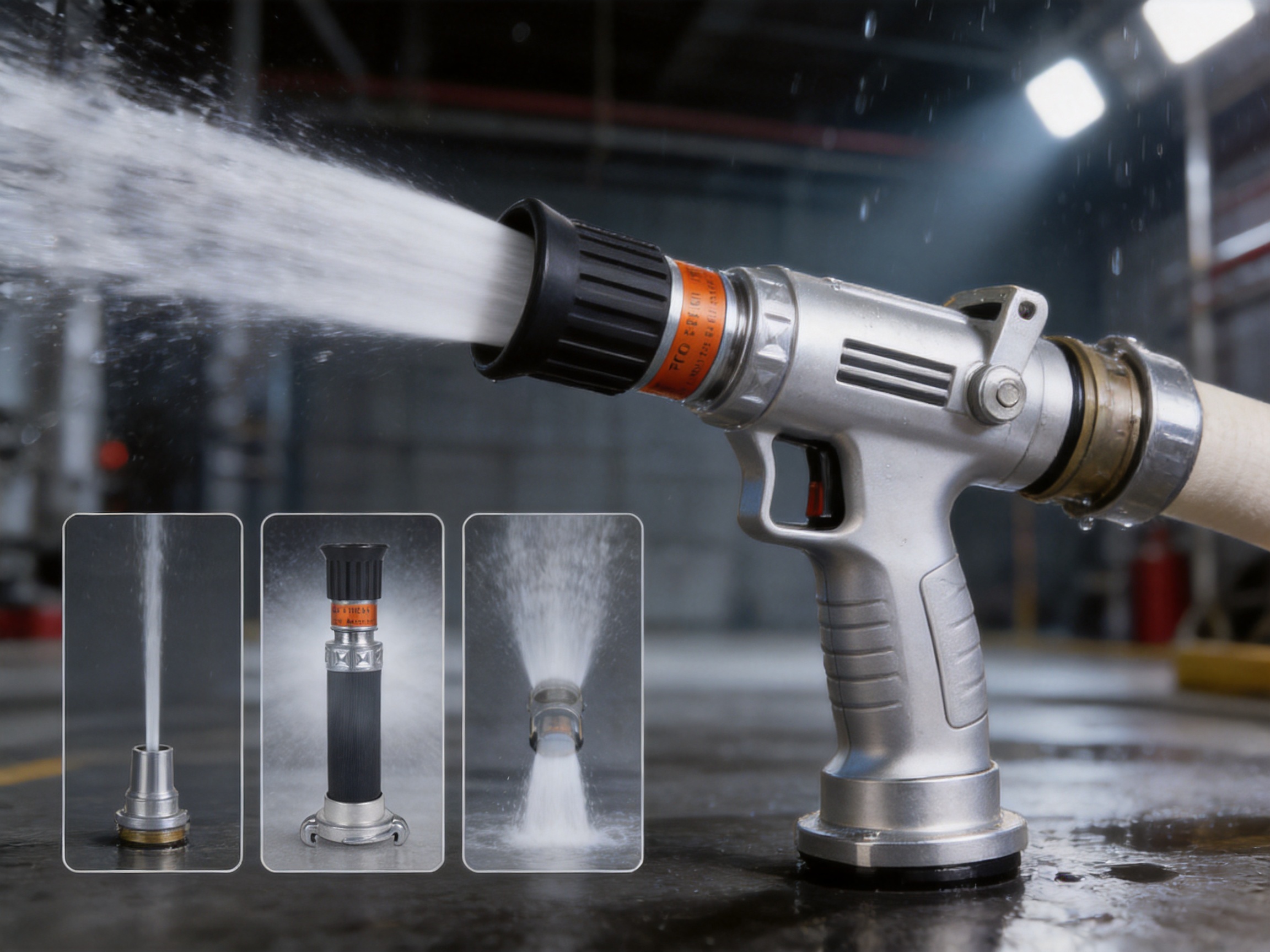
The listed flow range is 150 to 700 liters per minute. This broad range allows the nozzle to support different operational requirements and hose capacities. Lower flow settings can be useful for controlled washdown, cooling, or applications where water conservation is important. Higher flow settings may be selected when greater discharge volume is required for suppression, heavy cleaning, or rapid wetting.
The stated working pressure is 100 PSI, equivalent to approximately 7 bar. Buyers should confirm that the pressure of the complete hose assembly, pump, hydrant, connector, and nozzle configuration is appropriate for the intended application. The nozzle should never be operated beyond the pressure limits specified for the particular model and system.
Flow rate and pressure are related, but they are not interchangeable. A higher pressure does not automatically mean better performance. The required result depends on the application, desired reach, water pattern, hose size, available pump capacity, and acceptable reaction force. Selecting a nozzle requires an evaluation of the complete water-delivery system rather than looking at one rating in isolation.
| Specification | Available or Stated Value | Practical Significance |
| Product type | Pistol grip multipurpose fire hose nozzle | Provides portable control of water discharge for firefighting and industrial duties |
| Construction material | Lightweight, robust aluminum | Combines reduced handling weight with durable service potential |
| Inlet sizes | 1.5 inches, 2 inches, 2.5 inches, and 3 inches | Supports different hose, pump, and hydrant arrangements |
| Connector choices | Storz, NH, Russian, BS, and other configurations | Improves compatibility with regional and international systems |
| Flow range | 150 to 700 liters per minute | Allows selection of lower or higher discharge according to task requirements |
| Working pressure | 100 PSI, approximately 7 bar | Defines the stated operating pressure for the nozzle |
| Discharge patterns | Straight stream, fog spray, and flush | Supports focused discharge, broad coverage, and line cleaning |
| Flow adjustment | Adjustable ring and three-position slide valve | Allows the operator to manage water delivery while the line is flowing |
The correct inlet size should correspond to the hose coupling and water-delivery arrangement. A 1.5-inch nozzle may be suitable for smaller hose lines and applications where portability is a priority. Larger 2-inch, 2.5-inch, and 3-inch versions can be considered for systems designed to deliver higher water volumes or for hose assemblies using larger couplings.
Selection should account for more than the diameter of the hose. The coupling standard, thread or fitting configuration, pump output, hydrant connection, and local operating practices must also be checked. A properly matched inlet reduces the risk of leaks, difficult assembly, incompatible threads, and unplanned adapters.
For distributors, offering multiple inlet and connector options makes it easier to serve different markets. A single basic configuration may not be appropriate for every country, municipal department, industrial plant, or contractor. The availability of Storz, NH, Russian, and British Standard options supports a wider product range and can simplify procurement for international buyers.
Connector compatibility is one of the most important practical features of a hose nozzle. Even a high-quality nozzle cannot perform effectively if it cannot be connected securely to the available hose. Regional standards often differ in thread form, coupling design, terminology, and preferred equipment configuration.
Storz connectors are commonly associated with quick-connect hose systems. NH configurations are widely recognized in North American fire equipment. Russian and British Standard options support other regional requirements. The availability of these connector types helps users select a nozzle that aligns with their existing infrastructure instead of replacing an entire hose system.
Before ordering, customers should provide accurate information about the required connector, nominal size, thread specification where applicable, sealing method, and operating pressure. Clear technical communication helps prevent purchasing errors and allows the manufacturer or distributor to recommend an appropriate configuration.
The primary competitive advantage of this product is functional versatility. A basic nozzle may be limited to a single stream or may require the operator to close the line before changing components. The multipurpose model integrates several discharge functions and permits pattern changes during operation.
Another advantage is the combination of adjustable flow and constant-gallonage behavior. Operators can select a suitable flow level while retaining access to different spray patterns. This can help reduce unnecessary water consumption during routine cleaning or cooling while preserving the ability to increase discharge when conditions demand it.
The aluminum construction offers a further advantage over heavier alternatives. A portable nozzle must be strong, but it must also be practical for real users. Lightweight handling can contribute to better aiming, faster repositioning, and reduced fatigue. These qualities may be particularly important in emergency response, where the operator may need to maintain control under difficult conditions.
The broad inlet-size range is another distinguishing feature. Buyers can select from four nominal sizes rather than being restricted to a single configuration. This makes the product useful for a wider variety of hose assemblies and gives distributors greater flexibility when preparing product inventories.
Multiple connector standards also improve purchasing flexibility. Instead of sourcing one nozzle for a local thread and another from a separate supplier for a different coupling system, organizations may obtain related configurations from one manufacturing source. This can simplify communication, technical review, spare-parts planning, and shipment coordination.
| Feature | Basic Fixed-Pattern Nozzle | Pistol Grip Multipurpose Nozzle |
| Pattern selection | Often limited to one primary pattern | Straight stream, fog spray, and flush functions |
| Flow control | May be fixed or limited | Adjustable ring with multiple flow settings |
| Pattern change while flowing | May require shutdown or component change | Designed for adjustment without shutting down |
| Handling design | May have a simple body only | Pistol grip supports controlled operation |
| Material approach | Varies by product and may be heavier | Lightweight, robust aluminum construction |
| Connection choices | May be limited to one regional standard | Multiple inlet sizes and connector options |
| Application range | Usually focused on one task | Firefighting, cleaning, flushing, cooling, and water control |
This comparison does not mean that every fixed-pattern nozzle is unsuitable. Simple equipment may be appropriate for a dedicated application with stable operating conditions. However, users who need flexibility, rapid adjustment, and compatibility across multiple hose systems may gain more value from a multipurpose design.
In firefighting, the nozzle is used to direct water toward flames, heated surfaces, smoke-affected areas, and exposed structures. The straight-stream pattern may be selected when concentrated reach is required. The fog pattern can be used when wider distribution or cooling coverage is needed, subject to the operational procedures of the fire department and the conditions at the scene.
The ability to change patterns without shutting down the line supports dynamic response. Fire conditions can change as doors open, ventilation shifts, materials collapse, or the team moves from an exterior attack to interior protection. A nozzle that permits rapid adjustment gives the operator an additional method of responding to those changes.
Municipal departments may also value the range of connector options. Fire departments frequently maintain equipment according to local infrastructure and established coupling standards. A product available in several configurations can be specified for new hose packages, replacement programs, or equipment standardization projects.
Manufacturing plants, warehouses, energy facilities, chemical sites, logistics centers, and processing operations may require portable hose nozzles as part of emergency-response equipment. These locations can contain complex layouts, elevated hazards, large open areas, and equipment that requires rapid cooling or protection.
A multipurpose nozzle can support first-response teams by providing control over discharge pattern and flow. It can be connected to a fixed hydrant, portable pump, or designated hose reel system when the complete installation is designed for that purpose. Facility managers should ensure that the nozzle configuration matches the plant’s water supply, fire plan, training program, and inspection schedule.
Industrial cleaning often requires both concentrated impact and broad surface coverage. The straight-stream setting can help remove material from specific areas, while fog spray can support general rinsing or cooling. The flush function can be useful when the nozzle passage needs to be cleared of small particles or residual contamination.
Applications may include cleaning production floors, equipment surfaces, loading areas, workshops, storage zones, agricultural facilities, and construction sites. The correct cleaning method depends on the material being removed, surface sensitivity, water temperature, chemical exposure, and required hygiene standard. The nozzle should be selected and maintained according to the environment in which it will be used.
Construction contractors may use high-flow hose nozzles for dust suppression, equipment washing, material wetting, site cleanup, and emergency water control. A nozzle with multiple inlet sizes can be matched to portable pumps and temporary hose arrangements commonly used on changing job sites.
Water-management operations may also benefit from adjustable flow. When water is being used for cooling, dust control, or surface wetting, the operator may not need the highest available flow. Adjustable control helps direct water where it is needed and can support more efficient use of available supply.
Agricultural facilities can use multipurpose hose nozzles for yard washdown, equipment cleaning, livestock-area maintenance, irrigation support, and emergency water delivery. Because agricultural environments may contain dirt, fibers, organic material, and debris, the flush function can be a practical feature when the water passage requires clearing.
General utility users may include service contractors, public works teams, building maintenance departments, and property-management organizations. The product’s broad application range means that the same general nozzle concept can support routine maintenance as well as emergency response, provided the operating pressure and water source are suitable.
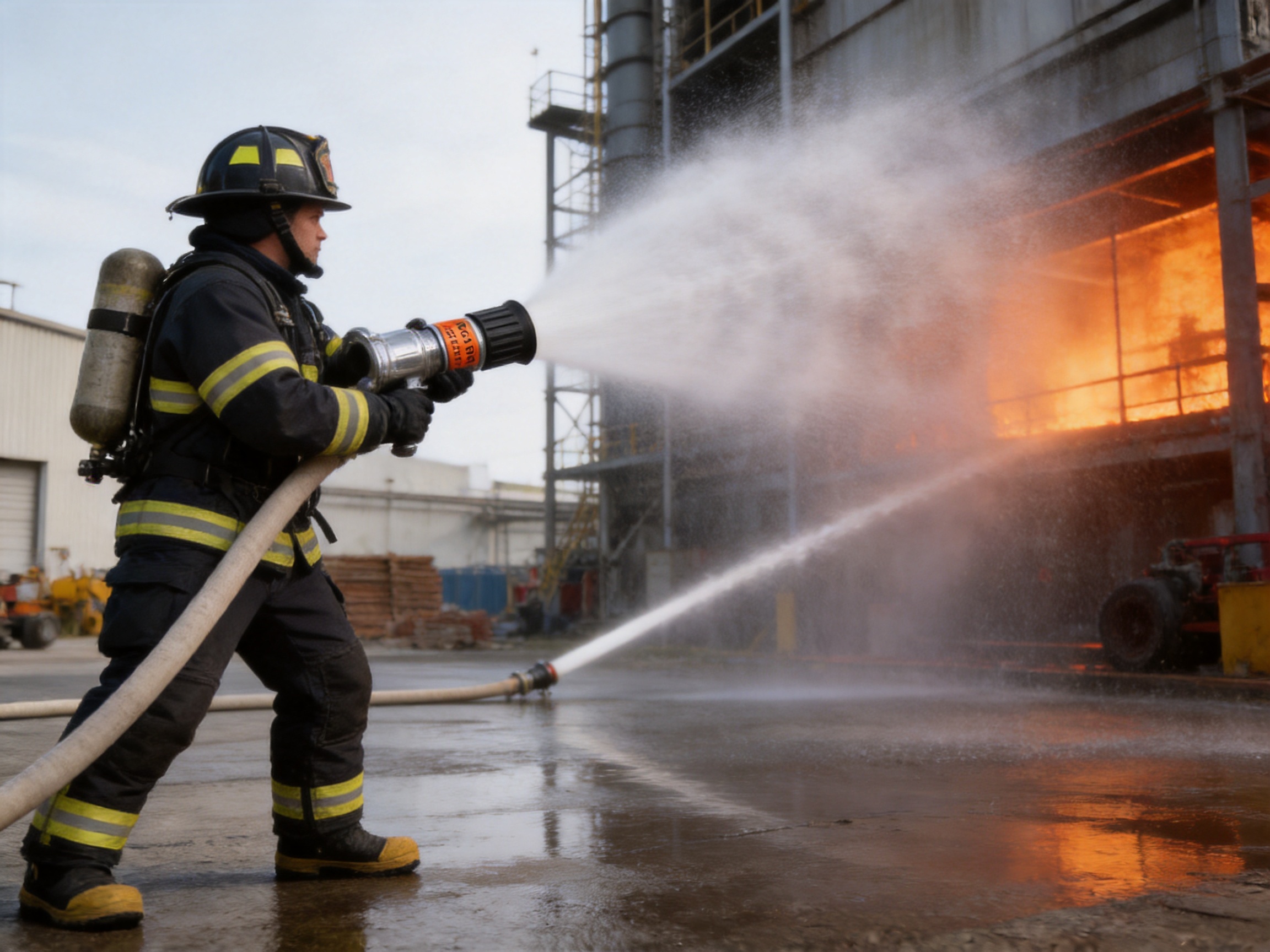
The manufacturer, Taizhou Shenlong Fire Science and Technology Co., Ltd., was established in 1995 and operates across research and development, production, sales, and service. This long-term industry experience provides an important foundation for developing and supplying hose-related equipment. A manufacturer that combines product development with production and after-sales service can respond more directly to customer requirements than a company that only resells finished goods.
The company’s principal business includes lined fire hoses made from various materials. Its product experience also extends to foreign-trade items involving rubber, PVC, polyurethane, and double-sided tape according to customer requirements. This broader material and export-product background can support practical knowledge of polymer products, flexible hose assemblies, industrial supply chains, packaging, and international customer expectations.
According to the provided company information, its products are sold in more than 20 provinces, cities, and autonomous regions and are exported to multiple countries through cooperation with domestic foreign trade companies. This market experience is relevant to buyers seeking a supplier capable of handling different specifications, documentation requirements, packing arrangements, and communication needs.
Research and development is especially important for fire hose nozzles because the product must balance hydraulic performance, mechanical strength, ergonomic handling, sealing reliability, and compatibility with different connectors. Product development begins with understanding the intended use and then translating that requirement into material selection, internal geometry, control design, and production tolerances.
For a multipurpose nozzle, development work may include evaluation of the adjustable ring, slide valve, internal water passage, discharge pattern, grip position, connection method, and resistance to repeated operation. Each element affects the user’s experience and the nozzle’s service potential. A successful design must remain easy to operate without sacrificing the ability to withstand working pressure and normal field handling.
The company’s combined R&D and production structure can help shorten the feedback cycle between users and engineering personnel. Information from distributors, fire departments, contractors, and industrial facilities can be reviewed during product improvement activities. This is useful when customers require a particular inlet size, connector standard, material option, packaging method, or private-label arrangement.
Manufacturing a reliable aluminum hose nozzle generally involves several controlled stages. These can include material preparation, forming or casting, machining, surface finishing, component fitting, sealing installation, functional testing, cleaning, marking, and packaging. The precise process varies according to product design and manufacturing equipment, but quality depends on consistency throughout the complete sequence.
Material preparation is important because the aluminum alloy must be suitable for the required combination of strength, weight, corrosion resistance, and machinability. Consistent material quality helps production teams maintain predictable dimensions and mechanical properties.
Forming or casting creates the main body of the nozzle. During this stage, attention must be paid to wall thickness, internal cavities, surface condition, and potential defects. The body must provide a reliable housing for the water passage and control components.
Machining may be used to refine connection surfaces, valve seats, threads, grooves, and other critical dimensions. Accurate machining helps ensure that the inlet connects properly, seals remain positioned, and the control mechanism moves smoothly. Dimensional consistency is particularly important when products are supplied in multiple sizes or connector configurations.
Surface treatment and finishing can improve appearance, handling, and resistance to normal environmental exposure. A smooth, properly finished surface is easier to inspect and clean. It can also reduce the possibility of sharp edges affecting the operator or damaging adjacent equipment.
Assembly requires careful installation of valves, adjustable rings, grips, seals, and other components. The final product should be checked for smooth movement, correct pattern selection, proper connection, and leakage resistance. Testing should be conducted in accordance with the manufacturer’s internal procedures and the requirements applicable to the target market.
Quality control for a fire hose nozzle should address both appearance and function. Visual inspection can identify surface damage, incomplete finishing, incorrect markings, or assembly problems. Dimensional checks can confirm that the inlet and control components meet the intended specification.
Pressure and leakage testing are important because the nozzle is used in a pressurized water system. Testing can help identify sealing defects, body weaknesses, incorrectly fitted components, or valve problems before shipment. Flow and pattern checks can confirm that the nozzle produces the expected discharge behavior at the specified operating conditions.
Connector inspection is equally important for international products. A Storz, NH, Russian, or British Standard configuration must be manufactured according to the correct dimensional and functional requirements. Proper connector verification reduces the risk of incompatibility when the product arrives at the customer’s facility.
Quality documentation may include inspection records, packing lists, product specifications, and applicable test information. Customers with specialized procurement requirements should communicate their documentation expectations before production begins. This is particularly important for large orders, government procurement, industrial projects, and export shipments.
Before installation, inspect the nozzle, connector, gasket, hose coupling, and surrounding equipment. Confirm that the selected inlet size and connector type match the hose. Check that the water source and pump can provide an operating pressure and flow appropriate for the nozzle configuration.
Connect the nozzle carefully and ensure that the coupling is fully engaged. Do not force mismatched threads or use an improvised connection that could fail under pressure. If an adapter is necessary, it should be selected and rated for the intended service by a qualified person.
Before opening the water supply fully, position the hose and nozzle securely. Operators should maintain a stable stance and account for hose reaction force. The nozzle should be aimed in a safe direction during initial pressurization. Personnel should be trained in hose handling and should wear the protective equipment required for the application.
Use the adjustable ring to select an appropriate flow setting. Operate the three-position slide valve deliberately to choose straight stream, fog spray, or flush. Avoid rapid, uncontrolled movements if they could destabilize the hose or create an unexpected reaction force.
After operation, close the water supply according to established procedures. Release residual pressure before disconnecting the nozzle. Rinse away dirt and deposits using clean water when appropriate, and inspect the body, control components, grip, connector, and gasket.
Routine maintenance should include checking for cracks, dents, corrosion, worn seals, restricted passages, loose parts, and difficult control movement. A nozzle that has been dropped from a height, exposed to unusual heat, contaminated by aggressive chemicals, or subjected to impact should be removed from service until it has been inspected.
Storage should take place in a clean, dry, accessible location. The nozzle should be protected from unnecessary impact, freezing conditions, direct contamination, and prolonged exposure to substances that may damage seals or surface finishes. Fire cabinets, service vehicles, hose stations, and industrial equipment rooms should be organized so that the nozzle can be retrieved quickly when required.
Purchasers should begin by defining the application. A municipal fire department may prioritize connector standards, flow performance, operator training, and compatibility with existing hose lines. An industrial plant may focus on washdown, emergency response, chemical exposure, and storage requirements. A distributor may need several inlet sizes, packaging options, and consistent supply for multiple markets.
The required flow range should be matched with the pump and hose system. Selecting a nozzle with a greater nominal capacity does not automatically improve performance if the water source cannot support it. Conversely, a nozzle that is too small for the intended system may restrict the available water delivery.
Connector selection should be confirmed in writing. Buyers should specify the nominal inlet diameter and the exact connection standard. If the product is being exported, technical drawings or sample couplings may be useful for avoiding misunderstandings.
Customers should also ask about available customization. Depending on order volume and production capability, customization may include connector type, surface finish, markings, packaging, labeling, instruction materials, and product combinations. Early communication helps the supplier determine whether a requested variation can be incorporated into the manufacturing process.
Lead time, inspection requirements, packing method, spare seals, replacement components, and after-sales support should be considered before ordering. A supplier with integrated production and service capabilities may be able to provide more coordinated support throughout the purchasing cycle.
For larger projects, buyers should establish an acceptance plan. This may include sample approval, dimensional verification, pressure testing, flow confirmation, connector inspection, packaging review, and shipment documentation. Defining expectations before production reduces the possibility of delays or disputes after delivery.
The Pistol Grip Fire Multipurpose Hose Nozzle is designed around the practical needs of professional users. It combines a lightweight aluminum body, multiple flow settings, a three-position slide valve, several discharge patterns, and a wide range of inlet and connector options.
Its versatility reduces the need to keep separate nozzles for every basic water-control task. One tool can support straight-stream discharge, fog spraying, flushing, industrial cleaning, and general water management. This can simplify equipment storage and improve readiness, particularly for facilities that must maintain compact emergency-response kits.
The product also offers a useful balance between flexibility and simplicity. The operator does not need a complex electronic interface or external control system. Flow is adjusted by twisting the ring at the middle of the nozzle, while the slide valve manages the primary discharge positions. Mechanical controls are familiar to many users and can be maintained with straightforward inspection procedures.
Its compatibility range makes it appropriate for both domestic and international supply. The availability of Storz, NH, Russian, British Standard, and other connector arrangements enables the same general nozzle design to serve markets with different equipment traditions.
Combined with the manufacturer’s experience in fire hose production, product development, export cooperation, and service, the nozzle represents a practical option for fire protection distributors, industrial buyers, construction contractors, agricultural users, and emergency-response organizations.
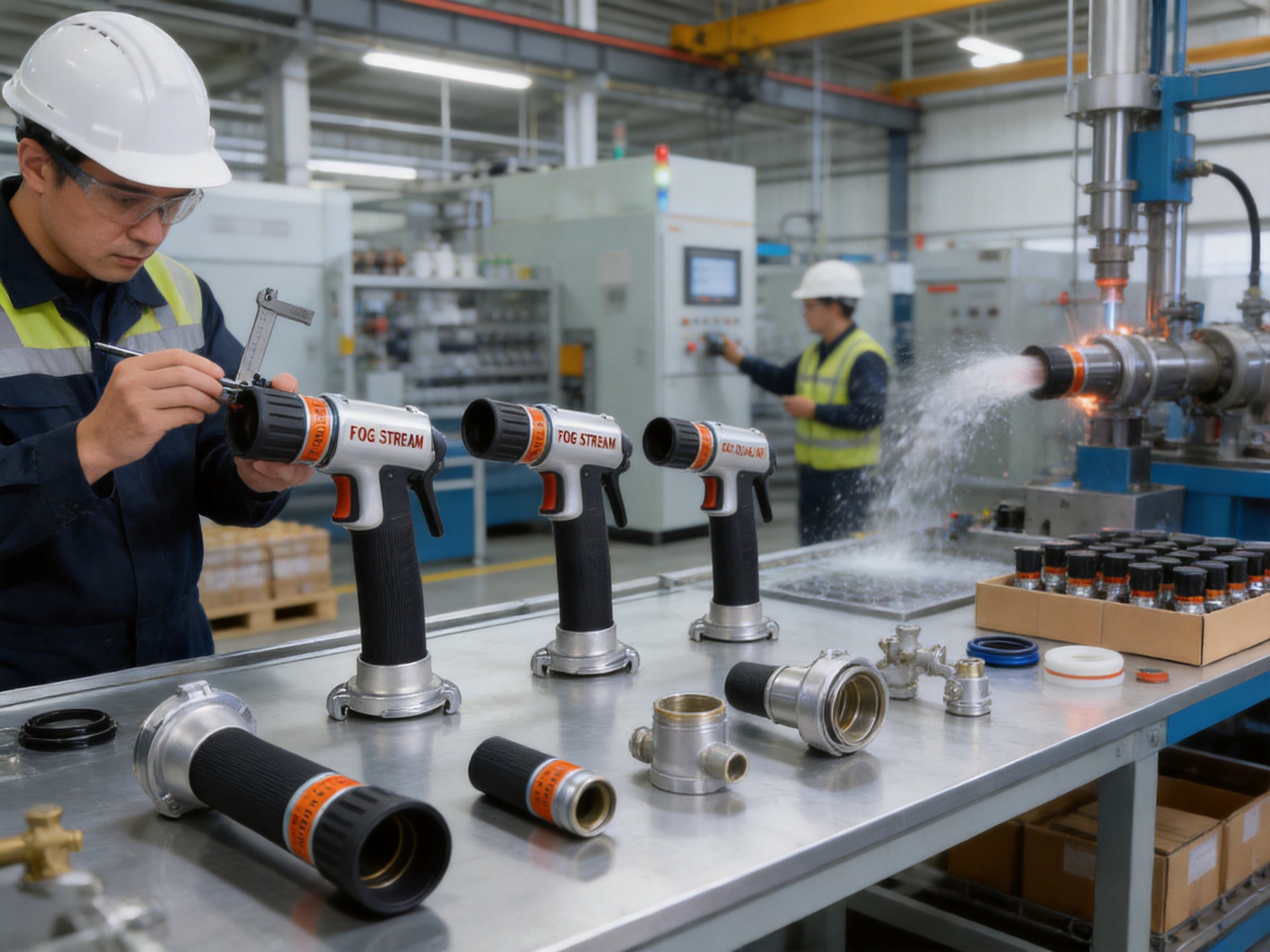
The primary purpose is to control and direct water from a fire hose or compatible water-delivery system. It can be used for firefighting, industrial cleaning, cooling, flushing, washdown, and general water-control operations.
Yes. The nozzle is designed to provide straight-stream and fog-spray patterns. It also includes a flush position for clearing the passage without shutting down the hose line.
Yes. The product description states that it can be adjusted between straight stream, fog spray, and flush without shutting down. Operators should still follow site procedures and maintain safe control of the hose during every adjustment.
The stated flow range is 150 to 700 liters per minute. The precise flow depends on the selected model, adjustment position, water pressure, hose arrangement, and system conditions.
The stated working pressure is 100 PSI, which is approximately 7 bar. The complete system should be checked to ensure that the hose, coupling, pump, hydrant, and nozzle are all suitable for the intended pressure.
The available inlet sizes are 1.5 inches, 2 inches, 2.5 inches, and 3 inches. Buyers should select the size that matches the hose and water-supply arrangement.
Connector options include Storz, NH, Russian, and British Standard configurations, along with other arrangements according to customer requirements and production feasibility.
Aluminum provides a useful balance of low weight and mechanical durability. This helps make the nozzle easier to carry and operate while supporting the robust construction required for professional service.
Yes. Its adjustable flow and multiple patterns make it suitable for many industrial cleaning and washdown tasks. The correct flow and spray pattern should be selected according to the surface, material, water supply, and workplace safety requirements.
It can be used for agricultural washdown, equipment cleaning, yard maintenance, irrigation support, and related water-control duties when the system pressure and connector configuration are appropriate.
Inspect the body, inlet, coupling, gasket, valve, adjustable ring, grip, and discharge opening after use. Remove dirt and deposits, check for leaks or damage, release residual pressure before storage, and replace worn components through an appropriate service process.
Buyers should confirm the inlet diameter, connector standard, required flow range, working pressure, quantity, packaging, marking, documentation, delivery schedule, and any inspection or customization requirements.
The product is supplied by Taizhou Shenlong Fire Science and Technology Co., Ltd., a company established in 1995 with activities covering research and development, production, sales, and service.
The Pistol Grip Fire Multipurpose Hose Nozzle is a flexible and durable solution for users who need more than a single fixed water pattern. Its lightweight aluminum construction supports easier handling, while the adjustable ring and three-position slide valve provide practical control over discharge. Straight stream, fog spray, and flush functions allow the nozzle to serve multiple operational purposes without requiring a line shutdown during pattern changes.
The range of 1.5-inch, 2-inch, 2.5-inch, and 3-inch inlets, together with Storz, NH, Russian, British Standard, and other connector options, makes the product adaptable to different hose systems and regional standards. Its stated 150-to-700-liter-per-minute flow range and 100-PSI working pressure support a variety of firefighting, industrial, construction, agricultural, and general utility applications.
Behind the product is a manufacturer with experience dating back to 1995 and capabilities that include research and development, production, sales, service, and international cooperation. This integrated approach can provide value to customers seeking dependable product supply, specification flexibility, and technical communication.
For professional organizations, the nozzle’s strongest advantages are its versatility, handling comfort, compatibility, and straightforward mechanical control. When correctly selected, installed, tested, and maintained, it can become an important component of a modern fire hose and industrial water-control system.
1. Manufacturer-provided product specification for the Pistol Grip Fire Multipurpose Hose Nozzle.
2. Manufacturer-provided company profile and business history.
3. General principles of fire hose, nozzle, coupling, and pressurized water-system operation.
4. General guidance for industrial hose inspection, maintenance, storage, and safe handling.
5. General engineering principles concerning aluminum construction, flow control, pressure management, and hose-system compatibility.
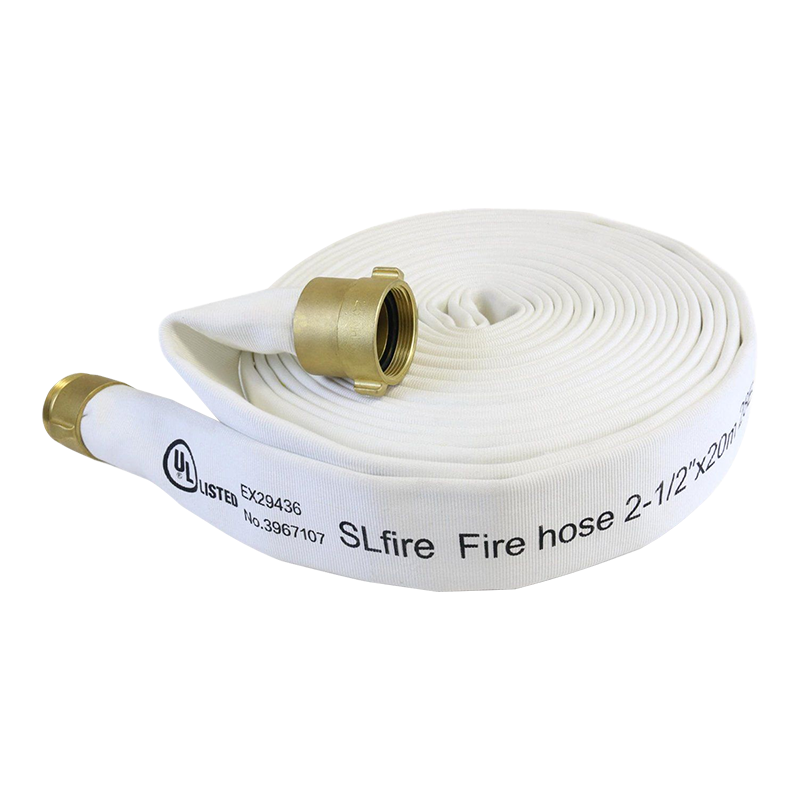
Single jacket, EPDM rubber liner Features • 100% high tenacity polyester jacket, high-grade EPDM rub...
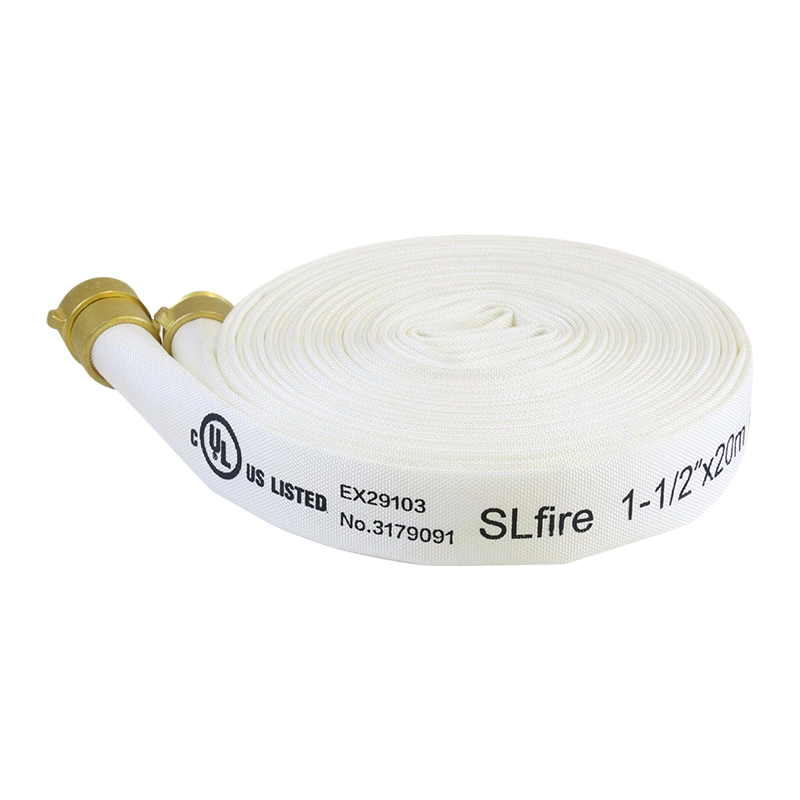
Single jacket, TPU liner •High-tenacity polyester yarn, circular woven in twill weave/plain weave,T ...
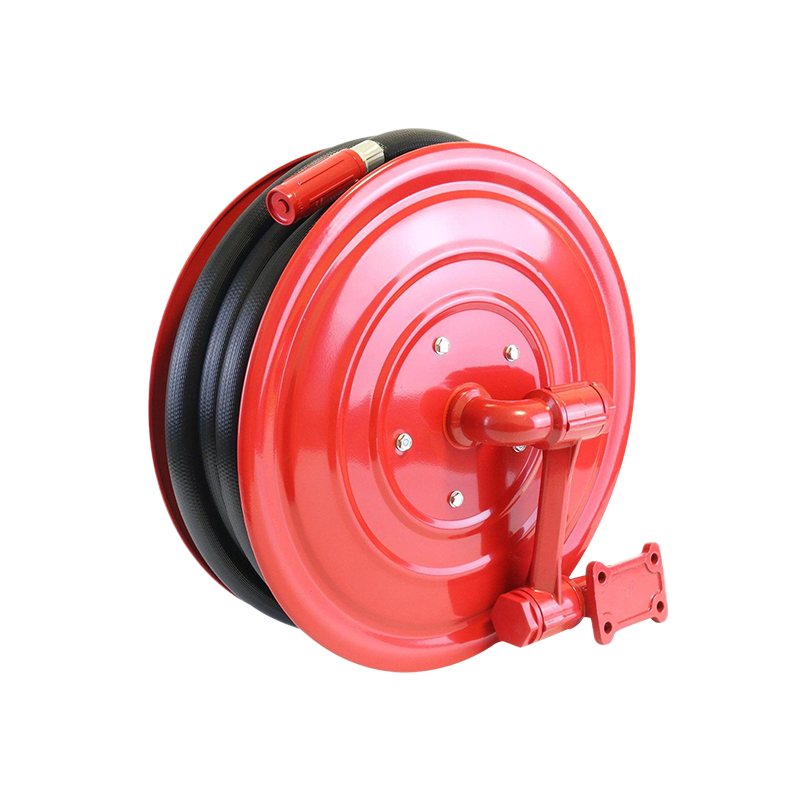
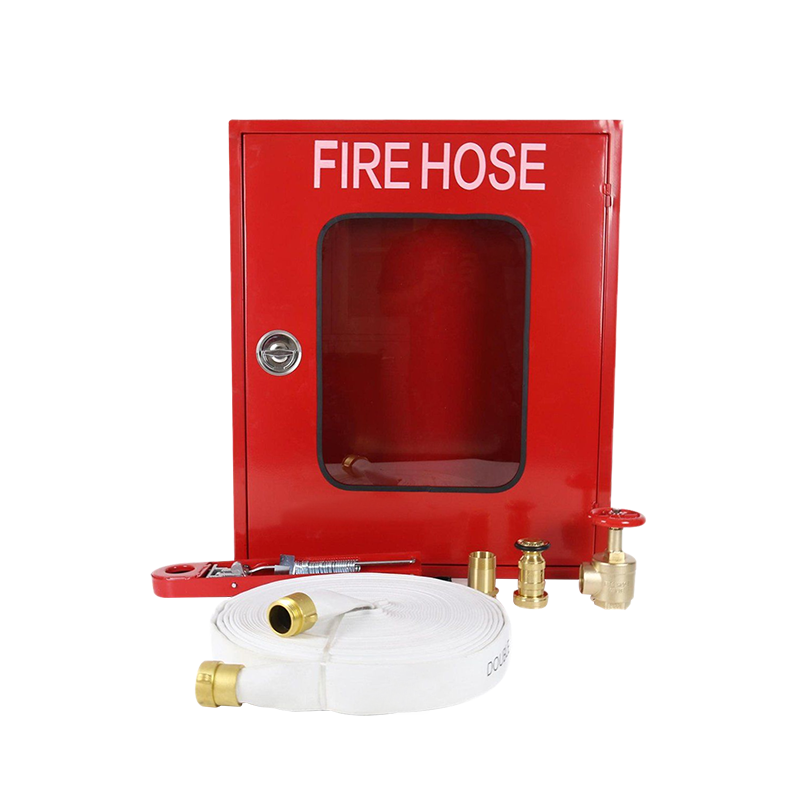
Fire cabinets are designed to accommodate fire hose,valve and other firefighting equipment. Type 201...
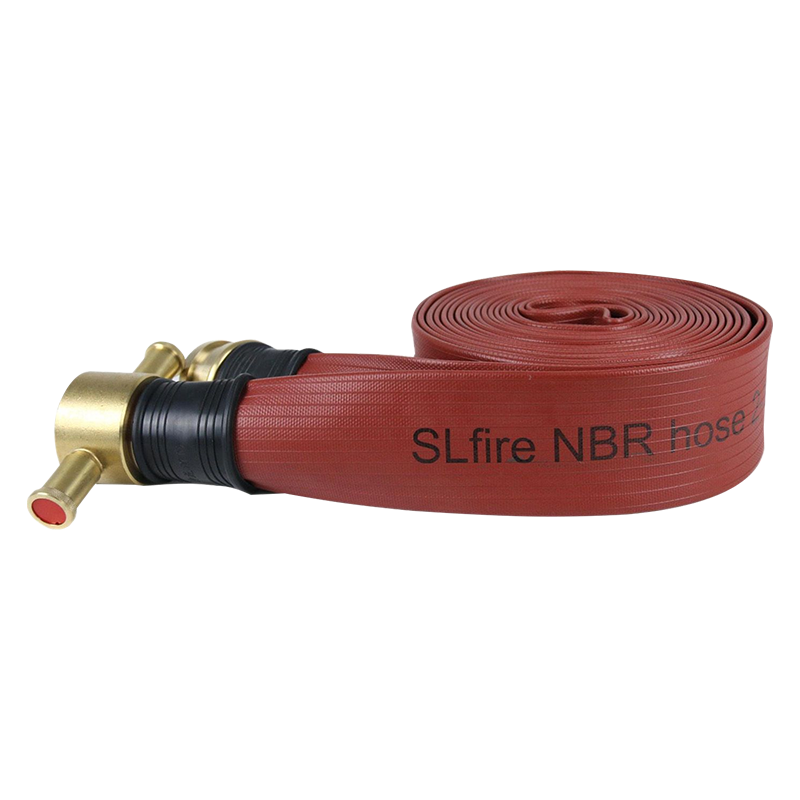
Nitrile covered hose •Nitrile/TPR blend as cover and lining, with 100% high-tenacity polyester yarn ...
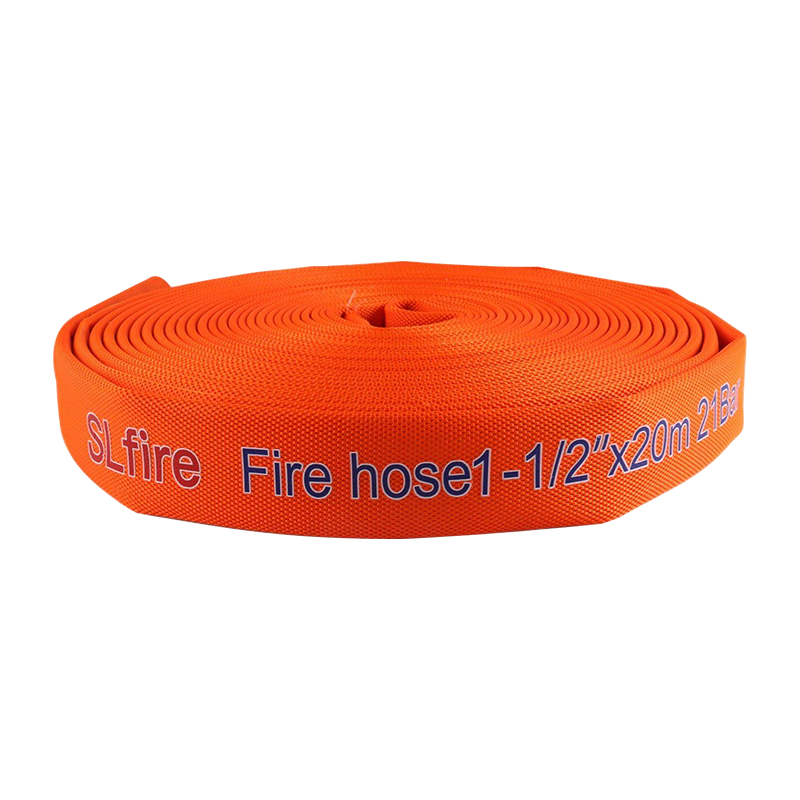
Single jacket, TPU liner •High-tenacity polyester yarn, circular woven in twill weave, TPU lining, f...
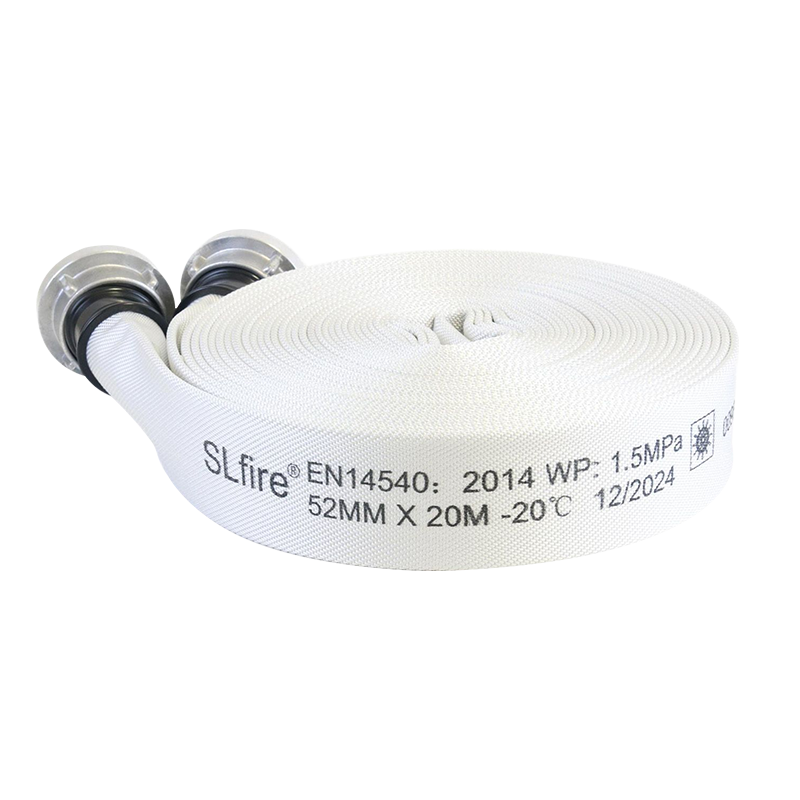
Marine hose Single jacket, PVC liner •100% high tenacity polyester yarn, circular woven in twill wea...
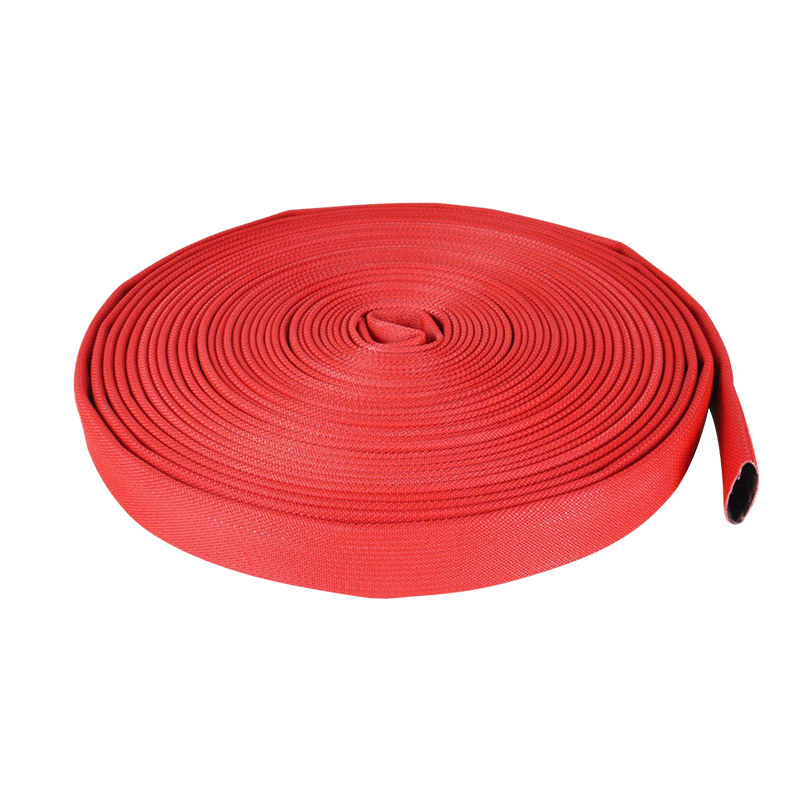
Marine hose Single jacket, PVC liner, PU coated •100% high tenacity polyester yarn,c ircular woven i...
 Call Us
+86 159-5116-9511
Need Support
Head Office
No.58, Kechuang Road, Sixiang Street Medicine Gaoxin District Taizhou City, Jiangsu Province

At a structure fire, the first line off the truck is the one that does the hardest work. Pulled around obstacles, dragged across gravel, charged with high-pressure water, and shut off at the nozzle d...
Copyright © Taizhou Shenlong Fire Science and Technology Co., Ltd. All Rights Reserved.
 Fire Hose Manufacturers, Fire Hydrant Hose Factory