

 English
 русский
 Español
 Deutsch
 عربى
 Français
 Português
Don't hesitate to send a message

Single jacket, EPDM rubber liner Features • 100% high tenacity polyester jacket, high-grade EPDM rub...
Content
Firefighting operations involving flammable liquids demand equipment that can deliver more than a simple stream of water. Fires involving petroleum products, solvents, fuels, and other combustible liquids can spread rapidly across a surface, reignite after partial extinguishment, and create dangerous radiant heat. In these situations, a high-quality foam application system is essential. The Aluminum Self-Aspiration Air-Foam Nozzle is designed specifically for this demanding environment, combining a lightweight aluminum body, self-aspirating foam technology, flexible inlet options, and several flow-rate configurations.
This nozzle is engineered to draw air into a foam solution as the solution passes through the device. The resulting expanded foam can cover the surface of a flammable liquid, reduce vapor release, separate the fuel from atmospheric oxygen, and assist firefighters in controlling and suppressing the fire. Operating at 100 PSI, or approximately 7 bar, the nozzle provides a consistent working condition for industrial fire response systems.
Manufactured by Taizhou Shenlong Fire Science and Technology Co., Ltd., a company established in 1995, the product reflects the company’s long-term experience in fire hose, fire protection, and related industrial equipment. The company combines research and development, production, sales, and service, allowing it to support customers from product selection through delivery and after-sales communication. Its experience in supplying fire protection products to domestic and international markets also supports the development of practical equipment for different industries and operating conditions.
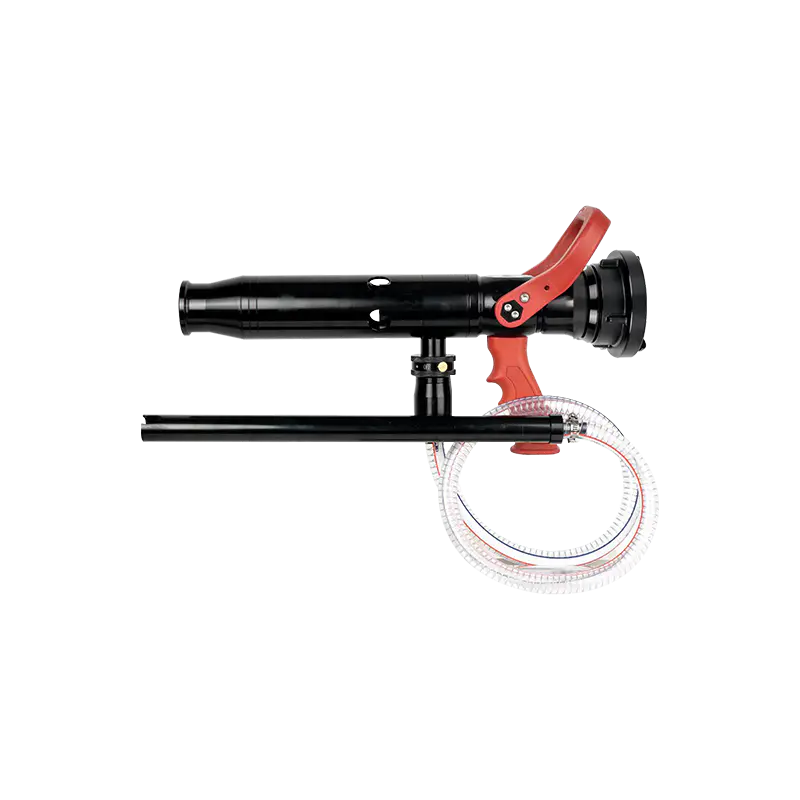
Alumilum Self-Aspiration Air-Foam Nozzle
Water is an effective extinguishing medium for many ordinary Class A fires involving materials such as wood, paper, textiles, and some plastics. However, water alone is often unsuitable for burning flammable liquids. Many fuels are lighter than water and can float on top of it. In some situations, applying water directly can spread the burning liquid, increase the hazard, or produce violent splashing and steam generation.
Firefighting foam addresses this problem by creating a blanket over the fuel surface. The blanket separates the fuel from the surrounding air and helps suppress the release of flammable vapors. It also provides a cooling effect and can reduce the likelihood of reignition when the foam layer remains intact.
A self-aspiration air-foam nozzle is an important part of this process. It does not merely project liquid toward the fire. Instead, it introduces air into a foam solution so that the discharged stream contains expanded foam. The foam structure, coverage, stability, and application distance depend on the nozzle design, foam concentrate, solution ratio, pressure, and operating technique.
For petrochemical facilities, fuel storage areas, loading stations, aircraft facilities, industrial plants, marine locations, and emergency response teams, the ability to produce a reliable foam stream can be a decisive factor in fire control. The nozzle must be easy to handle, compatible with the available hose system, resistant to harsh working conditions, and capable of delivering a suitable flow without excessive operator fatigue.
The Aluminum Self-Aspiration Air-Foam Nozzle is a portable foam application device intended for high-quality foam discharge. Its design incorporates a solution-mixing and air-entrainment principle. Foam solution enters the nozzle under pressure, air is drawn into the flow, and the resulting aerated foam is discharged toward the burning or threatened surface.
The product is available with 1.5-inch, 2-inch, and 2.5-inch inlet sizes. The available flow rates are 240 liters per minute, 480 liters per minute, and 960 liters per minute. These options allow users to select a configuration that matches the size of the protected area, the capacity of the fire pump, the hose diameter, the expected fire scenario, and the operational requirements of the facility.
The standard working pressure is 100 PSI, equivalent to approximately 7 bar. Maintaining the correct operating pressure is important because foam quality and discharge performance depend on hydraulic conditions. An appropriate pressure enables the nozzle to form a usable foam pattern while supporting a practical reach and manageable reaction force for trained operators.
| Product characteristic | Specification or benefit |
| Product type | Self-aspiration air-foam nozzle |
| Primary material | Aluminum |
| Inlet sizes | 1.5 inches, 2 inches, and 2.5 inches |
| Available flow rates | 240 LPM, 480 LPM, and 960 LPM |
| Working pressure | 100 PSI, approximately 7 bar |
| Operating principle | Air is drawn into foam solution to produce expanded foam |
| Connection options | Storz, NH, Russia, BS, Machino, and other available connectors |
| Typical application | Flammable liquid and petrochemical fire protection |
The central advantage of this nozzle is its self-aspirating operating principle. In a conventional liquid nozzle, the discharge may consist primarily of water or foam solution. In a self-aspirating foam nozzle, the internal flow path is designed to draw air into the solution. This creates an expanded mixture that can be distributed over the surface of a liquid fuel.
The process begins when foam solution enters the nozzle through the selected inlet connection. As the solution moves through the internal passage, its velocity and pressure conditions support the intake of surrounding air. The air and solution combine before discharge, creating a foam stream with a greater volume than the original liquid solution.
This approach provides several practical benefits. First, the foam can cover a larger surface area than an equivalent volume of unexpanded solution. Second, the blanket can remain on the fuel surface and reduce vapor release. Third, the foam stream can be more effective for indirect application, where firefighters aim at a nearby surface and allow the foam to flow gently across the burning liquid rather than striking the fuel aggressively.
Foam quality is influenced by more than the nozzle alone. Operators must use a compatible foam concentrate, maintain the recommended proportioning arrangement, provide sufficient water flow, and follow the foam manufacturer’s instructions. The nozzle is designed to support the air-entrainment stage, but the complete system must be correctly configured for the intended extinguishing agent and hazard.
Compared with a basic straight-stream nozzle, the self-aspirating model offers a specialized solution for flammable liquid hazards. A standard water nozzle may provide a powerful jet, but it does not automatically create the same type of stable, oxygen-separating foam blanket. The self-aspirating unit is therefore better aligned with industrial facilities where fuel, oil, solvents, or petrochemical products are present.
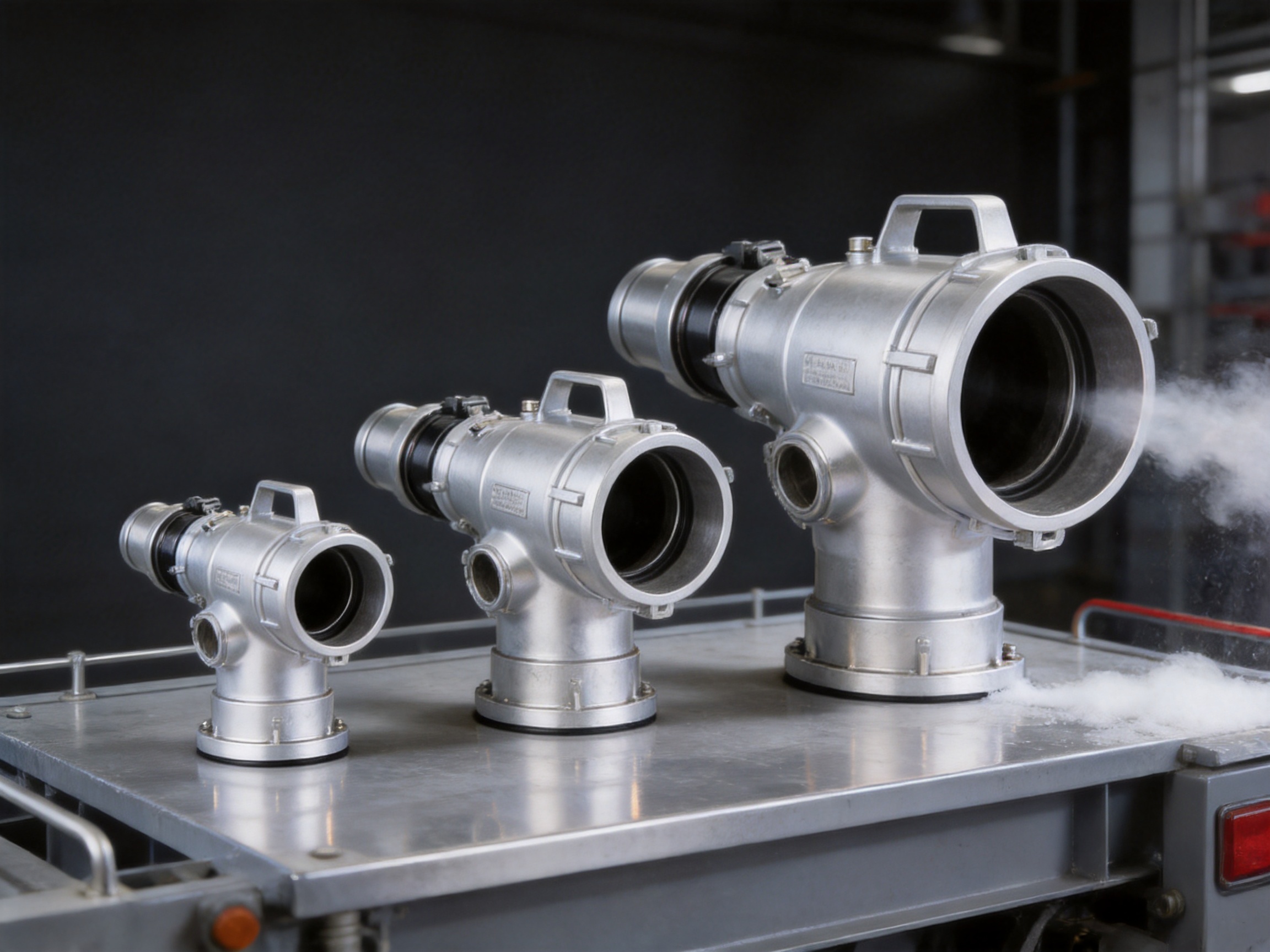
The nozzle body is made from aluminum, a material widely used in portable firefighting equipment because it offers a useful balance between strength, weight, and corrosion resistance. A foam nozzle may need to be carried, connected, repositioned, and operated by firefighters wearing protective clothing and breathing equipment. Reducing unnecessary weight can improve handling and reduce fatigue during an extended emergency response.
Aluminum construction also supports practical transportation and storage. Industrial sites may keep multiple nozzles in fire cabinets, emergency vehicles, hose stations, or mobile response units. A lighter nozzle can be easier to remove from storage and connect to a charged hose line. This is especially valuable when equipment must be moved quickly over stairs, platforms, gravel, wet floors, or congested industrial areas.
Corrosion resistance is another important consideration. Firefighting equipment may be exposed to water, foam concentrate, humidity, salt air, industrial chemicals, and outdoor weather. Aluminum can provide better resistance to many common environmental conditions than ordinary unprotected steel. Proper cleaning, inspection, drying, and storage remain necessary, but the material helps support longer service life when the nozzle is maintained correctly.
The aluminum body also contributes to a professional balance between portability and durability. The nozzle must withstand the mechanical forces associated with pressurized water and foam solution, as well as the normal handling associated with emergency response. Its construction is intended to provide reliable service without making the equipment unnecessarily cumbersome.
Fire protection systems are not standardized in exactly the same way across every country, industrial sector, or organization. Hose diameters, hydrant outlets, fire trucks, mobile pumps, and fixed installations may use different connection systems. For this reason, the availability of several inlet sizes and connector types is a significant purchasing advantage.
The nozzle can be supplied in 1.5-inch, 2-inch, and 2.5-inch inlet configurations. Smaller connections may be suitable for portable hose lines where maneuverability is a priority. Larger connections can support higher flow rates and may be appropriate for industrial fire brigades, fixed foam systems, tank farms, and larger exposure protection operations.
Connector options include Storz, NH, Russia, BS, Machino, and other configurations. The exact connector should be selected according to the hose, hydrant, pump, or manifold already installed at the customer’s facility. This approach helps avoid unnecessary modification of an existing fire protection system and makes the nozzle more adaptable for export markets.
Purchasers should confirm thread standards, coupling dimensions, sealing requirements, and local compatibility before placing an order. A nozzle with the correct flow capacity is useful only when it can be securely connected to the hose system and supplied with the required volume and pressure.
The flexibility of connection options gives this product an advantage over narrowly configured competing nozzles. Instead of forcing every customer to adapt its entire system to a single connection standard, the manufacturer can offer configurations that correspond more closely to regional and industrial requirements.
The three stated flow-rate options—240 LPM, 480 LPM, and 960 LPM—allow the product to serve different operational scales. A lower-flow model may be easier to handle and may be suitable for smaller protected areas or applications where a compact hose line is preferred. A medium-flow model can provide a balance between foam output, reach, and operator control. The high-flow model is intended for situations where a greater volume of foam solution is required.
Flow-rate selection should not be based on nozzle size alone. It should be evaluated together with the fire pump, hose length, elevation changes, proportioning equipment, foam concentrate supply, and the hazard analysis for the facility. An excessively large nozzle connected to an undersized pump may not receive sufficient pressure. Conversely, a small nozzle may not provide the required application rate for a large fuel surface.
The product’s range gives engineering teams the ability to match the nozzle to the system rather than treating every fire scenario in the same way. This is particularly useful for companies operating multiple facilities, because different sites may have different hydrant pressures, hose arrangements, storage hazards, and emergency response plans.
| Inlet size | Nominal flow option | Potential selection focus |
| 1.5 inches | 240 LPM | Portable handling, compact hose lines, smaller application areas |
| 2 inches | 480 LPM | Balanced flow, reach, handling, and general industrial use |
| 2.5 inches | 960 LPM | High-volume foam application and larger industrial hazards |
The values above represent the available product configurations. Actual field performance depends on the complete system, including pressure, foam type, hose condition, nozzle orientation, and the method of application selected by trained firefighters.
A defined working pressure helps users design and operate a predictable foam delivery system. The stated working pressure of 100 PSI, or 7 bar, provides a clear reference for pump selection, hose-line planning, testing, and training.
Stable pressure is important because changes in pressure can affect discharge velocity, flow rate, foam expansion, pattern quality, and reaction force. Operators should use a suitable pressure gauge and verify that the pump and hose line can maintain the required conditions while the nozzle is flowing. Pressure should also be checked during routine drills, not only during an emergency.
At the stated working condition, the nozzle is intended to deliver a strong and consistent foam stream. The exact reach and pattern will vary according to the selected configuration and the properties of the foam solution. Wind, temperature, elevation, hose friction, and the angle of application can also affect the effective discharge.
Using the nozzle outside the recommended operating range may reduce foam quality or create unnecessary stress on the equipment. Users should follow the manufacturer’s operating instructions and the requirements of the relevant fire protection authority. Testing should be carried out using the actual hose, coupling, pump, and foam system planned for service.
The product is especially suited to locations where flammable liquids represent a significant fire risk. Petrochemical plants, fuel storage terminals, refineries, chemical processing areas, loading and unloading stations, and industrial warehouses may all require foam equipment as part of their emergency response resources.
At a fuel storage area, the nozzle can be connected to a compatible hose line and used to apply foam to the surface of a burning or threatened liquid. Firefighters may select an indirect application technique to avoid disturbing the fuel surface. The foam can be directed toward a tank wall, bund wall, or nearby surface so that it flows over the fuel in a controlled manner.
At a loading station, the nozzle can provide a portable response option when a spill or fire develops around transfer equipment. In such circumstances, response teams must consider the fuel type, spill size, ignition sources, access routes, and exposure hazards. Foam application is only one part of the emergency plan, but a reliable self-aspirating nozzle can be an important part of that plan.
In manufacturing facilities, flammable liquids may be present in process areas, laboratories, maintenance workshops, paint rooms, or chemical storage spaces. A lightweight nozzle with flexible connections can be deployed from a fire hose station or emergency vehicle, provided the facility’s foam concentrate and water supply are correctly arranged.
Airports, marine terminals, and transport facilities may also require foam equipment because fuels can be present in large quantities and may spread across hard surfaces. The correct nozzle configuration depends on the site’s emergency response strategy and applicable codes. The product’s multiple flow and inlet choices can simplify integration into different types of response equipment.
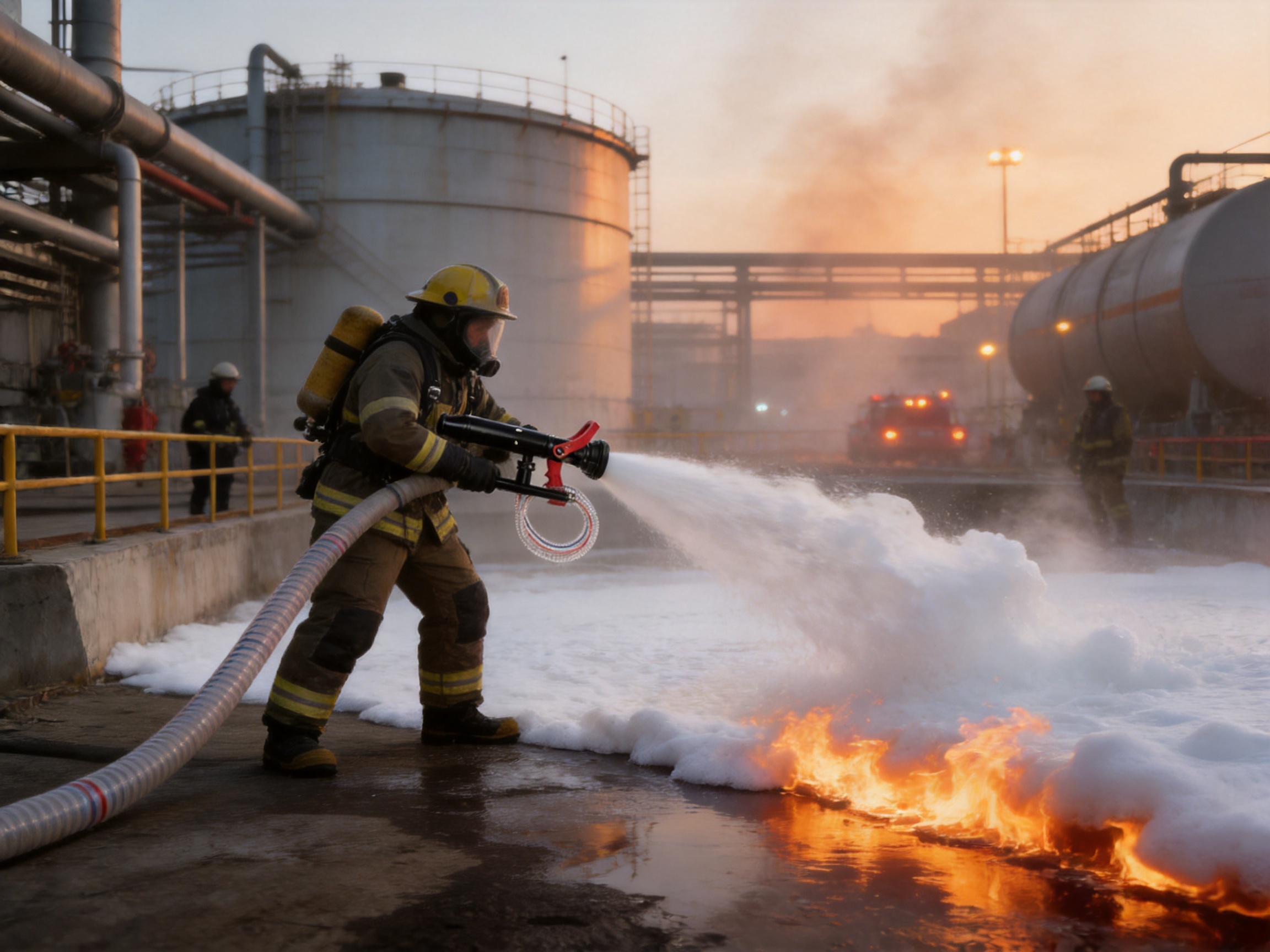
One of the main competitive advantages of this nozzle is specialization. It is designed for self-aspirating foam production rather than serving only as a general-purpose water outlet. This makes it more appropriate for flammable liquid incidents where foam coverage and vapor suppression are central objectives.
Its aluminum construction offers a weight advantage over many heavier metal alternatives. Lower weight can improve portability, reduce handling fatigue, and support faster deployment. These benefits may be especially noticeable when firefighters must carry the nozzle over long distances or operate it in protective equipment under high heat.
The three inlet sizes and three flow-rate options provide a wider selection than a one-size product. Customers can choose a configuration based on their hydraulic design and local connection standards. The availability of Storz, NH, Russia, BS, Machino, and other connector options further expands compatibility.
The product also offers a practical balance between performance and simplicity. A self-aspirating design does not necessarily require a separate external air compressor or complicated mechanical air-injection assembly. Air is drawn into the foam solution through the nozzle’s operating principle, helping create a portable system that can be deployed directly from a compatible hose line.
Another advantage is its suitability for international purchasing. Fire departments, industrial contractors, distributors, and system integrators may work with different hose and hydrant standards. The ability to discuss the required connector before production or delivery helps reduce compatibility problems and supports more efficient procurement.
However, product comparison should always be based on verified technical data. Buyers should compare foam expansion, discharge pattern, pressure range, corrosion performance, coupling quality, maintenance requirements, testing documentation, and operating instructions. The nozzle should be selected as part of a complete fire protection system rather than judged only by material or nominal flow rate.
Taizhou Shenlong Fire Science and Technology Co., Ltd. was founded in 1995. Its business combines research and development, production, sales, and service. This integrated structure is valuable in the fire protection industry because equipment must be practical, consistent, and suitable for real operating environments.
A company that manages product development and manufacturing together can obtain direct feedback from customers, distributors, and field users. This feedback can support improvements in product configuration, coupling options, handling characteristics, and application suitability. The company’s experience with different fire hose materials and related products also provides a broader understanding of how nozzles interact with hose systems, hydrants, pumps, and accessories.
The company produces various materials of lined fire hoses and also undertakes foreign trade products according to customer requirements, including rubber, PVC, polyurethane, and double-sided tape products. This wider production and supply experience demonstrates familiarity with material selection, product coordination, export requirements, and customer-specific orders.
Its products are sold in more than 20 provinces, cities, and autonomous regions, while cooperation with four domestic foreign trade companies supports export activity. Such market exposure can help a manufacturer understand different purchasing standards, packaging needs, communication practices, and application conditions.
For customers purchasing the Aluminum Self-Aspiration Air-Foam Nozzle, the company’s combined capabilities can provide several practical benefits. Buyers can communicate their desired inlet size, flow rate, connector type, and application. The manufacturer can then support the selection of a suitable configuration instead of offering a completely fixed product with no customization pathway.
Manufacturing strength in this context is not limited to machinery. It also includes product knowledge, material familiarity, process coordination, inspection discipline, order management, and service responsiveness. These capabilities are important for fire protection products because reliability depends on both the physical item and the consistency of the supply process.
Manufacturing a dependable foam nozzle requires attention to the body material, internal passages, air-intake structure, coupling interface, seals, threads, and surface finish. Each part must work together to maintain a controlled flow path and secure connection during pressurized operation.
Aluminum components should be produced with suitable forming or machining methods and checked for dimensional consistency. The inlet connection must align correctly with the internal passage. The air-aspiration openings must remain clear and properly positioned. Sealing surfaces must support a leak-resistant connection, while the exterior should be finished in a way that supports handling and routine cleaning.
Flow performance should be evaluated at the stated operating pressure. Testing can verify whether the nozzle provides the intended discharge behavior for each available size and flow configuration. Inspection of couplings and seals is also essential because a nozzle that leaks at the connection may reduce system pressure and create a safety risk.
Quality control should include visual inspection, dimensional checks, connection checks, pressure testing, and functional discharge testing appropriate to the product configuration. Packaging inspection is also important, especially for export shipments, because the nozzle must arrive without damage to the inlet, air-intake components, or sealing surfaces.
The company’s experience in producing and supplying fire protection products supports a manufacturing approach focused on practical reliability. Customers should request the applicable technical documents, inspection information, operating instructions, and testing details for their selected configuration before commissioning the product.
Before installation or use, the nozzle should be matched with the correct hose, coupling, foam proportioning arrangement, pump, and water supply. The connection must be mechanically secure and compatible with the pressure and flow requirements of the system.
A self-aspirating nozzle requires a suitable foam solution. The foam concentrate must be compatible with the fuel hazard and proportioning equipment. Using the wrong concentration can reduce foam quality and may lead to poor control of the fire. The nozzle itself cannot correct an unsuitable concentrate, incorrect mixing ratio, contaminated water supply, or inadequate pump capacity.
The hose line should be inspected for damage, kinks, excessive wear, and contamination. Kinks and sharp bends can restrict flow and increase pressure loss. The pump operator should confirm that the system can provide the selected flow rate at approximately 100 PSI at the nozzle inlet, while accounting for elevation and hose friction.
Firefighters should be trained to manage nozzle reaction and maintain a stable stance. Larger flow configurations may create greater reaction force. A team-based operating method may be preferable for high-flow models, particularly when the nozzle is used for extended periods or in difficult terrain.
The nozzle should be positioned and directed according to the fire scenario. Directly striking a burning liquid surface at high velocity may disturb the fuel and reduce the effectiveness of the foam blanket. Indirect application, bank-down application, or controlled surface coverage may be more appropriate depending on the tank, spill area, wind, and fire behavior.
Firefighting nozzles should be inspected regularly and after every operational use. The exterior should be checked for dents, cracks, distortion, severe abrasion, or signs of chemical attack. The inlet and coupling should be inspected for damaged threads, missing parts, worn seals, and difficulty in connection.
The air-aspiration openings must remain clear. Dirt, dried foam concentrate, paint, tape, or other debris can restrict air intake and reduce the quality of the discharged foam. After use, the nozzle should be flushed with clean water in accordance with the manufacturer’s instructions. This is particularly important when foam concentrate has been used, because residue may dry inside or around the flow passages.
Cleaning should be performed using methods that do not damage the aluminum surface, seals, or internal components. Harsh chemicals, abrasive tools, and unapproved solvents may reduce service life. If the nozzle has been exposed to saltwater, corrosive chemicals, or unusual contaminants, it should receive additional inspection and cleaning.
Storage should take place in a clean, dry, and accessible location. Fire cabinets and vehicle compartments should protect the nozzle from unnecessary impact while allowing rapid retrieval. The coupling should be protected from damage, and the nozzle should not be stored in a way that blocks the air-intake openings.
Any nozzle that shows abnormal leakage, reduced flow, damaged components, or poor foam formation should be removed from service until it has been assessed and repaired or replaced. Regular drills can confirm that the nozzle, hose, pump, and foam system function together as expected.
Industrial purchasers should begin with a hazard assessment. The type of flammable liquid, maximum spill area, storage arrangement, expected fire size, available water supply, and response time all influence the correct nozzle selection.
The purchaser should then confirm the required flow rate and inlet size. A 240 LPM configuration may be suitable for a smaller portable response arrangement, while a 480 LPM or 960 LPM option may be required for larger hazards. These choices should be verified by the facility’s fire protection engineer or responsible authority.
Connector selection is equally important. The customer should identify whether the hose system uses Storz, NH, Russia, BS, Machino, or another standard. If the product is being exported, the connection should be checked against the local fire department, hydrant, pump, and hose specifications.
Buyers should also ask about available documentation, packaging, spare seals, inspection procedures, operating instructions, and delivery requirements. Where the nozzle is part of a larger project, it may be useful to purchase a sample for compatibility testing before ordering a larger quantity.
Because the company supports research and development, production, sales, and service, customers can discuss configuration requirements directly with the manufacturer. This can help distributors and project contractors prepare a more accurate quotation and avoid selecting a nozzle that does not match the existing system.
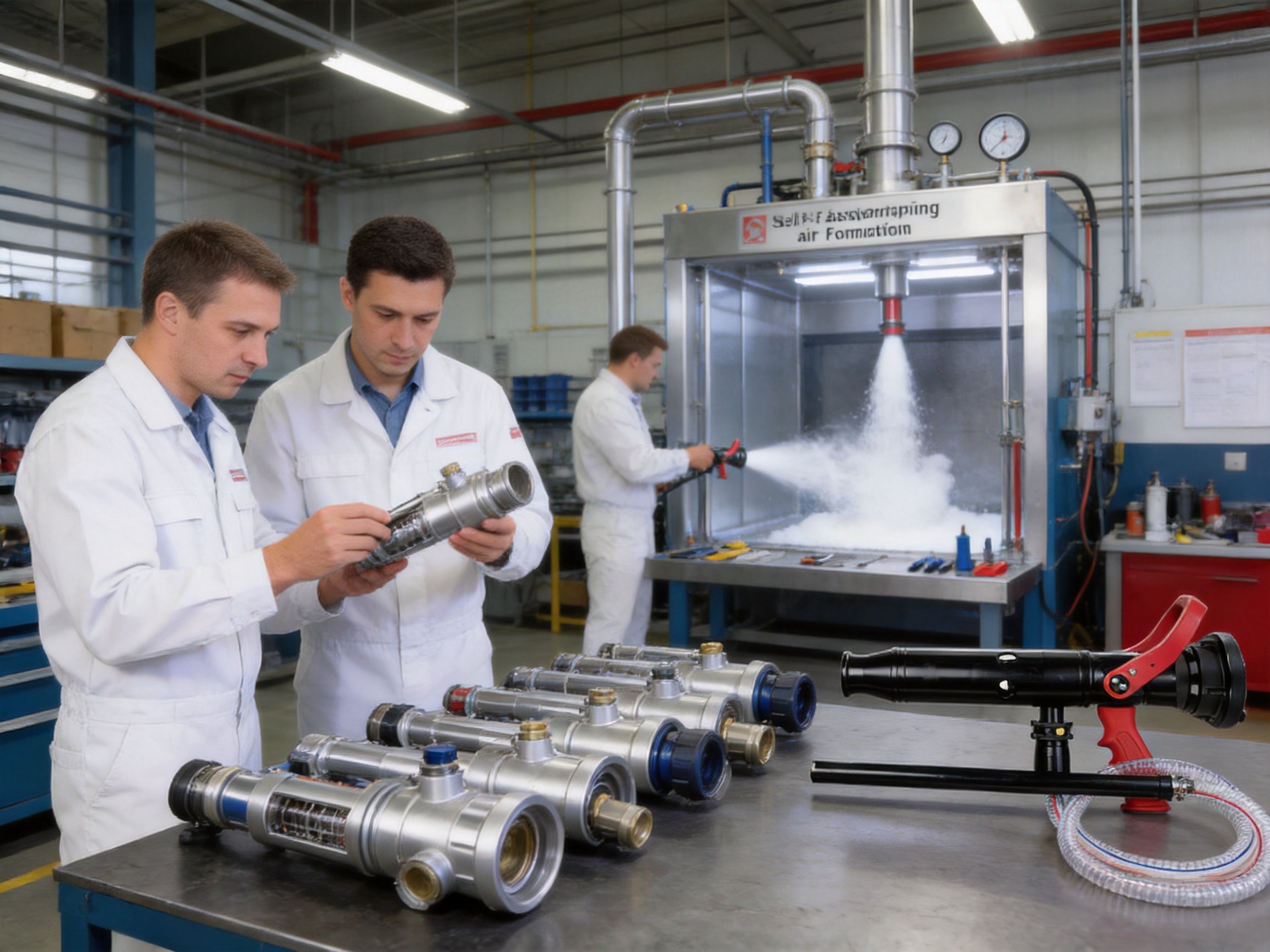
Only trained personnel should operate the nozzle during an active fire. Foam application involves pressurized equipment, high heat, smoke, toxic combustion products, unstable structures, and the possibility of sudden fire growth. The nozzle should be used as part of an approved emergency response plan, not as a substitute for professional fire protection procedures.
Operators should understand the selected foam concentrate, the correct mixing ratio, the required pressure, and the intended application technique. They should know how to open and close the supply valve gradually, communicate with the pump operator, control the hose line, and withdraw safely if conditions deteriorate.
Training should include dry familiarization, controlled water-flow exercises, foam discharge practice, hose handling, communication, and emergency shutdown. Personnel should also learn to identify restricted air-intake openings, leaking connections, abnormal vibration, and other signs of equipment problems.
Facilities should establish inspection intervals and keep records of tests, repairs, and use. The nozzle’s location should be clearly identified, and access should not be blocked by stored materials. If the device is installed in a fire cabinet, the cabinet should be checked to ensure that the nozzle, hose, coupling, and related accessories are complete and ready for deployment.
The lightweight aluminum design can reduce the physical burden associated with carrying and positioning firefighting equipment. This may support faster deployment and more efficient personnel movement, particularly in large industrial sites. A portable nozzle can also be repositioned as the fire changes, provided the operation remains within the facility’s safety procedures.
Self-aspiration provides an efficient way to create expanded foam without requiring a separate air supply. This can simplify portable operation and reduce the number of components that must be transported to the incident area. A simpler field arrangement may also reduce setup time, although correct foam proportioning and water supply remain essential.
The availability of multiple sizes can help prevent overcapacity. Selecting a nozzle that matches the actual system may improve water and foam concentrate management. It may also help the facility standardize equipment across different response teams while retaining appropriate flow options for different hazards.
Durable, corrosion-resistant equipment can support longer service when properly maintained. Extending the useful life of a nozzle reduces the frequency of replacement and helps maintain consistent emergency preparedness. Nevertheless, environmental performance should always be assessed through inspection records and actual service conditions rather than assumed solely from the material description.
A clear selection process helps ensure that the Aluminum Self-Aspiration Air-Foam Nozzle performs as intended. The first step is to identify the hazard. Determine whether the nozzle will protect fuel storage, chemical processing, loading operations, aircraft facilities, marine areas, or another flammable-liquid environment.
The second step is to determine the required application flow. This should be based on the fire area, foam type, system design, and applicable regulations. The available 240 LPM, 480 LPM, and 960 LPM configurations provide a starting point for matching the product to the hazard.
The third step is to verify hydraulic compatibility. Confirm the pump capacity, hose diameter, hose length, elevation, expected friction loss, and pressure at the nozzle. The system should be capable of supporting the selected configuration at the stated 100 PSI working pressure.
The fourth step is to select the inlet and coupling. Compare the desired 1.5-inch, 2-inch, or 2.5-inch inlet with the existing hose and hydrant system. Confirm the specific Storz, NH, Russia, BS, Machino, or other connection type required.
The final step is to establish an inspection and training plan. The nozzle should be delivered with suitable instructions and incorporated into routine drills. Operators should understand how to produce and apply foam safely before the equipment is relied upon during an emergency.
An air-foam nozzle is used to discharge expanded foam for fire suppression, particularly on flammable liquid fires. It mixes foam solution with air so that the resulting foam can cover the fuel surface, reduce vapor release, separate the fuel from oxygen, and assist with cooling and suppression.
The nozzle is designed with an internal flow arrangement that draws air into the foam solution as the solution passes through the device. This air-entrainment process creates expanded foam without requiring a separate external air compressor.
The nozzle is made from aluminum. The material supports a lightweight design, practical handling, and resistance to many common corrosive environmental conditions. Routine cleaning and inspection are still required.
The available inlet sizes are 1.5 inches, 2 inches, and 2.5 inches. The correct size should be selected according to the hose, pump, hydrant, and fire protection system design.
The listed flow rates are 240 LPM, 480 LPM, and 960 LPM. Flow-rate selection should be coordinated with the system’s pump capacity, hose arrangement, foam concentrate supply, and hazard assessment.
The stated working pressure is 100 PSI, which is approximately 7 bar. The complete system should be tested to confirm that the pump and hose line can deliver the required pressure and flow at the nozzle inlet.
Available connector options include Storz, NH, Russia, BS, and Machino configurations, along with other options depending on customer requirements. Customers should confirm the exact local connection standard before ordering.
The nozzle should be used with a foam concentrate that is suitable for the specific flammable-liquid hazard and compatible with the proportioning system. Users must follow the concentrate manufacturer’s mixing, storage, and application instructions.
The product is designed primarily for air-foam application. It should be used according to its technical instructions and intended application. If a facility requires both water-only and foam operations, it should confirm the appropriate equipment arrangement with a qualified fire protection professional.
Aluminum can reduce the weight of the nozzle while providing practical strength and corrosion resistance. Lower weight can make the product easier to carry, connect, reposition, and operate during demanding emergency conditions.
Potential users include petrochemical plants, fuel storage terminals, chemical facilities, industrial warehouses, transport facilities, marine sites, airports, loading stations, and emergency response organizations that require portable foam application equipment.
The nozzle should be inspected after use and at scheduled intervals. It should be flushed with clean water when appropriate, kept free of debris, checked for damaged seals and couplings, and stored in a clean, dry, accessible location. Any leakage or abnormal discharge should be investigated before the nozzle is returned to service.
Customers should provide the required inlet size, flow rate, connector standard, quantity, application, destination market, packaging requirements, and any project documentation needs. This information helps the manufacturer offer a suitable configuration and avoid connection or hydraulic mismatches.
The Aluminum Self-Aspiration Air-Foam Nozzle is a specialized firefighting tool for flammable liquid and petrochemical fire protection. Its self-aspirating design helps create expanded foam capable of forming a protective blanket over burning or threatened fuel surfaces. The aluminum body supports lightweight handling and corrosion resistance, while the 1.5-inch, 2-inch, and 2.5-inch inlet options provide flexibility for different hose systems and operating requirements.
With flow rates of 240 LPM, 480 LPM, and 960 LPM and a working pressure of 100 PSI, the nozzle can be selected for a range of portable and industrial applications. Its compatibility with Storz, NH, Russia, BS, Machino, and other connector types gives it an additional advantage in domestic and international markets.
The product is supported by Taizhou Shenlong Fire Science and Technology Co., Ltd., a fire protection manufacturer with experience dating back to 1995. The company’s integrated research and development, production, sales, and service structure, together with its experience in lined fire hoses and export-oriented products, provides a practical foundation for serving distributors, contractors, industrial users, and fire departments.
For the best results, the nozzle must be selected as part of a complete foam firefighting system. Correct pressure, flow, foam concentrate, proportioning, hose compatibility, operator training, inspection, and maintenance are all essential. When these factors are properly addressed, the Aluminum Self-Aspiration Air-Foam Nozzle can provide a portable, adaptable, and efficient response option for serious flammable-liquid fire hazards.
1. General principles of portable foam fire suppression equipment and flammable-liquid fire control.
2. Fire hose, fire nozzle, and fire protection equipment selection practices for industrial facilities.
3. Manufacturer-provided product specifications for the Aluminum Self-Aspiration Air-Foam Nozzle.
4. Manufacturer-provided company information concerning research and development, production, sales, service, and export cooperation.
5. General engineering guidance for foam proportioning, hose friction loss, nozzle pressure, and emergency response training.
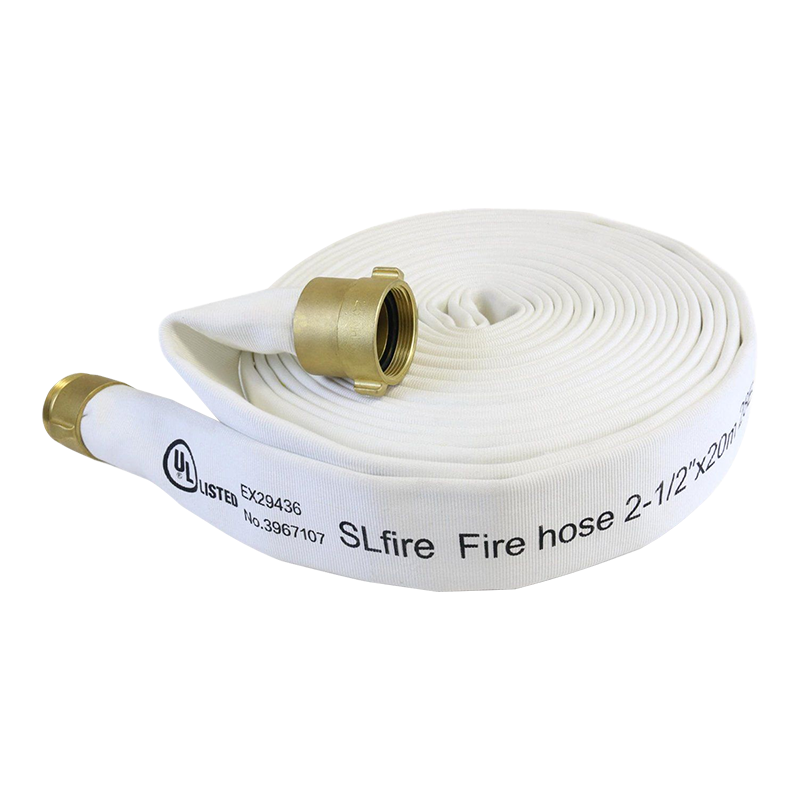
Single jacket, EPDM rubber liner Features • 100% high tenacity polyester jacket, high-grade EPDM rub...
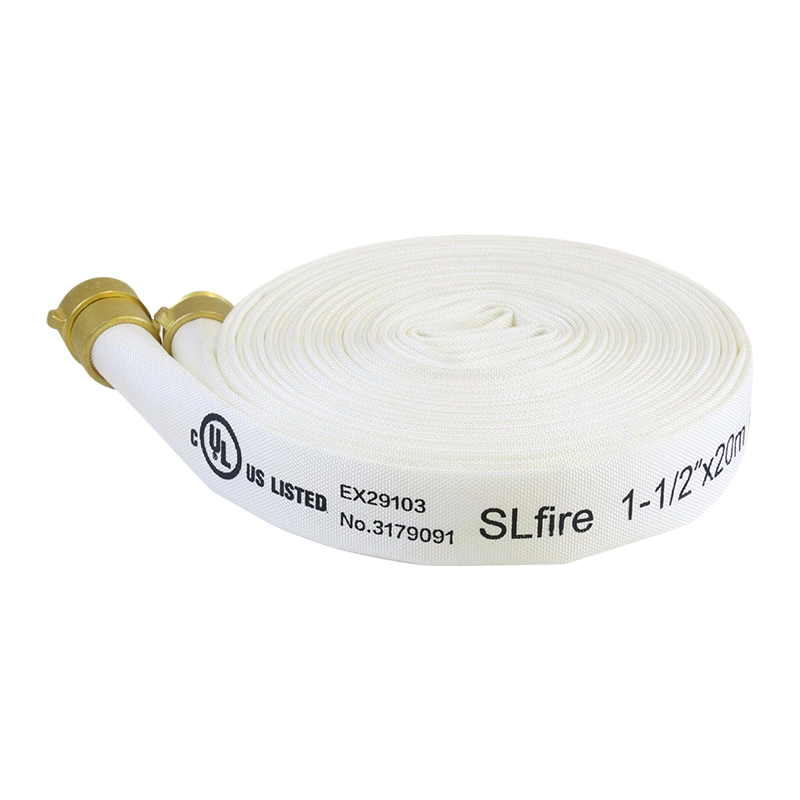
Single jacket, TPU liner •High-tenacity polyester yarn, circular woven in twill weave/plain weave,T ...
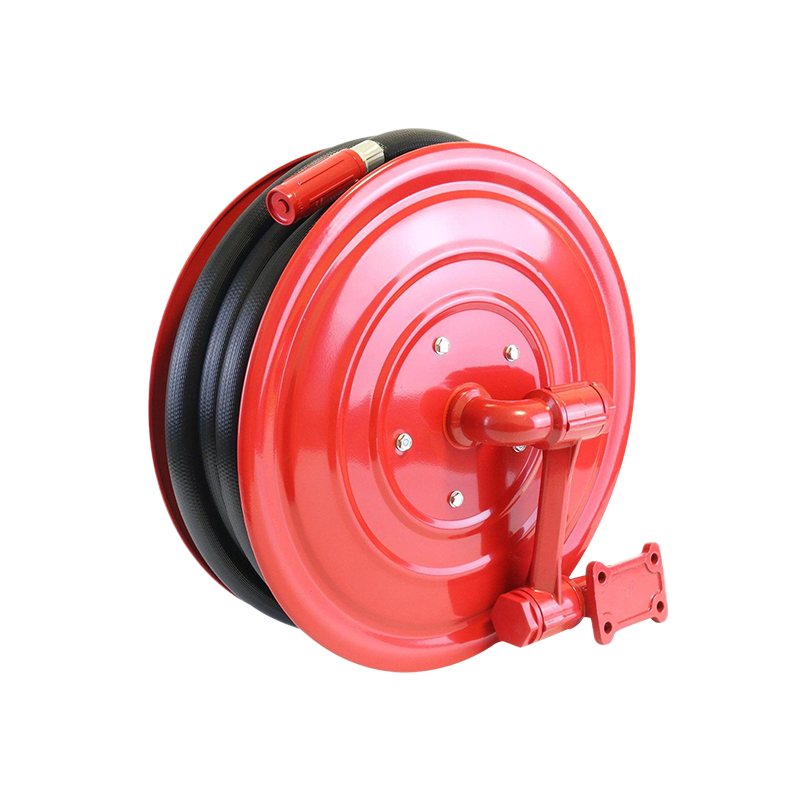
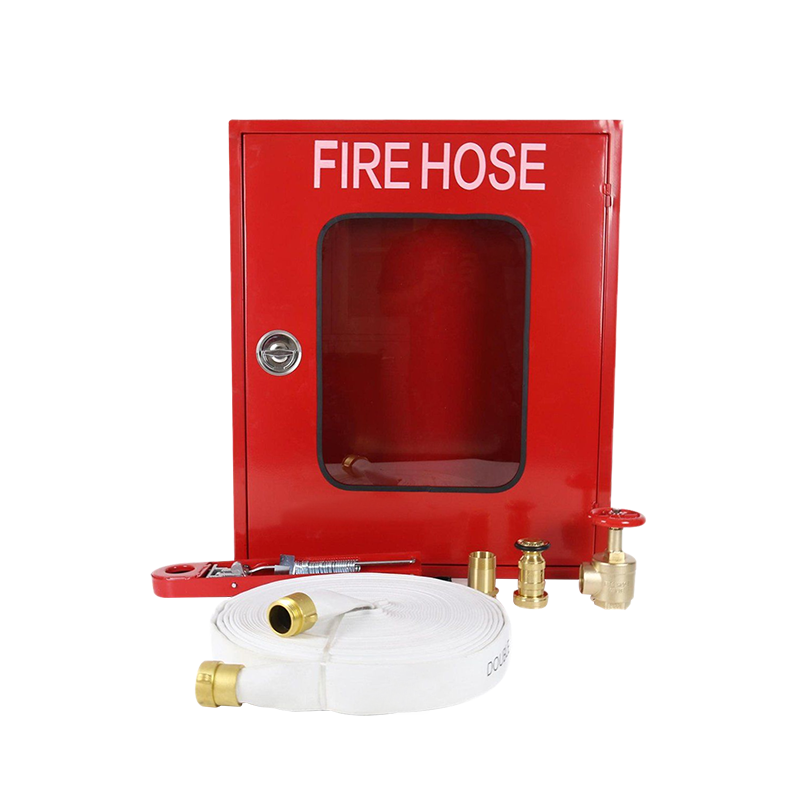
Fire cabinets are designed to accommodate fire hose,valve and other firefighting equipment. Type 201...
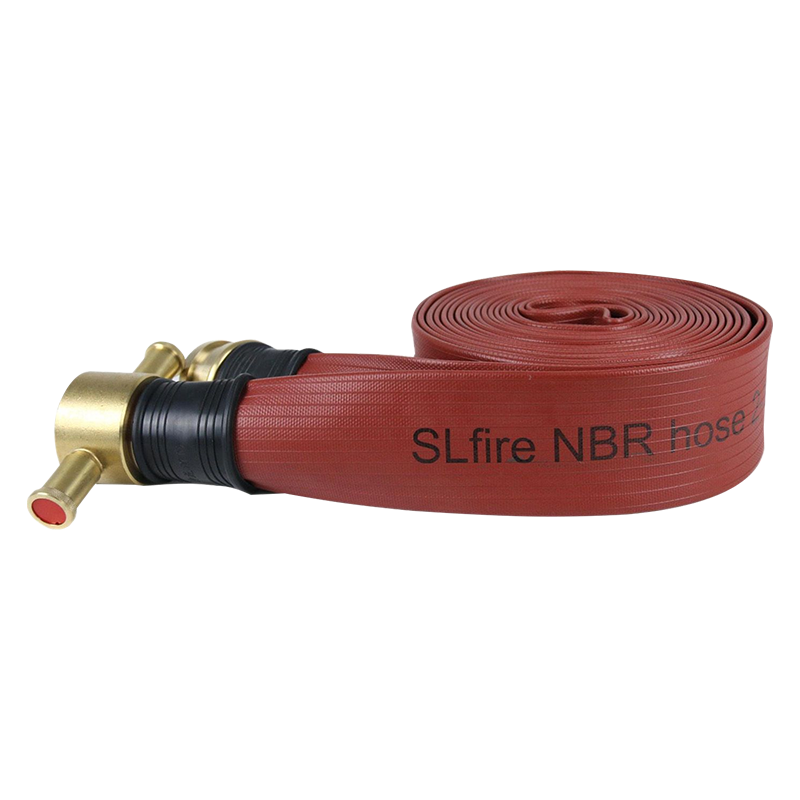
Nitrile covered hose •Nitrile/TPR blend as cover and lining, with 100% high-tenacity polyester yarn ...
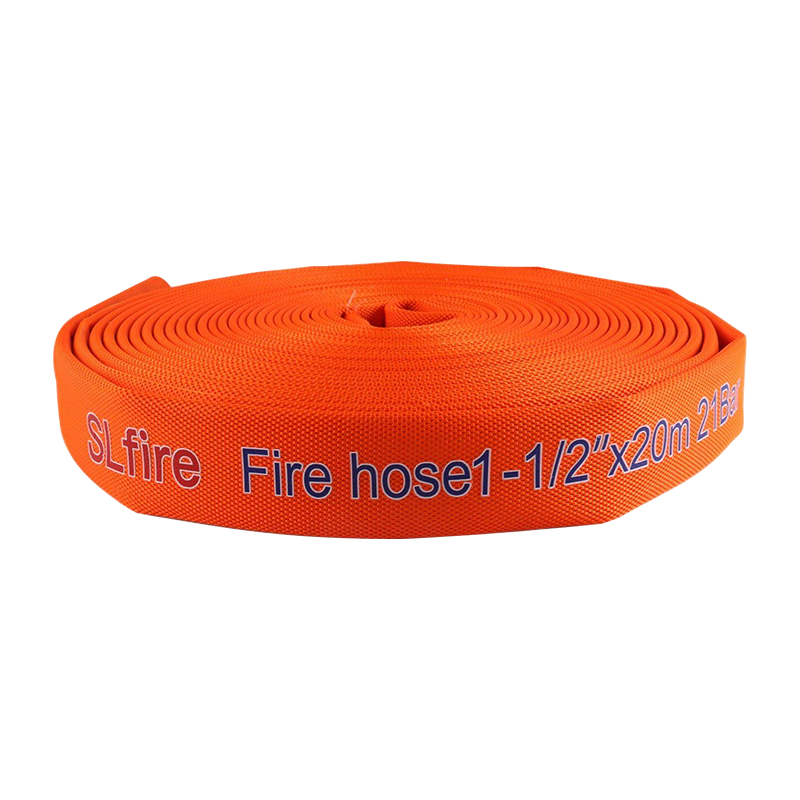
Single jacket, TPU liner •High-tenacity polyester yarn, circular woven in twill weave, TPU lining, f...
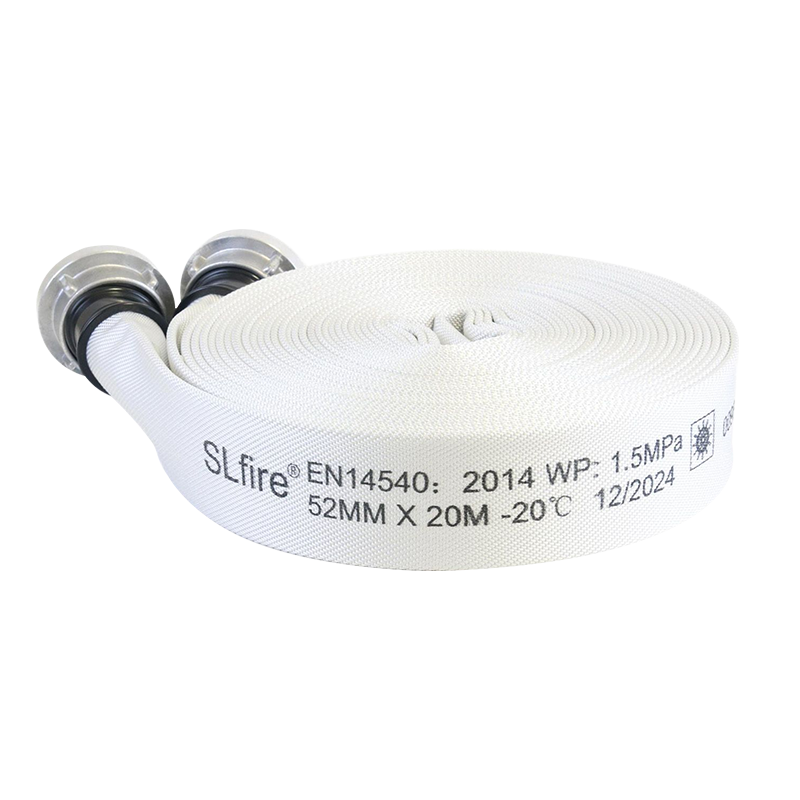
Marine hose Single jacket, PVC liner •100% high tenacity polyester yarn, circular woven in twill wea...
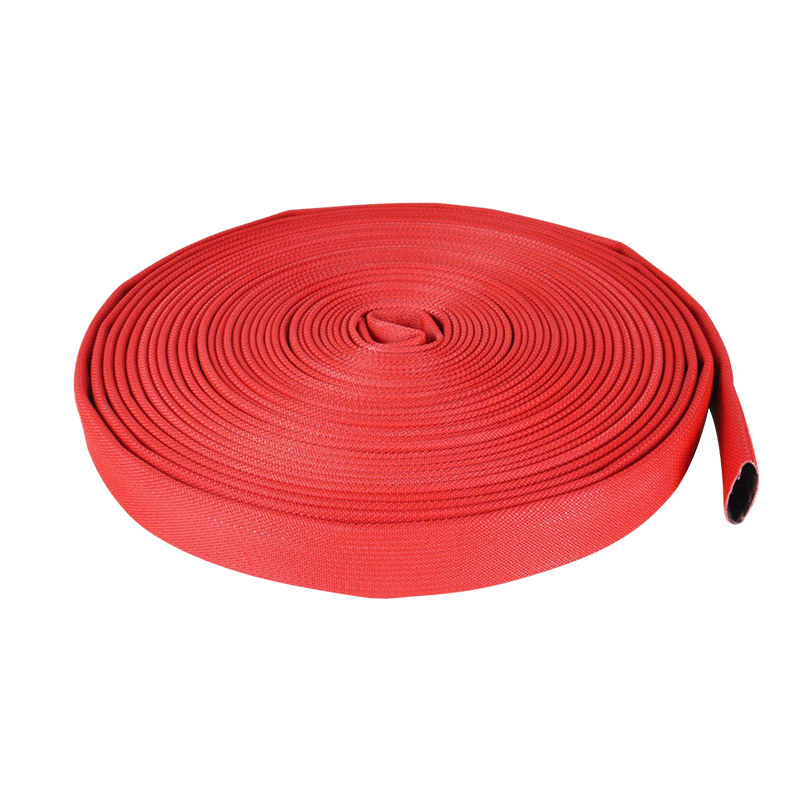
Marine hose Single jacket, PVC liner, PU coated •100% high tenacity polyester yarn,c ircular woven i...
 Call Us
+86 159-5116-9511
Need Support
Head Office
No.58, Kechuang Road, Sixiang Street Medicine Gaoxin District Taizhou City, Jiangsu Province

At a structure fire, the first line off the truck is the one that does the hardest work. Pulled around obstacles, dragged across gravel, charged with high-pressure water, and shut off at the nozzle d...
Copyright © Taizhou Shenlong Fire Science and Technology Co., Ltd. All Rights Reserved.
 Fire Hose Manufacturers, Fire Hydrant Hose Factory