

 English
 русский
 Español
 Deutsch
 عربى
 Français
 Português
Don't hesitate to send a message

Single jacket, EPDM rubber liner Features • 100% high tenacity polyester jacket, high-grade EPDM rub...
Content
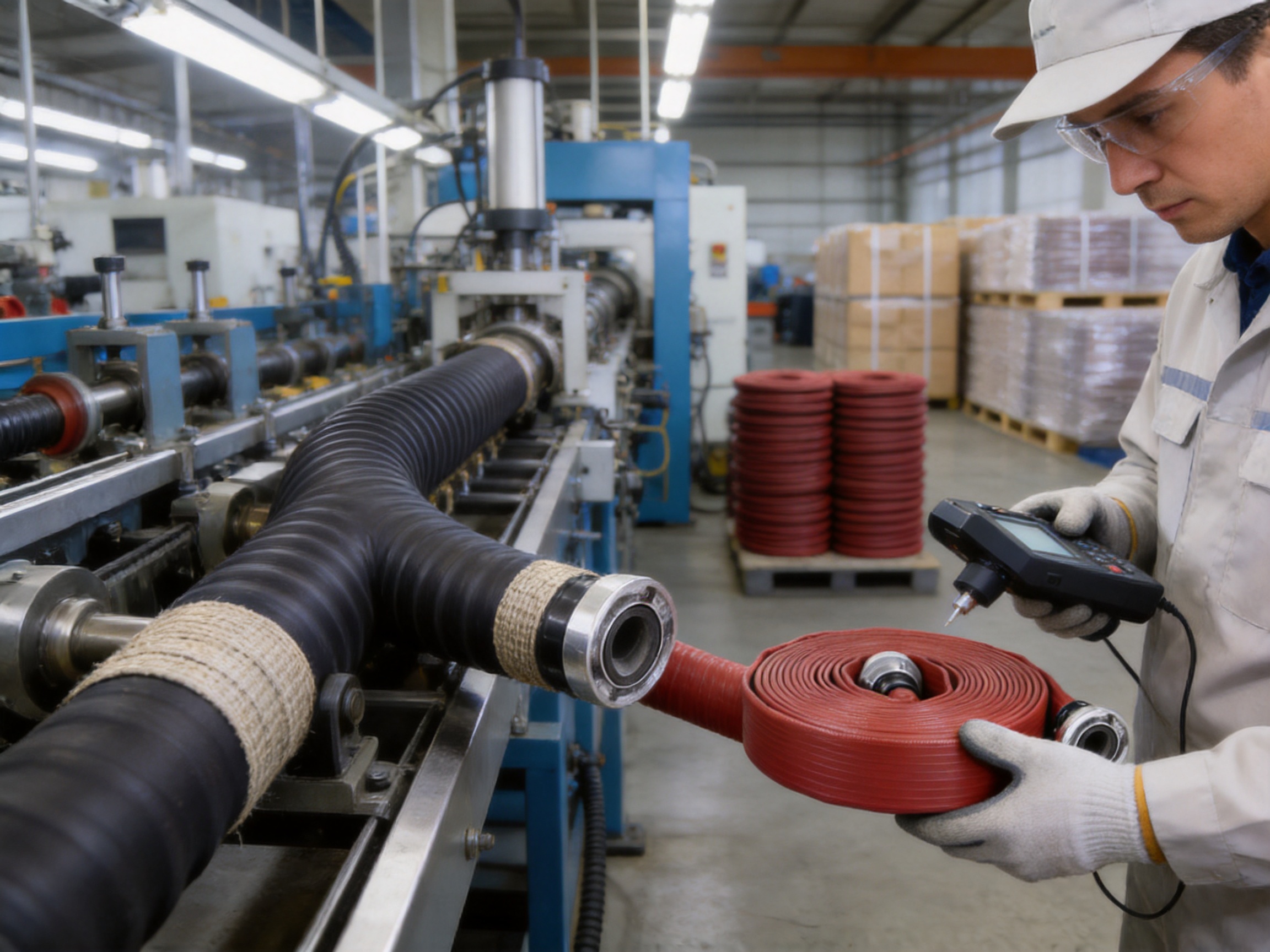
Reliable water delivery depends on more than pressure capacity alone. A supply hose must remain flexible during deployment, resist abrasion during repeated handling, tolerate changing outdoor conditions, and maintain dependable performance when exposed to oils, mildew, and other aggressive substances. The nitrile covered supply hose is designed to address these practical requirements through a durable outer cover, a resilient lining, and high-tenacity polyester yarn reinforcement.
Unlike ordinary fabric-covered hoses that may wear rapidly when dragged across rough surfaces, this hose uses a nitrile and thermoplastic rubber blend for both the cover and lining. The result is a supply hose with a strong balance of flexibility, environmental resistance, abrasion protection, and service durability. Its ribbed exterior further reinforces the cover, helping the hose withstand friction during transportation, deployment, storage, and retrieval.
This product is suitable for fire protection, water transfer, construction, agricultural operations, industrial facilities, and other applications requiring a dependable flexible hose. It is available in 50-foot, 75-foot, and 100-foot lengths, allowing users to select a configuration that fits their deployment requirements without unnecessary connections or excess hose.
The hose is manufactured by Taizhou Shenlong Fire Science and Technology Co., Ltd., a Chinese manufacturer with experience in the development, production, sales, and service of lined fire hoses and related products. Since its establishment in 1995, the company has expanded its capabilities across fire protection, construction, water conservancy, and other fields. Its production experience and product development resources support consistent manufacturing for domestic and international customers.
A supply hose is generally used to transport water or other compatible fluids from one point to another. In fire protection, supply hoses may connect pumps, hydrants, water sources, manifolds, and other equipment. In construction, agriculture, and industrial environments, they can be used for general water transfer, site maintenance, cleaning, or temporary fluid delivery.
The nitrile covered supply hose combines several functional layers into one integrated construction. The cover protects the hose from external hazards, the lining provides the fluid-contact surface, and the reinforcement gives the hose the tensile strength required for pressure service. Each component contributes to the hose’s overall performance.
The nitrile and thermoplastic rubber blend is used for the exterior cover and interior lining. Nitrile is widely recognized for its resistance to oil and many petroleum-based substances, while thermoplastic rubber can contribute flexibility and practical handling characteristics. By combining these materials, the hose is designed to provide a useful balance between chemical resistance, durability, and ease of use.
High-tenacity polyester yarn is incorporated as the reinforcement. This reinforcement helps the hose maintain its shape and withstand internal pressure while still allowing it to be rolled, transported, and deployed. Polyester yarn is also suitable for flexible hose construction because it provides strength without making the product unnecessarily rigid or difficult to handle.
The exterior ribs are another important design feature. A smooth cover can be vulnerable to concentrated wear when dragged over concrete, gravel, metal edges, or other abrasive surfaces. Ribs can help distribute contact points and protect the main cover from direct, continuous friction. They also give the hose a distinctive texture that can improve handling and visual inspection.
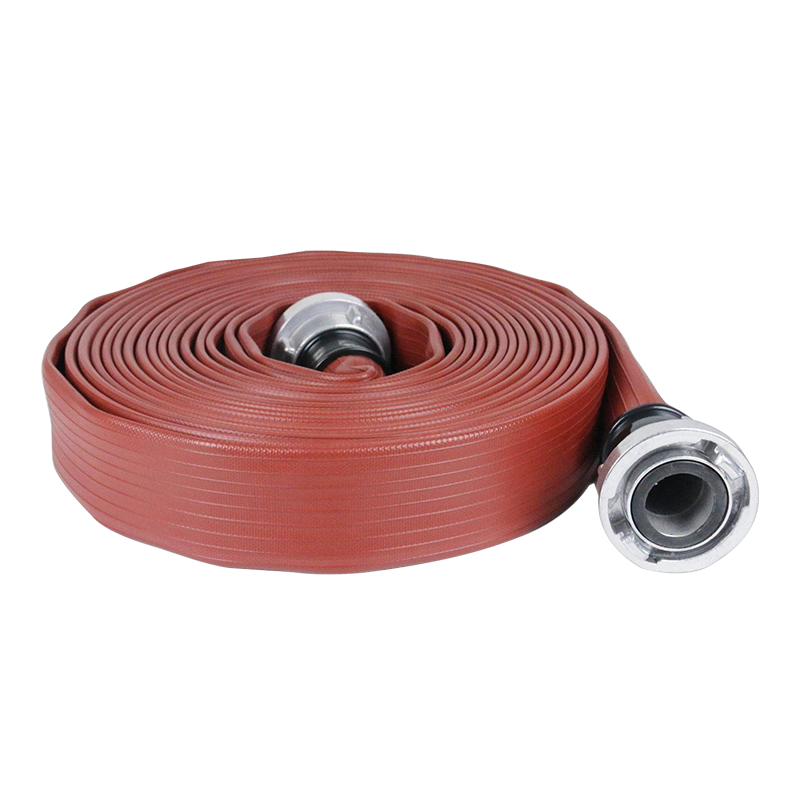
Nitrile Covered Hose Supply Hose
The cover is the first line of defense against external damage. During normal operation, a supply hose may encounter sunlight, rain, dust, mud, oil residues, machinery, rough flooring, and repeated bending. The nitrile and thermoplastic rubber blend is designed to withstand many of these environmental and mechanical challenges.
Resistance to ultraviolet exposure helps the hose remain suitable for outdoor storage and operation. Continuous sunlight can accelerate the aging of some polymer materials, causing them to become brittle, faded, or cracked. A cover designed to resist UV-related deterioration can help extend useful service life when the hose is properly stored and maintained.
Resistance to ozone is also important. Ozone can be present in the atmosphere and may contribute to surface cracking in certain elastomeric materials. The stated ozone resistance of this hose supports use in varied environments, including locations where hoses are frequently stored outdoors or exposed to changing weather conditions.
The lining forms the internal passage through which water or another compatible medium flows. A suitable lining should remain continuous, smooth enough for efficient flow, and resistant to the intended operating environment. The nitrile-based lining is designed to resist oil, mildew, and petrochemicals, giving the hose broader application potential than a basic water-only hose.
The lining also contributes to the hose’s ability to remain functional over repeated use. Internal deterioration can affect flow, create leakage, or contaminate the transported fluid. A durable lining helps reduce these risks when the hose is used within its intended temperature, pressure, and chemical compatibility limits.
The reinforcement layer is essential to the hose’s pressure performance. High-tenacity polyester yarn provides a strong textile structure that supports the cover and lining. It helps the hose resist stretching and supports dimensional stability during pressurization.
Textile reinforcement also makes the hose more practical than a completely rigid pipe. The hose can be coiled, transported, and positioned around obstacles. This flexibility is especially valuable for emergency response teams, temporary water-transfer systems, construction sites, and agricultural operations where fixed piping may not be convenient.
The ribbed exterior is designed to improve abrasion resistance. Dragging a hose is often unavoidable, particularly during emergency deployment or when the hose must be moved across a large worksite. Ribs add protective material to the exterior and help the cover withstand contact with rough surfaces.
The rib pattern can also assist users during inspection. Cuts, flattened areas, deep abrasion, or unusual deformation may be easier to identify when the external surface has a consistent molded structure. Regular visual inspection remains important, but a clearly defined outer profile can support practical maintenance routines.
One of the most important advantages of this design is its focus on abrasion resistance. Conventional smooth fabric-covered hoses may be adequate in low-wear applications, but repeated dragging can quickly damage their outer surfaces. Once the cover is worn, the reinforcement may become exposed, increasing the risk of further deterioration.
The ribbed nitrile-based cover is intended to provide stronger protection against abrasion. This is especially useful in fire service environments, where hoses are deployed quickly and may be pulled over pavement, stairs, thresholds, or debris. It is also beneficial in construction and industrial areas where the ground surface is rarely perfectly smooth.
Many water hoses are designed primarily for clean water and may not be suitable for environments where oil, fuel, lubricants, or petrochemical residues are present. The nitrile cover and lining provide resistance to oil and petrochemicals, making the hose more adaptable in workshops, industrial plants, transport facilities, fuel-handling areas, and emergency response applications.
This resistance does not mean that every chemical is automatically compatible with the hose. Users should still evaluate the specific substance, concentration, temperature, and contact duration before selecting the product for chemical service. Nevertheless, the nitrile construction provides a meaningful advantage over general-purpose hoses with limited oil resistance.
Mildew can be a concern when hoses are stored damp, used in humid environments, or exposed to soil and organic residues. Mildew growth can produce unpleasant odors, affect the appearance of the cover, and contribute to material degradation over time. Resistance to mildew helps the hose remain more suitable for humid conditions and repeated water-related use.
Although the hose is designed with mildew resistance, proper drying and storage remain important. A hose should be drained, cleaned when necessary, and stored in a ventilated area rather than being sealed while wet. Good storage practices work together with material resistance to support longer service life.
UV, ozone, aging, and corrosion resistance support outdoor use. Fire equipment, agricultural systems, and construction equipment are often exposed to sunlight and changing weather. A hose that can tolerate these conditions offers greater flexibility in storage and deployment planning.
Weather resistance is particularly valuable for organizations that maintain equipment at multiple locations. The hose can be used in outdoor fire cabinets, service vehicles, temporary water-transfer stations, and field operations, provided that it is inspected and stored according to the application requirements.
The product is described as maintenance free, which indicates that the durable cover and lining are intended to reduce routine maintenance demands. In practical terms, users can benefit from a hose that requires less frequent repair and less intensive care than a more vulnerable alternative.
However, “maintenance free” should not be interpreted as “inspection free.” Every hose used for pressure service should be checked before and after use. Users should examine the cover for cuts, deep abrasion, burns, chemical damage, exposed reinforcement, leakage, or unusual swelling. Couplings should also be checked for secure attachment and visible damage.
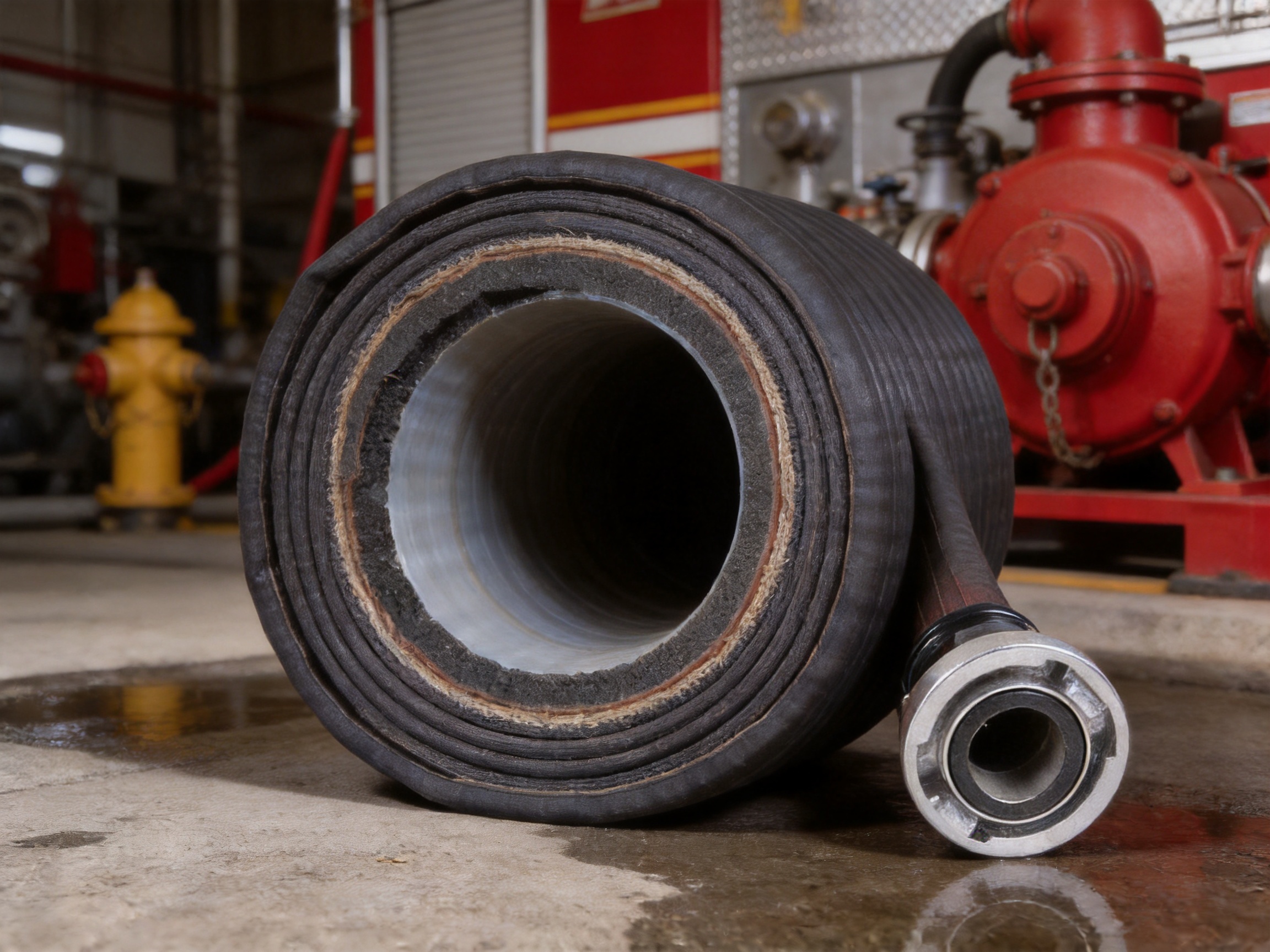
The stated operating temperature range is from -30°C to 70°C. This range allows the hose to be used in cold outdoor conditions and in warm industrial or field environments. The lower limit is relevant to winter firefighting, cold storage areas, and northern outdoor operations, while the upper limit supports use during summer conditions and in warm workspaces.
Temperature affects the behavior of polymer materials. At low temperatures, some hoses become stiff and less flexible. At high temperatures, materials may soften or age more rapidly. The specified range gives users a practical reference for selecting the hose and planning storage and operation.
Users should avoid exposing the hose to temperatures outside the stated range. Hot surfaces, steam, heated fluids, direct contact with flames, and prolonged storage beside high-temperature equipment may create conditions beyond normal service expectations. Likewise, a frozen hose should be handled carefully and should not be sharply bent or struck while the material is rigid.
Fire protection is a primary application for a durable supply hose. The hose can be incorporated into water delivery systems serving fire hydrants, pumps, standpipe connections, manifolds, and other compatible fire equipment. Its abrasion-resistant cover is useful during rapid deployment, while its resistance to UV, ozone, oil, and mildew supports storage in varied environments.
Fire departments and industrial emergency teams may value the available 50-foot, 75-foot, and 100-foot lengths. Shorter lengths can be useful for compact equipment arrangements or confined areas. Longer lengths can reduce the number of connections required when water must be transferred across a larger distance.
Actual fire-service suitability depends on the complete system, including working pressure, test pressure, coupling type, connection size, fluid compatibility, and applicable local regulations. The hose should always be selected and installed according to the requirements of the specific fire protection system.
Construction sites often require temporary water delivery for dust suppression, concrete work, cleaning, equipment cooling, and general site services. Hoses may be moved frequently and exposed to rough surfaces, metal fragments, soil, and construction materials.
The ribbed exterior and flexible textile reinforcement make this hose suitable for applications where portability and wear resistance are important. Its resistance to oil and petrochemicals can also be useful around construction machinery, where contact with lubricants or fuel residues may occur.
Agricultural operations require hoses that can tolerate outdoor exposure, mud, moisture, and repeated handling. The hose may be used for water transfer, equipment cleaning, livestock-area maintenance, irrigation support, and other general agricultural tasks.
Resistance to UV, mildew, and aging is valuable in agricultural environments because hoses are often stored outdoors or used in humid conditions. The available length options can support both compact farm installations and longer-distance water delivery.
Industrial users may need flexible hoses for washdown, utility water, emergency response, equipment cleaning, and temporary fluid transfer. Industrial floors can contain oils, metal edges, and abrasive debris, making cover durability especially important.
The nitrile construction gives this supply hose an advantage in areas where contact with oil or petroleum residues is possible. Before use with any industrial fluid, the facility should confirm chemical compatibility and verify the required pressure and temperature conditions.
Water conservancy projects and municipal operations may require temporary, portable, or supplemental water-transfer equipment. A flexible supply hose can be easier to install than rigid piping in locations where terrain, access, or project duration makes permanent infrastructure impractical.
The manufacturer’s experience serving water conservancy and related industries provides a foundation for understanding the practical requirements of these applications. Product selection should still be based on flow requirements, connection standards, pressure conditions, and environmental exposure.
The performance of a hose depends not only on its material formula but also on how consistently the product is manufactured. In lined hose production, the cover, lining, and reinforcement must be combined with controlled dimensions and reliable bonding or integration. Variations in thickness, yarn placement, curing, or surface formation can affect service performance.
Taizhou Shenlong Fire Science and Technology Co., Ltd. has operated in the fire hose field since 1995. The company integrates research and development, production, sales, and service. This integrated structure allows product requirements from customers and end users to inform product development and manufacturing decisions.
The company’s main product range includes lined fire hoses made from various materials. Its broader production experience also includes rubber, PVC, polyurethane, and double-sided tape products made according to customer requirements. This material diversity can support a wider understanding of polymer processing, textile reinforcement, flexible product construction, and application-specific design.
Manufacturing capability is particularly important for a nitrile covered hose because the product must balance multiple characteristics. The cover needs to be durable without becoming excessively stiff. The lining must remain consistent for reliable fluid passage. The reinforcement must be integrated evenly so that the hose can resist pressure and repeated bending. The outer ribs must be formed with a stable pattern to provide consistent abrasion protection.
Material selection begins with the intended service conditions. Nitrile is selected for its resistance to oil, petroleum-related substances, and general environmental exposure. Thermoplastic rubber contributes flexibility and practical processing characteristics. Polyester yarn is selected for reinforcement because it provides high tensile performance in a flexible textile form.
Consistent material preparation is important for product uniformity. Polymer components must be handled and blended in a controlled manner so that the finished cover and lining show stable physical characteristics. Reinforcement yarn must also be selected and positioned according to the intended construction.
A lined hose is a multi-component product. Its performance depends on the relationship between the inner lining, reinforcement, and outer cover. During manufacturing, these layers must be formed and integrated so that they work together under pressure and bending.
Improper layer integration can lead to separation, uneven flexibility, localized stress, or premature failure. A professional manufacturing process therefore pays attention to layer alignment, thickness control, surface condition, and the consistency of the finished structure.
The exterior rib design is not merely decorative. It is part of the hose’s wear-protection system. The ribs must be formed consistently along the length of the hose to provide a reliable external profile. Uneven ribs could create localized stress points or inconsistent contact with the ground.
Controlled forming and finishing help ensure that the cover remains uniform. Surface inspection can identify irregularities such as incomplete rib formation, surface contamination, pinholes, or visible defects. These checks are important because the cover is exposed to the greatest amount of external abuse during normal use.
Quality management may include inspection of raw materials, dimensional checks, visual examination, pressure-related testing, and review of finished lengths. The exact testing program depends on the product specification and customer requirements.
A structured quality approach helps reduce variation between production batches. It also supports traceability, customer communication, and continuous improvement. For international buyers, consistent documentation and clear product specifications are particularly useful when integrating hoses into larger equipment packages or distribution programs.
The company cooperates with domestic foreign trade companies and produces products for export to multiple countries. This experience can help the manufacturer understand the importance of packaging, labeling, shipment coordination, product consistency, and communication across different markets.
Customer requirements may vary by application, connection system, length, material preference, or packaging method. A manufacturer with research, production, sales, and service functions can coordinate these requirements more efficiently than a supplier focused only on trading finished goods.
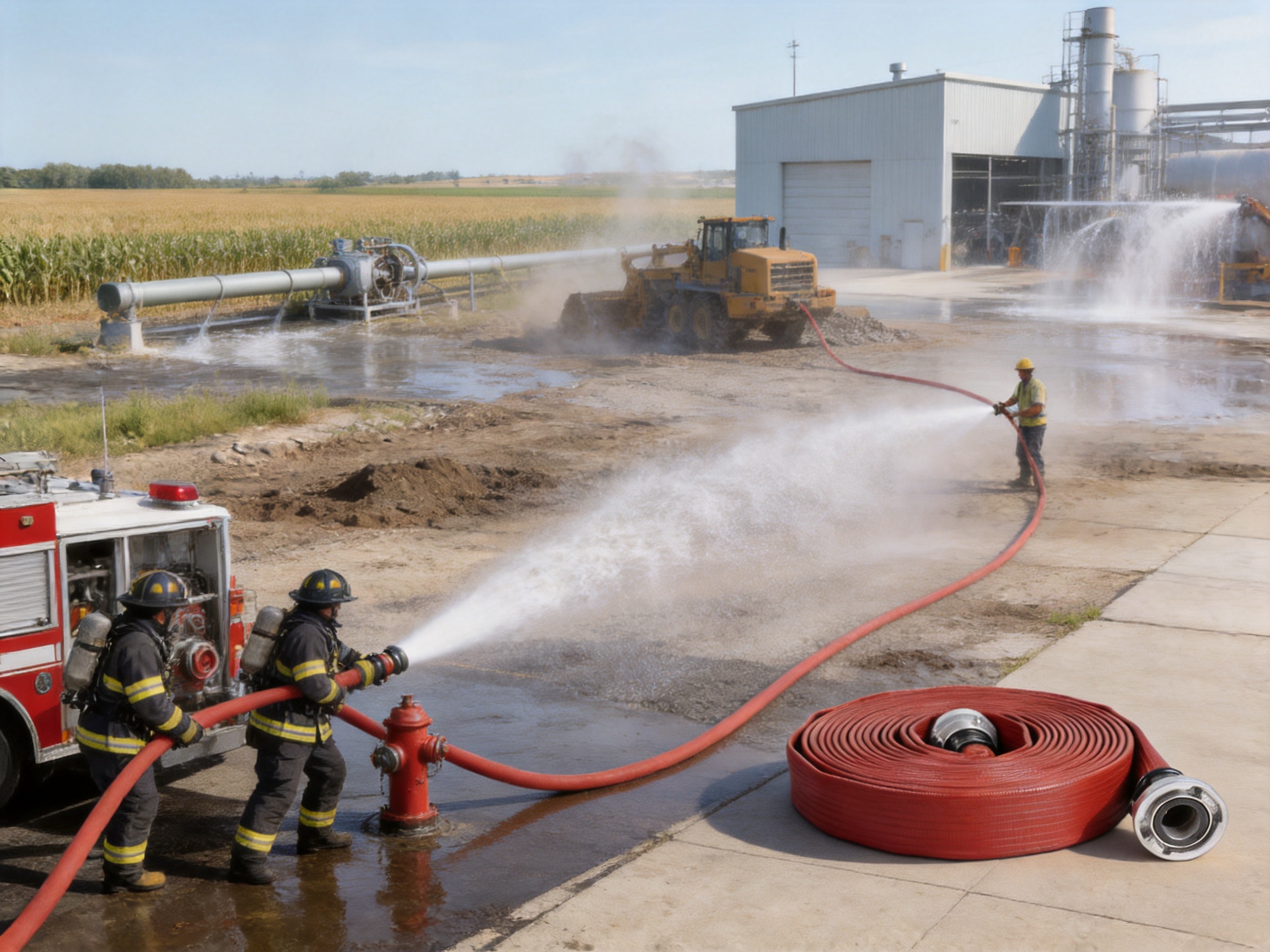
Wholesale buyers need products that are easy to explain, practical to stock, and suitable for several customer groups. The nitrile covered supply hose offers a clear product proposition: a durable, oil-resistant, weather-resistant, ribbed supply hose available in multiple standard lengths.
The product can be marketed to fire equipment distributors, industrial safety suppliers, agricultural dealers, construction-equipment suppliers, municipal contractors, and general hose wholesalers. Its broad application range can help distributors serve different industries without maintaining completely separate product lines for every environment.
The three available lengths provide useful inventory flexibility. A 50-foot hose can suit compact systems and shorter runs. A 75-foot hose can provide an intermediate option for users who need additional reach without selecting the longest configuration. A 100-foot hose can support larger work areas and reduce the number of hose connections in longer water-transfer routes.
Distributors should communicate that length selection is only one part of product selection. Buyers should also confirm nominal diameter, coupling configuration, pressure requirements, working temperature, fluid type, and local standards. Clear product information helps prevent improper application and supports customer satisfaction.
Before installation, inspect the complete hose for visible damage. Check the cover, ends, coupling areas, and any attached fittings. Look for cuts, cracks, abrasion, swelling, exposed reinforcement, flattened sections, or signs of chemical attack.
Confirm that the hose is suitable for the intended pressure and temperature. Make sure the transported fluid is compatible with the nitrile lining. Verify that the couplings match the connected equipment and that gaskets or sealing components are in suitable condition.
Deploy the hose without sharp twists or unnecessary kinks. Avoid dragging it across sharp edges whenever possible, even though the ribbed cover is designed for improved abrasion resistance. Use a suitable route that limits crushing by vehicles, machinery, doors, or heavy equipment.
When connecting multiple hose lengths, ensure that each coupling is properly engaged and aligned. Connections should not be forced into an angle that places excessive side load on the coupling. If the hose is used in a high-flow or high-pressure system, secure the layout to reduce sudden movement when the line is charged.
After use, relieve pressure before disconnecting the hose. Drain remaining water or fluid, especially when freezing conditions are possible. Rinse the hose if it has been exposed to mud, oil, chemicals, or other contaminants that could affect the cover or lining.
Allow the hose to dry before long-term storage. Coil it without tight bends or sharp folds. Store it away from direct sunlight, heat sources, sharp objects, and substances that could damage the polymer materials. Although the product is resistant to many environmental factors, appropriate storage can further extend its useful life.
When compared with a basic textile-covered hose, the nitrile covered design offers stronger protection against abrasion, oil, mildew, UV exposure, and ozone. A basic textile cover may be lighter or less expensive in some situations, but it may not provide the same level of environmental resistance or surface protection.
When compared with a rigid pipe, the supply hose provides greater portability and easier deployment. Rigid pipe can offer excellent dimensional stability, but it requires more planning, supports, transport effort, and permanent installation work. A flexible hose is more practical for temporary systems, emergency response, and changing site layouts.
When compared with a smooth rubber hose, the ribbed exterior offers an additional focus on abrasion resistance. The ribs may make the hose slightly different in handling characteristics, but they provide a protective outer structure suited to dragging and repeated field use.
When compared with a hose designed only for clean water, the nitrile construction provides broader resistance to oil and petrochemical exposure. This makes it more suitable for mixed industrial environments, although users should still confirm chemical compatibility before handling specialized fluids.
| Selection Factor | Why It Matters | Recommended Consideration |
|---|---|---|
| Application | Different industries impose different mechanical and environmental demands. | Identify whether the hose will be used for firefighting, construction, agriculture, industrial work, or general water transfer. |
| Length | Length affects coverage, handling, storage, and the number of connections. | Select 50 feet, 75 feet, or 100 feet according to the required working distance. |
| Fluid | The lining must be compatible with the transported medium. | Confirm compatibility with water, oil residues, petrochemicals, or other fluids before use. |
| Temperature | Extreme temperatures can affect flexibility and material durability. | Keep operation within the stated range of -30°C to 70°C. |
| Surface Conditions | Rough surfaces can accelerate cover wear. | Use the ribbed cover advantage while still avoiding sharp edges and excessive dragging. |
| Storage Environment | Storage affects long-term condition and readiness. | Drain, dry, coil, and store away from heat, sharp objects, and unnecessary sunlight. |
| Connections | Incorrect couplings can cause leakage or unsafe movement. | Confirm coupling size, type, gasket condition, and connection compatibility. |
| Compliance | Fire and industrial installations may be governed by local rules. | Review applicable specifications, testing requirements, and authority approvals. |
Purchase price is only one part of the total cost of a hose. A product that wears quickly may require frequent replacement, emergency repairs, additional labor, and unplanned downtime. A durable hose can offer better long-term value by reducing these interruptions.
The nitrile covered supply hose is designed to support long service through its abrasion-resistant ribs, environmental resistance, oil resistance, mildew resistance, and robust polyester reinforcement. These characteristics can reduce the likelihood of premature deterioration when the hose is used and stored properly.
Reduced maintenance requirements can also simplify equipment management. Fire departments, industrial plants, farms, and contractors may operate many hoses across multiple locations. A hose that is easy to inspect, clean, coil, and store can reduce the workload associated with routine equipment care.
Long-term value also comes from application flexibility. A hose that serves fire protection, construction, agricultural, and industrial needs can be transferred between compatible tasks when operational requirements change. This versatility may help users standardize equipment and reduce unnecessary product variety.
Taizhou Shenlong Fire Science and Technology Co., Ltd. was founded in 1995 and operates as an enterprise combining research and development, production, sales, and service. Its main products include lined fire hoses made from various materials, while its broader manufacturing activities include rubber, PVC, polyurethane, and double-sided tape products produced according to customer requirements.
The company’s products are used in fire protection, construction, water conservancy, and other industries. Its products are sold across more than 20 provinces, cities, and autonomous regions in China, and its cooperation with four domestic foreign trade companies supports export production for international markets.
This background is relevant to buyers seeking more than a single isolated product. A supplier with long-term experience in fire hose manufacturing can provide product knowledge, application communication, order coordination, and after-sales support. These capabilities are especially important for wholesale customers, project contractors, and distributors managing repeated procurement.
The company’s experience with multiple materials may also support customized product discussions. Depending on customer requirements, different polymer types, reinforcement structures, lengths, coupling arrangements, packaging approaches, or product categories may be considered. Any customized configuration should be confirmed through technical communication before production.
Reliable hose performance requires cooperation between the manufacturer and the user. The manufacturer must provide consistent materials, stable production, suitable inspection, and clear product information. The user must select the correct specification, follow installation practices, inspect the product, and avoid conditions outside the intended service range.
Users should never assume that a hose is suitable for every pressure, chemical, or temperature condition simply because it is labeled as industrial or fire related. The correct selection should be based on the complete application. Technical data, coupling specifications, pressure ratings, and local requirements should be reviewed before the hose is placed into service.
In high-consequence applications such as firefighting, the hose should be included in a documented inspection and testing program. Personnel should be trained in deployment, pressure control, coupling operation, storage, and withdrawal from service. A visibly damaged hose should be removed from service until it has been evaluated.
It is a flexible supply hose using a nitrile and thermoplastic rubber blend for the cover and lining, with high-tenacity polyester yarn reinforcement. The design is intended to provide durability, flexibility, abrasion resistance, and resistance to UV, ozone, aging, oil, mildew, petrochemicals, and corrosion.
The product is available in 50-foot, 75-foot, and 100-foot lengths. The appropriate length depends on the required operating distance, storage capacity, handling needs, and the number of connections acceptable in the system.
The ribs provide additional protection for the outer cover and are designed to improve abrasion resistance. This is useful when the hose is dragged over rough surfaces or handled repeatedly in demanding field conditions.
The nitrile cover and lining are resistant to oil and petrochemicals. However, users should confirm the exact chemical compatibility, concentration, temperature, and duration of exposure before using the hose with a specific substance.
Yes. The hose is designed to resist UV exposure, ozone, aging, corrosion, mildew, and other environmental conditions. Proper storage is still recommended, particularly for long periods when the hose is not in use.
The stated temperature range is -30°C to 70°C. Operation outside this range may affect flexibility, material condition, or service performance and should be avoided unless specifically approved by the manufacturer.
The product is described as maintenance free because its durable materials are intended to reduce maintenance requirements. Nevertheless, users should inspect, clean, drain, dry, and store the hose properly. Pressure-service equipment should never be used without regular inspection.
The hose is designed as a supply hose and may be used in compatible fire protection applications. Before installation, users must verify pressure requirements, coupling type, size, local fire regulations, and the complete system specification.
The hose uses high-tenacity polyester yarn reinforcement. This textile reinforcement supports pressure performance while allowing the hose to remain flexible enough for coiling, transport, and deployment.
Drain the hose, clean it when needed, allow it to dry, and coil it without sharp bends. Store it in a ventilated location away from direct heat, sharp objects, damaging chemicals, and unnecessary prolonged sunlight.
The product is manufactured by Taizhou Shenlong Fire Science and Technology Co., Ltd., a company founded in 1995 with activities covering research and development, production, sales, and service for lined fire hoses and related products.
The company cooperates with domestic foreign trade companies and produces products for export to multiple countries. Export requirements, packaging, documentation, specifications, and order details should be confirmed directly during the purchasing process.
The nitrile covered supply hose is designed for users who need more than basic water transfer. Its nitrile and thermoplastic rubber cover and lining provide resistance to oil, petrochemicals, mildew, UV exposure, ozone, aging, and corrosion. Its ribbed exterior improves abrasion protection, while high-tenacity polyester yarn reinforcement provides the strength and flexibility needed for practical field use.
Available in 50-foot, 75-foot, and 100-foot lengths, the hose can support fire protection, construction, agricultural, industrial, water conservancy, and general utility applications. Its temperature range of -30°C to 70°C provides flexibility for cold and warm operating environments.
The product is supported by a manufacturer with experience dating back to 1995 and capabilities covering research and development, production, sales, service, and export-oriented cooperation. For buyers seeking a durable, versatile, and environmentally resistant supply hose, this construction offers a practical alternative to basic textile-covered or water-only hose products.
As with any pressure hose, correct selection and responsible use remain essential. Users should confirm application compatibility, pressure requirements, connection details, temperature conditions, inspection procedures, and applicable regulations before putting the hose into service.
1. Manufacturer-provided product information for nitrile covered supply hose.
2. Manufacturer-provided company profile and product range information.
3. General principles of flexible hose construction, textile reinforcement, and polymer cover design.
4. General guidance for fire hose inspection, handling, storage, and pressure-service safety.
5. General technical references concerning nitrile rubber resistance to oils and petroleum-based substances.
6. General technical references concerning thermoplastic rubber flexibility and polymer processing.
7. General technical references concerning polyester yarn reinforcement in flexible hose structures.
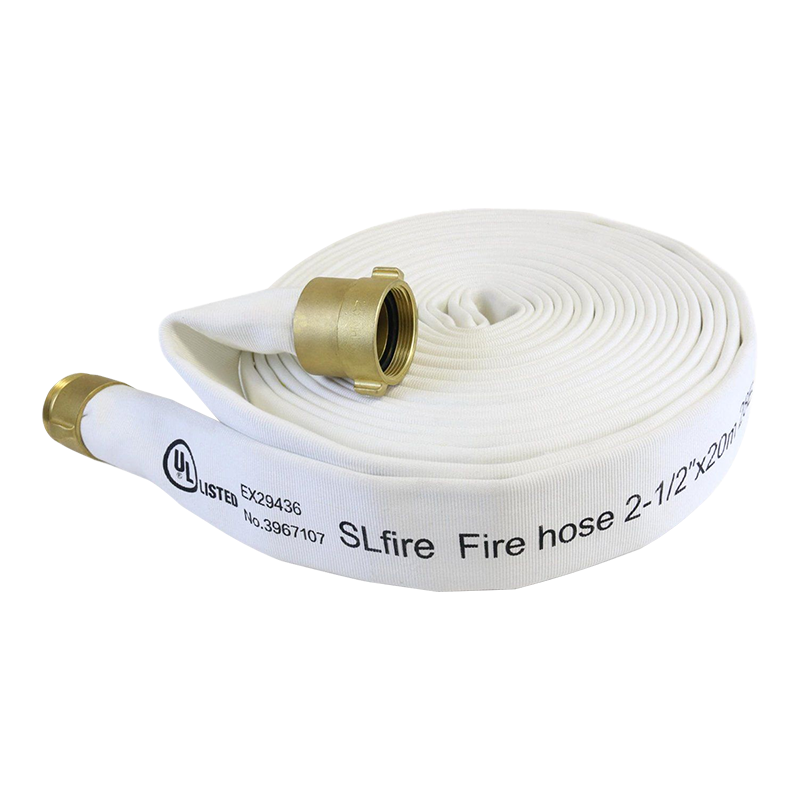
Single jacket, EPDM rubber liner Features • 100% high tenacity polyester jacket, high-grade EPDM rub...
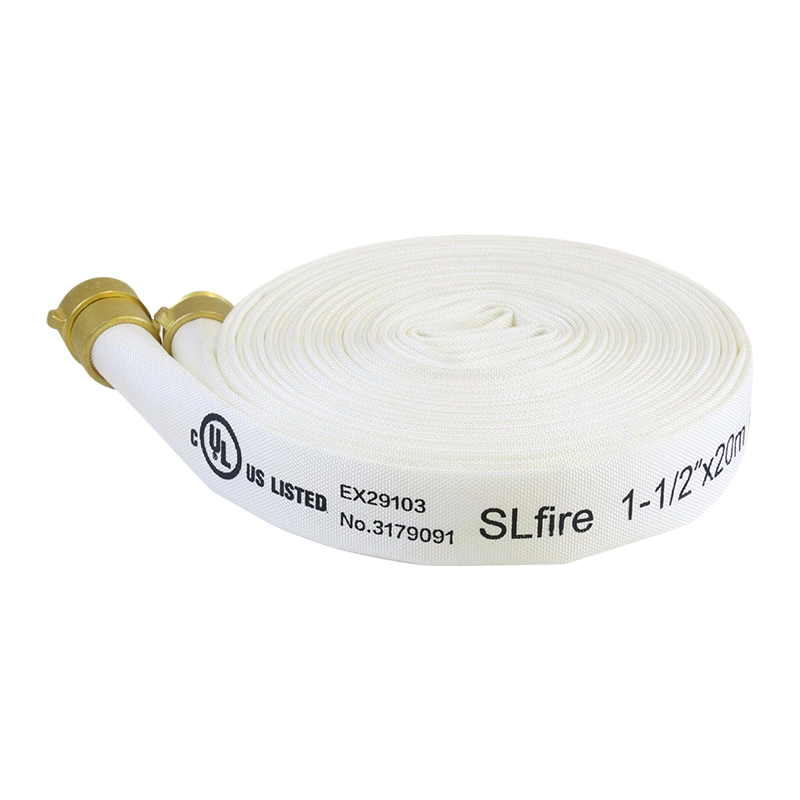
Single jacket, TPU liner •High-tenacity polyester yarn, circular woven in twill weave/plain weave,T ...
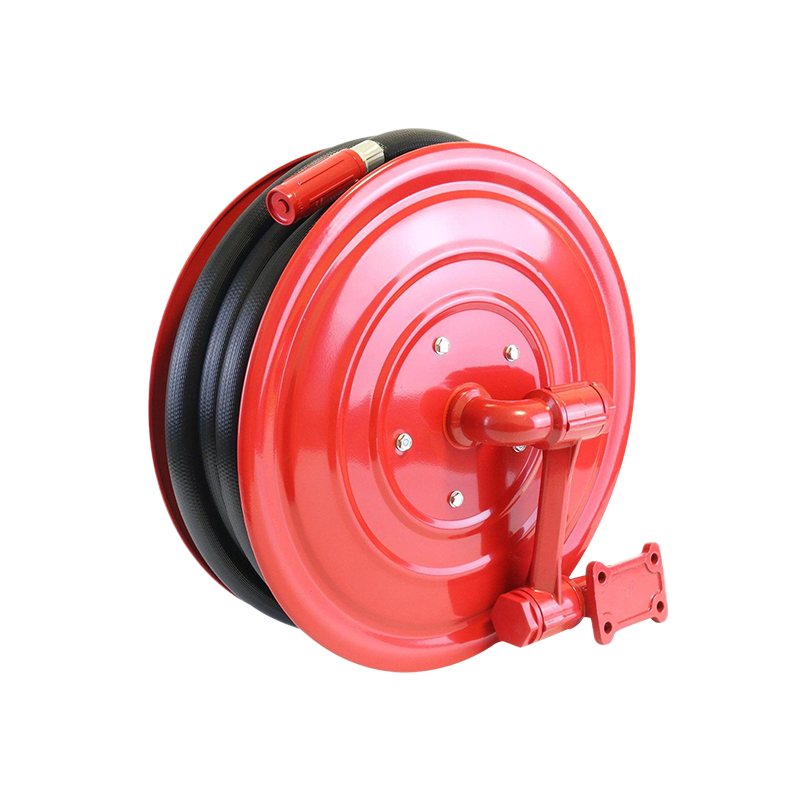
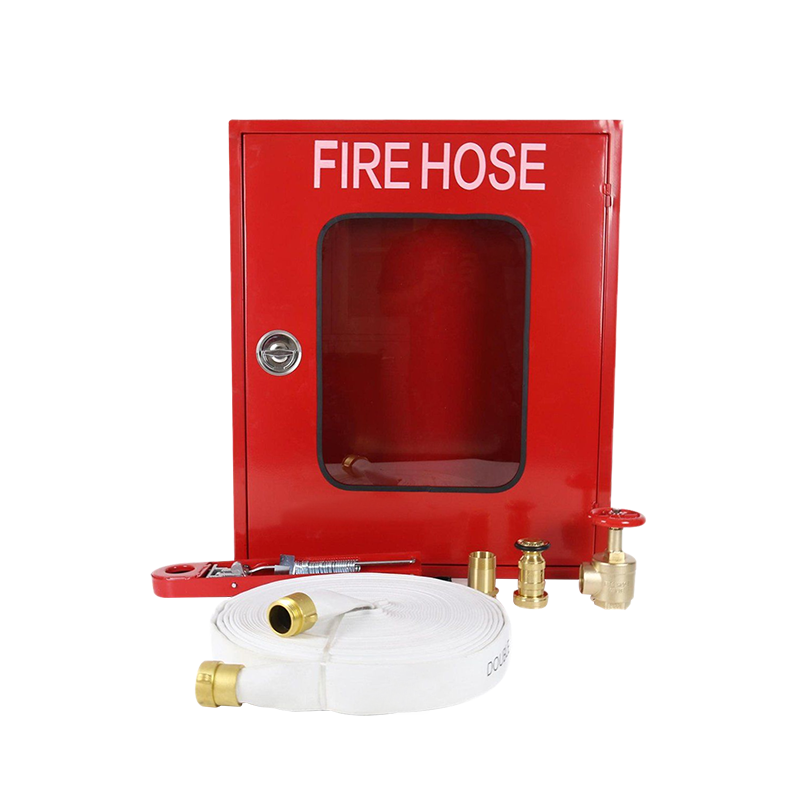
Fire cabinets are designed to accommodate fire hose,valve and other firefighting equipment. Type 201...
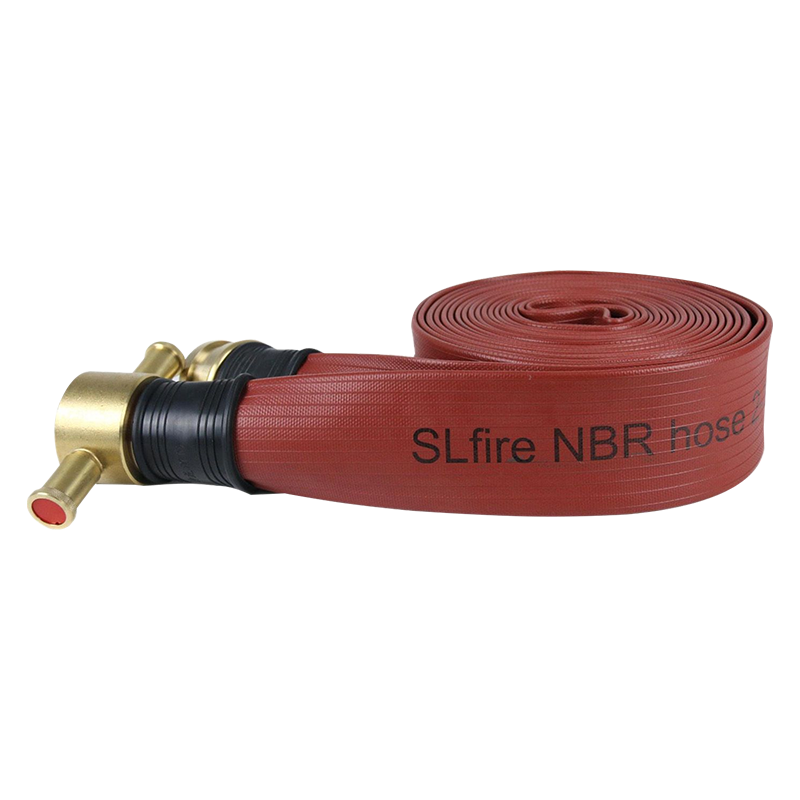
Nitrile covered hose •Nitrile/TPR blend as cover and lining, with 100% high-tenacity polyester yarn ...
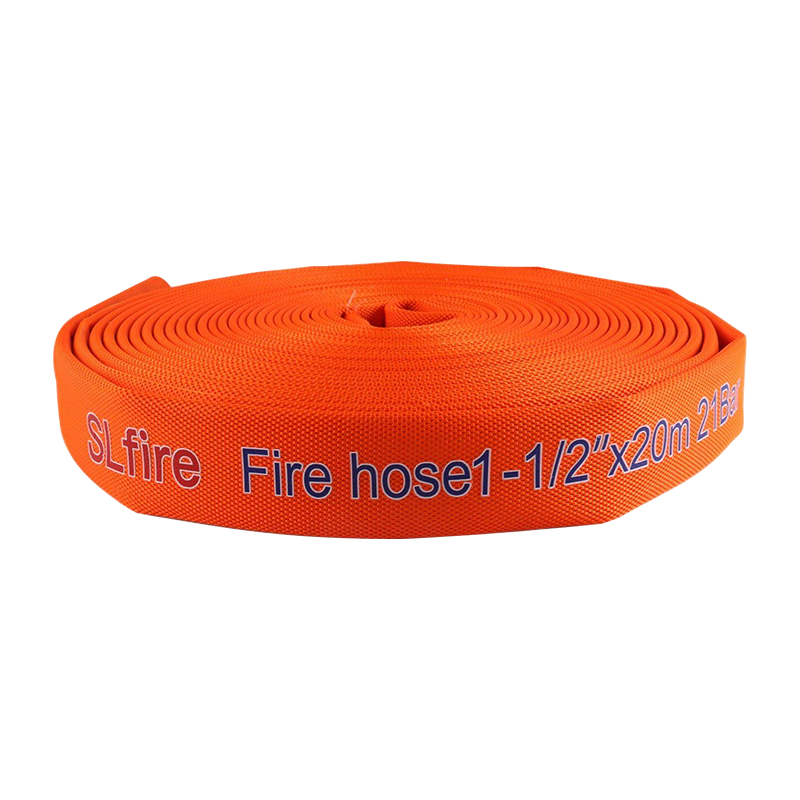
Single jacket, TPU liner •High-tenacity polyester yarn, circular woven in twill weave, TPU lining, f...
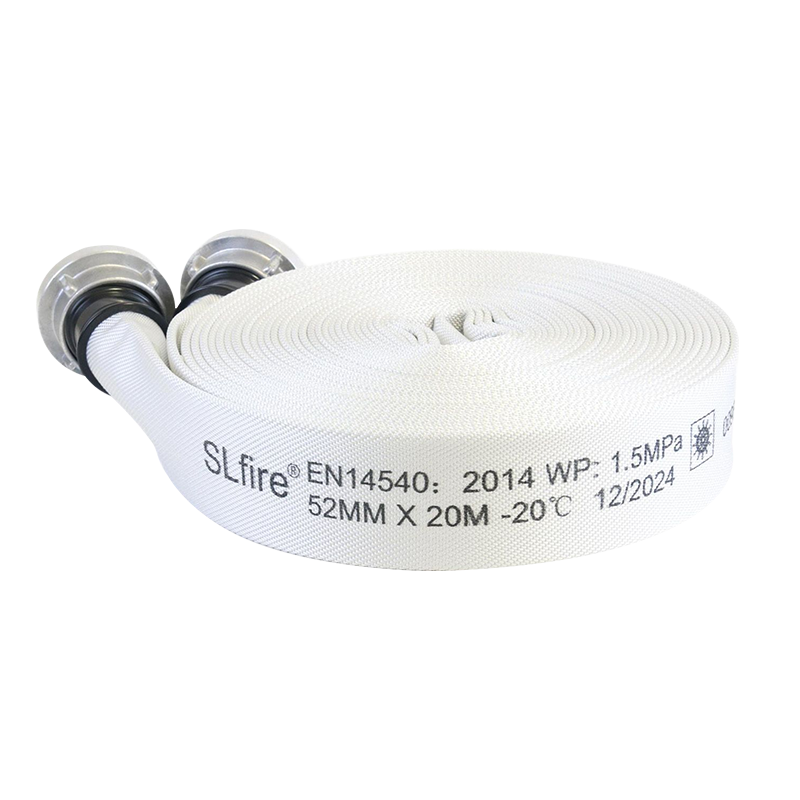
Marine hose Single jacket, PVC liner •100% high tenacity polyester yarn, circular woven in twill wea...
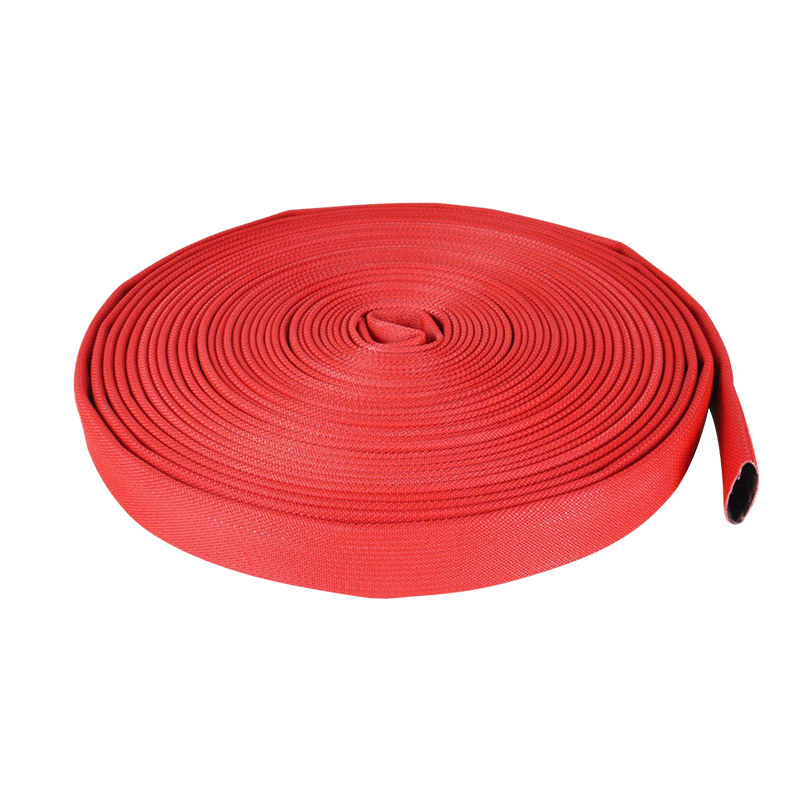
Marine hose Single jacket, PVC liner, PU coated •100% high tenacity polyester yarn,c ircular woven i...
 Call Us
+86 159-5116-9511
Need Support
Head Office
No.58, Kechuang Road, Sixiang Street Medicine Gaoxin District Taizhou City, Jiangsu Province

At a structure fire, the first line off the truck is the one that does the hardest work. Pulled around obstacles, dragged across gravel, charged with high-pressure water, and shut off at the nozzle d...
Copyright © Taizhou Shenlong Fire Science and Technology Co., Ltd. All Rights Reserved.
 Fire Hose Manufacturers, Fire Hydrant Hose Factory