

 English
 русский
 Español
 Deutsch
 عربى
عربى Français
 Português
Don't hesitate to send a message

Single jacket, EPDM rubber liner Features • 100% high tenacity polyester jacket, high-grade EPDM rub...
Content
Nitrile Covered Hose Attack Hose
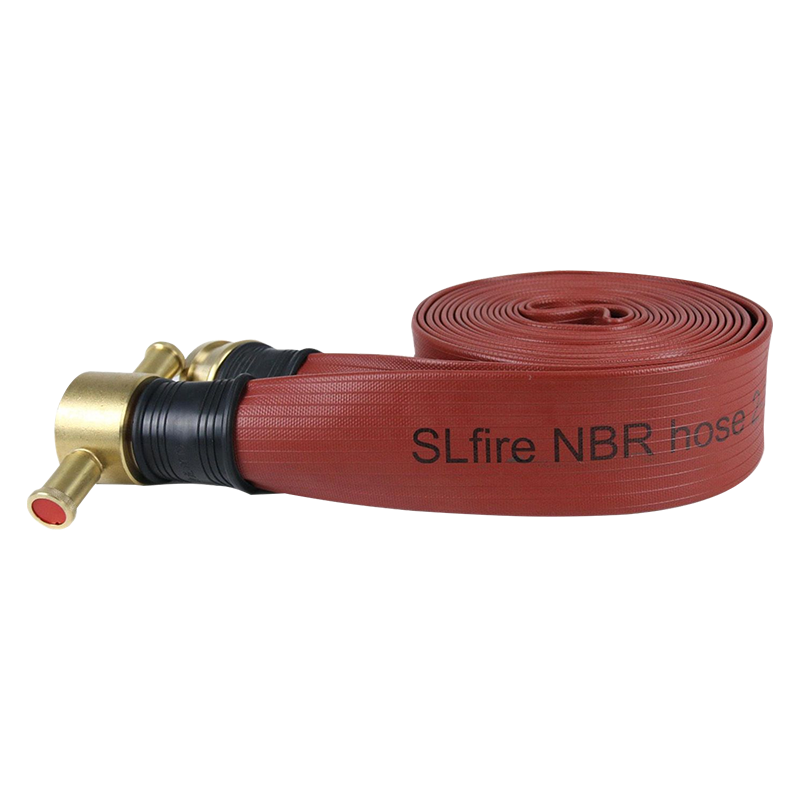
Firefighting operations depend on equipment that performs reliably under pressure, heat, abrasion, chemical exposure, and repeated handling. Among the most important components in a fire-response system is the attack hose. It must deliver water quickly, remain flexible enough for deployment, resist damage while being dragged across difficult surfaces, and continue working after repeated use. The nitrile covered attack hose is designed to meet these demands through a durable nitrile/thermoplastic rubber blend, high-tenacity polyester reinforcement, and a ribbed exterior cover.
This hose is developed for professional firefighting, industrial emergency response, construction sites, agricultural facilities, municipal services, and other locations where dependable water delivery is essential. Its construction combines a resilient inner lining with a protective outer surface. The result is a hose that offers a practical balance of pressure capability, flexibility, abrasion resistance, chemical resistance, and low-maintenance operation.
Unlike basic textile fire hoses that may be more vulnerable to external wear, the nitrile covered design provides a reinforced working surface. Exterior ribs help reduce direct friction when the hose is pulled over concrete, asphalt, gravel, metal edges, and other rough materials. At the same time, the nitrile-based material helps protect the hose from oil, fuels, petrochemicals, ozone, mildew, corrosion-related contamination, and punctures.
Taizhou Shenlong Fire Science and Technology Co., Ltd. manufactures this type of fire hose as part of a wider product range serving fire protection, construction, water conservancy, and related industries. With experience in research and development, production, sales, and service, the company is positioned to support both standard requirements and customized export orders.
An attack hose is not simply a flexible tube for transporting water. It is a pressure-bearing safety product used in situations where failure can delay extinguishing operations, expose personnel to danger, and increase property damage. Firefighters must be able to connect, charge, move, and control the hose quickly. The hose must also tolerate the physical forces created by water pressure, movement, bending, dragging, coupling, and storage.
During a fire response, a hose may be deployed across a wide range of surfaces. It can pass over floors, stairways, roads, building entrances, industrial platforms, and outdoor ground. Sharp debris, rough concrete, metal corners, glass fragments, and other hazards may come into contact with the outer cover. A hose with insufficient abrasion resistance can suffer cuts, scuffing, or premature wear, reducing its service life and creating a potential failure point.
Firefighting hoses are also exposed to environmental factors. Sunlight and ozone can age certain rubber materials. Oils and fuels may be present at factories, vehicle depots, workshops, warehouses, farms, and transportation facilities. Moisture and poor drying conditions may encourage mildew on unsuitable materials. A well-designed attack hose should therefore provide more than pressure resistance alone.
The nitrile covered attack hose addresses these challenges with a cover and lining made from a nitrile/TPR blend. Nitrile is known for its resistance to oils, fuels, and many petrochemical substances, while thermoplastic rubber can contribute to flexibility, toughness, and processing efficiency. The reinforcement is made from 100% high-tenacity polyester yarn, which provides the strength needed for pressure service and repeated handling.
The hose uses a nitrile/TPR blend for both the cover and lining. This material combination is selected to provide a strong balance between durability and handling performance. Nitrile contributes resistance to oil, fuel, petrochemicals, and general contamination. TPR, or thermoplastic rubber, contributes flexibility and a resilient surface that can recover from normal bending and handling.
The inner lining is the water-contact layer. It is designed to create a smooth flow path while maintaining the integrity of the hose under working pressure. A suitable lining helps reduce unnecessary flow restriction and supports consistent water delivery. The outer cover protects the reinforcement and lining against the external environment.
Using a compatible material system for the cover and lining can help create a more integrated hose structure. The cover is not merely a decorative layer; it is a functional protective barrier. It must tolerate dragging, contact with contaminants, changes in temperature, bending, and storage conditions. The nitrile-based formulation is therefore an important part of the hose’s overall service performance.
The reinforcement consists of 100% high-tenacity polyester yarn. This textile layer provides the structural strength required for pressurized water transport. Polyester reinforcement is widely used in fire hoses because it offers a useful combination of tensile strength, dimensional stability, flexibility, and resistance to moisture-related degradation.
High-tenacity yarn is designed to withstand the stress created when the hose is filled and pressurized. It also helps the hose maintain its shape during deployment. The reinforcement works together with the inner lining and outer cover, creating a flexible composite structure rather than relying on a single material to perform every function.
The reinforcement is particularly important when the hose is bent around corners or moved while charged with water. A properly manufactured textile structure helps distribute loads across the hose wall. This reduces the concentration of stress in one area and supports more consistent performance throughout the hose length.
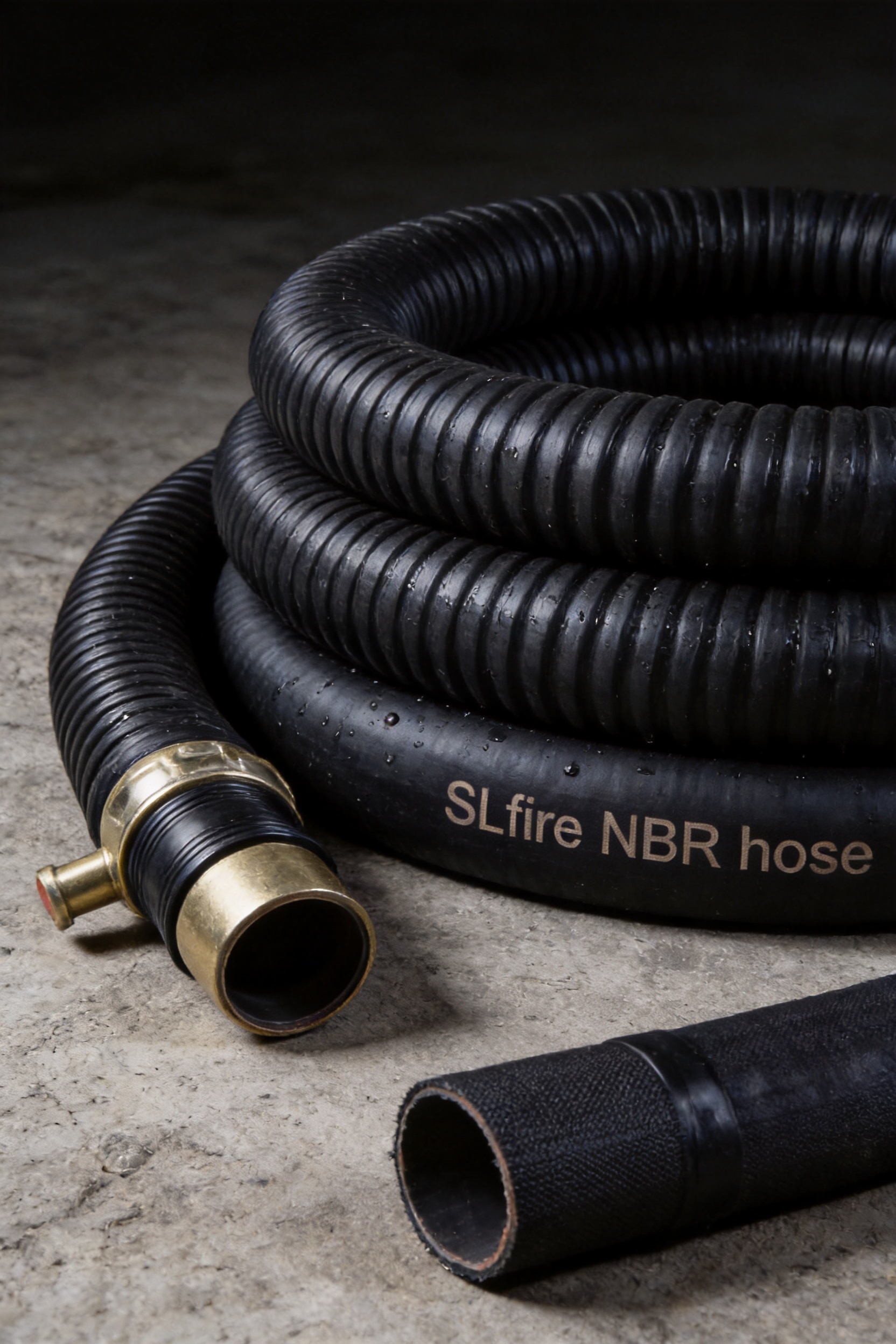
One of the most distinctive features of this attack hose is the ribbed exterior cover. The ribs create raised contact points that help reduce direct friction between the main hose body and the ground. When the hose is dragged, the ribs take much of the initial contact and wear.
This design can be especially valuable in high-abrasion environments. Firefighters often need to reposition hose lines quickly, sometimes while wearing protective equipment and working under limited visibility. A ribbed surface helps the hose withstand repeated movement over rough materials. It can also improve the hose’s visual and tactile identity during handling.
The ribs do not eliminate the need for proper deployment and care, but they provide an additional protective layer compared with a smooth, less-protected cover. By reducing excessive abrasion on the primary cover surface, the ribbed structure can help extend useful service life and reduce the frequency of replacement caused by external wear.
A major advantage of the nitrile covered attack hose is its resistance to abrasion. Conventional smooth textile hoses may experience substantial wear when dragged over coarse surfaces. Over time, repeated abrasion can thin the cover, expose reinforcement, or create weak spots. The ribbed exterior is designed to reduce this type of damage.
The raised ribs act as sacrificial contact areas during normal movement. Because they extend beyond the primary cover surface, they can help keep much of the hose body away from direct, continuous contact with rough ground. This is a practical benefit for municipal fire departments, industrial emergency teams, construction operations, and other users that routinely deploy hoses outside controlled indoor environments.
Enhanced abrasion resistance can also lower the total cost of ownership. A hose that remains serviceable for a longer period may reduce replacement frequency, inventory pressure, and downtime. The financial benefit depends on operating conditions, inspection practices, water quality, pressure, and handling methods, but a more durable outer cover is a meaningful advantage in demanding applications.
Many fire protection environments contain oil or fuel. Examples include garages, fuel storage areas, chemical processing facilities, transport terminals, agricultural machinery sheds, and manufacturing plants. When a hose cover absorbs or reacts poorly to these substances, its flexibility and mechanical properties may deteriorate.
Nitrile is recognized for its resistance to oils, fuels, and petrochemical contamination. The nitrile/TPR blend used in this hose helps provide protection in locations where exposure to such substances is possible. This does not mean the hose should be intentionally immersed in aggressive chemicals or used outside its technical limitations. However, it provides an important level of resilience for real-world emergency conditions.
Chemical resistance also supports easier cleaning after use. When contamination occurs, users can follow their established washing and inspection procedures to remove residues before storage. Proper cleaning remains essential, but a resistant cover is less likely to be compromised by ordinary exposure during firefighting operations.
Hoses may be stored in fire stations, vehicles, warehouses, equipment rooms, or outdoor locations. These environments can expose the product to sunlight, humidity, temperature changes, and ozone. Poor storage conditions can accelerate aging, especially when a hose is not cleaned and dried properly.
The nitrile-based cover is designed to resist ozone and mildew-related deterioration. This helps the hose maintain its physical integrity during storage and service. Nevertheless, users should still keep hoses away from unnecessary sunlight, extreme heat, sharp objects, and standing water. Material resistance improves durability, but it does not replace an effective maintenance program.
Fire hoses may come into contact with sharp edges, fasteners, tools, building materials, and debris. The combination of a tough nitrile/TPR cover and high-tenacity polyester reinforcement helps improve resistance to punctures and external damage.
The hose’s material system also provides resistance to corrosion-related problems. Unlike metal pipes, the flexible hose does not rely on a metallic wall that can rust. Couplings and connected equipment still require appropriate care, but the hose body itself is designed for environments where moisture and contamination are common.
The product is described as maintenance free in normal use. This refers to the hose’s durable construction and its ability to operate without complicated special treatments. Users still need to perform responsible inspection, cleaning, drying, pressure checks, and storage. “Maintenance free” should therefore be understood as low-maintenance performance rather than a reason to ignore safety procedures.
A low-maintenance hose helps simplify fleet management. Fire departments and industrial users can spend less time applying specialized protective products or carrying out complicated repairs. Routine inspection remains straightforward: examine the cover, check couplings, look for cuts or swelling, verify cleanliness, and confirm that the hose is properly dried before storage.
The operating temperature range is from -30°C to 70°C. This allows the hose to be used in many cold and warm environments. It can support firefighting operations during winter conditions and in industrial or outdoor locations where temperatures rise significantly.
Temperature performance is important because extreme cold can make some hose materials stiff or brittle, while heat can accelerate aging or reduce flexibility. The specified range gives purchasers a practical reference when selecting hose for their climate and operating conditions.
Actual performance can also depend on exposure duration, pressure, sunlight, chemical contact, storage conditions, and the temperature of the transported medium. Users should evaluate the complete application and follow relevant inspection and safety requirements.
The nitrile covered attack hose is available in four common inside diameters: 1-1/2 inches, 2 inches, 2-1/2 inches, and 3 inches. The corresponding nominal metric diameters are 38 mm, 52 mm, 64 mm, and 75 mm.
Depending on the size and selected pressure configuration, the hose has a working pressure of 250 or 300 psi, equivalent to approximately 17 or 21 bar. The test pressure is listed as 375 or 450 psi, equivalent to approximately 26 or 32 bar. Burst pressure is listed as 750 or 900 psi, equivalent to approximately 51 or 63 bar.
Working pressure is the pressure at which the hose is intended to operate under specified conditions. Test pressure is a higher pressure used for verification. Burst pressure is the pressure level associated with failure testing and should never be treated as a normal operating target. The selection of a hose should always be based on the complete system pressure, pump characteristics, coupling rating, nozzle requirements, and applicable standards.
| Nominal Inside Diameter | Metric Inside Diameter | Working Pressure | Test Pressure | Burst Pressure |
| 1-1/2 inch | 38 mm | 250 or 300 psi; 17 or 21 bar | 375 or 450 psi; 26 or 32 bar | 750 or 900 psi; 51 or 63 bar |
| 2 inch | 52 mm | 250 or 300 psi; 17 or 21 bar | 375 or 450 psi; 26 or 32 bar | 750 or 900 psi; 51 or 63 bar |
| 2-1/2 inch | 64 mm | 250 or 300 psi; 17 or 21 bar | 375 or 450 psi; 26 or 32 bar | 750 or 900 psi; 51 or 63 bar |
| 3 inch | 75 mm | 250 or 300 psi; 17 or 21 bar | 375 or 450 psi; 26 or 32 bar | 750 or 900 psi; 51 or 63 bar |
The four diameter options allow users to match hose capacity to different firefighting and water-transfer requirements. Smaller diameters can be easier to handle and may be suitable for attack lines where mobility is important. Larger diameters can support higher flow requirements and may be used for supply lines or large-volume applications, depending on system design.
Pressure selection should be made carefully. A hose working at 300 psi should be connected to couplings, valves, pumps, and nozzles that are also rated for the intended operating pressure. Incorrectly matched components can reduce system safety even when the hose itself has a high pressure rating.
The hose is available in 50-foot, 75-foot, and 100-foot lengths. These options support different deployment plans and equipment configurations. A 50-foot length can be useful where compact handling and rapid positioning are priorities. A 75-foot length provides additional reach while remaining manageable for many applications. A 100-foot length can reduce the number of connections required when a longer line is needed.
Length selection depends on building layout, hydrant spacing, fire engine configuration, storage capacity, crew size, and expected operating distance. Shorter hoses may be convenient for interior attack lines or equipment cabinets. Longer hoses may be useful for industrial compounds, warehouses, agricultural properties, and large outdoor areas.
Users should consider the weight and volume of a charged hose, not only its dry-storage dimensions. Larger diameters and longer lengths require more water and may be more difficult to reposition under pressure. Proper training and deployment procedures help crews make effective use of the selected hose length.
Taizhou Shenlong Fire Science and Technology Co., Ltd. was founded in 1995. Its activities combine research and development, manufacturing, sales, and service. This integrated structure allows product design and production experience to inform one another.
Fire hose performance depends on many connected factors, including compound formulation, textile reinforcement, extrusion, curing, dimensional control, pressure testing, coupling assembly, packaging, and storage. A company with long-term involvement in these areas can develop practical knowledge about how materials behave during production and field use.
Research and development are particularly important when customers require specific pressure levels, sizes, lengths, colors, markings, or connection configurations. Product development must balance flexibility, strength, chemical resistance, manufacturing efficiency, and cost. Ongoing technical evaluation helps improve that balance.
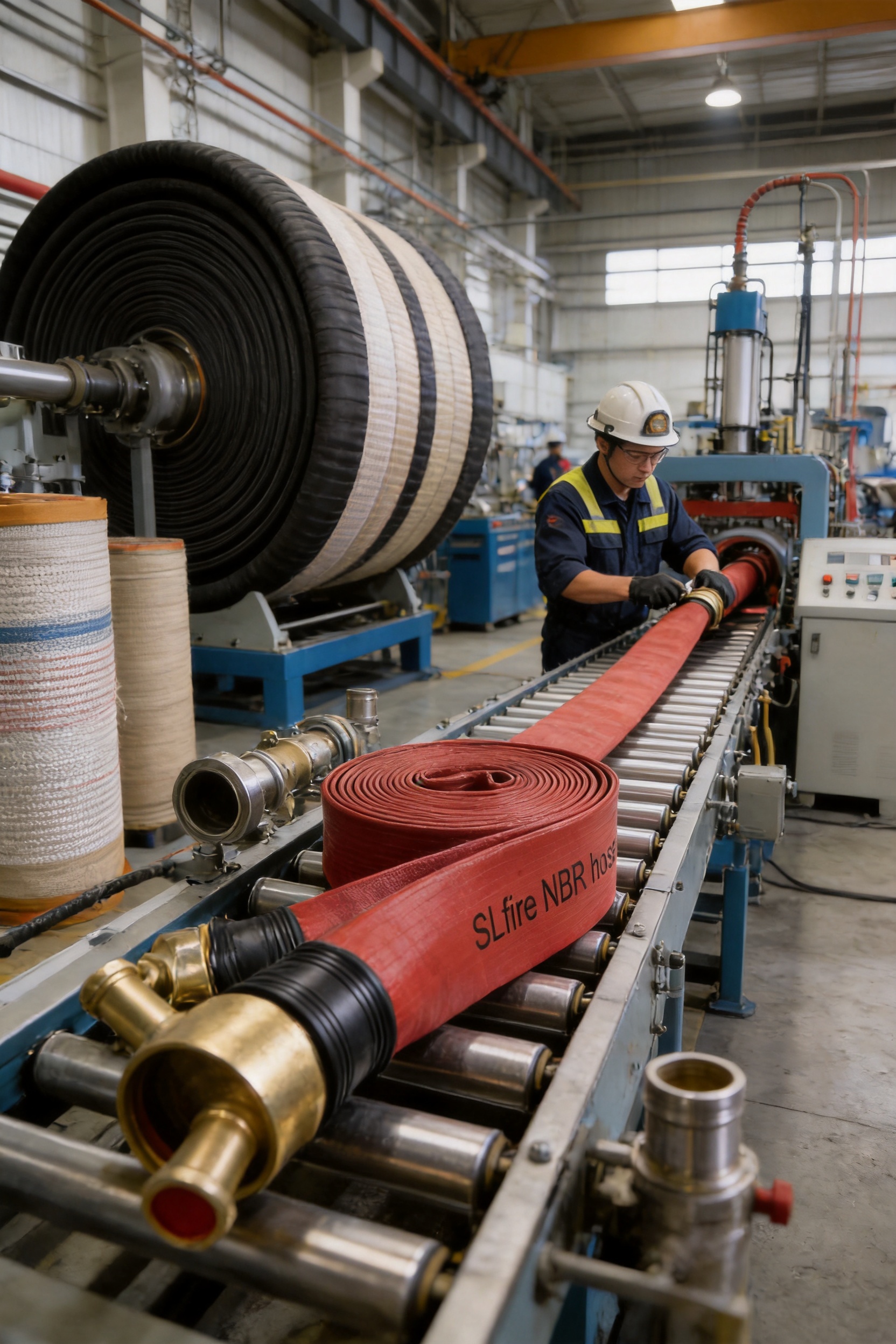
An advanced manufacturing process for nitrile covered hose typically begins with careful raw-material preparation. The nitrile/TPR compound must be mixed consistently so that the finished cover and lining have stable physical properties. Polyester yarn must be selected and handled to maintain uniform reinforcement performance.
The lining and cover are formed through controlled processing. Dimensional consistency is important because variations in wall thickness, diameter, or concentricity can affect pressure performance and coupling installation. The reinforcement must be applied evenly around the hose body so that pressure loads are distributed effectively.
Curing or thermal treatment allows the material system to develop the required strength and resilience. Processing conditions such as temperature, time, pressure, and line speed must be controlled. After production, the hose can be checked for appearance, dimensions, flexibility, surface integrity, and pressure performance.
Quality control should extend throughout the production process rather than take place only at the end. Incoming material checks, process monitoring, semi-finished product inspection, final pressure testing, and packaging verification all help reduce the risk of defects. This systematic approach is important for a safety-critical product.
Pressure testing verifies that the hose can tolerate the specified working and test conditions. A properly controlled test program helps identify leakage, abnormal expansion, structural weakness, or other problems before the product is shipped.
Testing may be performed on representative production samples or according to a customer’s required inspection plan. The precise test method depends on applicable standards, purchaser specifications, and product configuration. Documentation can support traceability and provide customers with greater confidence in the product’s consistency.
Performance verification should also consider the hose’s flexibility, cover adhesion, reinforcement integrity, dimensional accuracy, and appearance. Pressure capability is essential, but an attack hose must also remain practical to deploy and connect.
The company’s products are sold across more than 20 provinces, cities, and autonomous regions and are also exported through cooperation with domestic foreign trade companies. This market experience supports an understanding of different customer expectations, packaging requirements, documentation practices, and application conditions.
International customers may require particular units of measurement, coupling standards, labeling systems, inspection documents, or customized packaging. A manufacturer with export experience can coordinate these details more effectively. Clear communication before production is essential to confirm dimensions, pressure ratings, length, color, connection type, and delivery requirements.
The company also undertakes various foreign trade products according to customer requirements, including rubber, PVC, polyurethane, and double-sided tape products. This broader material experience can support procurement coordination for customers who need multiple industrial products from one source.
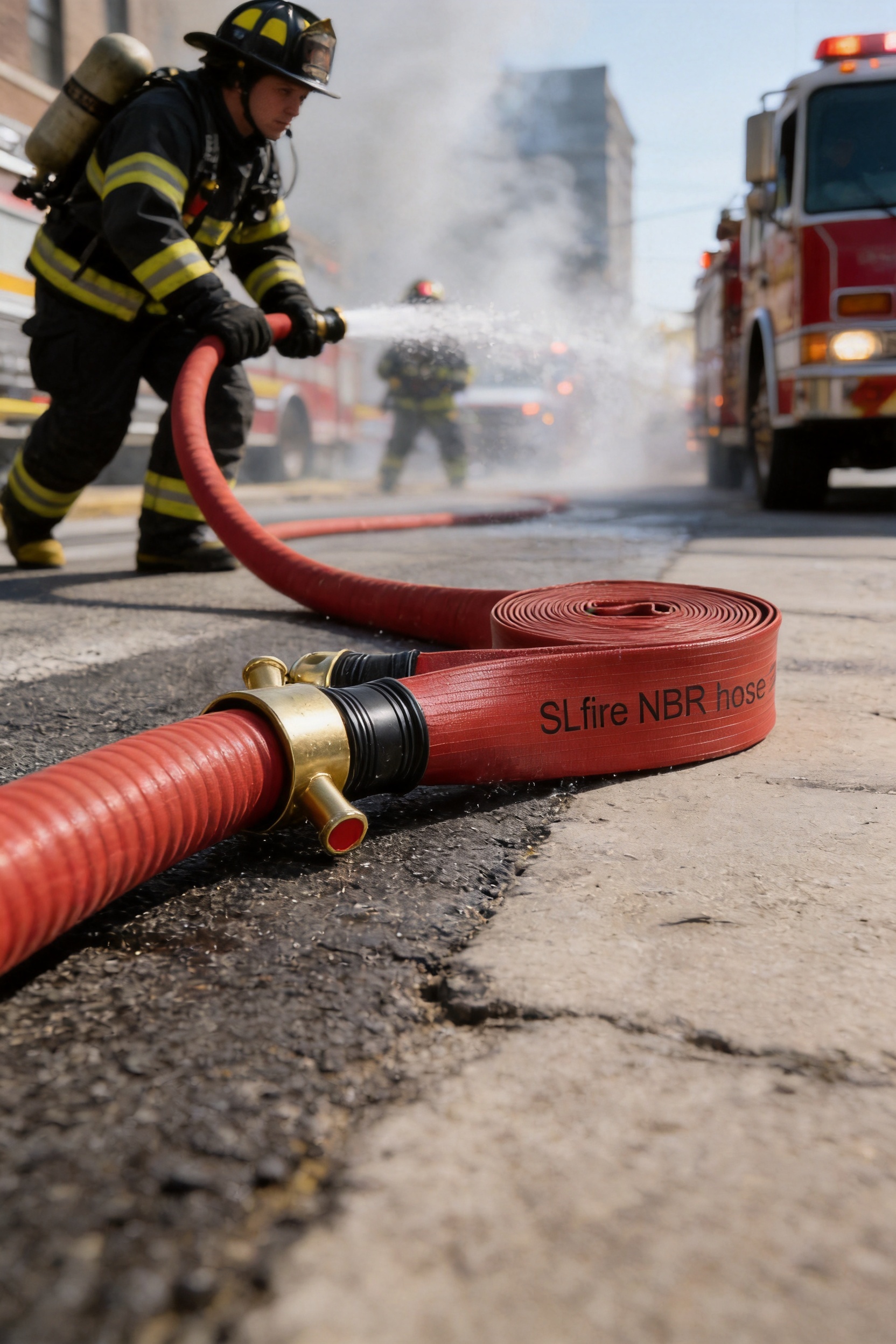
Municipal fire departments need hoses that can be deployed quickly in residential, commercial, and public environments. The nitrile covered attack hose is suitable for situations where the line may be dragged over roads, sidewalks, stairways, and building floors. Its abrasion-resistant ribs help address the wear associated with frequent deployment.
The available diameters and lengths allow departments to configure attack lines and supply arrangements according to vehicle equipment and local operating procedures. The hose can be paired with appropriate couplings, nozzles, valves, hydrants, and pumps to create a complete firefighting system.
Industrial facilities often contain oils, fuels, lubricants, solvents, machinery, and other substances that can challenge hose covers. The nitrile-based material provides useful resistance to oil and petrochemical exposure, making the hose appropriate for many industrial emergency-response environments.
Factories, workshops, warehouses, power facilities, transportation centers, and processing plants may also have abrasive floors and sharp structural features. The ribbed cover helps protect the hose during movement through these environments. Users should still select the hose based on the specific chemicals present and confirm compatibility when exposure is expected to be severe or prolonged.
Construction sites contain concrete, gravel, steel, tools, machinery, and debris. Hose lines may be moved repeatedly as work areas change. The high-abrasion resistance of the ribbed exterior is valuable in this setting, where a smooth cover could experience rapid scuffing.
The hose can be used for emergency fire response, temporary water delivery, equipment protection, and other applications that require a durable flexible line. Site managers should establish safe routing practices to reduce crushing by vehicles and prevent contact with sharp edges.
Agricultural buildings and equipment areas may contain fuel, oils, fertilizers, machinery, grain dust, moisture, and outdoor exposure. Fire risks can arise in barns, storage buildings, workshops, greenhouses, and machinery sheds. The hose’s resistance to oils, mildew, ozone, and abrasion makes it a useful option for these conditions.
Because agricultural properties may have long distances between water sources and buildings, the availability of 75-foot and 100-foot lengths can assist with layout planning. The correct diameter should be selected according to the available pump capacity and required flow.
In addition to emergency firefighting, the hose may be used in water conservancy and general water-transfer environments where a flexible, pressure-rated line is required. The exact suitability depends on the water type, pressure, temperature, connection method, and relevant regulations.
For non-fire applications, users should confirm whether the hose’s construction and pressure rating match the intended duty. A product designed for firefighting may be highly capable, but every installation should be evaluated according to its own operating conditions.
Before installation, inspect the entire hose length for cuts, punctures, severe abrasion, swelling, deformation, exposed reinforcement, or contamination. Check that the couplings are secure and that sealing components are in good condition. Do not install a hose that shows signs of structural damage.
When connecting the hose, ensure that threads, lugs, gaskets, or other connection features are correctly aligned. Avoid forcing a coupling into position or using excessive tools that could damage the connection. The hose should be connected to components with compatible size and pressure ratings.
During deployment, avoid dragging the hose across sharp objects whenever possible. Although the ribbed cover is designed for high abrasion resistance, no flexible hose is completely immune to severe cutting or puncture hazards. Use smooth routing paths and protect the hose from vehicle traffic, falling materials, and uncontrolled mechanical loads.
Do not exceed the stated working pressure. Pressure surges may occur when valves are opened or closed rapidly, so operating procedures should minimize water hammer. Pumps, hydrants, valves, nozzles, and couplings should be selected and operated as part of one coordinated system.
After use, drain the hose thoroughly. Rinse away dirt, salts, oils, chemicals, and other contaminants using procedures appropriate for the material and application. Allow the hose to dry before long-term storage. Store it in a cool, dry, ventilated area away from direct sunlight, ozone-generating equipment, sharp objects, and sources of excessive heat.
Regular inspection helps ensure that the hose remains ready for use. Inspection frequency should be based on operating conditions, local regulations, manufacturer recommendations, and the critical nature of the application. Hoses used frequently or exposed to aggressive environments require more frequent examination.
Inspect the cover for deep cuts, missing ribs, excessive flattening, burns, chemical damage, or exposed reinforcement. Examine the lining and ends for leakage or separation. Check couplings for distortion, corrosion, damaged threads, loose components, and missing gaskets.
A hose should be removed from service if it leaks, has serious structural damage, fails pressure testing, or no longer meets the requirements of the intended application. Temporary repairs should not be used as a substitute for proper replacement when safety is involved.
Good handling practices can extend service life. Avoid folding the hose sharply, storing it while wet, placing heavy objects on it, or exposing it unnecessarily to oils and sunlight. Rotate stored hose sections when practical so that the same areas are not continuously compressed or exposed.
The first selection factor is inside diameter. A smaller hose may be easier to handle, while a larger hose can support greater flow with lower friction loss under appropriate system conditions. Pump capacity, nozzle requirements, expected flow, and available personnel should all be considered.
The second factor is pressure. Select a working pressure that exceeds the maximum expected system operating pressure, including foreseeable pressure surges. Confirm the ratings of every connected component. The hose’s test and burst values are not substitutes for a properly selected working pressure.
The third factor is length. Consider the distance between the water source and operating point, the number of turns and obstacles, storage capacity, and the weight of the charged line. A combination of different lengths may provide greater flexibility than using one length for every situation.
The fourth factor is environmental exposure. If the hose will encounter oil, fuel, petrochemicals, rough surfaces, ozone, moisture, or outdoor conditions, a nitrile covered ribbed design may provide advantages over a basic cover. For unusual chemicals or extreme conditions, compatibility should be confirmed before purchase.
The fifth factor is connection configuration. Couplings must match hydrants, valves, pumps, manifolds, and nozzles. Customers should provide complete connection information when requesting a quotation or customized production.
Professional buyers may require more than a standard hose. They may need specific lengths, diameters, pressure ratings, colors, markings, coupling types, packaging, or inspection documents. The manufacturer can discuss these requirements before production to ensure that the final product matches the customer’s operating system.
Customization should be approached as an engineering and quality-control process. Changes in diameter, reinforcement, cover formulation, length, or coupling configuration can affect performance and production requirements. Clear technical confirmation helps avoid errors and supports consistent order fulfillment.
For wholesale purchasers, reliable supply is also important. Fire departments, distributors, contractors, and industrial users may require repeated deliveries or mixed specifications. A manufacturer with an established production system can help coordinate regular orders, product identification, packaging, and export preparation.
Taizhou Shenlong Fire Science and Technology Co., Ltd. supports customers from its facility in Taizhou, Jiangsu Province, China. Its product experience covers various materials of lined fire hoses and related products used in fire protection, construction, water conservancy, and other industries.
Distributors benefit from a product that addresses several common customer concerns in one design. The nitrile/TPR cover provides chemical and environmental resistance, while the ribbed surface provides additional protection against abrasion. The range of diameters and lengths allows distributors to serve municipal, industrial, agricultural, and construction customers.
Project buyers can evaluate the hose based on measurable specifications, including inside diameter, working pressure, test pressure, burst pressure, length, temperature range, reinforcement material, and cover construction. These details support equipment schedules, tender documents, system design, and purchasing comparisons.
The hose can also provide a stronger value proposition than products that focus on only one performance characteristic. A hose with high pressure capability but poor abrasion resistance may not be suitable for rough deployment. A hose with a tough cover but inadequate pressure rating may not meet system requirements. This product is designed to combine pressure performance, durability, chemical resistance, and practical handling.
Fire hose selection should always be made with reference to local laws, project specifications, and applicable industry standards. Requirements may differ according to country, authority, building type, fire system design, and intended use. Buyers should request the technical documents needed for their application and confirm whether additional certifications or testing are required.
Product specifications should be reviewed before installation. Confirm the pressure rating, diameter, length, temperature range, coupling type, and intended medium. If the hose is to transport liquids other than clean water or ordinary firefighting water, material compatibility should be evaluated carefully.
Safety depends on the complete system, not the hose alone. Pumps, valves, fittings, nozzles, hydrants, manifolds, and supports must be correctly selected and maintained. Personnel should be trained in hose deployment, pressure control, coupling operation, inspection, cleaning, and storage.
A nitrile covered attack hose is a pressure-rated firefighting hose with a nitrile/TPR blend used for the cover and lining. It uses 100% high-tenacity polyester yarn reinforcement and includes ribs on the exterior cover to improve abrasion resistance during dragging and deployment.
The ribs create raised contact areas that help reduce direct friction on the main hose body. They are designed to improve resistance to abrasion when the hose is moved across rough surfaces such as concrete, asphalt, gravel, and industrial flooring.
The nitrile-based material provides resistance to oils, fuels, and petrochemicals. This makes the hose suitable for many industrial, agricultural, transportation, and mechanical environments. For prolonged exposure to concentrated chemicals, compatibility should be confirmed in advance.
The hose is available in 1-1/2-inch, 2-inch, 2-1/2-inch, and 3-inch inside diameters. These correspond approximately to 38 mm, 52 mm, 64 mm, and 75 mm.
Standard length options are 50 feet, 75 feet, and 100 feet. Other requirements may be discussed with the manufacturer according to production capability and order quantity.
The stated temperature range is -30°C to 70°C. Users should consider the duration of exposure, pressure, storage conditions, and transported medium when applying the hose in extreme temperatures.
The listed working pressure options are 250 psi and 300 psi, equivalent to approximately 17 bar and 21 bar. The appropriate selection depends on the system’s maximum operating pressure and the ratings of all connected components.
Yes. Its abrasion-resistant ribbed cover and nitrile-based material make it suitable for many industrial fire-protection environments. Facilities should verify chemical compatibility and ensure that the hose pressure rating matches the system.
No. The phrase refers to the hose’s low-maintenance construction. Users should still clean, dry, inspect, pressure-test, and store the hose properly. Any hose showing serious damage or leakage should be removed from service.
Store it clean and dry in a cool, ventilated location away from direct sunlight, ozone-producing equipment, sharp objects, excessive heat, oils, and heavy loads. Avoid storing the hose while wet or contaminated.
Coupling requirements should be confirmed with the manufacturer. Customers should provide the required coupling standard, size, material, pressure rating, and connection configuration so that the complete assembly can be prepared correctly.
The product is manufactured by Taizhou Shenlong Fire Science and Technology Co., Ltd., a Chinese fire-hose producer founded in 1995. The company combines research and development, production, sales, and service and supplies products for domestic and international markets.
The nitrile covered attack hose is designed for demanding firefighting and industrial water-delivery conditions. Its nitrile/TPR blend cover and lining provide resistance to oils, fuels, petrochemicals, ozone, mildew, corrosion, punctures, and abrasion. The high-tenacity polyester reinforcement supports pressure performance, while the ribbed exterior cover helps protect the hose during repeated dragging over rough surfaces.
With working pressure options of 250 and 300 psi, available diameters from 1-1/2 inches to 3 inches, and standard lengths of 50, 75, and 100 feet, the hose can be configured for a wide range of applications. Its operating temperature range of -30°C to 70°C further supports use in diverse climates and working environments.
The product’s value is strengthened by the manufacturer’s experience since 1995, integrated research and production capabilities, export cooperation, and experience serving fire protection, construction, water conservancy, and industrial markets. For buyers seeking a durable, chemical-resistant, abrasion-resistant attack hose, this design offers a practical combination of safety, service life, and operational flexibility.
1. Manufacturer-provided product specifications for nitrile covered attack hose.
2. Manufacturer-provided technical information concerning nitrile/TPR cover and lining construction.
3. Manufacturer-provided pressure, temperature, diameter, and length data.
4. General principles of fire hose inspection, cleaning, drying, storage, and pressure safety.
5. General industrial guidance for selecting flexible pressure hose according to application, operating environment, and connected-system requirements.
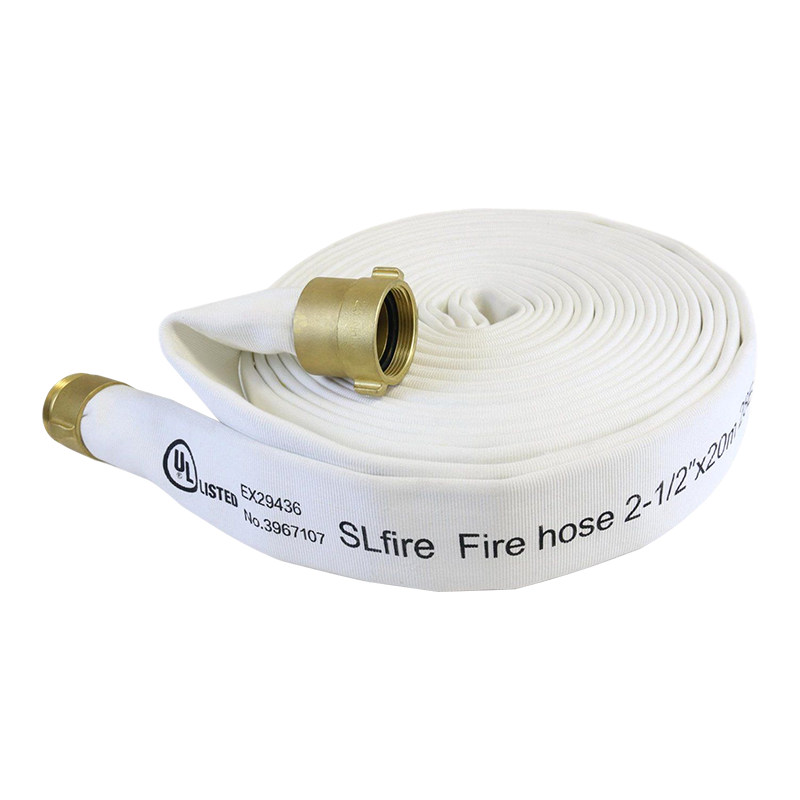
Single jacket, EPDM rubber liner Features • 100% high tenacity polyester jacket, high-grade EPDM rub...
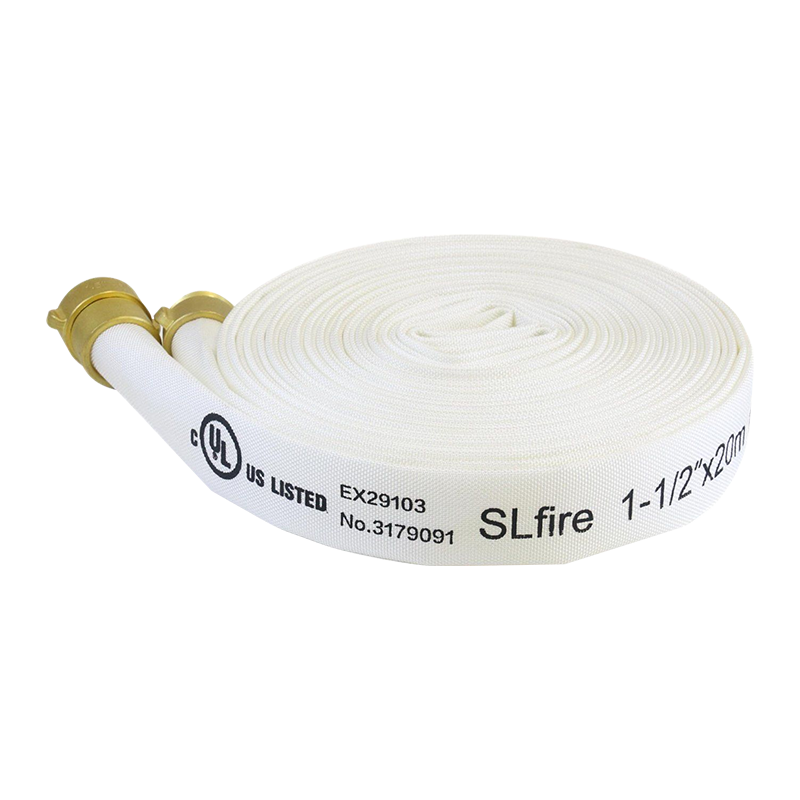
Single jacket, TPU liner •High-tenacity polyester yarn, circular woven in twill weave/plain weave,T ...
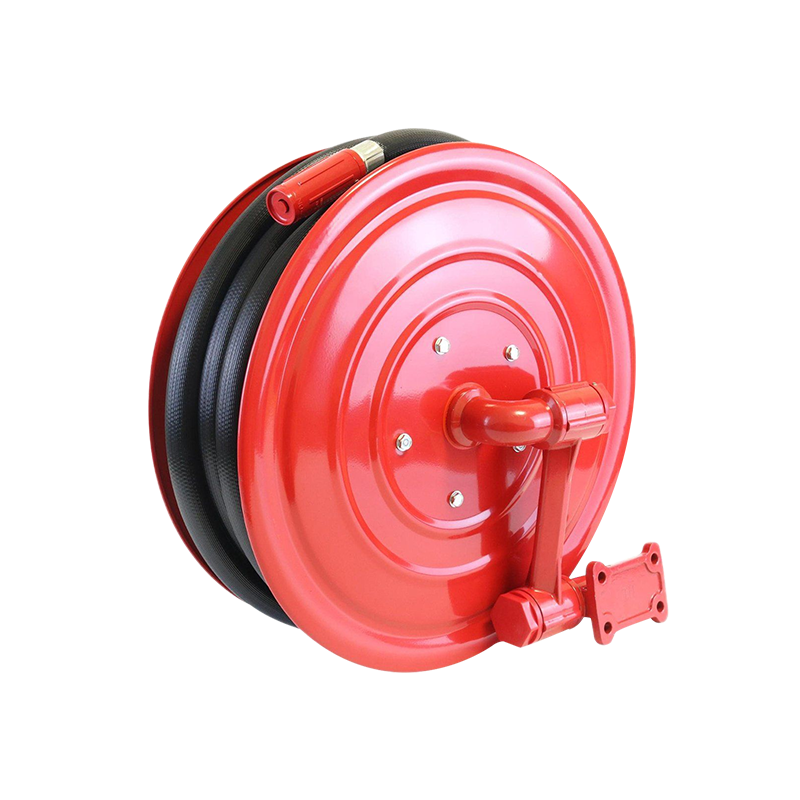
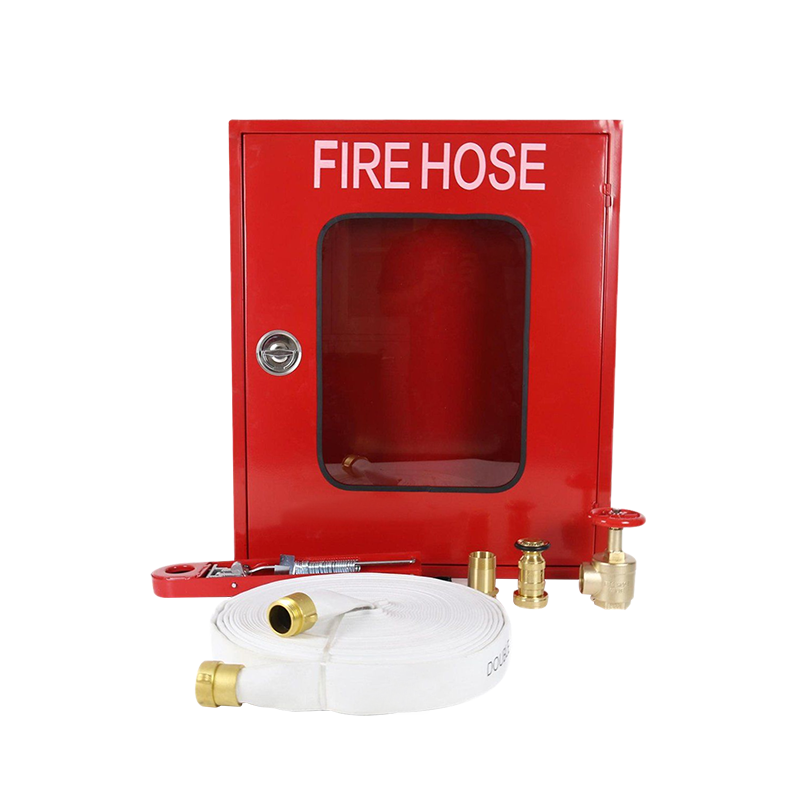
Fire cabinets are designed to accommodate fire hose,valve and other firefighting equipment. Type 201...
Nitrile covered hose •Nitrile/TPR blend as cover and lining, with 100% high-tenacity polyester yarn ...
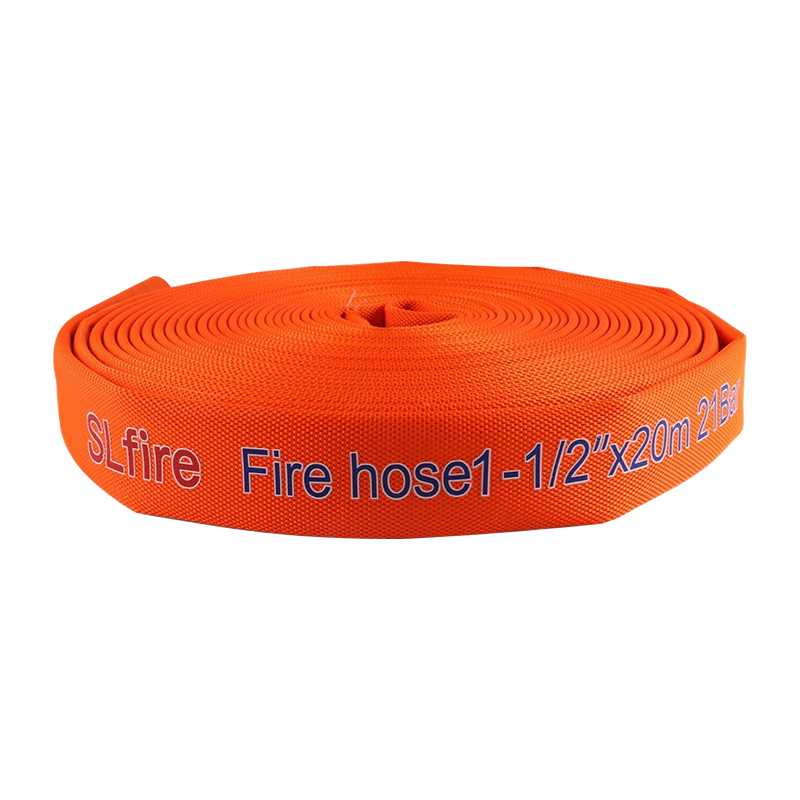
Single jacket, TPU liner •High-tenacity polyester yarn, circular woven in twill weave, TPU lining, f...
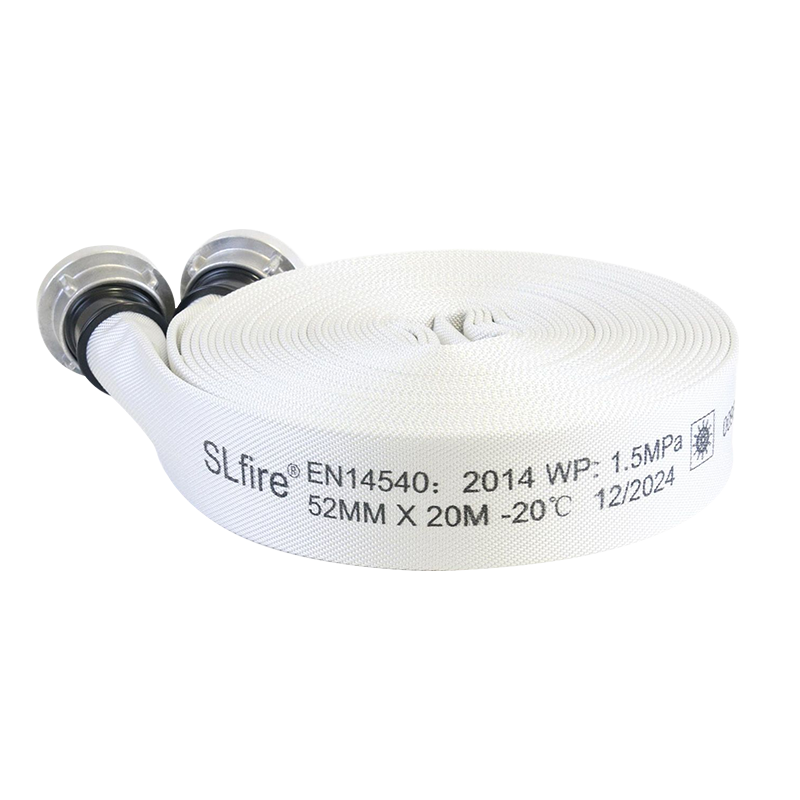
Marine hose Single jacket, PVC liner •100% high tenacity polyester yarn, circular woven in twill wea...
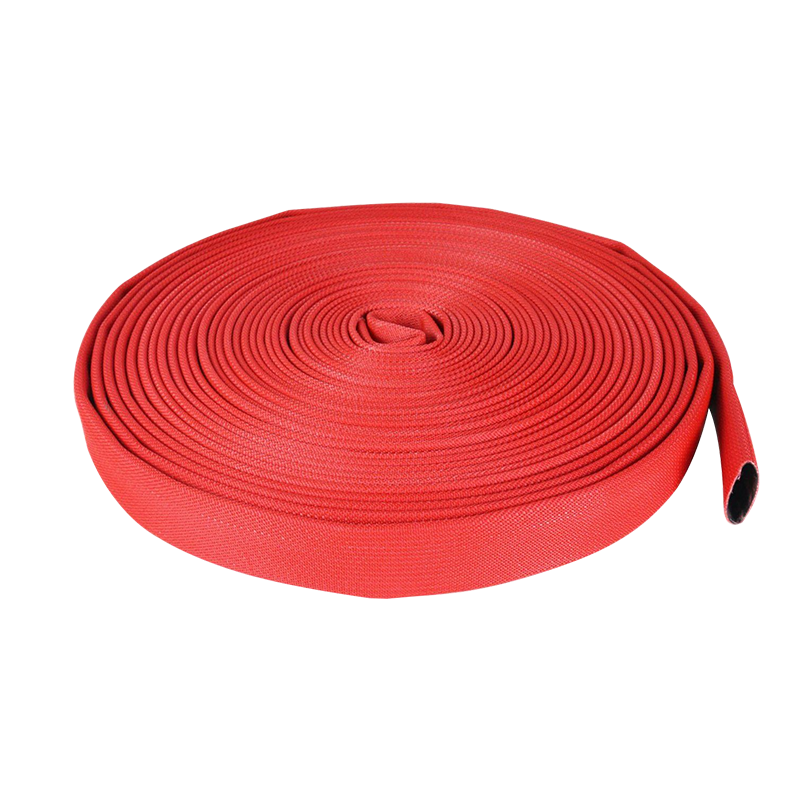
Marine hose Single jacket, PVC liner, PU coated •100% high tenacity polyester yarn,c ircular woven i...
 Call Us
+86 159-5116-9511
Need Support
Head Office
No.58, Kechuang Road, Sixiang Street Medicine Gaoxin District Taizhou City, Jiangsu Province

What Is a Fire Hose? A fire hose is a high-pressure flexible hose designed to carry water or fire retardant chemicals from a water source, such as a hydrant, pump, or tank, to a fire for suppression p...
Copyright © Taizhou Shenlong Fire Science and Technology Co., Ltd. All Rights Reserved.
 Fire Hose Manufacturers, Fire Hydrant Hose Factory