

 English
 русский
 Español
 Deutsch
 عربى
عربى Français
 Português
Don't hesitate to send a message

Single jacket, EPDM rubber liner Features • 100% high tenacity polyester jacket, high-grade EPDM rub...
Content
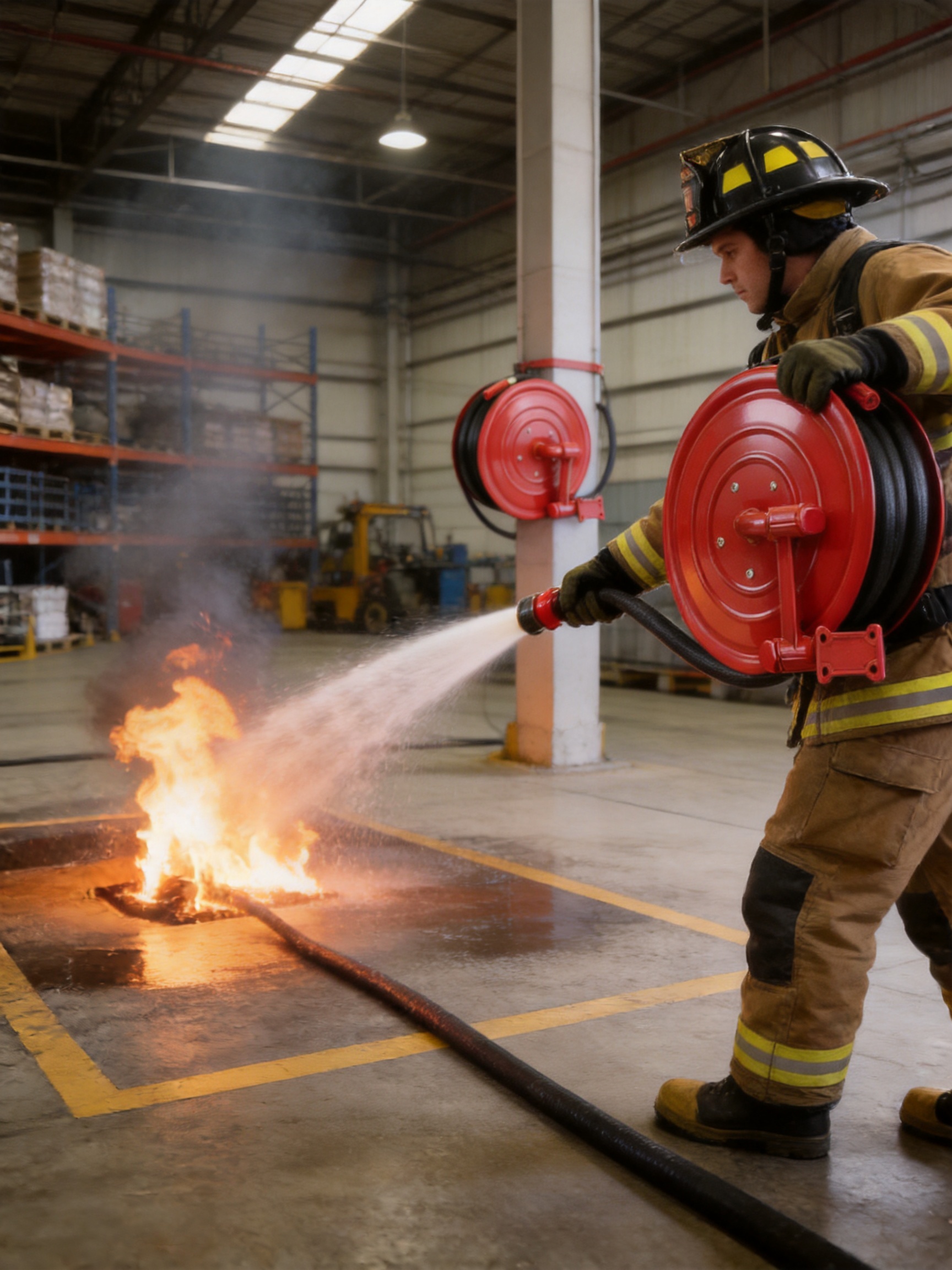
Fire protection equipment must be available before an emergency occurs, easy to operate when a fire begins, and durable enough to remain dependable throughout years of service. Fixed manual and swing manual fire hose reels are designed to meet these practical requirements by providing a controlled, accessible water supply for first-response firefighting. With a 30-metre hose, a steel drum, a red epoxy powder finish, and a working pressure of 12 bar, this type of reel is suitable for warehouses, factories, workshops, commercial properties, public buildings, and other facilities where occupants may need to control a developing fire before professional firefighters arrive.
The product described in this article is available in fixed manual and swing manual configurations. Both designs are intended to store and deploy a fire hose in an organized manner. The fixed version remains securely mounted in one position, while the swing manual version can move outward on its bracket to improve access and hose deployment around walls, corners, equipment, or storage areas. Both configurations are manually operated, straightforward to maintain, and compatible with the essential accessories required for a complete hose reel installation.
Manufactured by Taizhou Shenlong Fire Science and Technology Co., Ltd., the fire hose reel reflects the company’s long experience in fire hose research, development, production, sales, and service. Since its establishment in 1995, the company has developed a product range covering lined fire hoses made from different materials and has supplied products for fire protection, construction, water conservancy, and related industries. Its manufacturing and export experience supports the production of practical fire equipment for different project requirements and operating environments.
Fire extinguishers are essential for many small fires, but they have limitations related to discharge time, agent capacity, and the type of fire being addressed. A hose reel offers a continuous water supply connected to the building’s water system. Once the inlet valve is opened and the hose is extended, the operator can direct water toward the fire using a jet or spray nozzle. This can provide a more sustained response than a portable extinguisher.
A hose reel also gives building occupants a clear and recognizable firefighting point. When equipment is mounted in a visible and accessible location, trained personnel can identify it quickly during an emergency. The 30-metre hose length provides a substantial operating radius, although the actual coverage depends on the installation position, building layout, water pressure, obstacles, and applicable fire safety regulations.
Well-organized hose storage is another important benefit. A loose hose can become damaged, obstruct walkways, or be difficult to deploy under pressure. A reel keeps the hose wound around a dedicated drum and helps protect it from unnecessary contact with the floor. The manual reel design is mechanically simple, reducing dependence on complicated mechanisms and making the unit easier to inspect and service.
Hose reels are especially useful in large spaces. Warehouses may contain long aisles and high-value inventory. Factories may have machinery, combustible materials, electrical installations, and restricted access routes. Public buildings may require equipment that can be understood quickly by trained staff. In these environments, a hose reel can form an important part of a broader fire protection strategy that also includes alarms, sprinklers, extinguishers, hydrants, emergency lighting, and evacuation procedures.
The fixed manual and swing manual fire hose reels are supplied as practical firefighting assemblies rather than as bare drums alone. The listed accessories include a fire hose, a jet or spray fire hose nozzle, wall brackets, an inlet pipe, and a gate valve. This arrangement supports installation and operation by bringing the primary connection and discharge components together in one organized unit.
| Specification | Product Information |
|---|---|
| Product type | Fixed manual / swing manual fire hose reel |
| Drum size | 510 mm |
| Drum material | Steel |
| Surface finish | Red epoxy powder coating |
| Hose material | PVC |
| Hose diameter options | 19 mm and 25 mm |
| Hose length | 30 m |
| Working pressure | 12 bar |
| Hose standard information | Reel associated with EN 671; hose complies with EN 694 |
| Primary accessories | Fire hose, jet/spray nozzle, wall brackets, inlet pipe, and gate valve |
| Typical applications | Warehouses, factories, industrial premises, and large public buildings |
The product information identifies both 19 mm and 25 mm hose diameter options. The appropriate diameter should be selected according to the design requirements of the installation, available water supply, required flow, local regulations, and project specifications. Purchasers should confirm the exact configuration, connection dimensions, nozzle type, and installation details before placing an order.
The 510 mm drum provides a balanced storage platform for the 30-metre hose. Its steel construction is intended to provide strength and dimensional stability during mounting, hose deployment, and rewinding. The red epoxy powder coating gives the reel a highly visible fire equipment appearance while adding a protective finish to the steel surface.
A fixed manual hose reel is mounted in a permanent position using wall brackets or an equivalent approved support arrangement. The fixed design is suitable where the installation layout provides sufficient clearance for the hose to be pulled directly toward the protected area. Because the reel does not swing away from the wall, it offers a simple and compact solution for corridors, service areas, plant rooms, workshops, and other locations with a straightforward approach route.
The fixed configuration can be advantageous where installation simplicity and predictable positioning are priorities. Facility managers know exactly where the equipment is located, and maintenance personnel can inspect the same connection, valve, drum, hose, and nozzle arrangement each time. A permanent mounting position can also reduce the risk of accidental movement or misalignment during routine building operations.
Before installing a fixed reel, the site team should verify that the reel is not blocked by stored goods, doors, machinery, partitions, vehicles, or temporary structures. The hose must be capable of being pulled out smoothly without sharp bending or excessive friction. The nozzle should be accessible, and the gate valve should be clearly identifiable. The installation should also allow enough space for inspection, testing, and hose replacement.
A swing manual hose reel is mounted on a bracket or support system that allows the reel to move outward or pivot from its installed position. This movement can improve the hose’s approach angle and make it easier to direct the hose around corners or toward areas located beside the mounting wall. The swing version is particularly useful where a fixed reel would cause the hose to rub against a wall or where the building layout requires greater flexibility during deployment.
In a warehouse, for example, a swing reel may help an operator pull the hose along an aisle while keeping the drum aligned with the direction of travel. In a factory, the swing function may improve access around machinery or structural columns. In a public building, it may make the hose more visible and accessible without requiring the complete assembly to project permanently into a circulation route.
The swing mechanism should be handled carefully and inspected regularly. The bracket must be firmly secured, the pivoting movement should remain smooth, and the reel should return to a safe parked position after use. Operators should not force the reel beyond its designed travel range. The installation area should include adequate clearance for the reel to swing without striking doors, walls, equipment, or people.
The drum is the central structural component of the hose reel. It supports the wound hose, maintains an organized storage shape, and assists the operator during manual deployment and rewinding. Steel is used for the drum because it provides a strong and stable material for a wall-mounted firefighting device. Compared with weaker or less rigid materials, a properly manufactured steel drum can resist deformation during normal handling, installation, and service.
The red epoxy powder finish serves both functional and identification purposes. Red is widely associated with fire protection equipment, helping the reel stand out in industrial and commercial environments. The epoxy powder coating also creates a protective layer over the steel. When applied correctly to a properly prepared surface, powder coating can help resist ordinary abrasion, handling marks, and environmental exposure.
Surface preparation and coating quality are important elements of manufacturing. The drum surface should be clean and suitable for coating, with attention given to edges, mounting areas, joints, and other locations where poor adhesion or incomplete coverage could occur. A consistent finish improves appearance and supports long-term protection. During inspection, manufacturers and purchasers should check for visible defects such as peeling, blistering, exposed metal, uneven coverage, or damage caused during transportation.
Although the coating improves resistance, it does not make the reel immune to corrosion. Installation in highly corrosive, coastal, chemical, or outdoor environments may require additional material or coating considerations. The purchaser should communicate environmental conditions in advance so the manufacturer can recommend a suitable configuration.
The reel is supplied with a PVC hose in a 30-metre length and with a listed diameter option of 19 mm or 25 mm. PVC is valued in many hose applications because it can offer flexibility, relatively low weight, resistance to moisture, and ease of handling. These properties are useful for a manual hose reel, where an operator may need to pull the hose from the drum quickly and control the nozzle while moving toward the incident area.
Hose flexibility is influenced by diameter, wall construction, temperature, storage conditions, and manufacturing quality. A hose that is too stiff may be difficult to deploy, while a hose that lacks sufficient structural strength may kink, collapse, or suffer premature wear. The hose must therefore be manufactured and assembled to work with the selected drum, inlet connection, nozzle, and water pressure.
The listed working pressure is 12 bar. This value is important for system design and should not be treated as permission to exceed the rated operating conditions. The building water supply, pressure-reducing equipment, valves, pipework, nozzle, and hose should be evaluated as a complete system. Pressure testing and routine inspection should follow the applicable standard, local regulations, and the building owner’s fire safety program.
Hose routing is also significant. The operator should avoid dragging the hose across sharp edges, hot surfaces, chemical spills, vehicle traffic, or abrasive flooring. After use, the hose should be drained as required, inspected for damage, and rewound evenly on the drum. Correct rewinding prevents flattening, twisting, and uneven loading that could make future deployment more difficult.
The supplied jet or spray fire hose nozzle allows the operator to control the shape and direction of the water discharge. A jet setting can provide a concentrated stream for reaching a particular target, while a spray setting can distribute water over a wider area. The appropriate mode depends on the fire situation, the distance from the fire, the material involved, and the training of the person operating the equipment.
A nozzle must be comfortable to hold and simple to operate. In a stressful emergency, unnecessary controls can delay response. The nozzle should be connected securely to the hose and inspected for cracks, blockage, damaged threads, or worn seals. The operator should never point the discharge toward people unless the equipment and emergency circumstances require it for life safety, and water should not be applied to energized electrical equipment unless the system is specifically approved and the electrical hazard has been controlled.
Training is essential. A hose reel can provide a continuous water supply, but it also introduces reaction forces, water pressure, trip hazards, and potential exposure to smoke and heat. Only trained personnel should attempt firefighting, and evacuation should always take priority when a fire is spreading, smoke is severe, or conditions are unsafe.
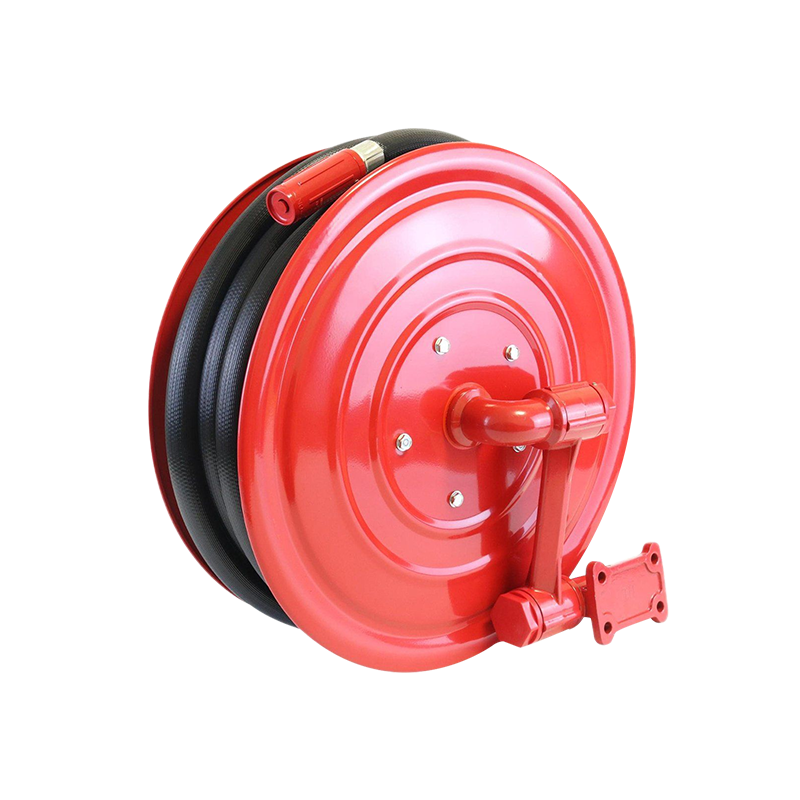
Fixed Manual / Swing Manual Fire Hose Reels
The product information identifies EN 671 and states that the hose complies with EN 694. These references are important because they indicate that the reel and hose should be considered in relation to recognized European fire hose equipment and hose requirements. The exact scope of compliance depends on the specific product configuration, testing records, assembly, installation, and certification documentation supplied for the order.
EN 671 is associated with fixed firefighting systems using hose reels or hose systems. It addresses important considerations such as equipment arrangement, performance, accessibility, and installation-related requirements. EN 694 relates to semi-rigid delivery hoses for fixed firefighting systems. A project engineer or fire protection consultant should confirm that the selected hose reel configuration satisfies the requirements applicable to the building and jurisdiction.
Standards should not be viewed as a substitute for correct installation. A compliant component can fail to provide its intended protection if it is connected incorrectly, installed in an inaccessible location, supplied with inadequate water flow, or neglected during inspection. The hose reel should therefore be incorporated into the building’s documented fire protection design.
For procurement, buyers should request the applicable technical documents, test reports, declarations, installation instructions, and maintenance information. They should also confirm whether the complete assembly, rather than only the hose, is covered by a particular standard or approval. This distinction helps prevent misunderstanding during project review and authority inspection.
Taizhou Shenlong Fire Science and Technology Co., Ltd. was founded in 1995 and operates across research and development, production, sales, and service. This long-term industry presence is valuable because fire equipment manufacturing requires more than basic metal fabrication. It involves material selection, pressure performance, hose construction, connection design, assembly control, inspection, packaging, documentation, and after-sales support.
The company’s principal product range includes lined fire hoses made from various materials. This background is directly relevant to hose reel production because the hose is the most operationally active part of a reel assembly. A manufacturer familiar with different hose materials is better positioned to evaluate flexibility, pressure resistance, lining behavior, abrasion considerations, and compatibility with couplings and nozzles.
The company also undertakes foreign trade products according to customer requirements, including rubber products, PVC products, polyurethane products, and double-sided tape. This indicates experience with material-specific production and customized supply arrangements. For international buyers, the ability to coordinate different material categories and export requirements can simplify procurement, particularly when a project requires several related fire hose products or private specifications.
Products are reported to sell in more than 20 provinces, cities, and autonomous regions, while the company also cooperates with domestic foreign trade companies for export products supplied to multiple countries. This market experience can support improved understanding of varying customer requirements, packaging expectations, documentation needs, and shipment coordination.
A manufacturer with an established production history can also develop more consistent procedures. Repeated production allows the company to identify common defects, improve assembly methods, standardize inspection points, and refine packaging. For a hose reel, consistency matters because the drum, bracket, inlet pipe, valve, hose, and nozzle must work together as one functional assembly.
Manufacturing quality begins with engineering review. Before production, the supplier should confirm the required reel type, drum size, hose diameter, hose length, working pressure, mounting arrangement, valve connection, nozzle selection, surface finish, packaging, and applicable standards. This review helps prevent mismatches between the equipment and the customer’s fire protection design.
The steel used for the drum and brackets should be selected according to the required strength, forming characteristics, weldability, and environmental conditions. Incoming material inspection may include checking dimensions, surface condition, thickness, and supplier documentation. PVC hose materials should be evaluated for consistency, flexibility, pressure performance, and compatibility with the intended assembly.
Incoming inspection is particularly important when multiple component suppliers are involved. A valve with the wrong connection, a nozzle with an incompatible thread, or a hose with unsuitable dimensions can create assembly delays or field installation problems. Clear material identification and batch traceability improve production control.
The drum must be formed accurately so that it rotates or supports the hose correctly and stores the hose evenly. Manufacturing may involve cutting, forming, drilling, welding, fastening, and dimensional checking. The bracket and pivot components of the swing version require particular attention because they must support the reel’s weight and operating movement.
Welded areas should be visually examined for incomplete joints, sharp projections, excessive spatter, distortion, or other defects. Edges that may contact the hose should be smooth and free from burrs. Accurate alignment reduces friction and helps the reel remain stable during manual deployment and rewinding.
Before the red epoxy powder coating is applied, the steel parts should be cleaned and prepared. Contamination, oil, rust, scale, and moisture can reduce coating adhesion. The powder is electrostatically applied and then cured under controlled conditions so that it forms a continuous protective layer.
Coating control can include checking color consistency, coverage, adhesion, curing condition, and visible finish. A professional production line should also protect threaded areas, moving interfaces, valve connection points, and other locations where excess coating could interfere with assembly or operation.
The hose must be cut to the specified length, fitted with the appropriate connections, and secured to the reel and nozzle assembly. Connection installation should be controlled to reduce the risk of leakage, detachment, or hose damage. The inlet pipe and gate valve should be assembled with suitable seals and correctly aligned.
Because the product may be supplied in 19 mm or 25 mm versions, component matching is essential. The hose, nozzle, inlet connection, drum arrangement, and valve should correspond to the selected diameter. Each finished assembly should be identified clearly so that the customer receives the correct configuration.
Testing is a critical manufacturing stage for firefighting equipment. The hose reel assembly should be examined for leakage, connection security, hose condition, valve operation, nozzle function, and deployment behavior. Pressure testing should be conducted using controlled procedures appropriate to the product rating and applicable standards.
For the listed 12-bar working pressure, the manufacturer should maintain appropriate test equipment, calibrated instruments, and documented inspection procedures. Functional testing may also include checking whether the hose can be pulled out smoothly, whether the drum remains stable, whether the swing bracket moves correctly, and whether the hose rewinds without abnormal interference.
Final inspection should verify product identity, dimensions, hose length, diameter, finish, accessories, labels, and documentation. The packaging should protect the coated steel, hose, nozzle, valve, and bracket during storage and transportation. Packaging design is especially important for export shipments, where equipment may experience vibration, humidity, stacking pressure, and repeated handling.
Proper packaging can reduce scratches, deformation, moisture exposure, and missing accessories. Each package should be marked clearly with the product description, configuration, quantity, handling instructions, and any relevant identification information. Strong export coordination is an advantage for overseas customers purchasing fire equipment for distribution or project installation.
One advantage of this hose reel is that it combines a durable steel drum with a controlled 30-metre hose storage system. Some low-cost alternatives may use thinner structural components, poorly protected metal, inconsistent hose assemblies, or generic accessories that are not properly matched. A professionally assembled reel is more likely to provide predictable installation and operation when the components are selected and tested as a complete unit.
The choice between fixed manual and swing manual designs also gives customers greater flexibility than a one-style product. A fixed reel may be suitable for compact, direct-access locations, while a swing reel may be more effective where hose deployment requires movement away from the wall. Offering both configurations allows a project designer to match the equipment to the building layout rather than forcing every location into the same arrangement.
The 30-metre hose length offers a practical balance between coverage and manageability. A shorter hose may leave parts of a protected area difficult to reach, while an excessively long hose may be heavier, more difficult to rewind, and more likely to create storage or trip problems. The final coverage must still be verified through a site-specific design, but the stated length is appropriate for many commercial and industrial applications.
The 19 mm and 25 mm diameter options also support project customization. Different buildings and water systems may have different flow and pressure requirements. Providing diameter choices helps customers select a configuration based on engineering needs instead of relying on a single standard size.
The red epoxy powder finish offers both visual recognition and surface protection. A fire reel that is easy to identify can reduce the time needed to locate emergency equipment. The coated finish also gives the unit a cleaner appearance in public and commercial buildings, which may be important where fire protection equipment must remain visible without appearing unfinished or vulnerable to rapid deterioration.
Finally, the manufacturer’s experience across fire hoses and related material products can support more informed technical communication. Customers can discuss hose material, connection requirements, export packaging, project quantities, and potential customization with a supplier familiar with the broader fire protection product category.
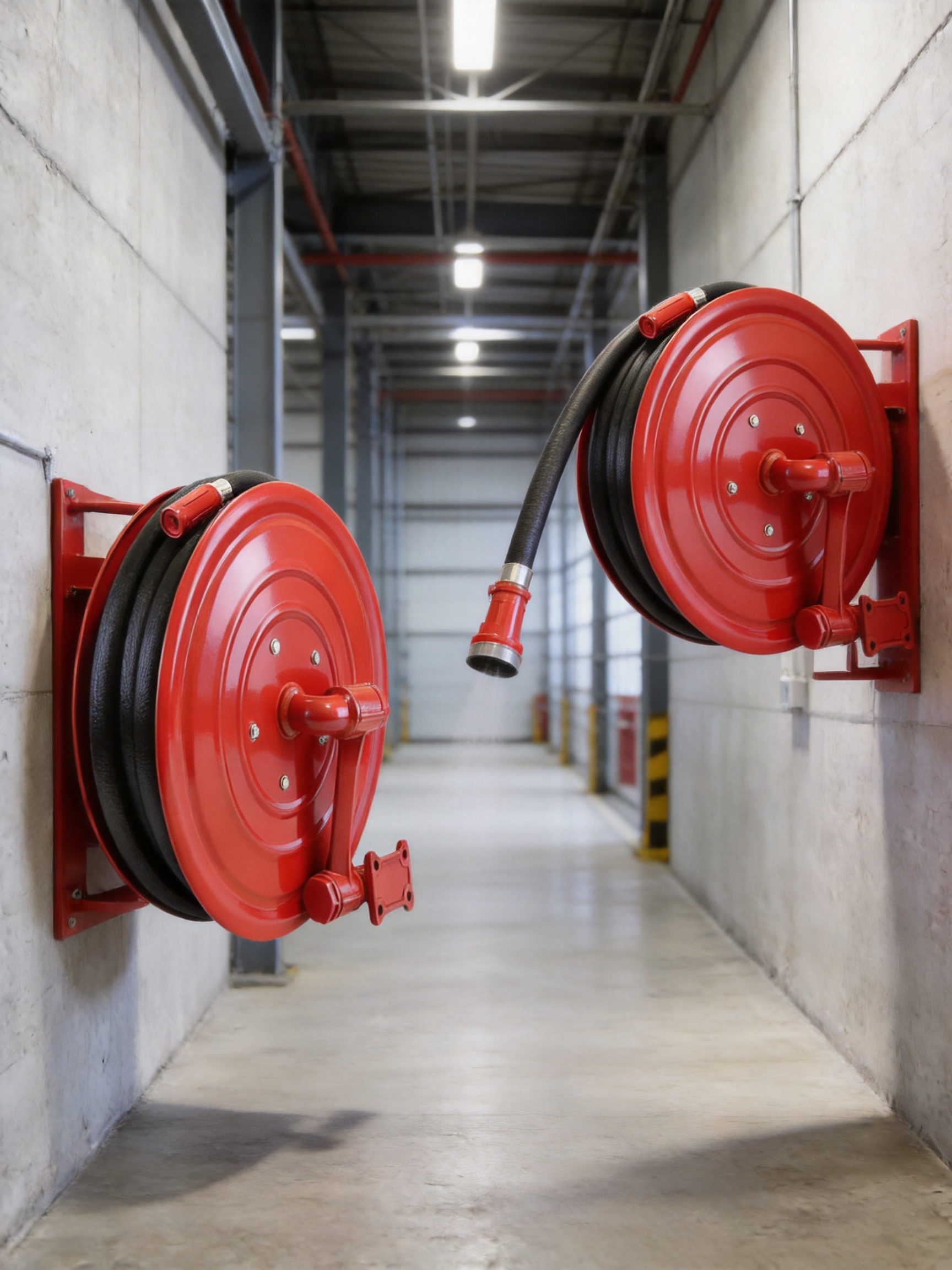
Warehouses often include long storage aisles, high shelving, packaging materials, pallets, loading areas, and vehicle movement. Fire can grow quickly when combustible goods are densely stored. A hose reel placed at a suitable access point can provide trained staff with a continuous water supply for an early response.
In a warehouse, visibility and access are essential. Reels should not be hidden behind stock or placed where forklifts can strike them. The swing manual design may be useful in areas where the hose must be pulled along an aisle or around a structural obstruction. The fixed design may be appropriate at loading bays, entrances, or wall sections with an unobstructed deployment path.
Warehouse managers should regularly check that the 30-metre hose is not compressed by stored materials and that the nozzle and valve remain accessible. Traffic management should reduce the risk of vehicles damaging the reel, bracket, or hose. Inspection records should identify the reel location and document any corrective work.
Factories and workshops may contain production machinery, oils, packaging, plastics, paints, solvents, welding areas, and electrical systems. The correct firefighting method depends on the material and hazard. Water from a hose reel may be suitable for some ordinary combustible materials, but it may be unsafe or ineffective for energized electrical equipment, flammable liquid fires, reactive chemicals, or other special hazards.
The hose reel should therefore be part of a hazard-based fire protection plan. In a general manufacturing area, the reel can support response to fires involving paper, wood, textiles, and similar materials when safe to do so. Supplementary extinguishers and specialized systems may be needed for other risks.
Factories should consider heat, dust, vibration, oil mist, chemical exposure, and heavy traffic when selecting the installation position. The steel drum and epoxy finish provide a robust basic configuration, but the environmental conditions should be reviewed with the supplier before purchase. In demanding environments, protective barriers, upgraded finishes, or revised mounting arrangements may be appropriate.
Large public buildings may include schools, shopping centers, transport facilities, hospitals, offices, exhibition halls, and entertainment venues. These buildings require clear emergency equipment, orderly circulation, and coordinated evacuation procedures. Hose reels can be mounted at designated fire points so trained building personnel can locate them quickly.
In public facilities, appearance and accessibility are both important. The red powder-coated finish makes the equipment visually identifiable, while the manual operating method avoids dependence on complex controls. Fixed reels can be positioned in protected corridors or service areas, while swing reels may improve access where walls, columns, or building features restrict direct hose withdrawal.
Public building operators should ensure that the reel does not create a hazard during normal occupancy. It must not obstruct exit routes, narrow required passageways, or interfere with accessibility provisions. Signage, lighting, inspection schedules, and staff training should complement the physical installation.
Installation should be completed by competent personnel familiar with fire protection systems and local requirements. The wall or support structure must be capable of carrying the reel and resisting the forces created during hose deployment. Mounting hardware should be suitable for the substrate, and the reel should be positioned at an appropriate height and orientation.
The water supply should be evaluated before commissioning. The building pipework must deliver sufficient pressure and flow at the reel location. The gate valve should be accessible and clearly labeled. Connections should be sealed correctly without damaging threads or applying excessive force. The hose should be routed so that it can be pulled out without sharp bends.
After installation, the assembly should be tested for leaks and operation. The operator should confirm that the valve opens correctly, the nozzle discharges as intended, and the hose can reach the intended coverage area. For a swing manual model, the pivoting mechanism should be checked through its full safe movement. The reel should then be returned to its normal storage position.
Commissioning records should include the equipment location, product configuration, installation date, pressure test results, responsible installer, and any maintenance recommendations. Clear records make future inspection easier and help facility managers demonstrate that the fire protection system is being maintained.
Regular inspection helps preserve readiness. The frequency should follow applicable regulations, the building’s fire safety plan, and the manufacturer’s instructions. At a minimum, responsible personnel should check that the reel is visible, unobstructed, securely mounted, and free from obvious damage.
The hose should be inspected for cuts, abrasion, cracking, flattening, chemical damage, excessive stiffness, and leakage. The nozzle should be checked for blockage and physical damage. The valve should operate smoothly and remain free from corrosion or leakage. Brackets, fasteners, pivot points, and drum components should be examined for looseness or deformation.
Hose reels should not be used for general washing, cleaning, or non-emergency water supply. Unnecessary use can introduce contamination, damage the hose, and leave the equipment improperly rewound. If the reel is used during an incident or test, it should be inspected, drained where required, dried appropriately, rewound correctly, and returned to service without delay.
Any component that fails inspection should be repaired or replaced by qualified personnel. A damaged hose should not be hidden by rewinding it deeper onto the drum. Replacement parts should be compatible with the original assembly and suitable for the specified pressure and standard requirements.
International customers should provide complete technical information when requesting a quotation. Important details include the fixed or swing configuration, hose diameter, hose length, working pressure, quantity, connection standard, nozzle type, mounting conditions, surface finish, packaging requirements, destination country, and requested documents.
Buyers should confirm whether the quotation includes the complete assembly or only selected parts. The listed accessories include the fire hose, jet or spray nozzle, wall brackets, inlet pipe, and gate valve, but project requirements may differ. Confirmation at the quotation stage helps avoid unexpected costs or installation delays.
Customers should also request drawings or dimensional information where the reel will be installed in a restricted space. The 510 mm drum size is an important planning dimension, but the total installed projection, bracket clearance, valve position, swing radius, and hose outlet direction should also be considered.
For export shipments, packaging and documentation should be discussed in advance. Buyers may require commercial invoices, packing lists, certificates, test reports, inspection records, product labels, installation instructions, or translated documents. The manufacturer’s experience cooperating with foreign trade companies can help organize these requirements.
Fire protection projects often involve different building layouts and regulatory expectations. A supplier that provides research and development, production, sales, and service can offer more continuity than a supplier focused only on trading standard products. Technical questions can be directed to a team familiar with manufacturing, assembly, and application issues.
Customization may involve hose materials, dimensions, connections, colors, labels, packaging, bracket arrangements, or accessory combinations. Any customization must remain consistent with safe operation and the applicable standards. Customers should describe the intended use and environmental conditions so the manufacturer can evaluate whether the requested change is practical.
Taizhou Shenlong Fire Science and Technology Co., Ltd. also manufactures and supplies various lined fire hoses and other material-based products. This broader product capability can be useful when a project requires fire hoses, hydrant hoses, couplings, nozzles, or related equipment from one experienced source. Consolidated purchasing may simplify communication, quality coordination, and shipment planning.
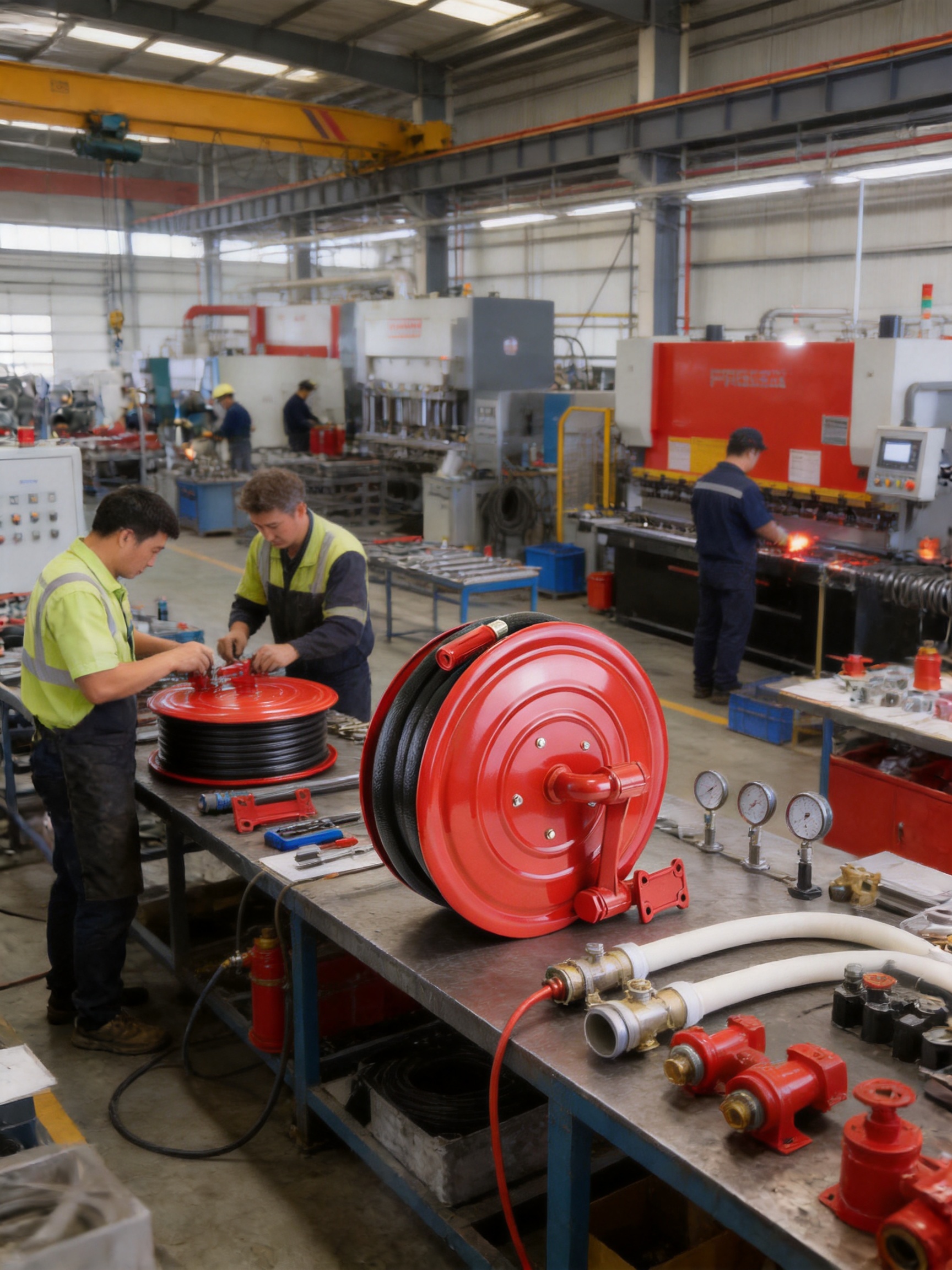
A hose reel should only be used when it is safe to do so and when the operator has received suitable training. The first priority is to raise the alarm, notify emergency services, and begin evacuation. A small fire may be tackled only if the escape route remains clear, smoke is limited, the operator is trained, and the fire is appropriate for water application.
To operate a typical manual reel, the user opens or releases the cabinet or access point if applicable, pulls the hose toward the fire, opens the gate valve, and controls the discharge with the nozzle. The hose should be kept as straight as practical, and the operator should maintain awareness of heat, smoke, slippery floors, electrical hazards, and changing fire conditions.
If the fire grows, visibility decreases, the hose cannot reach safely, or the operator loses confidence, the attempt should stop immediately. The user should withdraw, close doors if possible without delay, and follow the building evacuation plan. Fire hose reels are first-response equipment, not a replacement for professional emergency response or a complete building fire protection system.
Indoor installation is generally preferred for protecting the reel from ultraviolet exposure, freezing temperatures, rain, dust, and vandalism. If the equipment must be installed in an exposed location, the purchaser should evaluate whether additional protection is needed. Freezing water can damage valves, hoses, and pipework, while intense sunlight can affect some hose materials over time.
Industrial atmospheres may contain corrosive vapors, salt, solvents, or abrasive dust. The standard red epoxy powder-coated steel configuration may be suitable for many indoor environments, but specialized conditions should be communicated before manufacture. The manufacturer may be able to recommend alternative finishes, protective enclosures, or material adjustments.
Temperature also affects hose flexibility. PVC hose may become stiffer in cold conditions and softer at elevated temperatures. Storage, transport, and operation should remain within the manufacturer’s specified range. The hose should not be stored in contact with hot machinery, chemical containers, sharp metal edges, or direct sources of radiant heat.
The fixed manual and swing manual fire hose reels combine practical design, recognized component standards, accessible operation, and adaptable installation options. The steel 510 mm drum provides a stable base for the 30-metre PVC hose. The 12-bar working pressure supports demanding commercial and industrial applications when the water supply and complete system are correctly designed.
The product is supplied with core operating accessories, including a jet or spray nozzle, wall brackets, inlet pipe, and gate valve. This makes it more convenient than sourcing each part separately, while also improving the opportunity for component compatibility. The choice between fixed and swing mounting allows project designers to respond to different spatial conditions.
The manufacturer’s established history since 1995, expertise in various lined fire hoses, export experience, and integrated research and production capabilities provide a solid foundation for quality-oriented procurement. Customers can obtain a fire hose reel from a company whose primary business is connected with fire hose technology and related material products.
Compared with uncoordinated low-cost alternatives, a properly engineered and tested reel can offer better installation predictability, clearer component matching, stronger product identification, and more dependable maintenance planning. These advantages are particularly important in fire protection, where equipment must remain ready even though it may be used only rarely.
A fire hose reel provides an accessible and controlled water supply for trained personnel to respond to an early-stage fire. It is normally connected to a building water system and stores the hose on a dedicated drum for organized deployment.
A fixed manual reel remains mounted in one position. A swing manual reel can pivot or move outward on its bracket, which may make hose deployment easier around corners, machinery, columns, or restricted wall layouts.
The listed hose length is 30 metres. Actual coverage depends on the mounting location, building layout, hose routing, water supply, and applicable fire protection design requirements.
The product information lists 19 mm and 25 mm hose diameter options. The selected diameter should match the project’s flow, pressure, connection, nozzle, and regulatory requirements.
The stated working pressure is 12 bar. The complete installation must be designed and tested within the applicable pressure limits, and users should not exceed the manufacturer’s specified operating conditions.
The drum is made from steel and finished with red epoxy powder coating. The hose is made from PVC. The assembly also includes a jet or spray nozzle, wall brackets, an inlet pipe, and a gate valve.
No. Water is not suitable for every fire. It may be dangerous on energized electrical equipment, flammable liquid fires, reactive chemicals, and some specialized hazards. The building’s fire risk assessment should determine which extinguishing equipment is required.
Yes, the product is intended for applications such as warehouses, factories, and large public buildings. The final suitability depends on the building design, hazard classification, water supply, installation conditions, and local requirements.
EN 671 is associated with fixed firefighting systems using hose reels or hose systems. Customers should confirm the precise compliance scope and documentation for the selected complete assembly and installation.
EN 694 relates to semi-rigid delivery hoses for fixed firefighting systems. The product information states that the hose complies with EN 694. Buyers should request applicable technical and conformity documentation for their project.
Maintenance should include regular inspection of the drum, hose, nozzle, valve, brackets, connections, coating, and access area. The hose should be protected from sharp edges, chemicals, heat, and unnecessary use. Testing and maintenance should follow local regulations and manufacturer instructions.
Project-specific requirements should be discussed with the manufacturer before ordering. Possible considerations may include hose material, diameter, connection type, labeling, packaging, and accessory configuration, provided the final product remains suitable for its intended application and applicable standards.
The red finish makes the reel easier to identify as fire protection equipment and provides a protective coating over the steel drum. It does not eliminate the need for inspection or make the reel suitable for every corrosive environment.
Buyers should confirm the reel type, hose diameter, hose length, working pressure, connection dimensions, nozzle style, bracket arrangement, installation environment, required standards, quantity, packaging, shipping documents, and any local approval requirements.
Fixed manual and swing manual fire hose reels provide a practical and durable first-response firefighting solution for commercial, industrial, and public facilities. With a 510 mm steel drum, red epoxy powder finish, 30-metre PVC hose, 12-bar working pressure, and essential operating accessories, the product is designed for controlled storage, rapid access, and straightforward manual use.
The fixed configuration supports compact and predictable installation, while the swing configuration adds movement and flexibility where hose deployment is affected by walls, corners, machinery, or structural obstacles. The availability of 19 mm and 25 mm hose options allows the equipment to be matched to different project requirements.
Taizhou Shenlong Fire Science and Technology Co., Ltd. strengthens the product offering through its long history in fire hose research, production, sales, and service. Its experience with various lined fire hoses, PVC and other material products, domestic distribution, and export cooperation supports a quality-focused supply process for customers in different markets.
For the best result, the hose reel should be selected as part of a complete fire protection design, installed by competent personnel, connected to an adequate water supply, inspected regularly, and operated only by trained people when conditions are safe. When these requirements are followed, a properly manufactured hose reel can provide an important layer of protection between the discovery of a fire and the arrival of professional emergency responders.
EN 671, Fixed Firefighting Systems—Hose Systems—Requirements and Test Methods.
EN 694, Fire-Fighting Hoses—Semi-Rigid Delivery Hoses for Fixed Systems.
Manufacturer Product Specification, Fixed Manual / Swing Manual Fire Hose Reels.
Manufacturer Company Information, Taizhou Shenlong Fire Science and Technology Co., Ltd.
General Principles of Building Fire Safety Design and Maintenance.
Fire Hose Reel Installation, Inspection, and Operational Safety Guidance.
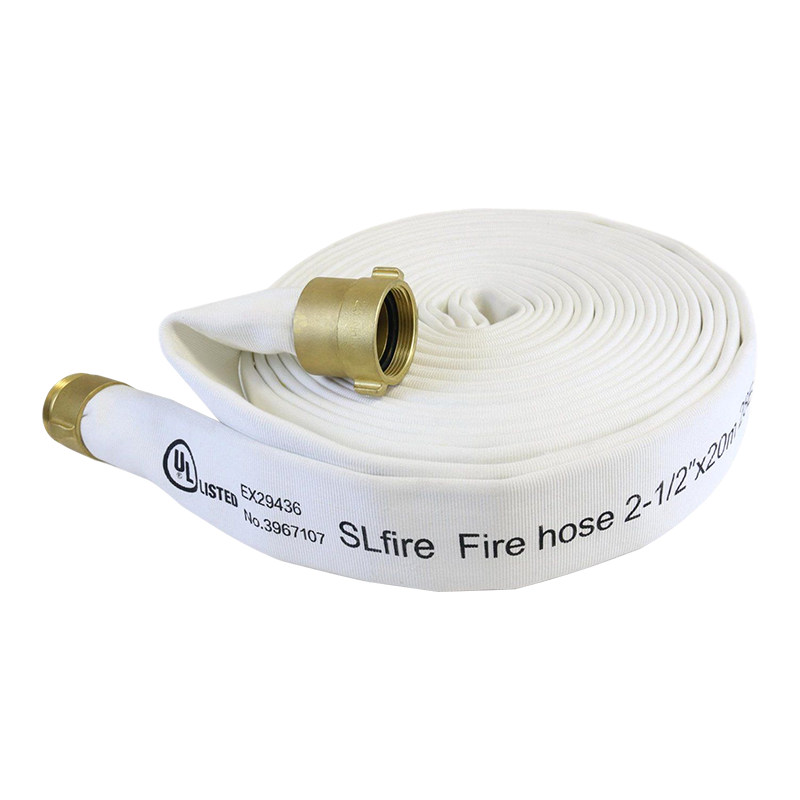
Single jacket, EPDM rubber liner Features • 100% high tenacity polyester jacket, high-grade EPDM rub...
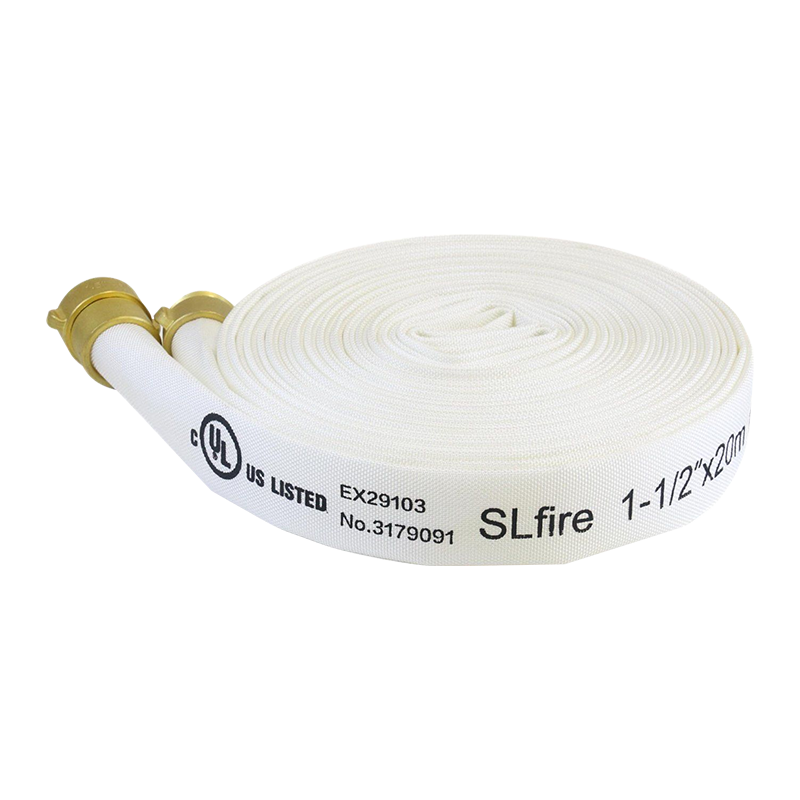
Single jacket, TPU liner •High-tenacity polyester yarn, circular woven in twill weave/plain weave,T ...
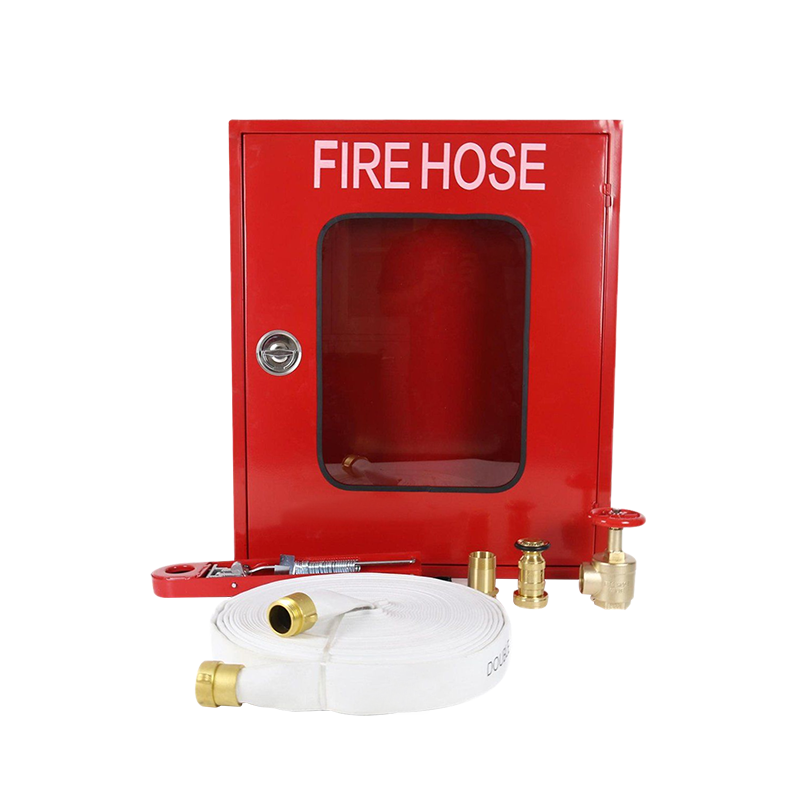
Fire cabinets are designed to accommodate fire hose,valve and other firefighting equipment. Type 201...
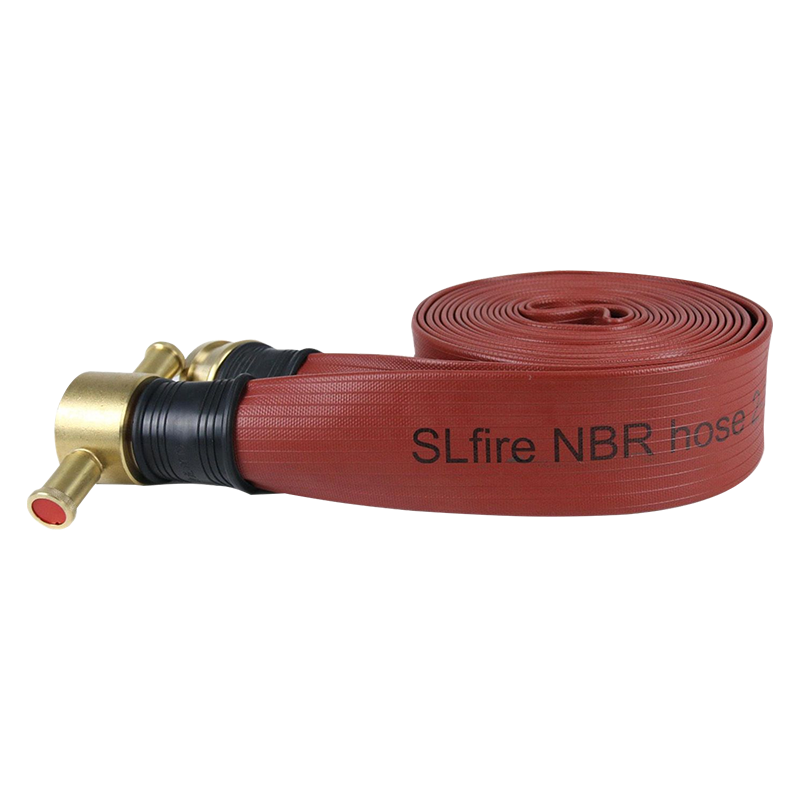
Nitrile covered hose •Nitrile/TPR blend as cover and lining, with 100% high-tenacity polyester yarn ...
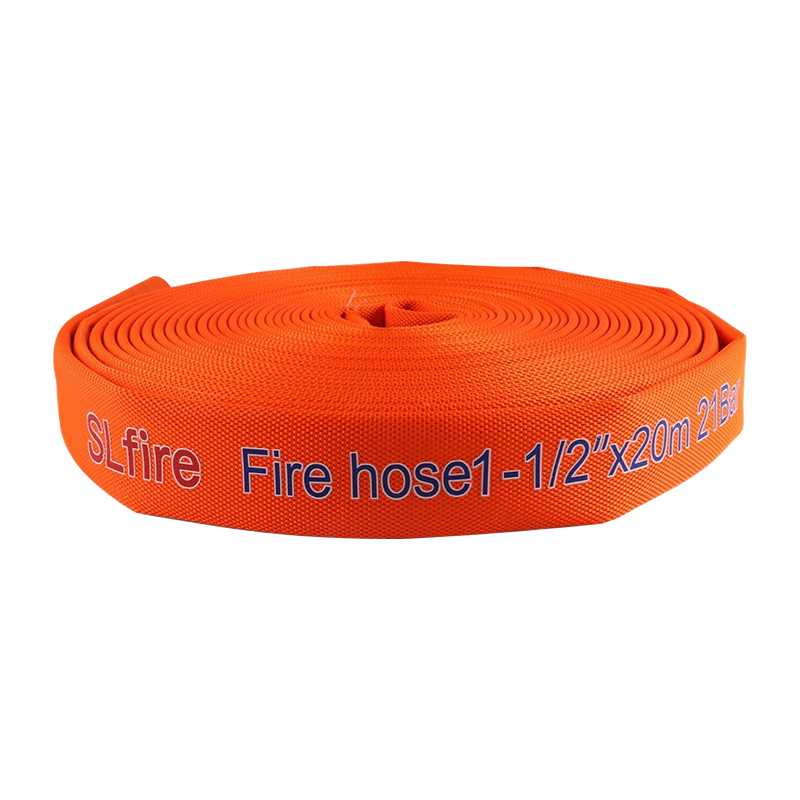
Single jacket, TPU liner •High-tenacity polyester yarn, circular woven in twill weave, TPU lining, f...
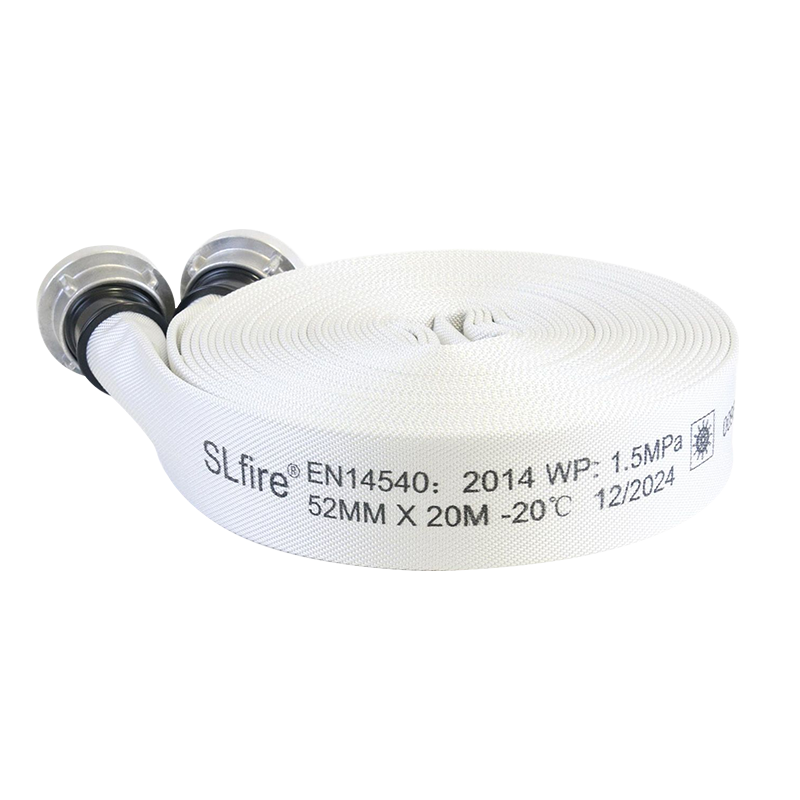
Marine hose Single jacket, PVC liner •100% high tenacity polyester yarn, circular woven in twill wea...
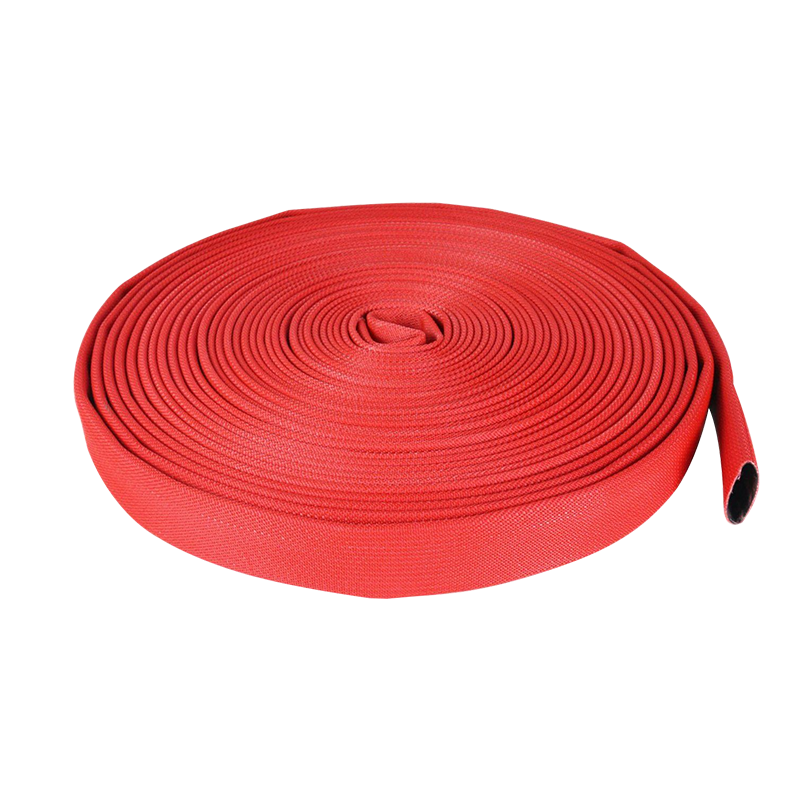
Marine hose Single jacket, PVC liner, PU coated •100% high tenacity polyester yarn,c ircular woven i...
 Call Us
+86 159-5116-9511
Need Support
Head Office
No.58, Kechuang Road, Sixiang Street Medicine Gaoxin District Taizhou City, Jiangsu Province

What Is a Fire Hose? A fire hose is a high-pressure flexible hose designed to carry water or fire retardant chemicals from a water source, such as a hydrant, pump, or tank, to a fire for suppression p...
Copyright © Taizhou Shenlong Fire Science and Technology Co., Ltd. All Rights Reserved.
 Fire Hose Manufacturers, Fire Hydrant Hose Factory