

 English
 русский
 Español
 Deutsch
 عربى
عربى Français
 Português
Don't hesitate to send a message

Single jacket, EPDM rubber liner Features • 100% high tenacity polyester jacket, high-grade EPDM rub...
Content
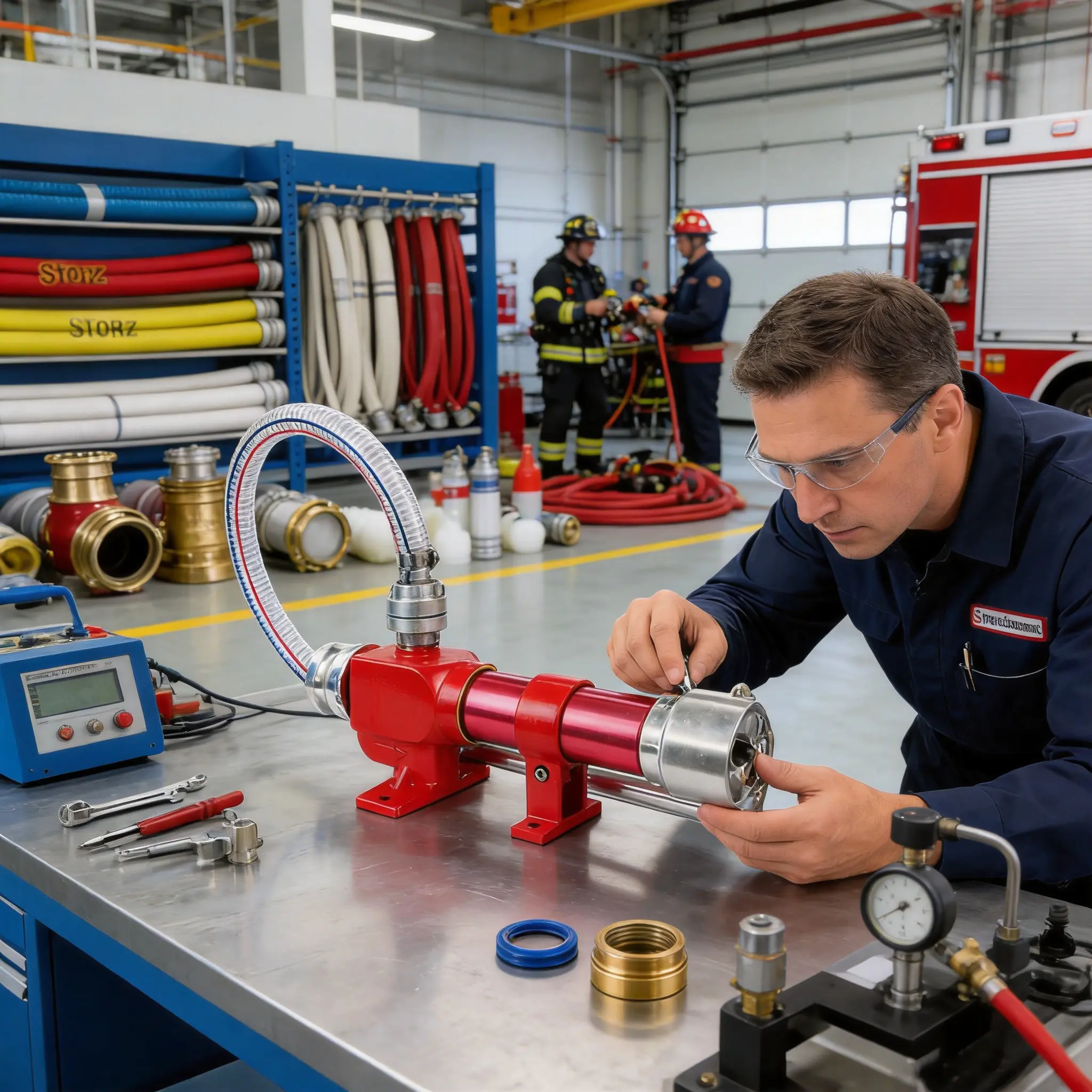
Fire suppression depends on more than simply delivering water to a burning area. In many incidents, water alone cannot control fuel-based fires, prevent re-ignition, or cover the surface of a hazardous liquid effectively. Foam concentrate provides an important additional capability by creating a stable foam solution that separates fuel from oxygen, suppresses vapors, cools heated surfaces, and helps reduce the possibility of re-ignition. To obtain these benefits, the concentrate must be introduced into the water stream accurately and consistently. The Brass Foam Inductor is designed for this purpose.
Manufactured from brass and configured with a 2.5-inch inlet, the Brass Foam Inductor is a practical firefighting device for professional fire brigades, industrial facilities, construction sites, municipal emergency services, agricultural operations, and other locations where dependable foam delivery is required. It is designed to draw foam concentrate into a flowing water stream and produce a properly proportioned foam solution before the mixture reaches the discharge device.
The unit combines a durable metal body, a standard firefighting connection size, a working pressure of 100 PSI, and a flow range of approximately 225 to 450 liters per minute. These characteristics make it suitable for a wide range of emergency response applications. Its design also supports different inlet and connector configurations, including Storz, BS, Machino, and other connection standards, allowing the product to be adapted to different hose systems and regional firefighting practices.
For purchasers, the value of an inductor is measured not only by its material and dimensions but also by its reliability under pressure, ease of connection, flow stability, maintenance requirements, and compatibility with existing firefighting equipment. The Brass Foam Inductor is developed to address these practical requirements while benefiting from the manufacturing experience of Taizhou Shenlong Fire Science and Technology Co., Ltd., an established producer of lined fire hoses and related firefighting products.
A foam inductor is a proportioning device installed in a firefighting water line. It uses the movement and pressure of water to create a controlled suction effect. As water passes through the internal passage, the pressure conditions cause foam concentrate to be drawn from a connected container or supply tank. The concentrate then combines with the water at a predetermined proportion, creating a foam solution that can be discharged through a foam branch pipe, foam nozzle, monitor, or other compatible device.
The Brass Foam Inductor performs this mixing function without requiring a separate electrically powered pump or complex automated proportioning system. Its operation is based on the hydraulic energy already present in the firefighting line. This makes it especially useful for mobile response teams, temporary firefighting arrangements, industrial emergency stations, and installations where simplicity and rapid deployment are important.
The device is positioned between the water supply hose and the foam delivery hose or discharge equipment. A pickup tube is generally connected to the foam concentrate container, allowing the inductor to draw concentrate into the main stream. Correct operation depends on maintaining the specified inlet pressure, flow range, hose arrangement, and compatibility between the inductor and the selected foam concentrate.
Because the inductor is a critical part of the foam delivery system, its internal passages must be manufactured accurately. The water path, suction port, mixing section, and outlet must work together to provide consistent hydraulic performance. A well-made inductor reduces the risk of unstable mixing, excessive pressure loss, leakage, or delayed foam production during an emergency.
| Specification | Product Information |
|---|---|
| Product type | Foam inductor for firefighting systems |
| Primary material | Brass |
| Inlet size | 2.5 inches |
| Flow rate | 225–450 liters per minute |
| Working pressure | 100 PSI, approximately 7 bar |
| Connection options | Storz, BS, Machino, and other available configurations |
| Main function | Introducing foam concentrate into a water stream to create a foam solution |
| Typical product category | Firefighting hose nozzles and foam delivery accessories |
| Recommended use | Fire brigades, industrial fire protection, emergency response, construction, and other firefighting applications |
The listed flow range of 225 to 450 liters per minute gives the equipment a useful operating window for different firefighting conditions. The correct flow setting should be selected according to the available water supply, the type and concentration of foam being used, the downstream discharge device, and the requirements of the complete firefighting system.
Material selection has a direct effect on the service life and reliability of a firefighting accessory. Brass is widely used in valves, couplings, hose fittings, hydrant accessories, and other fluid-handling components because it provides a balanced combination of strength, corrosion resistance, machinability, and long-term durability.
One of the main advantages of brass is its resistance to ordinary atmospheric corrosion and moisture exposure. Firefighting equipment is frequently stored in environments where humidity, water residue, temperature changes, and airborne contaminants may be present. A brass body can withstand these conditions more effectively than many unprotected ferrous materials, especially when the equipment is properly rinsed, dried, inspected, and stored after use.
Brass also offers good mechanical strength for a compact pressure-handling device. A foam inductor must withstand the forces generated by pressurized water and repeated connection and disconnection of hose couplings. The material must retain its shape and sealing surfaces so that the connection remains secure during operation.
Another benefit is machinability. Brass can be formed and machined to produce clean internal passages, threaded sections, coupling interfaces, and sealing surfaces. Accurate machining is important because even small irregularities inside a hydraulic component may increase turbulence, create unwanted pressure loss, or affect the suction performance of the foam pickup system.
Compared with lightweight plastic alternatives, brass generally provides a more substantial and impact-resistant body. Plastic components may be suitable for certain low-risk applications, but professional fire crews often prefer robust metal equipment that can tolerate rough handling, repeated deployment, and exposure to demanding working environments. Compared with ordinary steel, brass can provide better resistance to corrosion in wet conditions without requiring the same level of protective coating maintenance.
Brass is also visually easy to inspect. Cracks, dents, damaged threads, contamination, and surface abnormalities can usually be identified during routine checks. This supports preventive maintenance and helps operators remove questionable equipment from service before an emergency occurs.
The Brass Foam Inductor is based on the principle of hydraulic suction. Pressurized water enters through the 2.5-inch inlet and travels through an internal flow passage. The internal geometry produces a pressure reduction at the foam pickup point. When the foam concentrate hose is connected correctly, this pressure difference draws concentrate into the water stream.
The water and concentrate combine inside the inductor and continue through the outlet toward the foam discharge device. The resulting solution can then be expanded into finished foam by a suitable nozzle or branch pipe. The inductor itself does not necessarily create the final foam blanket; rather, it performs the essential proportioning function that prepares the water-concentrate mixture for downstream foam generation.
This operating method has several practical advantages. It does not depend on an electrical control panel, battery, motor, or software. It can be used in locations where power is unavailable or where a simple emergency response arrangement is preferred. The device can be incorporated into a portable hose line, a fixed industrial fire point, or a temporary foam application system.
However, correct hydraulic conditions remain important. If the inlet pressure is too low, the flow rate is outside the specified range, the hose arrangement creates excessive resistance, or the outlet device is not compatible, concentrate pickup may be reduced or interrupted. For this reason, operators should evaluate the complete system rather than treating the inductor as an isolated component.
The 100 PSI working pressure, equivalent to approximately 7 bar, provides a clear operating reference for system designers and end users. Water supply pressure, elevation changes, hose length, coupling type, nozzle resistance, and friction loss should all be considered during installation and deployment. A properly designed system allows the inductor to function within its intended hydraulic range.
A central advantage of a dedicated foam inductor is its ability to introduce concentrate into the water stream in a controlled manner. Improvised mixing methods may produce uneven foam concentration, excessive waste, or insufficient chemical content. In contrast, a purpose-built inductor is designed around a defined flow range and pressure condition, giving the firefighting team a more dependable starting point for foam application.
Consistent proportioning is important because too little concentrate may produce weak foam with limited fuel-separation capability. Too much concentrate can increase operating costs, create unnecessary environmental and cleanup concerns, and place additional demands on the downstream equipment. A correctly selected inductor helps create a more predictable foam solution.
The brass construction offers a durable alternative to fragile fittings or low-grade components. Firefighting equipment may be exposed to impact, vibration, water, foam residue, outdoor storage, and repeated transport. A robust brass housing is suitable for this type of service when combined with proper inspection and maintenance.
The durable construction is particularly valuable for industrial fire teams that must keep equipment ready for use over long periods. A reliable inductor can support repeated training exercises and emergency deployments without requiring frequent replacement due solely to ordinary environmental exposure.
Firefighting connection standards vary between countries, industries, and existing hose networks. The availability of Storz, BS, Machino, and other connector options allows the product to be configured for different users. This is a significant advantage over products offered with only one fixed coupling standard.
Connection compatibility simplifies procurement for organizations that already operate a particular hose system. It can also help international distributors serve several markets using the same basic product platform while selecting the connection configuration required by each customer.
The inductor can be deployed as part of a mobile firefighting line without the complexity of a powered proportioning unit. Its compact function and hose-based operation are suitable for emergency teams that need to move quickly from storage to the incident area.
Simple equipment is also easier to train with. Firefighters can learn the connection sequence, operating pressure requirements, concentrate supply arrangement, and shutdown procedure without needing advanced electronic controls. This can be helpful for industrial facilities, agricultural sites, warehouses, and smaller emergency organizations.
Because the device uses water flow to create suction, it can operate without a separate electrical supply. This is an important benefit during power outages, outdoor incidents, remote-area fires, and emergency situations in which electrical equipment may be unsafe or unavailable.
The absence of powered components also reduces the number of parts that can fail because of battery depletion, motor damage, control-system faults, or electrical moisture intrusion. Routine checks still remain necessary, but the basic operating principle is mechanically straightforward.
The inductor can be integrated into systems used for flammable liquid protection, industrial process areas, fuel storage locations, vehicle fires, aircraft support facilities, warehouses, and other applications where foam suppression is appropriate. The actual foam concentrate, proportioning requirement, and discharge method must be selected for the hazard, but the inductor provides a flexible means of introducing the concentrate.
Its flow range also supports both smaller localized incidents and larger emergency response arrangements, provided the complete water supply and discharge system are correctly matched to the required capacity.
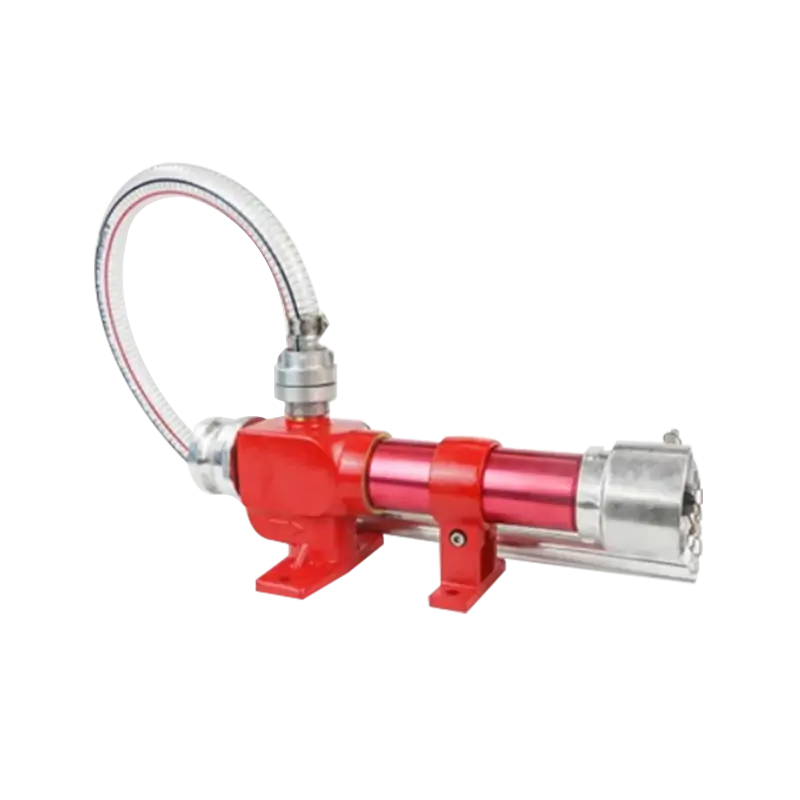
Brass Foam Inductor
The performance of a foam inductor depends heavily on manufacturing quality. A product may have an attractive exterior but still perform poorly if its internal passages are inconsistent, its connection dimensions are inaccurate, or its sealing areas are not properly finished. The production of reliable firefighting accessories therefore requires attention to material selection, forming, machining, assembly, inspection, and packaging.
Taizhou Shenlong Fire Science and Technology Co., Ltd. was founded in 1995 and operates across research and development, production, sales, and service. This integrated structure gives the company experience in understanding both product design and field use. Its main business includes various materials of lined fire hoses, while its broader capabilities cover related foreign trade products such as rubber, PVC, polyurethane, and double-sided tape products according to customer requirements.
Experience in fire hose manufacturing is directly relevant to the development and supply of hose accessories. Hose, couplings, foam inductors, nozzles, and related fittings must function as a coordinated system. Understanding hose pressure, coupling dimensions, flow behavior, storage conditions, and field handling helps a manufacturer supply more practical products rather than isolated components with limited system compatibility.
Reliable production begins with suitable raw material control. For a brass foam inductor, the selected brass material must be appropriate for pressure service, machining, and the expected environmental conditions. Material consistency supports stable processing and helps reduce variation between production batches.
During manufacturing, attention should be given to surface condition, casting or forming quality, machining allowance, and the removal of burrs or irregularities. Internal and external surfaces should be prepared so that water can pass through the device efficiently and connection interfaces can accept the required seals or couplings correctly.
The internal geometry of an inductor is central to its hydraulic performance. The water inlet, flow passage, suction port, mixing area, and outlet must be formed and finished with appropriate accuracy. Precision machining helps maintain the intended relationship between these sections.
Machining also affects the fit of couplings and threaded components. A connection that is too loose may leak or disconnect under pressure, while a connection that is too tight or poorly aligned may be difficult to install during an emergency. Consistent dimensions improve interchangeability and make the equipment easier for operators to use with standard hose systems.
A foam inductor is only as reliable as its weakest connection. Assembly procedures should ensure that pickup ports, valves, coupling components, seals, and protective parts are installed correctly. Sealing surfaces must remain clean and free from damage. Where gaskets or O-rings are used, their material and dimensions should be suitable for the service conditions and the foam concentrate involved.
Proper assembly also includes checking the movement and alignment of relevant components. A pickup connection that is obstructed, incorrectly fitted, or contaminated may prevent concentrate from entering the water stream even when the main water path appears to be functioning.
Quality inspection should cover dimensions, appearance, connection compatibility, sealing performance, and pressure resistance. A responsible manufacturer evaluates products against defined specifications rather than relying only on visual inspection.
Pressure testing is particularly important for firefighting components. The product must be capable of operating at its stated working pressure without leakage or structural instability. Flow verification can help confirm that the inductor performs within the specified range of 225 to 450 liters per minute under suitable test conditions.
Testing may also include checks of foam concentrate pickup, connector fit, and the condition of internal passages. These evaluations help identify manufacturing variation before products are packed and shipped. For distributors and professional users, documented inspection procedures provide greater confidence when purchasing equipment for emergency service.
The company’s long experience in producing lined fire hoses provides a foundation for coordinated product development. Fire hose production involves textile reinforcement, lining materials, pressure considerations, coupling assembly, dimensional control, and quality management. These areas overlap with the practical requirements of foam inductors and other hose accessories.
Because the company produces and supplies multiple categories of firefighting products, it can better understand how an inductor will be used alongside hoses, couplings, nozzles, cabinets, and fire accessories. This broader product knowledge supports more useful technical communication with customers and can help buyers select compatible components for a complete system.
Municipal fire departments require equipment that can be transported quickly, connected to existing hose lines, and used in changing incident conditions. A brass foam inductor can be included in a foam response kit for fires involving fuels, oils, solvents, and other hazards where a foam solution is more appropriate than water alone.
The selection of Storz, BS, Machino, or other connector configurations helps the inductor fit different departmental standards. Before purchase, the department should confirm hose diameter, coupling type, concentrate container arrangement, nozzle requirements, and available pump pressure.
Industrial plants may handle combustible liquids, chemicals, paints, lubricants, gases, or other materials requiring specialized firefighting measures. A foam inductor can form part of an emergency response system positioned near storage tanks, loading areas, production lines, workshops, and fuel-handling zones.
Industrial users benefit from the product’s durable brass body and mechanical operating principle. The device can be stored in an emergency cabinet or response station and deployed when a portable foam line is needed. Regular drills should verify that operators can connect the equipment, identify the correct concentrate, establish water flow, and control the discharge safely.
Fuel terminals, vehicle depots, marine facilities, and transport yards may face risks from gasoline, diesel, aviation fuel, oils, and similar combustible liquids. Foam works by spreading across the fuel surface and reducing vapor release, while also cooling the exposed area.
A foam inductor can support portable response systems in these environments. The specific foam type and application method must be selected according to the fuel, regulatory requirements, environmental considerations, and the recommendations of the foam manufacturer.
Construction projects often contain fuel-powered machinery, temporary storage areas, welding operations, electrical installations, and flammable materials. Fire protection arrangements may change as the project develops. A portable inductor can provide flexibility when a permanent foam system is not yet installed.
Its hose-based configuration allows the equipment to be moved between designated fire points. The brass body is also suitable for sites where tools and emergency equipment may be exposed to dust, rain, handling, and frequent relocation.
Agricultural sites may store fuel, fertilizers, pesticides, oils, and machinery. They may also be located far from municipal fire stations, making on-site equipment important for initial response. A foam inductor can be included in a rural firefighting package where a reliable water source and suitable foam concentrate are available.
Rural users should pay particular attention to water supply capacity, hose length, elevation, storage temperatures, and access to replacement seals. Routine flushing is important because dried foam residue can restrict small passages or affect connection components.
Firefighting organizations can use the inductor during training exercises to teach proportioning principles, hose-line arrangement, equipment inspection, and foam application. Training should include both normal operation and troubleshooting procedures.
Practice helps operators recognize symptoms such as inadequate concentrate pickup, unstable discharge, excessive leakage, or unexpected pressure loss. It also provides an opportunity to verify that the selected foam concentrate, pickup tube, connectors, and discharge nozzle are compatible before a real incident occurs.
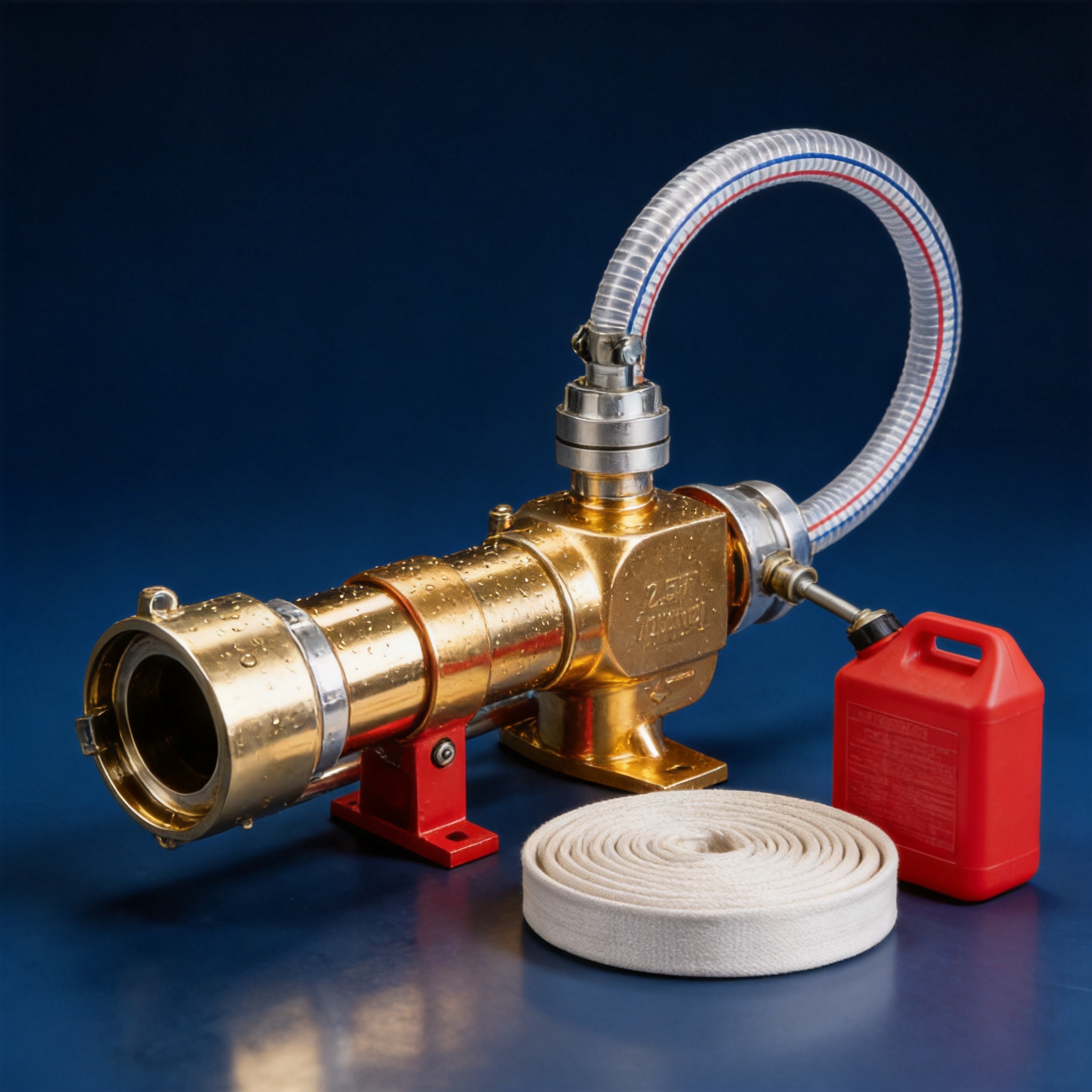
The inductor should be installed according to the direction of water flow indicated by the product configuration and the instructions supplied with the complete system. The water supply hose must be connected to the inlet, and the downstream hose or discharge device must be connected to the outlet. The foam pickup hose should be inserted securely into the approved concentrate container.
Before opening the water supply fully, operators should check all couplings and ensure that gaskets are seated correctly. Loose fittings can cause leakage and may prevent the pressure differential needed for concentrate pickup. The concentrate container should remain stable and accessible during operation.
The water supply should be adjusted so that the inductor operates within the recommended flow and pressure conditions. If the water supply is too weak, the device may not draw concentrate effectively. If the system is operated outside its specified working limits, pressure loss, unstable proportioning, or equipment damage may occur.
Operators should use only foam concentrates that are suitable for the intended hazard and compatible with the inductor’s materials and seals. Different concentrates may require different mixing ratios and discharge equipment. The inductor should not be assumed to be suitable for every chemical product without verification.
After use, the equipment should be shut down in a controlled manner. Residual foam solution should be flushed from the water path and pickup components using clean water where the foam manufacturer and local procedures permit. The unit should then be drained, dried, inspected, and stored in a clean location.
Regular maintenance helps preserve the inductor’s performance and extends its usable service life. Inspection should be performed before storage, after training, and after emergency deployment. The inspection should include the brass body, inlet and outlet connections, pickup port, seals, threads, coupling locks, and any visible valves or control components.
Operators should look for dents, cracks, corrosion deposits, damaged threads, missing gaskets, loose parts, and foreign material inside the passages. Brass is corrosion resistant, but it is not maintenance free. Foam residue, hard water deposits, dirt, and chemical contamination can still affect performance.
Seals should be replaced if they become cracked, permanently compressed, swollen, brittle, or damaged. Replacement parts should have the correct size and material. Lubricants should be used only when recommended for the particular seals and foam system, because some substances can damage elastomers or contaminate the concentrate.
Testing should be carried out at intervals established by the user’s fire safety program. A functional test can confirm that water passes through the inductor, the pickup system draws concentrate, and the downstream connection remains secure. Any abnormal pressure behavior or leakage should be investigated before the device is returned to service.
Storage conditions also affect service life. The inductor should be protected from unnecessary exposure to extreme heat, freezing conditions, direct sunlight, corrosive chemicals, and mechanical impact. It should be kept in a designated location where personnel can find it quickly and where periodic inspections can be recorded.
Portable foam inductors are one of several methods used to mix concentrate with water. Other options include inline proportioners, around-the-pump systems, balanced pressure proportioners, bladder tank systems, and electronically controlled units. Each method has advantages in specific applications.
Large fixed installations may use automated proportioning equipment where precise control, remote monitoring, and continuous high-capacity operation are required. Such systems can be appropriate for major industrial facilities but may involve higher installation costs, more complex maintenance, and greater dependence on fixed infrastructure.
A portable brass inductor is generally more straightforward. It can be kept ready for deployment, moved between hose lines, and used without a dedicated electrical control system. This makes it attractive for facilities that need flexible emergency capability or for response teams that require an economical backup arrangement.
Compared with improvised eductor arrangements, a purpose-built inductor provides a defined operating range, standardized connections, and a body designed for firefighting service. Compared with low-cost plastic devices, brass provides a more substantial material option for demanding environments. Compared with unprotected steel, brass can reduce concerns about ordinary surface corrosion and coating damage.
The best selection depends on the hazard assessment, required discharge rate, available pressure, foam type, operating environment, and local standards. The Brass Foam Inductor is particularly valuable where portability, durability, mechanical simplicity, and broad connection compatibility are priorities.
Product quality is only one part of a successful procurement program. Customers also need dependable communication, accurate specifications, export experience, packaging, and after-sales support. Taizhou Shenlong Fire Science and Technology Co., Ltd. combines research and development, manufacturing, sales, and service within one business structure.
The company’s products are reported to be sold across more than 20 provinces, cities, and autonomous regions, while cooperation with domestic foreign trade companies supports exports to multiple countries. This experience is useful for international buyers who require product documentation, connection customization, packaging coordination, and shipment preparation.
Customers may need different coupling standards, labeling requirements, carton arrangements, or product combinations. The availability of various connector configurations, including Storz, BS, and Machino, demonstrates a willingness to adapt the basic product to different firefighting networks. Buyers should communicate the required standard clearly before production or shipment to avoid compatibility problems.
The company also supplies a broad range of fire hose-related products, including lined fire hoses and other accessories. This allows buyers to evaluate the Brass Foam Inductor as part of a wider equipment package rather than purchasing it as an isolated fitting. Coordinated procurement can simplify technical communication and help ensure that hose, coupling, nozzle, and inductor specifications work together.
For distributors, the product is suitable for inclusion in catalogs serving industrial fire protection, municipal response, construction, agricultural, and general safety markets. Its clear specifications, durable brass construction, and adaptable connector options make it understandable to both technical purchasers and end users.
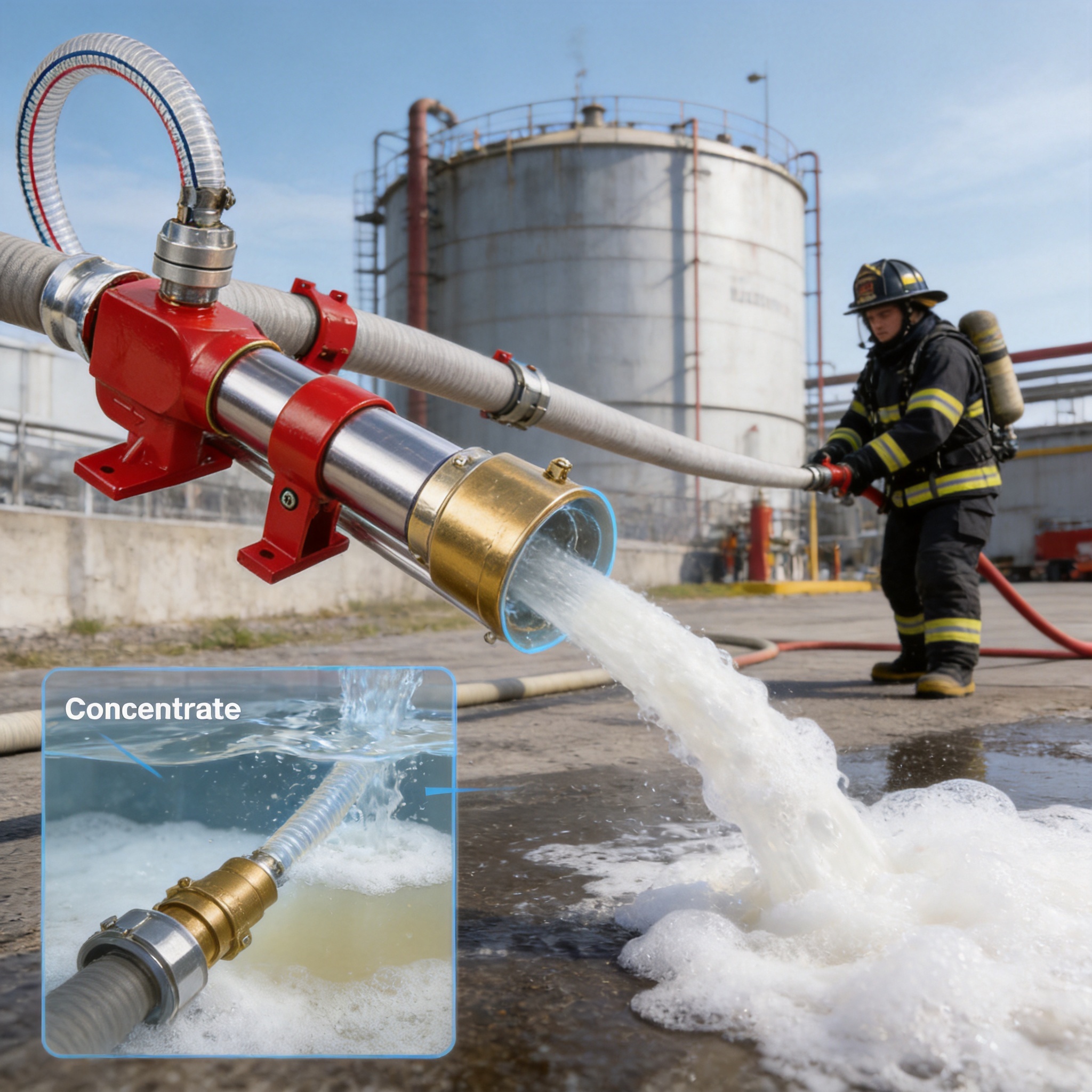
Before ordering a Brass Foam Inductor, buyers should identify the required inlet and outlet connection standards. A 2.5-inch inlet is a key specification, but the coupling interface must also match the hose, hydrant, pump, or downstream equipment already in use.
The required flow rate should be compared with the capacity of the water supply and the intended foam discharge device. The stated operating range is 225 to 450 liters per minute. A system that cannot maintain the necessary flow may not provide effective concentrate pickup, while a system that exceeds the design conditions may create unnecessary pressure loss or stress.
The foam concentrate should also be identified in advance. The user should confirm the desired mixing ratio, concentrate viscosity, compatibility with seals, environmental requirements, and suitability for the relevant fire hazard. The inductor must be used as part of a complete, compatible foam system.
Buyers should ask about connector options, available spare seals, inspection documentation, packaging, minimum order quantities, and lead times. For export orders, the buyer should also confirm product markings, shipping protection, customs documentation, and any destination-country requirements.
A foam inductor is an important firefighting component, but it does not replace a complete fire risk assessment or a trained emergency response plan. Users must select the correct foam concentrate and discharge method for the hazard. They must also follow local fire codes, workplace procedures, equipment standards, and manufacturer instructions.
Firefighters should wear the appropriate protective clothing and respiratory protection for the incident. Foam application can involve hot surfaces, toxic smoke, flammable vapors, pressurized hoses, and unstable structures. The inductor should be operated from a safe position, and hose movement should be controlled to reduce the risk of injury.
Water pressure should never be increased beyond the rated working conditions of the equipment or the lowest-rated component in the hose line. Couplings should not be disconnected while the line is pressurized. After use, the system should be depressurized and flushed according to the applicable procedures.
Environmental management is also important. Foam concentrate and contaminated rinse water should be handled according to local regulations and the recommendations of the concentrate supplier. The use of foam should be limited to situations where it provides a justified firefighting benefit.
Its primary function is to introduce foam concentrate into a flowing water stream and produce a foam solution for fire suppression. It is installed within a hose-based firefighting system and uses hydraulic suction to draw concentrate from a connected container.
The product is made from brass. Brass provides durability, corrosion resistance, good machinability, and a solid construction suitable for demanding firefighting environments.
The standard listed inlet size is 2.5 inches. Buyers should also confirm the exact coupling or connector configuration required for their hose system.
The stated flow range is 225 to 450 liters per minute. The actual operating point should be selected according to the available water pressure, hose arrangement, foam concentrate, and downstream discharge equipment.
The listed working pressure is 100 PSI, approximately 7 bar. The complete system should be designed so that no component is exposed to pressure beyond its rated limit.
Available options include Storz, BS, Machino, and other configurations. The exact option should be confirmed before ordering because compatibility depends on the standards used by the customer’s hose and hydrant network.
Yes. The inductor uses the hydraulic energy of the flowing water to draw foam concentrate, so it does not require a separate electrical power supply. Correct water pressure and flow are still essential.
Not automatically. The selected concentrate must be appropriate for the fire hazard and compatible with the inductor, seals, pickup hose, and downstream discharge equipment. Users should verify compatibility with the foam manufacturer and system designer.
After use, the inductor should be flushed where appropriate, drained, dried, and inspected. Users should check the body, connections, seals, pickup port, threads, and internal passages. Damaged or deteriorated seals should be replaced with suitable parts.
Brass offers a combination of corrosion resistance, strength, durability, and machinability. It is more robust than many lightweight plastic alternatives and can provide better wet-environment resistance than ordinary unprotected steel.
It can be used with compatible hose systems when the inlet size, connector standard, flow capacity, pressure rating, and downstream equipment are properly matched. Existing equipment should be checked before deployment.
International buyers should confirm the connector standard, inlet and outlet dimensions, operating pressure, flow range, foam compatibility, markings, packaging, inspection documents, spare parts, and shipping requirements. Clear technical communication helps prevent connection and installation problems.
The Brass Foam Inductor is a practical and durable solution for introducing foam concentrate into a firefighting water stream. Its brass construction provides strength and corrosion resistance, while the 2.5-inch inlet and 225–450 LPM flow range support a variety of professional firefighting applications. The 100 PSI working pressure offers a defined reference for system design, and the availability of Storz, BS, Machino, and other connection options improves compatibility with different hose networks.
Compared with improvised mixing arrangements, the product provides a more controlled and dependable method of preparing foam solution. Compared with highly complex powered systems, it offers mechanical simplicity, portability, and reduced dependence on electricity. These advantages make it useful for municipal fire brigades, industrial facilities, construction sites, agricultural operations, fuel-handling areas, and emergency preparedness programs.
The manufacturing strength behind the product is equally important. Taizhou Shenlong Fire Science and Technology Co., Ltd. brings experience in research and development, production, sales, service, lined fire hoses, and related firefighting products. Its broad product knowledge, customization capability, connector options, and international supply experience support the needs of distributors and professional users.
When correctly selected, installed, operated, and maintained, the Brass Foam Inductor can become a dependable part of a complete foam firefighting system. Its value lies in combining durable brass construction with straightforward hydraulic operation, adaptable connections, and practical support from an experienced fire equipment manufacturer.
1. General principles of portable foam proportioning equipment for firefighting applications.
2. Fire hose, coupling, and nozzle selection practices for pressurized water delivery systems.
3. Industrial fire protection guidance concerning foam application for flammable-liquid hazards.
4. Manufacturer-provided technical information for the Brass Foam Inductor, including material, inlet size, flow range, working pressure, and connector options.
5. General maintenance practices for brass firefighting fittings, hose accessories, and foam delivery equipment.
6. Fire service training principles for hydraulic systems, foam concentrate handling, hose-line deployment, and emergency equipment inspection.
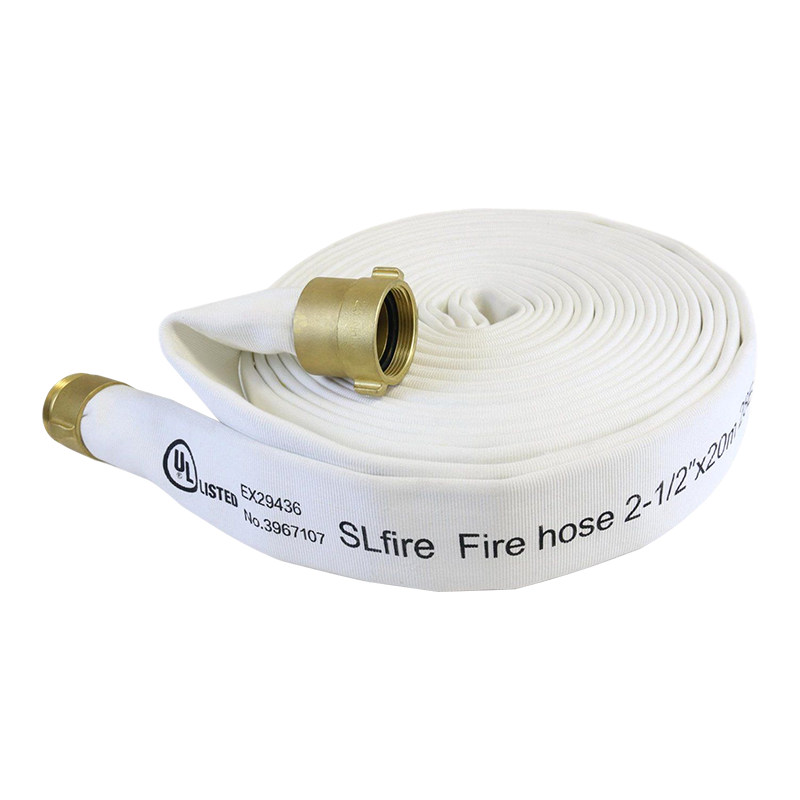
Single jacket, EPDM rubber liner Features • 100% high tenacity polyester jacket, high-grade EPDM rub...
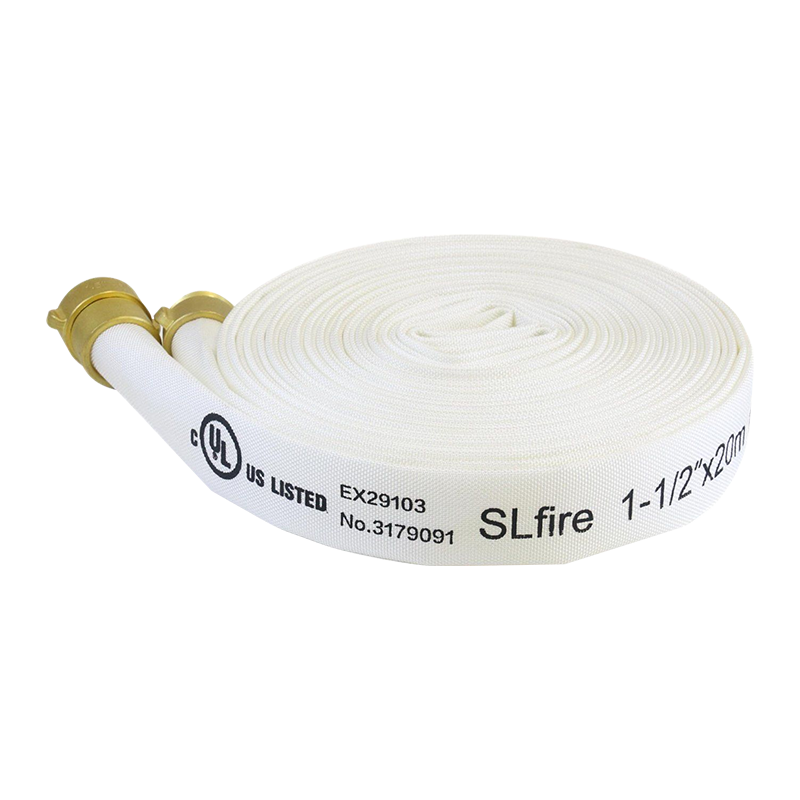
Single jacket, TPU liner •High-tenacity polyester yarn, circular woven in twill weave/plain weave,T ...
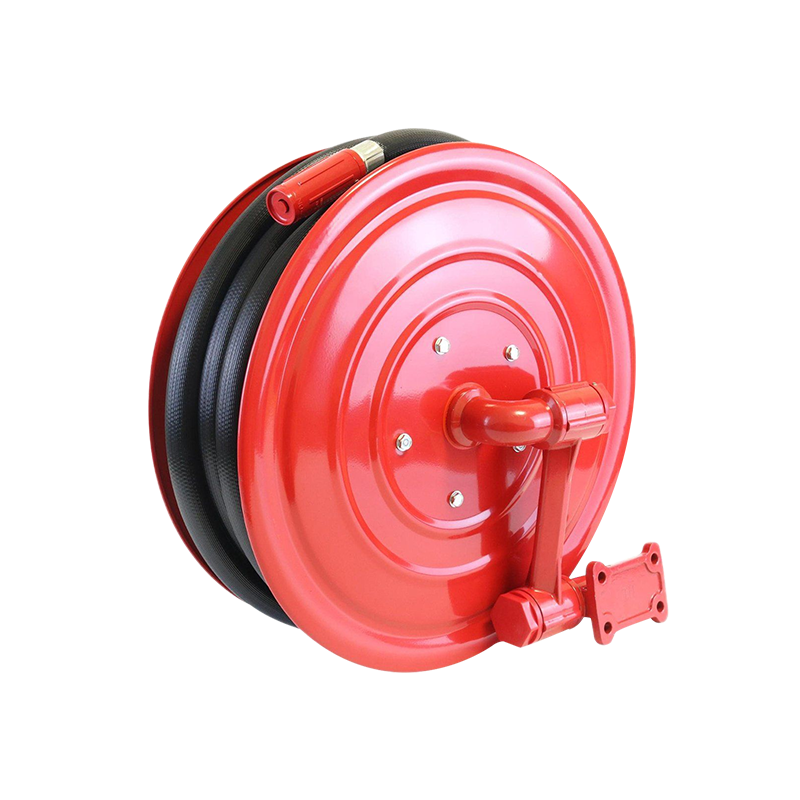
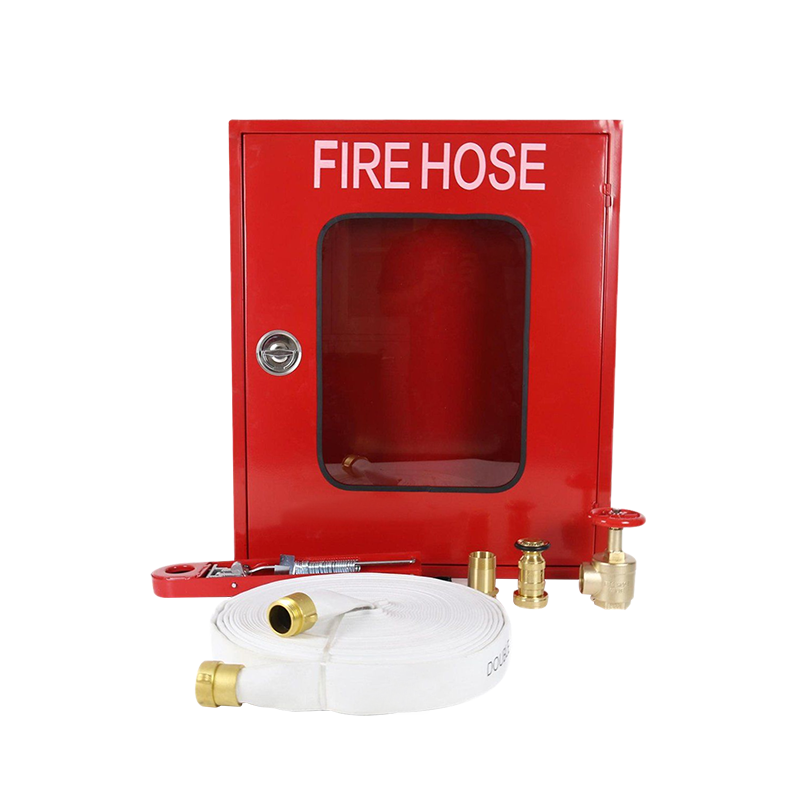
Fire cabinets are designed to accommodate fire hose,valve and other firefighting equipment. Type 201...
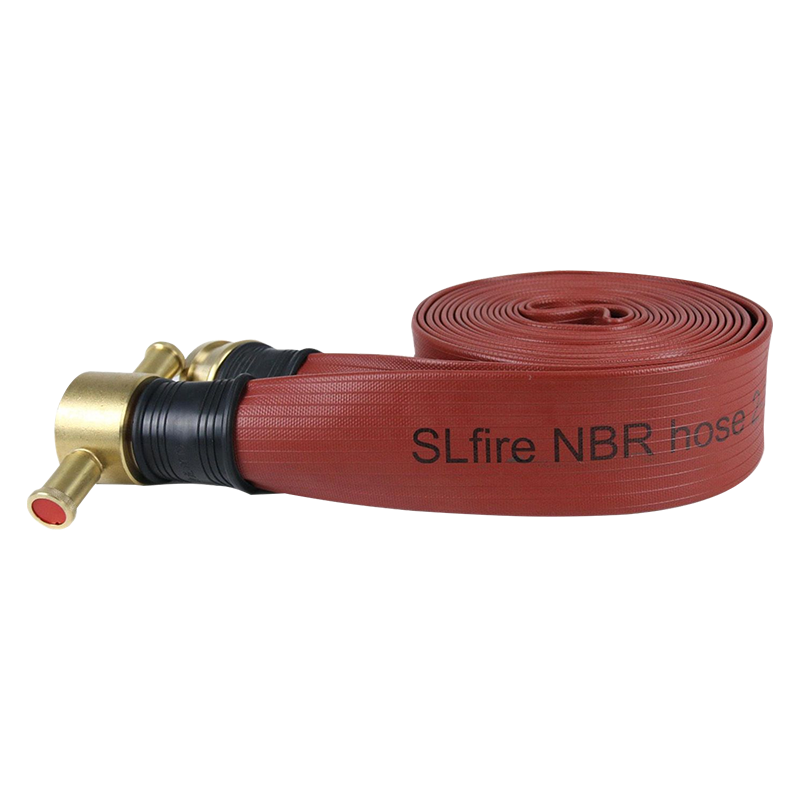
Nitrile covered hose •Nitrile/TPR blend as cover and lining, with 100% high-tenacity polyester yarn ...
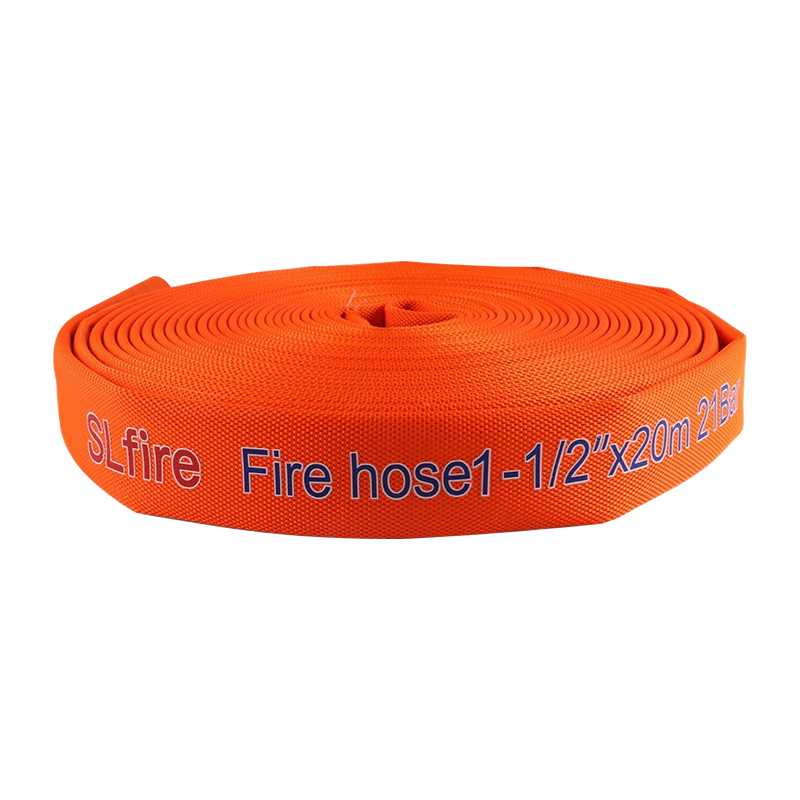
Single jacket, TPU liner •High-tenacity polyester yarn, circular woven in twill weave, TPU lining, f...
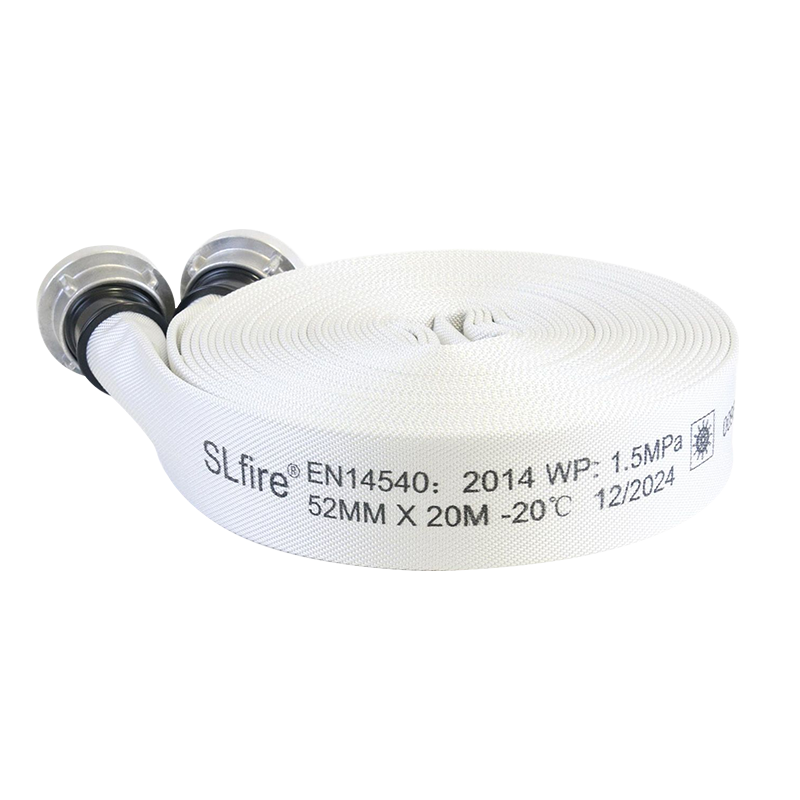
Marine hose Single jacket, PVC liner •100% high tenacity polyester yarn, circular woven in twill wea...
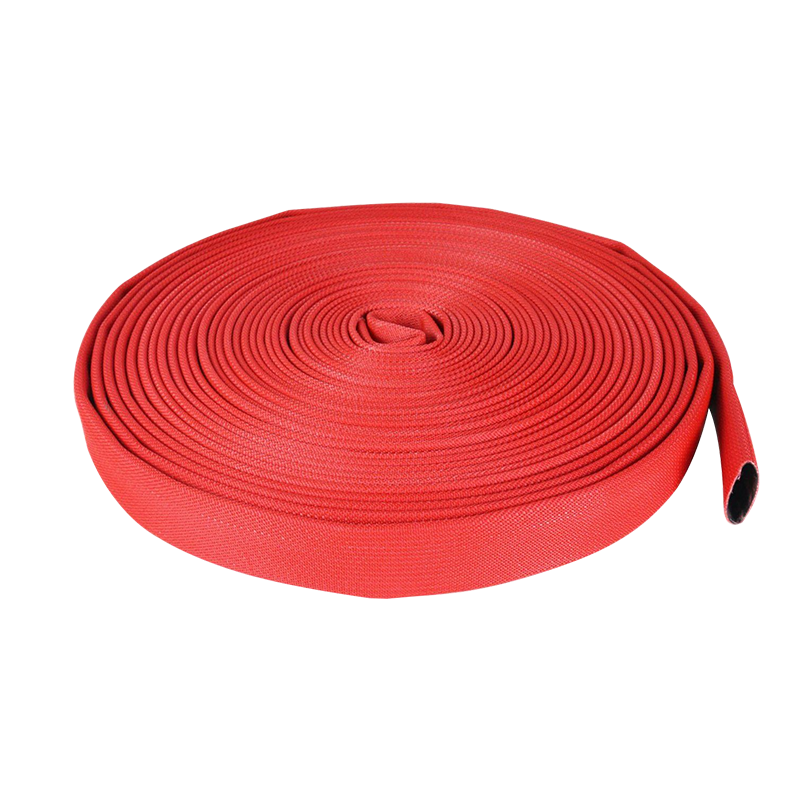
Marine hose Single jacket, PVC liner, PU coated •100% high tenacity polyester yarn,c ircular woven i...
 Call Us
+86 159-5116-9511
Need Support
Head Office
No.58, Kechuang Road, Sixiang Street Medicine Gaoxin District Taizhou City, Jiangsu Province

What Is a Fire Hose? A fire hose is a high-pressure flexible hose designed to carry water or fire retardant chemicals from a water source, such as a hydrant, pump, or tank, to a fire for suppression p...
Copyright © Taizhou Shenlong Fire Science and Technology Co., Ltd. All Rights Reserved.
 Fire Hose Manufacturers, Fire Hydrant Hose Factory