

 English
 русский
 Español
 Deutsch
 عربى
عربى Français
 Português
Don't hesitate to send a message

Single jacket, EPDM rubber liner Features • 100% high tenacity polyester jacket, high-grade EPDM rub...
Content
Modern snow-making systems demand hoses that can perform under pressure, in freezing temperatures, and across rugged mountain terrain. A Double Jacket TPU Liner Snow-Making Hose is designed for exactly these conditions, combining high-tenacity polyester reinforcement, a durable thermoplastic polyurethane liner, a double-jacket construction, and optional additional polyurethane coating for improved abrasion resistance. For ski resorts, winter recreation facilities, snow parks, mountain maintenance teams, and industrial users operating in cold climates, this hose provides a practical balance of strength, flexibility, weather resistance, and handling efficiency.
Unlike traditional rubber hoses that may become heavy, stiff, and difficult to move in subzero environments, a TPU-lined snow-making hose remains flexible at low temperatures and is easier to deploy, reposition, drain, roll, and transport. Its lightweight structure helps reduce worker fatigue during frequent setup and takedown operations, while its strong woven jacket supports high working pressure and dependable burst safety margins. The hose is available in commonly used lengths such as 50 feet and 100 feet, making it suitable for both fixed snow-making lines and mobile snow gun connections.
Taizhou Shenlong Fire Science and Technology Co., Ltd. has developed extensive experience in the production of lined hoses for firefighting, industrial, agricultural, and specialty applications. Founded in 1995, the company integrates research and development, manufacturing, sales, and service. Its production capability covers multiple liner and coating materials, including rubber, PVC, polyurethane, and double-sided coated structures. This manufacturing background gives the company a strong technical foundation for producing snow-making hoses that require pressure resistance, abrasion resistance, low-temperature flexibility, and long service life.
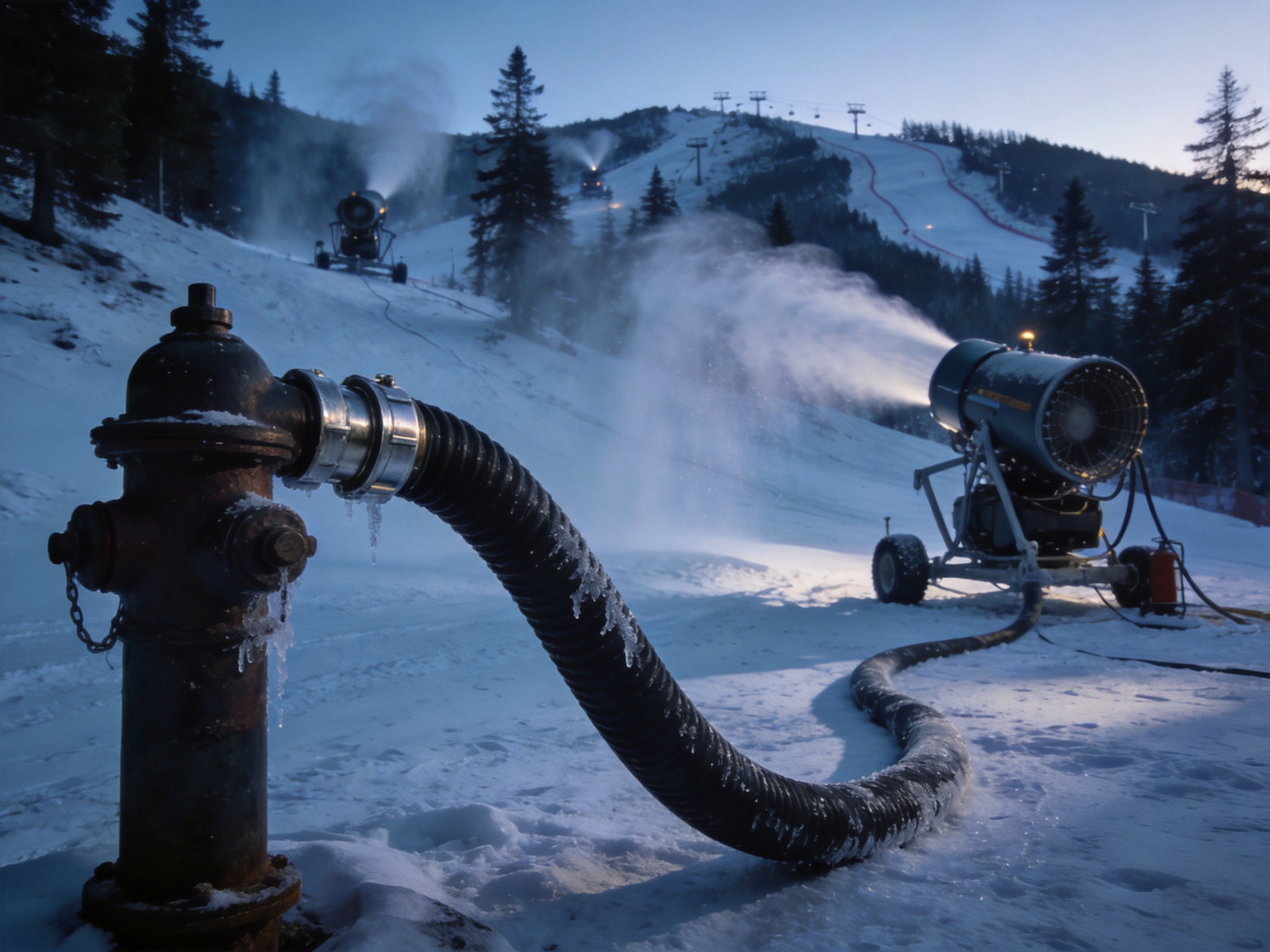
The Double Jacket TPU Liner Snow-Making Hose is a specialized lay-flat hose for delivering water to snow-making equipment in cold and demanding outdoor environments. Its structure includes a high-tenacity polyester yarn double jacket and a TPU lining. The double jacket contributes mechanical strength, pressure stability, and surface protection, while the TPU liner provides a smooth internal flow path, lower weight, and strong resistance to abrasion, ozone, ultraviolet exposure, and mildew.
The hose is designed to remain flexible at low temperatures down to approximately -30°C, equivalent to about -22°F. This feature is essential for snow-making operations because hoses are often used on frozen ground, dragged over snow, exposed to wind chill, and handled by workers wearing gloves. A hose that becomes stiff in cold weather can slow operations, create connection difficulties, and increase the risk of kinking or damage. By maintaining flexibility, the TPU-lined construction supports faster setup and safer handling.
Snow-making operations often involve repeated movement of hoses across snow, ice, gravel, mud, service roads, and equipment staging areas. For this reason, abrasion resistance is a key performance factor. The optional additional polyurethane coating improves the outer surface’s ability to withstand dragging and friction. This coating is especially valuable for ski resorts and outdoor facilities where hoses may be moved several times per day or left exposed to changing weather conditions throughout the season.
The product’s standard sizes include 1-1/2 inch, 2 inch, and 2-1/2 inch internal diameters. Each size is rated with a working pressure of 400 psi, or 28 bar, and a burst pressure of 1200 psi, or 84 bar. These ratings provide the strength needed for high-pressure snow-making water delivery systems while maintaining a safety margin suitable for demanding operating conditions.
The hose’s performance begins with its double jacket. A double jacket means that two woven layers of high-tenacity polyester yarn are used to reinforce the hose body. This reinforcement helps the hose resist internal pressure, external abrasion, twisting forces, and mechanical stress during deployment. Compared with single-jacket constructions, the double-jacket design offers additional durability and pressure capacity, making it more suitable for high-pressure snow-making applications.
High-tenacity polyester yarn is chosen because it provides strength while keeping the hose relatively lightweight. Polyester also has good resistance to moisture absorption and environmental degradation. In snow-making environments, water, ice, and wet snow are unavoidable. A reinforcement yarn that can maintain integrity under wet conditions contributes to consistent performance and long-term reliability.
The TPU liner is another critical feature. Thermoplastic polyurethane has become a preferred material in many hose applications because it offers an advantageous combination of flexibility, toughness, abrasion resistance, and chemical stability. In a snow-making hose, TPU contributes to reduced overall weight compared with traditional rubber-lined hoses. This weight reduction can be highly meaningful when workers must carry, drag, and reposition long hose sections on slopes or uneven terrain.
The smooth TPU liner also supports efficient water flow. A smooth internal surface can reduce friction loss compared with rougher internal surfaces, helping water move more efficiently from pumps or hydrant points to snow-making equipment. While system performance depends on many factors, including pump output, hose diameter, line length, couplings, elevation change, and nozzle configuration, a well-formed smooth liner is an important part of an efficient hose system.
Additional polyurethane coating can be applied to improve surface durability. In practical snow-making environments, hoses may rub against frozen soil, stones, metal equipment, vehicle tires, lift tower bases, and sharp ice edges. A reinforced coating helps protect the outer jacket, extends usable life, and reduces the frequency of replacement. This is one of the product’s important advantages for professional operations where downtime and maintenance costs must be controlled.
The following table summarizes the core dimensional and pressure information for the Double Jacket TPU Liner Snow-Making Hose. These values help buyers, engineers, maintenance supervisors, and snow-making managers choose the appropriate hose size for their systems.
Inner Diameter |
Inner Diameter |
Working Pressure |
Working Pressure |
Burst Pressure |
Burst Pressure |
inch |
mm |
psi |
bar |
psi |
bar |
1-1/2 |
38 |
400 |
28 |
1200 |
84 |
2 |
52 |
400 |
28 |
1200 |
84 |
2-1/2 |
65 |
400 |
28 |
1200 |
84 |
The consistent 400 psi working pressure across the available diameters helps simplify product selection for many snow-making networks. Facilities can choose diameter based on required flow capacity, distance, and equipment connection requirements while maintaining a strong pressure rating. The 1200 psi burst pressure provides a 3:1 burst-to-working-pressure ratio, which is commonly valued in hose selection because it helps account for pressure surges, demanding field use, and operational safety considerations.
The temperature range of -30°C to 80°C supports use in cold winter environments as well as storage and handling through changing seasons. Although the product is designed primarily for snow-making, this temperature capability reflects the durability of the materials and their ability to tolerate both freezing outdoor operation and warmer storage conditions.
TPU, or thermoplastic polyurethane, plays a central role in the hose’s performance. Traditional rubber hoses can deliver reliable strength, but they often carry more weight and may be more difficult to maneuver in cold environments. TPU provides a valuable alternative because it can be formulated to remain flexible in low temperatures while still resisting wear and environmental exposure.
For snow-making crews, weight is more than a technical specification. A hose section may need to be dragged uphill, pulled around snow guns, moved away from grooming routes, or carried to storage areas at the end of a shift. In freezing conditions, every unnecessary kilogram increases fatigue and reduces efficiency. A lighter TPU-lined hose helps crews work faster and with less strain, especially when handling 50-foot or 100-foot lengths.
TPU also offers excellent abrasion resistance. Snow-making hoses are frequently dragged across surfaces that can damage ordinary materials. Icy ground may appear smooth, but embedded gravel, sharp ice, and frozen debris can cut or scrape hose surfaces. TPU and polyurethane-coated surfaces help resist this type of wear. As a result, the hose can remain serviceable over more cycles of deployment, operation, draining, and storage.
Another advantage is mildew resistance. Snow-making hoses are used in wet environments, and moisture may remain in or around the hose after operation. Materials that resist mildew are less likely to degrade, smell, discolor, or weaken during storage. This matters when hoses are stored during off-season months and then expected to perform reliably when winter operations restart.
TPU also supports resistance to ozone and ultraviolet exposure. Ozone can cause cracking or degradation in certain rubber materials, while UV exposure can weaken surfaces over time. A hose used outdoors throughout the snow season needs protection from both. The TPU liner and PU coating system help maintain the hose’s structural and surface integrity under prolonged environmental exposure.
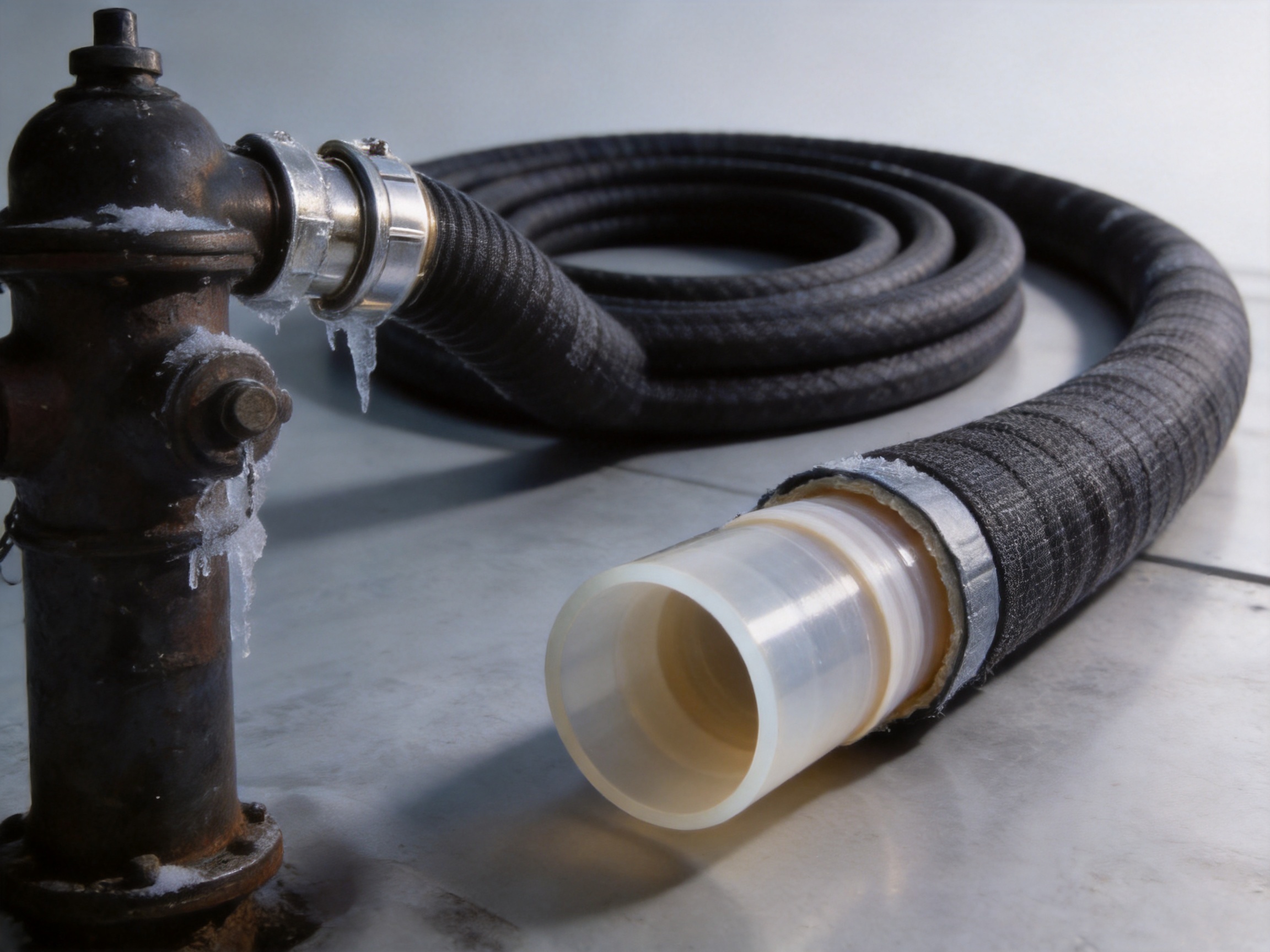
The Double Jacket TPU Liner Snow-Making Hose offers several advantages over conventional rubber hoses, especially where frequent handling and harsh winter conditions are involved. The first major advantage is reduced weight. Rubber-lined hoses can be robust, but their weight becomes a drawback when operators need to move multiple hose lengths across slopes. TPU lining helps reduce the burden without sacrificing the pressure capability needed for snow-making.
The second advantage is low-temperature flexibility. In very cold weather, some hoses become rigid, making them difficult to uncoil, connect, or reposition. A stiff hose may also be more likely to kink or develop stress points when bent. The TPU-lined snow-making hose is engineered to remain flexible at temperatures as low as -30°C, helping crews maintain productivity when snow-making conditions are at their best.
The third advantage is improved abrasion resistance, particularly when an additional PU coating is applied. Snow-making hoses are exposed to constant friction from dragging, vibration, and contact with ground surfaces. A hose that resists abrasion reduces maintenance concerns and replacement frequency. This directly supports lower operating costs for resorts and industrial users.
The fourth advantage is resistance to ozone, UV, and mildew. Outdoor hoses are exposed to sun, moisture, and atmospheric conditions. A hose that resists these factors can maintain appearance and function for a longer period. For seasonal operations, this means better readiness at the beginning of winter and fewer surprises during peak demand.
The fifth advantage is efficient handling. A lightweight, flexible, lay-flat design is easier to roll and store. When drained, the hose can be compactly organized, saving space in maintenance facilities, equipment rooms, service vehicles, or slope-side storage areas. Better handling also improves safety because workers can manage the hose with less awkward lifting and pulling.
The sixth advantage is strong pressure performance. With a 400 psi working pressure and 1200 psi burst pressure, the hose is suitable for demanding water delivery systems used in snow-making. This performance level places it above many general-purpose water hoses and makes it a more appropriate choice for professional snow-making infrastructure.
Ski resorts and winter recreation facilities often operate under tight weather windows. When temperature and humidity conditions are favorable for snow-making, teams need to act quickly and maintain continuous operation. Hose performance becomes a critical part of overall snow production efficiency. A hose that is slow to deploy, difficult to move, or vulnerable to damage can interrupt operations and reduce snow output.
The Double Jacket TPU Liner Snow-Making Hose helps reduce setup time because it is lighter and more flexible than many traditional options. Workers can connect snow guns, hydrants, pumps, and manifolds with fewer handling difficulties. This can be especially important during night operations, when visibility is limited and temperatures may be lower.
During operation, the hose’s pressure capacity supports consistent water delivery to snow-making equipment. Stable hose performance helps maintain system reliability, particularly when multiple snow guns are being fed across a network. The hose’s resistance to abrasion and weather exposure helps it remain dependable even when left in place for extended periods during active snow-making periods.
After operation, draining and storage are also easier. A hose that remains flexible is easier to roll after water is removed. The lay-flat design saves storage space and simplifies transportation. This is valuable for facilities that must store many hose sections and deploy them across different trails or work zones throughout the season.
The product also contributes to worker safety. Heavy, stiff hoses can create strain injuries, slips, and handling accidents, especially on icy surfaces. A lighter hose that bends more easily reduces some of these risks. While proper training, protective equipment, and safe operating procedures remain essential, equipment design can make daily work safer and more efficient.
Although the product is designed for snow-making, its construction makes it relevant to other cold-weather water transfer applications. Facilities that require high-pressure water delivery in freezing or wet environments may benefit from a similar hose structure. Potential applications include temporary water supply in winter construction, industrial washing in cold climates, municipal winter operations, and seasonal water transfer where low-temperature flexibility is required.
The hose may also be useful in rugged outdoor sites where abrasion resistance and portability are important. Its double jacket and TPU liner offer a combination of strength and easy handling that can serve many specialized water delivery tasks. However, users should always confirm chemical compatibility, pressure requirements, coupling needs, and environmental conditions before using the hose outside its intended application.
The reliability of a snow-making hose depends not only on raw materials but also on manufacturing discipline. Taizhou Shenlong Fire Science and Technology Co., Ltd. has been engaged in hose-related production since 1995 and has built experience across fire hose, industrial hose, agricultural hose, hose couplings, hose nozzles, fire accessories, fire cabinets, and trenchless rehabilitation hose products. This broad product background supports technical understanding of pressure-bearing hose structures, liner bonding, weaving quality, coating processes, and final inspection.
Advanced manufacturing begins with material selection. High-tenacity polyester yarn must be selected for strength consistency, dimensional stability, and suitability for double-jacket weaving. TPU liner material must meet requirements for flexibility, abrasion resistance, and environmental durability. The quality of these materials affects every later stage of hose performance.
The weaving process is essential to the strength of the double jacket. Uniform weave density and accurate tension control help ensure that pressure is distributed evenly across the hose wall. If the jacket is uneven, the hose may develop weak points, distortion, or inconsistent expansion under pressure. Experienced production teams pay close attention to yarn alignment, jacket integrity, and dimensional consistency.
Liner formation and integration are equally important. The TPU liner must be smooth, continuous, and properly bonded or integrated with the hose structure. A high-quality liner reduces flow resistance and prevents leakage through the jacket. It also helps the hose maintain flexibility during use. Manufacturing precision in this stage is vital for both performance and service life.
The optional PU coating process adds another layer of protection. Coating must be applied evenly to improve abrasion resistance without making the hose unnecessarily stiff. The right coating balance protects the outer jacket while preserving handling advantages. This reflects the importance of process knowledge and controlled production settings.
After production, testing and inspection help confirm quality. Pressure testing, visual inspection, dimensional checks, and material evaluations are important for ensuring that each hose meets expected standards. For high-pressure snow-making applications, this quality control is not optional; it is fundamental to safe and reliable operation.
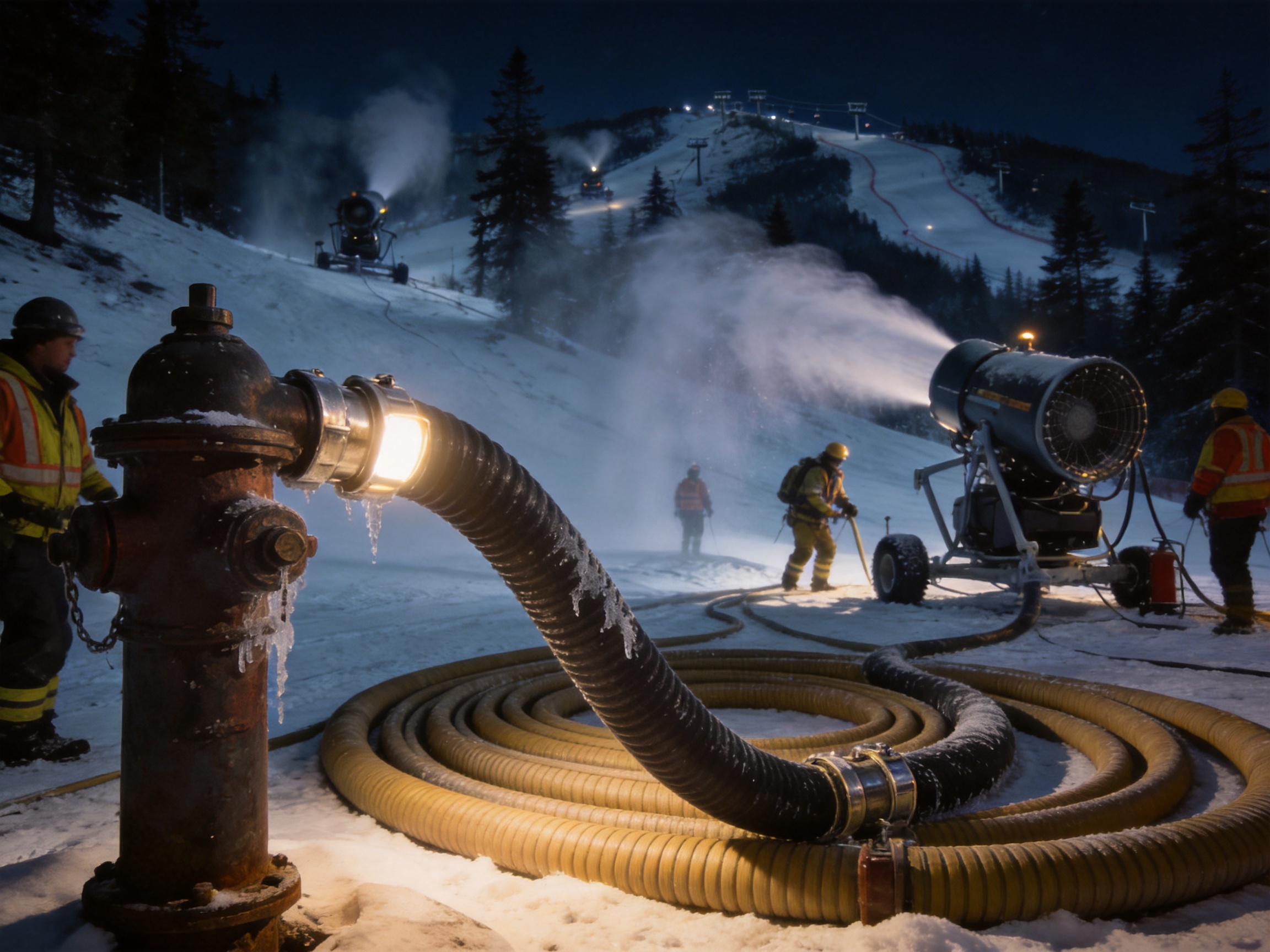
Taizhou Shenlong Fire Science and Technology Co., Ltd. is located at No.58, Kechuang Road, Sixiang Street, Medicine Gaoxin District, Taizhou City, Jiangsu Province. Since its founding in 1995, the company has developed as an enterprise integrating research and development, production, sales, and service. Its long-term focus on lined fire hoses and related hose products gives it a strong foundation for manufacturing high-performance flexible hoses.
The company’s product categories include fire hose, industrial hose, agricultural hose, hose couplings, hose nozzles, fire accessories, fire cabinets, and trenchless rehabilitation hose. This product diversity demonstrates manufacturing adaptability. A company that can work with different hose structures and materials is better positioned to meet specialized customer requirements, including those for snow-making hoses used in cold climates and high-pressure conditions.
The company can undertake various foreign trade products according to customer requirements, including rubber, PVC, polyurethane, and double-sided tape hose-related products. This customization capability is important because different markets may require different specifications, coupling types, colors, lengths, coatings, packaging, or performance characteristics. Snow-making operations in one region may not be identical to those in another; a manufacturer with flexible production capability can better support varied project needs.
The company’s products are sold in more than 20 provinces, cities, and autonomous regions, and it cooperates with domestic foreign trade companies to produce export products for many countries. Export experience supports better understanding of international expectations for product consistency, packaging, documentation, communication, and delivery. For buyers seeking reliable supply, this experience is an important practical advantage.
Manufacturing strength is also reflected in service. A hose is not merely a commodity; it is part of a working system. Customers may need guidance on diameter selection, working pressure, length, storage, couplings, and operation. A company integrating sales and service can support customers before and after purchase, helping them select suitable products and use them properly.
Selecting the right snow-making hose requires attention to operating pressure, flow demand, hose diameter, length, coupling compatibility, terrain, temperature, and handling requirements. The Double Jacket TPU Liner Snow-Making Hose is available in 1-1/2 inch, 2 inch, and 2-1/2 inch internal diameters. Smaller diameters may be suitable for shorter runs or lower flow needs, while larger diameters can support higher flow rates over longer distances, depending on system design.
Working pressure is one of the most important selection factors. The hose’s 400 psi rating makes it suitable for many high-pressure water delivery situations in snow-making. However, system designers should consider pump output, static pressure, elevation changes, pressure spikes, and equipment requirements. Proper pressure management helps extend hose life and maintain safety.
Length selection also matters. A 50-foot hose is easier to handle and may be ideal for shorter connections, while a 100-foot hose can reduce the number of couplings needed over longer distances. Fewer couplings may reduce potential leak points, but longer hoses may be heavier and require more careful handling. Facilities often use a combination of lengths to achieve flexibility in field layout.
Couplings should be selected based on compatibility with existing hydrants, manifolds, pumps, and snow guns. Secure coupling attachment is essential because snow-making systems operate under significant pressure. Coupling quality, installation method, gasket condition, and regular inspection all contribute to safe operation.
Terrain conditions should influence the choice of additional PU coating. If the hose will be frequently dragged across rocky, icy, or abrasive surfaces, the coating is strongly beneficial. If the hose will be used in a more controlled environment, the standard structure may already provide suitable durability. In demanding professional environments, however, additional abrasion resistance often provides a valuable return through longer service life.
Proper handling helps maximize the service life of any hose. Even a durable double-jacket TPU-lined hose should be protected from unnecessary damage. Workers should avoid dragging the hose over sharp metal edges, exposed rebar, broken glass, or other cutting hazards. When crossing vehicle routes, hose bridges or protective covers should be considered to reduce crushing and abrasion.
Before operation, the hose should be visually inspected. Workers should look for cuts, exposed yarn, abrasion spots, coupling damage, gasket wear, and signs of previous freezing damage. A quick inspection can prevent failures during high-pressure operation. Any hose with serious damage should be removed from service until evaluated.
During use, operators should avoid sudden pressure surges whenever possible. Water hammer can occur when valves are opened or closed too quickly. Even hoses with strong burst pressure margins benefit from smooth pressure control. Operators should follow established system procedures when charging and draining lines.
After operation, the hose should be drained thoroughly. Water left inside a hose may freeze, expand, and cause damage. Draining also reduces weight and makes rolling easier. In very cold weather, crews should drain hoses promptly after shutdown to prevent ice formation inside the liner.
Storage should be clean, dry, and protected from unnecessary sunlight when the hose is not in active use. Although the hose resists UV, ozone, and mildew, good storage practices still extend life. Hoses should be rolled without sharp folds and kept away from chemicals or sharp objects. Seasonal inspection before winter start-up helps ensure readiness.
The value of a snow-making hose should be measured by more than its purchase price. A lower-cost hose that is heavy, stiff, or prone to abrasion damage may create hidden expenses through labor inefficiency, frequent replacement, downtime, leaks, and operational delays. A high-performance Double Jacket TPU Liner Snow-Making Hose can help reduce these costs through better durability and easier handling.
Labor efficiency is a major economic factor. Snow-making teams often work at night, in cold weather, and under time pressure. If hoses are easier to move and connect, crews can complete setup faster and respond more quickly to changing weather conditions. Over a season, saved labor time can become significant.
Durability also affects total cost. Abrasion-resistant construction and environmental resistance help reduce replacement frequency. For facilities managing many hose sections, longer service life can significantly reduce annual equipment budgets. Reduced failure risk also helps avoid interruptions during prime snow-making windows, when lost time can affect trail opening schedules and guest satisfaction.
Storage and transportation efficiency add further value. Lay-flat hoses that roll compactly require less space and are easier to move between locations. This is especially useful for resorts with multiple slopes, remote snow gun positions, and seasonal storage requirements.
Safety-related value should not be overlooked. Lighter and more flexible hoses can reduce strain during manual handling. Equipment that supports safer work practices can reduce injury risk and improve crew morale. In demanding winter environments, practical ergonomic advantages are important.
In competitive hose markets, buyers often compare products based on price, pressure rating, material, service life, delivery time, and manufacturer reputation. The Double Jacket TPU Liner Snow-Making Hose is positioned as a strong option because it combines high-pressure capability, cold-weather flexibility, abrasion resistance, and manageable weight. These characteristics directly address the most common pain points in snow-making hose use.
Compared with many general-purpose water hoses, this product offers a more suitable pressure rating and stronger construction for demanding snow-making conditions. General-purpose hoses may be adequate for light water transfer, but they are not always designed for high pressure, freezing environments, or repeated dragging on rough terrain. Using a purpose-built hose improves reliability and safety.
Compared with some traditional rubber snow-making hoses, the TPU-lined design offers better handling efficiency due to reduced weight and low-temperature flexibility. This is especially important for operations that reposition snow guns frequently or manage extensive hose networks across slopes.
Compared with lower-grade synthetic hoses, the double-jacket reinforcement and optional PU coating provide stronger resistance to mechanical wear. In professional environments, hose failure can be costly. A stronger structure helps protect against premature damage and supports more dependable operation.
The manufacturer’s long-term experience and customization capability add another competitive advantage. Buyers may require specific lengths, packaging, couplings, or material details. A manufacturer experienced in multiple hose categories can respond more effectively to such needs than a supplier with limited production flexibility.
Snow-making hoses face a combination of environmental stresses. They are exposed to freezing temperatures, moisture, sunlight, ozone, mud, ice, and mechanical friction. The Double Jacket TPU Liner Snow-Making Hose addresses these conditions through material selection and layered construction.
Low-temperature flexibility helps the hose avoid cracking or excessive stiffness in winter. Abrasion resistance helps it survive contact with rough ground. UV and ozone resistance help protect against atmospheric degradation. Mildew resistance helps maintain material condition during wet use and storage. Together, these properties create a hose that is suitable for repeated outdoor service.
The temperature range from -30°C to 80°C also means the hose can tolerate seasonal changes. It may be used in severe cold and stored through warmer months without immediate material concerns when stored properly. This broad temperature tolerance supports year-round equipment management for seasonal businesses.
The hose is designed to deliver water to snow-making equipment in cold, high-pressure, and rugged outdoor environments. It is suitable for ski resorts, snow parks, winter recreation facilities, and other operations requiring reliable water transfer in freezing conditions.
The TPU liner helps reduce hose weight, maintain flexibility at low temperatures, resist abrasion, and provide a smooth internal surface for efficient water flow. It also contributes to resistance against ozone, UV exposure, and mildew.
The hose has a working pressure of 400 psi, or 28 bar, across the listed diameters. Its burst pressure is 1200 psi, or 84 bar.
The available internal diameters include 1-1/2 inch, 2 inch, and 2-1/2 inch. These correspond approximately to 38 mm, 52 mm, and 65 mm.
Yes. The hose is designed to remain flexible at low temperatures down to approximately -30°C, or -22°F, making it suitable for snow-making conditions.
The hose is available in 50-foot and 100-foot lengths, allowing users to choose the best option for short connections, longer runs, or flexible field layouts.
Compared with many traditional rubber hoses, the TPU-lined hose is lighter and easier to handle, especially in cold weather. It also provides strong abrasion resistance, weather resistance, and high-pressure performance.
The additional PU coating is recommended for demanding environments where the hose will be frequently dragged over ice, gravel, frozen soil, or other abrasive surfaces. It improves surface protection and can extend service life.
The hose should be drained, rolled without sharp folds, and stored in a clean, dry area away from sharp objects and unnecessary chemical exposure. Good storage practices help extend service life.
The manufacturer has long-term experience in lined hose production, a broad product range, customization capability, export production experience, and integrated research, manufacturing, sales, and service strengths. These capabilities support consistent quality and practical customer support.
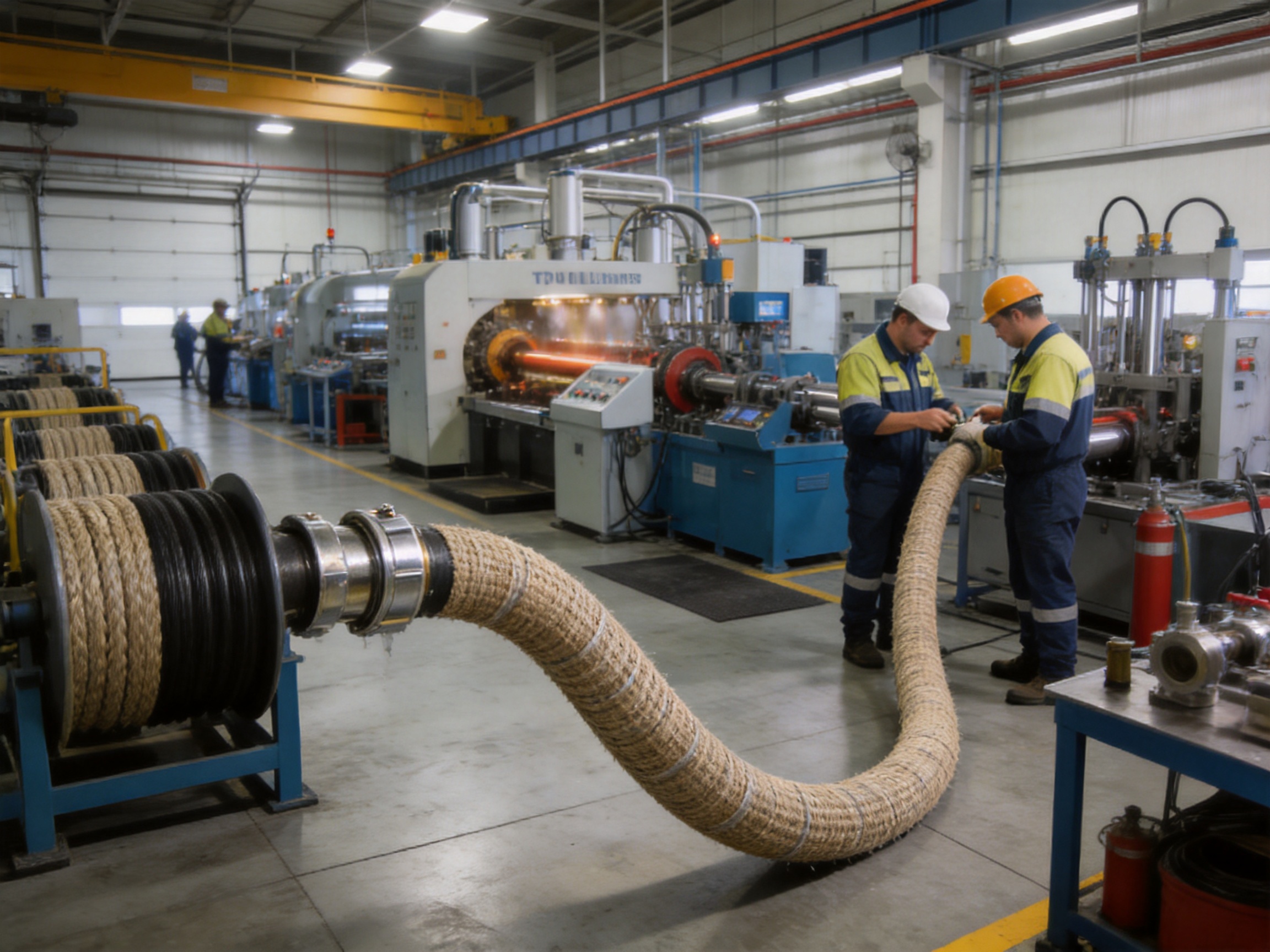
The Double Jacket TPU Liner Snow-Making Hose is a specialized solution for high-pressure winter water delivery. Its double-jacket high-tenacity polyester construction provides strength, while the TPU liner delivers low-temperature flexibility, reduced weight, abrasion resistance, and environmental durability. With a working pressure of 400 psi, a burst pressure of 1200 psi, and available diameters of 1-1/2 inch, 2 inch, and 2-1/2 inch, it is well suited for professional snow-making operations.
The hose’s advantages are especially clear when compared with heavier traditional rubber hoses and less durable general-purpose water hoses. It is easier to handle in freezing weather, more resistant to abrasion and outdoor exposure, and practical for repeated seasonal deployment. Optional additional PU coating further improves durability in rugged field conditions.
Behind the product is the manufacturing experience of Taizhou Shenlong Fire Science and Technology Co., Ltd., a company founded in 1995 with capabilities across fire hose, industrial hose, agricultural hose, couplings, nozzles, fire accessories, cabinets, and specialty hose products. Its experience with multiple liner materials and pressure-bearing hose structures supports the production of reliable snow-making hoses for demanding users.
For ski resorts, snow parks, winter maintenance teams, and cold-climate industrial users, choosing the right hose can improve efficiency, safety, and long-term cost control. A durable, flexible, lightweight, and pressure-rated snow-making hose is not merely an accessory; it is an essential part of a dependable winter operation.
1. Engineering Handbook for Industrial Hose Applications, Technical Materials Publishing.
2. Polyurethane Elastomers in Hose and Tubing Design, Materials Performance Series.
3. Cold Weather Fluid Transfer Systems, Industrial Maintenance Reference Manual.
4. Principles of Snowmaking System Design and Operation, Winter Resort Engineering Guide.
5. Textile Reinforcement Methods for Lay-Flat Hose Manufacturing, Hose Technology Review.
6. Pressure Testing and Safety Practices for Flexible Hose Assemblies, Fluid Power Standards Companion.
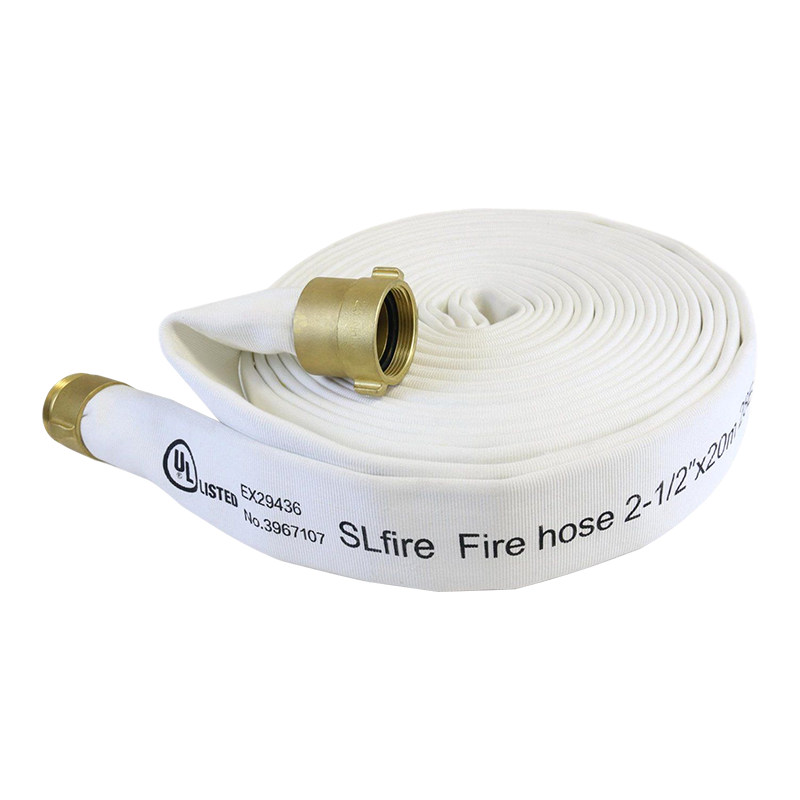
Single jacket, EPDM rubber liner Features • 100% high tenacity polyester jacket, high-grade EPDM rub...
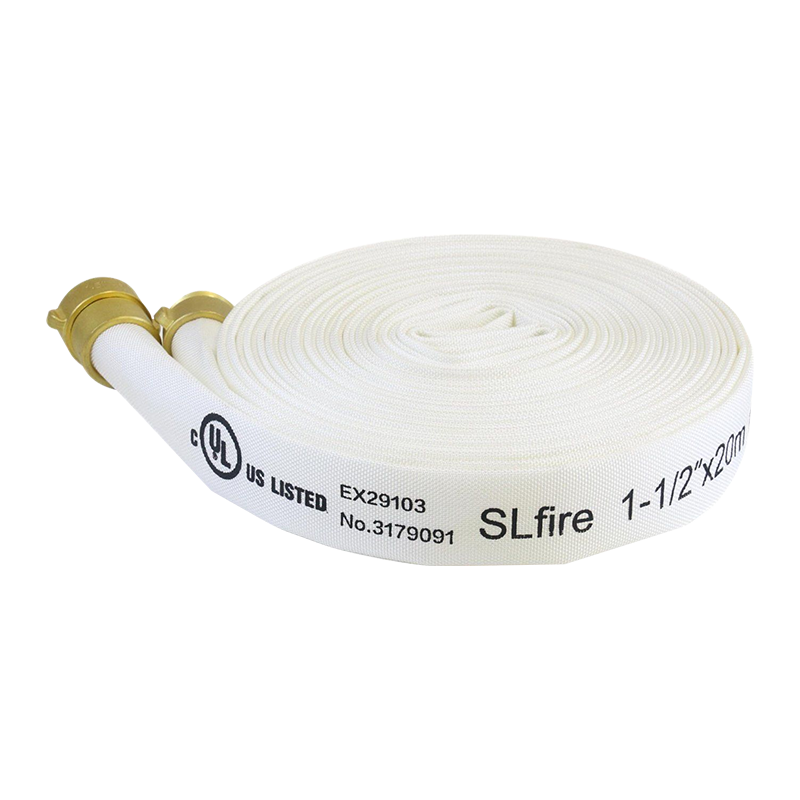
Single jacket, TPU liner •High-tenacity polyester yarn, circular woven in twill weave/plain weave,T ...
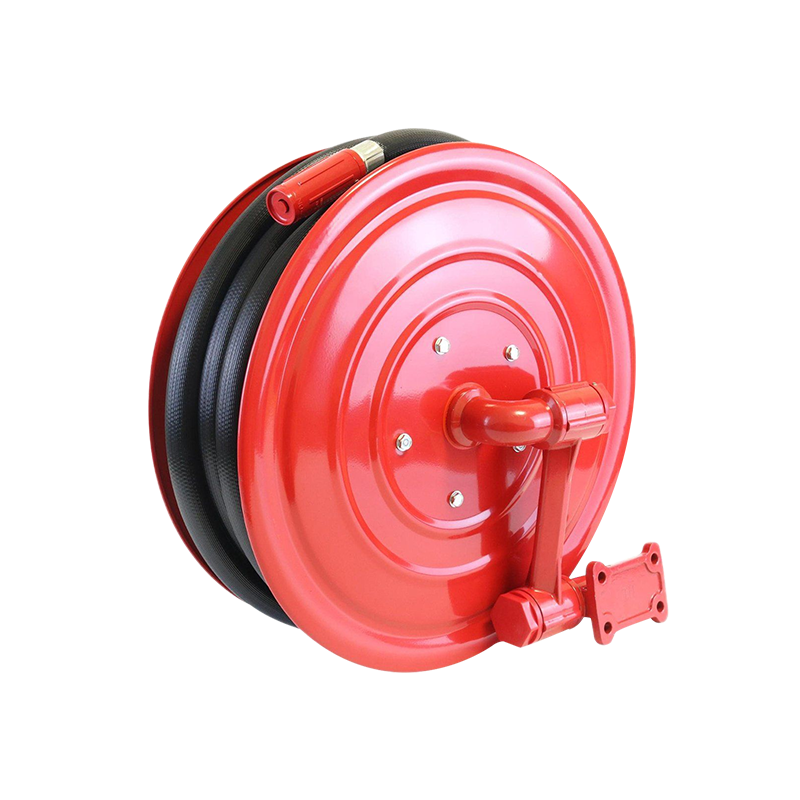
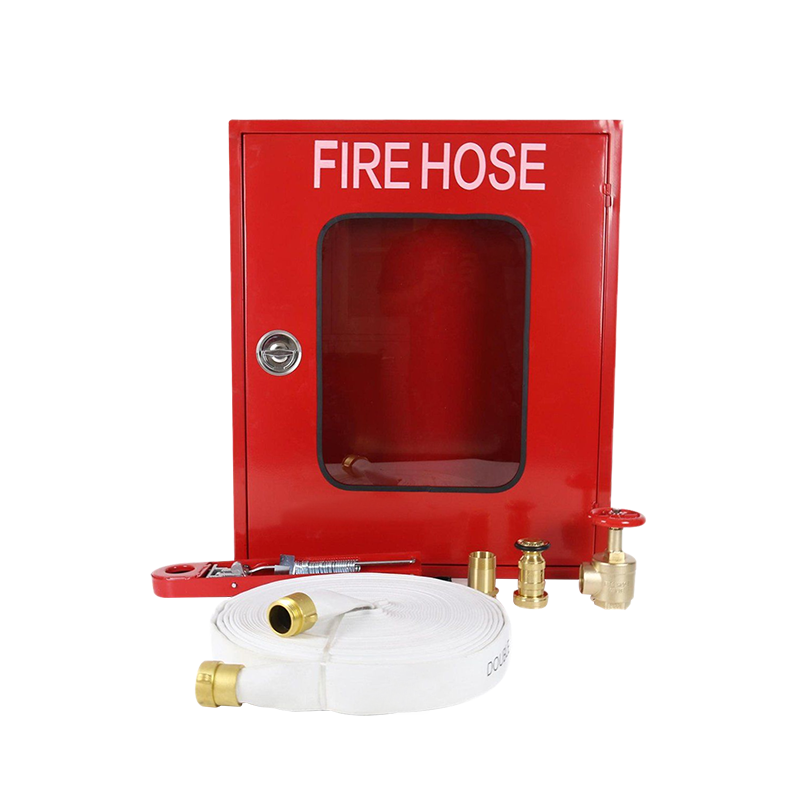
Fire cabinets are designed to accommodate fire hose,valve and other firefighting equipment. Type 201...
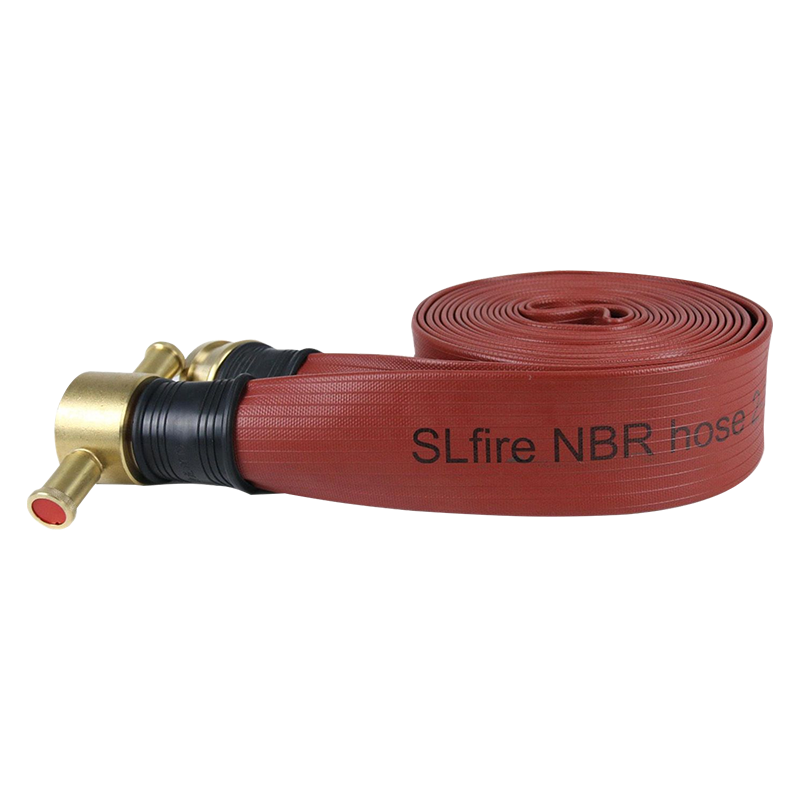
Nitrile covered hose •Nitrile/TPR blend as cover and lining, with 100% high-tenacity polyester yarn ...
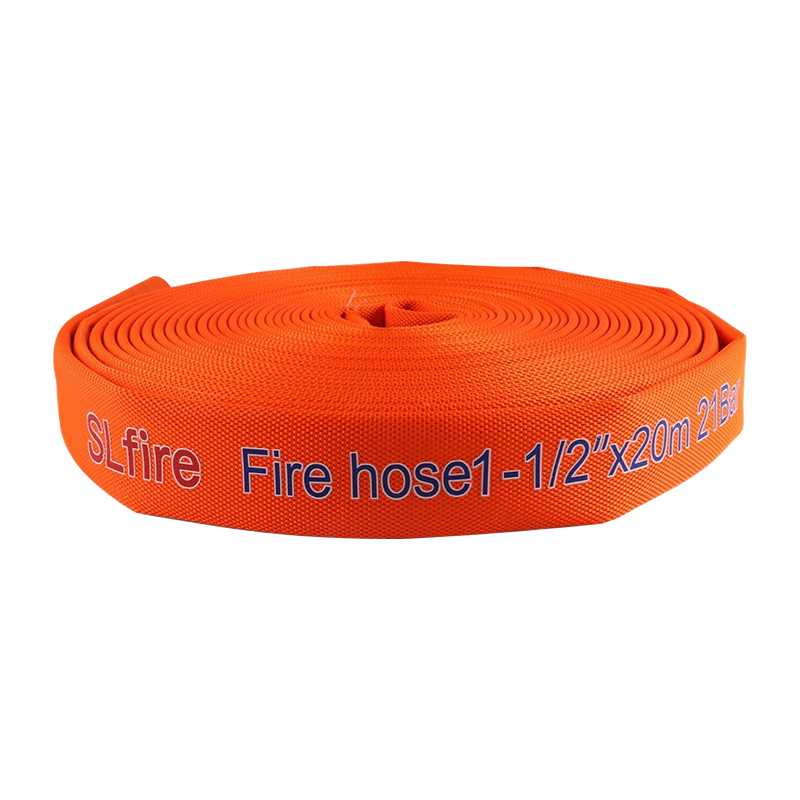
Single jacket, TPU liner •High-tenacity polyester yarn, circular woven in twill weave, TPU lining, f...
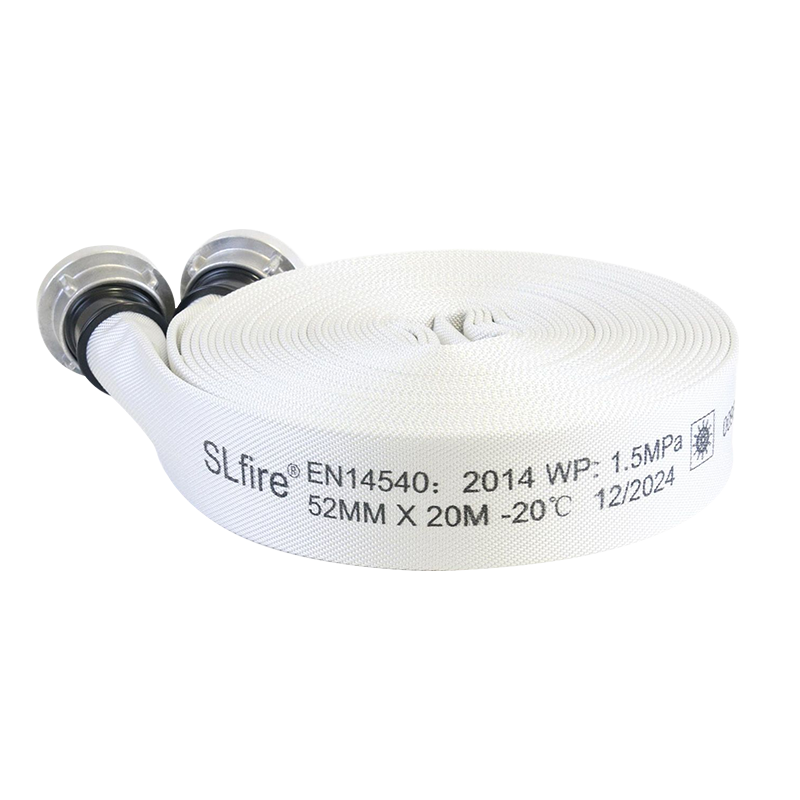
Marine hose Single jacket, PVC liner •100% high tenacity polyester yarn, circular woven in twill wea...
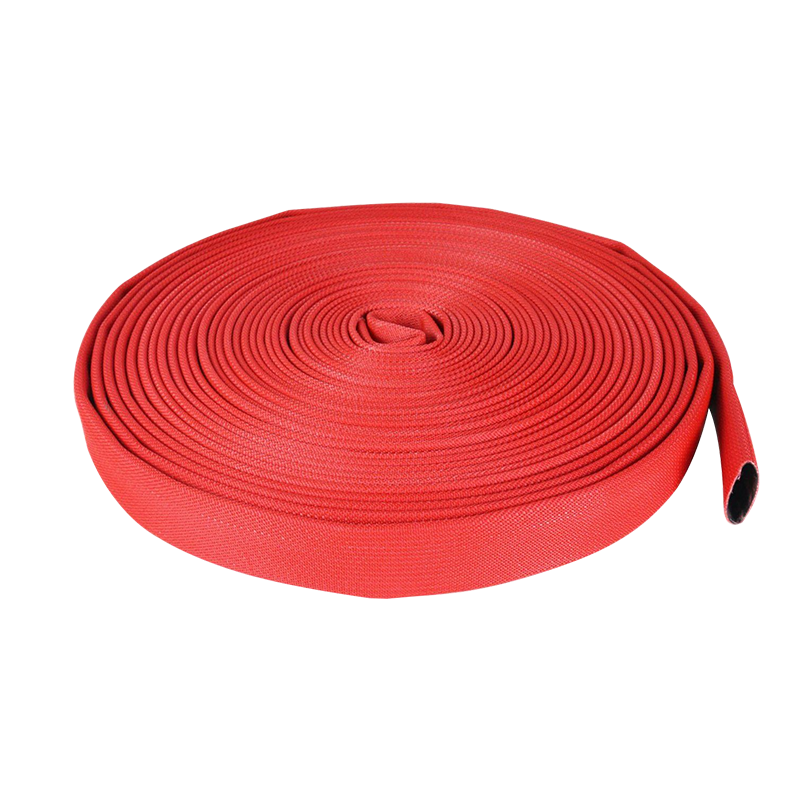
Marine hose Single jacket, PVC liner, PU coated •100% high tenacity polyester yarn,c ircular woven i...
 Call Us
+86 159-5116-9511
Need Support
Head Office
No.58, Kechuang Road, Sixiang Street Medicine Gaoxin District Taizhou City, Jiangsu Province

What Is a Fire Hose? A fire hose is a high-pressure flexible hose designed to carry water or fire retardant chemicals from a water source, such as a hydrant, pump, or tank, to a fire for suppression p...
Copyright © Taizhou Shenlong Fire Science and Technology Co., Ltd. All Rights Reserved.
 Fire Hose Manufacturers, Fire Hydrant Hose Factory