

 English
 русский
 Español
 Deutsch
 عربى
عربى Français
 Português
Don't hesitate to send a message

Single jacket, EPDM rubber liner Features • 100% high tenacity polyester jacket, high-grade EPDM rub...
Content
Modern irrigation systems demand more than a simple water passage. They require a hose that can be deployed quickly, moved easily, operated under pressure, and stored efficiently after use. The through-the-weave TPU layflat irrigation hose answers these requirements with a construction that combines high-strength polyester filament reinforcement with thermoplastic polyurethane, commonly known as TPU, as both the cover and lining. This design creates a lightweight, flexible, abrasion-resistant, and pressure-capable hose suitable for agricultural irrigation, industrial water transfer, temporary pumping systems, construction dewatering, and demanding field operations.
Unlike conventional layflat hoses that rely on separate layers bonded together, the through-the-weave process integrates the TPU material deeply into the woven reinforcement. The result is a hose body with excellent adhesion, reduced risk of delamination, improved pressure stability, and consistent performance over long service periods. For users who work across rough terrain, under variable weather, or in remote agricultural fields, this structure offers a practical advantage: fewer failures, easier handling, and dependable flow when water delivery cannot be interrupted.
The hose is designed for operation in a wide temperature range from minus 40 degrees Celsius to 70 degrees Celsius. This makes it suitable for diverse climates, from cold early-season field work to hot summer irrigation. It resists abrasion, kinking, ultraviolet exposure, oil, ozone, and many chemicals, helping users maintain productivity even when the hose is dragged across soil, gravel, concrete, or uneven working surfaces. Available lengths include 100 meters and 200 meters, with additional custom lengths available according to project requirements.
Through-the-weave TPU layflat Hose Irrigation Hose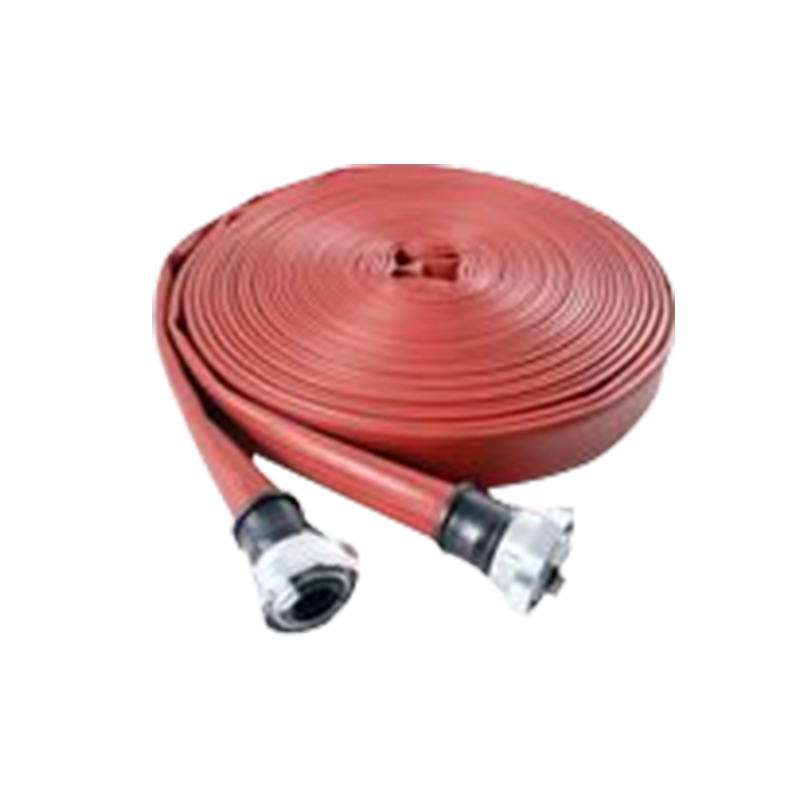
The through-the-weave TPU layflat irrigation hose is engineered as a high-performance water delivery solution for users who need strength without excessive weight. Its flat storage profile allows long lengths to be rolled into compact coils, reducing transport volume and simplifying handling. When pressurized, the hose expands into a round flow channel that supports efficient water movement. When depressurized, it returns to a flat shape for rapid drainage, rolling, and storage.
The core reinforcement is made from high-strength polyester filament. Polyester is valued for its tensile strength, dimensional stability, and resistance to stretching under load. In irrigation and pumping applications, a hose must not expand excessively when pressurized because expansion can reduce flow efficiency and increase stress at couplings. Polyester reinforcement helps maintain the hose’s shape, supports working pressure, and provides the mechanical backbone required for reliable service.
TPU is used as both the inner lining and the outer cover. As an inner lining, TPU provides a smooth, durable, and flexible surface for water flow. A smooth lining reduces internal friction, helping maintain flow efficiency over long distances. As an outer cover, TPU protects the woven reinforcement from abrasion, moisture, oils, ozone, sunlight, and field chemicals. By using TPU on both sides of the reinforcement, the hose achieves balanced protection from internal and external wear.
The through-the-weave process is the key feature that separates this hose from many standard layflat products. In this process, TPU penetrates and integrates with the woven reinforcement instead of remaining only as a surface coating. This produces a unified hose wall. The advantage is especially important under repeated pressurization, bending, dragging, and rolling. A hose that is not well integrated can suffer from blistering, delamination, or premature cracking. A through-the-weave hose is better prepared for repeated use in harsh conditions.
Thermoplastic polyurethane is widely recognized for its combination of elasticity, abrasion resistance, oil resistance, and durability. For irrigation hoses, these characteristics are highly valuable because field environments are rarely clean or predictable. Hoses may be dragged over stones, exposed to sunlight for long hours, used near fertilizers, or connected to pumps that create fluctuating pressure. TPU helps the hose resist these conditions while remaining flexible enough for convenient deployment.
Compared with some PVC layflat hoses, TPU typically offers better abrasion resistance and a longer service life under demanding use. PVC can be economical and suitable for light-duty applications, but it may become less flexible in cold weather and may wear faster when dragged repeatedly over rough surfaces. TPU remains flexible at low temperatures and offers stronger resistance to scraping and scuffing. For operators who value total lifecycle cost rather than only initial purchase price, TPU can provide a significant advantage.
Compared with rubber hoses, TPU layflat hoses can offer lower weight and easier storage while maintaining strong resistance to wear. Rubber hoses are useful in many heavy-duty applications, but they can be bulky and labor-intensive when long lengths are needed. The layflat TPU design reduces handling difficulty, which is important for large farms, temporary irrigation networks, emergency water supply, and mobile pumping contractors.
TPU also supports chemical resistance in environments where the hose may contact oils, agricultural chemicals, or industrial residues. While compatibility should always be checked for specific chemicals and concentrations, TPU’s general resistance profile makes it a versatile material for mixed-use water transfer. Its ozone and ultraviolet resistance also help reduce degradation from outdoor exposure, contributing to better durability in open-field installations.
One of the main competitive advantages of this through-the-weave TPU layflat irrigation hose is its balance of strength and flexibility. Many heavy-duty hoses provide strength but are difficult to move, while some lightweight hoses are easy to handle but lack pressure capacity or durability. This product is designed to bridge that gap. It can support demanding working pressures while remaining light enough for practical field deployment.
Another advantage is the resistance to kinking. Kinking can interrupt water flow, create pressure spikes, and reduce irrigation uniformity. In long-distance water transfer, even temporary flow restrictions can affect pump efficiency and field coverage. The hose’s reinforced structure and flexible TPU body help it resist sharp deformation, reducing downtime and manual correction during operation.
Abrasion resistance is also a major differentiator. In agriculture, hoses are often pulled across soil, stubble, stones, and road crossings. In industrial use, they may contact concrete, metal edges, or construction debris. A hose with weak outer protection can quickly develop leaks or weakened points. The TPU cover protects the hose surface and helps preserve the reinforcement layer, extending service life in challenging environments.
Ultraviolet resistance is another key factor. Irrigation hoses may remain outdoors for long periods, especially during growing seasons. Sunlight can weaken materials, making them brittle or cracked. The TPU cover helps slow degradation caused by ultraviolet exposure, allowing the hose to maintain flexibility and performance for longer periods than lower-grade materials.
Pressure stability gives the hose another advantage over many low-cost layflat hoses. The product range includes working pressures up to 400 psi for smaller diameters and 232 psi for several larger diameters. Burst pressure ratings are designed with a strong safety margin, reaching up to three times the working pressure in the listed specifications. This provides confidence for users operating with pumps, elevation changes, or long pipeline runs.
The through-the-weave construction further improves long-term reliability. Competitor hoses with weaker bonding between layers may fail after repeated rolling, pressure cycling, or bending. By integrating the TPU with the textile reinforcement, this hose reduces the likelihood of layer separation. For irrigation contractors and farm managers, fewer hose failures mean less labor, less water loss, and more predictable scheduling.
The following table summarizes the standard sizes and pressure data for the through-the-weave TPU layflat irrigation hose. Specifications may be adjusted according to application requirements, coupling selection, and customer request.
Inner Diameter |
Inner Diameter |
Working Pressure |
Working Pressure |
Burst Pressure |
Burst Pressure |
Wall Thickness |
Weight |
inch |
mm |
psi |
bar |
psi |
bar |
mm |
kg/m |
1 |
25 |
400 |
28 |
1200 |
84 |
2.5 |
0.18 |
1-1/2 |
38 |
300 |
21 |
900 |
63 |
2.5 |
0.20 |
2 |
50 |
232 |
16 |
696 |
48 |
2.8 |
0.50 |
2-1/2 |
65 |
232 |
16 |
696 |
48 |
3.0 |
0.76 |
3 |
80 |
232 |
16 |
696 |
48 |
3.1 |
0.78 |
4 |
100 |
232 |
16 |
696 |
48 |
3.3 |
1.15 |
5 |
125 |
232 |
16 |
696 |
48 |
3.6 |
1.80 |
6 |
150 |
232 |
16 |
696 |
48 |
4.0 |
2.14 |
Working pressure refers to the recommended operating pressure under normal use. Burst pressure refers to the pressure level at which the hose is expected to fail under controlled testing conditions. A higher burst pressure provides a safety margin, but the hose should not be operated continuously near its burst pressure. Proper system design should consider pump output, elevation changes, temperature, water hammer, coupling strength, and pressure fluctuations.
For example, the 1-inch hose provides a working pressure of 400 psi and a burst pressure of 1200 psi. This makes it suitable for applications where compact diameter and high pressure are required. Larger sizes from 2 inches to 6 inches provide a working pressure of 232 psi and a burst pressure of 696 psi, supporting substantial water transfer while maintaining a strong safety margin.
Wall thickness increases with diameter, from 2.5 millimeters in smaller sizes to 4.0 millimeters in the 6-inch version. Weight also increases with size, but the layflat construction still makes handling easier than many rigid or heavy rubber alternatives. The 6-inch hose, for instance, weighs approximately 2.14 kilograms per meter, which is practical for large-volume transfer when compared with many conventional heavy hoses.
The performance of a layflat hose depends not only on material selection but also on manufacturing precision. Taizhou Shenlong Fire Science and Technology Co., Ltd. has long experience in producing lined hoses and related water delivery products. Founded in 1995, the company integrates research and development, production, sales, and service. This background supports the development of hoses that meet practical requirements in agriculture, firefighting, construction, water conservancy, and industrial applications.
The through-the-weave process begins with the preparation of high-strength polyester filament. The filament must be selected for tensile strength, uniformity, and stability. During weaving, the reinforcement is formed into a tubular structure with controlled density and consistent geometry. This step is essential because the reinforcement carries the primary mechanical load during pressure operation. If the weave is inconsistent, pressure performance and dimensional stability can be affected.
After weaving, TPU is applied in a way that allows it to penetrate and integrate with the textile structure. The goal is not merely to coat the hose but to create a bonded composite wall. Proper temperature control, material flow, and processing speed are critical. If the TPU does not penetrate sufficiently, adhesion may be weak. If processing conditions are excessive, the reinforcement or surface quality may be compromised. Advanced production control helps ensure the correct balance.
During the forming stage, the TPU lining must remain smooth and continuous. A smooth internal surface helps reduce friction loss and supports efficient water flow. The outer surface must be tough and uniform to resist abrasion and environmental exposure. Consistent wall thickness is also important because variations can create weak points or affect flexibility. Careful process control allows the hose to maintain stable performance across long lengths.
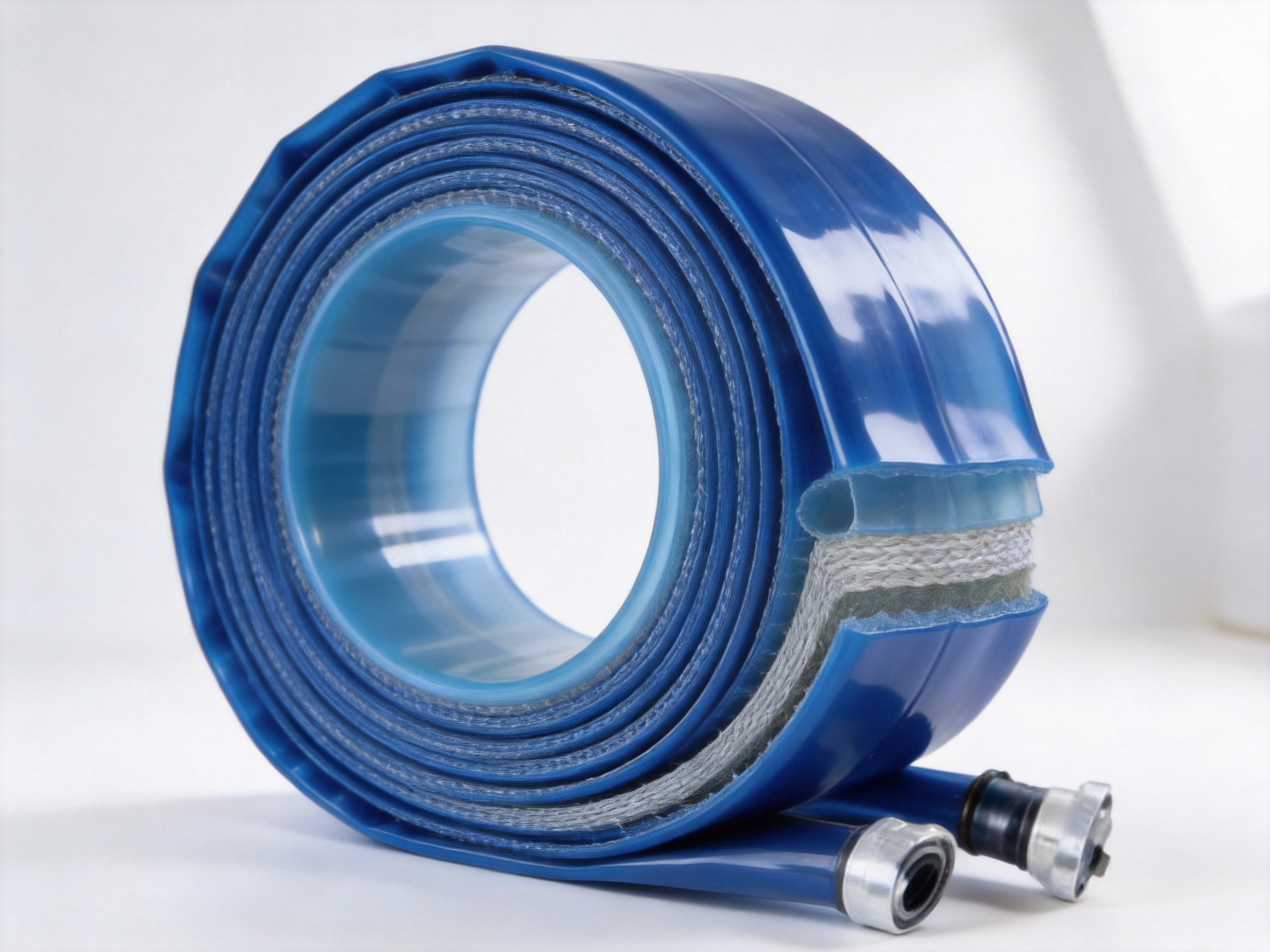
The hose is then cooled, inspected, and prepared for testing. Production testing may include dimensional checks, visual inspection, adhesion assessment, pressure testing, and evaluation of surface quality. The purpose is to confirm that the hose meets the required pressure rating, has no visible defects, and is suitable for customer delivery. This manufacturing discipline is one of the reasons the product can compete effectively against conventional hoses in both durability and reliability.
Taizhou Shenlong Fire Science and Technology Co., Ltd. benefits from decades of experience in hose manufacturing. The company’s product range includes fire hose, industrial hose, agricultural hose, hose couplings, hose nozzles, fire accessories, fire cabinets, and trenchless rehabilitation hose. This broad production background provides a strong technical foundation because many hose applications share common challenges: pressure resistance, flexibility, lining adhesion, abrasion protection, coupling compatibility, and long-term reliability.
The company can also produce foreign trade products according to customer requirements, including rubber, PVC, polyurethane, and double-sided tape hose solutions. This capability is important for customers with specialized requirements because irrigation systems vary greatly by region, crop type, water source, pressure level, and installation method. A manufacturer with multiple material technologies can recommend suitable structures rather than forcing every application into a single product type.
Another strength is the company’s experience serving domestic and export markets. Products are used in more than 20 provinces, cities, and autonomous regions, and export products are produced through cooperation with foreign trade companies. This market exposure helps the company understand different standards, application habits, and performance expectations. For international buyers, this practical experience can reduce communication barriers and support better product selection.
The company’s location in Taizhou City, Jiangsu Province, supports industrial production and logistics. Its address at No. 58, Kechuang Road, Sixiang Street, Medicine Gaoxin District, Taizhou City, Jiangsu Province, places it within an established manufacturing region. Customers can communicate through the listed email, [email protected], or by phone at +86 159-5116-9511 for product consultation, customization, and purchasing arrangements.
Reliable hose performance requires quality control at every step. For the through-the-weave TPU layflat irrigation hose, inspection begins with raw materials. Polyester filament must have the required strength and consistency. TPU must meet requirements for flexibility, abrasion resistance, and processing stability. If raw materials vary significantly, finished hose performance can become unpredictable.
Weaving quality is another critical control point. The reinforcement structure must be uniform along the hose length. Weave density, yarn alignment, and tubular shape all influence pressure capacity. A well-made reinforcement layer distributes internal pressure evenly, reducing localized stress. This is especially important for long hoses used in irrigation fields where pressure may fluctuate during pump start-up or valve operation.
During TPU application, technicians must monitor temperature, bonding, wall thickness, and surface finish. The inner lining should be free from defects that could obstruct flow or create weak points. The outer cover should be continuous and durable. The through-the-weave bond should remain strong enough to resist separation during repeated bending, rolling, and pressurization.
Pressure testing provides confirmation of mechanical performance. By testing hose samples under controlled pressure, the manufacturer can verify working pressure capability and safety margins. Visual inspection identifies surface defects, uneven coating, contamination, or dimensional irregularities. Final packaging also matters because improper rolling or storage can damage a hose before it reaches the user.
For customers, consistent quality means fewer unexpected failures. In irrigation, a hose leak can waste water, interrupt crop watering, create muddy field conditions, and require labor to repair. In industrial water transfer, downtime may delay construction or pumping operations. A hose produced under disciplined quality control reduces these risks and supports more efficient work.
The primary application for this hose is agricultural irrigation. Farms often need to transfer water from wells, reservoirs, ponds, canals, pumps, or storage tanks to fields. Depending on the crop and terrain, the hose may be used as a main supply line, a temporary transfer line, or a connection between pumping equipment and irrigation devices. The layflat design is especially useful where irrigation layouts change seasonally or where hoses must be moved between fields.
For field crops, long-distance water movement is often necessary. A 100-meter or 200-meter hose length allows operators to cover large areas with fewer connections. Fewer connections can reduce leakage points and simplify installation. When custom lengths are required, the product can be supplied according to customer request, helping match the system layout more accurately.
In orchards and vineyards, hoses may need to follow uneven ground, pass between rows, and be stored after seasonal use. Flexibility and kink resistance are important in these settings. A hose that is too rigid can be difficult to route, while a hose that kinks frequently can interrupt water supply. The TPU layflat hose offers a practical balance by remaining flexible while supporting stable flow under pressure.
In vegetable production and greenhouse operations, water delivery often requires frequent repositioning. Lightweight handling becomes a major benefit because workers may move hoses daily or weekly. The lower weight of the layflat TPU construction reduces fatigue and helps improve labor efficiency. Resistance to agricultural chemicals also helps when hoses are used near fertilizers, soil treatments, or nutrient solutions.
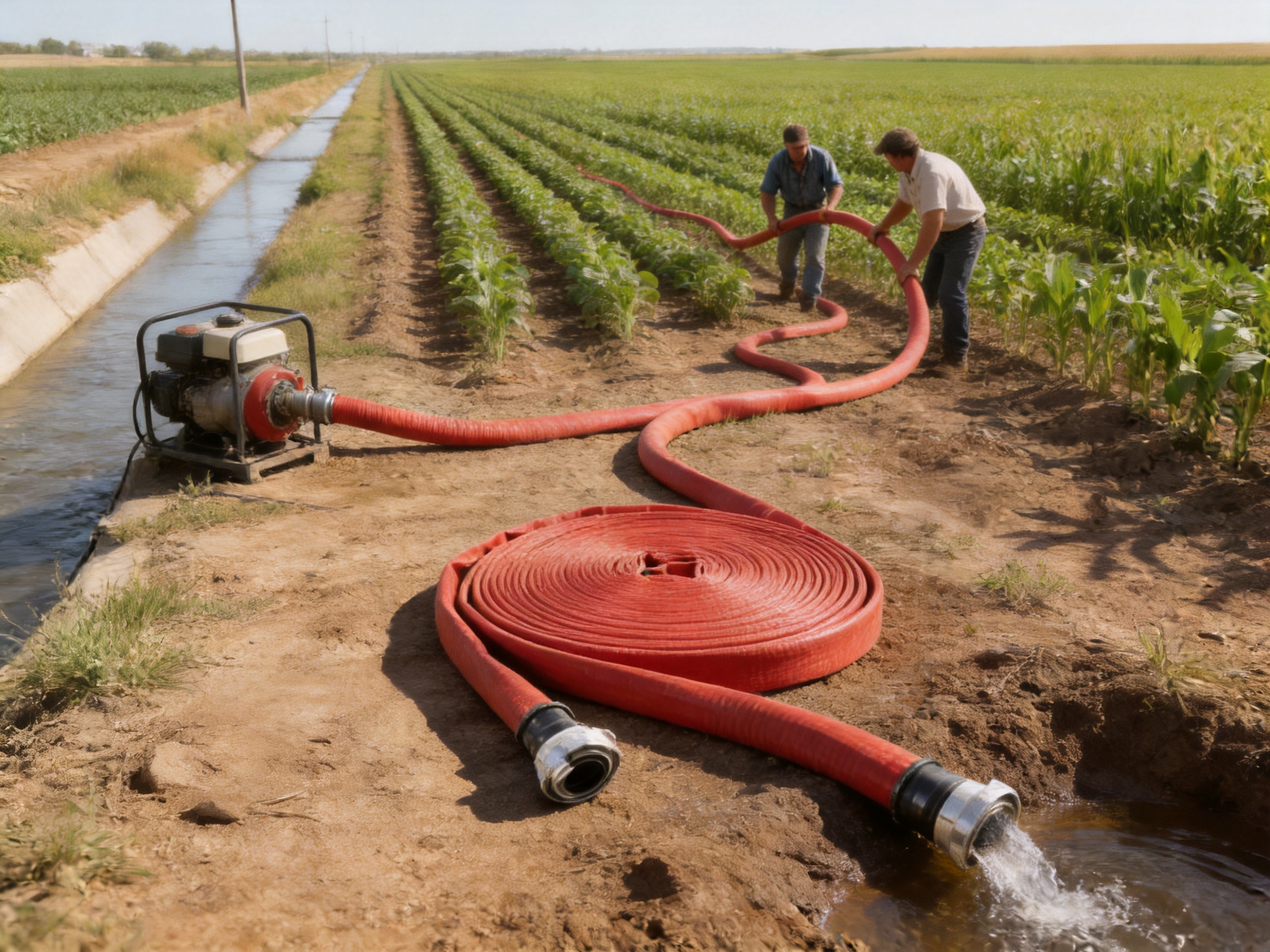
Although designed as an irrigation hose, the product is also suitable for many industrial water transfer tasks. Construction sites frequently need temporary water lines for dust control, equipment washing, concrete preparation, and site drainage. A hose used in such environments must tolerate abrasion, rough surfaces, and frequent movement. The TPU cover helps protect against these conditions, while the layflat profile supports easy storage between jobs.
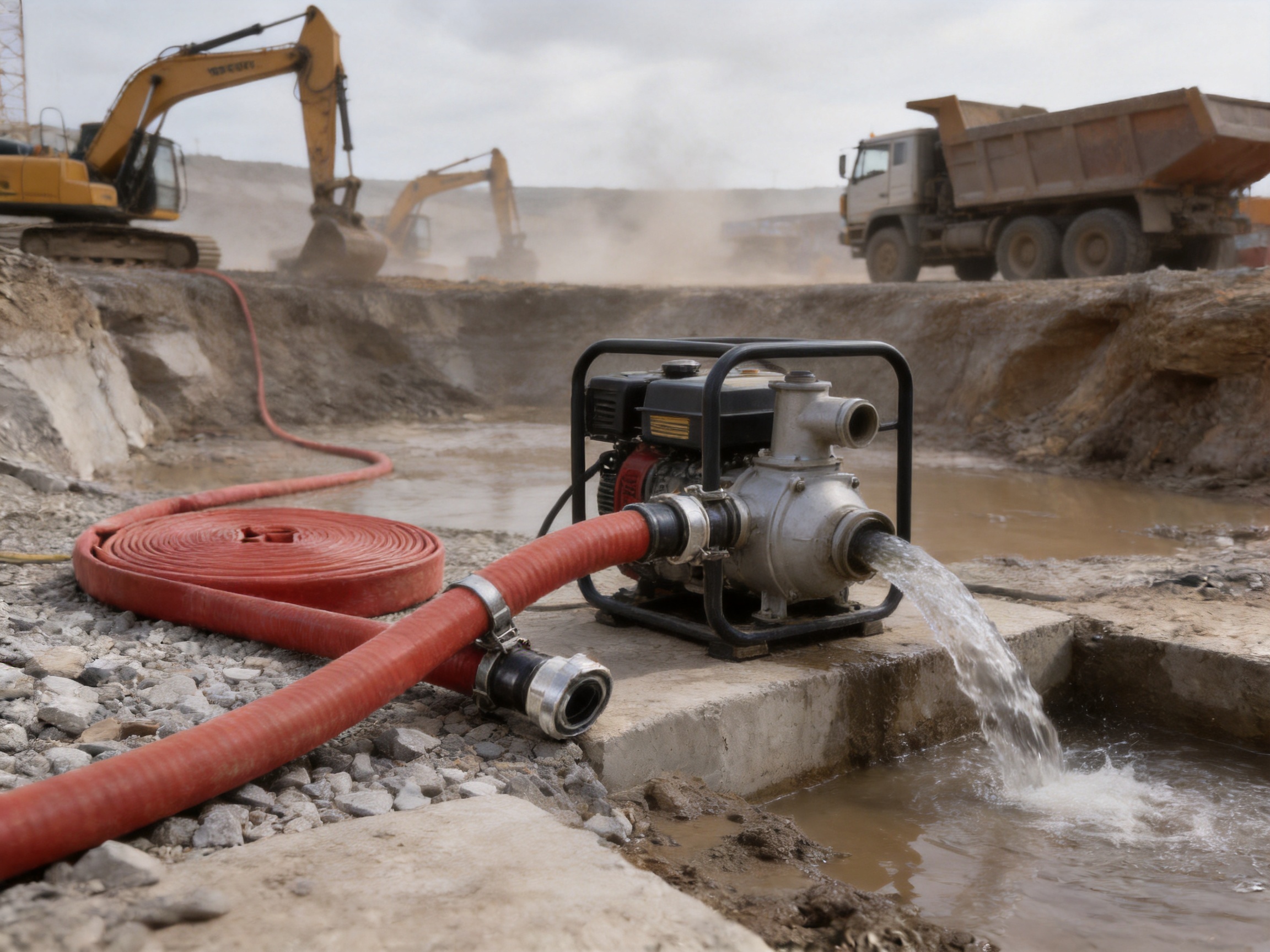
Dewatering operations are another strong application. When water must be pumped away from excavations, trenches, foundations, or flooded areas, contractors need hoses that can be deployed quickly and connected securely. The hose’s pressure capacity and abrasion resistance make it useful for temporary pumping systems. Its flexibility allows it to follow site contours without requiring rigid pipe installation.
Industrial plants may use layflat hoses for temporary water bypass, maintenance cleaning, cooling water transfer, or emergency supply. In these situations, the hose’s oil, ozone, and chemical resistance can be valuable. Industrial environments may expose hoses to residues or atmospheric conditions that degrade ordinary materials. TPU provides better protection and helps extend service life.
Water conservancy projects can also benefit from large-diameter TPU layflat hoses. The 4-inch, 5-inch, and 6-inch sizes support higher flow volumes while remaining easier to transport than rigid pipe. Temporary installations can be established rapidly, making the hose suitable for seasonal pumping, flood response, reservoir management, and remote water distribution.
Handling efficiency is one of the most visible benefits of a layflat hose. When empty, the hose collapses flat and can be rolled into a compact coil. This reduces storage space compared with rigid pipes and many heavy round hoses. For farms and contractors with limited storage areas, compact rolling is a practical advantage.
Transport is also simplified. Long hose lengths can be moved on vehicles, trailers, or hose reels with less space requirement. When a worksite changes, the hose can be drained, rolled, loaded, and redeployed. This flexibility is particularly valuable in temporary irrigation, mobile pumping, and emergency water transfer.
Lightweight construction improves worker safety and productivity. Heavy hoses can cause fatigue, strain, and slower installation. A hose that is easier to carry and position allows teams to complete setup more quickly. In large operations, time savings during deployment and retrieval can be significant across an entire season.
The hose’s flexibility also reduces installation complexity. It can be routed around obstacles more easily than rigid pipe. It can follow uneven ground and adapt to temporary layouts. When paired with suitable couplings, valves, and fittings, it becomes a versatile component in many water delivery systems.
A hose performs best when paired with appropriate couplings and accessories. Taizhou Shenlong Fire Science and Technology Co., Ltd. also supplies hose couplings, hose nozzles, and related accessories, which can help customers build complete water delivery systems. Proper coupling selection depends on hose diameter, working pressure, application type, and regional connection standards.
For irrigation, common coupling requirements include secure sealing, easy connection, corrosion resistance, and compatibility with pumps or distribution equipment. A poorly matched coupling can leak, slip, or create flow restrictions. Therefore, customers should confirm coupling size, pressure rating, and attachment method before installation.
In higher-pressure applications, coupling retention is especially important. The coupling must remain secure under pressure surges and repeated movement. Hose clamps, binding methods, or specialized fittings should be selected according to manufacturer recommendations. For large-diameter hoses, correct installation also helps prevent twisting and uneven stress near the coupling area.
System integration should consider pump capacity, hose length, elevation difference, and desired flow rate. Longer hoses create greater friction loss, and elevation changes affect pressure requirements. Selecting the correct diameter helps maintain efficient water delivery. A larger diameter may reduce friction loss but increases weight and storage volume. A smaller diameter may be easier to handle but may not provide enough flow for large fields. Technical consultation can help identify the best size for each project.
The hose is designed to perform across a wide temperature range from minus 40 degrees Celsius to 70 degrees Celsius. Cold-weather flexibility is important because some hoses become stiff and difficult to unroll in low temperatures. TPU helps maintain flexibility, reducing cracking risk during early morning operation or cold-season water transfer.
In hot environments, hoses may be exposed to high surface temperatures, sunlight, and pressure cycling. The TPU cover helps resist ultraviolet degradation and ozone exposure. This makes the hose suitable for outdoor use during long irrigation seasons. Proper storage away from unnecessary sunlight when not in use can further extend service life.
Abrasion resistance is essential when hoses are dragged across rough surfaces. The outer cover protects the reinforcement from direct contact with stones, concrete, field debris, or machinery contact. While no hose is indestructible, a TPU cover provides a stronger protective layer than many basic layflat materials.
Chemical and oil resistance allows the hose to tolerate more demanding environments. In agricultural settings, hoses may contact fertilizers, pesticides, fuel residues, or oils from pumps and machinery. In industrial environments, exposure may include cleaning agents or process residues. Users should verify compatibility for specific chemicals, but the hose’s general resistance profile makes it suitable for many practical situations.
When choosing a hose, the lowest purchase price is not always the most economical choice. A low-cost hose that wears quickly, kinks frequently, leaks, or fails under pressure can create hidden expenses. These include labor for repair, lost water, crop stress, equipment downtime, and replacement costs. A durable through-the-weave TPU hose is designed to reduce these problems.
Longer service life can lower the total cost of ownership. If a hose lasts longer under the same operating conditions, the user replaces it less often. Better abrasion resistance reduces surface damage. Strong bonding reduces delamination risk. Pressure stability reduces the chance of sudden failure. Flexibility and light weight reduce labor time during setup and retrieval.
Flow efficiency also contributes to operating economy. A smooth lining helps reduce internal friction, supporting more effective water delivery. Efficient flow can help pumps operate closer to intended conditions, especially over longer hose runs. While system design must account for many variables, hose quality plays an important role in maintaining performance.
For agricultural users, reliability can directly affect crop management. Irrigation timing matters, especially during dry periods or sensitive growth stages. A hose failure during a critical watering window can create stress for crops and workers. Choosing a stronger hose helps protect the irrigation schedule.
Standard hose lengths include 100 meters and 200 meters. These lengths are practical for many irrigation and water transfer applications because they reduce the number of joints required across long distances. However, different projects may require different lengths, and custom requests can be supported according to customer needs.
Customization may involve hose length, diameter selection, coupling type, pressure requirements, color preferences, or packaging. The ability to produce according to customer requirements is important for buyers who serve specific markets or operate specialized systems. For example, a farm may require a particular coupling standard, while a contractor may require shorter sections for easier handling on construction sites.
Because the company manufactures multiple hose categories, it can help customers compare materials and choose the best solution. TPU layflat hose may be ideal for demanding irrigation, while other materials may be suitable for light-duty water discharge, firefighting, or specialized industrial use. This product knowledge supports more accurate purchasing decisions.
To maximize service life, users should deploy the hose carefully. Before operation, the hose path should be checked for sharp objects, metal edges, broken glass, or severe abrasion points. While the TPU cover is durable, avoiding unnecessary damage will extend the hose’s working life.
The hose should be unrolled fully before pressurization. Pressurizing a tightly coiled or twisted hose can create uneven stress and may damage the hose or couplings. Operators should avoid sharp bends near fittings and ensure couplings are properly attached. If the system includes valves, they should be opened and closed gradually to reduce water hammer.
During operation, pressure should remain within the rated working pressure. Pumps should be matched to the hose rating, and pressure gauges should be used where practical. Sudden pressure surges can damage hoses, couplings, and system components. If high-pressure operation is expected, safety margins and proper coupling retention become especially important.
After use, the hose should be drained before storage. Removing water reduces weight, prevents freezing damage in cold climates, and helps avoid internal contamination. The hose should be rolled neatly without sharp folds. Storage in a clean, dry location away from unnecessary sunlight, heat, chemicals, and sharp objects will help preserve the material.
Regular inspection helps identify issues before they become failures. Users should check for cuts, deep abrasions, swelling, blistering, coupling movement, or leakage. Areas near couplings deserve special attention because they experience repeated bending and mechanical stress. If damage is found, the hose should be repaired or removed from service according to the severity of the issue.
Cleaning may be necessary after use in muddy, chemical, or industrial environments. The hose can be rinsed with clean water and allowed to dry before storage. Avoid harsh cleaning agents unless chemical compatibility has been confirmed. Keeping the hose clean reduces surface wear and makes inspection easier.
Operators should also monitor system behavior. Reduced flow, unusual pump load, visible bulging, or repeated kinking may indicate installation problems or hose damage. Early correction can prevent larger failures. Proper training for workers who deploy and retrieve hoses can significantly improve hose life.
Durable hoses can contribute to more sustainable operations by reducing waste. A hose that lasts longer requires fewer replacements, which reduces material consumption and disposal. Efficient water transfer also helps reduce water waste from leaks and failures. In agriculture, reliable irrigation supports better water management and crop health.
The layflat design can reduce transportation impact by allowing compact shipment and storage. More hose length can be transported in less space compared with bulky rigid piping. For contractors who move equipment frequently, this can improve logistics efficiency.
Because the hose is suitable for repeated deployment, it supports temporary systems that do not require permanent infrastructure. This can be beneficial for seasonal irrigation, emergency pumping, or short-term construction work. Users can install water delivery capacity where needed and remove it after the task is complete.
Selecting the correct diameter is essential for system performance. Smaller diameters, such as 1 inch or 1-1/2 inches, are useful for compact high-pressure applications or lower flow needs. They are lightweight, easy to handle, and suitable for smaller pumps or distribution lines. The 1-inch size offers the highest listed working pressure at 400 psi.
Medium diameters, such as 2 inches and 3 inches, are common for general irrigation, dewatering, and mobile pumping. They provide a strong balance between flow capacity and handling convenience. These sizes are suitable for many farms, construction sites, and temporary water transfer systems.
Larger diameters, such as 4 inches, 5 inches, and 6 inches, are selected when high-volume transfer is required. They are useful for main supply lines, large pumps, flood response, water conservancy projects, and industrial water movement. Although larger hoses weigh more, the layflat structure still makes them easier to store and move than many rigid alternatives.
When uncertain, users should consider required flow rate, pump pressure, total hose length, elevation, and acceptable friction loss. Consulting the manufacturer can help avoid undersizing or oversizing. Correct sizing improves efficiency, reduces energy waste, and supports longer hose life.
Professional users need equipment that works reliably in real conditions, not only in ideal test environments. The through-the-weave TPU layflat irrigation hose is designed for exactly that purpose. It combines high-strength polyester reinforcement, TPU lining and cover, integrated bonding, strong pressure ratings, abrasion resistance, kink resistance, and outdoor durability.
Its advantages over many competitor hoses are practical and measurable. It is lighter and easier to store than many heavy rubber hoses. It is tougher and more cold-flexible than many standard PVC layflat hoses. Its through-the-weave structure reduces delamination risk compared with hoses that rely on weaker surface bonding. Its broad resistance profile helps it survive rough agricultural and industrial environments.
The manufacturing experience of Taizhou Shenlong Fire Science and Technology Co., Ltd. adds further value. Since 1995, the company has built technical knowledge in lined hoses, fire hoses, agricultural hoses, industrial hoses, couplings, nozzles, and related accessories. This experience supports product consistency, customization capability, and practical application guidance. For buyers seeking a dependable hose supplier, manufacturing history and product range are important indicators of capability.
It is a flexible water delivery hose made with high-strength polyester filament reinforcement and TPU used as both the inner lining and outer cover. The through-the-weave process integrates TPU into the woven structure, creating a strong composite hose wall with good adhesion, pressure resistance, and durability.
The main advantages include lightweight handling, strong flexibility, abrasion resistance, kink resistance, ultraviolet resistance, oil resistance, ozone resistance, chemical resistance, and reliable operation across temperatures from minus 40 degrees Celsius to 70 degrees Celsius.
Compared with many PVC layflat hoses, TPU layflat hose generally provides better abrasion resistance, better cold-weather flexibility, and longer service life in demanding environments. PVC may be suitable for lighter-duty use, but TPU is often preferred when durability and repeated deployment are important.
Compared with many rubber hoses, this TPU layflat hose is usually lighter and easier to store. Rubber hoses can be durable, but they are often heavier and bulkier. The TPU layflat design is especially useful when long hose lengths must be transported, deployed, and retrieved frequently.
Standard inner diameters include 1 inch, 1-1/2 inches, 2 inches, 2-1/2 inches, 3 inches, 4 inches, 5 inches, and 6 inches. These correspond to approximately 25 millimeters, 38 millimeters, 50 millimeters, 65 millimeters, 80 millimeters, 100 millimeters, 125 millimeters, and 150 millimeters.
Common lengths include 100 meters and 200 meters. Custom lengths can be supplied according to customer request and project requirements.
The listed working pressure is 400 psi for the 1-inch size, 300 psi for the 1-1/2-inch size, and 232 psi for sizes from 2 inches to 6 inches. Actual system design should always stay within the rated working pressure and consider pressure surges.
Yes. Although it is well suited for irrigation, it can also be used for construction dewatering, temporary pumping, industrial water transfer, dust control, emergency water supply, and water conservancy projects.
Yes. The TPU cover provides resistance to ultraviolet light, ozone, abrasion, and weather exposure. For longest service life, the hose should still be stored properly when not in use.
Users should avoid dragging the hose over sharp objects, unroll it fully before pressurization, operate within rated pressure, avoid sudden valve closure, drain it after use, inspect it regularly, and store it in a clean, dry location away from excessive sunlight and chemicals.
The through-the-weave TPU layflat irrigation hose is a high-value solution for demanding water delivery applications. Its reinforced polyester structure provides strength, while the TPU lining and cover provide flexibility, durability, abrasion resistance, and environmental protection. The through-the-weave process creates strong integration between material layers, reducing delamination risk and improving long-term reliability.
For agricultural users, the hose supports efficient irrigation across long distances, changing layouts, rough terrain, and varied weather. For industrial and construction users, it offers a practical temporary water transfer solution that is easier to transport and deploy than many heavy alternatives. For professional buyers, its combination of pressure performance, handling convenience, and durable construction makes it a strong competitor in the layflat hose market.
Backed by the manufacturing experience of Taizhou Shenlong Fire Science and Technology Co., Ltd., the hose reflects a practical understanding of lined hose technology, customer customization, and real-world operating demands. Whether used for farm irrigation, dewatering, industrial pumping, or water conservancy work, it provides the reliability and efficiency that modern water transfer systems require.
Engineering Handbook of Industrial Hose Design and Application.
Materials Performance Guide for Thermoplastic Polyurethane in Flexible Hose Systems.
Agricultural Irrigation Equipment Selection and Maintenance Manual.
Technical Guide to Layflat Hose Pressure Ratings, Couplings, and Field Use.
Polyester Reinforcement Structures for High-Pressure Flexible Hose Manufacturing.
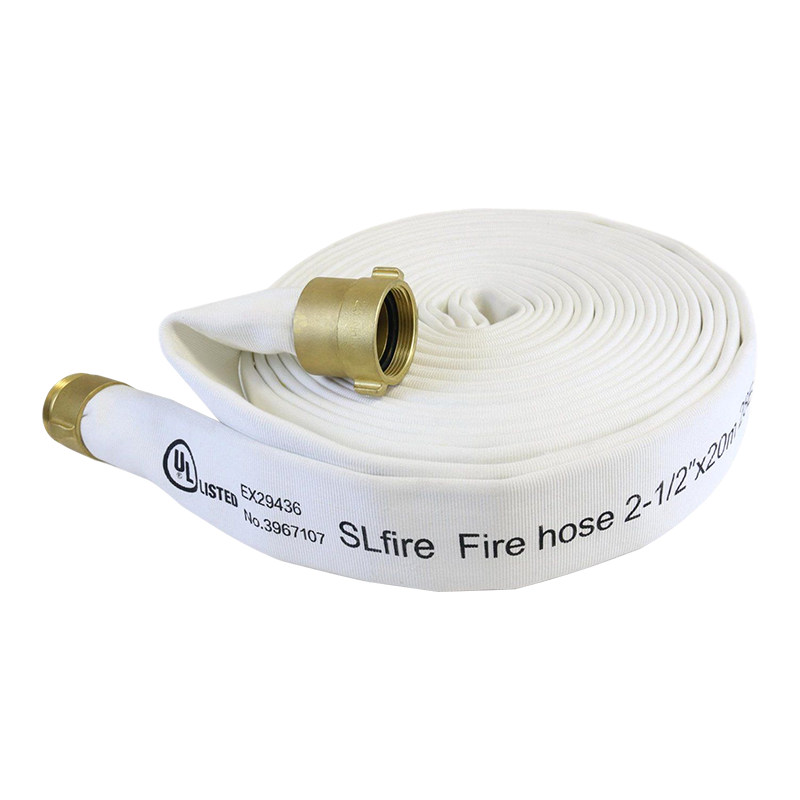
Single jacket, EPDM rubber liner Features • 100% high tenacity polyester jacket, high-grade EPDM rub...
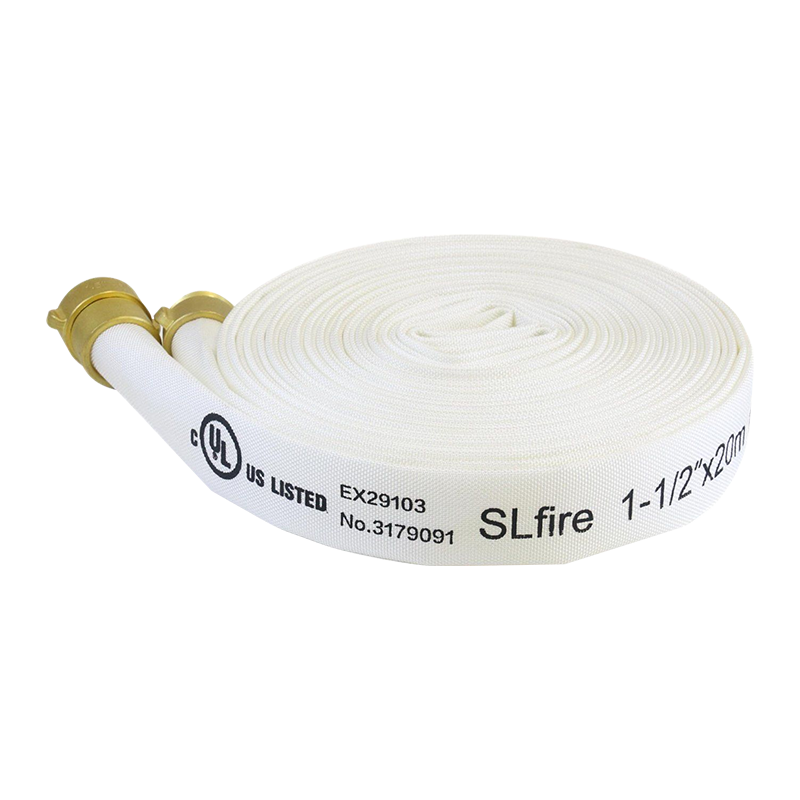
Single jacket, TPU liner •High-tenacity polyester yarn, circular woven in twill weave/plain weave,T ...
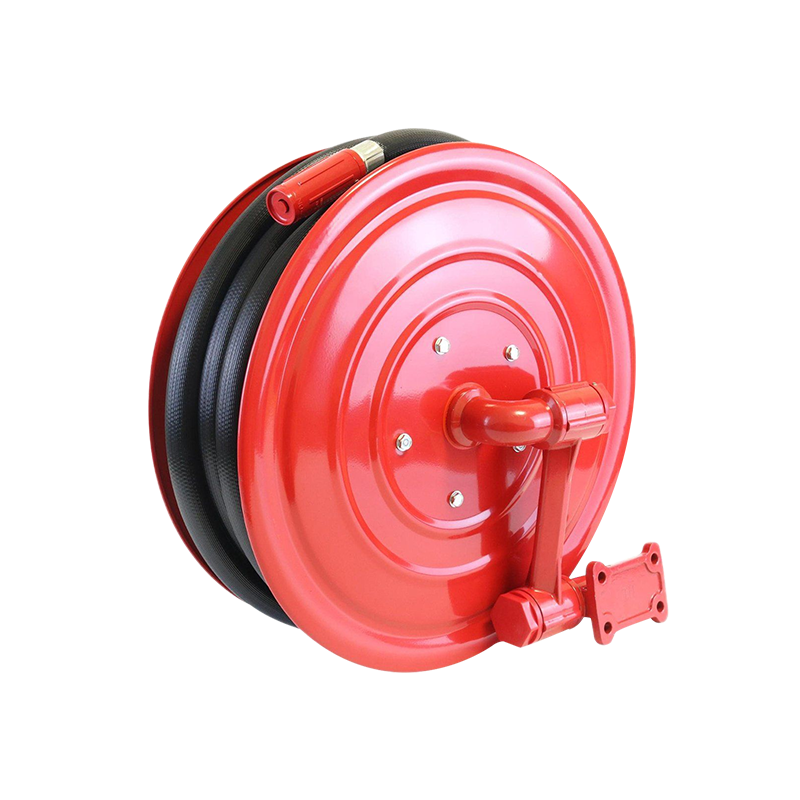
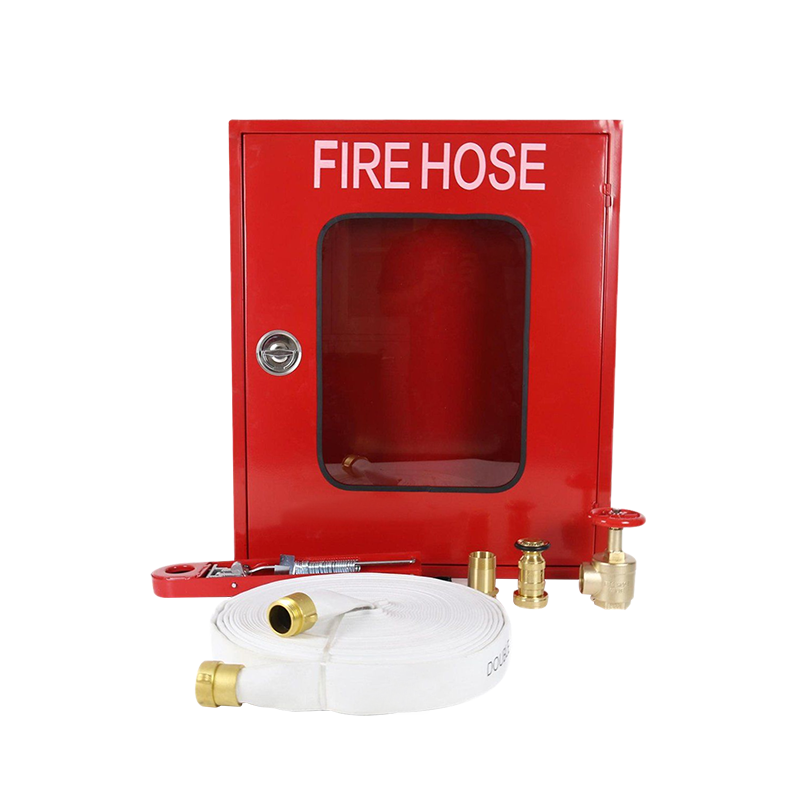
Fire cabinets are designed to accommodate fire hose,valve and other firefighting equipment. Type 201...
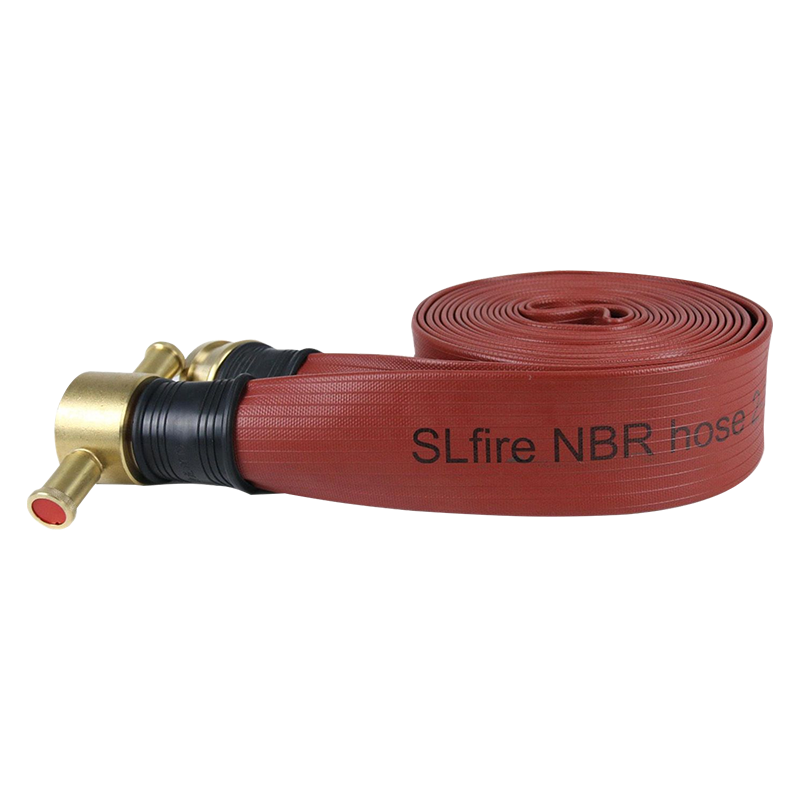
Nitrile covered hose •Nitrile/TPR blend as cover and lining, with 100% high-tenacity polyester yarn ...
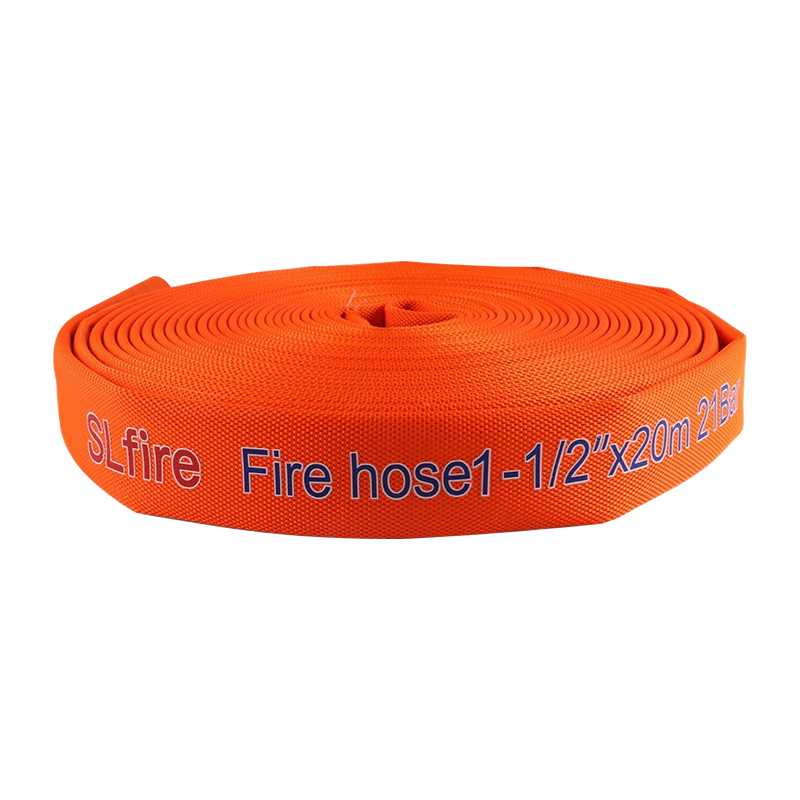
Single jacket, TPU liner •High-tenacity polyester yarn, circular woven in twill weave, TPU lining, f...
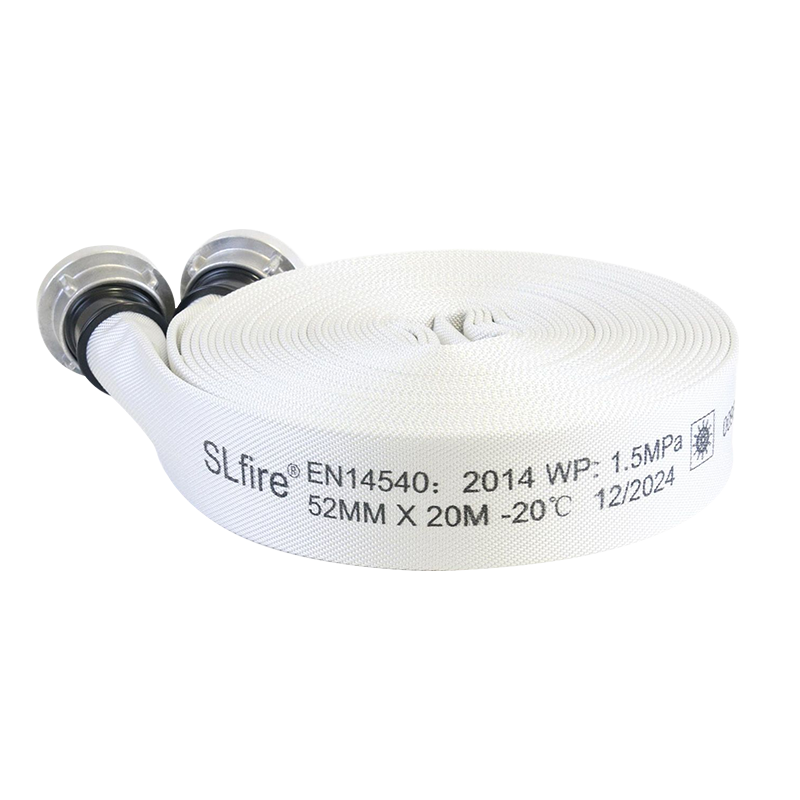
Marine hose Single jacket, PVC liner •100% high tenacity polyester yarn, circular woven in twill wea...
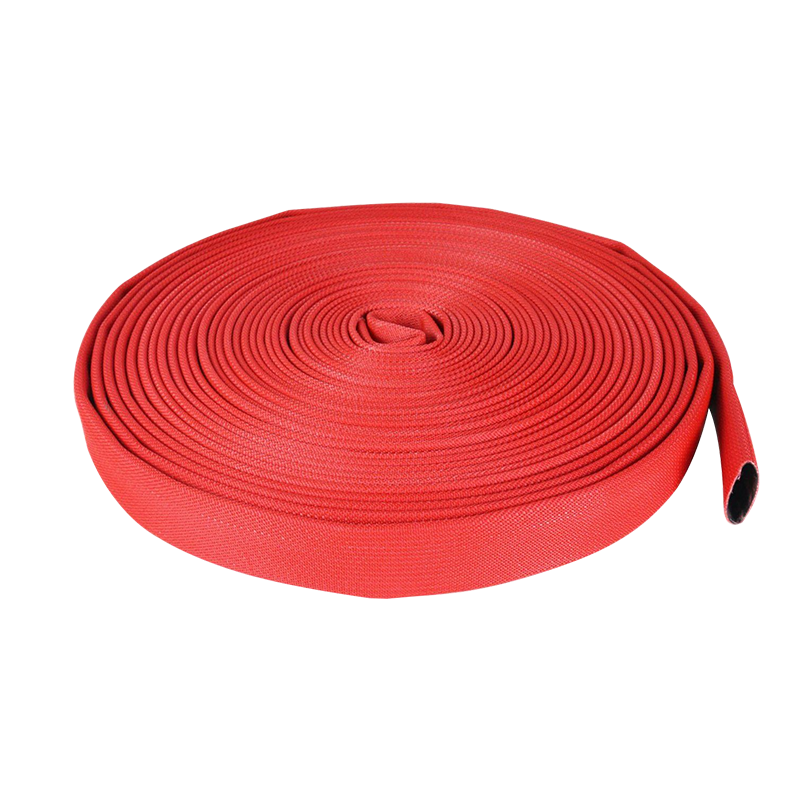
Marine hose Single jacket, PVC liner, PU coated •100% high tenacity polyester yarn,c ircular woven i...
 Call Us
+86 159-5116-9511
Need Support
Head Office
No.58, Kechuang Road, Sixiang Street Medicine Gaoxin District Taizhou City, Jiangsu Province

What Is a Fire Hose? A fire hose is a high-pressure flexible hose designed to carry water or fire retardant chemicals from a water source, such as a hydrant, pump, or tank, to a fire for suppression p...
Copyright © Taizhou Shenlong Fire Science and Technology Co., Ltd. All Rights Reserved.
 Fire Hose Manufacturers, Fire Hydrant Hose Factory