

 English
 русский
 Español
 Deutsch
 عربى
عربى Français
 Português
Don't hesitate to send a message

Single jacket, EPDM rubber liner Features • 100% high tenacity polyester jacket, high-grade EPDM rub...
Content
Fracturing operations require fluid-transfer equipment that can withstand pressure, abrasion, chemicals, changing temperatures, repeated handling, and difficult working environments. A hose used in these conditions must do more than transport water or fracturing fluids. It must maintain structural stability, resist damage from contact with the ground and equipment, remain flexible enough for rapid deployment, and provide dependable service over long distances.
The Through-the-Weave TPU Layflat Fracturing Hose is engineered for these demanding requirements. It combines high-strength polyester filament reinforcement with thermoplastic polyurethane, commonly known as TPU, for both the inner lining and outer cover. Its “through-the-weave” construction integrates the TPU material with the woven reinforcement, producing a flexible and durable layflat hose designed for high-pressure fluid transfer.
This hose is particularly suitable for oil and gas fracturing operations, water transfer, construction projects, mining support, industrial fluid delivery, emergency water supply, and other applications where a lightweight, compact, and pressure-resistant hose is needed. It is available in a broad range of internal diameters and pressure ratings, with standard lengths of 100 meters and 200 meters and additional customization available according to project requirements.
Manufactured by Taizhou Shenlong Fire Science and Technology Co., Ltd., the product benefits from long-term experience in the development and production of lined hoses and related fluid-transfer products. Since its establishment in 1995, the company has combined research and development, manufacturing, sales, and service capabilities to support customers in fire protection, construction, water conservancy, oil and gas, and other industrial sectors.
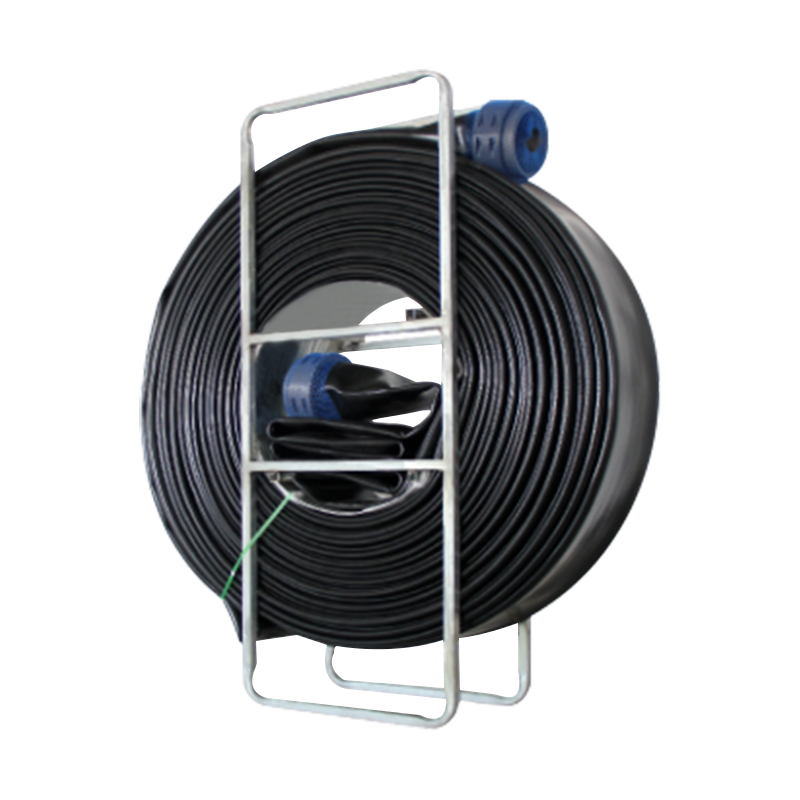
Through-the-weave TPU Layflat Fracturing Hose
A layflat hose is designed to flatten when it is not pressurized. This characteristic allows the hose to be rolled, transported, stored, and deployed with less space than a conventional rigid pipe or heavy spiral hose. When fluid enters the hose, the internal pressure opens the hose into a round flow channel.
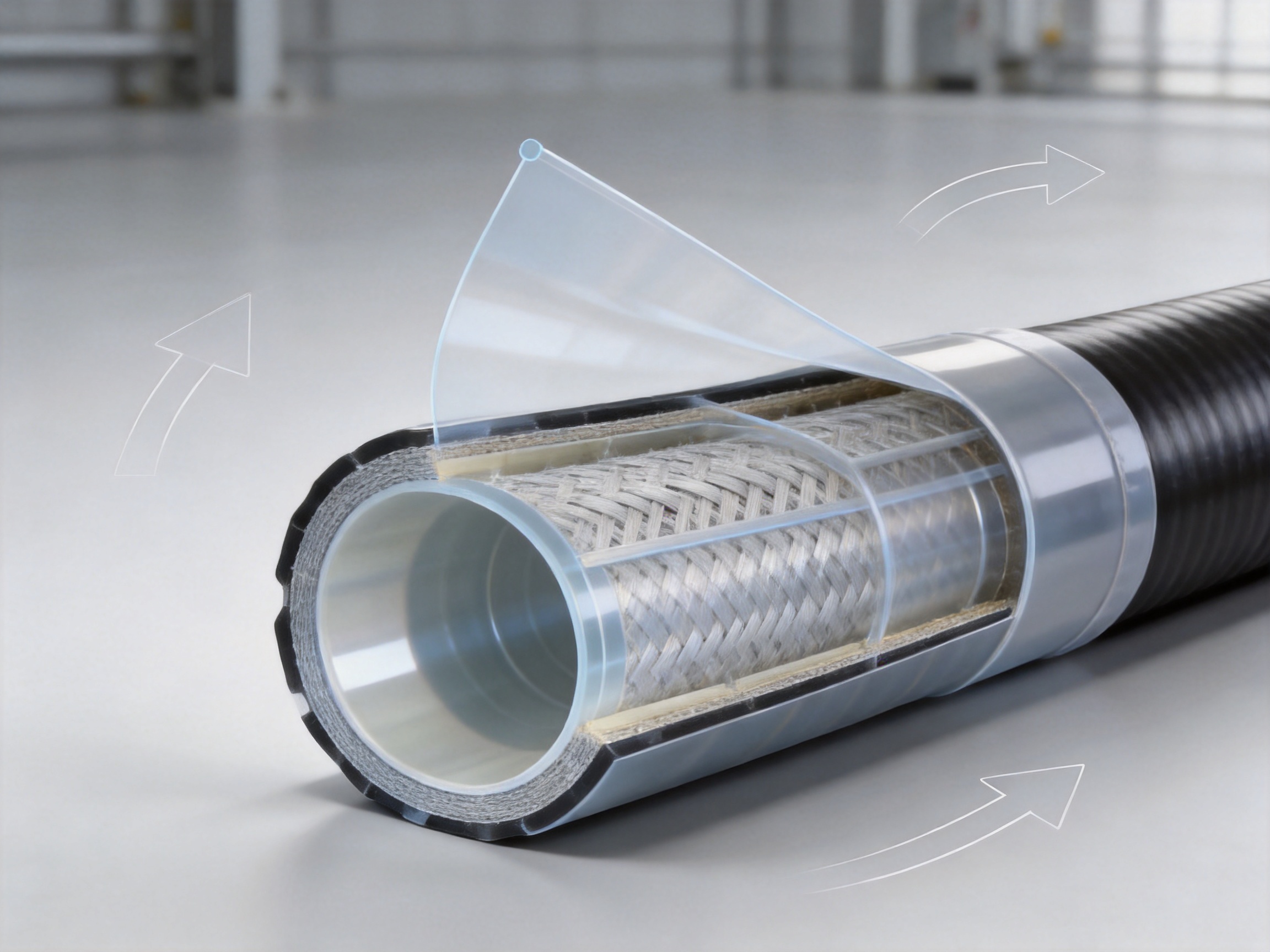
The through-the-weave design is different from a simple coated fabric hose. High-strength polyester filament is woven into a reinforcing structure, while TPU is applied through and around the weave to form the inner lining and outer cover. This construction creates a close relationship between the reinforcement and the polymer layers. The result is a hose that offers flexibility while maintaining resistance to elongation, pressure, abrasion, and environmental exposure.
The inner TPU layer provides a smooth passage for the conveyed fluid. A smooth inner surface helps reduce flow resistance and minimizes the possibility of material becoming trapped inside the hose. The outer TPU cover protects the reinforcement from abrasion, ultraviolet radiation, oil, ozone, moisture, and many common chemicals encountered in industrial environments.
The polyester reinforcement carries much of the mechanical load created by internal pressure. Polyester filament is valued for its high tensile strength, flexibility, relatively low weight, and ability to form a stable woven structure. When combined with TPU, it provides a balanced hose construction that is easier to handle than many rubber or rigid-pipe alternatives.
The reinforcement layer is manufactured from high-strength polyester filament. The filament is arranged into a woven structure that provides circumferential strength and longitudinal stability. This reinforcement helps the hose resist expansion when pressurized and helps it retain its shape during operation.
Polyester reinforcement is also suitable for layflat applications because it can be folded and rolled repeatedly without the same level of inconvenience associated with rigid reinforcement materials. Its relatively low weight contributes to easier transport, installation, relocation, and recovery after a fracturing stage or water-transfer project.
The woven reinforcement is selected and configured according to the required working pressure and hose diameter. Higher-pressure versions use construction parameters that provide greater resistance to internal pressure. This allows the product range to cover lower-pressure large-diameter water-transfer applications as well as higher-pressure fracturing lines.
Thermoplastic polyurethane is used as the inner lining because it provides a combination of flexibility, toughness, and resistance to abrasion. The smooth TPU lining supports efficient fluid movement and helps protect the reinforcement from direct contact with the transported medium.
In fracturing and industrial water-transfer applications, fluid may contain suspended particles, treatment chemicals, or other substances that can accelerate internal wear. The TPU lining is designed to resist this type of service better than many basic fabric or unprotected polymer constructions. The exact chemical suitability should always be verified against the fluid composition, concentration, temperature, and exposure time.
The TPU lining also supports the layflat function of the hose. It can flex as the hose is rolled or positioned, while the reinforcement maintains the pressure-bearing structure. This combination helps the hose accommodate changes in direction and uneven installation areas without requiring multiple rigid elbows.
The outer TPU cover protects the woven reinforcement from the external environment. During field operation, a fracturing hose may be dragged across gravel, soil, concrete, steel platforms, or other rough surfaces. It may also be exposed to sunlight, oil residue, ozone, moisture, and changing weather conditions.
TPU is selected for its strong abrasion resistance and its ability to retain useful flexibility across a wide temperature range. The outer cover reduces damage caused by ordinary handling and external contact. While no hose should be dragged over sharp edges without proper protection, the TPU cover gives the product a practical durability advantage in demanding work areas.
The through-the-weave process is a key feature of this product. Instead of treating the polymer cover as an independent layer loosely attached to a textile structure, the TPU is integrated with the woven reinforcement. This produces a more unified hose wall and helps reduce the risk of separation between the cover, lining, and reinforcement during normal service.
A typical manufacturing sequence begins with the preparation and inspection of polyester filaments. The yarns are then woven into a tubular reinforcement structure according to the required diameter and pressure class. The TPU material is processed under controlled conditions and applied so that it penetrates and bonds with the weave while forming the internal and external surfaces.
After coating and forming, the hose passes through controlled cooling and sizing stages. These stages help stabilize the dimensions and improve surface consistency. The finished hose is then inspected for appearance, dimensional accuracy, pressure performance, and other customer-specified requirements.
Through-the-weave construction can offer advantages over simple externally coated fabric hoses. The integrated structure improves resistance to delamination, supports better load distribution, and provides a durable outer surface. It also allows the hose to remain flexible while maintaining a reliable pressure-bearing body.
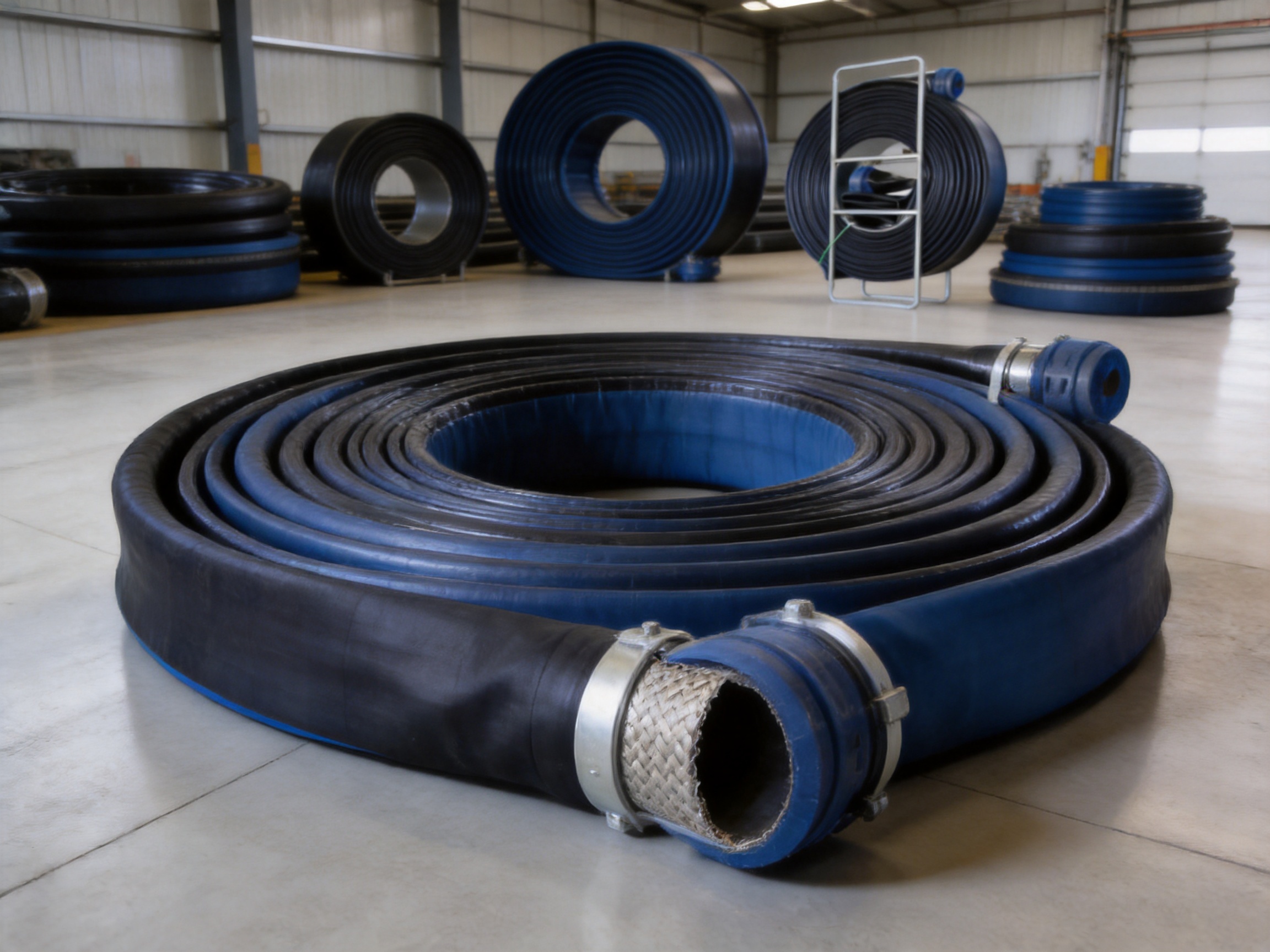
One of the main advantages of the product is the combination of high pressure capability and layflat flexibility. Rigid pipe can provide strong pressure performance, but it generally requires more transportation space, more lifting equipment, and more time for assembly. Heavy rubber hose can also handle demanding service, but it may be more difficult to move and store, particularly in large diameters and long lengths.
The TPU layflat format provides a practical alternative for projects where deployment speed, compact storage, and long-distance fluid transfer are important. The available working pressure ratings include 5 bar, 6 bar, 10 bar, 13 bar, 15 bar, 16 bar, 20 bar, 21 bar, 24 bar, 28 bar, 30 bar, and 40 bar options in the listed product range. The appropriate rating must be selected according to the complete system design and operating conditions.
Abrasion is a major cause of premature hose failure. Repeated movement across rough ground can wear through a weak outer cover and expose the reinforcement. The TPU outer layer is formulated to provide strong resistance to surface abrasion, making the product suitable for work sites where the hose must be installed, moved, and recovered repeatedly.
The hose should still be installed using good handling practices. Sharp rocks, metal edges, excessive bending, and uncontrolled dragging can damage any flexible hose. However, the combination of TPU and through-the-weave reinforcement provides a stronger defense against ordinary external wear than many basic PVC or lightly coated textile hoses.
Outdoor industrial operations expose hoses to sunlight and atmospheric ozone. Oil and fuel contamination may occur around pumps, trucks, storage tanks, and processing equipment. Fracturing fluids and cleaning agents may also contain chemicals that require a resistant hose material.
The TPU cover and lining are designed to resist ultraviolet radiation, oil, ozone, and a range of chemicals. This helps preserve the hose body during outdoor service and reduces the likelihood of rapid surface deterioration. Because chemical resistance depends on the exact substance, the supplier should review the fluid safety data and operating conditions before final selection.
The specified operating temperature range is from -40 degrees Celsius to 70 degrees Celsius. This broad range allows the hose to be used in cold climates, seasonal outdoor installations, and moderately hot industrial environments.
Temperature affects hose flexibility, pressure capability, chemical compatibility, and service life. At low temperatures, some materials become stiff or brittle. At high temperatures, polymer properties may change and pressure ratings may need to be reduced. The TPU construction is designed to maintain useful flexibility and performance within the stated range, but the hose must not be used outside the approved temperature and pressure limits.
When depressurized, the hose can be flattened and rolled into a compact package. This is particularly useful for large-diameter hoses, long-distance water transfer, temporary pipeline systems, and emergency installations. More hose can be transported in a single vehicle compared with rigid pipe, and manual handling may be possible for selected sizes and lengths.
Compact storage also helps reduce the space required in warehouses, field containers, service trucks, and project staging areas. The hose can be deployed when required and recovered after use, making it suitable for temporary systems that do not require permanent piping infrastructure.
Standard supply lengths include 100 meters and 200 meters. Long lengths can reduce the number of joints required in a transfer line. Fewer connections may simplify installation and reduce potential leakage points, provided that the hose is selected and installed correctly.
Customer-requested lengths may also be available. Customized lengths can help match the hose to the layout of a fracturing site, water-transfer route, construction zone, or industrial facility. Customization should be confirmed before production, including coupling type, end configuration, color, pressure rating, internal diameter, and packaging requirements.
The product range covers internal diameters from 2 inches to 16 inches in the supplied specifications. Working pressure, burst pressure, wall thickness, and weight vary according to the diameter and construction. The data below presents representative configurations from the available range.
Nominal Inner Diameter |
Inner Diameter |
Working Pressure |
Burst Pressure |
Wall Thickness |
Weight |
|---|---|---|---|---|---|
2 inches |
50 mm |
16 bar / 232 psi |
48 bar / 696 psi |
2.8 mm |
0.50 kg/m |
2 inches |
50 mm |
28 bar / 406 psi |
84 bar / 1,218 psi |
3.4 mm |
0.66 kg/m |
3 inches |
80 mm |
16 bar / 232 psi |
48 bar / 696 psi |
3.1 mm |
0.78 kg/m |
3 inches |
80 mm |
28 bar / 406 psi |
84 bar / 1,218 psi |
3.6 mm |
1.00 kg/m |
4 inches |
100 mm |
10 bar / 145 psi |
30 bar / 435 psi |
2.7 mm |
0.90 kg/m |
4 inches |
100 mm |
16 bar / 232 psi |
48 bar / 696 psi |
3.3 mm |
1.15 kg/m |
4 inches |
100 mm |
28 bar / 406 psi |
84 bar / 1,218 psi |
4.8 mm |
1.76 kg/m |
4 inches |
100 mm |
40 bar / 580 psi |
120 bar / 1,740 psi |
4.8 to 5.6 mm |
2.26 kg/m |
5 inches |
125 mm |
10 bar / 145 psi |
30 bar / 435 psi |
2.8 mm |
1.61 kg/m |
6 inches |
150 mm |
16 bar / 232 psi |
48 bar / 696 psi |
4.0 mm |
2.14 kg/m |
6 inches |
150 mm |
24 bar / 348 psi |
72 bar / 1,044 psi |
5.3 to 6.3 mm |
3.15 kg/m |
6 inches |
150 mm |
30 bar / 435 psi |
90 bar / 1,305 psi |
5.7 to 6.2 mm |
3.30 kg/m |
8 inches |
200 mm |
16 bar / 232 psi |
48 bar / 696 psi |
4.0 to 4.4 mm |
3.30 kg/m |
8 inches |
200 mm |
24 bar / 348 psi |
72 bar / 1,044 psi |
5.2 to 5.8 mm |
4.60 kg/m |
8 inches |
200 mm |
28 bar / 406 psi |
84 bar / 1,218 psi |
6.0 to 6.5 mm |
5.20 kg/m |
10 inches |
250 mm |
10 bar / 145 psi |
30 bar / 435 psi |
3.9 mm |
3.20 kg/m |
10 inches |
250 mm |
20 bar / 290 psi |
60 bar / 870 psi |
5.2 mm |
4.70 kg/m |
12 inches |
300 mm |
5 bar / 72.5 psi |
15 bar / 217.5 psi |
2.1 to 2.3 mm |
2.60 kg/m |
12 inches |
300 mm |
10 bar / 145 psi |
30 bar / 435 psi |
4.1 to 4.2 mm |
4.30 kg/m |
16 inches |
400 mm |
10 bar / 145 psi |
30 bar / 435 psi |
4.4 mm |
7.00 kg/m |
The listed values are product reference data. Actual dimensions, weights, pressure ratings, and tolerances may vary according to the selected construction and customer requirements. Inner diameter, wall thickness, weight, operating pressure, and color can be customized for suitable orders.
Hydraulic fracturing operations often require large volumes of water or other treatment fluids to be transferred between storage ponds, tanks, pumps, blending equipment, and injection systems. A layflat hose can be deployed across temporary routes and repositioned as the site layout changes.
Large internal diameters help support high flow rates while reducing the number of parallel hose lines required. The 8-inch, 10-inch, and 12-inch sizes can be considered for high-volume water-transfer duties, while smaller sizes may be used for branch lines, equipment connections, and lower-flow sections.
Fracturing sites are frequently temporary installations. Permanent steel or rigid plastic pipelines may not be practical when the route changes from one well pad to another. The TPU layflat hose can be rolled and transported to a new location after completion of a project.
Its flexible form allows the hose to follow practical surface routes around equipment, access roads, drainage channels, and other obstacles. Proper supports, crossing ramps, restraints, and protection should be used where vehicles or heavy equipment may pass over the line.
Depending on fluid compatibility and system design, the hose can also be considered for selected return-water, process-water, and industrial fluid-transfer applications. The chemical resistance of TPU makes it attractive for environments where a general-purpose water hose may not provide sufficient durability.
Before use with flowback water, additives, acids, hydrocarbons, or concentrated chemical solutions, the user should confirm compatibility. The evaluation should include the chemical composition, concentration, temperature, pressure, cleaning method, and expected exposure duration.
Although developed for high-performance fluid transfer, the hose construction can serve many industries. In construction, it may be used for dewatering, sediment control, concrete-site water supply, and temporary water distribution. In mining, it can support pit drainage, slurry-related water transfer where compatibility is confirmed, and dust-suppression systems.
Water conservancy projects can use large-diameter layflat hoses for temporary bypass lines, flood response, irrigation support, reservoir management, and construction-site drainage. Municipal and emergency-response organizations may also value the compact storage and rapid deployment characteristics for temporary water movement.
Industrial plants can use the hose for cooling water, process-water circulation, washdown systems, and temporary maintenance connections. The correct pressure, temperature, and chemical-resistance requirements must be checked for each service.
Agricultural applications may include irrigation, water transfer between tanks, field drainage, and temporary pumping systems. The hose can be especially practical where permanent pipelines are not installed or where seasonal water routes change. Its resistance to sunlight and abrasion supports outdoor use, while its compact rolled form simplifies seasonal storage.
Taizhou Shenlong Fire Science and Technology Co., Ltd. was founded in 1995 and has developed experience in research and development, production, sales, and service. Its principal product field includes lined fire hoses made from different materials, supported by related capabilities in rubber, PVC, polyurethane, and other customer-requested products.
This background is relevant to the production of TPU layflat fracturing hose because hose quality depends on more than the selection of a polymer. It requires understanding of textile reinforcement, extrusion or coating control, dimensional stability, end fitting compatibility, pressure behavior, storage, and field use.
An integrated research and development function allows hose construction to be adjusted for specific operating requirements. Customers may need a balance between weight and pressure, a specific internal diameter, a particular wall thickness, a special color, or a customized length. These requirements can be reviewed during product selection and manufacturing preparation.
Product development also involves evaluating the interaction between TPU and polyester reinforcement. The polymer must penetrate and bond with the weave while preserving the flexibility required for coiling and layflat operation. The reinforcement density and wall structure must be suitable for the intended pressure class.
Consistent production requires control of material preparation, polymer temperature, coating speed, line tension, cooling, sizing, and winding. Variations in these parameters can affect wall thickness, weight, surface appearance, adhesion, flexibility, and pressure behavior.
The through-the-weave manufacturing process benefits from controlled production because the TPU must be distributed consistently through the woven reinforcement. Uniform coverage helps protect the textile structure and supports predictable performance along the complete hose length.
Finished hose inspection may include checking the internal diameter, external appearance, wall thickness, length, weight, flexibility, and end condition. Pressure testing and burst testing may be performed according to the product specification, customer requirement, or applicable test method.
Each customer should receive technical documentation appropriate to the order. Such documentation may include size, working pressure, burst pressure, temperature range, length, color, coupling details, and inspection information. The final inspection plan should be agreed before production when the hose is intended for a critical industrial system.
The company’s products are sold in more than 20 provinces, cities, and autonomous regions and are also supplied for export through cooperation with domestic foreign-trade companies. This commercial experience supports the preparation of products for different markets, packaging requirements, and customer communication procedures.
For international projects, clear technical confirmation is essential. Buyers should provide the destination market, applicable standards, fluid details, pressure requirements, connection type, shipping length, and environmental conditions. This information helps the manufacturer recommend an appropriate construction and reduce the risk of selecting an unsuitable hose.
Before deployment, the hose route should be inspected for sharp stones, exposed metal, excessive slopes, unstable ground, and areas where vehicles may cross. The hose should be positioned to avoid unnecessary twisting and should be supported at connection points.
When the route crosses a road or equipment path, protective ramps, bridges, or other suitable crossing systems should be used. Heavy machinery must not drive directly over an unprotected hose because crushing forces can exceed the hose design even when the internal pressure is low.
Couplings must be suitable for the hose diameter, working pressure, fluid, and service temperature. Connections should be installed according to the coupling manufacturer’s instructions. Clamps, sleeves, gaskets, and locking devices must be correctly positioned and tightened.
Before pressurization, operators should inspect every connection for alignment, visible damage, and possible obstruction. The line should be filled and pressurized gradually. Sudden pressure changes can create surge loads that are higher than the normal working pressure.
The hose should be bent within the recommended minimum bend radius. Tight kinks can restrict flow, concentrate stress, and damage the reinforcement. When moving the hose, personnel should lift or guide it where possible rather than dragging it across abrasive surfaces.
Large-diameter hose sections may require mechanical handling equipment. Lifting slings should be wide enough and positioned to avoid cutting or crushing the hose cover. Forklift forks should not contact the hose directly unless appropriate protective packaging is in place.
The working pressure must never be exceeded. The burst pressure is a destructive test reference and is not an operating pressure. A suitable safety margin must be maintained between normal operating pressure, transient surge pressure, and the hose rated working pressure.
Pressure should be increased slowly during commissioning. Operators should remain away from connections and should not stand directly above or beside a pressurized hose. If abnormal swelling, leakage, movement, or surface damage is observed, the line should be depressurized before inspection.
After use, the hose should be drained and cleaned using a method compatible with TPU. Abrasive tools and aggressive cleaning chemicals should be avoided unless confirmed suitable. Remaining fluid, sediment, or chemical residue can affect the lining during storage.
The hose should be dried before long-term storage whenever practical. It should be coiled without sharp folds and protected from direct sunlight, ozone-generating equipment, excessive heat, oils, solvents, and rodents. Storage areas should be cool, dry, ventilated, and free from sharp objects.
Before every installation, the full hose length should be inspected. Look for cuts, punctures, deep abrasions, exposed reinforcement, blisters, abnormal swelling, discoloration, hardening, softening, and damaged couplings. Any section showing serious structural damage should be removed from service.
Inspection records can help identify repeated problems. If damage occurs at the same location on several deployments, the route, handling method, support system, or coupling arrangement should be reviewed. A durable hose can provide long service, but service life depends on correct selection, installation, pressure control, and maintenance.
The first selection factor is internal diameter. The diameter should support the required flow rate without creating excessive velocity or pressure loss. Larger diameters can be suitable for bulk transfer, while smaller diameters may be better for branch lines and equipment connections.
The second factor is working pressure. The selected hose should have a rated working pressure higher than the maximum steady pressure and anticipated transient pressure. Users should consider pump start-up, valve closure, elevation changes, and possible water hammer.
The third factor is burst pressure. Burst pressure provides a reference for the pressure margin of the hose, but it must not be treated as an allowable service pressure. System designers should apply suitable safety factors and follow the requirements of the relevant industry and project specification.
Temperature is also important. The specified range is -40 degrees Celsius to 70 degrees Celsius. The temperature of the fluid, surrounding air, ground surface, sunlight, and cleaning process should all be considered.
Chemical compatibility should be assessed for every fluid. The term “chemical resistant” does not mean resistant to every chemical under every condition. A compatibility review should consider acids, alkalis, solvents, hydrocarbons, salts, treatment additives, suspended solids, and mixtures.
Finally, customers should confirm length, color, coupling type, end treatment, packaging, and delivery requirements. The supplied product information states that parameters such as inner diameter, wall thickness, weight, pressure, and color can be customized according to customer requirements.
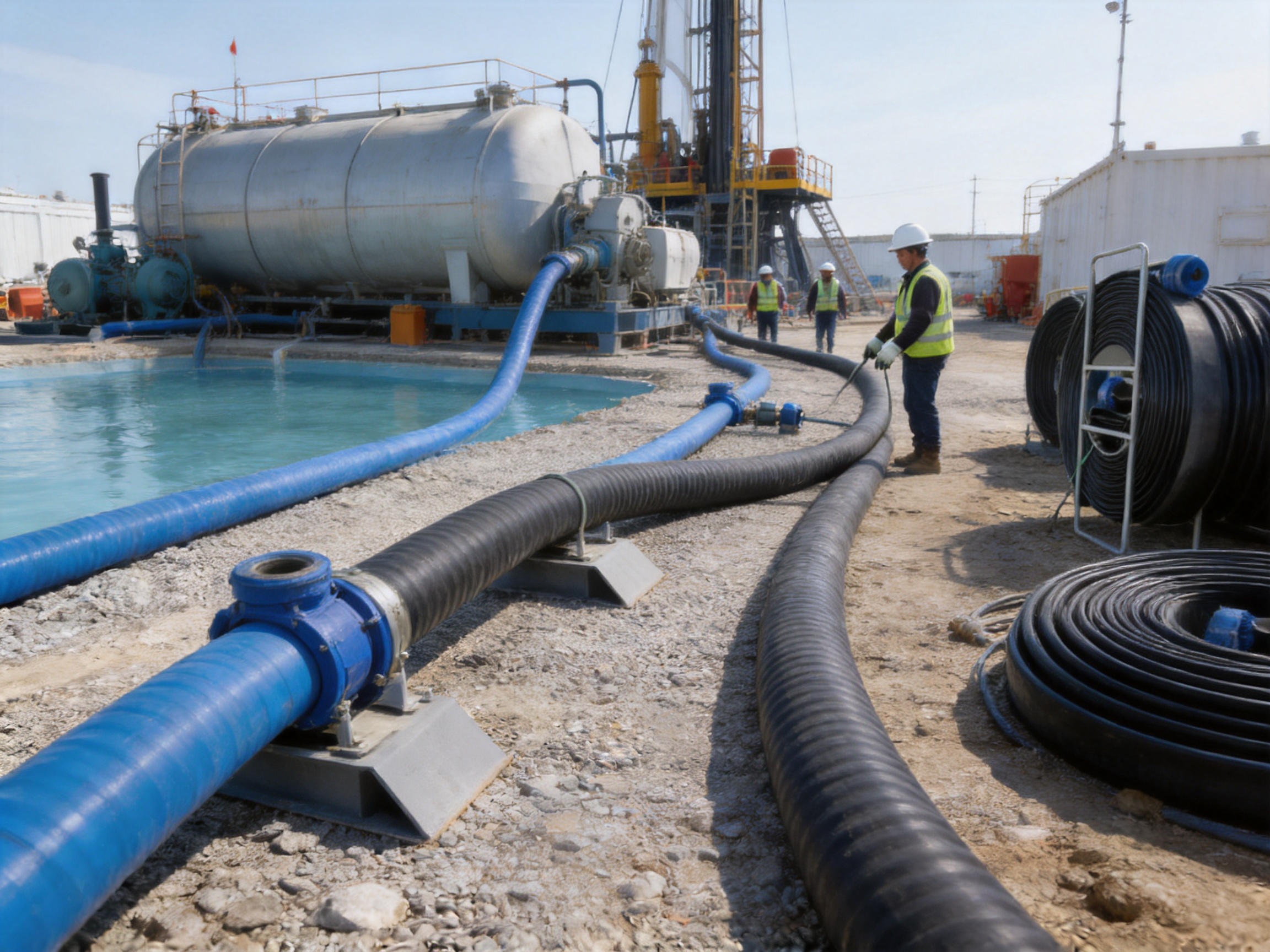
The hose is designed for high-performance fluid transfer, especially in oil and gas fracturing operations. It can also be used for temporary water transfer, construction dewatering, mining support, water conservancy, agriculture, and selected industrial applications.
TPU offers a useful combination of flexibility, abrasion resistance, environmental resistance, and chemical resistance. Using TPU for the inner and outer layers helps protect the reinforcement and provides a smooth fluid passage.
It refers to a manufacturing process in which TPU is integrated with the woven polyester reinforcement rather than being applied as a simple, loosely attached surface coating. This construction helps create a unified hose wall with improved durability and resistance to separation.
The listed range includes working pressures from 5 bar to 40 bar, depending on diameter and construction. The corresponding burst pressure values range from 15 bar to 120 bar in the supplied specifications. The correct rating must be selected according to the complete operating system.
The supplied specifications cover nominal inner diameters from 2 inches to 16 inches, corresponding approximately to 50 mm through 400 mm. Other dimensions may be considered as customized requirements.
The stated temperature range is -40 degrees Celsius to 70 degrees Celsius. Users should consider both fluid and ambient temperature and should confirm suitability when conditions approach the limits.
The TPU construction provides resistance to many chemicals, but compatibility must be confirmed for the specific fluid. Chemical concentration, temperature, pressure, and contact time can significantly affect performance.
Yes. The product is designed to resist ultraviolet radiation, ozone, oil, abrasion, and outdoor exposure. It should still be protected from sharp edges, uncontrolled vehicle traffic, excessive heat, and improper storage.
Standard lengths include 100 meters and 200 meters. Additional lengths may be available upon customer request, subject to production and transportation considerations.
Yes. Inner diameter, wall thickness, weight, pressure, color, length, and other product details may be customized according to customer requirements. Coupling and packaging requirements should be confirmed before production.
It should be cleaned, drained, dried when possible, coiled without sharp folds, and stored in a cool, dry, ventilated area away from direct sunlight, ozone sources, oils, solvents, heat, and sharp objects.
No. Burst pressure is a destructive test reference and must never be used as the normal operating pressure. The system must operate within the stated working pressure and include an appropriate safety margin.
The Through-the-Weave TPU Layflat Fracturing Hose provides a practical combination of pressure performance, flexibility, compact storage, abrasion resistance, and environmental durability. Its high-strength polyester filament reinforcement supports the pressure-bearing structure, while the TPU inner lining and outer cover protect the hose and support reliable fluid transfer.
The product range includes multiple diameters and pressure classes, with standard 100-meter and 200-meter lengths and customization available for project-specific needs. Its resistance to abrasion, ultraviolet radiation, oil, ozone, and many chemicals makes it suitable for demanding outdoor and industrial environments.
The through-the-weave production method is an important advantage because it integrates the TPU with the woven reinforcement to create a strong, flexible, and durable hose body. Supported by experience in lined hose development and manufacturing since 1995, Taizhou Shenlong Fire Science and Technology Co., Ltd. can provide product configurations for fracturing, construction, water conservancy, agriculture, fire protection, and other fluid-transfer applications.
For the best result, customers should select the hose according to internal diameter, flow rate, working pressure, temperature, chemical compatibility, route conditions, coupling requirements, and handling procedures. When properly selected, installed, inspected, and stored, this TPU layflat hose can offer an efficient alternative to heavier rigid piping and conventional flexible hose solutions.
International Organization for Standardization. Rubber and Plastics Hoses and Hose Assemblies: Hydrostatic Pressure Test Methods.
International Organization for Standardization. Rubber and Plastics Hoses and Hose Assemblies: Determination of Abrasion Resistance.
International Organization for Standardization. Thermoplastic Polyurethane Materials and Performance Considerations.
American Petroleum Institute. Recommended Practices for Hydraulic Fracturing Operations and Surface Fluid-Transfer Systems.
National Fire Protection Association. Guidance on Flexible Hose Handling, Inspection, and Pressure Safety.
Manufacturer Technical Data. Through-the-Weave TPU Layflat Fracturing Hose Product Specifications.
Manufacturer Quality and Application Information. Lined Hose Manufacturing, Material Selection, and Customer Customization Practices.
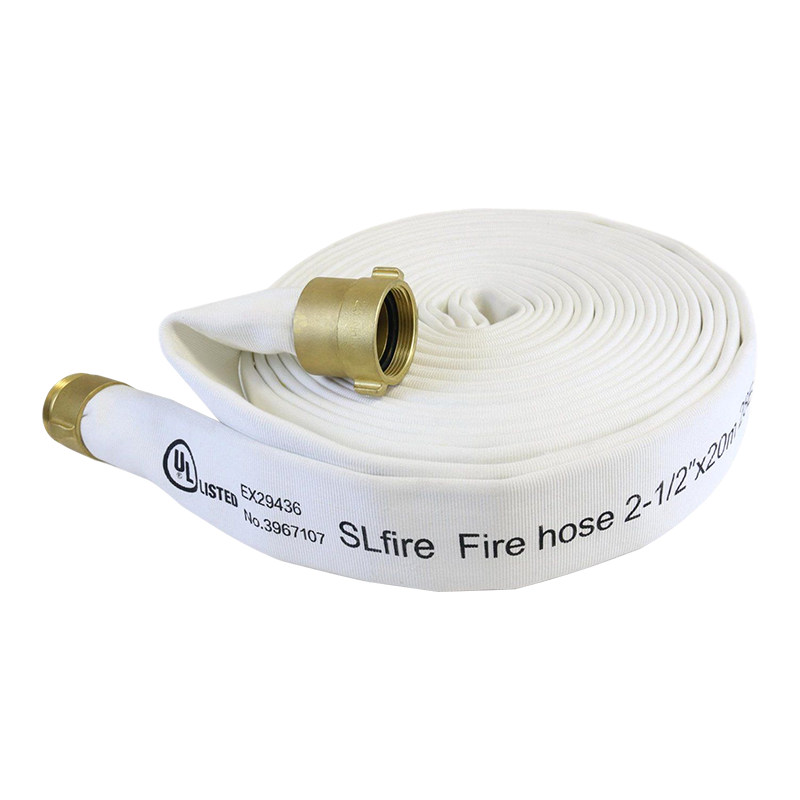
Single jacket, EPDM rubber liner Features • 100% high tenacity polyester jacket, high-grade EPDM rub...
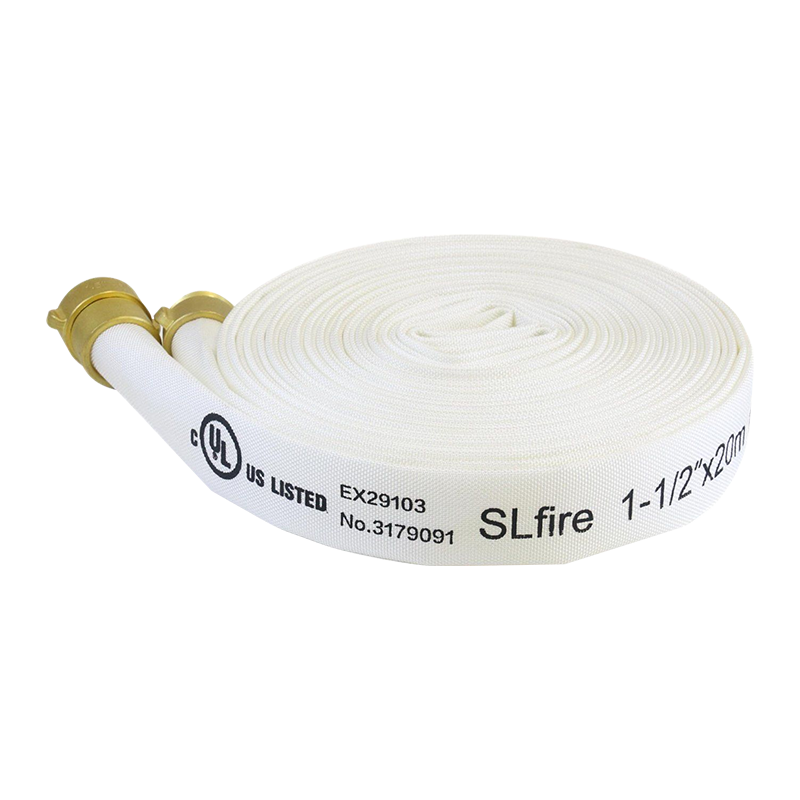
Single jacket, TPU liner •High-tenacity polyester yarn, circular woven in twill weave/plain weave,T ...
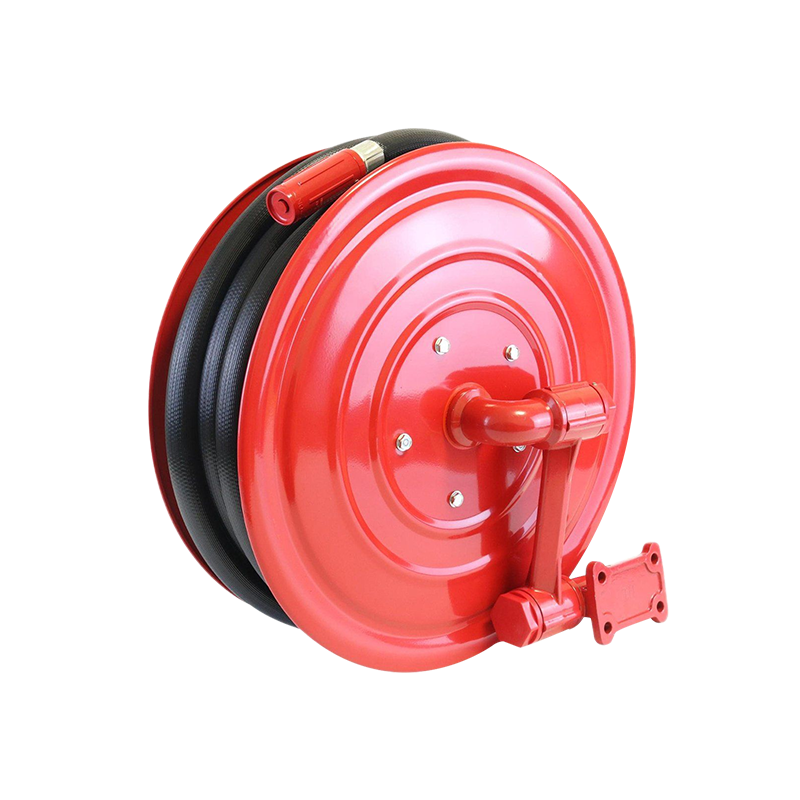
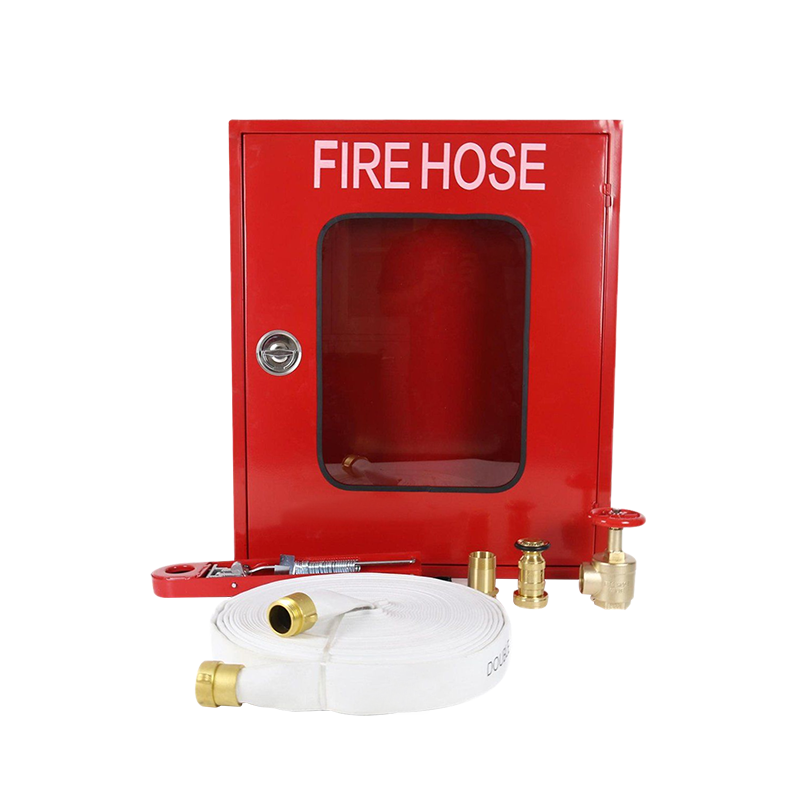
Fire cabinets are designed to accommodate fire hose,valve and other firefighting equipment. Type 201...
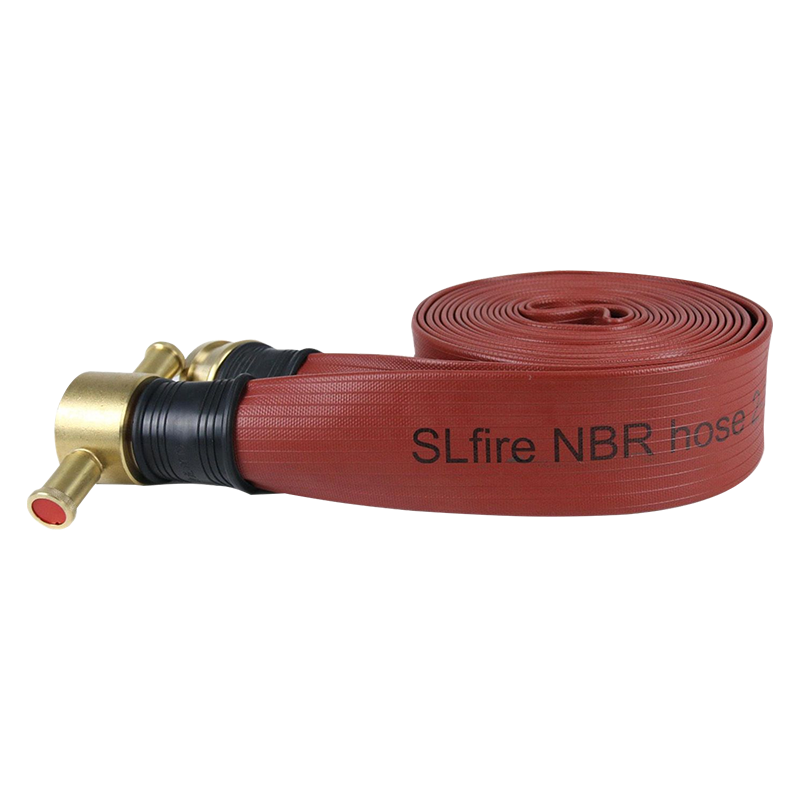
Nitrile covered hose •Nitrile/TPR blend as cover and lining, with 100% high-tenacity polyester yarn ...
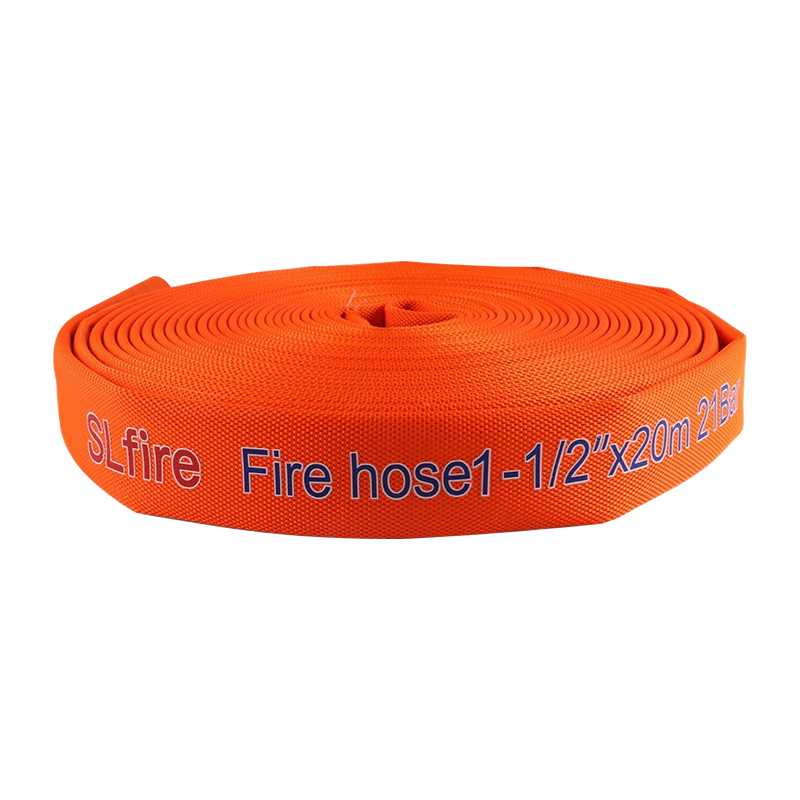
Single jacket, TPU liner •High-tenacity polyester yarn, circular woven in twill weave, TPU lining, f...
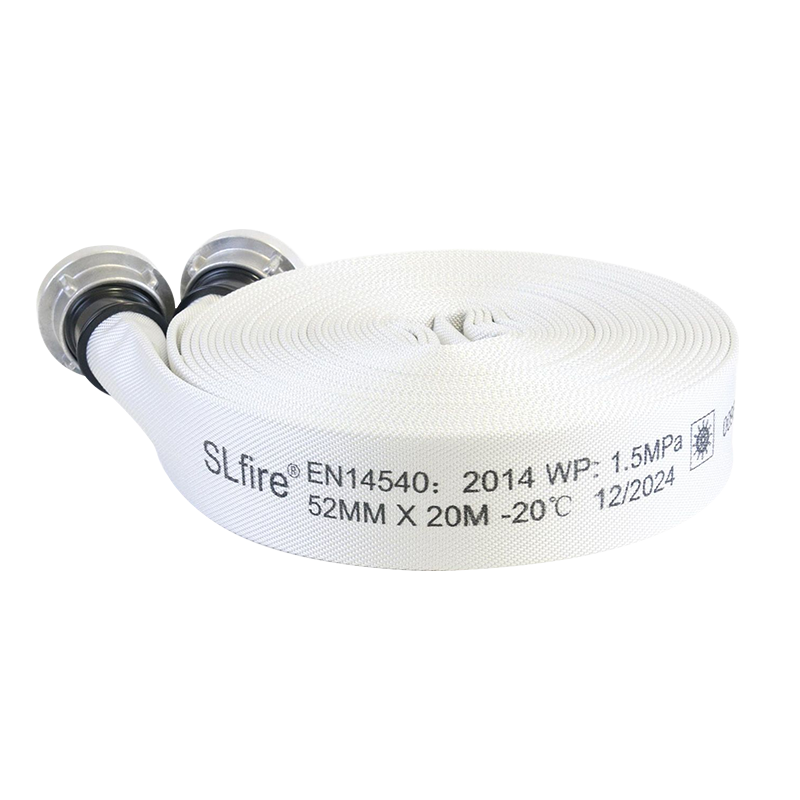
Marine hose Single jacket, PVC liner •100% high tenacity polyester yarn, circular woven in twill wea...
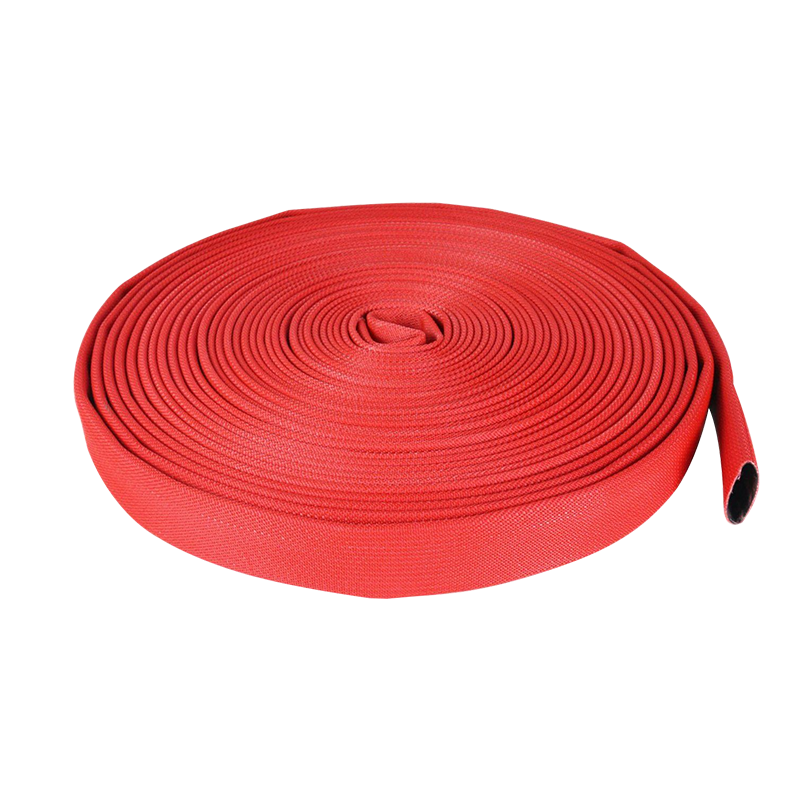
Marine hose Single jacket, PVC liner, PU coated •100% high tenacity polyester yarn,c ircular woven i...
 Call Us
+86 159-5116-9511
Need Support
Head Office
No.58, Kechuang Road, Sixiang Street Medicine Gaoxin District Taizhou City, Jiangsu Province

What Is a Fire Hose? A fire hose is a high-pressure flexible hose designed to carry water or fire retardant chemicals from a water source, such as a hydrant, pump, or tank, to a fire for suppression p...
Copyright © Taizhou Shenlong Fire Science and Technology Co., Ltd. All Rights Reserved.
 Fire Hose Manufacturers, Fire Hydrant Hose Factory