

 English
 русский
 Español
 Deutsch
 عربى
 Français
 Português
Don't hesitate to send a message

Single jacket, EPDM rubber liner Features • 100% high tenacity polyester jacket, high-grade EPDM rub...
Content
Oil and hydrocarbon transfer operations demand more than a hose that can simply carry liquid from one point to another. The hose must resist the chemical action of oils, withstand repeated handling, tolerate outdoor exposure, maintain pressure under demanding conditions, and help control static electricity in areas where flammable substances may be present. A failure in any one of these areas can lead to leakage, contamination, equipment damage, operational downtime, or a serious fire and explosion hazard.
The Anti-Static TPU as Cover and Lining Oil Hose is designed for applications in which electrical safety and mechanical durability are equally important. Its cover and inner lining are manufactured from anti-static thermoplastic polyurethane, commonly known as TPU. Several copper wires are embedded in the reinforcement layer and must be electrically connected to the couplings during installation. This construction provides a controlled path for static dissipation while maintaining the flexible and abrasion-resistant characteristics expected from a modern industrial oil hose.
The hose is suitable for transferring oil and other compatible hydrocarbons in industrial, agricultural, construction, water-management, emergency-response, and general fluid-handling environments. It is available in internal diameters from 2 inches to 8 inches, with working pressures ranging from 348 psi to 580 psi according to size and construction. The standard operating temperature range is from -50°C to 80°C, allowing the hose to function in cold outdoor conditions as well as moderately hot service environments.
Manufactured by Taizhou Shenlong Fire Science and Technology Co., Ltd., the product reflects the company’s long experience in lined hose development and production. Established in 1995, the company integrates research and development, manufacturing, sales, and service. Its experience with various lined fire hoses and customized products supports the production of specialized TPU hoses for customers who require dependable performance, dimensional flexibility, and reliable supply.
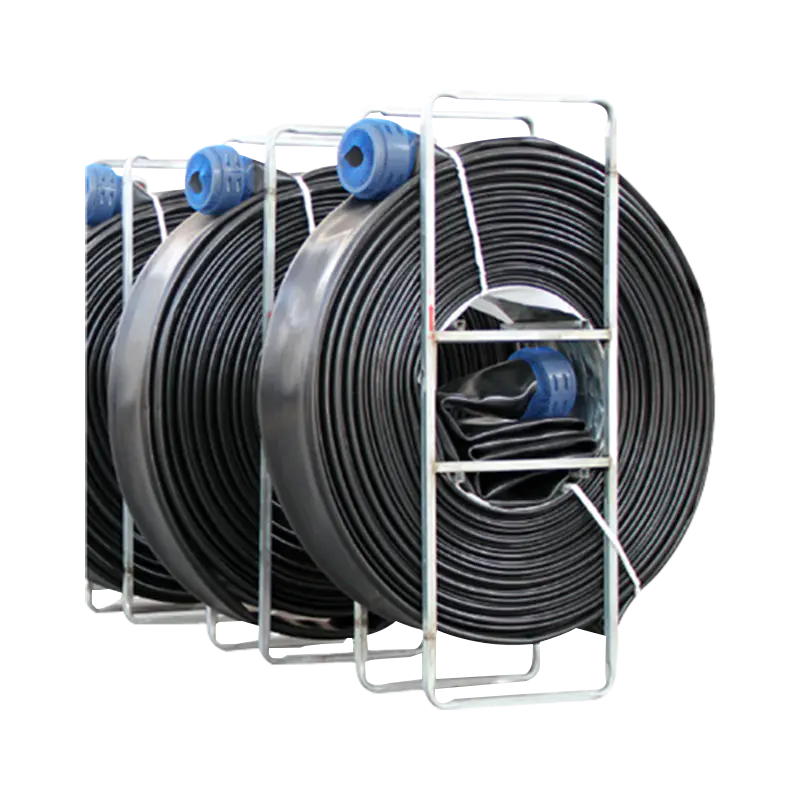
Anti-Static TPU as Cover And Lining Oil Hose
An anti-static TPU oil hose is a flexible pressure hose engineered for the transfer of oil and other compatible hydrocarbon-based fluids while reducing the accumulation of static electricity. Static charges can be generated when a liquid moves through a hose, especially when the liquid has low electrical conductivity, when the flow velocity is high, or when the hose is used in a dry atmosphere. If the charge is not safely dissipated, it can accumulate on the hose assembly and discharge as a spark.
In ordinary water service, a static spark may present little danger. In petroleum handling, fuel transfer, solvent processing, tank cleaning, chemical production, and similar operations, however, a spark may ignite flammable vapors. Anti-static hose construction is therefore an important part of an overall safety system that also includes proper grounding, compatible couplings, bonding, controlled flow rates, ventilation, and appropriate operating procedures.
This product uses anti-static TPU for both the cover and lining. The lining is the fluid-contacting layer. It is designed to provide a smooth and chemically resistant passage for oil and compatible hydrocarbons. The outer cover protects the reinforcement and lining from abrasion, ultraviolet radiation, ozone, and environmental exposure. Because both layers use anti-static TPU, the hose is designed to help prevent static buildup across the hose structure rather than relying only on a conventional outer grounding wire.
Several copper wires are embedded into the reinforcement layer. During installation, these wires must be connected to the couplings so that the hose assembly can be bonded and grounded correctly. The anti-static properties of the TPU and the electrical continuity provided by the copper wires work together as part of the complete static-control design.
The inner lining is the first barrier between the conveyed oil and the hose reinforcement. TPU is selected because it combines flexibility, toughness, abrasion resistance, and good resistance to many oils and chemicals. A properly manufactured lining also helps reduce fluid turbulence and limits the retention of product inside the hose after draining.
The anti-static formulation is produced by adding suitable anti-static materials to the PU raw materials during hose manufacturing. This approach integrates the desired electrical properties into the material itself. Instead of treating only the exterior surface, the formulation helps provide anti-static performance throughout the lining material. This is especially useful in applications where the inner surface is exposed to continuous fluid movement and repeated cleaning or draining.
The lining should always be evaluated against the exact oil, fuel, solvent, or hydrocarbon being transferred. Chemical compatibility can depend on temperature, concentration, pressure, exposure time, fluid additives, and flow conditions. The hose is intended for oil and compatible hydrocarbon service, but customers should confirm suitability before using it with unusual chemicals, aromatic solvents, aggressive additives, or mixed products.
The reinforcement layer provides the strength needed to contain internal pressure and resist the forces created during handling. The construction includes several copper wires embedded in the reinforcement layer. These wires are a critical feature of the anti-static hose assembly because they provide a conductive route to the couplings and grounding system.
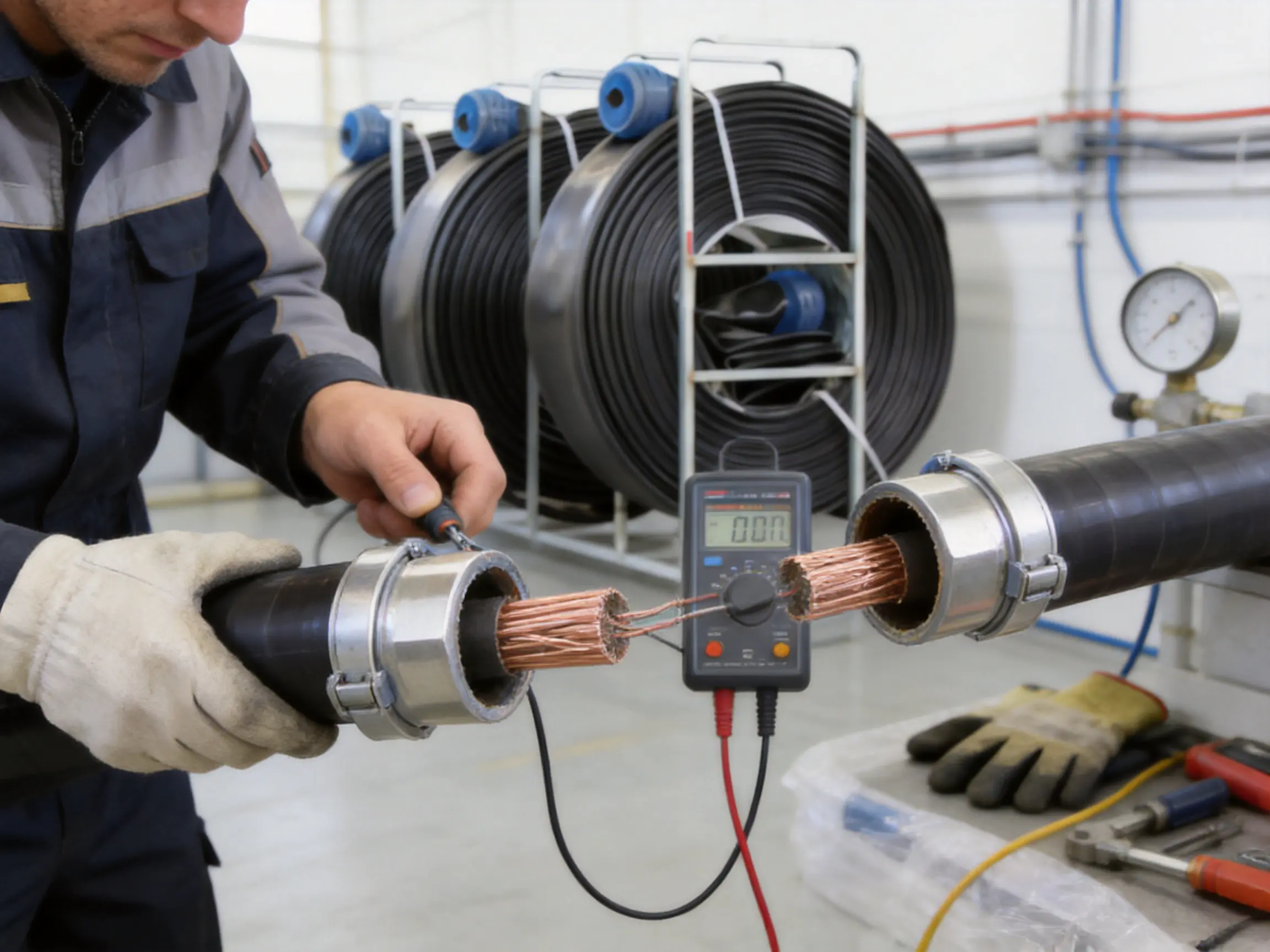
The copper wires must not be cut, isolated, or left unconnected during installation. Both ends of the assembly should be prepared so that electrical continuity can be maintained through the couplings. The finished hose assembly should be checked by qualified personnel before being placed into service. A visual connection alone is not sufficient; continuity testing should be performed according to the user’s safety procedures and applicable regulations.
The reinforcement also helps the hose retain its shape under pressure. It contributes to resistance against kinking, elongation, and deformation during normal handling. The precise performance of an assembly depends on hose diameter, reinforcement design, coupling type, bend radius, pressure, temperature, and installation conditions.
The outer cover is designed to protect the hose from the physical and environmental conditions encountered in industrial service. It resists abrasion caused by dragging, contact with equipment, and movement across floors or work areas. The cover also offers resistance to oil, ultraviolet radiation, ozone, and chemicals, helping extend service life in indoor and outdoor applications.
Using anti-static TPU for the cover provides an additional advantage in areas where the external surface may become electrically charged. It also gives the hose a durable, flexible surface that is easier to handle than many heavier rubber constructions of comparable size. The cover color can be supplied in standard black or red, with other colors available according to customer requirements.
The most important advantage of this oil hose is its anti-static design. Static electricity is a process hazard that may be overlooked when selecting a hose. Conventional hoses may be suitable for fluid containment but may not provide the electrical characteristics required for safe hydrocarbon transfer. This product is specifically developed for environments where static accumulation must be controlled.
Anti-static materials are added to the TPU raw materials used for the cover and lining. Copper wires in the reinforcement layer are connected to the couplings during installation. When the complete assembly is correctly bonded and grounded, static charge can be directed away from the hose and toward a designated grounding point.
This design is particularly valuable around fuel storage areas, oil terminals, loading and unloading stations, chemical plants, refineries, tank farms, marine transfer points, and industrial sites where flammable vapors may be present. The hose itself is not a replacement for a complete grounding and bonding system, but it is an important component in reducing static-related risk.
Oil hoses are frequently dragged over concrete, steel platforms, vehicle beds, loading areas, and uneven ground. Repeated abrasion can wear through a conventional cover, expose the reinforcement, and eventually compromise pressure containment. The TPU cover is designed to resist this type of mechanical wear.
High abrasion resistance can reduce the frequency of hose replacement and help preserve the integrity of the outer protection during repeated handling. It is particularly useful for mobile transfer equipment, construction sites, agricultural operations, emergency-response units, and industrial plants where hoses are frequently deployed and stored.
The product is designed to resist oil and a range of environmental influences that can shorten the life of a hose. Contact with oil can cause unsuitable materials to swell, soften, crack, or lose mechanical strength. Ultraviolet radiation can degrade exposed polymer surfaces, while ozone can cause surface deterioration in some elastomers. Chemical exposure may also attack the cover or lining.
The anti-static TPU construction provides resistance to oil, UV radiation, ozone, and chemicals as stated in the product specifications. This makes the hose suitable for demanding outdoor and industrial environments. Nevertheless, exact chemical compatibility should be confirmed for every application because the term “oil” includes many products with different compositions and additives.
The operating temperature range is -50°C to 80°C. This broad range allows the hose to be used in cold regions, winter construction environments, refrigerated industrial areas, and moderately hot oil-transfer operations. Flexibility at low temperatures is particularly important because a hose that becomes excessively rigid may be difficult to deploy and more vulnerable to damage during bending.
At the upper end of the range, the hose can handle moderately hot service conditions, provided that the pressure, chemical concentration, and exposure duration remain within the approved limits. Temperature and pressure should always be considered together. A hose’s safe working pressure may be affected by elevated temperature, fluid type, coupling design, and the condition of the assembly.
Compared with some traditional heavy rubber oil hoses, TPU hoses can offer a favorable balance between pressure capability, flexibility, and weight. The listed weights range from 0.66 kg/m for the 2-inch, 406 psi construction to 5.2 kg/m for the 8-inch, 406 psi construction. Lower weight helps workers position, connect, drain, and store long lengths of hose with less physical effort.
Reduced handling weight can be valuable in emergency operations and temporary installations where hoses must be deployed quickly. It can also help lower transportation and storage requirements. The actual handling experience depends on hose length, fluid remaining in the line, ambient temperature, bend radius, coupling mass, and support arrangement.
The standard product is available in 100-meter and 200-meter lengths, or in other lengths according to customer requirements. Inner diameter, wall thickness, weight, pressure, and color can also be customized. This flexibility allows users to specify a hose that better matches their transfer equipment, flow requirements, available storage space, and installation layout.
Customization is especially helpful for original equipment manufacturers, distributors, engineering contractors, fire-service suppliers, and industrial customers with repeated project requirements. A customer can discuss the target diameter, pressure rating, length, coupling configuration, color, and other technical parameters with the manufacturer before production.
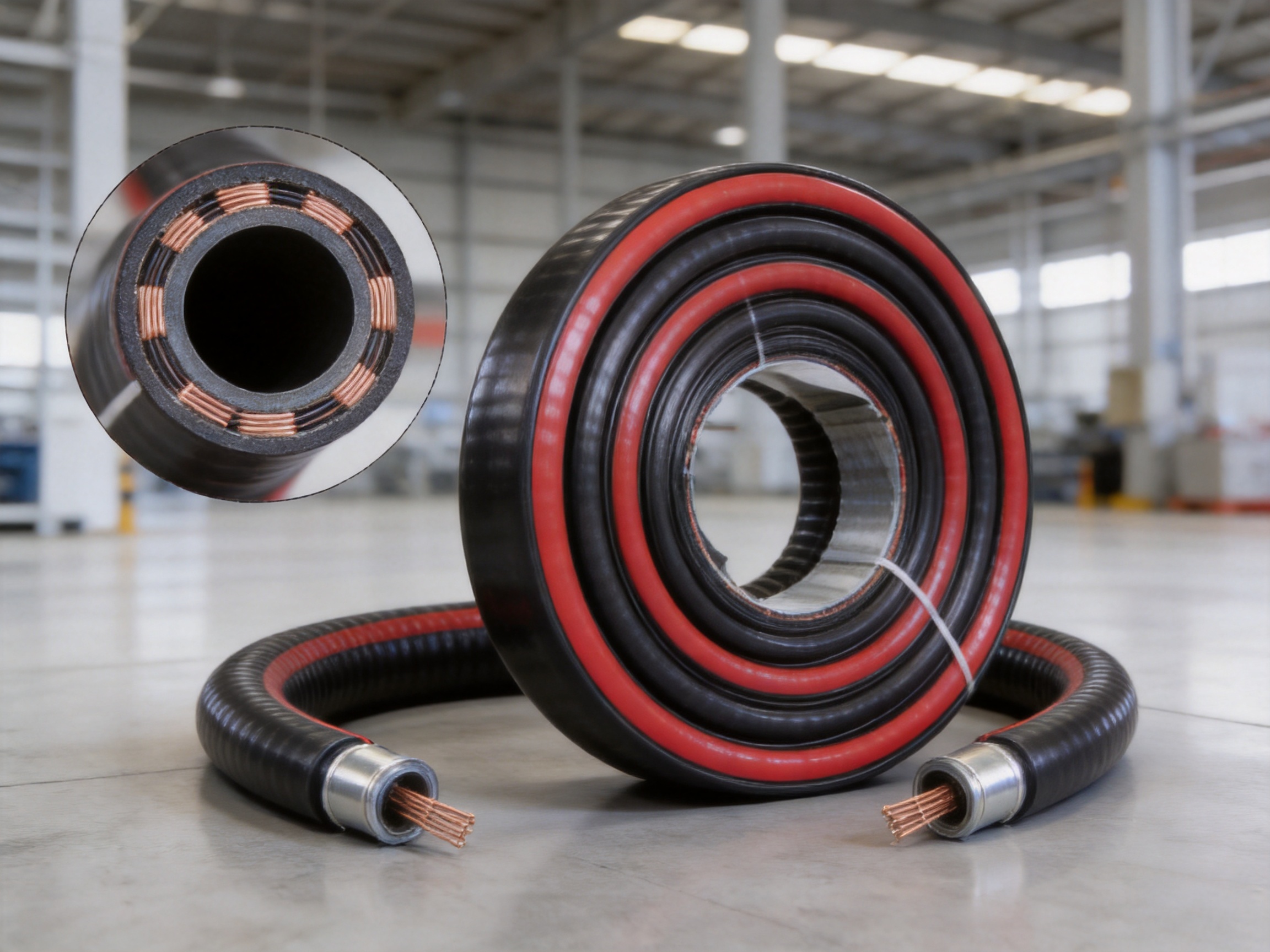
The product range includes several internal diameters and pressure constructions. The standard technical data are summarized below. Working pressure is the recommended maximum operating pressure for the listed construction, while burst pressure is the stated pressure at which the hose may fail during a burst test. Burst pressure is not an allowable operating pressure.
| Nominal Size | Inner Diameter | Working Pressure | Burst Pressure | Wall Thickness | Weight |
|---|---|---|---|---|---|
| 2 inches | 50 mm | 406 psi / 28 bar | 1218 psi / 84 bar | 3.4 mm | 0.66 kg/m |
| 2-1/2 inches | 65 mm | 406 psi / 28 bar | 1218 psi / 84 bar | 3.0 mm | 0.80 kg/m |
| 3 inches | 80 mm | 406 psi / 28 bar | 1218 psi / 84 bar | 3.6 mm | 1.00 kg/m |
| 4 inches | 100 mm | 406 psi / 28 bar | 1218 psi / 84 bar | 4.8 mm | 1.76 kg/m |
| 4 inches | 100 mm | 580 psi / 40 bar | 1740 psi / 120 bar | 4.8–5.6 mm | 2.26 kg/m |
| 5 inches | 125 mm | 406 psi / 28 bar | 1218 psi / 84 bar | 4.4–5.4 mm | 2.25 kg/m |
| 6 inches | 150 mm | 348 psi / 24 bar | 1044 psi / 72 bar | 5.3–6.3 mm | 3.15 kg/m |
| 6 inches | 150 mm | 435 psi / 30 bar | 1305 psi / 90 bar | 5.7–6.2 mm | 3.30 kg/m |
| 8 inches | 200 mm | 406 psi / 28 bar | 1218 psi / 84 bar | 6.0–6.5 mm | 5.20 kg/m |
The data show that the same nominal diameter may be available in more than one pressure construction. For example, the 4-inch hose is listed with both 406 psi and 580 psi working-pressure options, while the 6-inch hose is listed with 348 psi and 435 psi options. This gives users more flexibility when balancing pressure requirements, wall thickness, handling weight, and project cost.
Customers should select the hose based on the actual system pressure, pump characteristics, transient pressure, temperature, fluid compatibility, bend conditions, and coupling assembly. The working pressure should not be exceeded. Pressure surges caused by rapid valve closure, pump startup, or sudden changes in flow may be higher than the normal gauge pressure and must be considered during system design.
A general-purpose fluid hose may transport water, air, or nonflammable liquids effectively, but it may not be designed for hydrocarbon service or static control. The anti-static TPU oil hose is purpose-built around the combined requirements of oil resistance, abrasion resistance, electrical dissipation, and pressure containment.
This integrated design can reduce the need to combine multiple aftermarket solutions. Instead of using a standard hose and attempting to add external grounding measures after installation, the hose includes anti-static TPU and embedded copper wires as part of its original construction. This provides a more organized approach to static management and assembly design.
Traditional rubber oil hoses are often valued for their robustness, but they can be heavy, especially in larger diameters and long lengths. Excessive weight increases labor requirements and may require additional lifting equipment. TPU construction can provide a lighter alternative while preserving the flexibility and mechanical resistance needed for industrial transfer service.
The handling advantage becomes more noticeable when hoses are used in temporary transfer systems, mobile equipment, loading stations, and emergency operations. Easier deployment can reduce setup time and help operators position the hose with less strain. A lighter hose can also reduce the load on hose reels, support structures, and vehicle-mounted equipment.
Outdoor oil-transfer equipment is exposed to sunlight, rain, temperature changes, ozone, dust, rough surfaces, and accidental contact with machinery. A cover with resistance to UV, ozone, oil, chemicals, and abrasion is better suited to such conditions than a material selected only for indoor use.
The TPU cover helps protect the reinforcement and lining from the surrounding environment. Its resistance characteristics can support longer service life when the hose is properly stored, operated within its limits, and inspected regularly. No hose is indestructible, and severe dragging, sharp-edge contact, crushing, improper bending, or chemical exposure beyond the design range can still cause damage.
Some suppliers offer only fixed lengths, limited diameters, or a single pressure rating. This product can be supplied in standard 100-meter and 200-meter lengths as well as customer-requested lengths. Dimensions, pressure, wall thickness, color, and other requirements can be discussed during the order process.
Customization can improve logistical efficiency. A hose cut to the required length may reduce unnecessary coiling, unused material, and connection points. Color customization can also support visual identification, product separation, or customer branding requirements, subject to production confirmation.
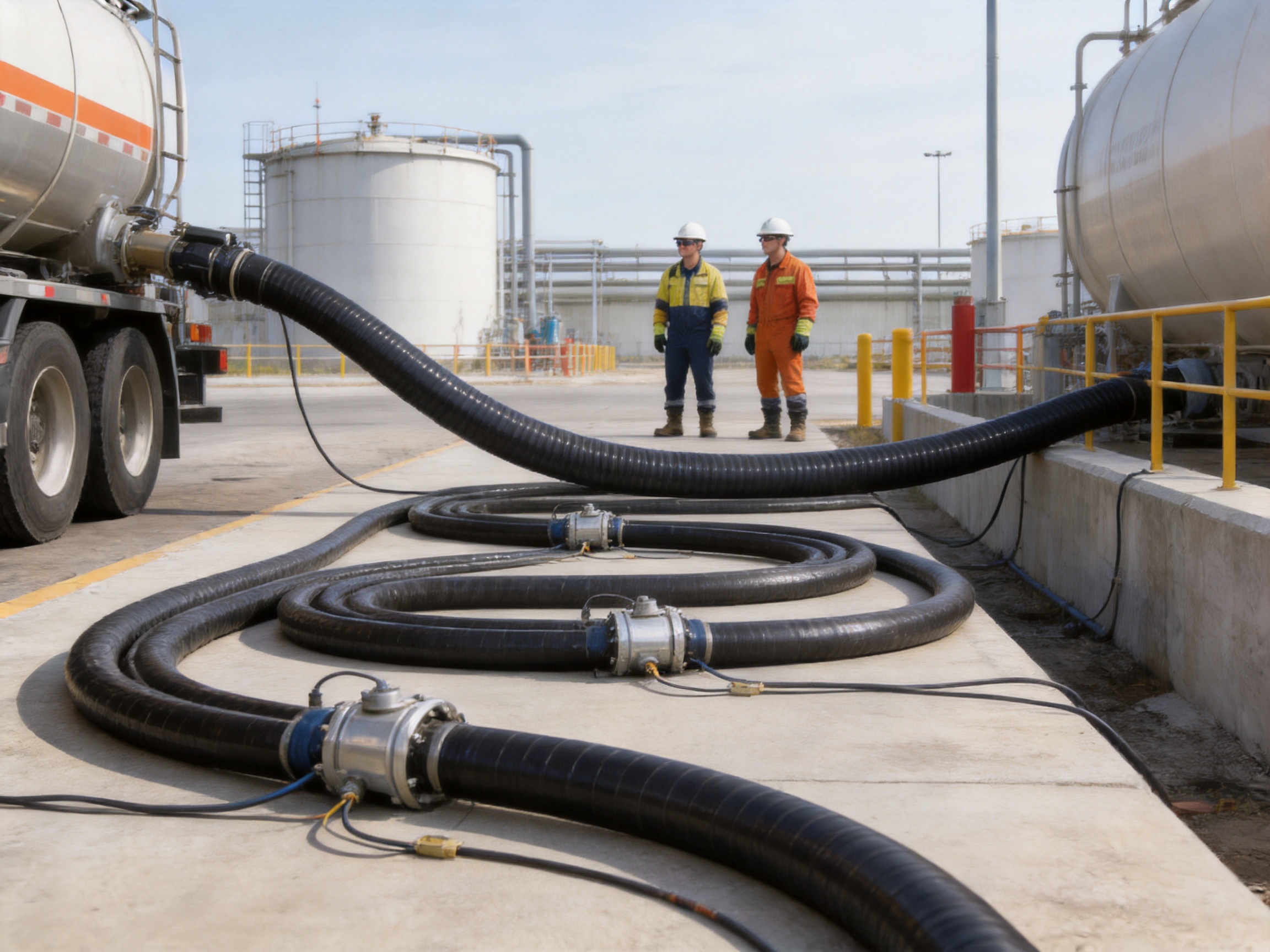
The hose can be used for transferring oil, fuel, and other compatible hydrocarbons in industrial facilities. Typical situations include loading and unloading from storage tanks, connecting mobile tankers, transferring product between process units, and supplying fuel to equipment. Static control is especially important when flammable vapors may exist near filling or discharge points.
Operators should use couplings and gaskets that are compatible with both the hose and the transferred fluid. The assembly should be bonded and grounded correctly, and flow rates should be controlled to reduce turbulence and electrostatic generation. A complete site risk assessment remains necessary.
Tank farms and oil storage areas often require flexible connections between fixed piping and mobile equipment. A hose can absorb movement, simplify maintenance, and allow temporary connections without installing permanent pipework for every transfer point.
The anti-static TPU construction is suitable for applications where the hose is exposed to outdoor weather and repeated use. Resistance to UV, ozone, oil, and abrasion helps address the environmental conditions commonly found around storage facilities.
Construction projects may require temporary oil transfer, equipment fueling, dewatering systems involving hydrocarbon-contaminated fluids, or the movement of petroleum-based products around large sites. Hoses may be moved frequently and exposed to dust, uneven ground, machinery traffic, and changing weather.
The product’s flexible construction, abrasion-resistant cover, and available long lengths can simplify temporary hose layouts. Before use, the hose route should be planned to prevent vehicle traffic, sharp bends, excessive tension, and contact with hot surfaces.
Agricultural operations use fuel and oil for tractors, harvesters, pumps, generators, and other equipment. A hose that is resistant to oil, outdoor weather, and abrasion can be useful for fuel-transfer and maintenance areas. Long-length options may be suitable for connecting storage tanks to dispensing equipment across larger facilities.
Because agricultural locations may include dust, dry air, and combustible materials, static control should not be ignored. The hose assembly should be grounded properly, and operators should keep ignition sources away from transfer operations.
Industrial plants may use oil hoses for process transfer, equipment servicing, maintenance operations, and temporary bypass systems. The stated chemical resistance of the TPU cover and lining provides a useful starting point for these applications. However, every chemical must be checked individually before use.
Plant engineers should review fluid composition, operating temperature, pressure, exposure duration, cleaning agents, and expected movement. If a chemical mixture contains aggressive aromatic or oxygenated components, a compatibility test or written technical confirmation may be required.
Emergency-response teams often need equipment that can be transported, deployed, connected, and removed quickly. A flexible hose with a favorable weight-to-performance ratio can help reduce handling time during urgent operations.
The hose may be considered for mobile oil-transfer systems, emergency fuel handling, industrial spill-response support, and temporary connections. Emergency users should establish inspection, cleaning, grounding, storage, and replacement procedures before the product is placed in service.
Taizhou Shenlong Fire Science and Technology Co., Ltd. was founded in 1995 and has developed experience in research and development, production, sales, and service. The company’s main products include lined fire hoses made from various materials. This background is relevant to the production of specialized oil hose because lined hose manufacturing requires control over polymer materials, reinforcement, dimensions, pressure performance, and finished assembly quality.
Experience accumulated over many years can support better process consistency and more practical product customization. It also enables the manufacturer to understand how hoses behave during storage, installation, deployment, pressure service, and repeated handling.
The company operates as an integrated enterprise rather than focusing only on one stage of the supply chain. Research and development supports product improvement and adaptation to customer requirements. Production provides control over the hose manufacturing process. Sales and service help connect technical specifications with actual application needs.
This integrated structure can be valuable for customers who need more than a catalog item. A technical discussion may involve selecting the correct diameter, pressure construction, length, cover color, coupling arrangement, and electrical bonding method. Coordinating these factors with one manufacturer can simplify communication and reduce the risk of specification gaps.
In addition to lined fire hoses, the company can undertake foreign-trade products involving rubber, PVC, polyurethane, and double-sided tape according to customer requirements. This broader material experience indicates familiarity with different polymer characteristics and product categories.
For buyers, a supplier with knowledge of multiple materials may be better positioned to recommend a practical construction for a specific environment. TPU may be preferred where flexibility, abrasion resistance, low weight, and anti-static characteristics are important. In other situations, another material may be more appropriate. Technical selection should be based on the actual duty rather than on material preference alone.
The company cooperates with four domestic foreign-trade companies to produce export products, and its products are sold in more than 20 provinces, cities, and autonomous regions as well as in international markets. This experience can support production planning, export packaging, documentation coordination, and communication with overseas customers.
International buyers often require consistent specifications, clear packaging marks, dependable delivery schedules, and product information that can be reviewed by procurement and engineering teams. A manufacturer familiar with domestic and international orders can better understand these commercial and technical expectations.
The anti-static TPU oil hose can be customized in several parameters, including inner diameter, wall thickness, weight, pressure, color, and length. The ability to produce 100-meter, 200-meter, or customer-requested lengths helps meet the requirements of different industries and distribution channels.
Customization should be confirmed in writing before production. The order specification should identify the nominal and actual inner diameter, working pressure, burst pressure if applicable, temperature range, wall thickness, hose length, color, fluid type, coupling requirements, and static-continuity expectations. Clear documentation supports quality control and prevents misunderstandings between the buyer and manufacturer.
The performance of an anti-static TPU oil hose depends on the interaction of several manufacturing steps. Polymer raw materials must be selected and prepared appropriately. Anti-static materials must be incorporated into the PU formulation. The inner lining and outer cover must be formed with consistent dimensions. Reinforcement must be applied evenly, and the copper wires must remain correctly positioned within the reinforcement layer.
During production, control of temperature, material flow, layer thickness, reinforcement tension, and bonding conditions is important. Inconsistent processing can lead to variations in wall thickness, surface quality, flexibility, pressure capability, or electrical continuity. A well-controlled process helps ensure that the finished hose performs consistently along its full length.
After forming, the hose should be checked for appearance, dimensions, pressure performance, and other applicable requirements. The ends should be prepared carefully when the hose will be supplied with couplings. Copper-wire continuity should be verified in the complete assembly, not assumed from the presence of wires inside the hose.
Quality control should also consider storage and packaging. Long hoses must be coiled without creating excessive permanent deformation or sharp kinks. Packaging should protect the hose from sunlight, heat, sharp objects, contamination, and unnecessary compression during shipment. Correct storage helps preserve the hose before installation.
The copper wires embedded in the reinforcement layer need to be connected to the couplings during installation. This is an essential requirement. If the wires are not connected, the hose may not provide the intended path for static dissipation.
The connection method should be completed by trained personnel using couplings designed for the hose and service conditions. After assembly, electrical continuity should be tested from one coupling to the other. If the hose is installed in a larger system, bonding and grounding should be checked across the entire transfer path.
Couplings must match the hose internal diameter, wall construction, pressure rating, temperature range, and fluid service. The coupling material and sealing components must also be compatible with the oil or hydrocarbon being transferred.
An incorrectly selected coupling can become the weakest point of the assembly. It may cause leakage, damage the hose end, interrupt electrical continuity, or fail under pressure. Couplings should be installed according to the supplier’s instructions, with the correct insertion depth, clamping method, torque, and safety restraints.
Hoses should not be bent below their recommended minimum bend radius. Excessive bending can flatten the inner passage, stress the reinforcement, damage the cover, and reduce pressure capability. The hose should also not be stretched to bridge a gap or used as a permanent support for heavy equipment.
Where movement is expected, the hose route should allow a controlled bend rather than a sharp fold. Supports, hangers, rollers, or hose reels may be used where appropriate. The hose should be protected from vehicle wheels, sharp edges, hot equipment, and areas where it may become trapped.
The listed working pressure must be treated as the maximum operating pressure for the specified construction. Pressure surges must be considered, especially in systems with pumps, fast-acting valves, or long transfer lines. The operating temperature must remain within -50°C to 80°C, and the combined effect of temperature and pressure should be evaluated.
Users should never use the burst pressure as a design or operating value. Burst pressure is a test or failure reference and includes no appropriate safety margin for continuous service. A suitable safety factor and applicable industry requirements should be used when designing the transfer system.
Regular inspection helps identify damage before it becomes a failure. The cover should be checked for cuts, deep abrasion, blistering, softening, cracking, exposed reinforcement, chemical attack, and unusual swelling. The hose should also be examined near the couplings because end connections experience concentrated mechanical and bending forces.
Operators should inspect the hose for kinks, flattening, excessive elongation, and permanent deformation. Any condition that suggests internal damage or loss of structural integrity should be investigated. If there is doubt about the hose’s condition, it should be removed from service until evaluated by a qualified person.
Electrical continuity should be checked periodically, especially after coupling replacement, severe mechanical impact, repairs, or exposure to conditions that could damage the embedded wires. Static-control performance depends on the complete assembly, so the bonding path should be tested from end to end and connected to a verified grounding system.
After use, the hose should be drained and cleaned using a method compatible with the lining material and the transferred product. Residual oil can create safety, contamination, and storage problems. Cleaning agents should not be assumed to be compatible simply because the hose is resistant to oil.
For storage, hose should be protected from direct sunlight, ozone-generating equipment, excessive heat, sharp objects, and contact with chemicals. It should be stored without tight kinks or crushing. If the hose is supplied in long coils, the coil should be supported so that its weight does not cause permanent deformation.
The first selection factor is inner diameter. A diameter that is too small may produce excessive pressure loss and increase flow velocity, while a diameter that is too large may increase cost, weight, and residual product volume. The required flow rate, transfer distance, pump capacity, and acceptable pressure loss should be considered together.
The second factor is working pressure. The chosen rating must exceed the normal system pressure and account for surges. The technical table includes different pressure options for some sizes, which allows the buyer to select a construction appropriate to the application.
Temperature is another essential factor. The standard range is -50°C to 80°C, but the actual fluid temperature and ambient conditions should be reviewed. Cold temperatures may affect flexibility, while high temperatures may influence pressure capability and chemical compatibility.
Fluid compatibility must be confirmed for the exact product. “Oil” can refer to petroleum fuels, lubricating oils, crude oil, hydraulic fluids, or blends containing additives. The concentration and temperature of the fluid may affect the lining. When the service fluid is unusual or highly aggressive, the customer should request technical confirmation before ordering.
The electrical installation should be planned from the beginning. The buyer should specify whether the hose will be used in a hazardous area, how it will be bonded, what couplings will be used, and how continuity will be tested. Selecting an anti-static hose without completing the grounding system does not provide the intended safety benefit.
Finally, the buyer should determine the required length, color, end configuration, packaging, and delivery schedule. The manufacturer can discuss customer-requested lengths and customized dimensions. A complete purchase specification helps ensure that the supplied hose matches the actual project.
The Anti-Static TPU as Cover and Lining Oil Hose combines several characteristics that are often considered separately: hydrocarbon-service capability, anti-static construction, abrasion resistance, environmental resistance, flexible handling, broad temperature performance, and customizable dimensions.
Its anti-static TPU cover and lining address the electrical risks associated with moving flammable liquids. Embedded copper wires provide a dedicated feature for connection to the couplings and grounding path. Its abrasion-resistant cover is suited to demanding handling conditions, while resistance to oil, UV, ozone, and chemicals supports use in outdoor and industrial environments.
The range of sizes from 2 inches to 8 inches covers many medium- and large-volume transfer requirements. Pressure options up to 580 psi working pressure are available in the listed specifications. Long standard lengths of 100 meters and 200 meters can reduce the number of intermediate connections in certain layouts, while customer-requested lengths provide additional flexibility.
Support from a manufacturer with experience dating back to 1995 adds value beyond the hose material itself. Taizhou Shenlong Fire Science and Technology Co., Ltd. combines product development, production, sales, and service and has experience supplying lined hoses and other polymer-based products. This background can help customers receive a more coordinated response to technical, customization, and export requirements.
The hose is designed for oil and other compatible hydrocarbons. Exact compatibility depends on the fluid composition, additives, concentration, temperature, and exposure time. The user should confirm the specific fluid before operation, particularly when transferring solvents, aromatic hydrocarbons, chemical mixtures, or specialized fuels.
The copper wires provide a conductive path through the hose assembly. They must be connected to the couplings so that static charge can be dissipated through a bonding and grounding system. The wires should not be left unconnected, and the finished assembly should be checked for electrical continuity.
No. The anti-static construction helps control static buildup, but safe operation also requires correct grounding, bonding, compatible couplings, proper flow control, suitable ventilation, trained personnel, and compliance with site and regulatory requirements. The complete transfer system must be assessed as a whole.
The stated temperature range is -50°C to 80°C. The actual allowable pressure may be influenced by temperature, fluid type, coupling design, and service conditions. Customers should review the complete application before selecting a pressure rating.
The listed sizes include 2 inches, 2-1/2 inches, 3 inches, 4 inches, 5 inches, 6 inches, and 8 inches. The corresponding inner diameters range from 50 mm to 200 mm. Customized dimensions may be available according to customer requirements.
The listed working pressures are 348 psi, 406 psi, 435 psi, and 580 psi, depending on hose size and construction. The buyer must select the rating based on the normal operating pressure, pressure surges, temperature, and installation conditions.
Yes. Standard lengths include 100 meters and 200 meters, and other lengths can be supplied upon customer request. Custom length should be confirmed with the manufacturer before ordering.
Black and red are standard colors. Other colors may be available according to customer requirements and production confirmation.
Inspect the cover for cuts, abrasion, cracks, chemical damage, swelling, exposed reinforcement, and deformation. Check the coupling areas for leakage or mechanical damage. Electrical continuity should also be tested periodically and after any event that could damage the embedded copper wires or couplings.
The product is designed primarily for oil and compatible hydrocarbons. Although TPU hoses may be physically capable of handling some water applications, the user should select a product according to the intended fluid and required performance. A separate water-hose specification may be more appropriate for general water service.
Customers should provide the fluid type, flow rate, inner diameter, working pressure, temperature range, required length, color, coupling details, application environment, static-control requirements, and delivery destination. Providing complete information helps the manufacturer recommend the correct construction.
The Anti-Static TPU as Cover and Lining Oil Hose is designed for demanding oil and hydrocarbon transfer applications where static control, durability, and handling efficiency are essential. Its anti-static TPU lining and cover help reduce static buildup, while embedded copper wires support electrical bonding when properly connected to the couplings. The hose also offers resistance to abrasion, oil, UV radiation, ozone, and chemicals, with an operating temperature range of -50°C to 80°C.
Available in diameters from 2 inches to 8 inches and in several pressure constructions, the hose can serve a broad range of industrial, agricultural, construction, storage, and emergency-transfer requirements. Standard 100-meter and 200-meter lengths, along with customer-requested lengths and customizable dimensions, provide useful flexibility for project planning.
Taizhou Shenlong Fire Science and Technology Co., Ltd. supports the product with experience in lined hose manufacturing, research and development, production, sales, and service since 1995. Its broader capability with rubber, PVC, polyurethane, and other customer-requested products contributes to a practical understanding of polymer hose production and customized supply.
For safe and reliable service, users must select the correct diameter and pressure rating, verify fluid compatibility, use suitable couplings, connect the copper wires correctly, establish a complete grounding system, and follow regular inspection and storage procedures. When these requirements are addressed, the anti-static TPU oil hose can provide a durable and efficient solution for modern hydrocarbon transfer systems.
1. Product technical information for Anti-Static TPU as Cover and Lining Oil Hose, supplied by the manufacturer.
2. Manufacturer company information concerning lined fire hose production, research and development, customized products, and export supply.
3. General industrial hose engineering principles covering working pressure, burst pressure, temperature, fluid compatibility, and bend management.
4. General safety practices for bonding, grounding, and static control during the transfer of flammable liquids.
5. General maintenance practices for inspection, cleaning, storage, coupling safety, and service-life management of industrial hoses.
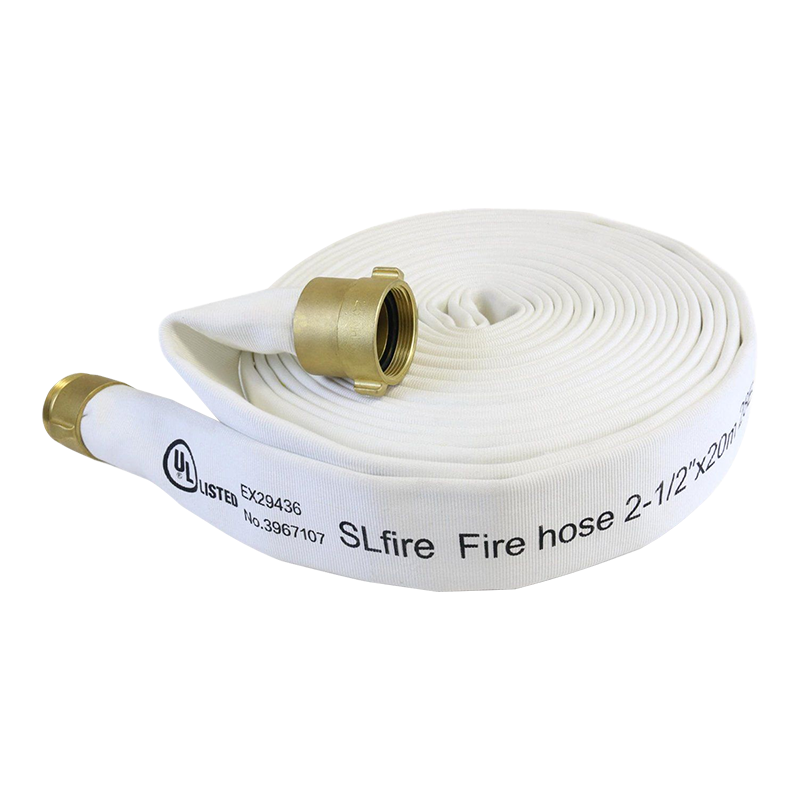
Single jacket, EPDM rubber liner Features • 100% high tenacity polyester jacket, high-grade EPDM rub...
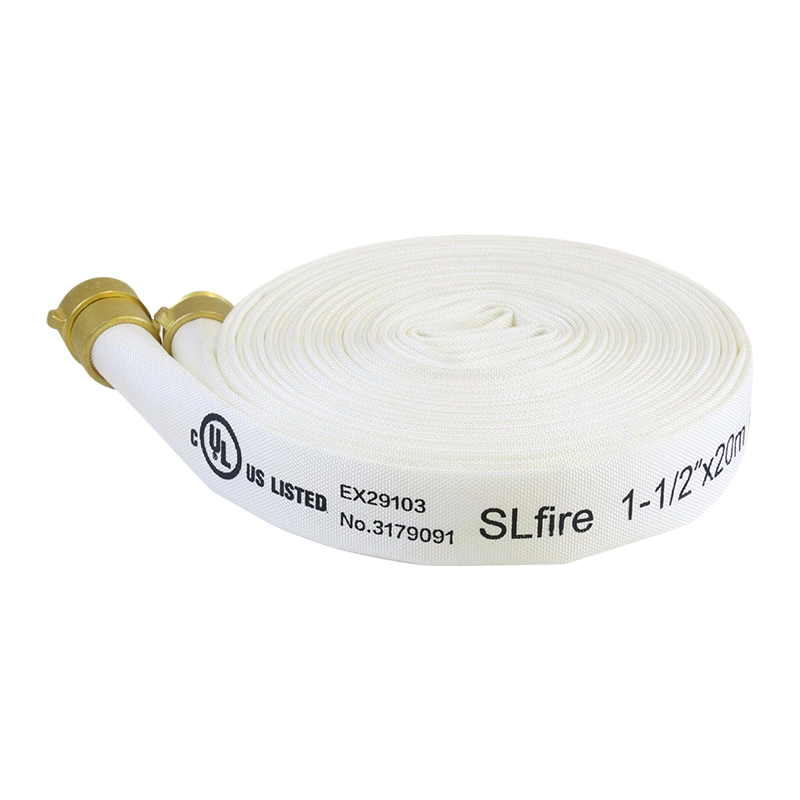
Single jacket, TPU liner •High-tenacity polyester yarn, circular woven in twill weave/plain weave,T ...
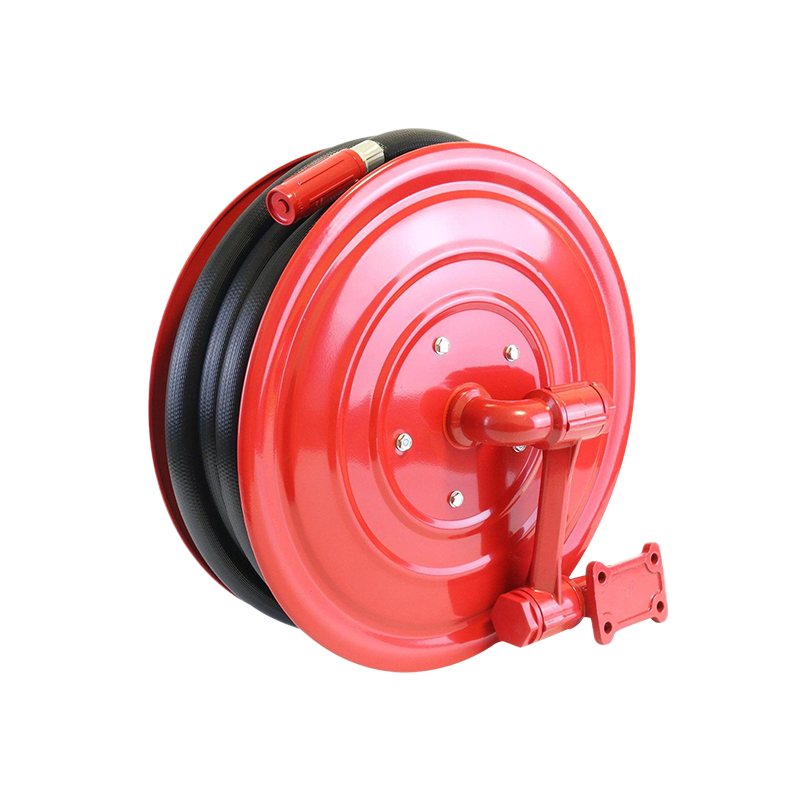
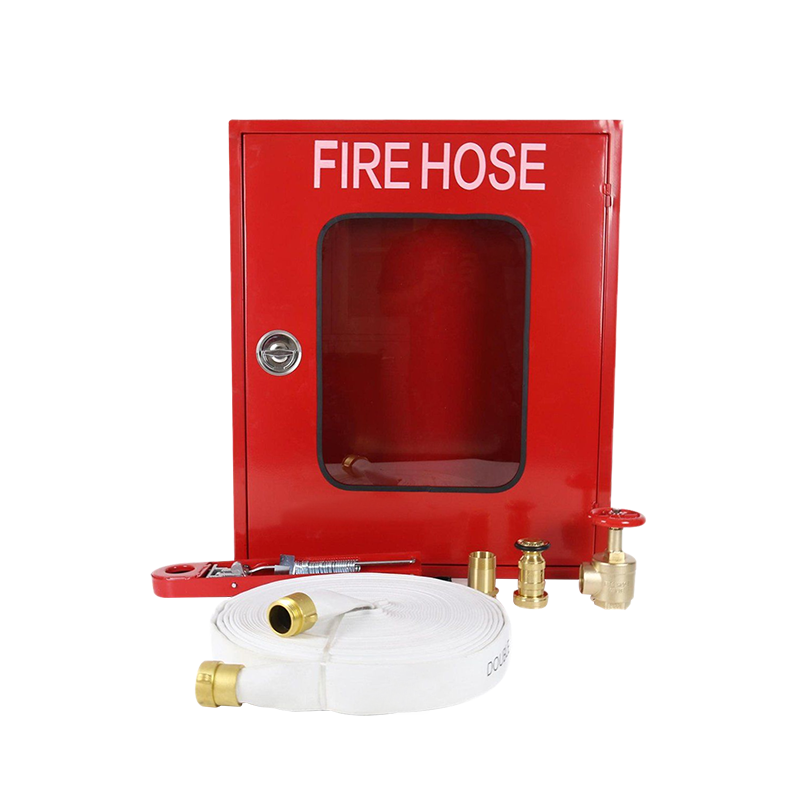
Fire cabinets are designed to accommodate fire hose,valve and other firefighting equipment. Type 201...
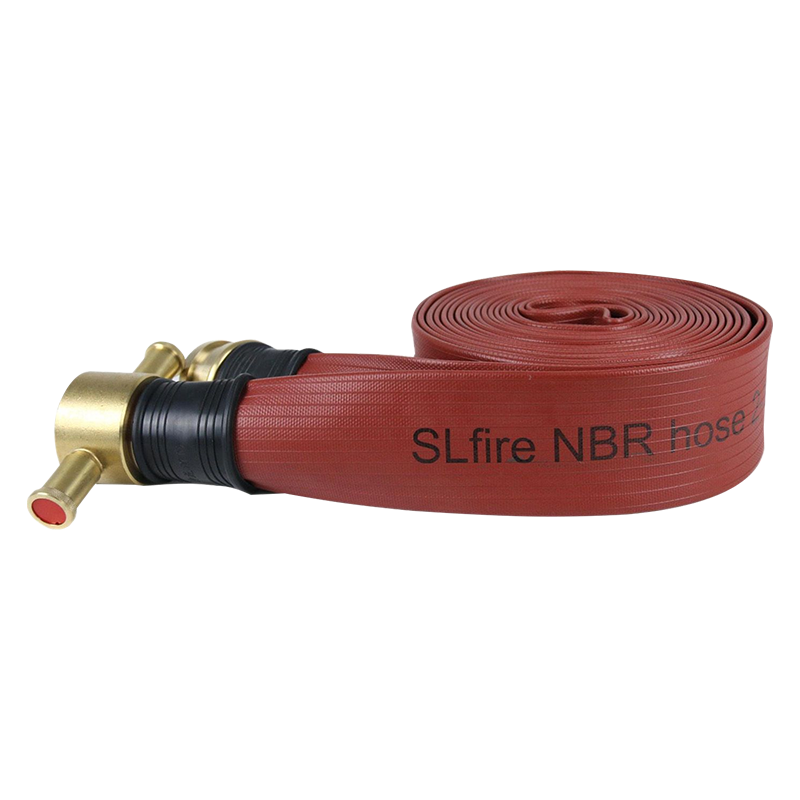
Nitrile covered hose •Nitrile/TPR blend as cover and lining, with 100% high-tenacity polyester yarn ...
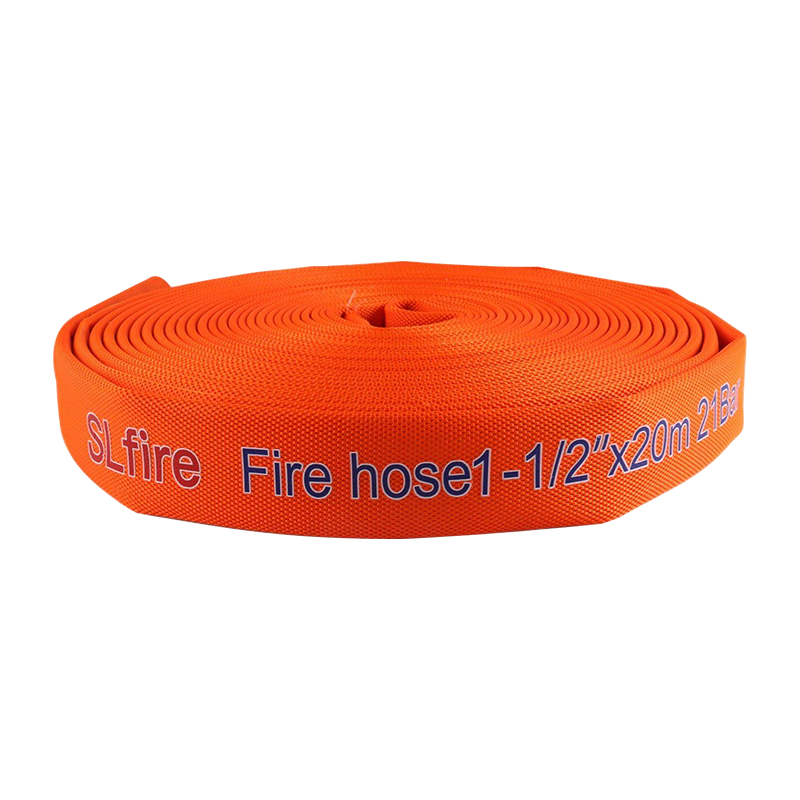
Single jacket, TPU liner •High-tenacity polyester yarn, circular woven in twill weave, TPU lining, f...
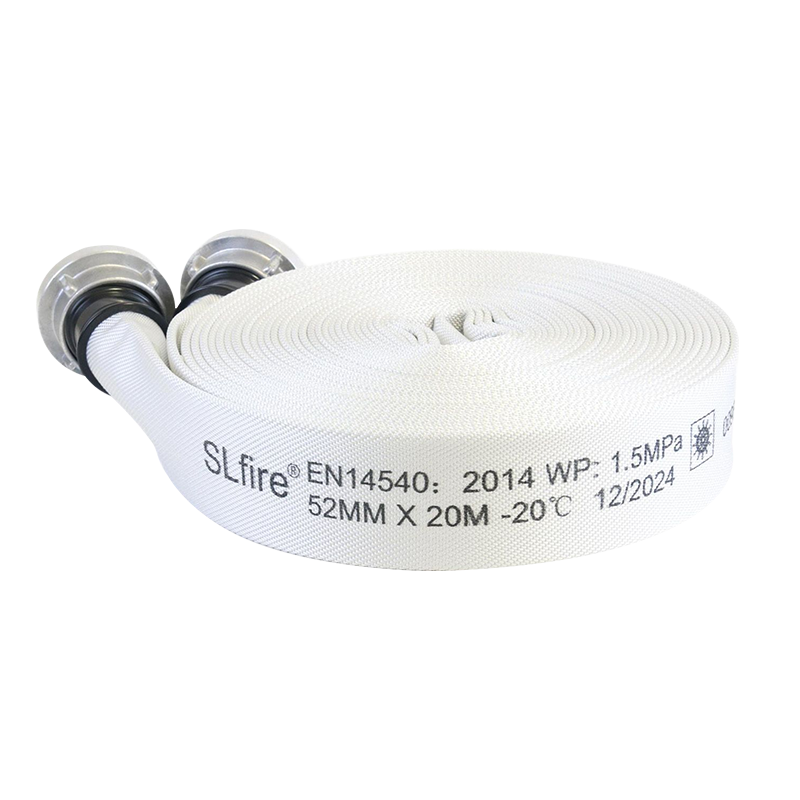
Marine hose Single jacket, PVC liner •100% high tenacity polyester yarn, circular woven in twill wea...
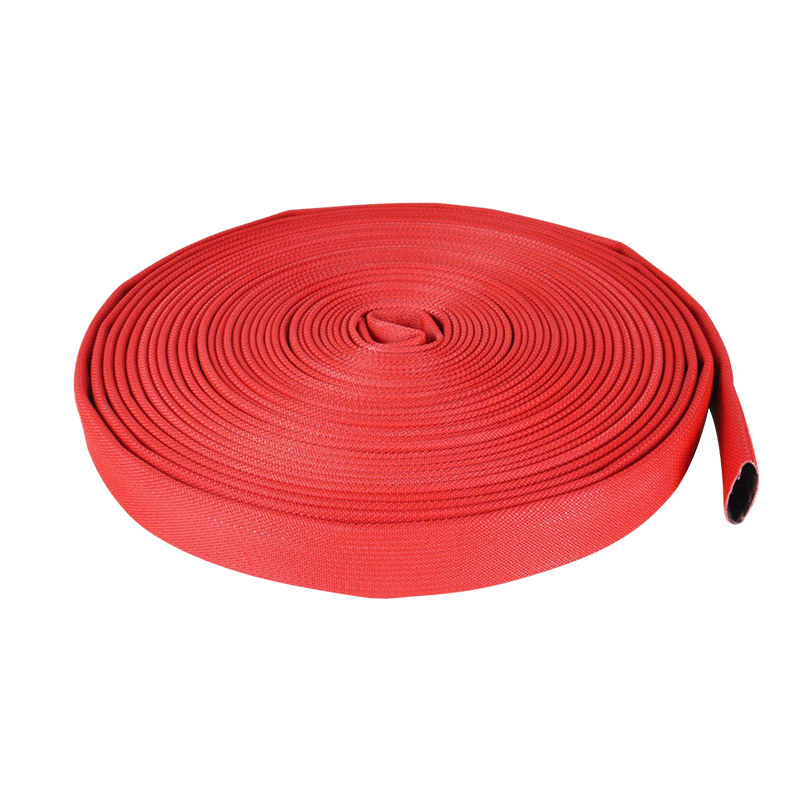
Marine hose Single jacket, PVC liner, PU coated •100% high tenacity polyester yarn,c ircular woven i...
 Call Us
+86 159-5116-9511
Need Support
Head Office
No.58, Kechuang Road, Sixiang Street Medicine Gaoxin District Taizhou City, Jiangsu Province

At a structure fire, the first line off the truck is the one that does the hardest work. Pulled around obstacles, dragged across gravel, charged with high-pressure water, and shut off at the nozzle d...
Copyright © Taizhou Shenlong Fire Science and Technology Co., Ltd. All Rights Reserved.
 Fire Hose Manufacturers, Fire Hydrant Hose Factory