

 English
 русский
 Español
 Deutsch
 عربى
 Français
 Português
Don't hesitate to send a message

Single jacket, EPDM rubber liner Features • 100% high tenacity polyester jacket, high-grade EPDM rub...
Content
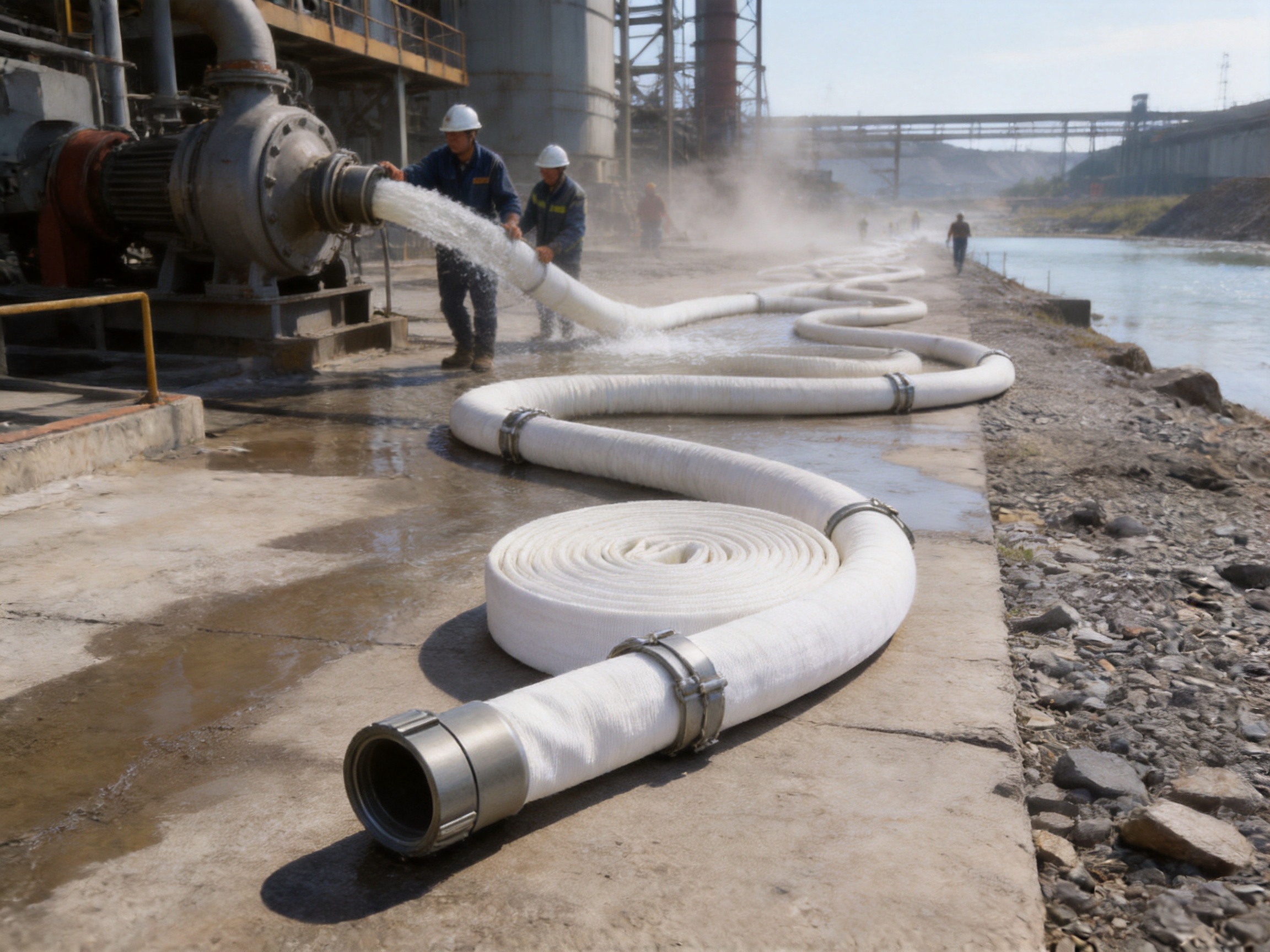
Mill discharge operations require hose assemblies that can withstand abrasion, pressure, repeated handling, weather exposure, and demanding industrial environments. A hose used for discharging water, process liquids, slurry, or other materials must do more than transport fluid from one point to another. It must maintain its structural integrity while being dragged, bent, connected, disconnected, exposed to sunlight, and subjected to continuous or intermittent pressure.
The double jacket EPDM rubber liner mill discharge hose is designed to address these challenges through a combination of high-tenacity polyester reinforcement and a durable EPDM rubber lining. Its construction provides a practical balance between strength and handling convenience. Compared with many single-jacket alternatives, the double-jacket structure adds an additional layer of protection around the hose body, helping it resist external abrasion and extending its useful service life in harsh working conditions.
This mill discharge hose is available in several commonly used inside diameters and pressure ratings. It is offered in 50-foot and 100-foot lengths, allowing users to select a configuration suited to different discharge layouts, pumping distances, and site requirements. With a temperature range of -40°C to 100°C, the hose can be used across a broad range of operating conditions when the conveyed material and system pressure are compatible with the product specifications.
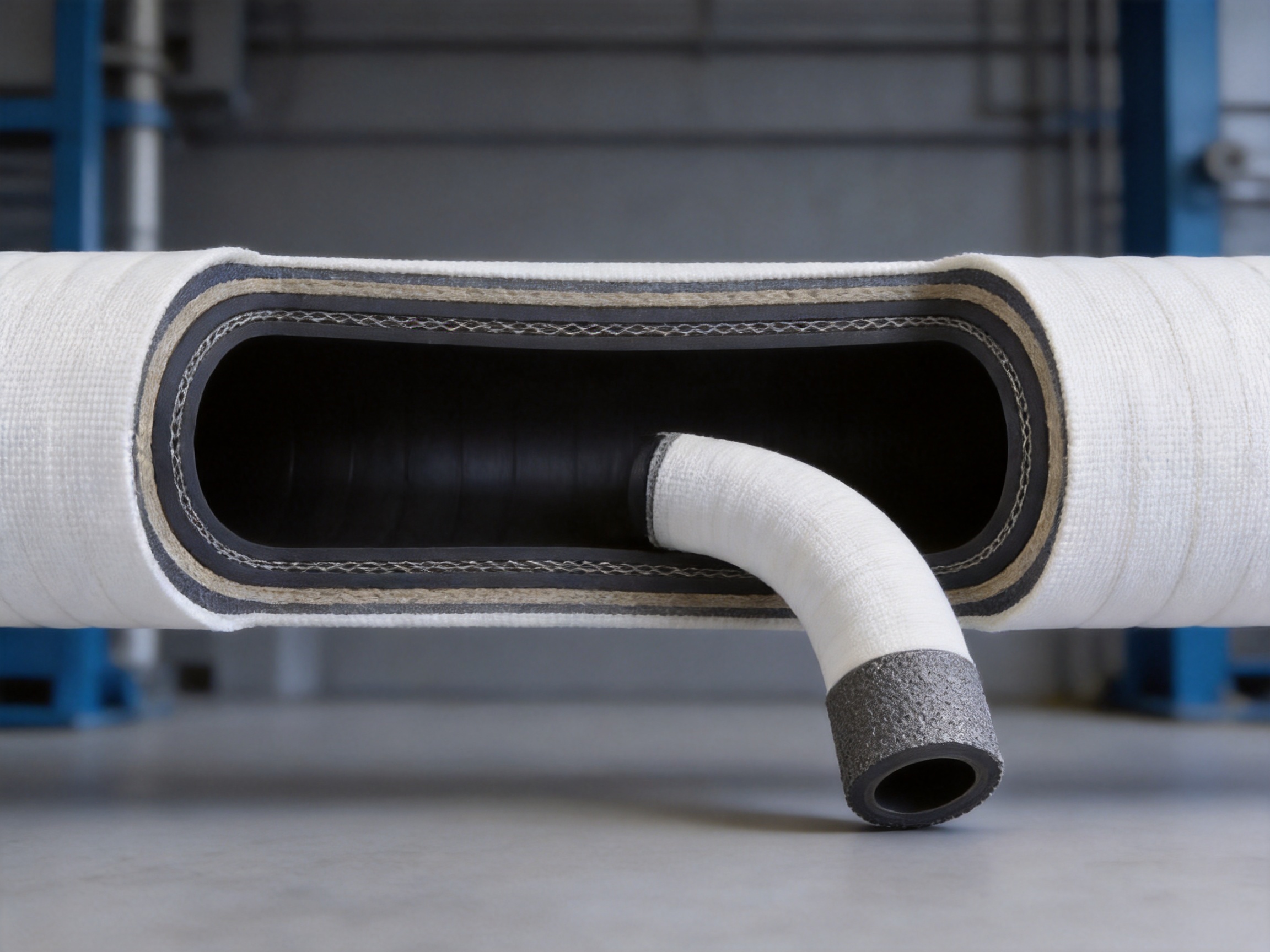
A double jacket EPDM rubber liner mill discharge hose is a flexible industrial hose constructed with an inner EPDM rubber lining and two layers of high-tenacity polyester jacket reinforcement. The inner liner forms the fluid-contact surface, while the woven textile jackets provide mechanical support and protection.
The EPDM lining is important because the internal surface must remain flexible while resisting heat, weathering, ozone, and many common environmental influences. EPDM rubber is widely recognized for its resistance to aging caused by sunlight and atmospheric exposure. This makes it particularly useful in outdoor industrial settings, where a hose may remain exposed to changing weather conditions for extended periods.
The two textile jacket layers reinforce the hose against external wear and help it maintain its shape under pressure. The jackets also provide a protective barrier against rough surfaces, repeated movement, and contact with equipment. In a mill, construction area, water-management project, or other industrial site, this added protection can offer a meaningful advantage over a lighter single-jacket design.
Although the hose is robust, it is designed to remain lightweight and manageable. This is a significant feature in operations where hoses must be moved manually, repositioned around machinery, rolled for storage, or connected to different discharge points. A product that combines reinforcement with manageable weight can help reduce handling difficulty and improve work efficiency.
Mill discharge environments can expose hoses to a combination of mechanical and operational stresses. Hoses may be placed across concrete, gravel, steel platforms, or uneven ground. They can be pulled around corners, exposed to vibration, and repeatedly connected to pumps, pipes, couplings, or nozzles.
Pressure fluctuations are another important consideration. A discharge hose may operate at a steady working pressure, but start-up, shutdown, valve operation, and pump changes can create transient loads. A suitable hose must have adequate working-pressure capacity and a suitable safety margin between its working and burst pressures.
Temperature also affects hose performance. Fluids may be warmer than ambient conditions, while outdoor installations can experience freezing temperatures. The specified operating range of -40°C to 100°C provides a broad temperature window for many industrial uses. However, users should always evaluate the actual conveyed fluid, pressure, exposure time, and connection system before installation.
External environmental exposure can be just as damaging as internal service conditions. Ozone, ultraviolet radiation, moisture, mold, mildew, and abrasive contact may gradually weaken a poorly selected hose. The double jacket EPDM rubber liner construction is intended to resist these common threats and provide dependable performance in demanding applications.
For these reasons, a mill discharge hose should not be selected only by inside diameter. The user should also consider jacket design, liner material, pressure rating, temperature conditions, length, coupling compatibility, storage requirements, and the expected frequency of movement.
The reinforcement uses high-tenacity polyester yarn. Polyester is valued in hose construction because it offers a useful combination of tensile strength, dimensional stability, flexibility, and resistance to moisture. The woven structure allows the hose to remain flexible while supporting the liner and resisting pressure-related expansion.
High-tenacity yarn helps the hose withstand the forces created during pressurization and handling. It also contributes to the hose’s ability to be rolled, transported, and deployed without requiring the weight associated with some heavier rigid or semi-rigid products.
The double-jacket design is one of the product’s primary advantages. Instead of relying on a single outer textile layer, the hose uses two jacket layers to improve protection and durability. The additional layer helps reduce the effect of external abrasion and can provide greater resistance to wear when the hose is pulled across rough surfaces.
Double-jacket construction can also help protect the inner liner from damage caused by repeated handling. While no flexible hose is completely immune to cuts, punctures, crushing, or improper use, the additional reinforcement gives the product a stronger protective structure than many single-jacket hoses.
For industrial users, the value of a double jacket is not limited to theoretical strength. It can support longer service intervals, reduce the frequency of hose replacement, and help maintain operational continuity. The actual service life will depend on pressure, fluid, handling practices, installation conditions, and maintenance, but the design is intended for demanding service.
The EPDM rubber liner provides a smooth and resilient internal flow surface. It is designed to remain flexible across the stated temperature range while resisting common weathering factors. The liner also helps isolate the conveyed material from the polyester jacket.
EPDM is commonly selected for applications requiring resistance to heat, ozone, and outdoor exposure. Its weather-resistant characteristics make it useful for hoses that may be deployed outside or stored in environments where humidity and sunlight are present.
Users should confirm chemical compatibility before transporting specialized chemicals, oils, fuels, or aggressive process fluids. EPDM performs well in many water-based and general industrial applications, but the exact fluid composition, concentration, temperature, and exposure duration should be reviewed for every installation.
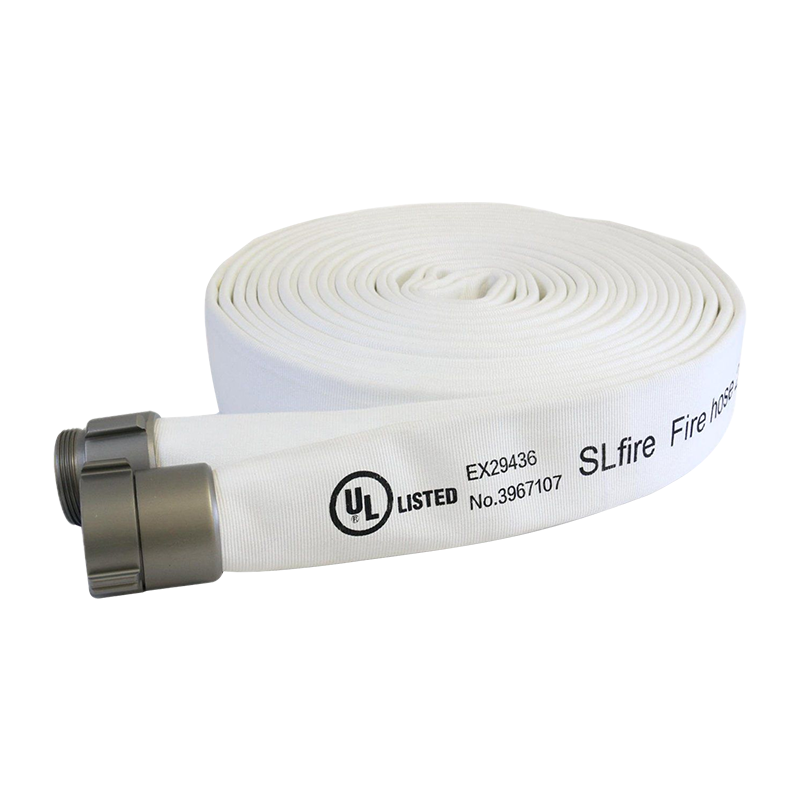
Double Jacket EPDM Rubber Liner Mill Discharge Hose
External abrasion is a common cause of hose damage. A hose may be dragged over a rough floor, positioned beside sharp-edged equipment, or moved repeatedly during daily operations. A single jacket can become worn through over time, exposing the underlying structure and increasing the risk of failure.
The double jacket provides an additional protective layer. This construction is particularly valuable where the hose is frequently repositioned or where the ground surface cannot be completely controlled. By improving resistance to external wear, the hose can offer a longer and more reliable service life than a comparable single-jacket product under similar conditions.
Outdoor and humid environments can accelerate the deterioration of hose materials. Ozone can attack certain rubber compounds, while mold and mildew may affect textile surfaces when hoses are stored wet or exposed to persistent moisture.
The product is designed to resist ozone, mold, and mildew. This makes it suitable for a wide range of industrial and outdoor applications, including sites where hoses are exposed to changing weather, wet ground, high humidity, or long storage periods between uses.
The hose has a specified temperature range of -40°C to 100°C. This broad operating window supports use in cold climates, temperate environments, and many warmer industrial conditions. The ability to retain flexibility at low temperatures can help prevent handling problems during winter deployment, while resistance to elevated temperatures supports a wider range of discharge duties.
Temperature rating should always be considered together with pressure and fluid compatibility. A hose operating at the upper end of its temperature range may require more careful inspection and may not be suitable for every fluid. Responsible selection involves matching all operating variables rather than relying on one specification alone.
Hose handling affects productivity and worker effort. Heavy hoses can be difficult to move, especially when they are long, wet, or filled with fluid. They may require mechanical assistance or additional personnel, increasing installation time and operating complexity.
The high-tenacity polyester double jacket provides reinforcement without making the hose unnecessarily heavy. Its lightweight design makes it easier to carry, deploy, reposition, drain, and store. This can be especially useful in temporary discharge systems, emergency pumping, maintenance operations, and sites where hoses must be moved frequently.
Flexibility allows the hose to follow practical routes around equipment and across uneven work areas. A flexible discharge hose can be arranged with fewer rigid elbows and can often be installed more quickly than a fixed pipe system.
Flexibility also supports compact storage. Once drained and properly cleaned, the hose can be rolled for transport or kept in a designated hose cabinet or storage area. Proper rolling and protection from sharp objects help preserve the jacket and liner during periods of non-use.
The product is available with working-pressure options of 250, 300, and 400 psi, corresponding to approximately 17, 21, and 28 bar. Burst-pressure options are listed as 750, 900, and 1,200 psi, corresponding to approximately 51, 63, and 84 bar.
The range of pressure choices allows users to select a configuration appropriate for their pumping system. A higher pressure rating may be suitable for more demanding systems, while a lower rating may be sufficient for applications where the operating pressure is modest. The selected hose should never be operated above its rated working pressure.
The mill discharge hose is available in five inside diameters: 1-1/2 inches, 2 inches, 2-1/2 inches, 3 inches, and 4 inches. These sizes cover many common industrial discharge requirements, from relatively compact pumping arrangements to higher-volume flow systems.
| Inside Diameter | Approximate Inside Diameter | Working Pressure Options | Working Pressure Options | Burst Pressure Options | Burst Pressure Options |
|---|---|---|---|---|---|
| Inch | mm | psi | bar | psi | bar |
| 1-1/2 | 38 | 250, 300, 400 | 17, 21, 28 | 750, 900, 1,200 | 51, 63, 84 |
| 2 | 52 | 250, 300, 400 | 17, 21, 28 | 750, 900, 1,200 | 51, 63, 84 |
| 2-1/2 | 64 | 250, 300, 400 | 17, 21, 28 | 750, 900, 1,200 | 51, 63, 84 |
| 3 | 75 | 250, 300, 400 | 17, 21, 28 | 750, 900, 1,200 | 51, 63, 84 |
| 4 | 102 | 250, 300, 400 | 17, 21, 28 | 750, 900, 1,200 | 51, 63, 84 |
The pressure values in the table represent the listed product options. The correct selection depends on the pump’s maximum operating pressure, expected pressure fluctuations, fluid characteristics, hose length, connection configuration, and local safety practices.
The 1-1/2-inch and 2-inch sizes can be useful where space, weight, or moderate flow requirements are important. The 2-1/2-inch and 3-inch sizes provide a balance between flow capacity and handling convenience. The 4-inch size is suitable for systems requiring a larger flow path, provided that the pump, couplings, and supporting equipment are also sized accordingly.
The hose is available in 50-foot and 100-foot lengths. These standard lengths support many temporary and semi-permanent discharge layouts. A 50-foot length may be suitable for compact installations, pump-to-header connections, or applications where frequent movement is expected. A 100-foot length can reduce the number of connections required when the discharge point is farther away.
Longer hose runs should be planned carefully. Friction loss increases with length and depends on inside diameter, flow rate, fluid properties, and internal surface condition. Selecting a larger diameter may help support higher flow rates or reduce pressure loss over long distances, but the decision should be based on the complete system design.
Users should avoid unnecessary sharp bends, twisting, and excessive tension. The hose should be arranged so that it is not supporting the weight of unsupported piping or couplings. Where the hose passes through high-traffic areas, protective measures should be used to prevent crushing, vehicle damage, or trip hazards.
Connections should be selected to match the hose size and pressure rating. Couplings must be installed correctly and inspected regularly. A strong hose cannot compensate for a poorly fitted or damaged coupling. The entire assembly, including clamps, gaskets, adapters, valves, and pump connections, should be treated as one pressure system.
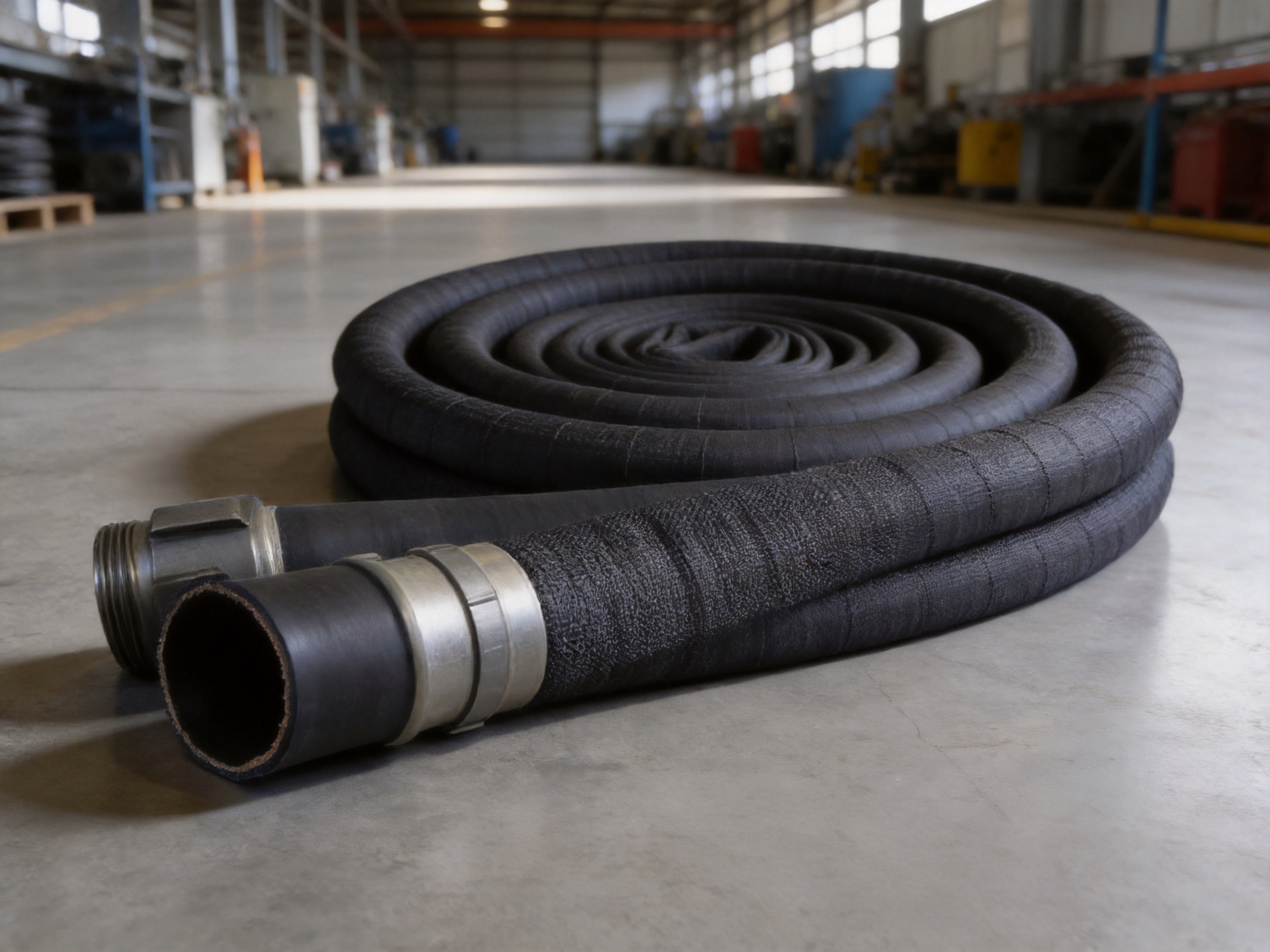
The hose is designed for mill discharge duties where flexible fluid transfer is required. It can be used to move process water or other compatible materials away from equipment, tanks, processing areas, or pumping stations.
Its abrasion-resistant double jacket is advantageous in facilities where hoses are exposed to rough flooring, metal structures, or frequent equipment movement. Its EPDM liner and environmental resistance also support use in industrial areas where heat, moisture, and atmospheric exposure are present.
Construction, excavation, infrastructure, and water-management projects often require temporary pumping systems. Hoses may need to be laid across ground surfaces, connected to portable pumps, and moved as work progresses.
The lightweight design helps crews deploy and recover the hose more efficiently. The selection of different diameters and pressure ratings allows the hose to be matched to various pumping arrangements, from smaller transfer systems to higher-volume discharge lines.
Construction sites present challenging conditions for flexible hoses. Dust, mud, sunlight, sharp materials, vibration, and vehicle traffic can all contribute to wear. The double jacket helps protect the hose from external abrasion, while resistance to mold, mildew, and ozone supports outdoor use.
Because construction layouts change frequently, a flexible hose can be more practical than a permanent piping system. It can be redirected as excavation areas, drainage points, and equipment locations change.
During maintenance work, a facility may need to bypass a section of piping or redirect a discharge flow. A flexible hose can provide a temporary connection while permanent equipment is isolated, repaired, or replaced.
The 50-foot and 100-foot length options can help maintenance teams configure temporary systems with fewer field joints. The hose can also be stored for future use if it is cleaned, dried, inspected, and protected correctly after each project.
In suitable pressure and fluid conditions, the hose may also support agricultural or general water-transfer operations. Farms, irrigation projects, drainage systems, and water-storage facilities may benefit from a product that can be moved between discharge points.
Before using the hose for a particular agricultural fluid, users should verify that the EPDM liner is compatible with fertilizers, treatment products, cleaning agents, or other materials that may be conveyed. Water-transfer use should also take into account local regulations and application-specific requirements.
The manufacturer, Taizhou Shenlong Fire Science and Technology Co., Ltd., was founded in 1995. The company combines research and development, production, sales, and service within one enterprise. This integrated structure supports product development and allows technical, manufacturing, and customer-service functions to work together.
The company’s principal product area includes lined fire hoses made from various materials. Its wider production capability also covers rubber, PVC, polyurethane, and double-sided tape products according to customer requirements. This range demonstrates experience with multiple polymer and textile-based product categories.
For the double jacket EPDM rubber liner mill discharge hose, manufacturing quality depends on the coordinated control of several stages. These include material preparation, EPDM liner formation, textile jacket production, jacket integration, length cutting, end preparation, pressure verification, visual inspection, and packaging.
Consistent performance begins with suitable raw materials. The liner compound must be prepared to provide the required flexibility, temperature resistance, and environmental durability. The polyester yarn must provide sufficient tensile strength and maintain a stable woven structure.
Material preparation is important because variations in compound consistency, yarn quality, moisture, or storage conditions can affect the final hose. A disciplined production system helps reduce variation and supports repeatable product performance across different production batches.
The inner liner must be formed with a consistent wall structure and a smooth internal surface. Uniformity is important for maintaining predictable flow characteristics and supporting the mechanical bond between the liner and reinforcement layers.
The production process must also control temperature, pressure, and curing conditions appropriate to the rubber compound. Proper vulcanization helps the EPDM achieve its intended elastic and mechanical properties. Inadequate or uneven curing can affect flexibility, strength, and resistance to service conditions.
The high-tenacity polyester jacket is woven to provide a balance of strength and flexibility. The weave must be sufficiently tight and uniform to support pressure while allowing the hose to bend and roll.
Using two jacket layers requires attention to alignment, coverage, and integration. The outer jacket should provide consistent protection along the hose length, while the inner jacket should support the liner without creating excessive stiffness. Proper weaving and assembly help the finished hose perform consistently during pressurization and handling.
The liner and jacket must function as a coordinated structure. The manufacturing process is designed to bring the rubber liner and textile layers together so that the final hose has the necessary flexibility, pressure support, and external protection.
Attention to the interface between materials helps reduce unwanted movement between the liner and jacket. A well-integrated hose is better able to withstand bending and pressurization without developing localized stress concentrations.
Inspection is an essential part of hose production. Finished products should be checked for visible defects, dimensional consistency, jacket coverage, end condition, and other characteristics relevant to the intended application.
Pressure testing and verification help confirm that the hose is suitable for its stated working-pressure category. The difference between working pressure and burst pressure provides a safety margin, but users must still operate the hose within the designated working limits and follow appropriate inspection procedures.
Manufacturing inspection should be supported by traceable production information, clear product identification, and proper packaging. These practices help customers identify the selected size and pressure rating and support efficient stock management.
The company’s combined research, production, sales, and service structure allows it to respond to customer requirements across different product categories. Its experience with foreign trade products and cooperation with domestic foreign trade companies also supports export-oriented production and international customer service.
The company reports that its products are sold in more than 20 provinces, cities, and autonomous regions and exported to multiple countries through cooperation with foreign trade partners. This market experience can help support different packaging, documentation, product configuration, and delivery requirements.
Reliable hose performance depends on both product design and correct use. The double jacket and EPDM liner provide a strong foundation, but the hose must be selected and installed appropriately for the application.
Before use, inspect the entire hose for cuts, exposed reinforcement, severe abrasion, deformation, chemical attack, cracks, blistering, or damaged ends. Any hose showing significant deterioration should be removed from service. Inspection should be repeated after unusual events such as overpressure, crushing, exposure to incompatible chemicals, or contact with sharp equipment.
Pressure should be controlled through correctly sized pumps, valves, and regulators. The hose should not be used as a substitute for pressure-control equipment. Sudden valve closure can produce pressure surges that exceed normal operating pressure, so the system should be designed to minimize hydraulic shock.
Correct coupling installation is equally important. The coupling must be compatible with the hose, fully inserted or attached according to the applicable assembly method, and secured against movement. Gaskets and sealing components should be suitable for the conveyed material and operating temperature.
Hoses should not be dragged by their couplings. Pulling from the coupling can damage the end attachment and create a hidden failure point. When moving the hose, personnel should support the hose body and avoid placing it over sharp corners or abrasive surfaces whenever practical.
Confirm the hose inside diameter, length, working-pressure rating, temperature conditions, and fluid compatibility. Check that the pump outlet, valves, couplings, and receiving connection are correctly matched.
Unroll the hose carefully. Do not pull it from the center of a tightly packed coil in a way that creates twisting. Inspect both ends and the full visible length before connecting it to the system.
Lay the hose along a route that avoids unnecessary bends, kinks, sharp edges, and high-traffic locations. The minimum bend radius should be respected according to the applicable product and assembly requirements. A hose that is forced into a tight bend may experience concentrated stress and restricted flow.
Ensure that the hose is not twisted along its length. Twisting can place stress on the jacket and liner and may cause the hose to move unexpectedly when pressurized.
Secure the hose where necessary, but do not clamp it so tightly that the jacket is crushed. Supports should distribute load over a suitable area. Where vehicles or heavy equipment may cross the route, use a suitable protective bridge or reroute the hose.
Pressurize the system gradually and observe the hose and connections. Check for leaks, abnormal movement, bulging, coupling displacement, or unusual sounds. If a problem is detected, shut down and isolate the system before attempting any adjustment.
Do not inspect a pressurized hose at close range. A hose failure can release stored energy and fluid suddenly. Safe operating procedures should include suitable personal protective equipment, exclusion zones, and emergency shutdown methods.
Regular maintenance helps preserve the hose’s performance and makes damage easier to identify before failure. After use, drain residual fluid whenever practical. Leaving fluid inside the hose for long periods may increase the risk of liner deterioration, odor, contamination, or freezing.
Clean the hose using a method compatible with EPDM rubber and the conveyed material. Avoid aggressive solvents or cleaning chemicals unless their compatibility has been confirmed. High-pressure cleaning should be controlled so that it does not damage the liner, jacket, or end connections.
Allow the hose to dry before long-term storage. Store it in a cool, dry, and ventilated area away from direct sunlight, ozone-generating equipment, sharp objects, oils, fuels, and incompatible chemicals. Although the hose is designed to resist ozone and weathering, protection from unnecessary exposure can extend its useful life.
Roll the hose without twisting or creating sharp folds. Avoid placing heavy objects on top of stored coils. If hoses are stored vertically or on racks, the support should prevent excessive bending at the ends.
Maintain records of inspection, use, pressure exposure, repairs, and service conditions. A record system is particularly useful for industrial operations that maintain multiple hoses in different sizes and pressure ratings.
The purchase price of an industrial hose is only one part of its total operating cost. A hose that is difficult to move may require more labor. A hose that wears quickly may require frequent replacement. A hose with inadequate pressure capacity may create shutdowns, safety risks, and equipment damage.
The double jacket EPDM rubber liner design supports operating value in several ways. Its protective construction can reduce external wear. Its lightweight format can simplify deployment. Its resistance to ozone, mold, and mildew can support outdoor storage and use. Its multiple size and pressure options can help users select a product suited to their system rather than relying on a one-size-fits-all solution.
Longer service life is not guaranteed in every environment, because performance depends on correct selection and handling. Nevertheless, a durable hose can provide value when it reduces replacement frequency, limits maintenance interruptions, and remains available for repeated deployment.
The company’s integrated production and service structure adds another dimension to total value. Customers can work with an organization that has experience in research and development, manufacturing, sales, and service, while also supporting a wider range of rubber, PVC, polyurethane, and related products.
Single-jacket hoses can be suitable for controlled environments where external abrasion is limited and the hose is handled infrequently. They may also be selected when low weight and lower initial cost are the primary considerations.
However, a single jacket offers less external protection than a double jacket. In a mill, construction site, or outdoor pumping operation, the hose may encounter rough surfaces and repeated movement that accelerate jacket wear. Once the outer protection is damaged, the inner structure may become more vulnerable.
The double jacket design is therefore advantageous where durability and external resistance are important. It provides an additional reinforcement layer while retaining the flexibility associated with textile-jacketed hose construction.
The most appropriate choice depends on the application. Users should evaluate the severity of abrasion, pressure, temperature, exposure, handling frequency, expected service life, and budget. For demanding conditions, the added protection of a double jacket may justify its selection over a lighter single-jacket alternative.
Rigid pipe can provide stable, permanent routing, but it often requires more planning, supports, fittings, labor, and installation time. It may be less practical for temporary systems, changing work areas, or locations where equipment must be moved.
A flexible mill discharge hose can be deployed more quickly and rerouted with less effort. It can absorb some movement and vibration and can be stored when not required. These characteristics make it useful as a temporary bypass, portable discharge line, or flexible connection between fixed equipment.
Rigid pipe may still be preferable for permanent installations, high-temperature service beyond the hose rating, or applications requiring specialized chemical resistance. The hose should be viewed as a practical solution for compatible industrial duties, not as a replacement for every type of piping system.
Begin by identifying the material to be conveyed. Water-based fluids and general industrial discharge may be compatible with EPDM, but specific chemicals, oils, fuels, or process additives require confirmation.
Next, determine the required inside diameter. Consider desired flow rate, pump capacity, acceptable pressure loss, connection size, and the physical space available for routing.
Determine the maximum normal working pressure and any possible pressure surges. Select a hose with a working-pressure rating above the expected operating pressure. Do not use the burst-pressure value as an operating target; burst pressure is a failure-limit reference, not a recommended working condition.
Evaluate temperature at both the low and high ends of the operating range. Include fluid temperature, ambient temperature, exposure duration, and heat from nearby machinery.
Estimate the required length and decide whether 50-foot or 100-foot sections are more practical. Fewer joints can simplify installation, but excessively long lengths may be more difficult to move and store.
Finally, review coupling requirements, delivery documentation, packaging, storage conditions, inspection procedures, and after-sales support. A complete specification review helps prevent mismatches between the hose and the rest of the system.
The double jacket provides an additional layer of textile reinforcement and external protection. It improves resistance to abrasion and helps protect the EPDM liner in demanding environments where the hose may be dragged, moved, or exposed to rough surfaces.
The inner liner is made from EPDM rubber. EPDM is selected for its flexibility and resistance to heat, ozone, weathering, mold, and mildew. Compatibility with the specific conveyed fluid should always be confirmed before use.
The stated temperature range is -40°C to 100°C. The actual suitability of the hose depends on the combined effect of temperature, pressure, fluid composition, exposure time, and operating conditions.
The available inside diameters are 1-1/2 inches, 2 inches, 2-1/2 inches, 3 inches, and 4 inches, corresponding approximately to 38, 52, 64, 75, and 102 millimeters.
The listed working-pressure options are 250, 300, and 400 psi, or approximately 17, 21, and 28 bar. The correct rating should be selected according to the maximum operating pressure and possible pressure surges in the system.
The listed burst-pressure options are 750, 900, and 1,200 psi, or approximately 51, 63, and 84 bar. These values should not be treated as operating pressures. The hose must be used within its specified working-pressure rating.
The hose is available in 50-foot and 100-foot lengths. These options support both compact installations and longer discharge routes.
Yes. The hose is designed to be lightweight and easy to handle despite its double-jacket construction. This can simplify carrying, deployment, repositioning, draining, rolling, and storage.
The hose is designed to resist ozone, mold, mildew, and weather-related exposure, making it suitable for many outdoor industrial applications. It should still be stored correctly and protected from unnecessary sunlight, sharp objects, incompatible chemicals, and crushing.
EPDM is compatible with many water-based and general industrial fluids, but compatibility depends on the exact chemical, concentration, temperature, and exposure duration. Users should obtain confirmation before conveying specialized or aggressive chemicals.
Drain and clean the hose after use, allow it to dry, and store it in a cool, dry, ventilated area away from direct sunlight, ozone sources, oils, fuels, sharp objects, and heavy loads. Roll it without twisting or creating sharp folds.
The product is manufactured by Taizhou Shenlong Fire Science and Technology Co., Ltd., an enterprise founded in 1995 with research and development, production, sales, and service capabilities. The company produces lined fire hoses and other rubber, PVC, polyurethane, and related products according to customer requirements.
The double jacket EPDM rubber liner mill discharge hose is designed for industrial users who need a flexible, durable, and manageable discharge solution. Its high-tenacity polyester double jacket improves external protection, while the EPDM rubber liner supports resistance to heat, ozone, mold, mildew, and weathering.
The product is available in five inside diameters, three listed working-pressure categories, and two standard lengths. This range gives users flexibility when planning mill discharge, dewatering, construction, maintenance, agricultural water transfer, and other compatible industrial operations.
Compared with single-jacket hose designs, the double jacket offers greater abrasion protection and improved durability in harsh handling environments. Compared with rigid pipe, it provides faster deployment, easier relocation, and more convenient storage for temporary or changing systems.
Reliable performance depends on correct application. Buyers should verify fluid compatibility, pressure, temperature, diameter, length, coupling design, routing, and maintenance procedures before placing the hose into service. With appropriate selection and care, this hose can provide a practical and cost-effective component for demanding discharge systems.
1. Manufacturer-provided product specification for the double jacket EPDM rubber liner mill discharge hose.
2. Manufacturer-provided technical information concerning hose construction, sizes, pressure ratings, temperature range, and standard lengths.
3. General industrial hose maintenance and inspection practices for flexible pressure-transfer assemblies.
4. General engineering references concerning EPDM rubber properties, textile reinforcement, abrasion resistance, and environmental exposure.
5. General guidance for industrial fluid-transfer system design, pressure control, coupling installation, and hose storage.
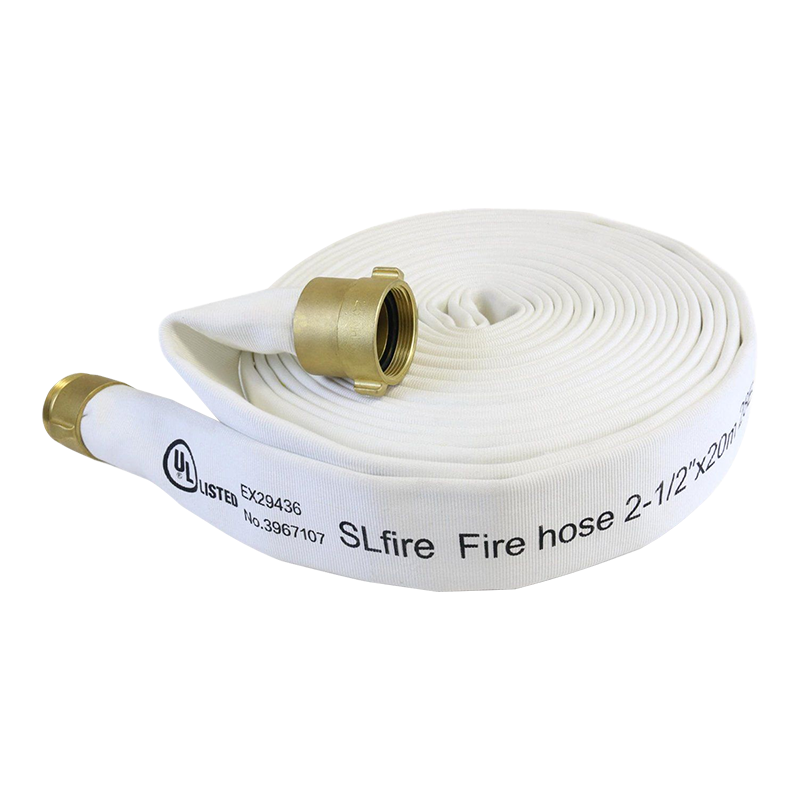
Single jacket, EPDM rubber liner Features • 100% high tenacity polyester jacket, high-grade EPDM rub...
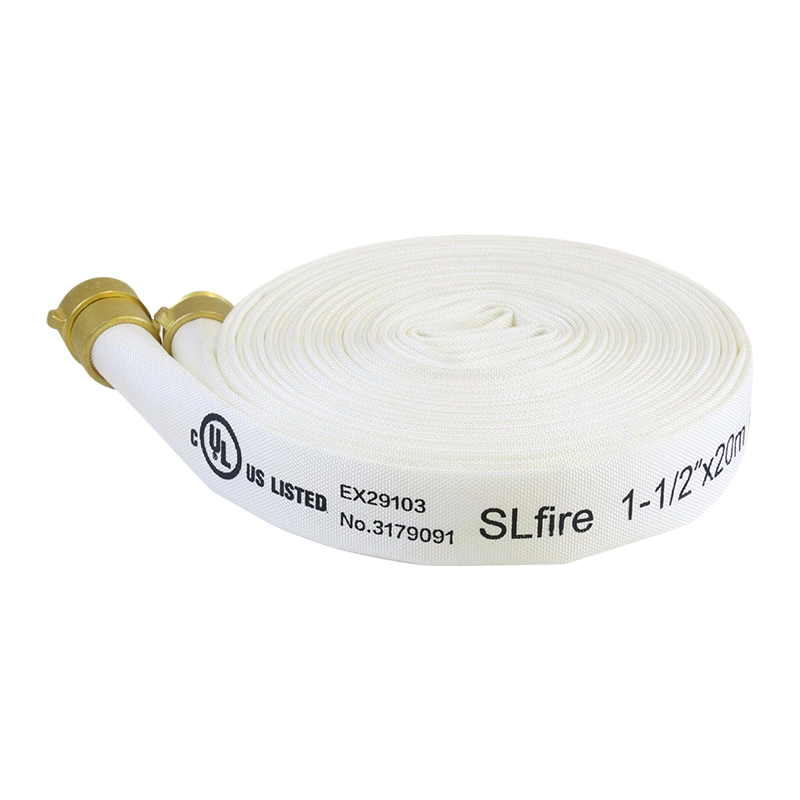
Single jacket, TPU liner •High-tenacity polyester yarn, circular woven in twill weave/plain weave,T ...
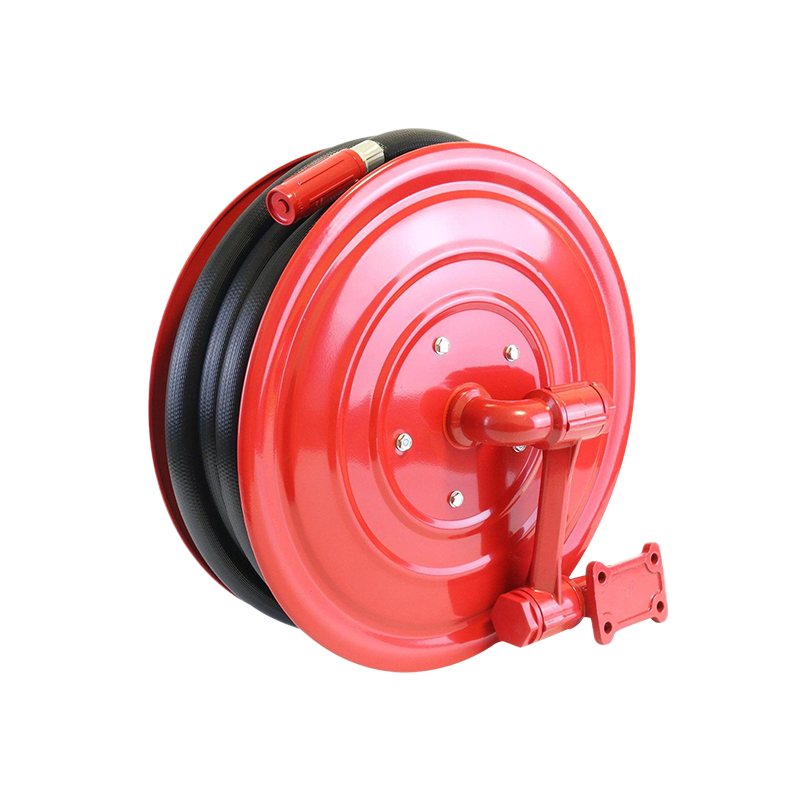
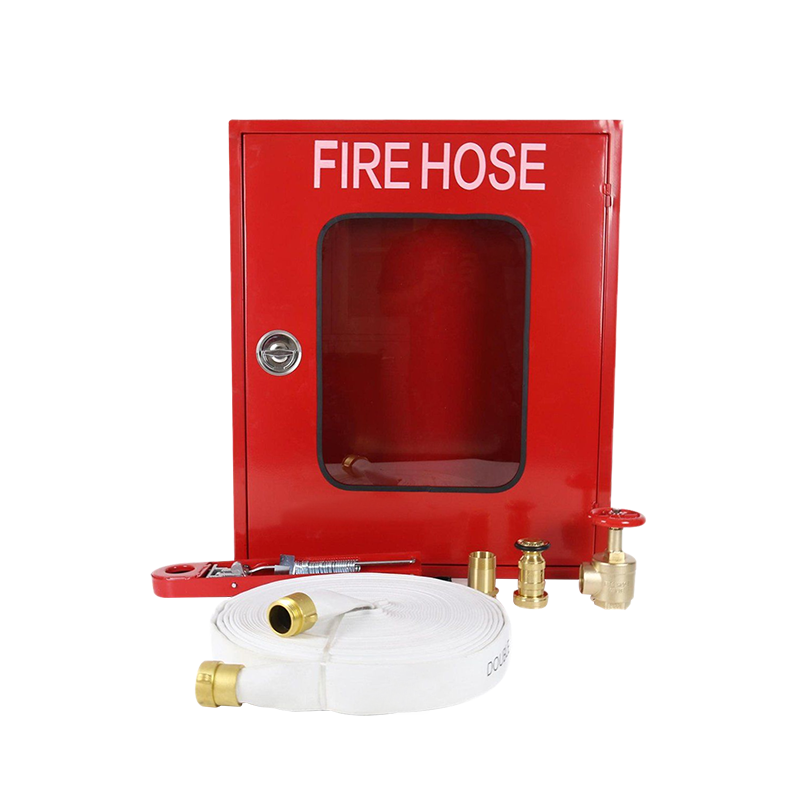
Fire cabinets are designed to accommodate fire hose,valve and other firefighting equipment. Type 201...
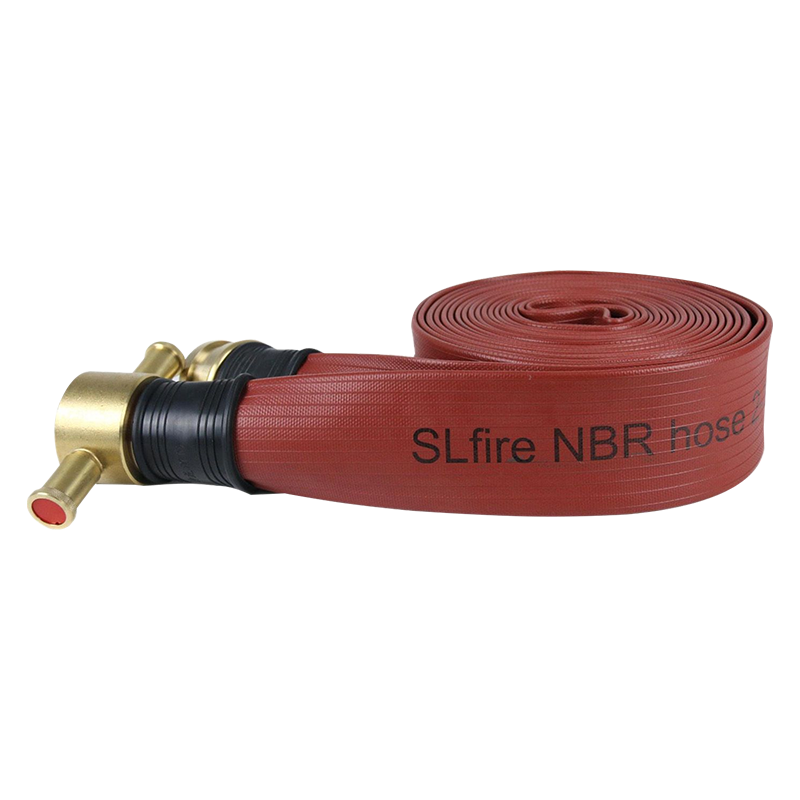
Nitrile covered hose •Nitrile/TPR blend as cover and lining, with 100% high-tenacity polyester yarn ...
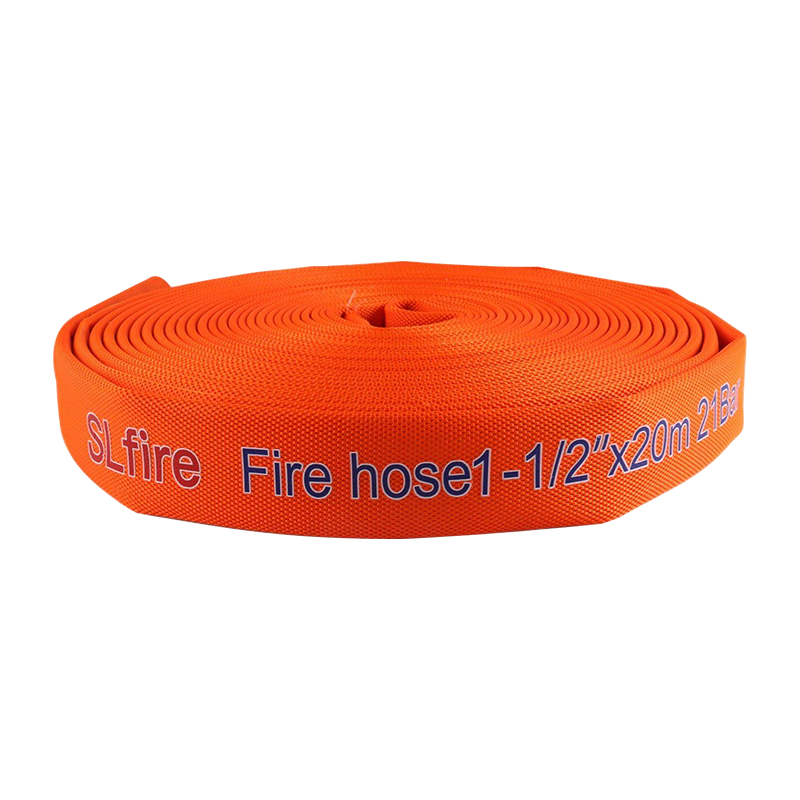
Single jacket, TPU liner •High-tenacity polyester yarn, circular woven in twill weave, TPU lining, f...
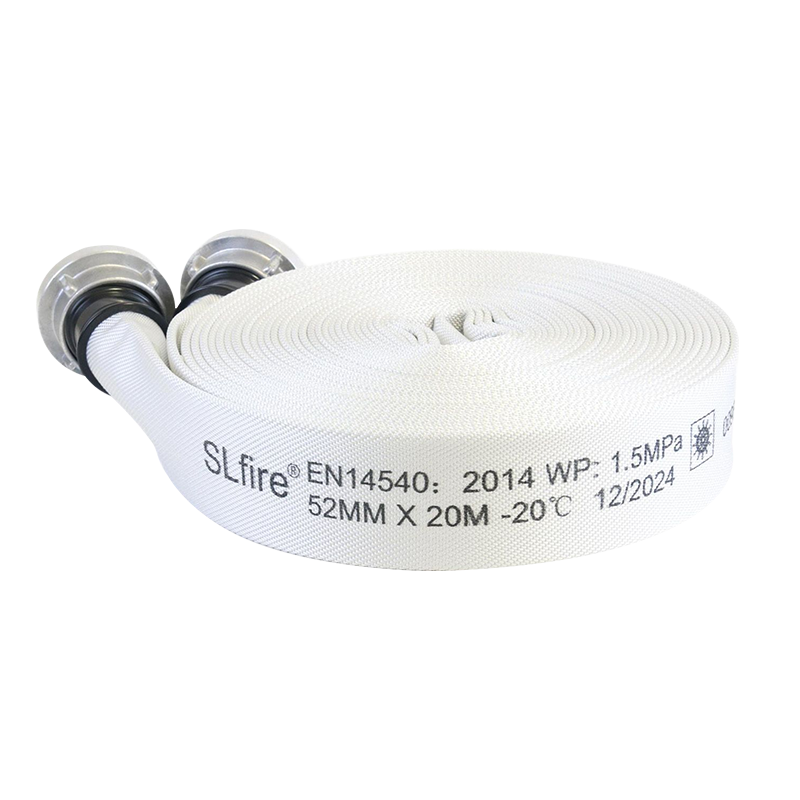
Marine hose Single jacket, PVC liner •100% high tenacity polyester yarn, circular woven in twill wea...
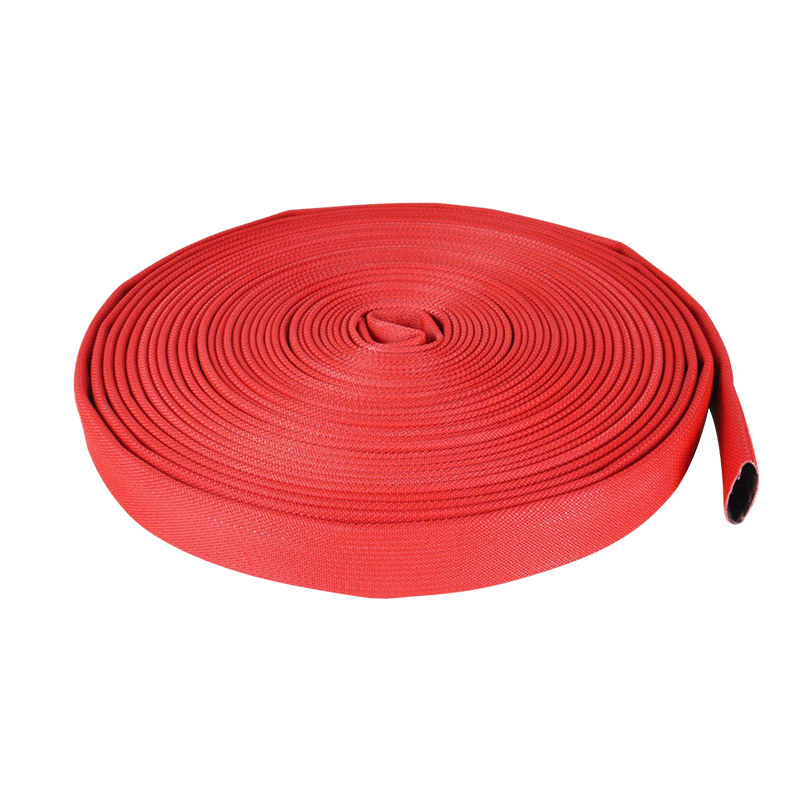
Marine hose Single jacket, PVC liner, PU coated •100% high tenacity polyester yarn,c ircular woven i...
 Call Us
+86 159-5116-9511
Need Support
Head Office
No.58, Kechuang Road, Sixiang Street Medicine Gaoxin District Taizhou City, Jiangsu Province

At a structure fire, the first line off the truck is the one that does the hardest work. Pulled around obstacles, dragged across gravel, charged with high-pressure water, and shut off at the nozzle d...
Copyright © Taizhou Shenlong Fire Science and Technology Co., Ltd. All Rights Reserved.
 Fire Hose Manufacturers, Fire Hydrant Hose Factory