

 English
 русский
 Español
 Deutsch
 عربى
عربى Français
 Português
Don't hesitate to send a message

Single jacket, EPDM rubber liner Features • 100% high tenacity polyester jacket, high-grade EPDM rub...
Content
Reliable hose connections are essential wherever water, chemicals, petroleum products, or other fluids must be transferred safely and efficiently. A hose may be manufactured from high-quality materials, yet the complete fluid-transfer system can still fail if the coupling is difficult to operate, poorly fitted, vulnerable to corrosion, or unable to withstand the required working pressure. For this reason, selecting the correct coupling is as important as selecting the hose itself.
Fair Corrosion GOST Hose Couplings are designed as practical connection components for firefighting, irrigation, petroleum handling, chemical processing, construction, and other demanding applications. Manufactured through casting and produced from aluminum alloy or brass, these couplings combine structural strength, economical production, convenient handling, and compatibility with GOST-based connection requirements. Their rated working pressure of 16 Bar gives users a dependable solution for many medium- and high-demand fluid-transfer operations.
The couplings are available in 1-3/4-inch and 2-3/4-inch sizes, allowing them to serve different hose diameters and flow requirements. Their tool-free operating design supports quick assembly and disassembly, which is especially valuable during emergency response, routine maintenance, irrigation setup, and industrial hose replacement. A vibratory grinding surface treatment improves the appearance and handling quality of the cast components while helping create a smoother finished surface.
This article explains the construction, performance, applications, advantages, manufacturing process, selection considerations, installation practices, and maintenance requirements of these GOST hose couplings. It also describes the production strengths of Taizhou Shenlong Fire Science and Technology Co., Ltd., a manufacturer with long-term experience in fire hose and related fluid-transfer products.
A hose coupling is a mechanical connector used to join a hose to another hose, a valve, hydrant, pump, nozzle, pipe, or other equipment. The coupling must maintain a secure connection while allowing fluid to pass with minimal leakage and acceptable flow resistance. In firefighting and industrial environments, it must also tolerate repeated handling, pressure changes, vibration, outdoor exposure, and contact with potentially aggressive substances.
Fair Corrosion GOST Hose Couplings are developed for users who need a simple and cost-effective connection solution that meets GOST requirements. The main body is produced by casting, using aluminum alloy or brass according to the intended application and customer requirements. Both materials are widely used in fluid-transfer hardware because they offer a useful balance of mechanical performance, weight, corrosion behavior, machinability, and cost.
The 16 Bar working pressure rating provides a clear reference for system design. Users should always compare the coupling rating with the hose, pump, valve, and other components in the complete assembly. The system should be operated within the lowest applicable pressure rating, and additional allowance should be considered for water hammer, surges, temperature effects, and unusual operating conditions.
The coupling design emphasizes easy operation without additional tools. This feature helps reduce setup time and makes the connector suitable for emergency applications in which personnel may need to assemble or separate hoses quickly. It also benefits maintenance departments, irrigation operators, contractors, and industrial workers who frequently change hose layouts.
| Product Item | Specification |
|---|---|
| Product type | GOST hose coupling |
| Casting method | Casting |
| Working pressure | 16 Bar |
| Material options | Aluminum alloy or brass |
| Applicable standard | GOST |
| Surface treatment | Vibratory grinding |
| Available sizes | 1-3/4 inch and 2-3/4 inch |
| Typical applications | Firefighting, irrigation, petroleum, and chemical handling |
| Operating feature | Tool-free connection and disconnection |
| Primary advantages | Economical design, practical corrosion resistance, and convenient operation |
In a fluid-transfer system, the coupling is exposed to forces that are often greater than they appear from the outside. Internal pressure pushes against the coupling body and sealing surfaces. Bending forces are created when a hose is dragged, folded, or connected at an angle. External impact may occur when equipment is moved across a worksite. Repeated connection cycles can gradually wear threads, locking components, sealing surfaces, or contact points.
A weak or poorly manufactured coupling may leak, loosen, deform, or fail under pressure. In a firefighting situation, such a problem can reduce the water available at the nozzle and delay emergency response. In irrigation, leakage can reduce water efficiency and create muddy or unsafe working conditions. In petroleum and chemical service, a failed connection can create environmental, safety, and operational risks.
For these reasons, users should evaluate more than the purchase price. Material, casting quality, dimensional accuracy, surface condition, pressure capacity, compatibility, and service support all influence the true cost of a coupling. An economical design is valuable when it reduces unnecessary expense without sacrificing the performance needed for the application.
These GOST hose couplings address this requirement by combining a relatively straightforward construction with suitable metallic materials and a pressure rating of 16 Bar. Their design avoids unnecessary complexity while retaining the features required for practical hose connection work. This balance can be particularly attractive to distributors, fire-equipment contractors, agricultural suppliers, and industrial maintenance buyers.
Aluminum alloy is frequently selected for hose couplings because it offers a favorable strength-to-weight ratio. A coupling made from aluminum alloy can be easier to carry and handle than a comparable steel component. This difference becomes important when firefighters or industrial workers must move multiple hoses and fittings over long distances, stairs, uneven ground, or elevated work areas.
The lower weight can also reduce transportation and storage burdens. A distributor may be able to handle larger quantities more efficiently, while an end user may find that equipment installation requires less physical effort. In portable firefighting, agricultural irrigation, and temporary construction water systems, reduced component weight can improve overall mobility.
Aluminum alloy also provides useful resistance to atmospheric corrosion in many outdoor environments. It is not immune to corrosion, and its suitability must be assessed for the exact fluid and environmental conditions. Nevertheless, when properly selected, cast aluminum alloy can provide a practical service life in general water service, firefighting, irrigation, and many non-aggressive industrial applications.
Brass is another established material for hose coupling production. It is valued for its good corrosion behavior in many water-related environments, its ability to withstand regular handling, and its suitability for precision-machined connection features. Brass can be an excellent choice when a heavier, robust metallic component is preferred or when the application benefits from the material’s established use in valves, fittings, and fluid-transfer hardware.
Compared with aluminum alloy, brass is generally heavier. However, that additional weight may be acceptable or desirable in fixed installations, industrial service, petroleum-related equipment, or applications where a more substantial hand feel is preferred. The final material choice should consider fluid chemistry, temperature, pressure, installation conditions, connection compatibility, and customer requirements.
There is no single material that is ideal for every hose system. Aluminum alloy may be preferred when portability, lower weight, and economical handling are important. Brass may be selected when a heavier fitting, established chemical compatibility, or a particular installation requirement is desired. Users should consult the supplier when the coupling will be exposed to concentrated chemicals, unusual temperatures, petroleum products, saltwater, or other aggressive media.
The phrase “fair corrosion resistance” should be understood as practical resistance for suitable service conditions rather than universal resistance to every chemical or environment. Correct material selection is essential. A coupling that performs well in clean water may require different material consideration in highly acidic, alkaline, saline, or solvent-rich service.
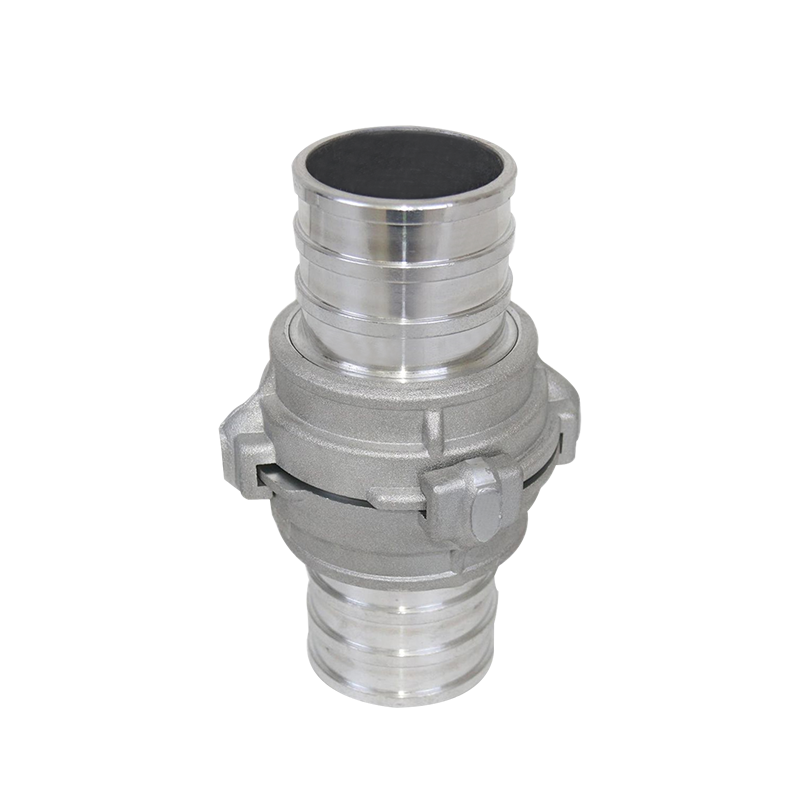
Fair corrosion GOST Hose Couplings
GOST standards are used across a broad range of technical and industrial applications. A coupling produced for GOST-based systems is intended to meet the dimensional, functional, or performance expectations associated with the relevant GOST connection requirements. Standardization helps users identify compatible components and reduces uncertainty when designing or maintaining hose assemblies.
Compatibility should always be verified before installation. A coupling may conform to a recognized standard and still be unsuitable if the mating component uses a different size, sealing arrangement, thread form, locking method, or pressure class. Buyers should confirm the exact connection dimensions and intended mating equipment with the manufacturer or supplier.
For distributors and project contractors, standardized couplings can simplify stock management. Instead of purchasing a large number of unrelated connection types, a company can organize inventory around recognized sizes and applications. This may help reduce procurement delays and make replacement work more efficient.
Standardized products can also support cross-border purchasing and project supply. Firefighting systems, agricultural installations, and industrial projects may include equipment from different manufacturers. A recognized standard can provide a common technical reference, although final dimensional verification remains necessary.
The rated working pressure of these couplings is 16 Bar. This rating indicates the intended continuous working pressure under specified conditions, not an invitation to operate the component at the limit under every circumstance. Pressure ratings can be influenced by fluid temperature, coupling material, hose condition, installation alignment, connection wear, and pressure surges.
Users should ensure that the hose and every connected component have a compatible pressure rating. A 16 Bar coupling cannot increase the pressure capability of a hose rated below 16 Bar. Similarly, a hose with a high pressure rating cannot make a coupling suitable for a pressure above its specified working limit.
Pressure surges deserve special attention. Rapid valve closure, pump startup, sudden hose movement, or changes in elevation can create transient pressure above the normal operating level. These conditions are commonly known as water hammer or pressure shock. System designers should account for these effects and use suitable valves, regulators, accumulators, or operating procedures when required.
Before pressurizing a new assembly, personnel should inspect the coupling, hose, gasket, locking components, and mating connection. The hose should be laid out without sharp bends or excessive twisting. Connections should be fully engaged, and the system should be brought up to pressure gradually. Any sign of leakage, deformation, unusual movement, or noise should be investigated immediately.
One of the most practical features of the coupling is operation without additional tools. Tool-free connection systems are valuable in situations where speed, mobility, and simplicity matter. A firefighter may need to connect a hose while wearing protective gloves. An irrigation worker may move hoses between fields. A contractor may configure temporary water lines at several points on a jobsite.
When no special wrench or accessory is required, the number of items carried to the work area can be reduced. This makes the system easier to deploy and may shorten the time required for installation. Tool-free operation can also reduce the likelihood of using an incorrect tool or applying excessive force that damages the fitting.
However, tool-free does not mean careless operation. The coupling must still be aligned correctly and engaged fully. Operators should not use hammers, pipes, or other improvised tools to force a connection. If the connection cannot be made by normal hand operation, the components should be inspected for dirt, damage, misalignment, or incompatibility.
After connection, the hose should be positioned so that its weight and movement do not place excessive side load on the coupling. In mobile systems, suitable hose supports, strain relief, or anchoring arrangements may be required. Correct handling protects both the coupling and the hose from unnecessary stress.
Corrosion can weaken a coupling, interfere with operation, damage sealing surfaces, and create contamination in the transferred fluid. The risk depends on material, moisture, temperature, exposure time, fluid chemistry, surface condition, and contact with dissimilar metals. Outdoor firefighting and irrigation equipment may face rain, humidity, soil, fertilizer residue, and changing temperatures. Industrial equipment may face oils, solvents, acids, alkalis, or process chemicals.
The aluminum alloy and brass options provide practical corrosion performance for many common applications. Vibratory grinding creates a more uniform and smoother surface after casting, helping remove rough edges and loose surface irregularities. A clean, properly finished surface is easier to inspect and maintain than a rough casting with excessive burrs or flash.
Material compatibility should be assessed carefully in chemical service. Before ordering, the user should provide information about the fluid, concentration, temperature, operating pressure, exposure duration, and cleaning agents. The supplier can then help determine whether aluminum alloy or brass is more appropriate, or whether a different material or protective system is needed.
Good maintenance also improves corrosion resistance. Couplings should be rinsed after exposure to salt, fertilizer, chemicals, muddy water, or other residues. They should be dried before long-term storage. Where appropriate, protective measures can be used, but coatings or lubricants must not interfere with sealing surfaces or fluid compatibility.
Reliable coupling production begins before metal enters the mold. The manufacturer must establish the required dimensions, pressure performance, material selection, surface requirements, and connection details. Production planning should take into account the intended application, size, alloy or brass grade, casting method, and subsequent finishing operations.
Material preparation is important because variation in the raw material can influence strength, surface quality, machinability, and corrosion performance. Appropriate alloy or brass feedstock should be selected and stored in a way that limits contamination and unnecessary exposure to moisture or other harmful conditions.
The casting process uses a mold or pattern that defines the external geometry of the coupling. Mold design must account for metal flow, shrinkage, wall thickness, connection details, and the removal of the finished casting. Well-planned gating and feeding arrangements help reduce casting defects and support consistent production.
Dimensional accuracy is particularly important around mating surfaces and connection features. Even a small dimensional error can make assembly difficult or cause leakage. For this reason, the casting stage should be supported by process control and inspection rather than relying only on final visual checking.
During melting and pouring, temperature and material condition must be managed carefully. Excessive temperature can increase oxidation or affect the final structure, while insufficient temperature may cause incomplete filling or poor surface formation. Skilled production personnel monitor the process to achieve consistent filling of the mold.
Clean handling and appropriate process discipline help reduce inclusions, porosity, cold shuts, misruns, and other defects. These issues can affect appearance, dimensional stability, pressure performance, and service life. A manufacturer experienced in cast hose fittings can develop production controls suited to the geometry and material of the coupling.
After pouring, the metal must cool and solidify under controlled conditions. Improper cooling can contribute to distortion, residual stress, or inconsistent structure. Once the casting has solidified, it is removed from the mold and separated from the gating system. Excess metal is trimmed, and the casting is prepared for finishing and inspection.
Vibratory grinding is used to improve the surface condition of the cast component. During this process, castings are placed in a vibrating container with suitable media. Movement between the parts and media helps remove burrs, sharp edges, flash, and minor surface irregularities.
This finishing step provides several practical benefits. It can make the coupling more comfortable to handle, improve visual consistency, reduce loose particles, and prepare the surface for inspection or additional treatment. It also supports more uniform contact at areas where smooth handling and clean finishing are important.
Some coupling features may require additional machining after casting. Connection surfaces, grooves, holes, threads, or other functional areas may be processed to achieve the required fit. Machining must be controlled carefully because the coupling’s performance depends on correct alignment and engagement with the mating component.
Dimensional inspection can include measurement of critical diameters, connection features, wall areas, and sealing surfaces. Depending on the production order and customer requirements, inspection may also include visual examination, pressure testing, material verification, and sampling procedures.
Before shipment, finished couplings should be checked for visible casting defects, sharp edges, contamination, incorrect dimensions, and damage. Packaging should protect the parts from impact and unnecessary exposure to moisture during transportation and storage. Clear product identification helps customers match the coupling to the correct hose and system.
The manufacturing process is therefore more than simply pouring metal into a mold. It includes design, material management, casting control, finishing, dimensional verification, performance evaluation, and logistics. Each stage contributes to the reliability of the finished product.
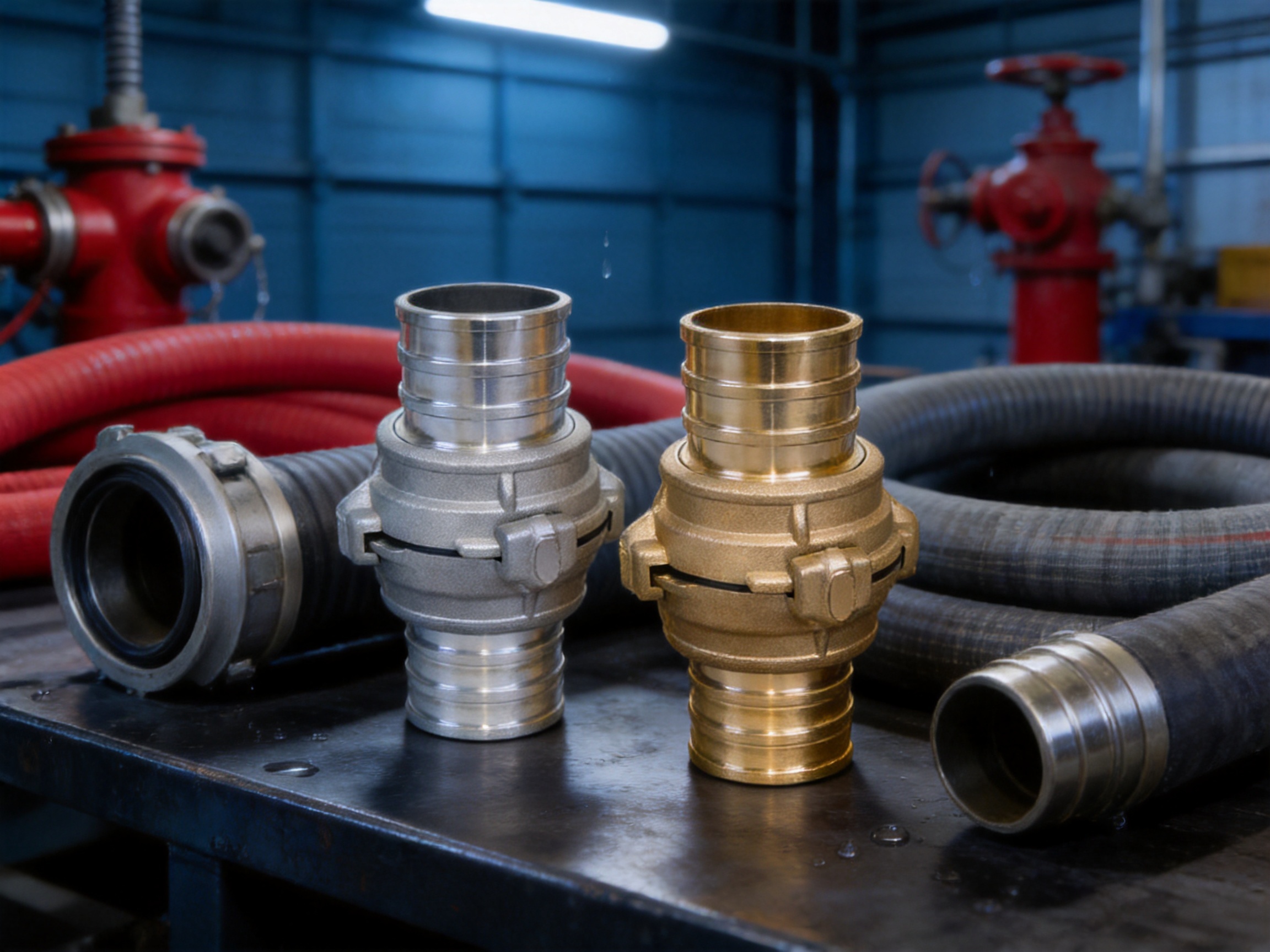
Taizhou Shenlong Fire Science and Technology Co., Ltd. was founded in 1995 and has developed experience in research and development, production, sales, and service. This long operating history provides a foundation for understanding the requirements of fire protection and fluid-transfer markets.
The company’s principal products include lined fire hoses made from various materials. Its broader production and cooperation capabilities also support foreign-trade products such as rubber, PVC, polyurethane, and double-sided tape products according to customer requirements. This range indicates experience with different material systems, manufacturing methods, and customer specifications.
Products are sold across more than 20 provinces, cities, and autonomous regions, while cooperation with domestic foreign-trade companies supports export business to multiple countries. Such market experience can help a manufacturer understand differences in project requirements, packaging expectations, documentation, and application conditions.
The company’s location in Taizhou, Jiangsu Province, places it within an established Chinese manufacturing region. Its facility address is No. 58, Kechuang Road, Sixiang Street Medicine Gaoxin District, Taizhou City, Jiangsu Province. The company’s product and service approach combines production capability with customer communication, allowing buyers to discuss materials, specifications, and application needs.
For buyers of GOST hose couplings, the value of an experienced supplier is not limited to the individual fitting. A manufacturer familiar with fire hoses, industrial hoses, and related accessories can better understand how couplings interact with hose reinforcement, lining materials, storage methods, and field operating conditions.
Generic couplings may be available in many markets, but they do not always provide clear information about their intended standard, pressure capacity, materials, or application range. A defined GOST coupling with a stated 16 Bar working pressure gives buyers a clearer starting point for system design and procurement.
The availability of two sizes also supports practical selection for different hose requirements. Rather than forcing users to adapt an unsuitable connector, the product range provides options for common hose connection needs in firefighting, irrigation, petroleum, and chemical applications.
The economic design is one of the product’s key advantages. Cost efficiency is important for municipal fire departments, agricultural operators, contractors, distributors, and industrial plants that must purchase multiple couplings or maintain replacement inventory.
A low price alone does not guarantee value. The better measure is the relationship between purchase cost, operating reliability, maintenance requirements, service life, and replacement frequency. By using established cast materials and a practical design, these couplings aim to provide useful performance without unnecessary complexity.
The tool-free operating feature distinguishes the coupling from connection systems that require specialized wrenches or complicated procedures. Reduced tool dependence can improve field productivity and make the product more suitable for emergency or temporary installations.
Workers can spend less time searching for tools and more time completing the connection. This benefit is especially relevant where hose layouts change frequently or where equipment must be deployed under time pressure.
The choice of aluminum alloy or brass allows users to align the coupling with project priorities. Aluminum alloy can support lightweight portable systems, while brass can serve applications where a heavier and robust fitting is preferred. Material flexibility is useful for distributors that serve multiple industries and require more than one product configuration.
A supplier that manufactures fire hoses and other related products may be able to support more complete procurement packages. Customers can discuss hoses, couplings, nozzles, cabinets, and accessories through one experienced source. This can simplify communication and reduce the risk of mismatched components.
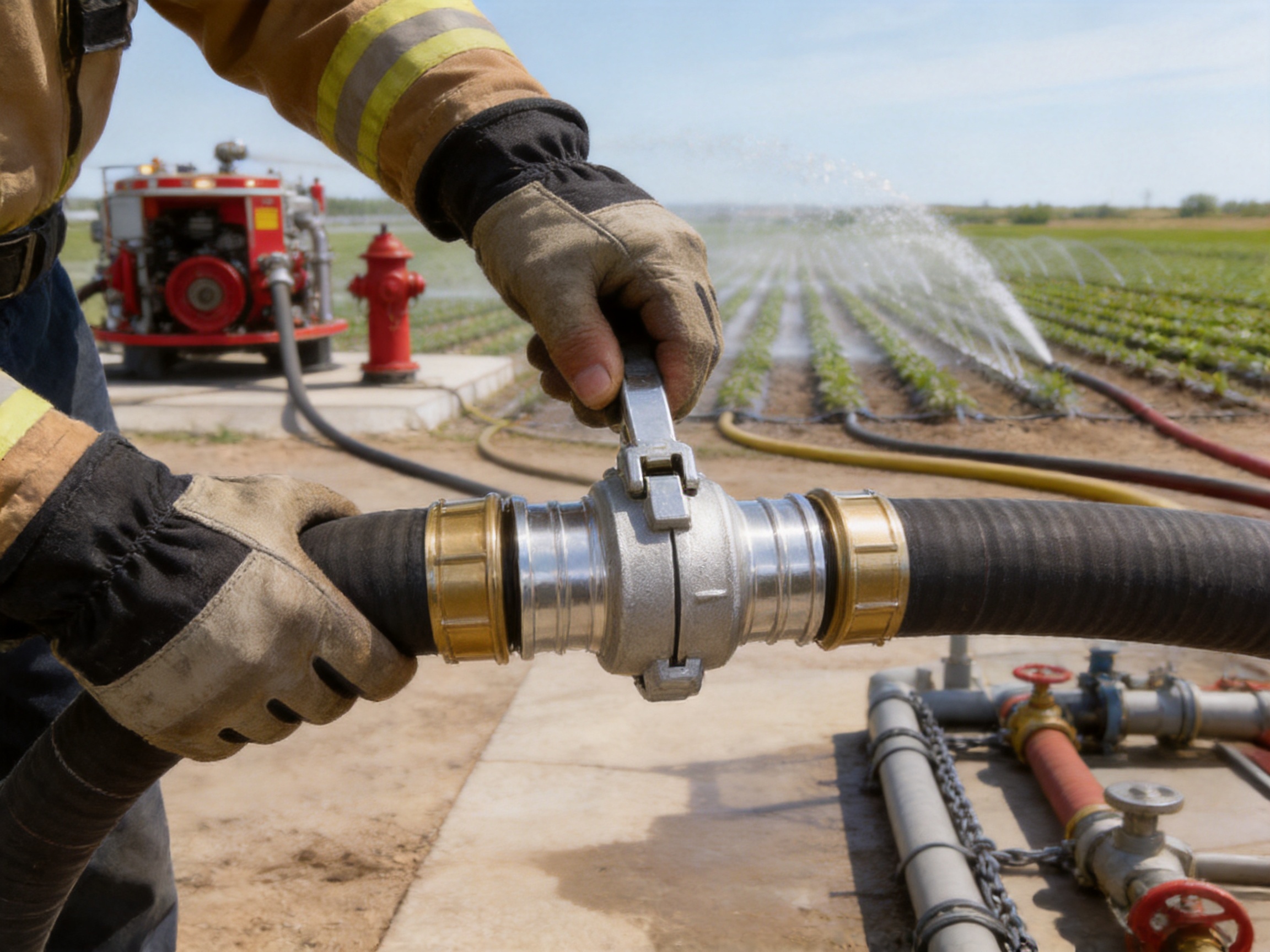
Firefighting is one of the most demanding applications for hose couplings. Equipment must be deployed quickly, operated under pressure, transported repeatedly, and stored for long periods before use. Couplings must connect securely while remaining manageable for trained personnel wearing protective equipment.
The 16 Bar working pressure rating makes these couplings suitable for many firefighting hose arrangements, provided that the complete system has compatible ratings and the operating conditions remain within specification. The tool-free design can help crews assemble hose lines efficiently during training, inspection, and emergency response.
Fire departments and industrial fire brigades should include couplings in regular equipment inspections. Threads, locking areas, sealing surfaces, and body sections should be examined for cracks, deformation, corrosion, contamination, and excessive wear. Any coupling that has been exposed to severe impact or abnormal pressure should be evaluated before being returned to service.
Agricultural and landscape irrigation systems often require flexible hose layouts. Hoses may be moved between fields, greenhouses, orchards, construction areas, or temporary water-storage points. Lightweight aluminum alloy couplings can help reduce the effort required to relocate equipment.
Brass couplings may be selected for fixed or semi-fixed installations where weight is less important and a substantial connection is desired. In either case, users should consider fertilizer residues, soil contact, standing water, and seasonal storage. Cleaning and drying the coupling after use can reduce the impact of corrosive residues.
Petroleum-related applications require careful attention to material compatibility, grounding, static control, temperature, and safety procedures. The coupling should only be used when its material and sealing arrangement are suitable for the specific petroleum product and operating environment.
Before use in petroleum handling, the purchaser should provide the supplier with information about the transferred product and service conditions. The coupling’s general corrosion resistance and 16 Bar pressure rating do not replace a detailed compatibility review. All applicable safety rules and site procedures must be followed.
Chemical processing can expose couplings to aggressive fluids, elevated temperatures, vapors, and repeated cleaning cycles. Aluminum alloy and brass should not be treated as universally compatible with every chemical. Concentration, temperature, exposure time, and contamination can significantly change corrosion behavior.
These couplings can be considered for suitable chemical-transfer applications after technical confirmation. The user should specify the chemical name, concentration, operating temperature, normal pressure, cleaning procedure, and expected service frequency. This information helps determine whether the selected material is appropriate.
Construction sites use hoses for dust suppression, concrete-area cleaning, equipment washing, drainage, temporary water supply, and fire protection. Couplings must tolerate movement, dirt, impact, and frequent reconfiguration. The simple operating design can be beneficial where temporary systems are assembled and removed repeatedly.
In general industrial service, the coupling may be used for water transfer, equipment maintenance, cooling, washdown, and utility lines. The correct selection depends on hose dimensions, fluid type, pressure, temperature, and connection arrangement.
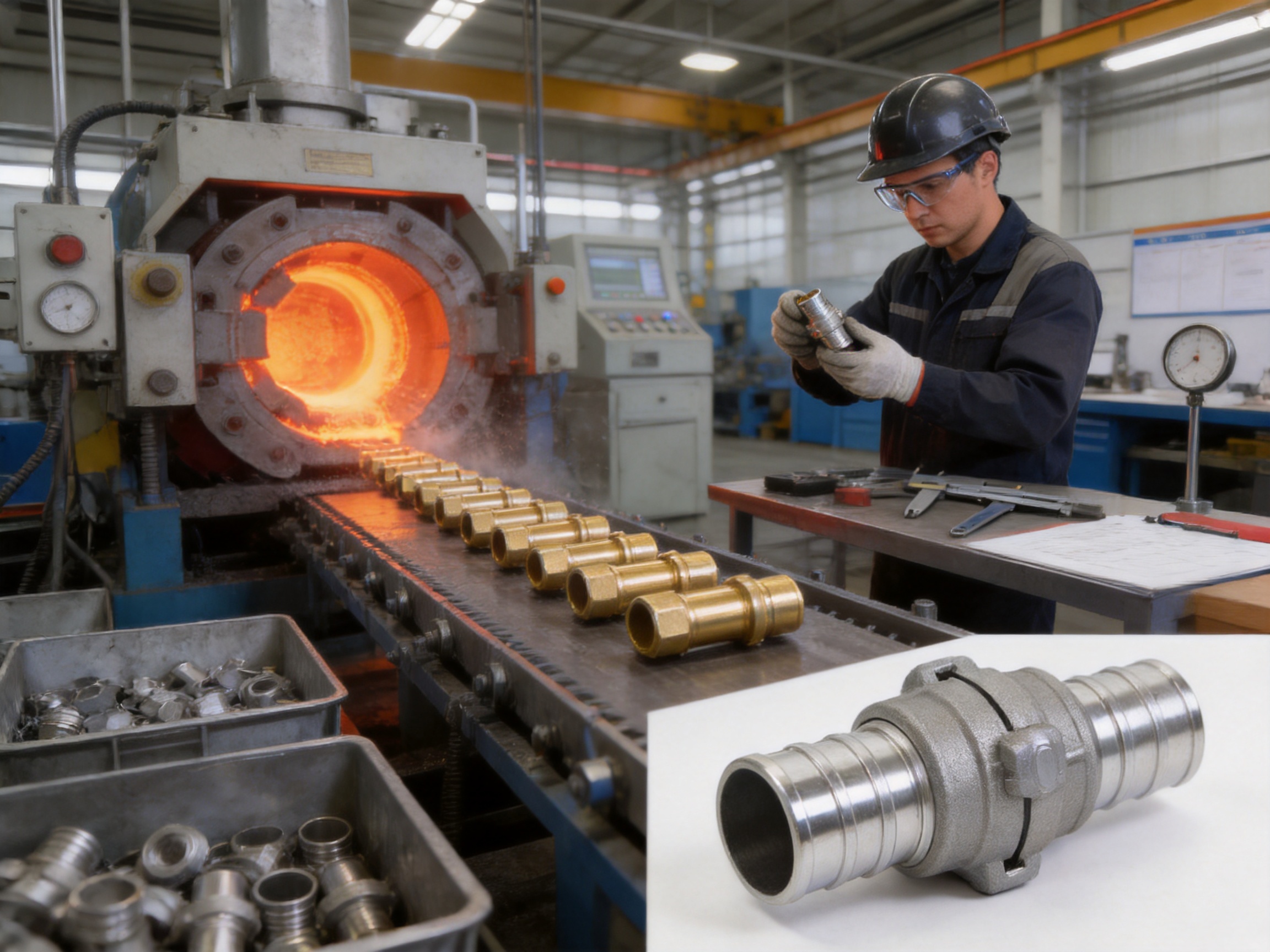
Before installation, confirm that the coupling size matches the hose and mating equipment. Check whether the selected coupling is 1-3/4 inch or 2-3/4 inch, and verify that the connection type corresponds to the system. Do not rely solely on appearance, especially when similar-sized fittings are stored together.
Inspect the coupling, hose end, gasket, locking parts, and mating component. Look for cracks, dents, burrs, contamination, damaged threads, distorted sealing surfaces, or signs of corrosion. The hose should not have exposed reinforcement, severe abrasion, cuts, or deformation near the connection.
The hose end should be clean, properly cut, and supported according to the hose manufacturer’s instructions. A damaged or uneven hose end can prevent the coupling from seating correctly. If the hose has been stored under pressure or tightly coiled, allow it to relax before making the connection.
Align the coupling with the mating connection and engage it by hand. Avoid cross-threading, forced misalignment, or excessive twisting. If the coupling does not engage smoothly, stop and determine the cause. Dirt, incorrect size, damaged components, or incompatible connection types may be responsible.
After the connection is complete, open the valve or start the pump gradually. Observe the coupling for movement or leakage. If leakage occurs, depressurize the system before attempting any adjustment. Never try to tighten or disconnect a pressurized coupling.
Hoses should be routed to avoid sharp bends, crushing, dragging across abrasive surfaces, and excessive side loads at the coupling. Where the hose is suspended or subject to movement, use suitable support arrangements. The coupling should not be used as a handle for dragging a loaded hose.
Regular maintenance helps preserve coupling performance and extend service life. After use, rinse off dirt, mud, salts, fertilizer, chemicals, and other residues. Use a cleaning method compatible with the coupling material and the hose lining. Avoid aggressive tools that can scratch or deform connection surfaces.
Inspect the coupling after cleaning. Pay attention to cracks, dents, deep scratches, corrosion products, worn locking areas, damaged threads, and sealing-surface defects. A coupling that appears acceptable externally may still require replacement if it has experienced a severe pressure event or impact.
Lubrication should only be used when appropriate for the connection design and transferred fluid. The lubricant must be compatible with aluminum alloy or brass, seals, hose lining, and the process media. In some applications, contamination from an unsuitable lubricant can be more harmful than operating without lubrication.
For storage, keep couplings in a clean, dry, and ventilated location. Protect them from standing water, chemical vapors, direct contamination, and impact from other equipment. Store different sizes separately and label them clearly. Avoid stacking heavy items on top of couplings, as pressure or impact can distort connection features.
Firefighting organizations should maintain inspection records, including the date of inspection, equipment location, observed condition, pressure-test information where applicable, and any replacement action. Industrial users can incorporate couplings into preventive-maintenance programs and hose-assembly audits.
When purchasing GOST hose couplings, buyers should request clear technical information. Important details include material, size, working pressure, standard, surface treatment, application, packaging, and inspection procedures. Documentation supports traceability and helps maintenance teams select correct replacements.
Visual inspection is the first quality-control step. The casting should be free from obvious cracks, severe porosity, incomplete filling, sharp flash, and damaging surface defects. Functional connection features should be clean and properly formed.
Dimensional inspection confirms that the coupling can be assembled with the intended hose and mating component. Critical dimensions should be measured using suitable equipment and compared with the approved drawing or specification. For larger production orders, sampling plans may be established according to customer requirements.
Pressure testing may be used to verify the integrity of the coupling or hose assembly. The test method, test pressure, duration, medium, and acceptance criteria should be defined in advance. Testing must be performed safely by trained personnel using suitable equipment and protective procedures.
Material verification can be important when the product will be exposed to demanding environments. Buyers may request material certificates or other supporting information depending on the project. The level of documentation should reflect the risk, regulatory requirements, and end-use application.
Distributors should evaluate the demand profile of their customers before selecting inventory. Firefighting customers may prioritize quick operation and compatibility with existing equipment. Agricultural buyers may focus on weight, corrosion behavior, and ease of relocation. Industrial customers may require material review, pressure documentation, and project-specific packaging.
Stock should be organized by size, material, standard, and connection type. Clear labels reduce the chance of issuing the wrong coupling to a field technician. Where both aluminum alloy and brass models are offered, the material should be visibly identified in inventory and documentation.
End users should provide complete information when requesting a quotation. Useful information includes hose internal diameter, connection standard, normal and maximum pressure, fluid type, temperature, environmental exposure, quantity, and delivery requirements. Detailed information allows the supplier to recommend a more suitable configuration.
For larger projects, buyers may request samples before placing a full order. Sample evaluation can include connection trials, dimensional checks, visual inspection, and compatibility verification with the existing hose and equipment. This step is particularly useful when replacing a discontinued coupling or integrating products from different suppliers.
Packaging and shipping should also be discussed. Couplings must be protected against impact and moisture during transportation. For export orders, customers may require specific carton markings, pallet arrangements, documentation, or inspection procedures. An experienced manufacturer can coordinate these requirements during order preparation.
Specialized experience provides practical advantages when a supplier produces more than one isolated fitting. A manufacturer involved in fire hose production understands hose construction, lining materials, reinforcement, abrasion, pressure, storage, and field handling. This knowledge can support better coupling recommendations and more complete product matching.
Research and development capability is also important. Different markets may require changes in materials, dimensions, packaging, markings, or operating features. A supplier with an R&D background can evaluate customer feedback and improve products in response to actual field requirements.
Production, sales, and service working together can shorten communication paths. Customers can discuss technical specifications, production schedules, inspection requirements, and after-sales questions with a supplier familiar with the product. This is useful for overseas buyers who need consistent communication throughout the purchasing process.
Taizhou Shenlong Fire Science and Technology Co., Ltd. combines its experience in fire hoses with the production and supply of related products. The company’s long-term market presence, cooperation with foreign-trade companies, and broad customer coverage provide a foundation for serving domestic and international requirements.
A durable coupling can help reduce waste by lowering the frequency of premature replacement. When a coupling remains serviceable through repeated installation, inspection, and maintenance cycles, the user may consume fewer replacement components over the equipment’s working life.
The aluminum alloy option can reduce handling weight and transportation burden compared with heavier alternatives. This may improve worker efficiency and reduce the physical effort associated with moving hose equipment. Brass provides another durable material option for users whose applications justify a heavier fitting.
Proper maintenance is central to environmental value. Cleaning, inspection, repair where appropriate, and responsible replacement help maximize useful service life. When a coupling has reached the end of its service life, users should follow local procedures for recycling or disposal of metal components and any attached seals or contaminated materials.
They are used to connect hoses with compatible equipment in firefighting, irrigation, petroleum handling, chemical processing, construction, and general industrial fluid-transfer systems. The final application must be evaluated for pressure, fluid compatibility, temperature, and connection dimensions.
The stated working pressure is 16 Bar. The complete hose assembly must be operated within the lowest pressure rating of all connected components. Pressure surges and unusual temperatures should also be considered during system design.
The couplings are available in aluminum alloy or brass. Aluminum alloy is useful when lower weight and portability are important. Brass may be preferred where a heavier fitting or a particular material compatibility requirement exists.
The listed sizes are 1-3/4 inch and 2-3/4 inch. Buyers should confirm the exact connection dimensions and mating standard before ordering because nominal size alone may not identify every dimensional feature.
The design allows operation without additional tools. Nevertheless, the connection must be aligned and fully engaged by hand. Improvised tools should not be used to force a connection or compensate for incorrect sizing.
GOST refers to a system of technical standards used for products and equipment in several markets. The coupling is identified as a GOST product, but users should still confirm the exact standard, dimensions, and mating requirements for their particular system.
No. Aluminum alloy and brass have different compatibility limits, and no general-purpose metallic coupling is suitable for every chemical. The fluid name, concentration, temperature, pressure, exposure time, and cleaning process should be reviewed before chemical service.
Vibratory grinding helps remove burrs, sharp edges, flash, and minor surface irregularities from cast components. It can improve handling comfort, surface consistency, and general finish quality. It is one part of the manufacturing process and does not replace dimensional or pressure inspection.
No. The hose diameter, construction, pressure rating, lining, connection method, and service fluid must be compatible with the coupling. The hose end must also be prepared correctly to achieve a secure and leak-resistant assembly.
Store them in a clean, dry, ventilated location away from corrosive vapors, standing water, impact, and heavy loads. Keep sizes and materials separated and clearly labeled. Clean and dry couplings before long-term storage.
Stop the flow and depressurize the system before inspection. Check for incorrect size, incomplete engagement, damaged sealing surfaces, contamination, hose damage, or component deformation. Do not attempt to adjust or disconnect a pressurized connection.
The product is supplied by Taizhou Shenlong Fire Science and Technology Co., Ltd., a Chinese manufacturer founded in 1995 with experience in research and development, production, sales, and service for fire hoses and related products.
Fair Corrosion GOST Hose Couplings provide a practical connection solution for firefighting, irrigation, petroleum, chemical, construction, and industrial hose systems. Their cast aluminum alloy or brass construction, 16 Bar working pressure, GOST designation, vibratory grinding finish, and tool-free operation combine to address the central requirements of reliable hose connection work.
The product’s principal advantage is its balance. It offers useful pressure capability without an unnecessarily complicated design, material options for different handling and service requirements, and an economical approach suitable for both replacement purchasing and larger project supply. The 1-3/4-inch and 2-3/4-inch sizes support common hose connection needs while allowing users to select according to system requirements.
Performance depends on correct application. Users should verify dimensions, pressure ratings, fluid compatibility, temperature, installation method, and maintenance procedures before placing couplings into service. When these factors are properly managed, the couplings can provide dependable performance and convenient operation across a wide range of fluid-transfer environments.
Backed by Taizhou Shenlong Fire Science and Technology Co., Ltd.’s experience in fire hose manufacturing, research and development, production, sales, and service, the couplings are positioned as part of a broader professional product offering. For buyers seeking a reliable and cost-conscious GOST connection component, they represent a practical option for demanding daily operations.
1. Product specification information for Fair Corrosion GOST Hose Couplings, including material, pressure, sizes, surface treatment, standard, and applications.
2. Technical information concerning cast aluminum alloy and brass components used in hose connection hardware.
3. General principles of hose assembly inspection, pressure safety, connection compatibility, and preventive maintenance.
4. General guidance on corrosion control and material selection for water, petroleum, chemical, agricultural, and industrial fluid-transfer systems.
5. Company information supplied by Taizhou Shenlong Fire Science and Technology Co., Ltd., including company history, product scope, manufacturing activities, and market experience.
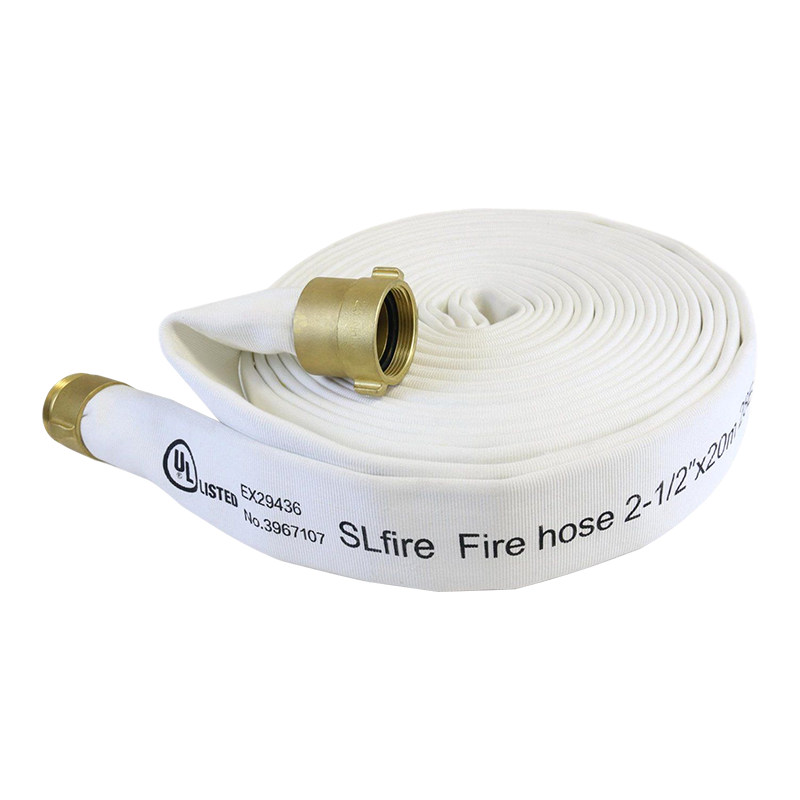
Single jacket, EPDM rubber liner Features • 100% high tenacity polyester jacket, high-grade EPDM rub...
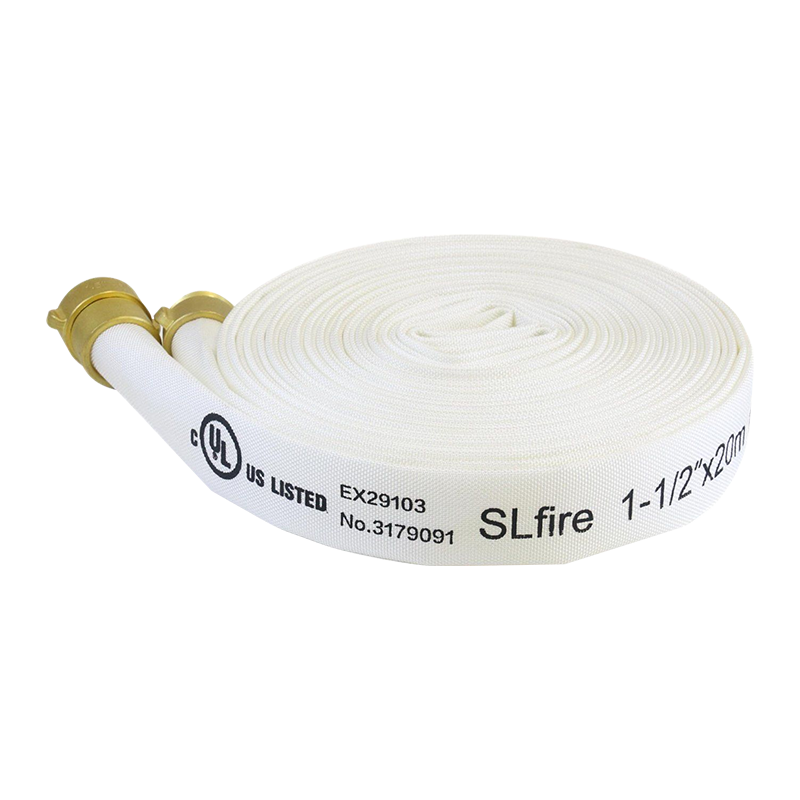
Single jacket, TPU liner •High-tenacity polyester yarn, circular woven in twill weave/plain weave,T ...
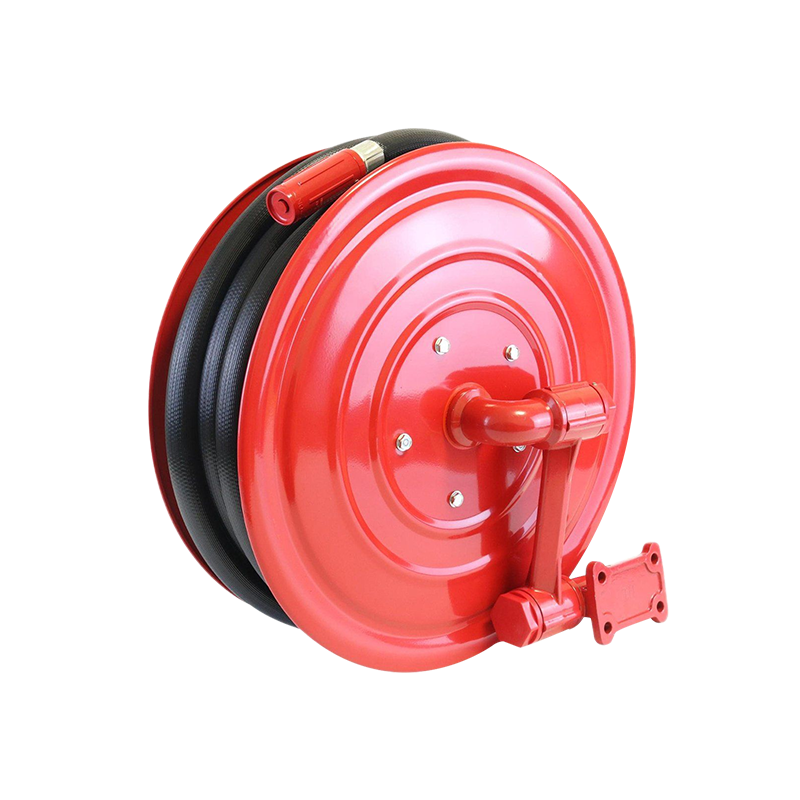
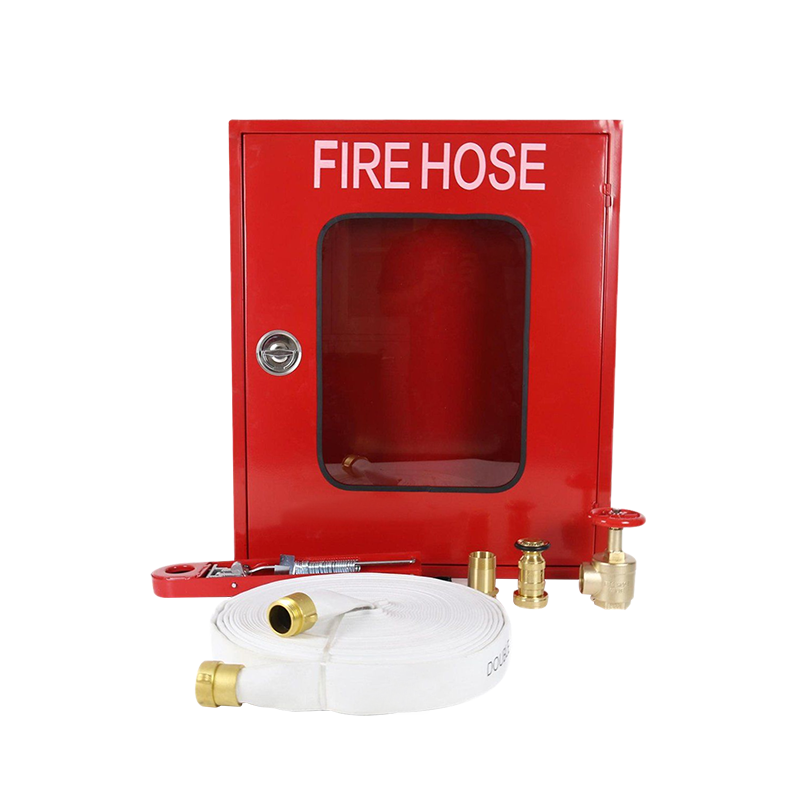
Fire cabinets are designed to accommodate fire hose,valve and other firefighting equipment. Type 201...
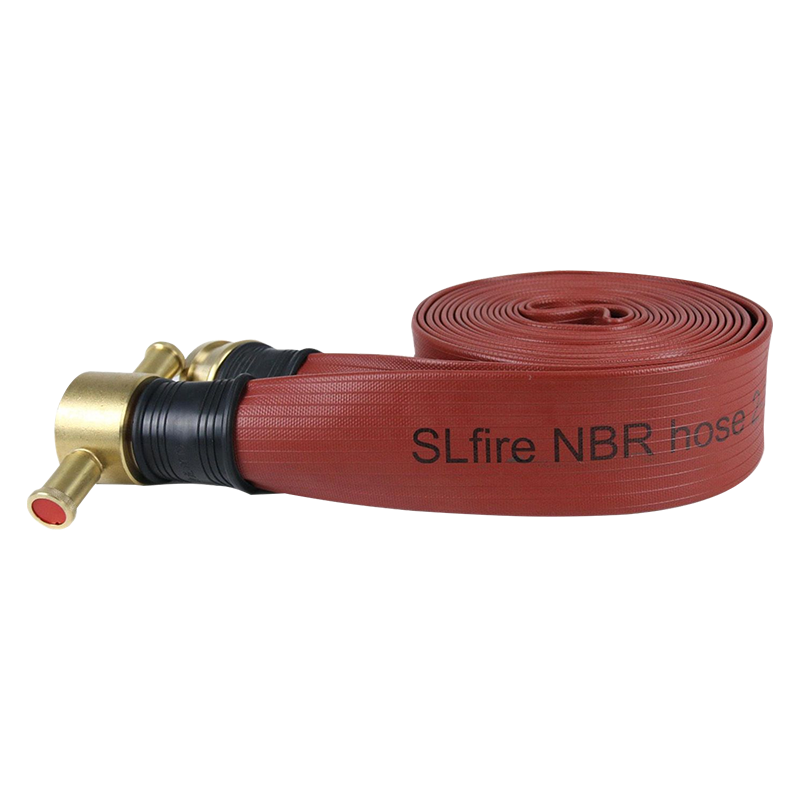
Nitrile covered hose •Nitrile/TPR blend as cover and lining, with 100% high-tenacity polyester yarn ...
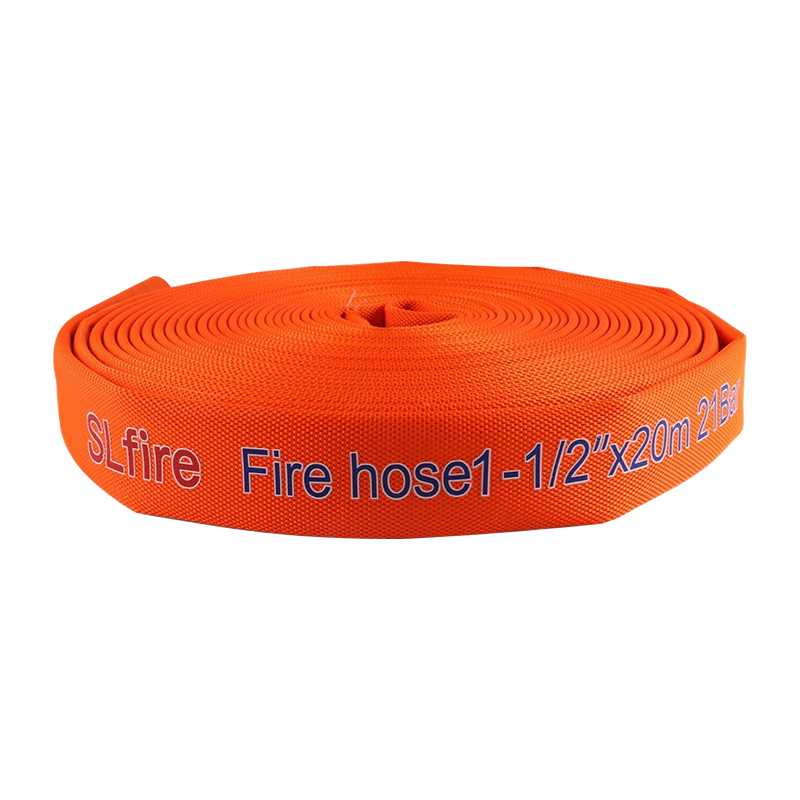
Single jacket, TPU liner •High-tenacity polyester yarn, circular woven in twill weave, TPU lining, f...
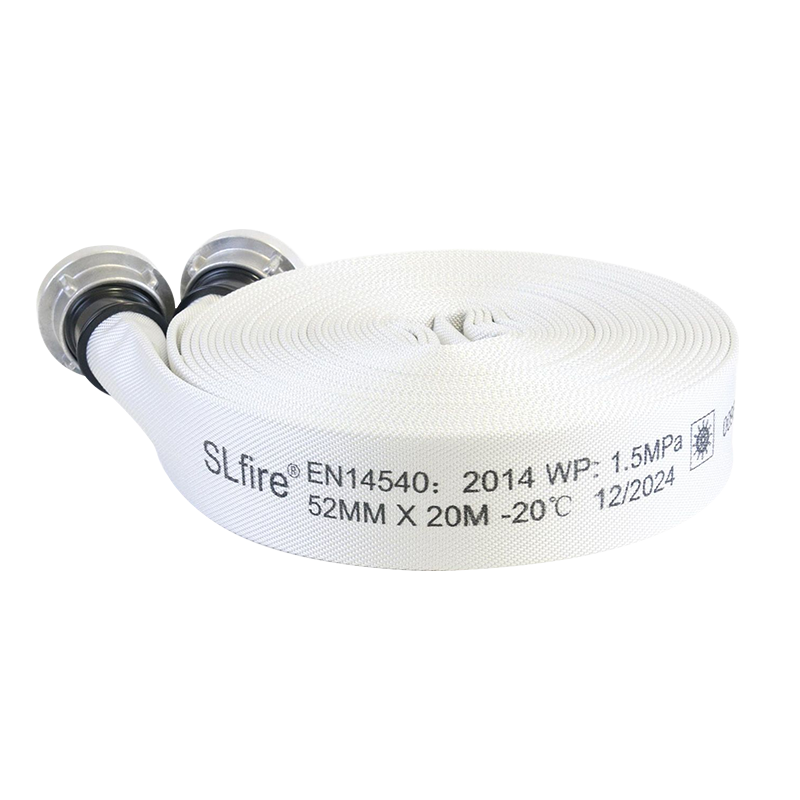
Marine hose Single jacket, PVC liner •100% high tenacity polyester yarn, circular woven in twill wea...
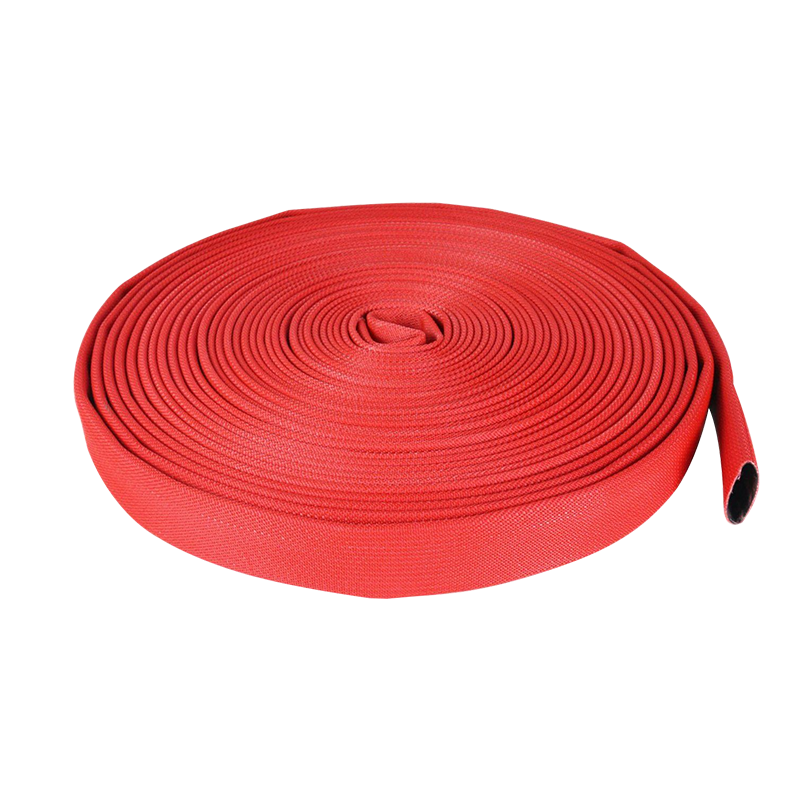
Marine hose Single jacket, PVC liner, PU coated •100% high tenacity polyester yarn,c ircular woven i...
 Call Us
+86 159-5116-9511
Need Support
Head Office
No.58, Kechuang Road, Sixiang Street Medicine Gaoxin District Taizhou City, Jiangsu Province

What Is a Fire Hose? A fire hose is a high-pressure flexible hose designed to carry water or fire retardant chemicals from a water source, such as a hydrant, pump, or tank, to a fire for suppression p...
Copyright © Taizhou Shenlong Fire Science and Technology Co., Ltd. All Rights Reserved.
 Fire Hose Manufacturers, Fire Hydrant Hose Factory