

 English
 русский
 Español
 Deutsch
 عربى
عربى Français
 Português
Don't hesitate to send a message

Single jacket, EPDM rubber liner Features • 100% high tenacity polyester jacket, high-grade EPDM rub...
Content
Modern firefighting demands hose products that combine pressure capability, abrasion resistance, chemical tolerance, flexibility, and dependable handling under rapidly changing conditions. A nitrile covered attack hose is designed for these exact requirements. Built with a nitrile and TPR blend as both cover and lining, reinforced with 100 percent high-tenacity polyester yarn, and engineered with exterior ribs for additional protection, this hose is intended for demanding attack-line operations where durability and practical reliability matter.
Nitrile Covered Hose Attack Hose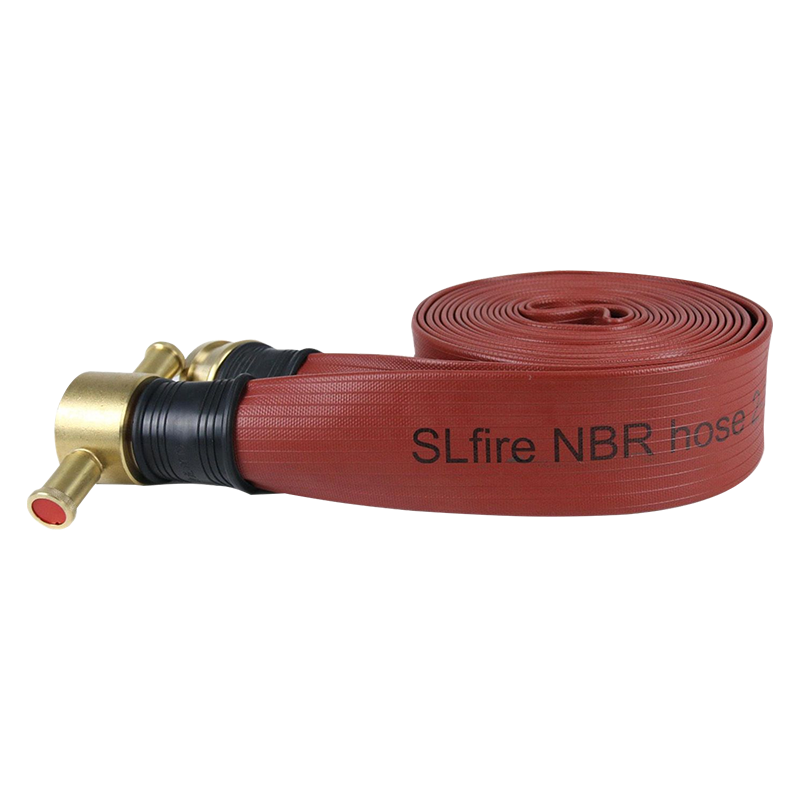
The nitrile covered attack hose is a rugged fire hose solution for direct firefighting, industrial emergency response, municipal fire departments, construction site fire protection, petrochemical facilities, and other environments where hoses may be dragged over rough ground, concrete, gravel, metal edges, or contaminated surfaces. Its structure is based on an integrated rubber-like cover and lining made from a nitrile and TPR blend, supported by a strong polyester yarn reinforcement system.
Unlike traditional woven-jacket hoses that rely heavily on a textile exterior, this hose uses a tough covered construction. The cover protects the reinforcement from abrasion, moisture, mildew, oil, fuels, and many common petrochemical exposures. The exterior ribs further reduce direct surface contact across the main body of the hose, improving service life when the hose is pulled, repositioned, or deployed repeatedly across harsh ground.
Available in common firefighting lengths such as 50 feet, 75 feet, and 100 feet, and with inner diameters including 1-1/2 inch, 2 inch, 2-1/2 inch, and 3 inch, the hose can be selected for different flow requirements and deployment methods. Working pressure options of 250 psi and 300 psi support a wide range of attack-line uses, while corresponding test and burst pressure values provide important safety margins for professional fireground use.
The hose is manufactured with a nitrile and TPR blend as the cover and lining. Nitrile rubber is recognized for resistance to oils, fuels, and many chemical exposures, while TPR contributes flexibility and processability. Together, the blend creates a durable and practical hose body that can tolerate difficult working environments while remaining manageable for deployment.
The reinforcement is made from 100 percent high-tenacity polyester yarn. This yarn contributes tensile strength, pressure resistance, dimensional stability, and kink resistance. In fire hose construction, reinforcement quality is critical because it carries the internal pressure load when water flows through the hose. High-tenacity polyester helps maintain strength while keeping the hose flexible enough for field handling.
The ribbed exterior cover is one of the most important design advantages. When a hose is dragged over asphalt, concrete, metal grating, rubble, or industrial flooring, the raised ribs act as sacrificial contact points. They help reduce full-surface abrasion and protect the main hose body. This feature is especially beneficial in fire attack operations where speed is critical and crews cannot always prevent the hose from scraping against abrasive surfaces.
The hose is designed to resist punctures, ozone, corrosion, abrasion, mildew, oil, and petrochemicals. This resistance profile makes it more suitable for harsh outdoor storage, industrial emergency use, and repeated wet-dry cycles than many conventional hose types. In addition, the hose is described as maintenance free, meaning that its covered construction helps reduce the cleaning, drying, and mildew-prevention demands often associated with textile-jacket hose products.
On active firegrounds, attack hoses are frequently dragged across driveways, stairs, broken glass, gravel, steel decks, and building debris. Conventional jacketed hoses can suffer fiber wear when exposed to these surfaces. Once the jacket is weakened, the reinforcement may become vulnerable, reducing hose life and increasing the need for inspection or replacement.
The nitrile covered attack hose provides a more protective exterior. Its ribbed cover helps shield the hose from surface damage, while the nitrile and TPR compound contributes a tough outer skin. This combination is especially valuable for departments and industrial teams that use hose lines frequently in high-wear environments.
Firefighting and industrial emergency response often occur in environments where hoses may contact gasoline, diesel, lubricants, hydraulic fluid, solvents, foam concentrates, and petrochemical residues. Traditional textile-jacket hoses may absorb contaminants or require more intensive cleaning after exposure. Nitrile covered construction helps resist such contamination, making the hose easier to clean and more dependable for repeated use.
This feature is particularly important for refineries, fuel storage areas, transport terminals, workshops, power plants, and manufacturing facilities. In these locations, hose durability is not only a matter of abrasion resistance but also chemical compatibility and ease of decontamination.
Textile surfaces can hold moisture if not dried correctly after use. Over time, this can contribute to mildew, odor, discoloration, or material degradation. A covered nitrile hose offers a more sealed surface that reduces moisture absorption. This makes the hose suitable for departments that need fast turnaround after use and for facilities where hoses may be stored in cabinets, vehicles, hose racks, or damp environments.
The phrase maintenance free should be understood in a practical operational sense: the hose is designed to minimize routine care compared with more absorbent hose constructions. Fire departments and industrial users should still conduct regular inspection, pressure testing according to applicable procedures, and proper storage. However, the covered surface simplifies cleaning and reduces the drying burden, saving time after training or emergency response.
The hose is designed for a temperature range from minus 30 degrees Celsius to 70 degrees Celsius. This supports use in cold climates, temperate regions, and hot operating environments. Cold flexibility is important because attack hoses must deploy quickly, even in winter or in chilled storage conditions. Heat tolerance is also important during outdoor summer operations, industrial fire response, and deployment near heated surfaces.
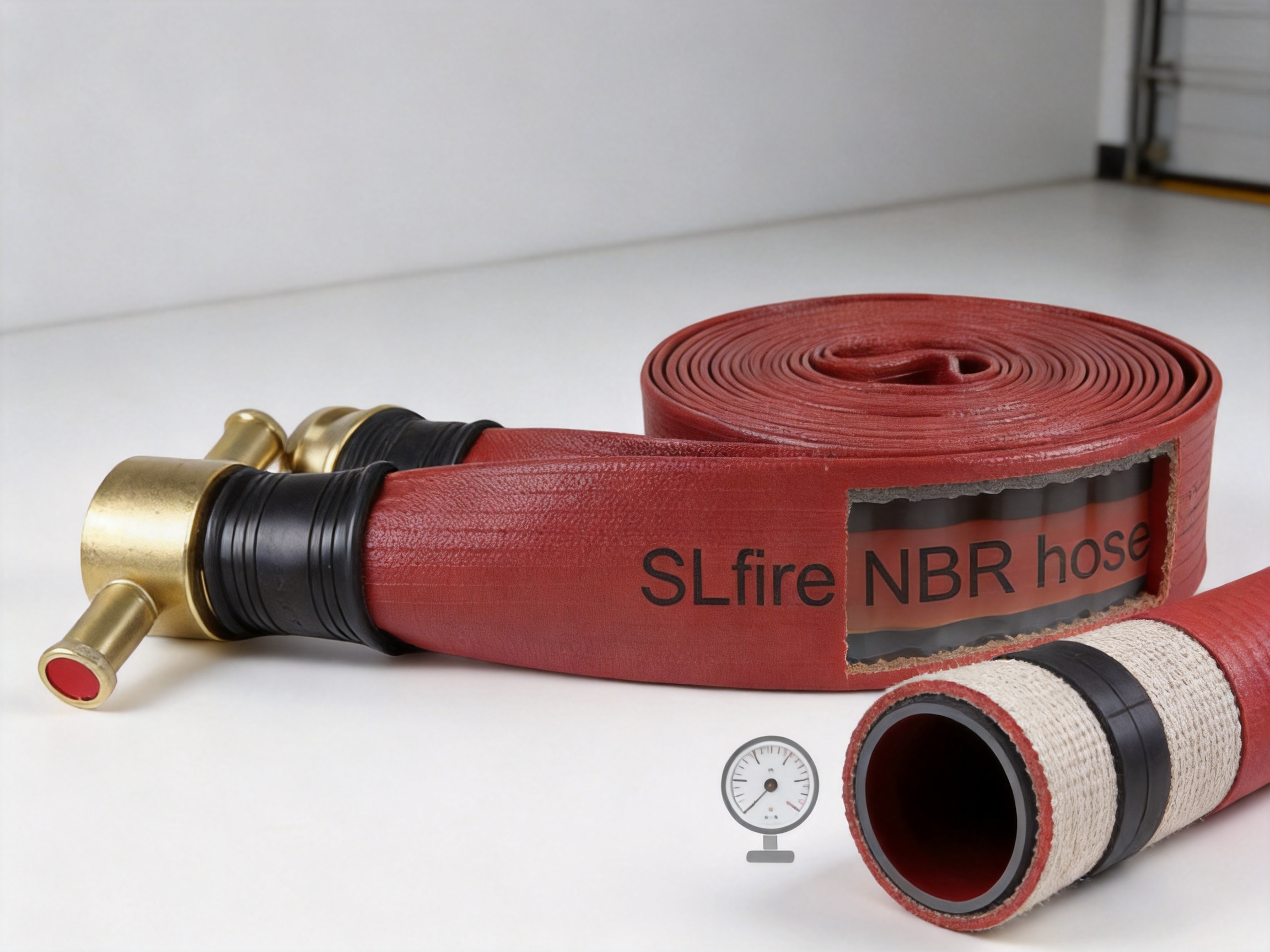
The following specification table summarizes the available inner diameters and pressure ratings for the nitrile covered attack hose.
Inner Diameter |
Inner Diameter |
Working Pressure |
Working Pressure |
Test Pressure |
Test Pressure |
Burst Pressure |
Burst Pressure |
inch |
mm |
psi |
bar |
psi |
bar |
psi |
bar |
1-1/2 |
38 |
250, 300 |
17, 21 |
375, 450 |
26, 32 |
750, 900 |
51, 63 |
2 |
52 |
250, 300 |
17, 21 |
375, 450 |
26, 32 |
750, 900 |
51, 63 |
2-1/2 |
64 |
250, 300 |
17, 21 |
375, 450 |
26, 32 |
750, 900 |
51, 63 |
3 |
75 |
250, 300 |
17, 21 |
375, 450 |
26, 32 |
750, 900 |
51, 63 |
Pressure ratings are central to fire hose selection. Working pressure indicates the pressure level intended for normal service. Test pressure is used for verification and quality control, while burst pressure indicates the failure threshold under controlled conditions. A strong difference between working pressure and burst pressure provides a safety margin, but users should never operate a hose above its rated working pressure.
The nitrile covered attack hose offers working pressure options of 250 psi and 300 psi, with test pressures of 375 psi and 450 psi, and burst pressures of 750 psi and 900 psi. These ratings make the product suitable for many municipal and industrial attack-line applications. The 1-1/2 inch and 2 inch sizes are commonly useful for maneuverable attack lines, while 2-1/2 inch and 3 inch options can support larger flow requirements, supply operations, or industrial firefighting layouts.
In practical terms, a higher working pressure hose can provide confidence when pump operators need to overcome friction loss, elevation, nozzle pressure requirements, and long lay distances. The hose’s strong reinforcement system helps maintain structural integrity when pressure fluctuates during nozzle opening, nozzle closing, pump adjustments, or water hammer events.
Municipal fire departments need attack hoses that can be deployed quickly, handled by firefighters wearing gloves and breathing apparatus, and operated under difficult visibility and heat conditions. The nitrile covered attack hose is well suited for aggressive interior and exterior attack operations where hose durability, pressure capability, and abrasion resistance are priorities.
When used in structural firefighting, the hose may pass over curbs, stair edges, door thresholds, asphalt, concrete floors, and debris. The ribbed exterior helps reduce damage from these surfaces. The covered construction also helps crews clean the hose after exposure to soot, water, fuel residues, or contaminated runoff.
Industrial facilities face hazards that differ from typical residential or commercial firegrounds. Hoses may be exposed to chemical residues, oils, moving equipment, metal platforms, abrasive flooring, and outdoor weather. A nitrile covered hose provides advantages in these conditions because its material blend resists oils, petrochemicals, and surface wear better than many ordinary textile-covered hoses.
For factories, warehouses, petrochemical sites, energy facilities, and transportation terminals, hose reliability can directly affect emergency response capability. A hose that resists contamination and abrasion can remain serviceable longer, reducing replacement frequency and improving readiness.
Construction sites are challenging because surfaces are rough, environments change daily, and hoses may be pulled over rebar, concrete, soil, wood, equipment tracks, and temporary roadways. A hose with a protective exterior is valuable in this setting. Its abrasion-resistant cover and puncture resistance help protect against premature damage during emergency use or site drills.
Although designed as an attack hose, the product may also support water transfer and emergency water delivery when appropriate for the pressure and coupling configuration. Its covered construction and flexible temperature range make it useful for temporary water movement, disaster response, and standby protection where a durable lay-flat hose is preferred.
Nitrile rubber, also known as NBR, is widely valued for oil and fuel resistance. In hose applications, this property is important because many emergency environments include hydrocarbon exposure. When a hose contacts petroleum-based residues, the cover should resist swelling, softening, cracking, or surface degradation. Nitrile helps provide that protection.
TPR, or thermoplastic rubber, contributes elasticity and manufacturing efficiency. When blended properly with nitrile, it can help create a hose body that is durable while maintaining flexibility. A flexible hose is easier to pack, carry, advance, coil, and retrieve. Firefighters and industrial responders often judge hose quality not only by pressure ratings but also by how the hose behaves during real deployment. A hose that is too stiff slows movement; a hose that lacks toughness wears quickly. The nitrile and TPR blend is designed to balance these needs.
The internal lining is also important. A smooth and durable lining supports efficient water flow and helps reduce internal friction. Lower internal resistance can support better nozzle performance, especially over longer lays. The integrated lining and cover system also reduces separation risks compared with some multi-component designs when manufacturing controls are properly applied.
The ribs on the exterior cover provide an important competitive advantage. Abrasion damage usually begins at the point of contact between the hose and the ground. If a smooth hose surface is dragged across rough concrete, the entire contact surface may wear. With a ribbed design, the raised ribs absorb much of the friction first. This creates a buffer zone that protects the main body of the hose.
Exterior ribs also help the hose move across the ground with less full-surface contact. In some situations, this can make repositioning easier. When firefighters advance a charged hose line, every reduction in friction matters. While no rib design can eliminate drag completely, a well-designed ribbed cover contributes to durability and practical handling.
In industrial settings, ribs can also help reduce damage from metal decks, grating, loading docks, and mechanical rooms. These environments can be especially harsh on hoses because sharp edges and abrasive surfaces are common. A ribbed nitrile cover gives the hose a stronger defense against repeated movement.
Taizhou Shenlong Fire Science and Technology Co., Ltd. was founded in 1995 and has developed into an enterprise combining research and development, production, sales, and service. The company focuses on lined fire hoses made from various materials and can also undertake customized foreign trade products such as rubber, PVC, polyurethane, and double-sided hose products according to customer requirements. This manufacturing background supports flexible product development and stable supply capability.
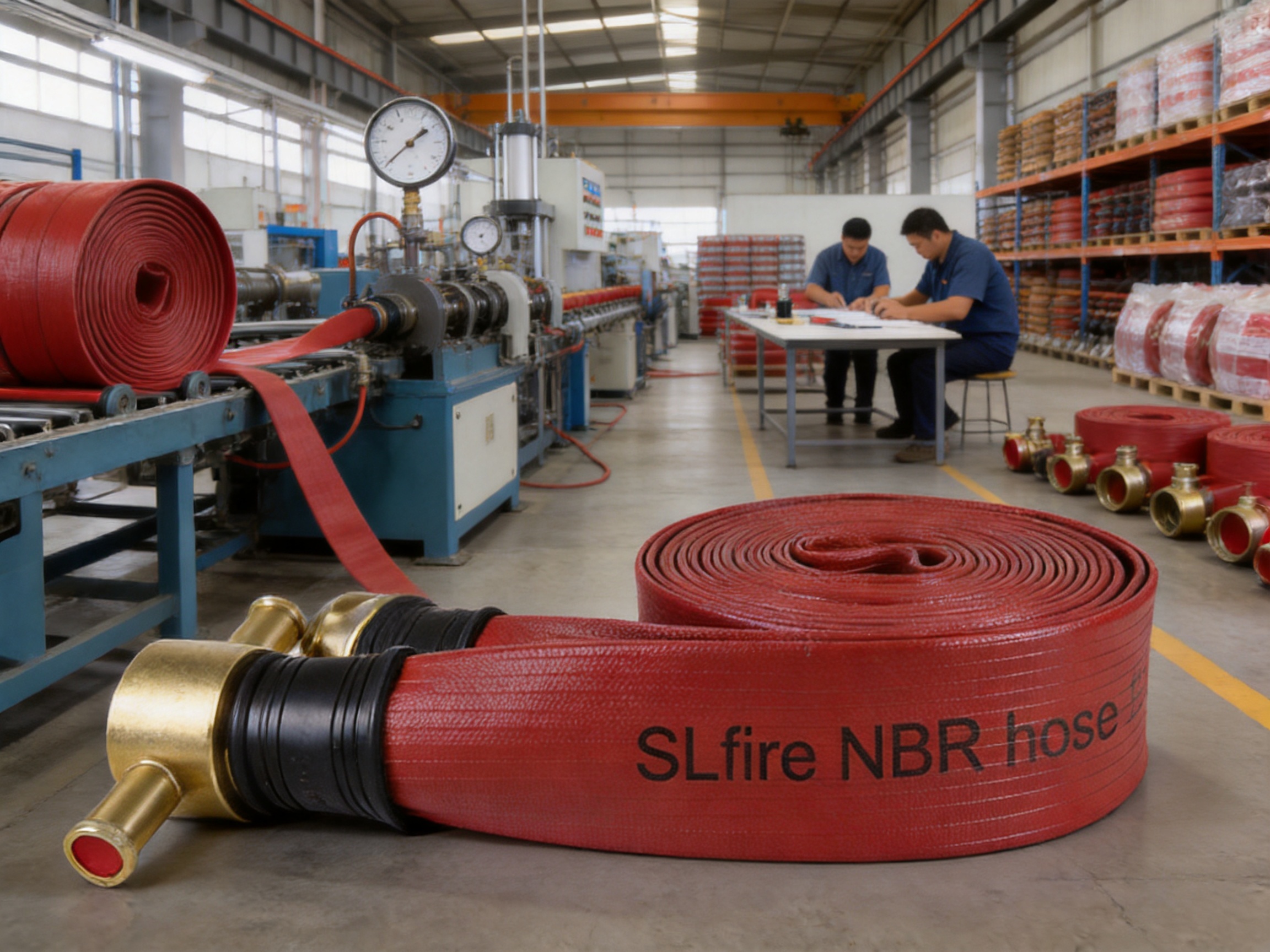
Long-term experience is a major advantage in fire hose production. Fire hoses appear simple from the outside, but their performance depends on precise control of materials, reinforcement, extrusion or coating uniformity, adhesion, curing, pressure resistance, and dimensional accuracy. A manufacturer with decades of production history is better positioned to understand the relationship between raw materials, process conditions, and final hose performance.
The company’s product applications cover fire protection, construction, water conservancy, and related industries. This broad application base provides practical feedback from different markets and operating environments. When a manufacturer supplies hoses for various industries, it gains insight into abrasion behavior, aging resistance, pressure performance, storage conditions, and user handling preferences. That experience can be reflected in improved product design and manufacturing control.
Quality begins with raw materials. The nitrile and TPR blend must be selected for resistance to oil, abrasion, ozone, mildew, and temperature variation. The polyester yarn must meet strength and consistency requirements because it functions as the primary pressure-bearing reinforcement. If yarn quality varies, pressure performance can become inconsistent. A professional hose manufacturer therefore controls material selection carefully.
For covered hose production, the formulation of the cover and lining is especially important. The compound must bond properly to the reinforcement, retain flexibility, and withstand repeated bending. It must also provide the desired surface hardness and abrasion resistance. Material formulation is one of the areas where experienced manufacturers can differentiate their products from lower-grade competitors.
The 100 percent high-tenacity polyester yarn reinforcement is formed to provide balanced strength around the circumference of the hose. Proper reinforcement geometry helps the hose resist expansion under pressure and maintain stability during operation. The yarn layout must be consistent because uneven reinforcement can lead to weak spots, twisting, or irregular diameter changes.
In professional manufacturing, reinforcement tension is controlled during production. If tension is too loose, the hose may expand excessively under pressure. If tension is too high or uneven, the hose may lose flexibility or develop internal stress. Stable reinforcement formation is essential to producing a hose that performs consistently from one length to another.
The nitrile and TPR blend is applied as both cover and lining, creating a durable integrated hose structure. Uniform thickness is critical. A thin area may become a wear point, while an overly thick area can reduce flexibility or increase weight. Manufacturers must control the application process so that the hose meets dimensional and performance expectations.
Good adhesion between the rubber-like compound and reinforcement is another key quality factor. If the layers do not bond properly, delamination may occur during pressure cycling, bending, or dragging. A reliable production process focuses on adhesion, compound flow, surface preparation, and curing conditions to help maintain structural integrity.
The ribbed exterior requires controlled forming to create consistent raised ribs along the hose length. The ribs should be uniform enough to provide predictable abrasion protection and handling performance. Irregular ribs could create uneven wear or affect packing and deployment. Producing a ribbed cover is more complex than producing a simple smooth cover, so process control is important.
Pressure testing confirms that the finished hose can withstand its rated test pressure. Each production batch should be evaluated for dimensional accuracy, appearance, adhesion, pressure resistance, and surface quality. Burst pressure testing may be used to verify design margins. Visual inspection also checks for surface defects, uneven ribs, contamination, or irregularities that could affect performance.
For fire hose users, quality inspection is not a minor detail. A hose is safety-critical equipment. It must function when needed, often under life-threatening conditions. Manufacturing quality is therefore a competitive advantage, not simply a production requirement.
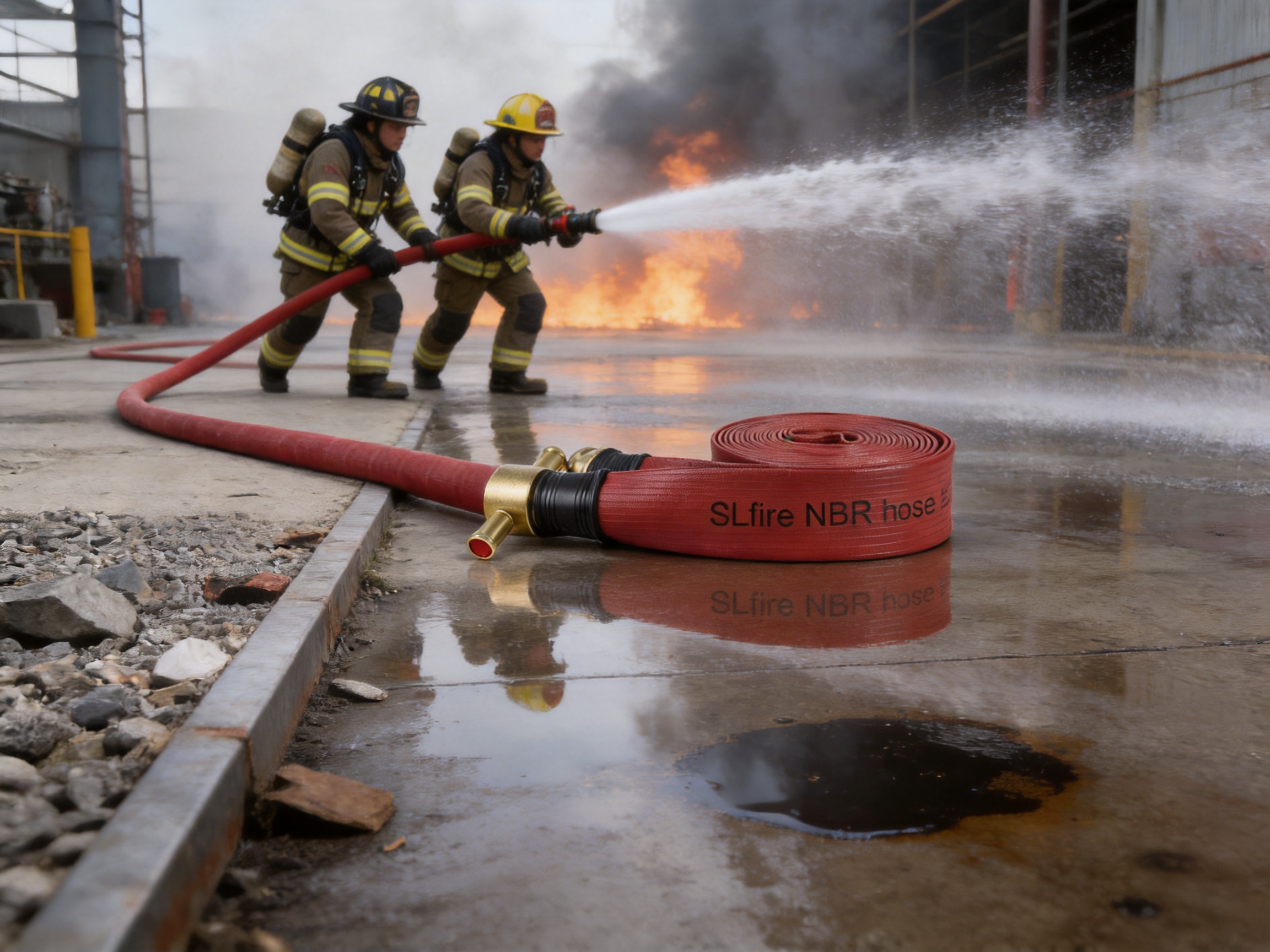
Some heavy-duty hoses achieve abrasion resistance by becoming thick and stiff. While this may improve surface protection, it can make deployment slower and more tiring. The nitrile covered attack hose is designed to combine durability with practical flexibility. The high-tenacity polyester reinforcement supports pressure strength without unnecessary bulk, while the nitrile and TPR blend provides protective coverage.
Compared with many standard jacketed attack hoses, the covered nitrile design has a stronger advantage in oil and petrochemical exposure. This makes the product particularly attractive to industrial buyers, airport emergency teams, fuel handling facilities, and departments that regularly respond to vehicle fires, machinery fires, or transportation incidents.
After fireground use, hoses may be covered in mud, soot, foam residue, oil, or chemical runoff. A covered hose surface can generally be cleaned more easily than an absorbent textile jacket. This saves time and helps return equipment to service faster. For busy departments and industrial emergency teams, quick turnaround is a real operational advantage.
The hose is available in four common diameters: 1-1/2 inch, 2 inch, 2-1/2 inch, and 3 inch. This allows users to choose the appropriate hose for attack lines, larger handlines, supply support, or industrial water delivery. Combined with length options of 50 feet, 75 feet, and 100 feet, the product can match different apparatus layouts and operational tactics.
Working pressure ratings of 250 psi and 300 psi give buyers flexibility. Some users prioritize lighter handling and standard pressure needs, while others want higher pressure capacity for demanding operations. The available pressure range helps the hose serve multiple markets without requiring a completely different product family.
Proper hose handling improves safety and service life. Even though the hose has strong abrasion resistance, users should avoid unnecessary dragging over sharp edges when possible. Hose bridges, edge protectors, or repositioning can further extend hose life in extreme conditions. After use, the hose should be inspected for cuts, punctures, coupling damage, unusual bulges, or signs of heat exposure.
When deploying the hose, firefighters should avoid severe kinks, especially under pressure. The polyester reinforcement and covered construction help resist pressure stress, but all hoses perform better when water flow is smooth and unrestricted. Pump operators should increase pressure gradually and avoid sudden surges when possible.
Storage should be clean, dry, and away from unnecessary ultraviolet exposure, extreme heat, and sharp objects. The hose is resistant to mildew and ozone, but good storage practices still help preserve long-term performance. Couplings should be checked regularly for thread or locking-lug damage, gasket condition, and secure attachment.
As a manufacturer with experience in fire hose and related hose products, Taizhou Shenlong Fire Science and Technology Co., Ltd. can support wholesale supply and product customization according to customer requirements. The company’s product categories include fire hose, industrial hose, agricultural hose, hose couplings, hose nozzles, fire accessories, fire cabinets, and trenchless rehabilitation hose. This range allows buyers to source related products from one supplier, which can simplify procurement and support consistency across fire protection systems.
For international buyers, the ability to produce export products is important. The company cooperates with domestic foreign trade companies and has supplied products to many countries. Export experience helps a manufacturer understand documentation needs, packaging expectations, shipping requirements, and market-specific product preferences.
Customization may involve diameter, length, pressure rating, color, coupling type, packaging method, or project-specific requirements. When buyers need hose assemblies for municipal departments, industrial sites, fire cabinets, or equipment packages, a manufacturer with flexible production capability can provide practical support.
Wholesale buyers evaluate hose products based on more than initial purchase price. They consider service life, complaint rate, replacement frequency, delivery reliability, product consistency, and support. A hose that costs slightly less but wears quickly may become more expensive over time. A durable nitrile covered attack hose can provide better value by reducing premature failure and lowering maintenance demands.
For distributors, a product with clear technical advantages is easier to present to customers. The ribbed exterior, nitrile and TPR blend, high-tenacity polyester reinforcement, oil resistance, abrasion resistance, and multiple pressure options are straightforward selling points. These features address real problems that fire departments and industrial customers experience in daily use.
For project contractors, dependable supply and consistent specifications are equally important. Fire protection systems and emergency equipment packages often require repeat orders, matched hose lengths, compatible couplings, and reliable documentation. A manufacturer with broad production experience can support these needs more effectively than a limited workshop supplier.
Standard textile-jacket fire hoses can be lightweight and flexible, but the textile surface may absorb water, dirt, oil, and contaminants. It may also require more careful drying after use. In abrasive environments, outer fibers can wear down over time. The nitrile covered attack hose improves protection by using a durable covered surface that resists abrasion and contamination.
Smooth-cover rubber hoses can offer good chemical resistance, but a smooth exterior may experience larger surface contact when dragged. The ribbed exterior of the nitrile covered attack hose adds an abrasion-management advantage. By concentrating contact on the ribs, the design helps protect the main hose body.
Not all covered hoses are equal. Differences in compound quality, reinforcement yarn, adhesion, rib consistency, and pressure testing can produce major differences in performance. The described hose uses a nitrile and TPR blend, high-tenacity polyester yarn, and a ribbed protective cover. Combined with experienced manufacturing, these features help distinguish it from lower-grade covered hoses that may have weaker reinforcement or less reliable surface durability.
A fire hose is only as effective as its complete assembly. Couplings must match the hose diameter, pressure rating, and intended application. Proper coupling attachment is essential to prevent leaks, separation, or unsafe operation. The company’s product range includes hose couplings and hose nozzles, which can support complete hose solutions for customers who need matched components.
When selecting couplings, buyers should consider thread standard, material, connection method, corrosion resistance, and compatibility with local firefighting equipment. Industrial users may also require specific adapters or fittings to connect with hydrants, monitors, pumps, manifolds, or fire cabinets. A supplier with experience in hose accessories can help ensure that the hose assembly is practical for the end user.
Fire cabinets often store hoses for emergency use in buildings, factories, warehouses, and public facilities. A hose stored in a cabinet may remain unused for long periods, but it must perform immediately when needed. Resistance to mildew, ozone, and aging is valuable in this context. A covered nitrile hose helps reduce moisture-related concerns and supports long-term readiness when inspected and stored properly.
For facility managers, the durability of the hose can reduce replacement costs and improve confidence in fire protection equipment. The available lengths and diameters also make the hose adaptable to different cabinet layouts and hydrant systems.
Longer service life can contribute to better resource efficiency. A hose that resists abrasion, oils, mildew, and ozone is less likely to require frequent replacement. This reduces material consumption, shipping frequency, and waste over time. While all hoses eventually need replacement after wear, damage, or age-related decline, selecting a durable construction can support more responsible equipment management.
The covered surface also helps reduce the amount of water and cleaning effort needed after contaminated use. When hoses are easier to clean, crews can maintain readiness with less labor. This is a practical environmental and operational benefit, especially for departments and facilities with frequent hose use.
A 1-1/2 inch hose is commonly selected for maneuverable handlines where speed and handling are priorities. A 2 inch hose can provide increased flow while remaining manageable for many attack operations. A 2-1/2 inch hose is suitable for larger handlines, exposure protection, and higher-volume needs. A 3 inch hose may be selected for industrial water movement, supply support, or applications requiring larger capacity.
Buyers should select 250 psi or 300 psi working pressure according to pump capability, nozzle requirements, friction loss, and operational standards. Higher pressure capability can provide additional flexibility, but users should also consider weight, handling, and compatibility with existing equipment.
Available lengths of 50 feet, 75 feet, and 100 feet allow departments and facilities to match apparatus beds, hose cabinets, hydrant layouts, and tactical preferences. Shorter lengths can be easier to handle and replace individually, while longer lengths reduce the number of coupling connections in a hose lay.
If the hose will be used in areas with oil, fuel, chemical residue, sharp surfaces, gravel, concrete, or metal platforms, the nitrile covered ribbed construction offers strong advantages. If the hose will be stored outdoors or in humid locations, mildew and ozone resistance become especially valuable.
A nitrile covered attack hose uses a protective nitrile and TPR blend as its exterior cover and internal lining, while traditional jacketed hoses usually have an exposed textile outer jacket. The covered construction improves resistance to abrasion, oil, petrochemicals, mildew, and moisture absorption. It is also easier to clean after use in dirty or contaminated environments.
The ribs act as raised protective contact points. When the hose is dragged across rough surfaces, the ribs absorb much of the friction and help protect the main hose body. This improves abrasion resistance and can extend service life in demanding fireground or industrial conditions.
The hose is made with a nitrile and TPR blend as both cover and lining. It is reinforced with 100 percent high-tenacity polyester yarn. This combination provides durability, pressure strength, flexibility, and resistance to oils, abrasion, ozone, corrosion, mildew, and petrochemicals.
The hose is available in inner diameters of 1-1/2 inch, 2 inch, 2-1/2 inch, and 3 inch. It is also available in lengths of 50 feet, 75 feet, and 100 feet. These options allow buyers to select the right hose for attack lines, larger flow needs, industrial response, or cabinet storage.
The hose is available with working pressure ratings of 250 psi and 300 psi. The corresponding test pressures are 375 psi and 450 psi, and the burst pressures are 750 psi and 900 psi. Users should always operate the hose within its rated working pressure and follow applicable inspection and testing practices.
Yes. The hose is well suited for industrial firefighting because it resists oils, fuels, petrochemicals, abrasion, mildew, and ozone. It is appropriate for environments such as factories, warehouses, fuel handling areas, machinery spaces, construction sites, and other locations where hose surfaces may face harsh exposure.
The hose is designed to reduce maintenance demands because the covered surface is easy to clean and resists moisture absorption and mildew. However, users should still inspect it regularly, clean it after exposure to contaminants, store it properly, and conduct pressure testing according to relevant procedures and local requirements.
The hose is designed for use from minus 30 degrees Celsius to 70 degrees Celsius. This range supports operation in cold weather, normal ambient conditions, and many hot working environments.
High-tenacity polyester yarn provides the reinforcement strength needed to resist internal water pressure. It helps maintain hose stability, pressure performance, and durability while allowing the hose to remain flexible enough for practical deployment.
Fire hose performance depends heavily on manufacturing control. Material selection, reinforcement consistency, cover formation, adhesion, rib uniformity, and pressure testing all affect final quality. A manufacturer with long-term experience in fire hose production and related hose categories can provide more reliable product consistency, customization capability, and supply support.
Taizhou Shenlong Fire Science and Technology Co., Ltd. has been engaged in the fire hose field since 1995. Its development as a research, production, sales, and service enterprise gives it a strong foundation for serving both domestic and international customers. The company’s products are used in fire protection, construction, water conservancy, and other industries, showing that its hose manufacturing experience extends beyond a single application.
The company’s ability to manufacture rubber, PVC, polyurethane, and double-sided hose products according to customer requirements demonstrates flexible process capability. This matters for buyers who need more than a standard catalog item. Different regions and industries may require different couplings, colors, markings, pressure ratings, packaging, and documentation. A flexible manufacturer can respond to those needs more effectively.
The company also offers related fire protection products such as hose couplings, hose nozzles, fire accessories, and fire cabinets. This product ecosystem is useful for distributors, contractors, and facility buyers who want compatible equipment from a single source. Coordinated supply can reduce procurement complexity and improve project efficiency.
The value of a fire hose becomes clear over years of deployment, cleaning, storage, inspection, and emergency use. A hose that resists abrasion reduces the risk of premature jacket wear. A hose that resists oils and petrochemicals remains more suitable for vehicle fires, industrial incidents, and contaminated sites. A hose that resists mildew and moisture absorption is easier to store and return to service. A hose that has reliable pressure capability helps crews operate with confidence.
The nitrile covered attack hose brings these advantages together in one product. Its ribbed exterior improves surface protection. Its nitrile and TPR compound supports resistance to common hazards. Its high-tenacity polyester reinforcement provides strength. Its available sizes and pressure ratings give buyers selection flexibility. Its maintenance-friendly design supports faster turnaround after use.
The nitrile covered attack hose is a strong choice for firefighting and industrial emergency response applications where durability, abrasion resistance, oil resistance, pressure performance, and easy maintenance are essential. Its nitrile and TPR cover and lining, 100 percent high-tenacity polyester yarn reinforcement, ribbed exterior, and broad resistance to punctures, ozone, corrosion, abrasion, mildew, oil, and petrochemicals provide clear advantages over many conventional hose options.
Backed by experienced manufacturing capability, broad hose product knowledge, and flexible supply support, this hose is suitable for wholesale buyers, fire departments, industrial facilities, contractors, and distributors seeking dependable attack hose performance. In environments where equipment must work immediately and withstand harsh treatment, the nitrile covered attack hose offers a practical balance of strength, service life, and operational efficiency.
National Fire Protection Association. Fire Hose Inspection, Care, and Use Guidelines.
International Fire Service Training Association. Essentials of Fire Fighting and Fire Department Operations.
Society of Fire Protection Engineers. Fire Protection Engineering Handbook.
Rubber Manufacturers Association. Industrial Rubber Products: Material Properties and Application Guidance.
Textile Institute. Technical Textile Yarns and Reinforcement Structures for Hose Applications.
Industrial Hose Technical Committee. Guidelines for Hose Selection, Pressure Ratings, and Service Conditions.
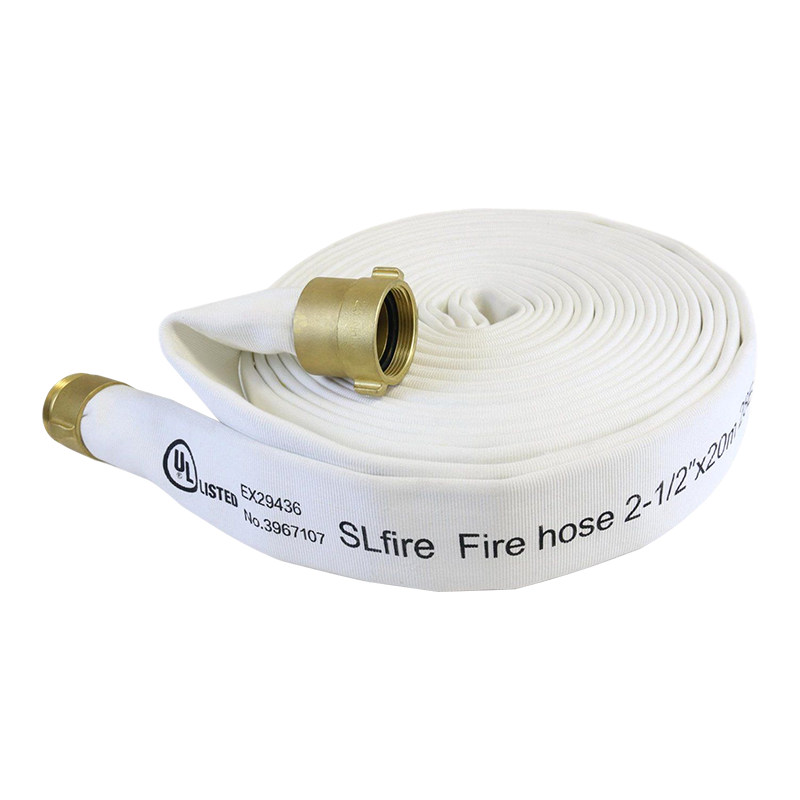
Single jacket, EPDM rubber liner Features • 100% high tenacity polyester jacket, high-grade EPDM rub...
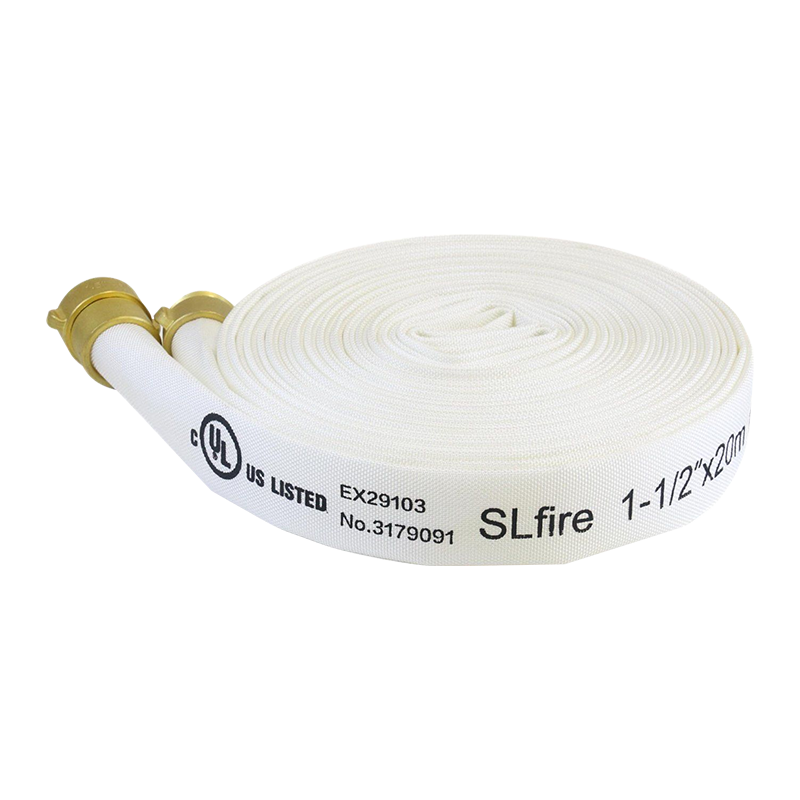
Single jacket, TPU liner •High-tenacity polyester yarn, circular woven in twill weave/plain weave,T ...
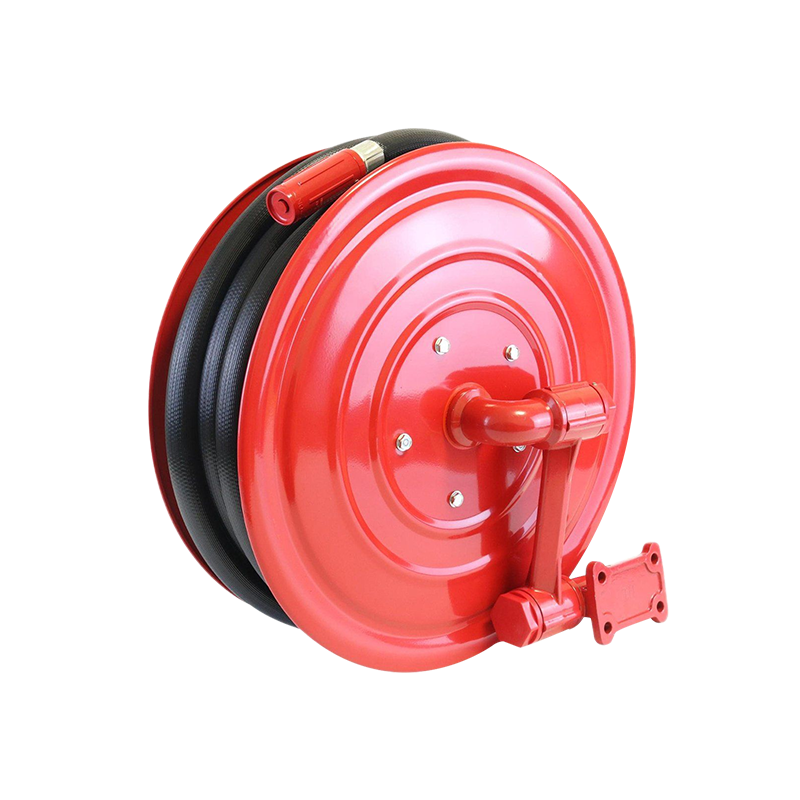
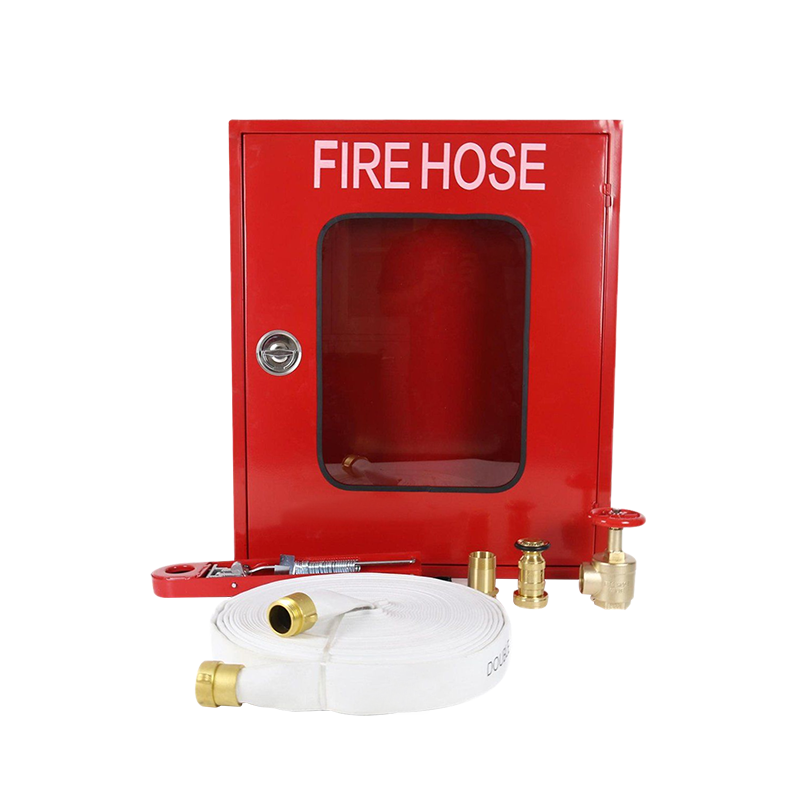
Fire cabinets are designed to accommodate fire hose,valve and other firefighting equipment. Type 201...
Nitrile covered hose •Nitrile/TPR blend as cover and lining, with 100% high-tenacity polyester yarn ...
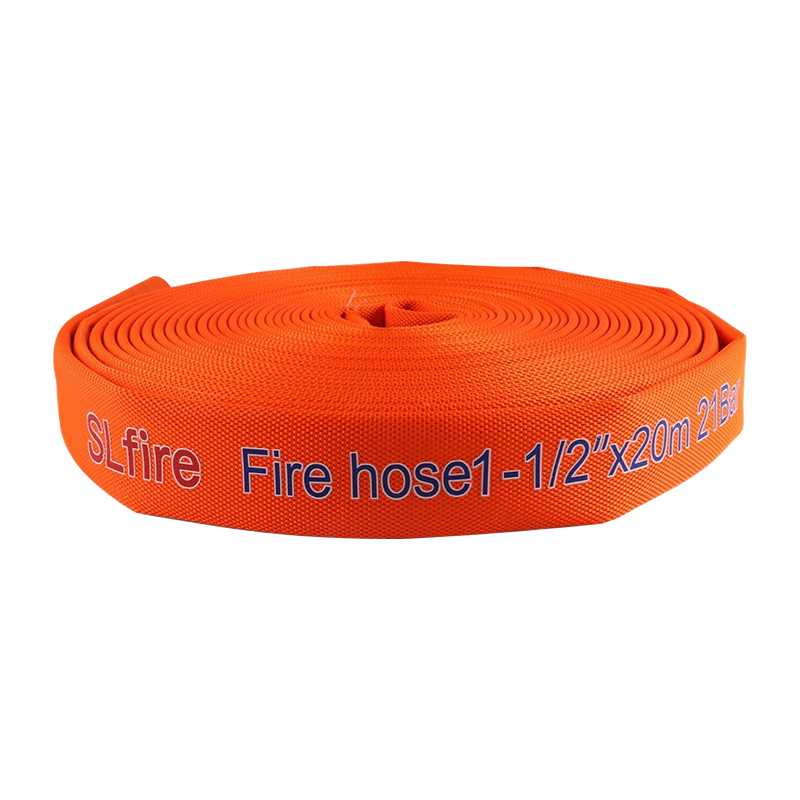
Single jacket, TPU liner •High-tenacity polyester yarn, circular woven in twill weave, TPU lining, f...
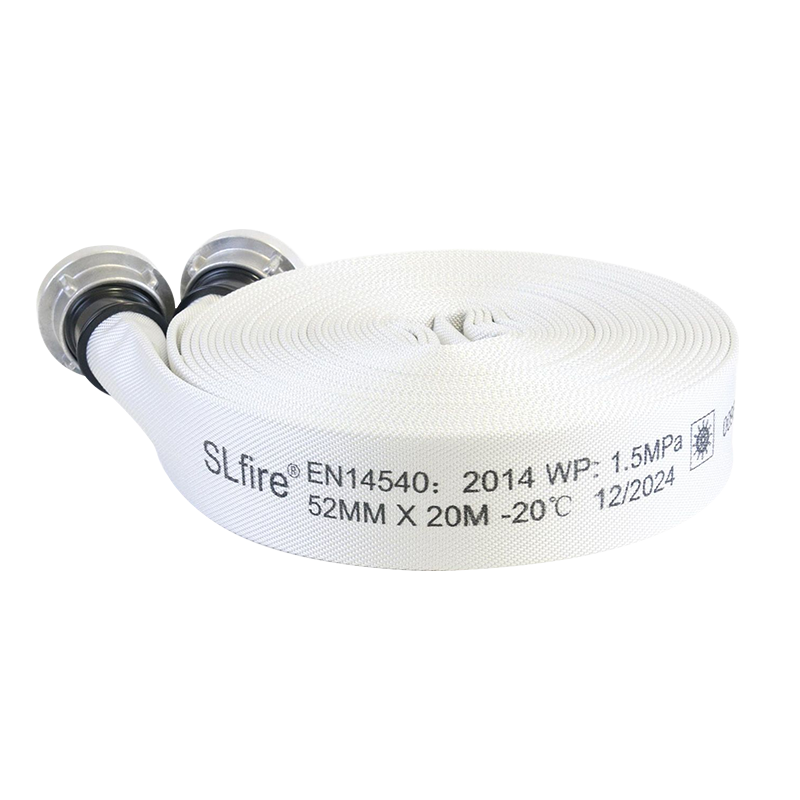
Marine hose Single jacket, PVC liner •100% high tenacity polyester yarn, circular woven in twill wea...
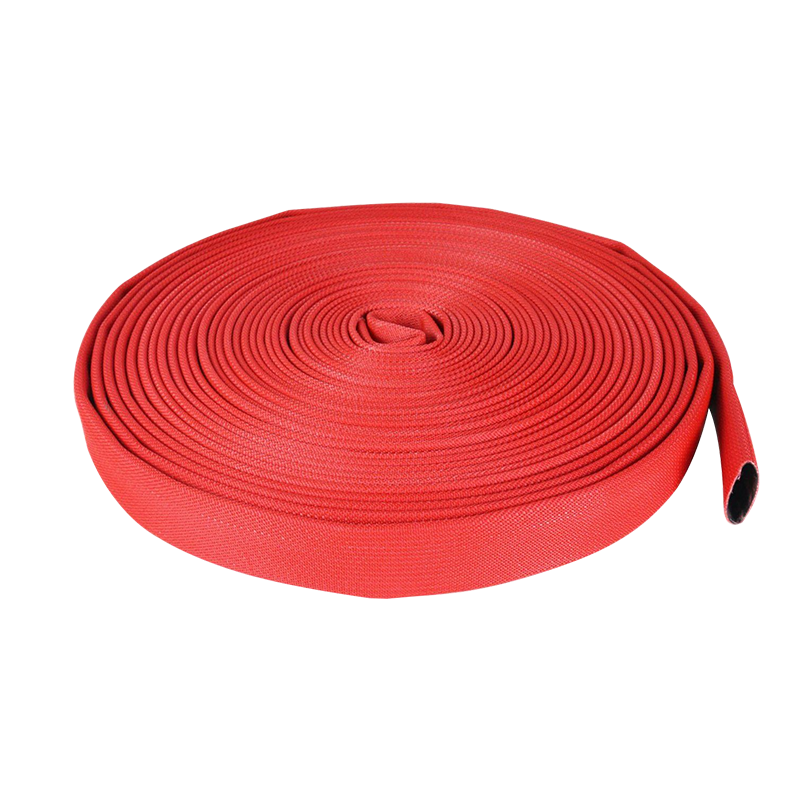
Marine hose Single jacket, PVC liner, PU coated •100% high tenacity polyester yarn,c ircular woven i...
 Call Us
+86 159-5116-9511
Need Support
Head Office
No.58, Kechuang Road, Sixiang Street Medicine Gaoxin District Taizhou City, Jiangsu Province

What Is a Fire Hose? A fire hose is a high-pressure flexible hose designed to carry water or fire retardant chemicals from a water source, such as a hydrant, pump, or tank, to a fire for suppression p...
Copyright © Taizhou Shenlong Fire Science and Technology Co., Ltd. All Rights Reserved.
 Fire Hose Manufacturers, Fire Hydrant Hose Factory