

 English
 русский
 Español
 Deutsch
 عربى
عربى Français
 Português
Don't hesitate to send a message

Single jacket, EPDM rubber liner Features • 100% high tenacity polyester jacket, high-grade EPDM rub...
Content
Common style fire hose reels are among the most practical, recognizable, and reliable pieces of first-response firefighting equipment used in modern buildings. Designed for rapid deployment during the early stage of a fire, they provide occupants, facility personnel, and trained building users with immediate access to a controlled water stream before a fire grows beyond initial containment. Their value lies in simplicity: a compact reel, a durable hose, a spray gun or nozzle, a water inlet connection, and a valve system that allows quick operation when time is critical.
In many commercial, residential, industrial, public, and mixed-use buildings, the first few minutes of a fire are decisive. A small flame in a corridor, storage area, stairwell, workshop, parking facility, or utility room can become a major emergency if no suitable equipment is available nearby. A common style fire hose reel helps bridge the gap between detection and professional firefighting response. It is not intended to replace fire brigades or comprehensive fire suppression systems, but it is an essential building-level resource for early intervention.
The product category of fire accessories includes many components that support firefighting readiness, and the common style fire hose reel is one of the most widely applicable accessories in that category. Its compact installation, straightforward use, and compatibility with building water supply systems make it suitable for corridors, stairwells, public areas, equipment rooms, entrances, and fire cabinet installations. Compared with more complex firefighting devices, the hose reel offers a balance of affordability, reliability, and ease of maintenance.
Taizhou Shenlong Fire Science and Technology Co., Ltd. has developed strong manufacturing capabilities in fire hose and related firefighting products since its founding in 1995. With experience in research and development, production, sales, and service, the company supports products used in fire protection, construction, water conservancy, agriculture, industrial water delivery, and other demanding applications. This background in hose materials and hose assembly gives the company a strong technical foundation for producing dependable fire hose reels and compatible hose systems.
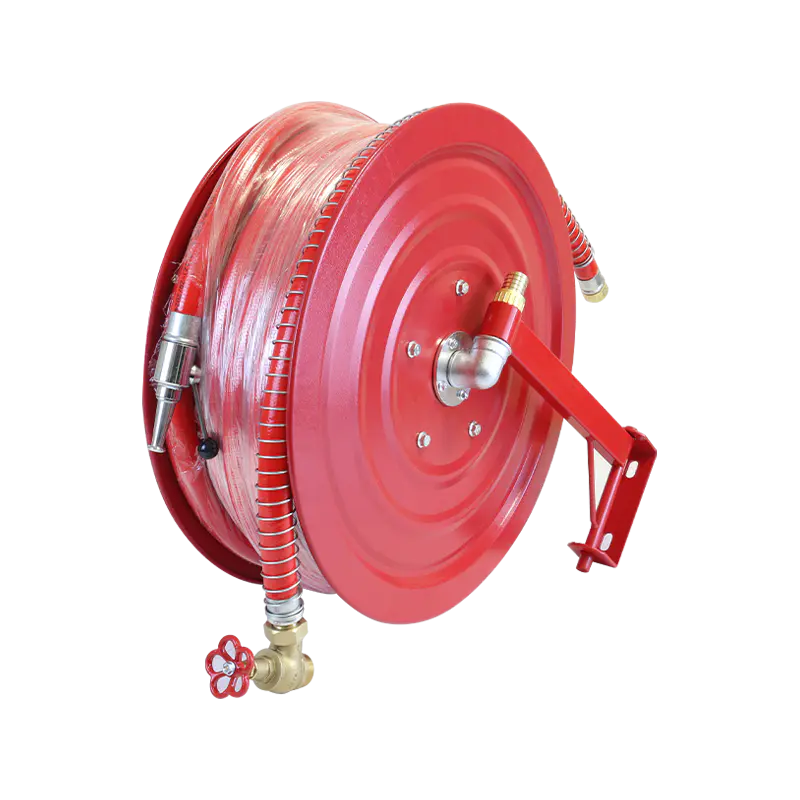
Common Style Fire Hose Reels
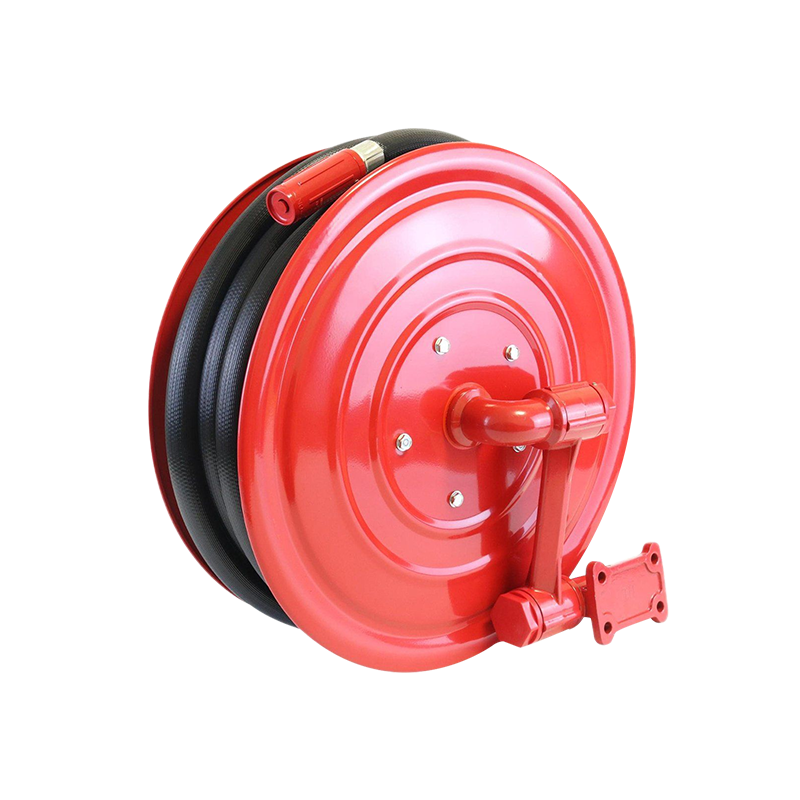
A common style fire hose reel is usually composed of four primary parts: the reel assembly, the hose, the spray gun or nozzle, and the water inlet pipe or connection. The reel provides organized storage and smooth deployment. The hose delivers water from the building supply to the fire area. The spray gun or nozzle controls discharge pattern and flow direction. The inlet pipe connects the unit to the fixed water supply system. Together, these components create a compact and accessible firefighting tool.
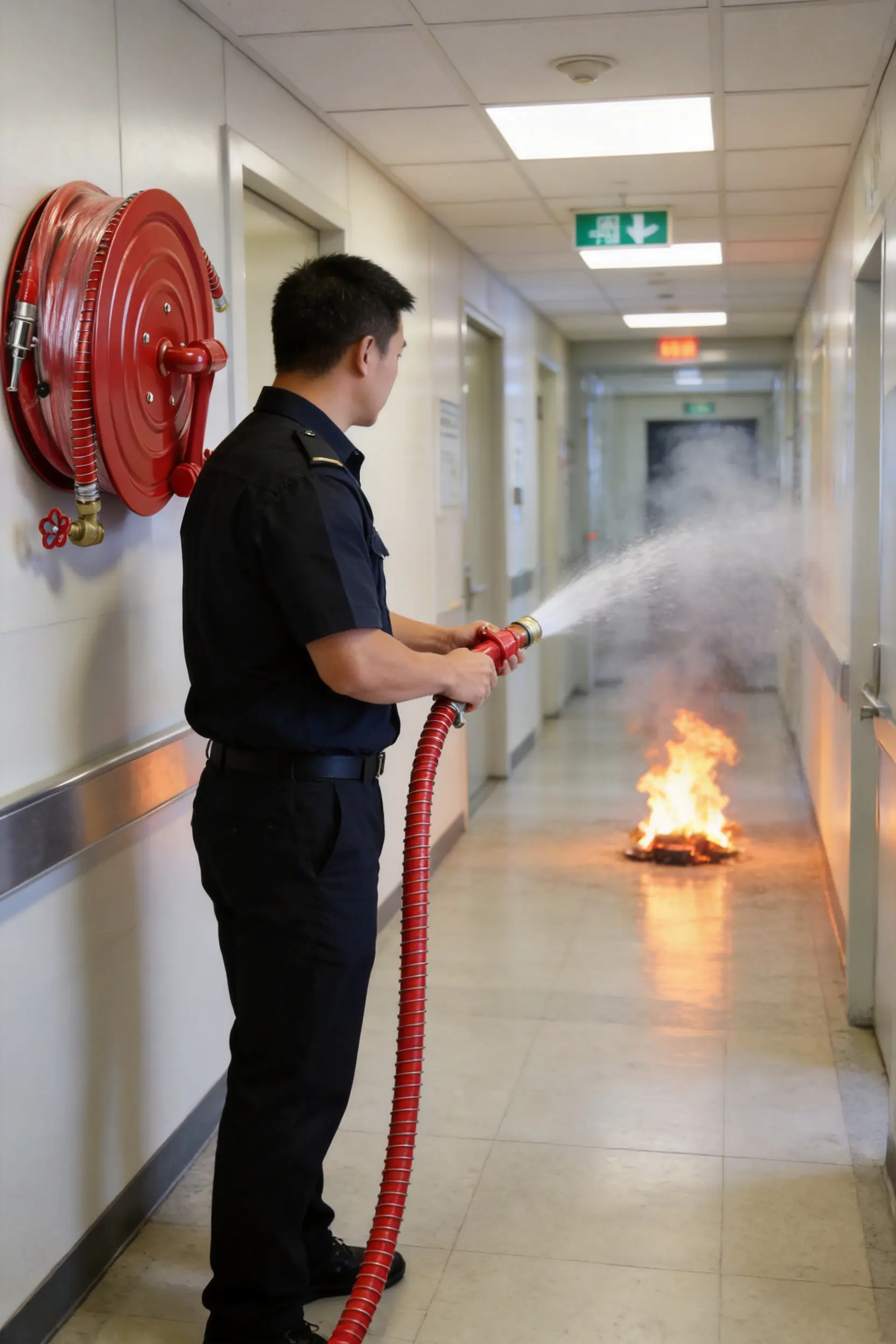
The design is deliberately simple. In an emergency, complexity can cause hesitation, misuse, or delay. With an ordinary fire hose reel, a user generally pulls out the required length of hose, opens the valve, aims the nozzle, and directs water at the fire source from a safe position. Because the hose remains connected to the water supply, users do not need to perform time-consuming assembly. This convenience is especially important for non-professional users who may have limited training.
The hose used in such reels is commonly made of high-quality rubber, PVC, or other suitable materials depending on application requirements. A proper hose must resist abrasion, moisture, corrosion, aging, repeated rolling, and pressure fluctuation. The material selection affects service life, handling, flexibility, weight, and maintenance frequency. Manufacturers with deep experience in hose production are better positioned to control these details and deliver stable performance.
The reel itself is normally designed for wall-mounted or cabinet-mounted installation. It can be installed in corridors, stairwells, public spaces, building entrances, service areas, and other positions where accessibility is required. Its compact footprint is one of its most important advantages. Because it occupies limited space and can be integrated into fire cabinets or wall-mounted layouts, it does not significantly interfere with building aesthetics or movement routes.
A common style fire hose reel is particularly suited to early-stage fires involving ordinary combustible materials. When properly installed, inspected, and maintained, it provides a readily available water source for suppressing small fires and preventing spread. This capability can reduce property damage, lower safety risks, and provide valuable time before professional responders arrive.
The market includes many types of firefighting equipment, including portable extinguishers, hydrant hoses, automatic sprinklers, foam systems, and specialized industrial suppression systems. Each has its own role. The common style fire hose reel stands out because of its combination of accessibility, immediate water availability, continuous discharge, and user-friendly operation. Compared with single-use or limited-capacity portable extinguishers, a hose reel can deliver water continuously as long as the supply remains available.
One major advantage is rapid deployment. In an emergency, the user does not need to locate separate hose lengths, attach couplings, connect to a hydrant valve, and assemble a nozzle. The hose is already arranged on the reel and connected to the inlet. This saves time and reduces the risk of incorrect assembly. For buildings where occupants may not be professional firefighters, this simplicity is a decisive feature.
A second advantage is stable storage. Loose hoses may become tangled, contaminated, crushed, or improperly stored. A reel keeps the hose organized and protected. The circular winding structure reduces storage clutter and enables controlled hose extension. Proper winding also supports longer hose life by minimizing severe bends, kinks, and unnecessary drag against rough surfaces.
A third advantage is compact installation. Many building owners and designers prefer firefighting equipment that does not occupy excessive floor space or disrupt interior movement. A common style reel can be mounted on a wall or placed inside a cabinet. It can be located where required by fire safety planning while maintaining a neat appearance. This gives it an advantage over bulkier hose storage arrangements in buildings with limited space.
A fourth advantage is cost-effective lifecycle performance. A well-made reel has a straightforward structure and does not require highly complex maintenance. Periodic inspection, pressure testing where required, hose condition checks, nozzle verification, and valve operation checks are usually sufficient. By contrast, more complicated systems may demand specialized maintenance procedures and higher service costs.
A fifth advantage is easy recognition. During an emergency, people need to identify equipment quickly. Fire hose reels have a familiar visual form, especially when installed in cabinets or designated fire points. This recognition supports faster action and improved fire safety awareness. Clear placement and proper signage can further improve emergency response.
The performance of a fire hose reel depends greatly on the hose. The hose must remain flexible enough to be pulled quickly, strong enough to withstand water pressure, and durable enough for long-term storage and emergency use. It must also resist cracking, hardening, delamination, abrasion, and chemical influence from environmental exposure. A hose that looks acceptable from the outside but has poor internal structure can fail during use, which is unacceptable in firefighting applications.
High-quality rubber and PVC materials provide important benefits. Rubber can offer excellent flexibility, abrasion resistance, and pressure performance. PVC can provide good corrosion resistance, light weight, and practical handling properties. The best choice depends on project requirements, installation environment, service expectations, water pressure, climate, and regulatory requirements. A manufacturer with experience in rubber, PVC, polyurethane, and other hose materials can recommend suitable constructions for different uses.
Aging resistance is especially important for building fire hose reels. Unlike hoses used every day in agriculture or industry, a fire hose reel may remain stored for long periods, then suddenly be required to function perfectly. If the hose material becomes brittle or cracked over time, emergency reliability is compromised. Proper compound selection, lining quality, reinforcement design, and curing or extrusion control all contribute to long-term performance.
Wear resistance is also essential. During use, the hose may be pulled across floors, stair edges, door frames, concrete surfaces, or exterior paving. Poor-quality hose jackets or covers can suffer rapid abrasion, exposing reinforcement and weakening the structure. A better hose resists these stresses and remains reliable after handling, testing, and emergency deployment.
Corrosion resistance relates not only to metal parts but also to hose compatibility with water quality and environmental conditions. In some installations, humidity, dust, cleaning chemicals, or temperature variation may affect product life. Durable hose materials, properly treated metal components, and stable inlet connections help maintain readiness.
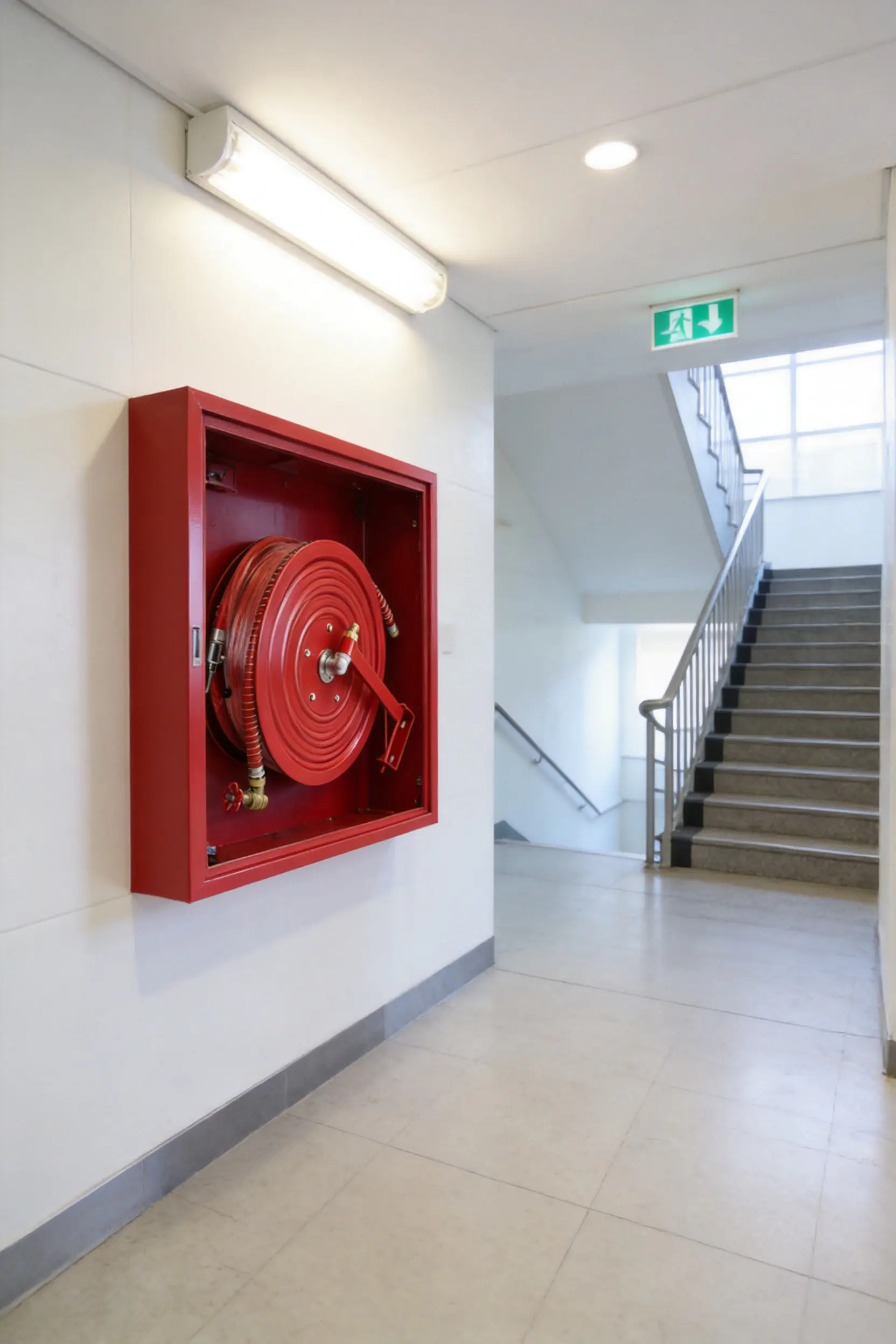
Strong manufacturing begins with material selection. Taizhou Shenlong Fire Science and Technology Co., Ltd. has long experience producing lined fire hoses and other hose products using materials such as rubber, PVC, polyurethane, and double-sided tape structures according to customer requirements. This experience supports careful control of hose lining, reinforcement, surface finish, flexibility, and pressure capacity. For fire hose reels, these capabilities translate into practical reliability.
Advanced hose manufacturing requires accurate formulation and process control. The lining material must be uniform, smooth, and properly bonded. Reinforcement must be arranged to provide pressure strength while maintaining flexibility. The outer layer must resist wear and environmental damage. The production process must control dimensions so the hose fits the reel properly and deploys smoothly without excessive friction or deformation.
The reel frame and rotating components also require careful manufacturing. A good reel should rotate smoothly under load, hold the hose securely, and maintain alignment during repeated winding and unwinding. Poorly made reels may wobble, bind, deform, or cause uneven hose stacking. Precision in frame forming, welding, surface treatment, bearing or bushing arrangement, and assembly tolerance directly affects field usability.
Surface protection is another important manufacturing detail. Fire hose reels may be installed in humid corridors, industrial spaces, parking areas, or outdoor-adjacent locations. Metal parts should resist rust and corrosion through suitable coating, painting, galvanizing, or other protective treatments. A clean surface finish also supports professional appearance and easier maintenance inspection.
Assembly quality is critical. The inlet pipe, valve, hose connection, reel hub, and nozzle must work together as a system. Leakage, loose fittings, poor sealing, or misaligned connections can reduce pressure and create water damage during testing or use. Reliable assembly requires trained workers, standard procedures, torque control where applicable, and final inspection.
Testing is an important difference between a dependable product and a low-cost substitute. Quality manufacturers perform checks for dimensional accuracy, hose appearance, pressure behavior, leakage, rotation, nozzle function, and packaging condition. For fire protection products, quality assurance is not only a commercial issue; it is a safety responsibility.
Taizhou Shenlong Fire Science and Technology Co., Ltd. was founded in 1995 and has developed into an enterprise integrating research and development, production, sales, and service. Its main products include lined fire hoses made from various materials, and its production capability extends to foreign trade products based on customer requirements. The company’s products are used in fire protection, construction, water conservancy, and other sectors, demonstrating wide application experience.
This background matters because hose reel performance depends on both hose knowledge and firefighting application knowledge. A company that understands only general metal fabrication may produce a reel frame but overlook hose flexibility, lining durability, pressure behavior, or aging resistance. A company with deep hose manufacturing experience can optimize the complete system rather than treating the hose as a secondary accessory.
The company’s cooperation with foreign trade partners and its export-oriented production experience also contribute to product consistency. International customers often require stable documentation, repeatable quality, packaging protection, material adaptation, and project-specific customization. Meeting these expectations encourages disciplined production management and continuous improvement.
Because the company supplies products used across more than 20 provinces, cities, and autonomous regions and supports export markets through cooperation, it has exposure to varied climate conditions, installation environments, and customer expectations. Such experience can help refine product design for durability, ease of installation, and practical field use.
Research and development capability is another important strength. Fire safety products must evolve with building design, material technology, installation standards, and customer needs. A manufacturer with R&D capacity can adjust hose materials, improve reel structure, optimize spray gun configuration, and support customized specifications. This flexibility is especially useful for contractors, distributors, and project buyers who need products adapted to local standards or specific building layouts.
The best fire hose reel is one that can be used confidently under stress. Emergency situations are noisy, confusing, and time-sensitive. Users may be frightened and may have only basic knowledge of fire safety equipment. For this reason, every design detail should support intuitive operation. The hose should pull out smoothly. The valve should be accessible. The nozzle should be comfortable to hold. The reel should not jam. The hose should not twist severely or collapse under pressure.
A compact body helps the reel fit into narrow spaces. Corridors and stairwells are common installation locations, but they must remain clear for evacuation. A bulky fire safety device can become an obstruction. A common style reel solves this issue by storing the hose efficiently in a circular form. When installed correctly, it remains accessible without occupying excessive space.
Simple installation is another benefit. Wall-mounted and cabinet-mounted configurations can be integrated into building fire protection layouts. The inlet connection can be arranged according to project needs. Maintenance staff can inspect the equipment without dismantling complicated assemblies. This lowers installation and service barriers for contractors and facility managers.
The spray gun or nozzle allows users to direct water effectively. Depending on configuration, it may provide a focused stream or controlled spray. A practical nozzle should be durable, easy to grip, and simple to operate. It should support quick shutoff or flow control when needed. Proper nozzle function reduces water waste and improves firefighting efficiency.
Hose length and diameter should match the intended area coverage and water supply capacity. If the hose is too short, it may not reach the fire area. If it is too heavy or too long for the environment, users may struggle to handle it. A professional supplier can help match specifications with building needs, ensuring appropriate coverage and usability.
| Feature | Common Style Fire Hose Reel | Loose Hydrant Hose Arrangement | Portable Fire Extinguisher Only |
|---|---|---|---|
| Deployment Speed | Fast, because the hose is pre-connected and stored on the reel | Slower, because hose handling and connection may be required | Fast, but limited by extinguisher capacity and fire type |
| Water Supply | Continuous when connected to building water supply | Continuous after proper connection | Limited discharge duration |
| User Friendliness | Suitable for trained non-professional building users | Often requires more training and physical handling | Simple, but selection and range limitations apply |
| Storage Condition | Organized winding reduces tangling and protects the hose | May be folded, stacked, or stored loosely | Compact cylinder storage |
| Space Efficiency | Wall-mounted or cabinet-mounted compact design | Can require more cabinet or storage space | Very compact, but not a continuous water source |
| Maintenance | Routine inspection of hose, reel, valve, and nozzle | Inspection of hose, couplings, valve, nozzle, and storage condition | Pressure, seal, weight, and replacement checks |
| Best Use | Early-stage building fires requiring water response | More formal firefighting response by trained personnel | Small incipient fires of suitable class |
Common style fire hose reels are widely used in buildings because they are practical for early fire control. In residential buildings, they can be installed in corridors, stairwells, or public areas where residents or property management personnel can access them quickly. If a small fire begins in a common area, storage room, or near an electrical service zone where water use is appropriate and safe, quick response can prevent rapid spread.
In commercial buildings, hose reels support fire safety in shopping centers, office buildings, hotels, schools, hospitals, and public service facilities. Such locations often contain high occupant density, varied fire loads, and complex evacuation needs. A nearby hose reel can help trained staff respond quickly while evacuation and emergency notification proceed.
In industrial facilities, the hose reel may be installed in workshops, warehouses, equipment rooms, loading areas, and utility corridors. Industrial settings may involve more demanding conditions such as dust, moisture, vibration, or rough handling. For these environments, durable hose materials and corrosion-resistant reel construction become especially important.
In construction-related environments, hose reels may support temporary or permanent fire safety planning. Building projects require reliable water access and emergency equipment, particularly when combustible materials, electrical tools, and hot work are present. A common style hose reel can contribute to site safety when installed and maintained according to applicable requirements.
In water conservancy and agricultural support facilities, the manufacturer’s broader hose expertise can be relevant. While the product discussed is a fire accessory, the company’s experience with industrial hose, agricultural hose, fire hose, hose couplings, hose nozzles, and related products supports comprehensive water delivery knowledge. This broad capability can benefit customers who source multiple hose and firefighting components from one experienced supplier.
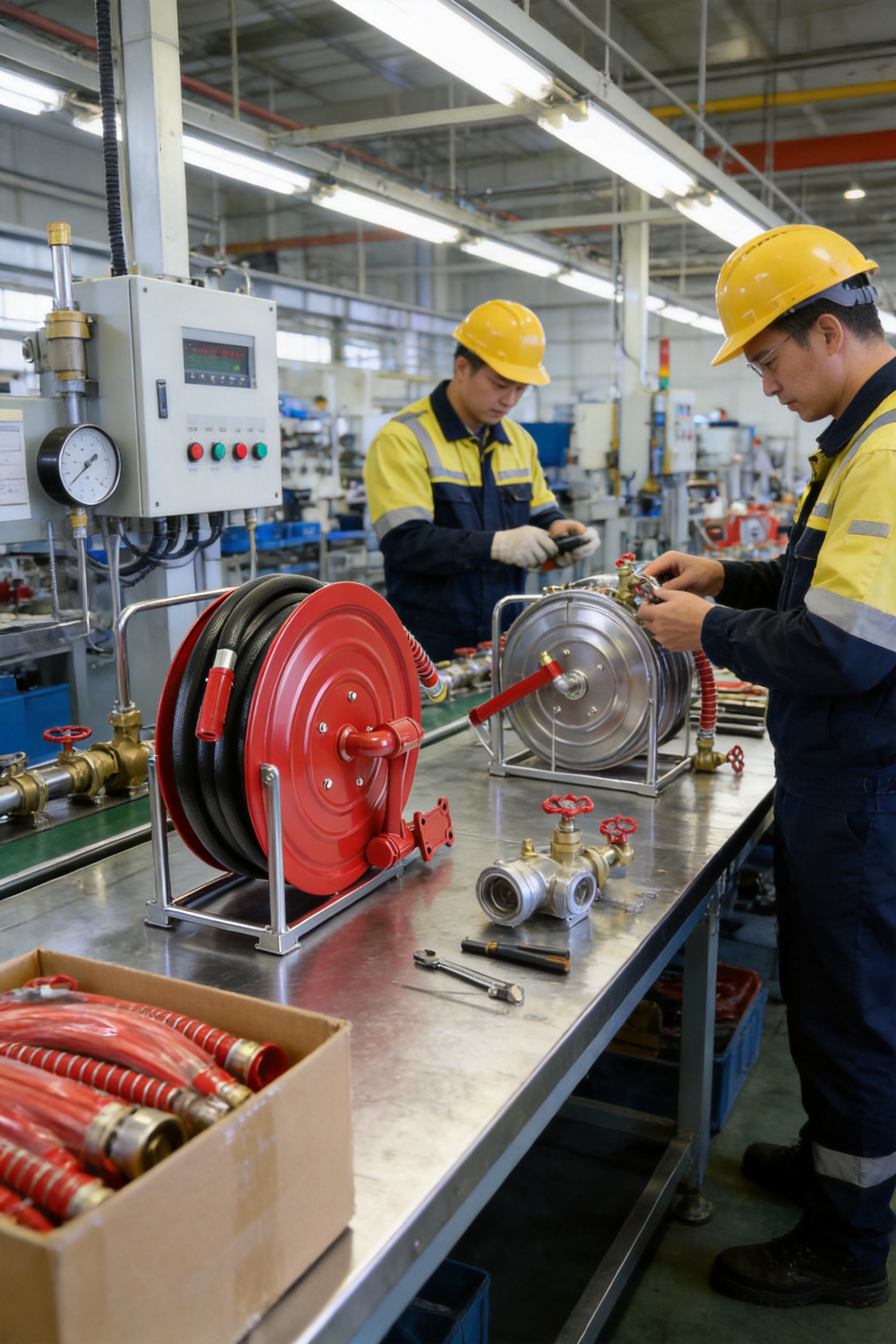
Correct installation is essential to the effectiveness of a fire hose reel. The unit should be positioned where it is visible, accessible, and close to likely risk areas. It should not be blocked by furniture, stored goods, locked doors, decorative structures, or temporary construction materials. Accessibility must be maintained at all times because emergency equipment is useful only if people can reach it quickly.
The mounting surface must be strong enough to support the reel, hose weight, water-filled load, and pulling force during deployment. Improper mounting may cause vibration, loosening, or detachment. Professional installers should verify wall strength, bracket alignment, fastener selection, and inlet pipe arrangement.
The water supply connection should provide adequate pressure and flow for the intended operation. A hose reel connected to an insufficient water supply cannot perform properly. Designers and contractors should evaluate pipe size, pressure conditions, valve arrangement, and local fire protection requirements. In some systems, pressure reducing or regulating components may be needed depending on the building layout.
The hose should be wound evenly on the reel after installation and after each test. Uneven winding can cause deployment problems and may create stress points in the hose. Maintenance personnel should ensure that the hose is not twisted, crushed, or sharply bent. The nozzle should be secured but easy to release.
Clear signage and instructions improve usability. Although the common style fire hose reel is simple, users benefit from visible operating guidance. A concise instruction panel can remind users to pull out the hose, open the valve, and operate the nozzle. Training drills for building staff can further improve response confidence.
Fire hose reels may remain unused for long periods, but they must always be ready. Routine inspection is therefore essential. A visual check should confirm that the reel is accessible, the hose is properly wound, the nozzle is present, the valve is not obstructed, the cabinet or mounting area is clean, and no visible damage exists.
The hose should be checked for cracks, abrasion, swelling, stiffness, discoloration, leakage, or deformation. Any sign of serious deterioration should be addressed promptly. Because hose materials can age even when not frequently used, periodic replacement may be necessary depending on local requirements, environmental exposure, and manufacturer guidance.
The reel should rotate smoothly. If it sticks, wobbles, or makes unusual noise, maintenance is required. Mechanical resistance can delay deployment during an emergency. The mounting bracket and fasteners should also be checked for looseness or corrosion.
The valve and inlet connection should be inspected for leakage and ease of operation. A stuck valve can make the entire system ineffective. Valves may need periodic operation to prevent seizure, particularly in humid or dusty environments. Seals and fittings should be checked according to maintenance procedures.
The nozzle or spray gun should be tested to ensure that it opens, closes, and directs water properly. If adjustable patterns are available, they should function smoothly. A damaged or missing nozzle reduces firefighting effectiveness and can create uncontrolled water discharge.
Inspection records are important. Facility managers should keep documentation of inspection dates, findings, corrective actions, pressure tests, replacements, and responsible personnel. Organized records support compliance, accountability, and long-term safety planning.
Manufacturing quality control for fire hose reels should cover incoming materials, in-process inspection, assembly verification, and final testing. Incoming material checks may include hose material appearance, thickness, lining consistency, reinforcement quality, metal component dimensions, coating condition, and fitting compatibility. Early detection prevents defects from entering assembly.
During production, hose dimensions and reel alignment should be monitored. The hose must fit the reel capacity without excessive compression. The reel must remain stable and balanced. The inlet arrangement should align with installation requirements. Workers should follow standardized procedures to reduce variation between batches.
Pressure-related testing is especially important for hoses and connections. While specific test levels depend on applicable standards and product specifications, the principle is consistent: the hose and assembled unit should resist leakage, deformation, and failure under expected service conditions. Reliable pressure performance gives users confidence that the reel will operate when needed.
Rotational and deployment checks ensure usability. A reel may pass a static appearance check yet still perform poorly if it does not rotate smoothly or if the hose binds during unwinding. Practical testing helps identify issues that matter in real use.
Packaging inspection also matters for export and distribution. Fire hose reels may travel long distances before installation. Proper packaging protects coating, hose surfaces, nozzles, valves, and fittings from impact, moisture, and abrasion during transport. A manufacturer experienced in domestic and foreign trade production is more likely to understand these logistics requirements.
Distributors, contractors, project developers, and facility owners do not purchase fire hose reels only as isolated objects. They purchase reliability, supply stability, documentation support, customization ability, and after-sales service. A product that looks inexpensive at first may become costly if it leaks, corrodes, fails inspection, requires frequent replacement, or causes installation delays.
A manufacturer with decades of experience offers several practical advantages. First, it can maintain more stable production because it understands material sourcing and process control. Second, it can provide technical communication for different customer needs. Third, it can adapt specifications for project requirements. Fourth, it can support related products such as fire hoses, hose couplings, hose nozzles, fire accessories, and fire cabinets, helping buyers simplify procurement.
Taizhou Shenlong Fire Science and Technology Co., Ltd. has experience across multiple hose-related product categories, including fire hose, industrial hose, agricultural hose, hose couplings, hose nozzles, fire accessories, fire cabinets, and trenchless rehabilitation hose. This range indicates familiarity with different pressure, flexibility, wear, and connection requirements. Such cross-category knowledge can improve product design and customer support.
For overseas buyers, export production experience is valuable. Different markets may have different expectations for labeling, packaging, materials, inspections, and documentation. A company that cooperates with foreign trade partners and produces export products can better understand these requirements. Communication, consistency, and delivery reliability are important parts of long-term business relationships.
For contractors, ease of installation matters. If a fire hose reel has poor alignment, inconsistent fittings, weak brackets, or unclear specifications, installation time increases. A well-manufactured product reduces job-site uncertainty. Clear product consistency also helps when multiple units are installed across a building or project.
The ordinary fire hose reel plays an important role in the earliest stage of firefighting. Many fires begin small. A waste bin, packaging material, textile, wooden fixture, or combustible storage item may ignite and produce a localized flame. If water is appropriate for the fire type and electrical hazards are controlled or absent, a hose reel can help prevent escalation.
However, safe use requires judgment. Users should not attempt to fight large fires, fires spreading rapidly, fires involving unknown chemicals, or fires that block evacuation routes. The priority is always life safety. A hose reel should be used only when the user has a safe exit path, the fire is small enough for initial response, and water is suitable for the burning material.
Building fire safety planning should combine detection, alarm, evacuation, suppression, and response training. The fire hose reel is one part of this system. Smoke detectors, alarms, emergency lighting, exit signage, portable extinguishers, fire doors, sprinkler systems, hydrants, and management procedures all contribute to safety. The hose reel adds immediate manual water application capability.
In residential and public buildings, hose reels also provide psychological reassurance. Occupants and staff can see that firefighting resources are present. This visibility can encourage awareness and preparedness. Nevertheless, proper training and signage are needed to prevent misuse or unsafe attempts during serious fires.
Different buildings may require different hose reel configurations. Variables include hose length, hose diameter, reel size, mounting method, cabinet compatibility, inlet direction, nozzle type, valve type, surface finish, and material preference. A professional manufacturer can support such variation while maintaining quality consistency.
Customization is especially important for distributors serving multiple markets. One region may prefer a specific cabinet format, another may require different hose material, and another may need packaging adapted for long-distance shipping. Manufacturing flexibility helps buyers serve diverse customers without sourcing from many unrelated suppliers.
Because Taizhou Shenlong Fire Science and Technology Co., Ltd. can undertake foreign trade products according to customer requirements, it is positioned to support project-based specifications. Its experience with rubber, PVC, polyurethane, and double-sided tape products provides a useful material platform for adapting hose performance. This is a meaningful advantage over competitors with narrower production capability.
For buyers seeking fire hose reels, product matching should begin with a clear understanding of the installation environment. Is the reel for a residential corridor, a factory, a parking garage, a warehouse, or a public facility? Will it be exposed to humidity, dust, temperature variation, or frequent inspection handling? What water pressure is available? What local standards apply? The answers guide the best configuration.
Long service life is an important part of sustainable product value. A durable fire hose reel reduces replacement frequency, material waste, service interruptions, and lifecycle cost. Quality materials, proper surface protection, sound assembly, and regular maintenance all contribute to longer useful life.
Anti-aging performance is particularly relevant. A hose reel may sit in place for years, but it cannot be allowed to deteriorate unnoticed. Better hose compounds and controlled manufacturing reduce premature cracking and hardening. Proper storage on the reel also helps prevent damage caused by disorganized folding or crushing.
Corrosion resistance extends the life of metal components. In humid environments, untreated or poorly coated metal may rust, weakening the structure and reducing appearance quality. A manufacturer that controls surface treatment can improve durability and reduce maintenance concerns.
Repairability and replaceable components also support sustainability. If a nozzle, valve, hose, or fitting can be serviced or replaced when needed, the entire reel assembly may not need immediate disposal. Practical product design should consider maintenance realities as well as initial sale appearance.
When selecting a common style fire hose reel, buyers should look beyond price. The purchase decision should consider hose material, pressure rating, reel construction, coating quality, nozzle function, valve reliability, fitting compatibility, packaging, supplier history, and after-sales support. Fire safety equipment must be dependable, not merely inexpensive.
Buyers should ask whether the manufacturer has direct hose production expertise. This is important because the hose is not a decorative part; it is the functional water delivery line. A manufacturer with hose production experience can better control performance and respond to technical requirements.
Buyers should also evaluate production consistency. If a project requires many units, each reel should install and operate similarly. Inconsistent dimensions or fittings can create problems on site. Stable manufacturing reduces delays and improves contractor confidence.
Packaging and logistics are also important for wholesale and export orders. Reels should arrive with protected surfaces, intact hoses, secure nozzles, and clear product identification. Damaged products create replacement costs and project delays. Export-experienced manufacturers understand these issues better than suppliers focused only on local short-distance delivery.
Technical communication is another key factor. A responsible supplier should be able to explain product specifications, material options, application suitability, and maintenance recommendations. For project buyers, this communication can prevent mismatches and improve long-term satisfaction.
It is used for initial firefighting in buildings and facilities. When a small fire begins and water is suitable for the fire type, the hose reel allows users to quickly pull out a hose, open the valve, and apply water to control or suppress the fire before it spreads.
A fire hose reel is designed to be simple enough for trained non-professional users, building staff, and facility personnel. However, users should receive basic instruction and should only use it when it is safe, the fire is small, and a clear escape route is available.
The main parts usually include a reel, hose, spray gun or nozzle, water inlet pipe or connection, valve, mounting structure, and related fittings. These parts work together to provide organized storage and quick water delivery.
Hose material affects flexibility, pressure resistance, abrasion resistance, aging resistance, corrosion resistance, and service life. High-quality rubber or PVC materials help ensure that the hose remains reliable after long-term storage and during emergency use.
It is commonly installed in corridors, stairwells, public areas, building entrances, fire cabinets, workshops, warehouses, and other accessible locations. The exact position should follow fire safety design requirements and local regulations.
A portable extinguisher is compact and useful for certain small fires, but it has limited discharge capacity. A fire hose reel provides continuous water flow when connected to a proper water supply, making it valuable for early control of suitable fires.
Inspection frequency depends on local requirements and facility policy, but regular visual checks and scheduled maintenance are essential. The hose, reel rotation, valve, nozzle, mounting, and accessibility should all be verified.
Yes, specifications such as hose material, hose length, reel configuration, nozzle type, inlet direction, coating, and packaging may be customized depending on manufacturing capability and project requirements.
An experienced hose manufacturer understands material behavior, lining quality, reinforcement, pressure performance, and aging resistance. This knowledge helps produce a more reliable complete hose reel system compared with suppliers that focus only on simple assembly.
The company has been active since 1995 and integrates research and development, production, sales, and service. Its experience with various lined fire hoses and hose materials supports strong product quality, customization capability, and broad application knowledge.
The common style fire hose reel remains an indispensable firefighting accessory because it combines simple operation, compact installation, durable hose construction, continuous water supply, and practical early-response capability. In buildings where fast action can prevent serious losses, the value of such equipment is clear. It supports safer corridors, stairwells, public areas, workshops, and facility spaces by making water delivery immediately available.
Its advantages over many competing solutions come from readiness and usability. Unlike loose hoses that may require assembly, the reel keeps the hose organized and connected. Unlike portable extinguishers with limited capacity, it can provide continuous water flow when connected to a suitable supply. Unlike complex systems that require specialized operation, it offers a straightforward method for trained users to respond during the initial stage of a fire.
The quality of a fire hose reel depends on more than appearance. Hose material, reel structure, surface treatment, valve reliability, nozzle function, assembly precision, and testing discipline all determine real performance. This is where manufacturing experience becomes essential. Taizhou Shenlong Fire Science and Technology Co., Ltd. brings decades of hose production knowledge, material capability, export experience, and product development strength to the field of fire accessories.
For distributors, contractors, facility managers, and project buyers, selecting a reliable fire hose reel supplier is a safety decision as well as a purchasing decision. A dependable product reduces installation problems, improves emergency readiness, and supports long-term building protection. A common style fire hose reel manufactured with careful material selection and strict process control can provide years of service while standing ready for the moment when it is needed most.
National Fire Protection Association. Fire Protection Handbook. Quincy: National Fire Protection Association.
International Organization for Standardization. Fire Protection Equipment and Hose Testing Guidelines. Geneva: International Organization for Standardization.
British Standards Institution. Fixed Firefighting Systems and Fire Hose Reel Requirements. London: British Standards Institution.
Society of Fire Protection Engineers. SFPE Handbook of Fire Protection Engineering. New York: Springer.
Institution of Fire Engineers. Fire Safety Management and Emergency Response Practice. Leicester: Institution of Fire Engineers.
Construction Industry Fire Safety Guidance. Building Fire Equipment Installation and Maintenance Principles.
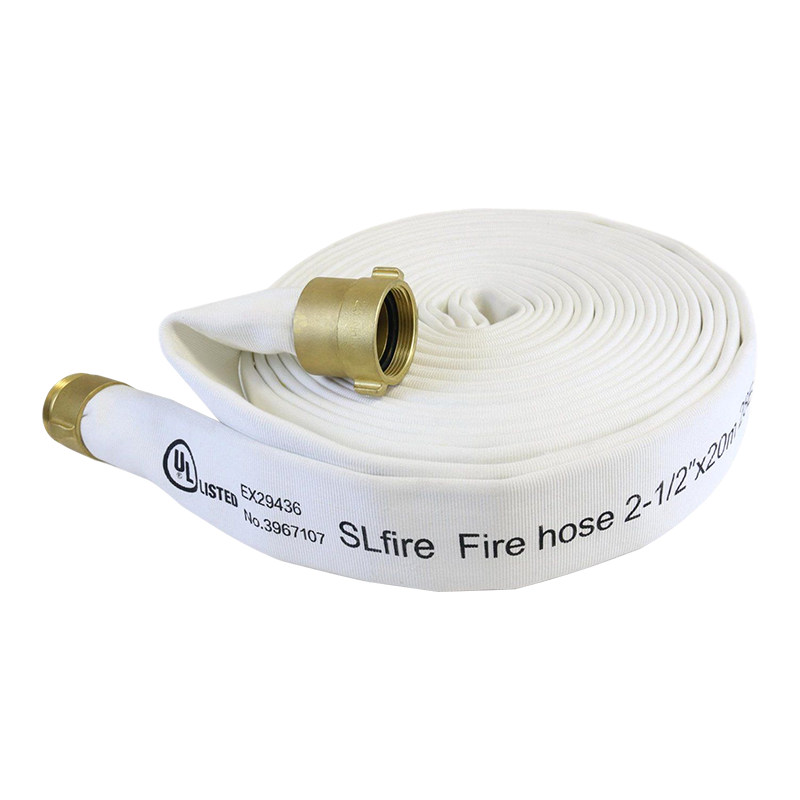
Single jacket, EPDM rubber liner Features • 100% high tenacity polyester jacket, high-grade EPDM rub...
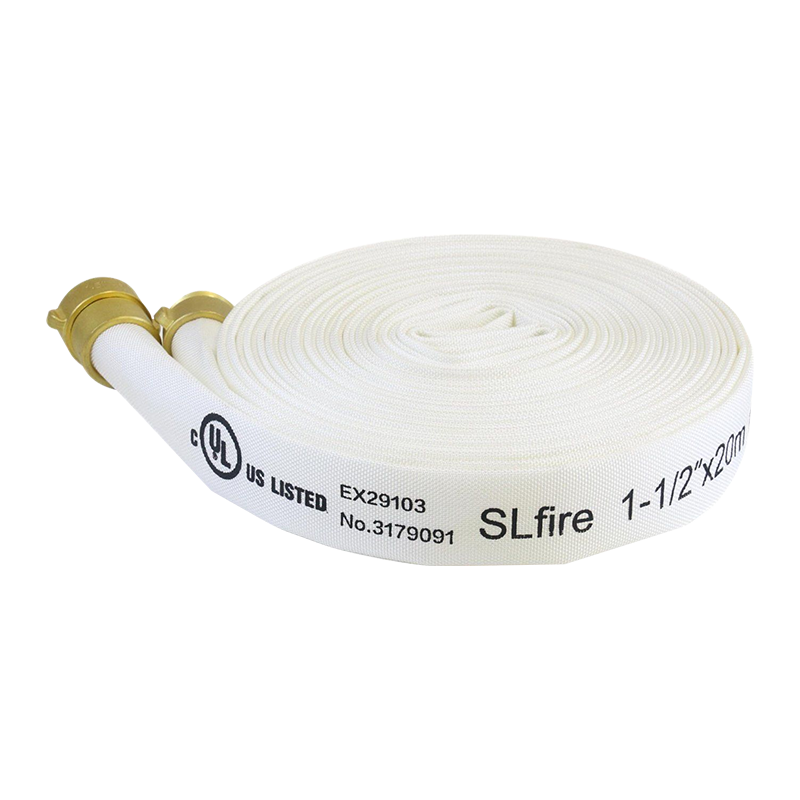
Single jacket, TPU liner •High-tenacity polyester yarn, circular woven in twill weave/plain weave,T ...
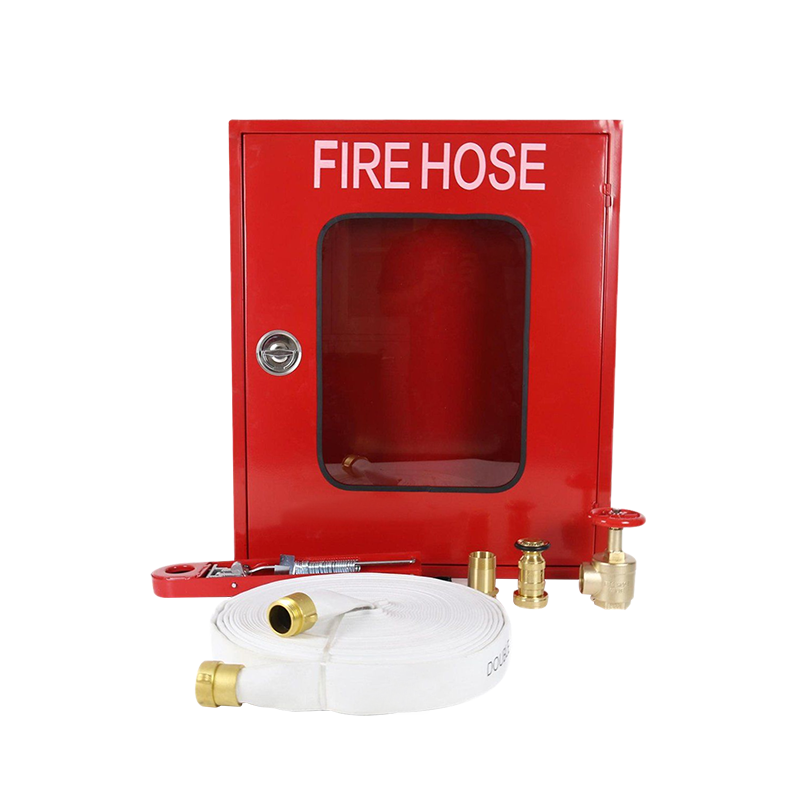
Fire cabinets are designed to accommodate fire hose,valve and other firefighting equipment. Type 201...
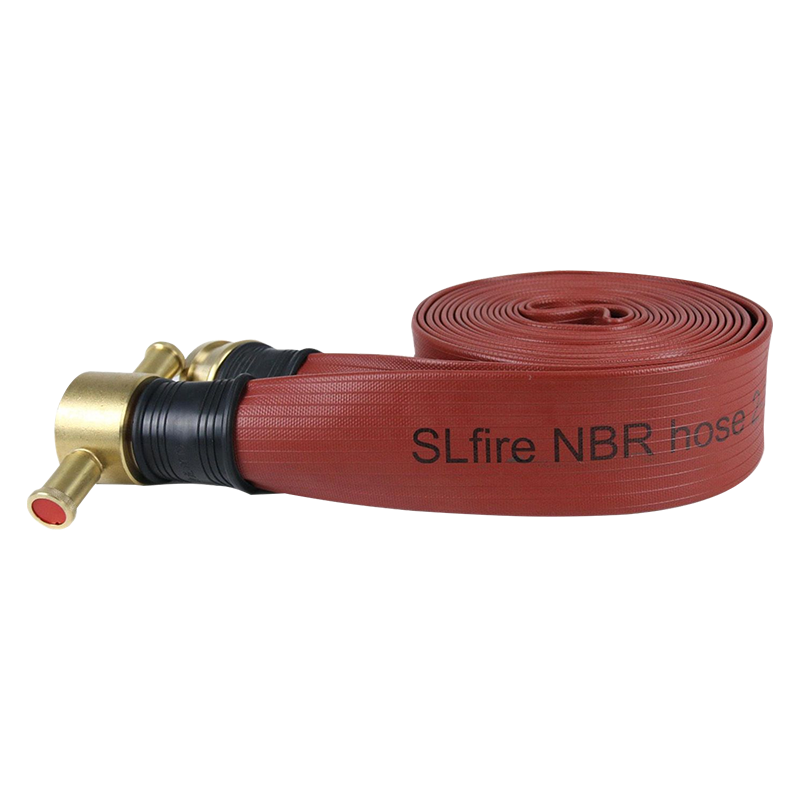
Nitrile covered hose •Nitrile/TPR blend as cover and lining, with 100% high-tenacity polyester yarn ...
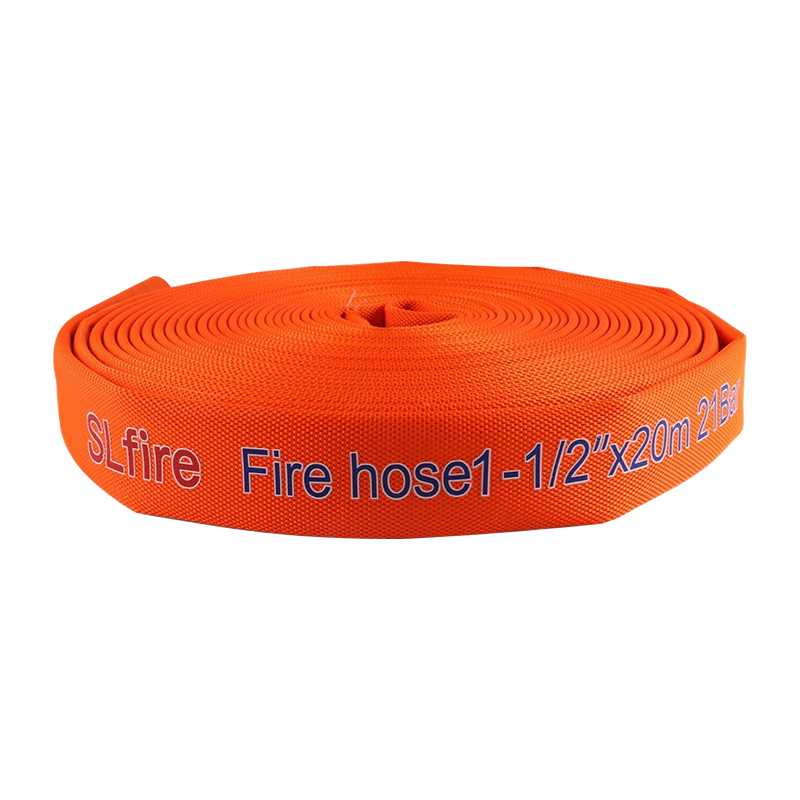
Single jacket, TPU liner •High-tenacity polyester yarn, circular woven in twill weave, TPU lining, f...
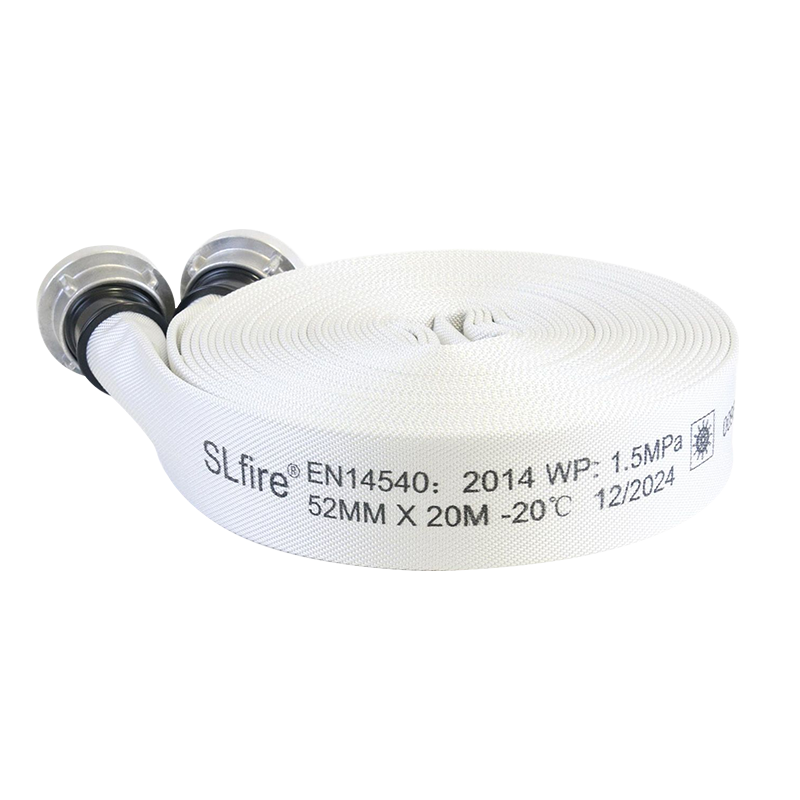
Marine hose Single jacket, PVC liner •100% high tenacity polyester yarn, circular woven in twill wea...
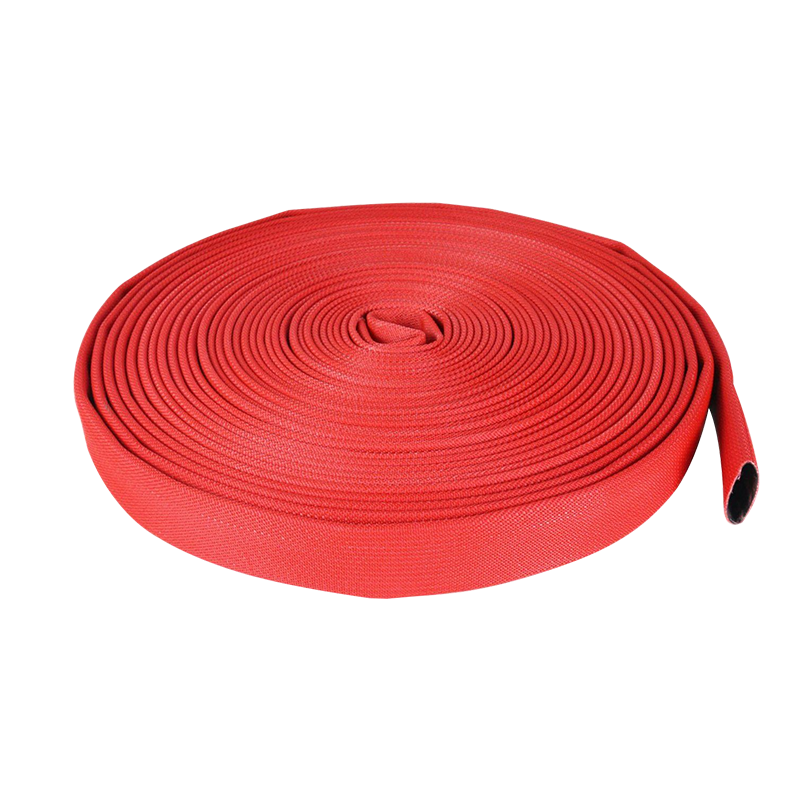
Marine hose Single jacket, PVC liner, PU coated •100% high tenacity polyester yarn,c ircular woven i...
 Call Us
+86 159-5116-9511
Need Support
Head Office
No.58, Kechuang Road, Sixiang Street Medicine Gaoxin District Taizhou City, Jiangsu Province

What Is a Fire Hose? A fire hose is a high-pressure flexible hose designed to carry water or fire retardant chemicals from a water source, such as a hydrant, pump, or tank, to a fire for suppression p...
Copyright © Taizhou Shenlong Fire Science and Technology Co., Ltd. All Rights Reserved.
 Fire Hose Manufacturers, Fire Hydrant Hose Factory