

 English
 русский
 Español
 Deutsch
 عربى
عربى Français
 Português
Don't hesitate to send a message
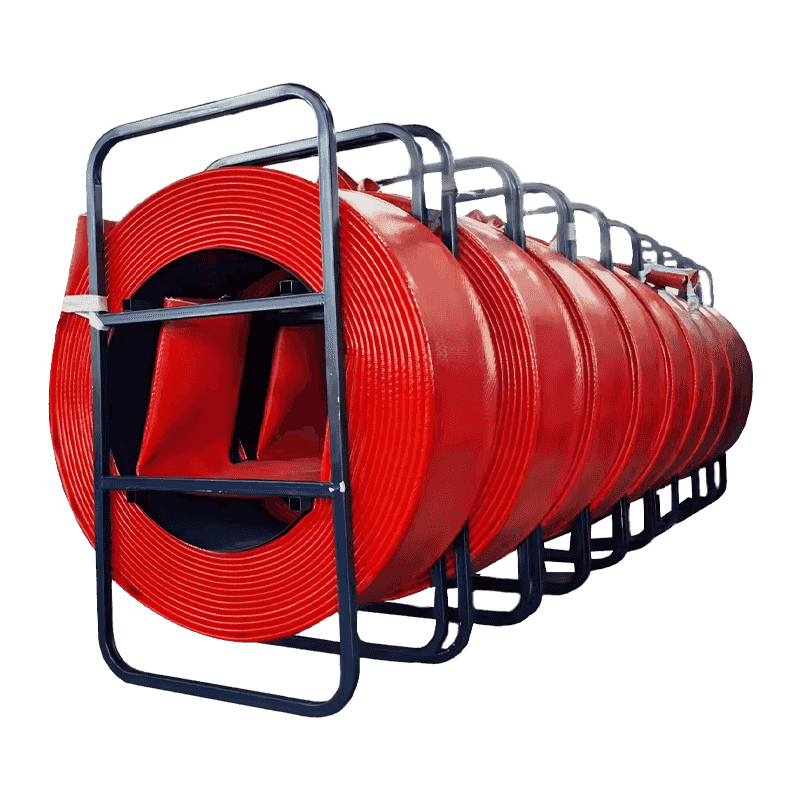

Single jacket, EPDM rubber liner Features • 100% high tenacity polyester jacket, high-grade EPDM rub...
Content
In modern hydraulic fracturing operations, fluid transfer is not a secondary task; it is a central part of safety, productivity, and site efficiency. The Co-Extrusion TPU Hose is designed for demanding fracturing environments where water, slurry, chemical additives, and other operating fluids must move reliably between tank trucks, pumps, blenders, frac tanks, manifolds, wellhead equipment, and other drill site components. Built with a high tenacity synthetic jacket and a thermoplastic polyurethane lining and cover, this hose combines pressure resistance, abrasion resistance, chemical resistance, flexibility, and weather durability in a practical lay-flat hose structure.
The product belongs to the fracturing hose category and is suitable for transfer duties across the drill site. Its core value lies in a balanced design: strong enough for industrial pressure requirements, light enough for easier handling compared with many rigid or heavy rubber alternatives, and durable enough to withstand rough outdoor conditions. With available inner diameters ranging from 2 inches to 16 inches, working pressure options from 120 psi to 300 psi depending on size, and burst pressure ratings generally three times the working pressure, the hose can support a wide range of field configurations.
Taizhou Shenlong Fire Science and Technology Co., Ltd. brings decades of hose manufacturing experience to this product. Founded in 1995, the company has developed integrated capabilities in research and development, production, sales, and service. Its background in fire hoses, industrial hoses, agricultural hoses, hose couplings, hose nozzles, fire accessories, fire cabinets, and trenchless rehabilitation hose gives it a broad understanding of fluid conveyance under pressure. That cross-industry experience supports the manufacturing discipline required for a fracturing hose that must handle pressure, abrasion, outdoor exposure, and repeated deployment.
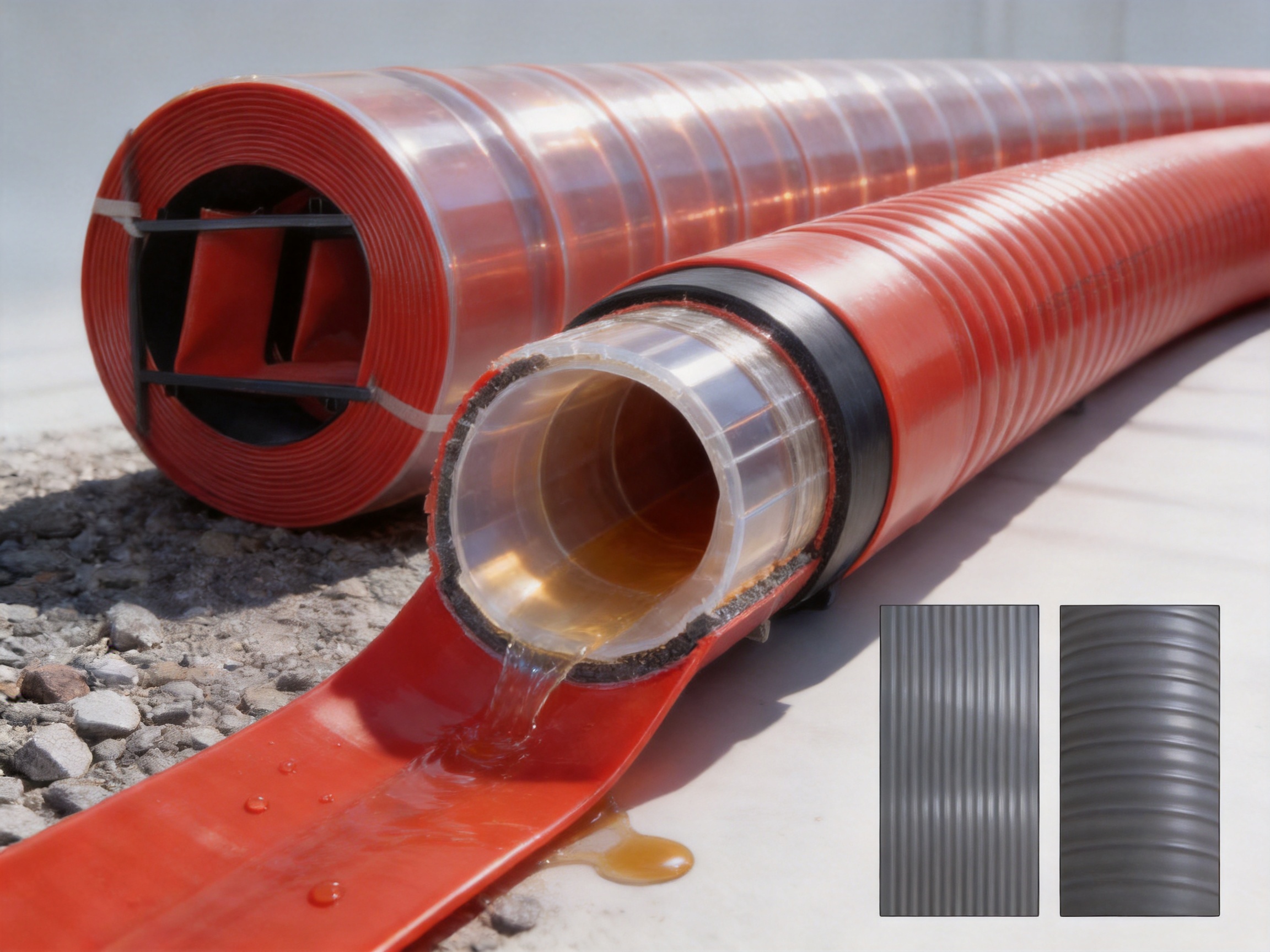
The Co-Extrusion TPU Hose is a lay-flat style hose designed with a high tenacity synthetic reinforcement jacket and TPU lining and cover. TPU, or thermoplastic polyurethane, is known for its excellent combination of abrasion resistance, toughness, oil resistance, chemical resistance, and flexibility across a broad temperature range. In this hose, TPU is used not merely as a thin internal liner but as part of an integrated lining and cover system that protects the reinforcement and supports long-term service performance.
The hose is available with a ribbed cover or a smooth cover. A ribbed cover can improve grip and abrasion behavior in certain field conditions, especially where hoses are dragged, moved, or exposed to rough ground. A smooth cover may be preferred where easier cleaning, lower surface friction, or a neater external finish is desired. This choice allows operators and distributors to match the product more closely to site conditions and handling preferences.
The hose can be supplied in lengths up to 60 meters. Long continuous lengths help reduce the number of couplings required in a transfer line, which can simplify installation and reduce potential leak points. At the same time, the lay-flat structure helps make storage and transportation more efficient than many rigid pipe or bulky suction hose arrangements. For fracturing sites where equipment may be repositioned frequently, these handling benefits are important.
The operating temperature range is from minus 40 degrees Celsius to 80 degrees Celsius. This range is valuable for outdoor oilfield operations because fracturing activities may occur in cold regions, hot climates, or environments with strong day-night temperature variation. A hose that remains serviceable across this range can reduce the need for different hose types for different seasons or job locations.
The reinforcement of the hose is a high tenacity synthetic jacket. This jacket is responsible for much of the pressure-bearing capability of the hose. High tenacity synthetic yarns are selected for strength, dimensional stability, and resistance to fatigue under pressure cycles. The reinforcement jacket supports the hose wall and distributes internal forces so the hose can maintain its shape and performance under working pressure.
The lining and cover are made of TPU. The inner lining is exposed to the transferred fluid, while the outer cover is exposed to the operating environment. By using TPU on both sides, the hose benefits from a material system that protects against internal fluid contact and external mechanical wear. TPU also bonds well in properly controlled extrusion processes, helping create a unified hose wall rather than a simple collection of separate layers.
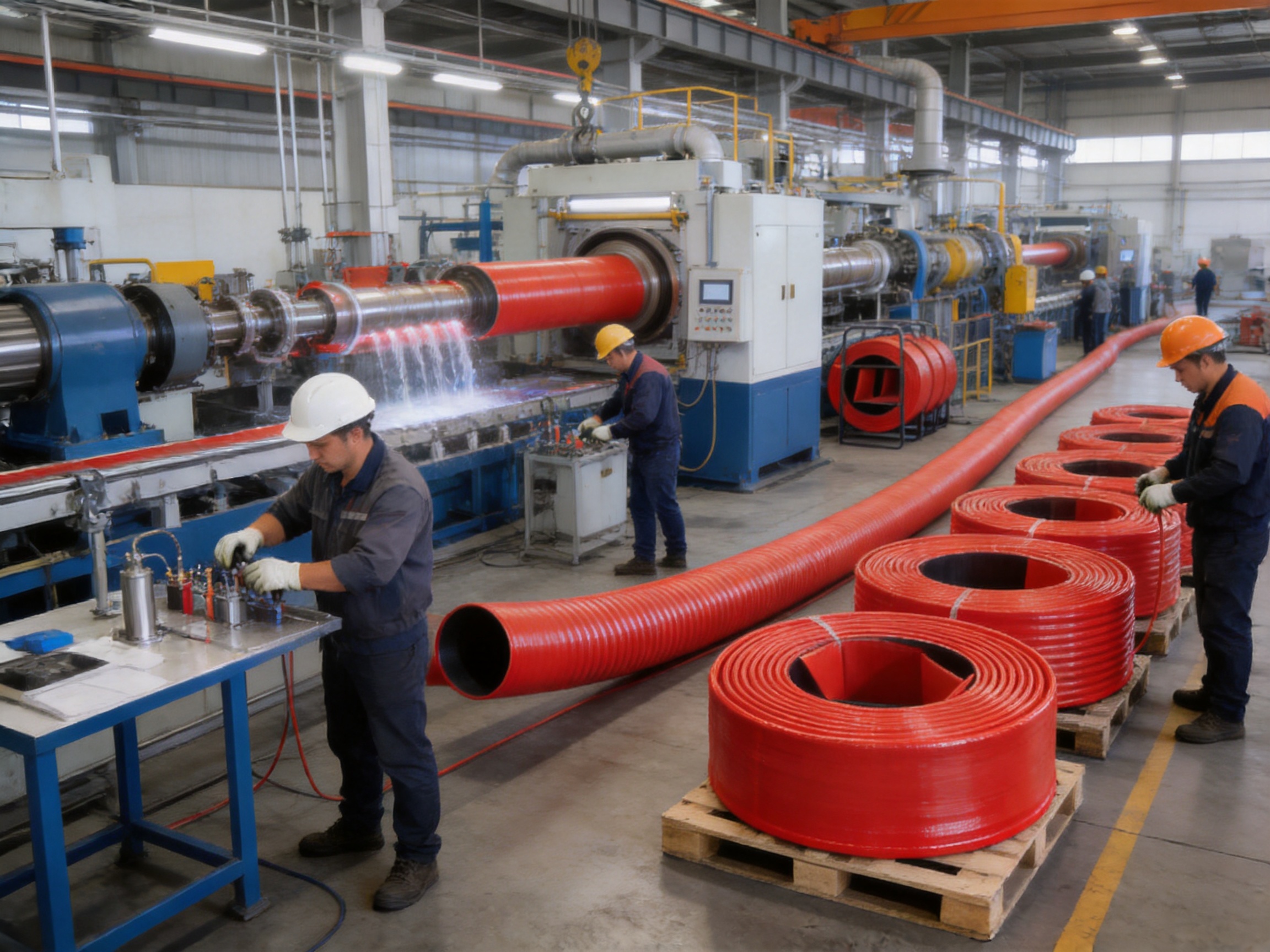
Co-extrusion is an important manufacturing concept for this product. In a co-extruded hose structure, compatible layers are formed in a coordinated process so that material distribution, bonding, wall thickness, and surface finish can be controlled with precision. This manufacturing approach helps achieve consistent lining quality, reliable cover formation, and improved protection of the reinforcement layer. Consistency is essential because even small variations in wall thickness, bonding, or material distribution can affect pressure performance and service life.
Compared with conventional hoses that may rely on separate coating steps or less integrated layer formation, a well-controlled co-extrusion process can improve uniformity. It can also reduce weak interfaces where delamination might begin. For field operators, this means a hose that is more predictable, easier to inspect, and better suited to repeated use in demanding applications.
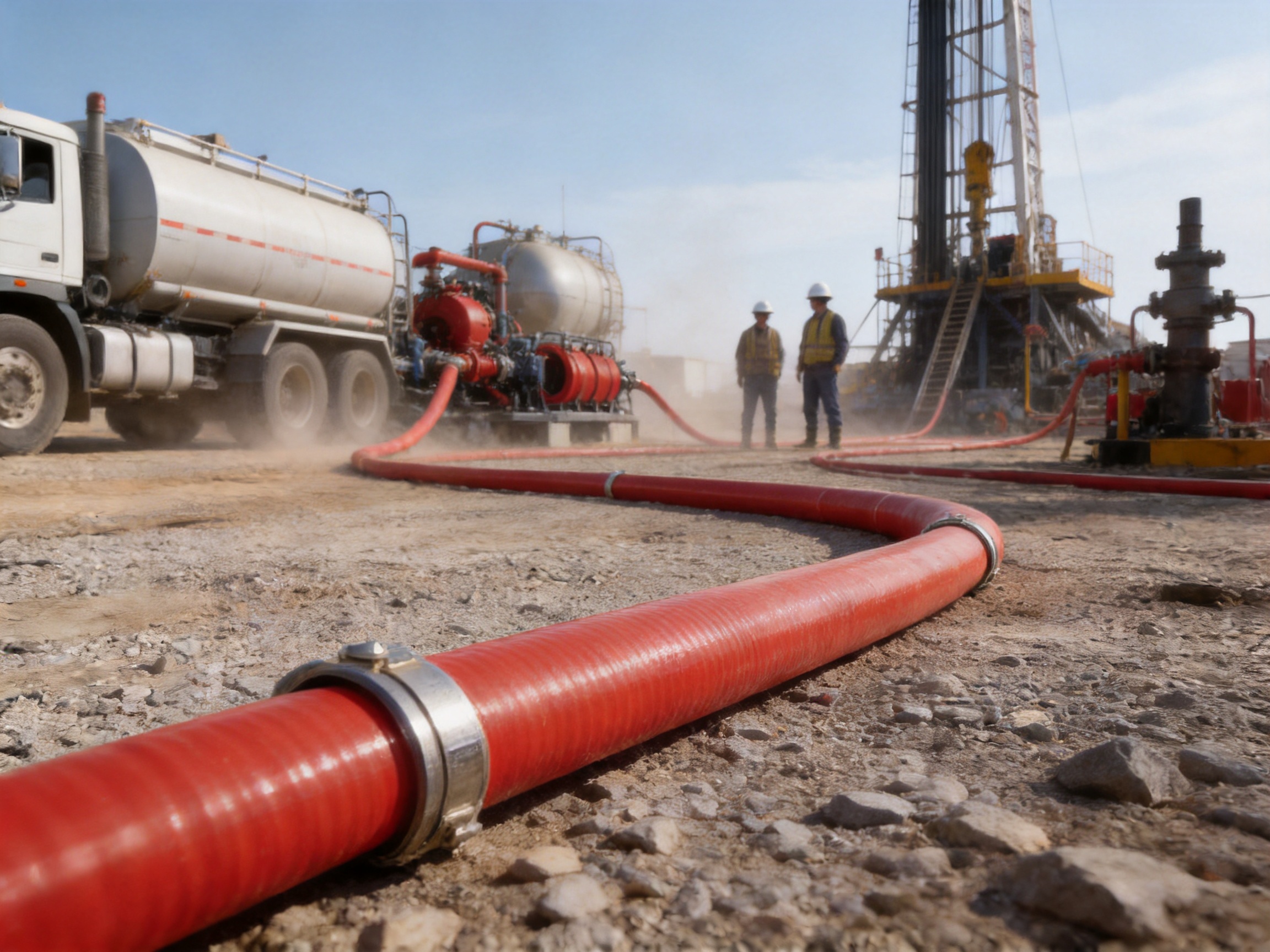
The primary application of the Co-Extrusion TPU Hose is the transfer of hydraulic fracturing fluids from tank trucks to the wellhead or other equipment. These fluids may include water, chemical additives, and treatment mixtures used during fracturing operations. Transfer efficiency directly affects job timing, equipment utilization, and overall site coordination. A hose that is easy to deploy and able to withstand working pressure helps reduce delays and supports smoother operations.
The hose can also be used for fluid transfer between various components on the drill site. Common examples include movement between pumps, blenders, frac tanks, storage units, and temporary manifolds. The flexible lay-flat format is especially useful when site layouts change or when temporary lines must be installed quickly. Instead of relying exclusively on rigid pipe sections or heavy hose assemblies, crews can use lay-flat hose to create practical fluid routes with fewer handling difficulties.
In addition to fracturing applications, the same design principles make the hose relevant for other industrial water transfer and fluid transfer tasks where pressure, abrasion, UV exposure, and chemical contact are concerns. However, the product should always be selected based on actual fluid compatibility, pressure requirements, temperature conditions, coupling method, and safety factors. Correct specification is essential for safe operation.
One of the most important advantages of the Co-Extrusion TPU Hose is its pressure resistance. Depending on size, the hose is available with working pressure ratings such as 200 to 300 psi for smaller diameters, 150 to 200 psi for larger diameters, and 120 psi for the 16-inch size. Burst pressure ratings are generally listed at approximately three times the working pressure, such as 600 to 900 psi for 2-inch and 3-inch hoses and 450 to 600 psi for several large-diameter options. This safety margin supports confidence when the hose is used within its specified limits.
In comparison with lower-grade lay-flat hoses that may be intended only for low-pressure water discharge, the reinforced TPU design provides a stronger solution for more demanding transfer systems. It is not enough for a fracturing hose to carry water; it must do so while resisting pressure fluctuations, handling stress, external abrasion, and continuous field use. The high tenacity reinforcement and TPU construction help the product meet these practical challenges.
Fracturing operations are performed outdoors, often under intense sunlight. Hoses may remain on the ground for extended periods, exposed to UV radiation, dust, moisture, oil, fuel residue, and chemical additives. A hose with poor UV resistance can become brittle, cracked, or weakened over time. A hose with poor oil or chemical resistance may swell, soften, or lose strength when exposed to site contaminants.
The TPU lining and cover give the Co-Extrusion TPU Hose strong resistance to UV, oil, and many chemicals. This feature makes it more suitable for industrial and oilfield environments than many ordinary fabric or PVC discharge hoses. While compatibility should always be checked for specific chemicals and concentrations, TPU is widely valued for its ability to resist a broad range of industrial exposure conditions.
Aging resistance is a major factor in total hose value. A hose that performs well when new but rapidly deteriorates under sunlight, temperature changes, and repeated handling creates higher replacement cost and greater operational risk. The Co-Extrusion TPU Hose is designed for high aging resistance, helping maintain performance during storage and field use.
The quality of the TPU compound, the stability of the reinforcement, and the integrity of the co-extruded structure all contribute to aging behavior. Good aging resistance means the hose can retain flexibility, surface integrity, and pressure capacity longer than many lower-cost alternatives. For distributors and end users, this translates into better lifecycle economics and fewer interruptions caused by premature hose failure.
On a fracturing site, hoses are rarely treated gently. They may be dragged across gravel, placed over uneven ground, exposed to mud, moved by crews, crossed by light equipment under controlled conditions, or handled in harsh weather. Abrasion resistance is therefore essential. TPU is particularly known for its resistance to wear, making it a strong choice for a hose cover.
Weather resistance is equally important. Rain, frost, heat, windblown sand, and sunlight can all affect hose performance. The Co-Extrusion TPU Hose is designed to withstand outdoor conditions better than many standard discharge hoses. This gives it an advantage in field environments where reliability matters and where replacing damaged hose can be costly and time-consuming.
Although strength is critical, handling efficiency is also a major advantage. Lay-flat hose can be rolled, transported, and stored more conveniently than rigid pipe or some heavy rubber hoses. The Co-Extrusion TPU Hose provides long lengths up to 60 meters, allowing crews to cover distance while minimizing connections. After use, the hose can be drained, flattened, rolled, and stored with less space demand.
This handling advantage improves field productivity. Faster deployment and retrieval can reduce labor time and support better site organization. In high-activity operations where many hoses, pumps, tanks, and vehicles must be coordinated, small improvements in handling can produce meaningful operational benefits.
The following table summarizes the available inner diameters, pressure ratings, burst pressure values, and approximate weights. Actual selection should be made according to the operating pressure, safety requirements, fluid type, coupling system, and site conditions.
| Inner Diameter | Inner Diameter | Working Pressure | Working Pressure | Burst Pressure | Burst Pressure | Weight |
| inch | mm | psi | bar | psi | bar | g/m |
| 2 | 51 | 200-300 | 14-21 | 600-900 | 42-63 | 200-250 |
| 3 | 76 | 200-300 | 14-21 | 600-900 | 42-63 | 360-450 |
| 4 | 102 | 200/250 | 14/17 | 600/750 | 42/51 | 1500-1700 |
| 5 | 125 | 200/250 | 14/17 | 600/750 | 42/51 | 1850-2100 |
| 6 | 152 | 200/250 | 14/17 | 600/750 | 42/51 | 2300-2650 |
| 8 | 204 | 150/200 | 10-14 | 450/600 | 30/42 | 2850-3300 |
| 10 | 254 | 150/200 | 10-14 | 450/600 | 30/42 | 3220-3950 |
| 12 | 306 | 150/200 | 10-14 | 450/600 | 30/42 | 4500-5100 |
| 14 | 356 | 150/200 | 10-14 | 450/600 | 30/42 | 6000-6600 |
| 16 | 400 | 120 | 8 | 360 | 24 | 7500 |
The range of diameters allows the hose to be used for different transfer volumes and site layouts. Smaller diameters such as 2 inches and 3 inches provide higher pressure options and easier handling for lines that do not require the highest flow volume. Mid-size hoses such as 4 inches, 5 inches, and 6 inches provide a balance between capacity and pressure rating. Larger sizes from 8 inches to 16 inches are useful for high-volume transfer where moving large quantities of fluid efficiently is the priority.
Weight is another important specification. Larger hoses naturally weigh more, but the lay-flat structure helps make them more manageable than many rigid alternatives. Selecting the right diameter avoids unnecessary weight while still providing adequate flow. Oversizing a hose can increase handling difficulty and cost, while undersizing may create excessive velocity, pressure drop, or operational inefficiency. The broad size range gives buyers the flexibility to match the hose to the job.
The listed burst pressure values provide an important indication of structural safety margin. Burst pressure is not a normal operating pressure; it is a test-related rating that demonstrates the hose’s ability to withstand pressure significantly above normal working pressure. Operators should always use the hose within its rated working pressure and follow safe practices, including controlled pressurization, proper coupling installation, inspection before use, and avoidance of sharp bends or crushing.
Advanced hose performance begins before extrusion or weaving. It begins with material selection. TPU quality, reinforcement yarn strength, compatibility between layers, and processing stability all affect the finished product. The manufacturer’s experience with fire hose and industrial hose production supports disciplined material control. Fire hose manufacturing, in particular, requires pressure performance, lining integrity, flexibility, and strict inspection, all of which are relevant to fracturing hose production.
TPU compounds must be chosen for the right combination of hardness, elongation, tear strength, abrasion resistance, hydrolysis resistance, temperature performance, and processability. Reinforcement yarns must be selected for tensile strength and consistency. When these components are controlled carefully, the finished hose has more uniform pressure behavior and improved service reliability.
The high tenacity synthetic jacket is a key pressure-bearing structure. In manufacturing, jacket formation requires consistent yarn tension, stable weaving or circular reinforcement geometry, and accurate dimensional control. Uneven reinforcement can lead to weak zones, irregular expansion, or reduced burst performance. A properly formed jacket distributes stress evenly around the hose circumference and along its length.
Because Taizhou Shenlong Fire Science and Technology Co., Ltd. has long experience in lined hose production, it understands the importance of reinforcement consistency. The same production discipline used for fire hose and industrial hose can be applied to fracturing hose. This gives the product a manufacturing foundation that is stronger than simple commodity hose production.
The co-extrusion process supports precise integration of TPU lining and cover with the reinforcement. During production, processing temperature, extrusion pressure, material flow, cooling rate, and line speed must be controlled. If the process is unstable, the hose may show thickness variation, poor bonding, surface defects, or reduced mechanical performance. A controlled process helps create a smooth inner surface, consistent wall structure, and durable exterior cover.
Layer bonding is especially important in hoses used under pressure. When a hose repeatedly expands and relaxes during pressure cycles, weak bonding can lead to delamination. Delamination may reduce pressure capacity, create blisters, or expose reinforcement to moisture and abrasion. By emphasizing co-extrusion and controlled bonding, the Co-Extrusion TPU Hose is designed to reduce these risks.
The ability to provide ribbed or smooth cover options demonstrates manufacturing flexibility. A ribbed cover requires controlled surface shaping during extrusion so ribs are consistent and functional. A smooth cover requires clean material flow and surface finishing to reduce defects. Both options must maintain adequate wall thickness and bonding over the reinforcement.
This flexibility benefits customers because operating environments differ. Some users prioritize resistance to ground abrasion and easy grip, while others prioritize cleaning and lower surface friction. By offering both cover styles, the manufacturer can serve a wider range of job requirements without changing the core pressure-bearing design.
Reliable hoses require testing. Pressure testing helps verify that each production batch meets working pressure and burst pressure expectations. Visual inspection checks surface quality, cover defects, lining condition, and dimensional accuracy. Weight and diameter checks help ensure production consistency. For hoses used in demanding industrial and fracturing applications, inspection is not optional; it is part of the product’s safety value.
Advanced manufacturing strength is not only about equipment. It also involves process records, trained personnel, inspection methods, corrective action, and customer feedback. A company with integrated research, production, sales, and service can use market feedback to refine products and improve manufacturing control. This integration is a practical advantage over suppliers that only trade hose products without deep manufacturing experience.
Taizhou Shenlong Fire Science and Technology Co., Ltd. was founded in 1995 and has grown into an enterprise combining research and development, production, sales, and service. Its main products include lined fire hoses made with various materials, and it can also undertake customized foreign trade products involving rubber, PVC, polyurethane, and related hose constructions according to customer requirements. This history matters because hose performance depends on accumulated technical knowledge, not merely on raw materials.
The company’s products are used in fire protection, construction, water conservancy, and other industries. These industries require reliable fluid conveyance under difficult conditions. Fire protection demands fast deployment and pressure reliability. Construction requires abrasion resistance and practical handling. Water conservancy often requires long-distance transfer and outdoor durability. Experience across these sectors strengthens the company’s ability to understand what field users need from a fracturing hose.
The company cooperates with domestic foreign trade companies to produce export products for many countries. Export production requires attention to documentation, packaging, specification communication, and quality consistency. For international buyers, this background can reduce purchasing risk because the manufacturer is familiar with export expectations and varied customer requirements.
Another important strength is product breadth. The company’s categories include fire hose, industrial hose, agricultural hose, hose couplings, hose nozzles, fire accessories, fire cabinets, and trenchless rehabilitation hose. This broad product system allows the company to understand not only hose bodies but also hose use, connection, handling, storage, and field deployment. For a fracturing hose, the connection between hose and coupling is critical. A manufacturer familiar with couplings and accessories is better positioned to support complete fluid transfer solutions.
TPU occupies a useful position between flexible plastics and high-performance elastomers. It can provide strong abrasion resistance, high tear strength, flexibility, and resistance to oil and many chemicals. In hose applications, TPU is often selected when users need better durability than standard PVC and lighter handling than many rubber constructions. For fracturing fluid transfer, these characteristics are highly relevant.
The inner surface of a hose affects flow efficiency and resistance to buildup. A consistent TPU lining can help provide a smooth flow path, reducing turbulence and making cleaning easier. The outer TPU cover protects the reinforcement against abrasion, UV exposure, and contact with site contaminants. This dual protection is a major reason the co-extrusion TPU structure offers a competitive advantage.
TPU also supports cold-weather flexibility better than many rigid plastic materials. The operating temperature range down to minus 40 degrees Celsius makes the hose suitable for cold environments where lower-grade materials may become stiff or brittle. At the upper range of 80 degrees Celsius, the hose also supports use in hot outdoor environments and with warm fluids within specification limits.
Standard PVC lay-flat hose is widely used for low-cost water discharge. It is useful in many light and medium-duty applications, but it often cannot match TPU in abrasion resistance, aging resistance, oil resistance, and high-performance pressure behavior. In oilfield environments, where sunlight, chemicals, and rough ground are common, a standard PVC hose may wear faster or lose flexibility sooner.
The Co-Extrusion TPU Hose is positioned as a more robust solution. It provides stronger material performance, improved resistance to demanding exposure, and a construction better suited to industrial transfer duties. Although the initial cost may be higher than a basic PVC hose, the potential for longer service life and fewer failures can make TPU more economical over time.
Rubber hose can be strong and durable, but it is often heavier and more difficult to handle, especially in larger diameters. Heavy rubber assemblies may require more labor, equipment, and storage space. They may also be less convenient for temporary lines that need frequent deployment and retrieval.
The Co-Extrusion TPU Hose provides a different balance. It offers pressure resistance and durability while preserving lay-flat handling advantages. For applications where flexibility, storage efficiency, and deployment speed matter, the TPU lay-flat design can outperform heavy rubber alternatives in practical field productivity.
Rigid pipe is durable and can handle high pressure, but it is less adaptable to changing site layouts. It requires more time to install, more fittings, and more planning. On temporary fracturing sites, flexibility is often valuable. Equipment may move, tank placement may change, and transfer routes may need to adapt quickly.
The Co-Extrusion TPU Hose allows faster installation and rerouting. It does not replace rigid pipe in every application, especially where extremely high pressure or permanent installation is required, but it offers clear advantages for temporary transfer lines and flexible site layouts. Its ability to be rolled for transport and storage further strengthens its practical value.
To achieve the best service life, users should select a hose size and pressure rating that match the job. The hose should never be operated above its rated working pressure. Pressure surges should be controlled with proper pump operation, valves, and system design. Abrupt valve closure can create water hammer and may damage hoses, couplings, or equipment.
Before each use, crews should inspect the hose for cuts, abrasion, exposed reinforcement, blistering, coupling damage, or signs of chemical attack. The hose should be laid on ground that is as clear as practical of sharp stones, metal edges, and cutting hazards. Where the hose crosses a road or work path, suitable protection should be used. The hose should not be kinked sharply under pressure, and bending radius should be respected according to practical handling guidance.
After use, the hose should be drained and cleaned as appropriate for the transferred fluid. If chemical additives have contacted the hose, compatibility and cleaning procedures should be followed. The hose should be dried when possible and stored away from sharp objects, excessive heat, and unnecessary sunlight exposure. Although the hose has UV and weather resistance, good storage practices still extend service life.
Coupling installation is another critical area. The coupling system must match the hose size, pressure rating, and application. Poorly installed or mismatched couplings can become failure points even when the hose body is strong. Users should ensure that coupling methods are appropriate for the selected hose and that assemblies are tested before field operation.
Pressurized fluid transfer always involves risk. A hose under pressure stores energy, and failure can cause sudden movement, fluid release, or injury. Operators should keep personnel away from pressurized hose lines whenever possible, especially near couplings and bends. Lines should be pressurized gradually, and pressure should be monitored during operation.
The rated burst pressure should never be treated as an operating pressure. Burst pressure is a design and test indicator, while working pressure is the maximum pressure for normal use under specified conditions. Safety factors are included to account for real-world variations, but they do not permit careless operation. Proper training, inspection, and system control remain necessary.
Chemical safety is also important. Fracturing fluids may contain additives that require personal protective equipment and specific handling procedures. The hose may resist many oils and chemicals, but operators must still follow safety data sheets and site rules for fluid handling. Hose selection should include chemical compatibility review when the transferred fluid is known to contain aggressive components.
Customers often require more than a standard hose. They may need specific lengths, cover style preferences, coupling compatibility, packaging requirements, labeling, or documentation. The manufacturer’s ability to undertake customized hose-related products according to customer requirements is a significant advantage. This flexibility is supported by the company’s experience with rubber, PVC, polyurethane, and various lined hose products.
For distributors, consistent supply and technical communication matter. A manufacturer with production, sales, and service integrated into one organization can respond more effectively to specification questions, application feedback, and order planning. This is especially important for international buyers who need reliable communication and predictable production quality.
Because the company has long-term experience supplying products across multiple provinces and exporting through trade partnerships, it understands diverse market needs. Some customers prioritize pressure rating, others prioritize weight, and others need a particular cover finish or hose length. The Co-Extrusion TPU Hose platform allows many of these needs to be addressed within a coherent product structure.
For distributors, a hose must be marketable, dependable, and backed by a manufacturer capable of repeat supply. The Co-Extrusion TPU Hose offers clear selling points: high pressure resistance, TPU abrasion resistance, UV and chemical resistance, high aging resistance, temperature flexibility, long available lengths, and a broad size range. These advantages make it suitable for industrial buyers who need more than a basic water discharge hose.
For end users, the value is measured in field performance. A good hose should reduce downtime, simplify handling, resist damage, and maintain pressure capability. The cost of hose failure on a fracturing site can be much greater than the cost of the hose itself. Lost time, cleanup, safety risk, and replacement logistics all affect total operating cost. A durable TPU hose can help reduce those hidden costs.
The product’s competitive advantage is not based on one feature alone. It comes from the combination of materials, reinforcement, co-extrusion process, pressure performance, weather resistance, and manufacturing experience. This integrated value is what separates a professional fracturing hose from ordinary commodity hose.
When selecting a Co-Extrusion TPU Hose, the first factor is required flow rate. Larger diameters allow greater flow but increase weight and handling requirements. The second factor is working pressure. The selected hose must have a working pressure rating equal to or greater than the maximum expected system pressure, including normal fluctuations. The third factor is fluid compatibility. If the fluid includes chemicals, oils, or additives, compatibility should be confirmed.
The fourth factor is site environment. Rough ground, intense sunlight, cold weather, and frequent movement favor a hose with strong abrasion, UV, and aging resistance. The fifth factor is length. Longer lengths reduce the number of connections but may be heavier to move when filled or wet. Finally, users should consider coupling type and installation method. A strong hose requires an equally suitable connection system.
For high-pressure transfer in smaller lines, 2-inch or 3-inch options may be appropriate. For balanced high-volume use, 4-inch to 6-inch sizes often provide practical capacity with strong pressure performance. For large-volume transfer lines, 8-inch to 16-inch sizes provide higher flow capability with working pressure ratings suited to their larger diameter design. The final choice should be based on engineering judgment and site safety requirements.
The main purpose is to transfer hydraulic fracturing fluids from tank trucks to the wellhead or other equipment. It can also transfer fluids between pumps, blenders, frac tanks, and other drill site components.
The hose uses a high tenacity synthetic reinforcement jacket with TPU lining and TPU cover. The cover can be supplied in ribbed or smooth form depending on customer needs.
TPU provides strong abrasion resistance, UV resistance, oil resistance, chemical resistance, aging resistance, and flexibility. These properties make it well suited for outdoor industrial and fracturing environments.
The hose is designed for operation from minus 40 degrees Celsius to 80 degrees Celsius, making it suitable for both cold and hot field conditions within specification limits.
The hose can be supplied in lengths up to 60 meters. Longer lengths can reduce the number of couplings and simplify temporary transfer line installation.
Co-extrusion helps form consistent TPU lining and cover layers while supporting strong bonding and uniform wall structure. This improves durability, pressure reliability, and resistance to delamination.
Compared with ordinary PVC lay-flat hose, the Co-Extrusion TPU Hose generally offers better abrasion resistance, aging resistance, UV resistance, oil resistance, chemical resistance, and suitability for demanding industrial transfer tasks.
No. Working pressure is the pressure for normal operation. Burst pressure is a higher test-related value that indicates safety margin. The hose should always be used within its rated working pressure.
The hose is designed for hydraulic fracturing fluid transfer, but similar TPU lay-flat hose technology can also benefit industrial water transfer, construction, water conservancy, and other demanding fluid conveyance applications when correctly specified.
The manufacturer has experience dating back to 1995, integrated research and development, production, sales, and service capabilities, broad hose product categories, export production experience, and knowledge of lined hose manufacturing.
The Co-Extrusion TPU Hose is a durable and practical solution for hydraulic fracturing fluid transfer and related industrial applications. Its high tenacity synthetic jacket provides pressure strength, while the TPU lining and cover deliver abrasion resistance, UV resistance, oil resistance, chemical resistance, and aging resistance. With lengths up to 60 meters, temperature performance from minus 40 degrees Celsius to 80 degrees Celsius, multiple diameter options, and ribbed or smooth cover choices, the hose can meet a wide range of operational requirements.
Its advantages over ordinary PVC hoses, heavy rubber hoses, and rigid pipe systems come from a well-balanced design. It is stronger and more durable than many basic lay-flat hoses, easier to handle than many heavy alternatives, and more adaptable than rigid systems for temporary site layouts. The co-extrusion manufacturing process strengthens product consistency and layer bonding, while careful reinforcement formation supports pressure performance.
Behind the product is a manufacturer with decades of experience in hose production and a broad industrial product base. Taizhou Shenlong Fire Science and Technology Co., Ltd. combines research, production, sales, and service, giving customers access to both manufacturing capability and practical application support. For buyers seeking a reliable TPU fracturing hose with strong field advantages, this product offers a compelling combination of performance, durability, and manufacturing value.
1. Brown, R. P. Physical Testing of Rubber. Springer, 2006.
2. Hepburn, C. Polyurethane Elastomers. Springer Applied Science, 1992.
3. Osswald, T. A., and Menges, G. Materials Science of Polymers for Engineers. Hanser Publishers, 2012.
4. ASTM International. Standard Test Methods and Specifications for Rubber and Plastic Hose Performance.
5. Society of Petroleum Engineers. Hydraulic Fracturing Operations: Fluid Handling and Surface Equipment Practices.
6. Brydson, J. A. Plastics Materials. Butterworth-Heinemann, 1999.
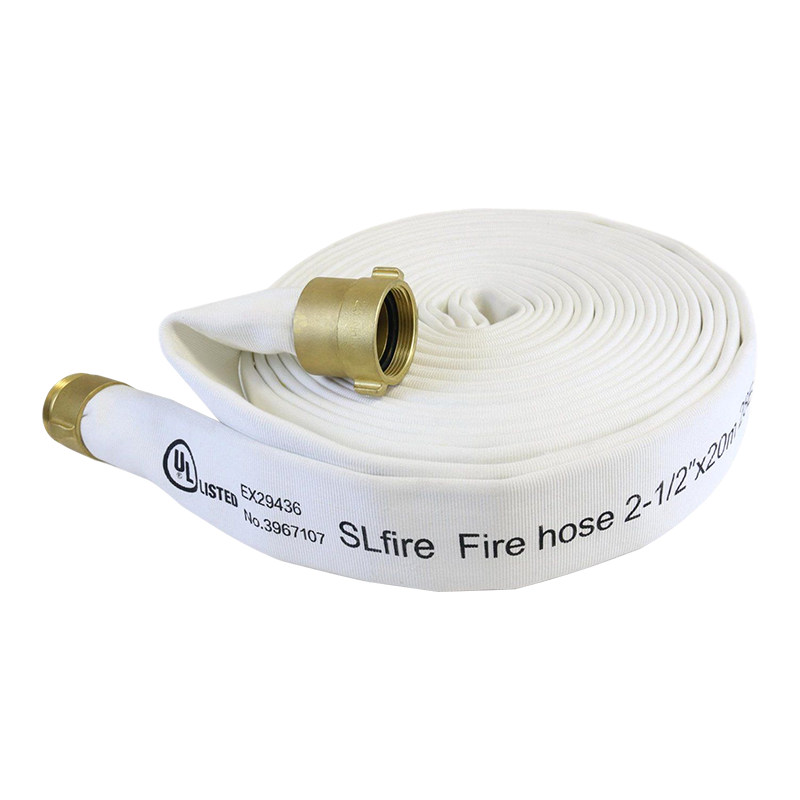
Single jacket, EPDM rubber liner Features • 100% high tenacity polyester jacket, high-grade EPDM rub...
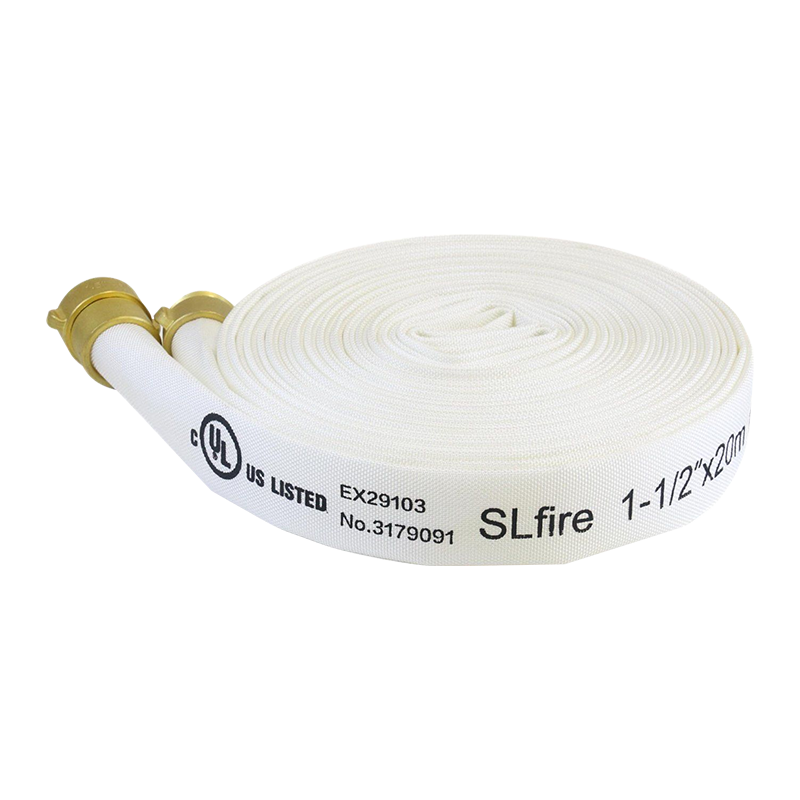
Single jacket, TPU liner •High-tenacity polyester yarn, circular woven in twill weave/plain weave,T ...
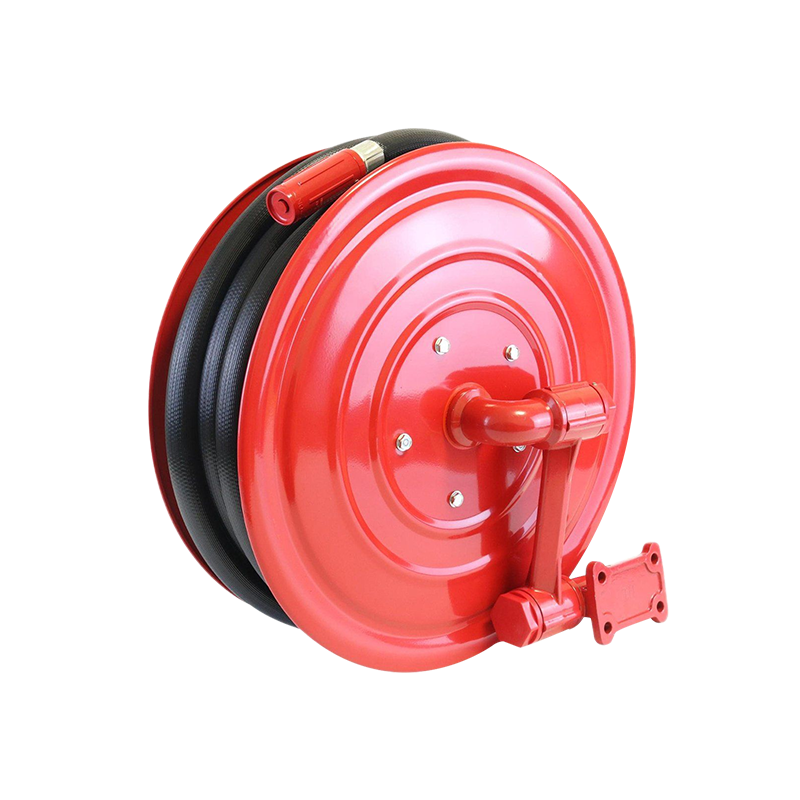
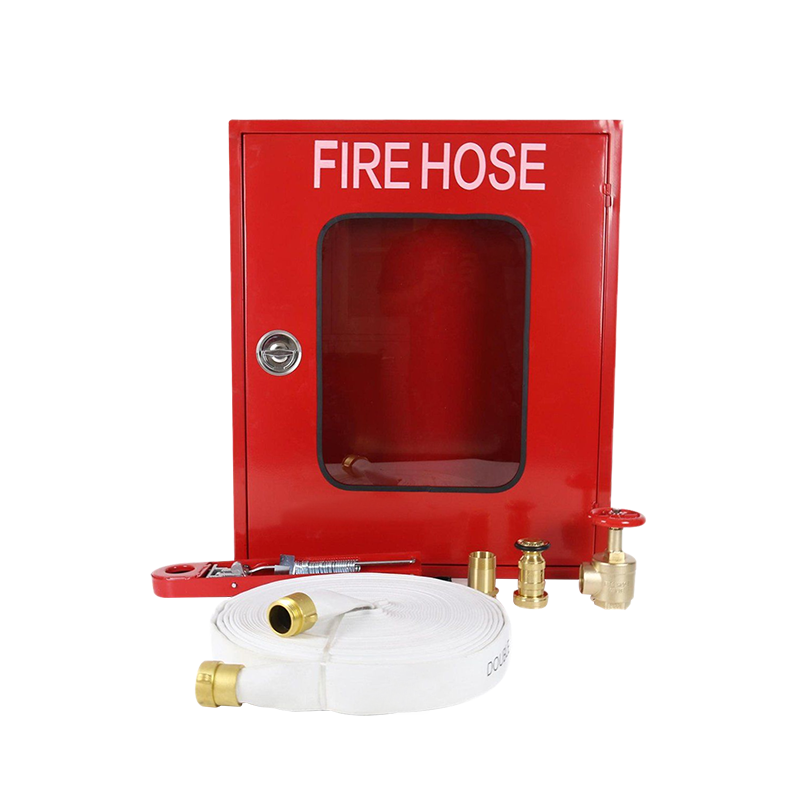
Fire cabinets are designed to accommodate fire hose,valve and other firefighting equipment. Type 201...
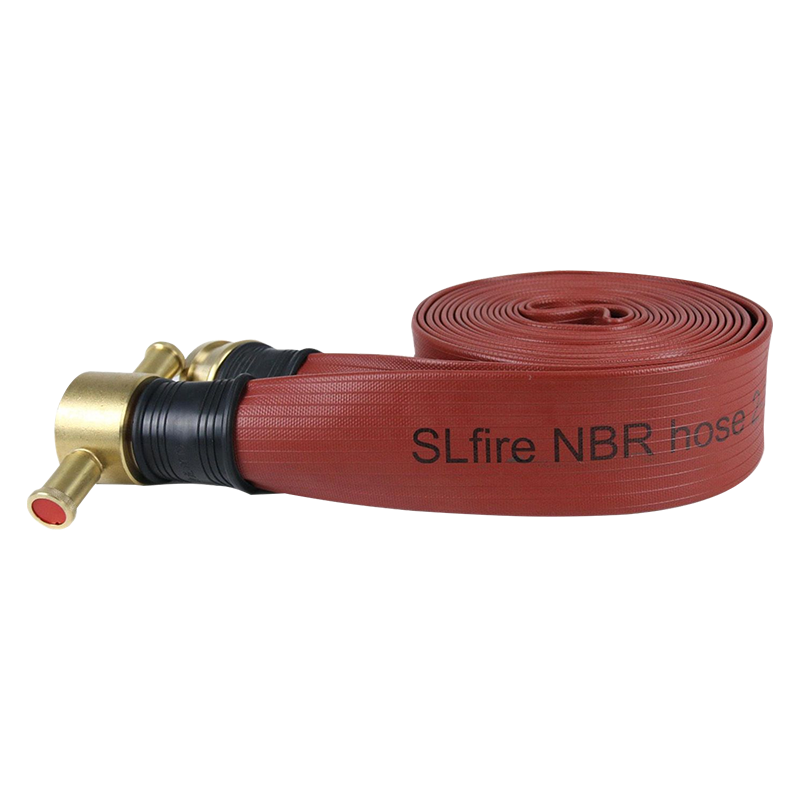
Nitrile covered hose •Nitrile/TPR blend as cover and lining, with 100% high-tenacity polyester yarn ...
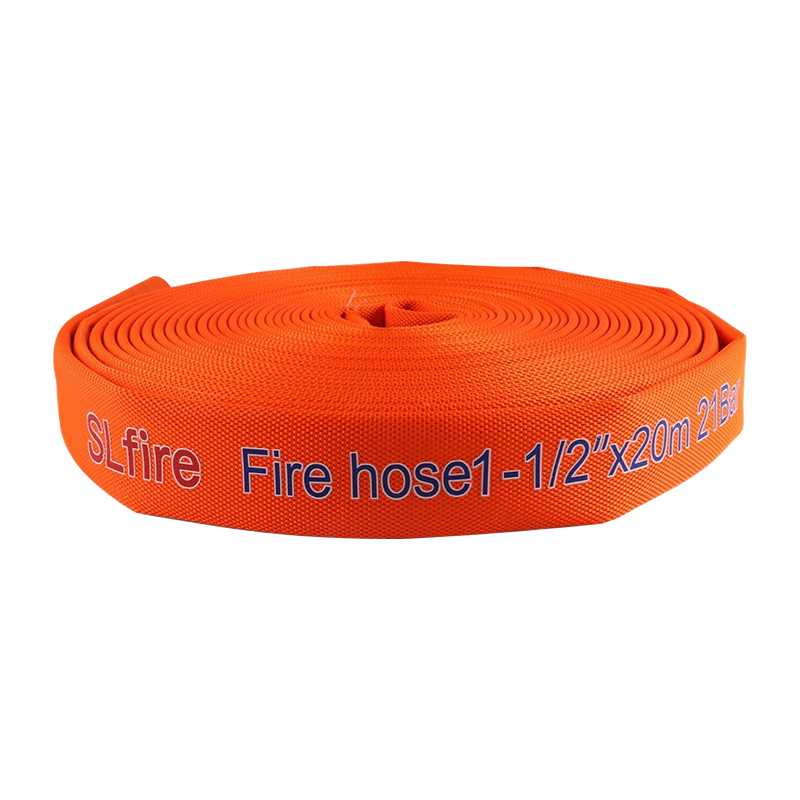
Single jacket, TPU liner •High-tenacity polyester yarn, circular woven in twill weave, TPU lining, f...
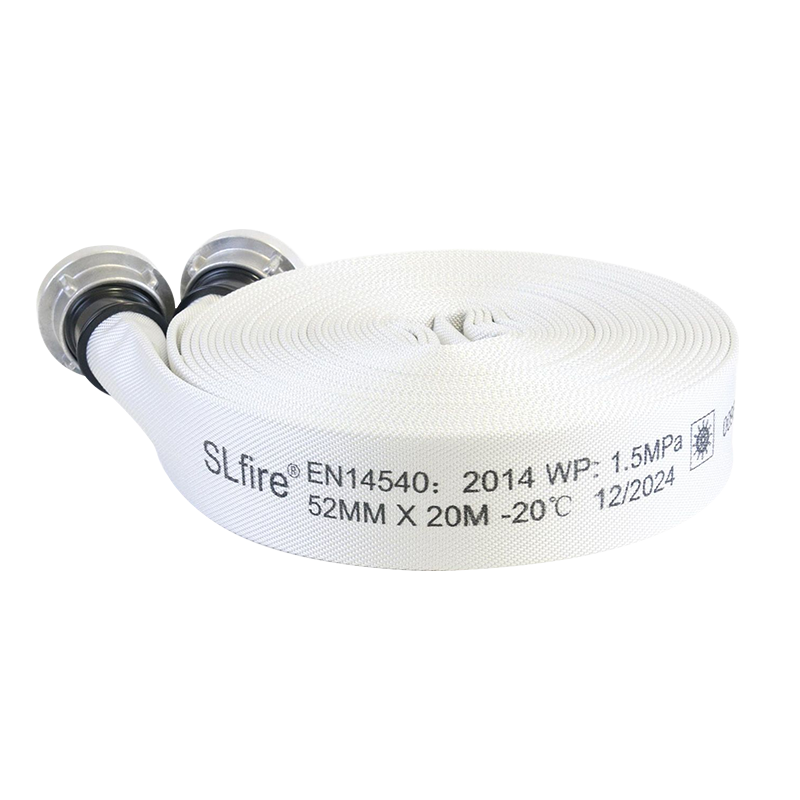
Marine hose Single jacket, PVC liner •100% high tenacity polyester yarn, circular woven in twill wea...
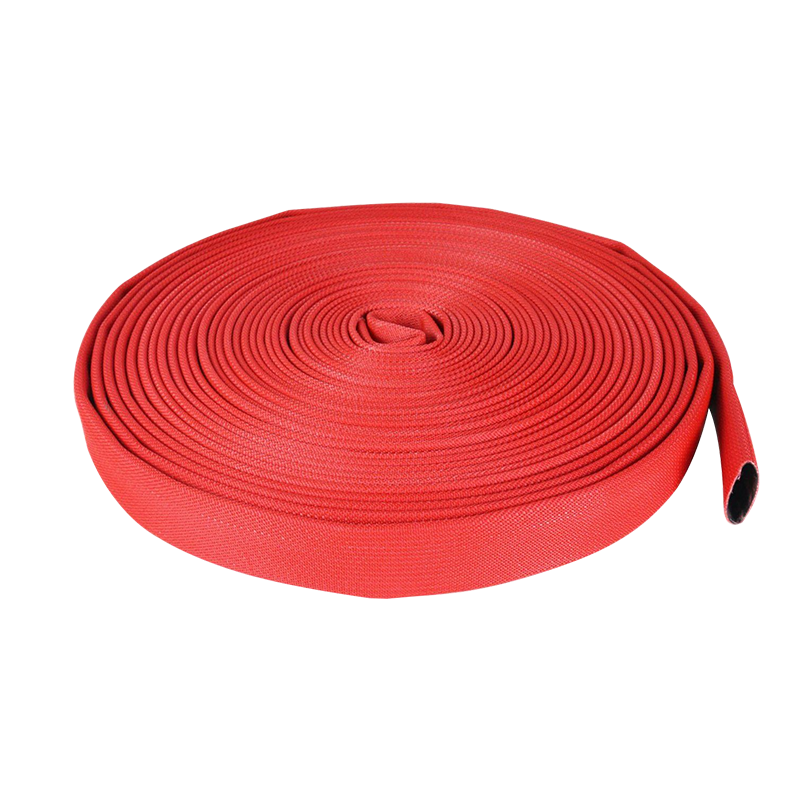
Marine hose Single jacket, PVC liner, PU coated •100% high tenacity polyester yarn,c ircular woven i...
 Call Us
+86 159-5116-9511
Need Support
Head Office
No.58, Kechuang Road, Sixiang Street Medicine Gaoxin District Taizhou City, Jiangsu Province

What Is a Fire Hose? A fire hose is a high-pressure flexible hose designed to carry water or fire retardant chemicals from a water source, such as a hydrant, pump, or tank, to a fire for suppression p...
Copyright © Taizhou Shenlong Fire Science and Technology Co., Ltd. All Rights Reserved.
 Fire Hose Manufacturers, Fire Hydrant Hose Factory