

 English
 русский
 Español
 Deutsch
 عربى
عربى Français
 Português
Don't hesitate to send a message

Single jacket, EPDM rubber liner Features • 100% high tenacity polyester jacket, high-grade EPDM rub...
Content
In firefighting, industrial water transfer, marine service, and emergency response, the quality of a hose can determine how efficiently a team controls risk. A Single Jacket EPDM Rubber Liner Attack Hose is engineered for fast deployment, dependable pressure performance, and long service life in demanding environments. Built with a 100% high-tenacity polyester jacket and a high-grade EPDM rubber lining, this hose combines flexibility, durability, and resistance to environmental degradation. It is designed for water, seawater, hot water, water steam, and selected chemical transfer applications, making it a versatile solution for professional users who need more than ordinary water conveyance.
This article explains the structure, advantages, manufacturing strengths, application value, selection considerations, and maintenance practices of the Single Jacket EPDM Rubber Liner Attack Hose. It also highlights why a company with long-term fire hose manufacturing experience, integrated production capability, and product customization strength can offer greater reliability than suppliers that focus only on low-cost output.
Single Jacket EPDM Rubber Liner Attack Hose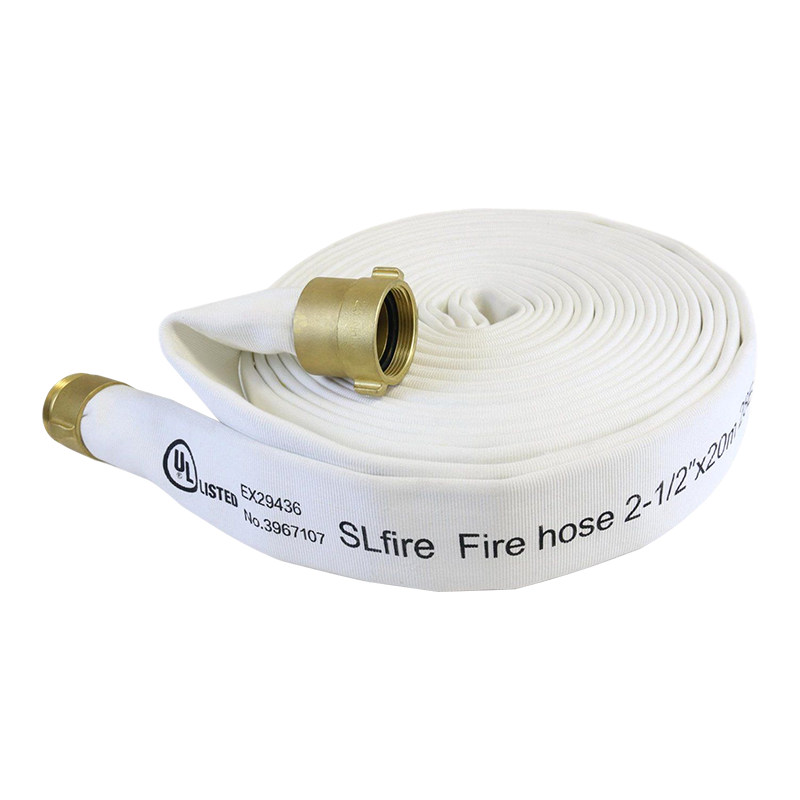
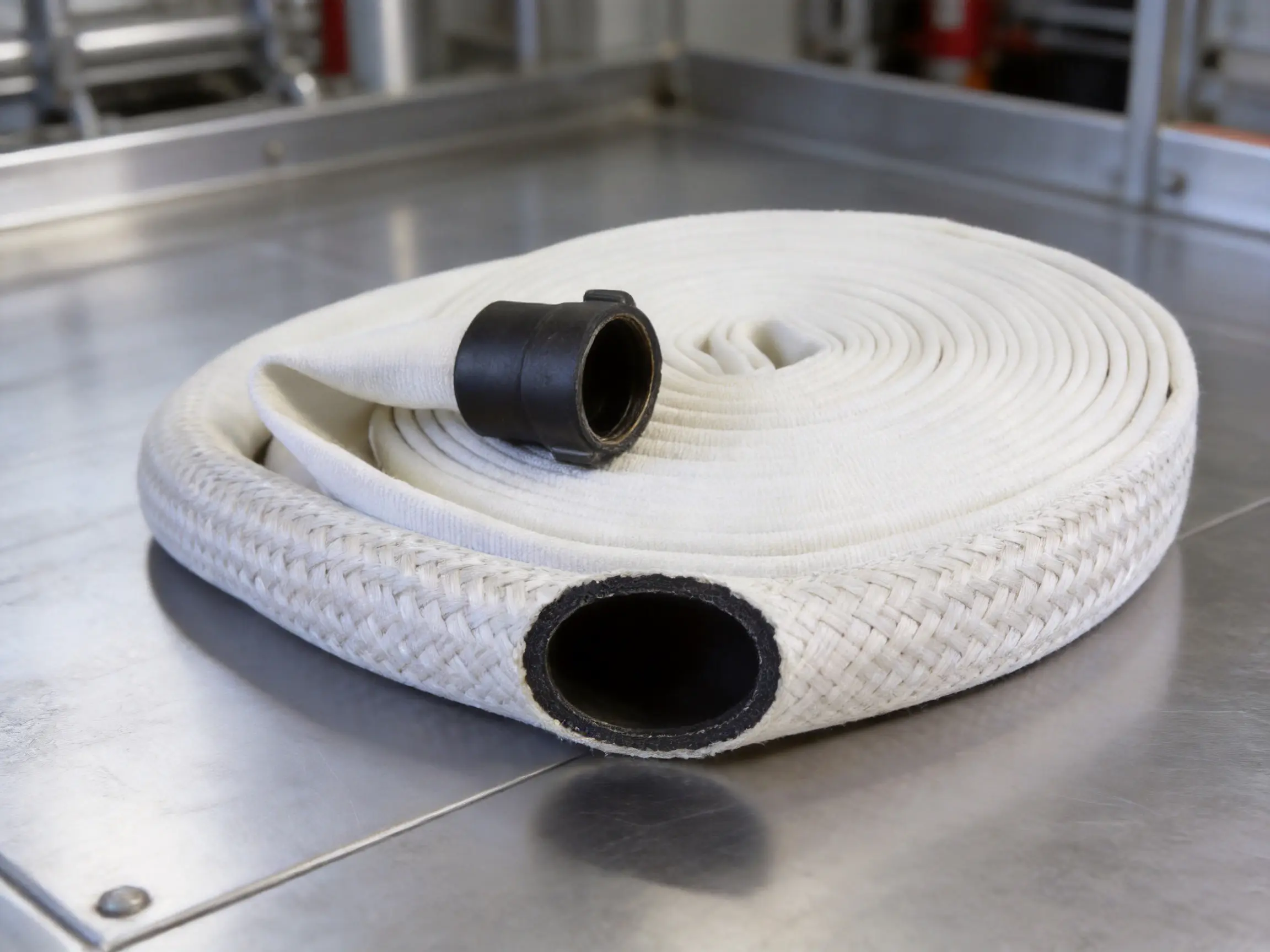
A Single Jacket EPDM Rubber Liner Attack Hose is a firefighting hose designed primarily for water delivery under high-pressure working conditions. The term “single jacket” refers to the outer woven textile reinforcement layer. In this product, the jacket is made from 100% high-tenacity polyester yarn. This reinforcement provides strength, abrasion resistance, dimensional stability, and flexibility while keeping the hose lighter and easier to handle than many heavier double-jacket alternatives.
The inner liner is made from EPDM rubber, a synthetic elastomer valued for its resistance to water, ozone, UV radiation, aging, mildew, rot, and weather exposure. EPDM is widely used in industries where long-term environmental performance matters. When placed inside an attack hose, it provides a smooth, sealed waterway that reduces leakage risk and supports stable flow. It also helps the hose remain flexible in extreme cold, down to approximately -40°F or -40°C, which is important for departments and industrial teams working in winter climates.
The word “attack hose” typically refers to a hose used by firefighters to advance toward a fire and apply water or firefighting streams directly. For such use, a hose must be more than strong. It must be manageable, quick to charge, easy to pull around obstacles, resistant to dragging, and able to perform reliably after repeated use. The Single Jacket EPDM Rubber Liner Attack Hose is designed to address these practical needs while supporting recognized performance expectations such as NFPA 1961 and UL19 requirements.
The performance of a fire hose depends on how its layers work together. A well-designed hose is not simply a tube; it is a coordinated system of textile reinforcement, elastomer lining, process control, coupling compatibility, inspection, and packaging. The Single Jacket EPDM Rubber Liner Attack Hose uses a structure that balances high pressure capability, flexibility, and resistance to environmental damage.
The outer jacket is woven from 100% high-tenacity polyester. High-tenacity polyester has strong tensile properties, good resistance to stretching, and reliable dimensional stability. In hose service, these characteristics help the hose withstand internal pressure without excessive expansion while also resisting wear from pavement, concrete, industrial floors, and outdoor terrain.
Compared with lower-grade textile jackets, a high-tenacity polyester jacket provides better strength-to-weight performance. This matters during fireground operations because every additional pound affects handling speed and crew fatigue. A single-jacket construction makes the hose easier to deploy, carry, roll, store, and reload, especially when long lengths are needed.
The EPDM liner is the water-contact surface. Its key function is to create a sealed internal passage that prevents leakage and supports efficient flow. EPDM is particularly useful for hoses that may be exposed to fresh water, saltwater, outdoor weather, ozone, ultraviolet radiation, and temperature variation.
Compared with some lower-cost rubber or plastic liners, EPDM offers excellent aging resistance. This helps prevent hardening, cracking, and loss of flexibility over time. It also performs well in cold conditions, allowing the hose to remain flexible at temperatures as low as -40°F or -40°C. For municipal fire departments, industrial safety teams, shipyards, construction sites, and water transfer operators, this cold-weather flexibility can make the difference between quick deployment and operational delay.
The hose is available in practical lengths including 50 ft, 75 ft, and 100 ft. These common lengths support flexible planning for fire departments, facilities, and contractors. A 50 ft hose may be preferred for compact interior operations, equipment racks, or short extension lines. A 75 ft hose can provide added reach while remaining manageable. A 100 ft hose is often selected for longer advances, industrial layouts, outdoor water delivery, and larger operational zones.
The hose is designed to meet or exceed NFPA 1961 and UL19 standards. Standards matter because fire hoses are safety-critical products. Users need confidence that a hose has been designed around pressure, construction, durability, and performance expectations recognized by the firefighting industry. While local approval requirements may vary, selecting a hose aligned with respected standards helps procurement teams reduce risk and improve operational confidence.
Not all hoses that look similar deliver the same performance. Differences in raw materials, yarn quality, liner formulation, weaving density, bonding technology, curing control, testing procedures, and quality inspection can significantly affect service life. The Single Jacket EPDM Rubber Liner Attack Hose provides multiple advantages over many general-purpose or low-cost alternatives.
One of the most important advantages is flexibility at extremely low temperatures. In cold regions, some hoses stiffen, become difficult to deploy, or develop cracks when bent under stress. The EPDM liner used in this hose supports flexibility down to -40°F or -40°C. This is valuable for winter firefighting, outdoor industrial water transfer, mining sites, cold storage areas, and emergency response in severe weather.
Competitor hoses with less advanced liners may perform adequately in moderate temperatures but become hard or unreliable in freezing conditions. A hose that remains flexible reduces deployment time, lowers crew fatigue, and helps operators maintain better control over water delivery.
Outdoor hoses are frequently exposed to sunlight, heat, moisture, ozone, and fluctuating weather. UV radiation and ozone can accelerate material degradation, leading to cracks, brittleness, discoloration, and eventual failure. EPDM rubber is well known for its resistance to ozone and weathering, making it a strong liner choice for hoses stored in cabinets, on apparatus, at industrial plants, or near marine environments.
This resistance gives the hose an advantage over lower-grade materials that may degrade quickly when exposed to sunlight and air pollutants. Longer durability means fewer replacements, lower lifecycle cost, and improved readiness.
Fire hoses are often used, drained, rolled, and stored in environments where moisture remains present. If materials are not properly selected, mildew and rot can damage the hose structure and create unpleasant odors, discoloration, or weakening. The polyester jacket and EPDM liner combination offers strong resistance to mildew and rot, improving storage reliability after wet operations.
For departments or facilities that do not use a hose daily but must keep it ready at all times, resistance to aging is crucial. A hose that sits in a cabinet, apparatus compartment, or industrial emergency station must still work when needed. The anti-aging characteristics of EPDM contribute to long-term dependability.
The hose is suitable for water and seawater conveyance. Saltwater can be harsh on many materials, especially when hoses are used in marine firefighting, port facilities, shipyards, offshore service, coastal industrial plants, aquaculture, or emergency pumping. EPDM’s water resistance helps maintain liner integrity in both fresh and saltwater conditions.
Compared with hoses that are optimized only for freshwater, this broader compatibility improves versatility. A single hose type can support fire protection, industrial washdown, marine operations, and temporary water transfer where saltwater exposure is expected.
The product information notes suitability for hot water and water steam. This gives the hose value in certain industrial settings where elevated temperature water delivery is required. While application conditions such as temperature, pressure, and chemical concentration should always be confirmed before use, EPDM’s thermal and moisture resistance makes it suitable for a wider range of water-based services than many ordinary hose liners.
Competitor hoses made only for basic cold water may not maintain liner performance under higher thermal exposure. Choosing a hose with broader service compatibility can reduce equipment complexity and improve operational flexibility.
A single-jacket hose is generally lighter than a double-jacket hose of similar size. This makes it attractive for attack lines where firefighters must move quickly. Lower weight can also help industrial workers drag, reposition, and store hose with less effort. Reduced handling burden improves productivity and safety, especially when a hose must be deployed repeatedly.
While double-jacket hoses may be preferred for especially severe abrasion or heavy-duty municipal service, a well-made single-jacket EPDM-lined hose offers an excellent balance of strength, mobility, and cost efficiency. For many applications, this balance is more practical than choosing an unnecessarily heavy hose.
The following table summarizes important product characteristics and practical user benefits.
| Feature | Product Design | User Benefit |
|---|---|---|
| Outer Jacket | 100% high-tenacity polyester single jacket | Strong, flexible, lightweight, and easier to deploy |
| Inner Liner | High-grade EPDM rubber | Leak-resistant waterway with excellent aging and weather resistance |
| Low-Temperature Flexibility | Flexible at approximately -40°F or -40°C | Reliable handling in cold climates and winter emergencies |
| Environmental Resistance | Resistant to UV, ozone, mildew, rot, and aging | Longer service life in outdoor and wet storage conditions |
| Media Compatibility | Suitable for water, seawater, hot water, water steam, and selected chemicals | Versatile use across firefighting, marine, and industrial settings |
| Available Lengths | 50 ft, 75 ft, and 100 ft | Flexible selection for different deployment distances |
| Standard Orientation | Meets or exceeds NFPA 1961 and UL19 requirements | Improved confidence for professional fire protection procurement |
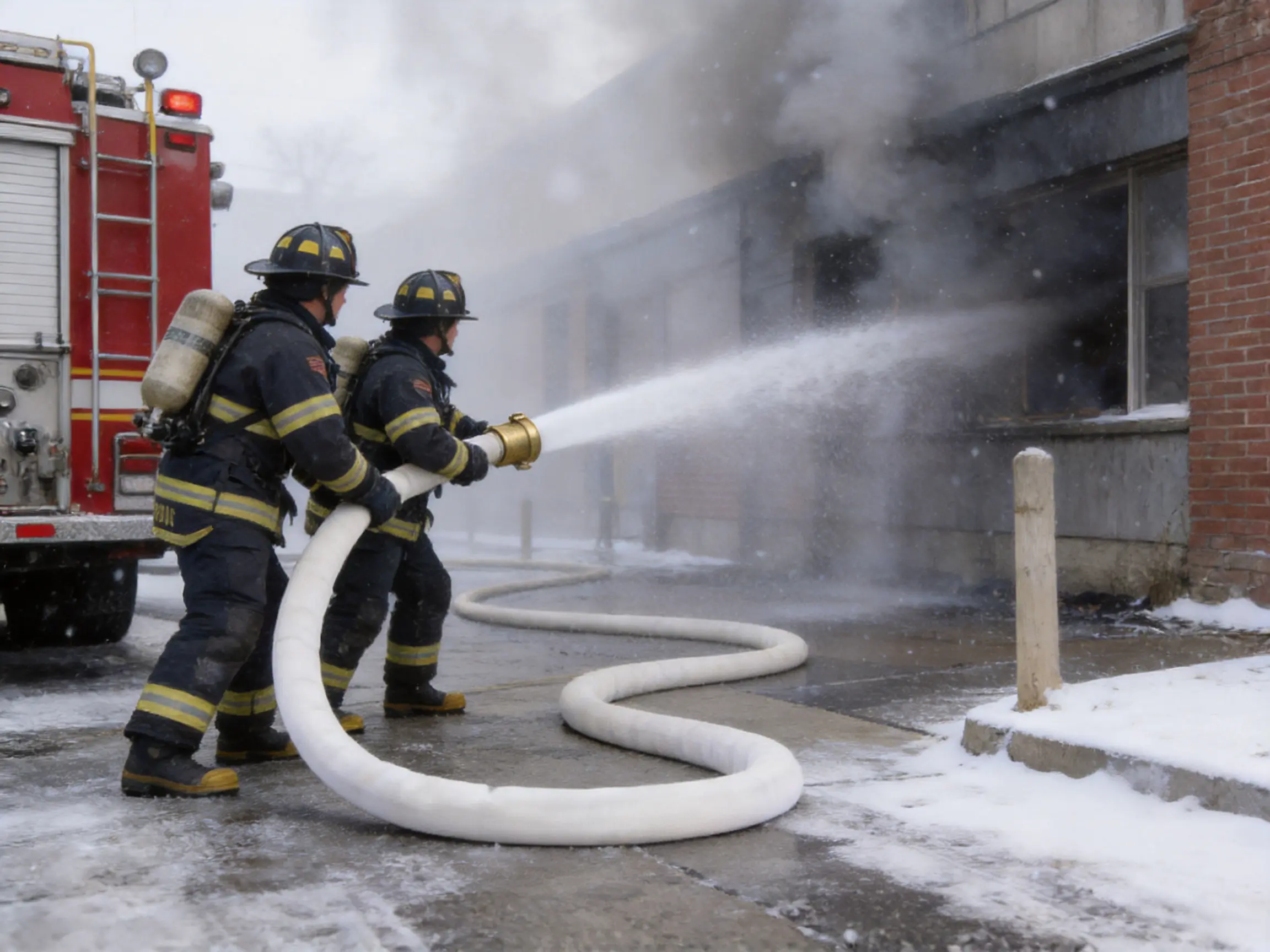
Firefighting places intense demands on hose performance. Attack lines must deliver water quickly and continuously while being pulled through streets, stairwells, hallways, industrial yards, and uneven outdoor environments. The hose must handle pressure, bending, abrasion, heat from nearby fire conditions, wet surfaces, and repeated coupling operations.
For interior fire attack, hose flexibility is essential. Firefighters must advance around corners, through doors, over thresholds, and across stairs. A stiff hose slows movement and increases physical strain. The single-jacket polyester construction and EPDM liner help maintain a manageable hose profile, supporting faster positioning and more controlled nozzle operation.
For exterior operations, weather resistance becomes more important. The hose may be exposed to sunlight, rain, mud, pavement, snow, and temperature swings. Resistance to UV, ozone, mildew, and rot supports dependable performance when the hose is used and stored in outdoor environments.
Although attack hoses are commonly connected from pumpers to nozzles, they may also support hydrant operations, short supply lines, cabinet systems, or emergency water delivery depending on the size and configuration selected. The available 50 ft, 75 ft, and 100 ft lengths allow departments to match hose inventory to apparatus layouts and operational tactics.
A hose that is easy to reload and store helps crews return to service faster after an incident. Single-jacket hoses are often easier to roll and manage than heavier alternatives, making post-incident recovery more efficient.
The product can be used in connection with fire cabinets where compatible hose sizes and coupling configurations are selected. In building protection systems, a hose may remain stored for long periods before emergency use. Resistance to aging, mildew, and environmental degradation is therefore essential. EPDM lining and polyester jacket construction help maintain readiness when the hose is properly stored and periodically inspected.
Beyond firefighting, the Single Jacket EPDM Rubber Liner Attack Hose is useful in industrial and agricultural environments where water conveyance reliability matters. Industrial hose users often need equipment that can tolerate rough handling, outdoor exposure, and intermittent high-pressure service. Agricultural users may need water transfer solutions for irrigation support, washdown, drainage, livestock operations, or emergency pumping.
Construction sites and water conservancy projects require hoses that can move water across temporary layouts. A lightweight but strong hose is easier to reposition as work zones change. The polyester jacket resists mechanical stress, while the EPDM liner supports reliable flow and sealing. In dewatering, temporary supply, and washdown tasks, the hose provides practical durability without unnecessary complexity.
Because EPDM performs well in saltwater environments, this hose is suitable for applications near ports, docks, shipyards, and coastal facilities. Saltwater exposure can shorten the life of inferior materials, but EPDM’s water resistance helps maintain long-term liner performance. When paired with appropriate couplings and proper rinsing after use, the hose can serve as a dependable marine water delivery option.
Industrial sites require fire protection and emergency water delivery systems that can be trusted under pressure. Refineries, warehouses, manufacturing plants, logistics centers, and chemical handling facilities may need hoses that remain available for occasional but critical use. The hose’s resistance to aging, ozone, UV, mildew, and rot helps support readiness in these environments.
The note that the hose is suitable for selected chemicals should be understood carefully. Chemical compatibility depends on the exact chemical, concentration, temperature, pressure, and exposure duration. Users should verify compatibility before transferring chemical fluids. However, EPDM’s broad resistance profile gives this hose an advantage over many ordinary water hoses in certain industrial situations.
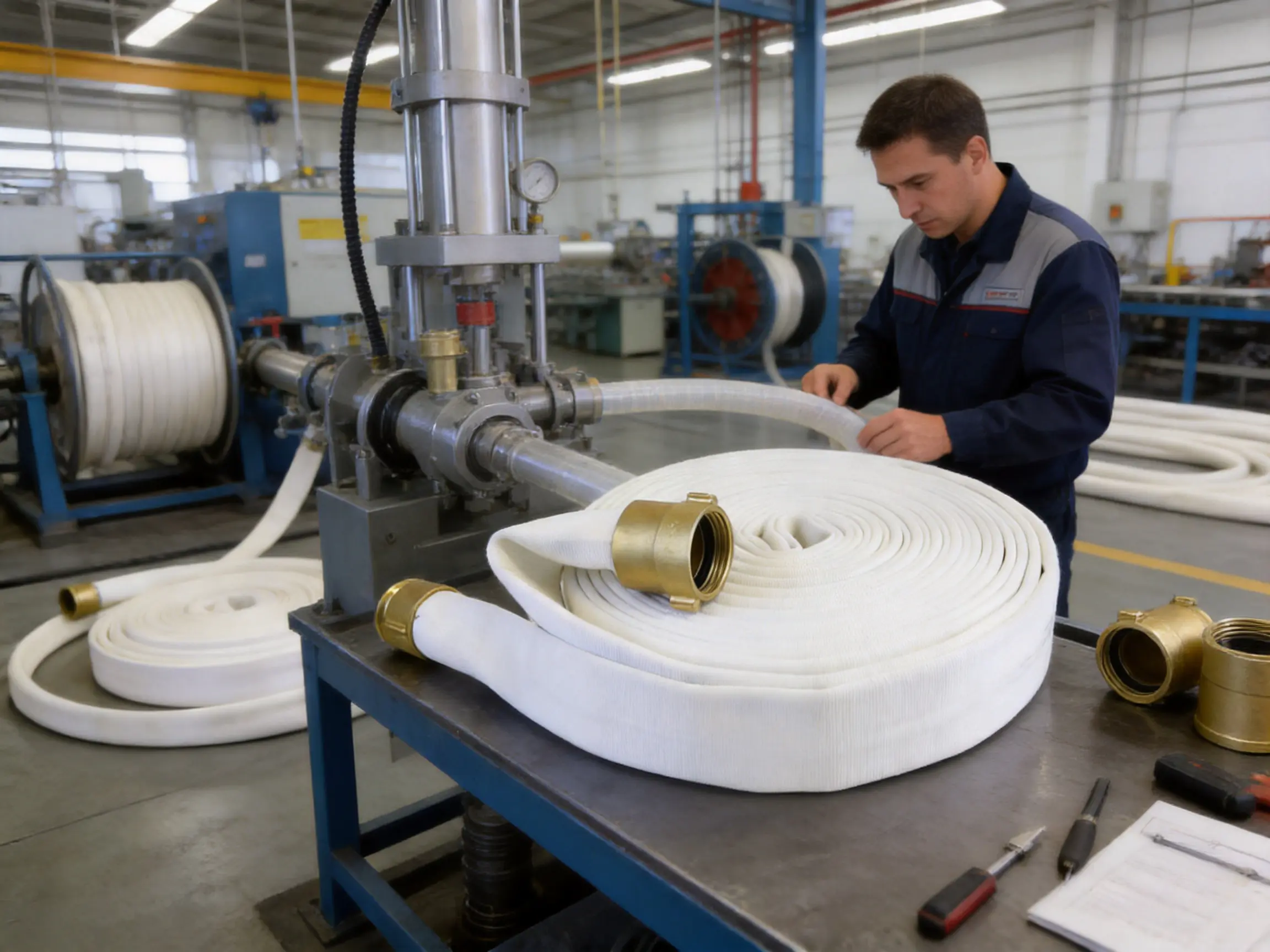
A hose’s performance is only as good as the manufacturing system behind it. Taizhou Shenlong Fire Science and Technology Co., Ltd. was founded in 1995 and has developed as an enterprise integrating research and development, production, sales, and service. The company focuses on various lined fire hoses and can also undertake foreign trade products involving rubber, PVC, polyurethane, and double-sided tape according to customer requirements.
Decades of production experience matter because fire hoses require consistent control at every stage. Material selection, yarn preparation, weaving, liner extrusion or processing, adhesion, curing, dimensional control, coupling assembly, pressure testing, and final inspection must be coordinated carefully. A manufacturer that combines R&D, production, and service can respond more effectively to technical requirements than a trading-only supplier.
Reliable hose manufacturing begins with raw materials. High-tenacity polyester yarn must be selected for strength, consistency, and weaving performance. EPDM rubber compounds must be prepared or sourced to provide suitable resistance to water, ozone, aging, low temperature, and thermal exposure. Material batches should be checked for uniformity before entering production.
Lower-cost competitors may reduce expense by using inconsistent yarn, lower-grade liner compounds, or insufficient inspection. These shortcuts may not be obvious at first glance, but they can lead to early leakage, poor flexibility, weak burst performance, or premature aging. Careful raw material selection is one of the most important ways to protect end users.
The jacket must be woven with controlled density and uniform tension. If the weave is too loose, pressure performance and abrasion resistance may suffer. If tension is uneven, the hose may twist, kink, or expand inconsistently when charged. Precision weaving helps the hose maintain shape and strength under pressure.
Advanced manufacturing focuses on repeatability. Machines must be calibrated, operators must monitor quality, and production parameters must be documented. For professional fire hoses, appearance alone is not enough; the structure must be consistently strong throughout the full hose length.
The inner liner must provide a smooth, continuous, leak-resistant surface. Proper liner formation affects flow efficiency, pressure loss, and durability. The liner must be integrated with the jacket so that the hose performs as a unified product rather than separate layers moving independently.
In a quality-focused production environment, the liner is processed with attention to wall uniformity, bonding or fitting stability, cure condition, and dimensional accuracy. Poor liner quality can create weak points, delamination, leakage, rough flow paths, or premature cracking. EPDM is an excellent material, but it must be processed correctly to deliver its full benefits.
Rubber curing is a critical step. Correct curing helps the EPDM liner achieve intended elasticity, strength, and resistance properties. Under-cured rubber may be weak or unstable; over-cured rubber may lose flexibility. Temperature, time, and process consistency must be managed carefully.
Dimensional control also matters. Hose diameter, wall thickness, length, coupling fit, and finished roll condition must match customer requirements. Fireground users rely on compatible connections and predictable handling. A small inconsistency in production can become a major inconvenience during emergency operations.
Professional hoses should be pressure tested to confirm performance before shipment. Inspection may include visual evaluation, dimensional checks, pressure holding, leakage inspection, coupling verification, and packaging review. This final stage reduces the risk that a defective hose reaches the customer.
Manufacturers with mature quality systems understand that inspection is not merely a formality. It is a practical responsibility because fire hoses are safety-related products. A reliable inspection process supports confidence for firefighters, industrial safety teams, and procurement departments.
Taizhou Shenlong Fire Science and Technology Co., Ltd. is located in Taizhou City, Jiangsu Province, and has served the fire hose industry for many years. The company’s products are widely used in fire protection, construction, water conservancy, and other industries. Its sales coverage includes many provinces, cities, and autonomous regions, and it cooperates with domestic foreign trade companies to supply export products to many countries.
An integrated enterprise can support customers more effectively than a supplier that only resells standard products. R&D capability helps with material improvement, structural design, and product adaptation. Production capability supports quality control and delivery stability. Sales and service capability helps customers select suitable products, understand specifications, and receive support after purchase.
For international buyers, integration is especially important. When a customer needs specific lengths, couplings, packaging, performance targets, or product documentation, a manufacturer with internal production and technical experience can respond more quickly and accurately.
The company can undertake products based on customer requirements, including products involving rubber, PVC, polyurethane, and related materials. This capability indicates manufacturing flexibility. In hose procurement, customization can include length, lining material, jacket style, coupling type, color, labeling, packaging, and application-specific performance features.
Customization helps customers avoid unsuitable off-the-shelf products. A municipal fire department, industrial plant, marine facility, agricultural user, and foreign distributor may all have different priorities. A capable manufacturer can help align hose design with real operating conditions.
Export experience matters because international orders often require consistent documentation, packaging, communication, and quality control. Products may need to satisfy different market expectations and inspection requirements. A company that has cooperated with foreign trade enterprises and exported products to many countries is better positioned to support global buyers.
In competitive markets, low price alone is not enough. Customers also need stable delivery, reliable packaging, consistent product batches, and responsive service. Export production experience supports these practical needs.
EPDM stands for ethylene propylene diene monomer. It is a synthetic rubber known for its resistance to water, steam, ozone, UV exposure, and weathering. These properties make it widely used in seals, roofing membranes, automotive weatherstrips, industrial hoses, and other applications where outdoor durability is important.
For fire hose liners, EPDM offers several useful advantages. It can remain flexible in cold temperatures, tolerate repeated wetting and drying, resist degradation from ozone, and perform well in water-based services. It also provides a smooth lining that supports efficient water movement and reduces leak potential.
Some hoses use PVC, polyurethane, nitrile, or other liner materials. Each material has its own strengths. PVC can be economical and lightweight. Polyurethane can offer abrasion resistance and compactness. Nitrile can provide oil and fuel resistance. EPDM stands out where weather resistance, water compatibility, ozone resistance, and cold flexibility are priorities. For an attack hose used in firefighting and outdoor water delivery, these are highly relevant strengths.
Choosing the right hose requires understanding tradeoffs. A Single Jacket EPDM Rubber Liner Attack Hose is not intended to replace every hose type in every situation. Instead, it provides a strong balance of mobility, water delivery reliability, environmental resistance, and cost-effective performance.
Basic PVC-lined hoses can be suitable for economical water transfer, but they may not provide the same low-temperature flexibility or ozone resistance as EPDM. In cold climates, PVC can become stiff depending on formulation. For professional fire protection and outdoor emergency use, EPDM offers a stronger durability profile.
Not all rubber liners are equal. Low-grade rubber may crack, harden, or degrade faster when exposed to UV, ozone, water, and temperature swings. High-grade EPDM is specifically valued for environmental resistance. This means the hose can maintain performance over a longer period when properly used and maintained.
Double-jacket hoses provide extra textile reinforcement and can be excellent for severe abrasion and heavy municipal use. However, they are heavier and may be more tiring to deploy. A single-jacket EPDM-lined hose is often more efficient where lightweight handling, quick deployment, and practical durability are the priorities. It can be an excellent choice for attack operations, industrial emergency stations, building fire cabinets, and water transfer tasks.
Many industrial water hoses are not designed around firefighting handling needs or fire hose standards. They may be heavier, less flexible, harder to store, or incompatible with firefighting couplings. The Single Jacket EPDM Rubber Liner Attack Hose offers a fire-hose-style design that supports rapid deployment, rolling, storage, and coupling integration while still serving industrial water delivery applications.
During use, a hose must perform not only in laboratory conditions but also in real environments. The practical benefits of the Single Jacket EPDM Rubber Liner Attack Hose become clear when considering everyday handling.
A lightweight single-jacket hose is easier to pull from a rack, cabinet, apparatus bed, or storage area. Faster deployment helps reduce response time. In firefighting, seconds matter. In industrial emergencies, quick water delivery can protect equipment, workers, and property.
Dragging and maneuvering charged hose is physically demanding. A hose that balances strength with lower weight reduces fatigue, especially during long incidents or repeated training sessions. Better flexibility also reduces resistance when moving around obstacles.
After use, hoses must be drained, inspected, dried when necessary, rolled, and stored. A manageable hose simplifies this process. Available standard lengths fit common storage practices and help users organize inventory efficiently.
The EPDM liner helps provide a smooth, leak-resistant internal passage. Stable water delivery supports nozzle performance, pump efficiency, and operator confidence. Leakage or liner defects can reduce pressure and create unsafe or inefficient operating conditions. A quality liner helps prevent these problems.
When selecting an attack hose, buyers should consider application, length, diameter, coupling type, pressure requirements, environmental conditions, storage method, and compliance expectations. The Single Jacket EPDM Rubber Liner Attack Hose is particularly suitable when the buyer values flexibility, weather resistance, water and seawater compatibility, and professional fire protection use.
A 50 ft hose is useful where compact handling and short reach are needed. A 75 ft hose offers a middle option with added distance. A 100 ft hose provides greater reach for larger firegrounds, industrial sites, outdoor operations, or temporary water delivery. Buyers should consider how the hose will be stored and deployed before choosing length.
Hose couplings must match hydrants, nozzles, pumps, cabinets, and local thread standards. Coupling compatibility is essential for safe and efficient operation. Buyers should specify thread type, coupling material, size, and any local requirements when ordering.
Temperature, water source, chemical exposure, pressure, abrasion level, and storage environment all influence hose selection. The EPDM liner provides strong resistance to water, seawater, weathering, ozone, UV, mildew, and aging, but users should verify suitability for special chemicals or unusually severe service.
A cheaper hose may cost less at purchase but more over time if it fails early, becomes stiff, leaks, or requires frequent replacement. A high-quality EPDM-lined hose can reduce lifecycle cost by improving durability and readiness. Buyers should evaluate total value rather than only initial price.
Proper maintenance extends hose life and protects users. Even a high-quality hose requires correct care. After each use, the hose should be inspected for cuts, abrasion, burns, soft spots, coupling damage, contamination, or signs of leakage. If the hose has been exposed to mud, seawater, chemicals, or dirty water, it should be rinsed thoroughly with clean water.
After washing, the hose should be drained and dried as appropriate before storage. Storing a wet hose for long periods can encourage odor, mildew on surrounding surfaces, or hidden damage, even when hose materials are resistant to mildew and rot. Hoses should be stored away from sharp objects, excessive heat, heavy crushing, and direct chemical contact.
Periodic pressure testing should be performed according to applicable fire department, facility, or industry guidelines. Couplings should be checked for tightness, gasket condition, thread damage, and proper fit. Hoses that show serious damage or fail testing should be removed from service.
In the hose industry, quality assurance is a major differentiator. Many hoses may appear similar in a catalog, but real-world reliability depends on manufacturing discipline. A company with long experience in fire hose production understands the importance of each step, from yarn selection to final inspection.
Taizhou Shenlong Fire Science and Technology Co., Ltd. has operated since 1995, giving it substantial experience in lined fire hoses and related flexible products. Its ability to combine R&D, production, sales, and service provides a foundation for stable quality and customer support. Its products are used across fire protection, construction, water conservancy, and other industries, showing practical market acceptance.
For buyers comparing suppliers, these strengths matter. A reliable manufacturer can help reduce risk, improve procurement efficiency, and support long-term supply relationships. In safety-related products, dependable manufacturing is not optional; it is essential.
It is mainly used for high-pressure water delivery in firefighting and can also support industrial, marine, agricultural, construction, and water transfer applications. It is suitable for water, seawater, hot water, water steam, and selected chemicals when compatibility is confirmed.
EPDM is used because it resists water, ozone, UV radiation, weathering, aging, mildew, and rot. It also remains flexible in very cold conditions, down to approximately -40°F or -40°C, making it suitable for outdoor emergency use.
A single-jacket hose has one woven textile reinforcement layer, making it lighter and easier to handle. A double-jacket hose has two reinforcement layers and may offer greater abrasion resistance, but it is usually heavier. The single-jacket design is advantageous when fast deployment and reduced fatigue are important.
The hose is available in 50 ft, 75 ft, and 100 ft lengths. These sizes support different deployment distances, storage layouts, and operational requirements.
Yes. EPDM rubber is highly resistant to water and performs well in both fresh and saltwater environments. For best service life after saltwater use, the hose should be rinsed with clean water and properly dried before storage.
Yes. One of its key advantages is flexibility at extremely low temperatures, down to approximately -40°F or -40°C. This makes it useful for winter firefighting and cold outdoor operations.
The hose is designed to meet or exceed NFPA 1961 and UL19 standards. Buyers should confirm required documentation and local approval needs when placing an order.
Its advantages include a 100% high-tenacity polyester jacket, high-grade EPDM rubber lining, cold-weather flexibility, resistance to UV and ozone, resistance to mildew and rot, suitability for seawater and hot water, and production support from an experienced manufacturer.
After use, inspect it for damage, rinse away dirt or contaminants, drain it, dry it when necessary, and store it properly. Periodic pressure testing and coupling inspection should be performed according to applicable safety practices.
Yes. The manufacturer has experience producing lined fire hoses and related rubber, PVC, polyurethane, and other products according to customer requirements. Buyers can discuss length, coupling, packaging, and application needs.
The Single Jacket EPDM Rubber Liner Attack Hose is a practical and reliable solution for firefighting and demanding water conveyance applications. Its 100% high-tenacity polyester jacket provides strength and flexibility, while the high-grade EPDM liner offers excellent resistance to water, seawater, ozone, UV radiation, aging, mildew, and rot. Its ability to remain flexible at extremely low temperatures makes it especially valuable in cold climates and outdoor emergency conditions.
Compared with many ordinary competitor hoses, this product offers a stronger balance of durability, handling comfort, environmental resistance, and application versatility. It is suitable for firefighting, industrial emergency response, construction, water conservancy, marine service, and agricultural water delivery when used within appropriate conditions.
The manufacturing strength behind the product is equally important. Taizhou Shenlong Fire Science and Technology Co., Ltd. brings long-term experience, integrated R&D and production capability, customization service, and export production knowledge. These capabilities help ensure that buyers receive not only a hose, but a dependable product supported by professional manufacturing discipline.
For procurement teams, fire departments, facility managers, distributors, and industrial users, choosing a Single Jacket EPDM Rubber Liner Attack Hose means choosing a hose designed for readiness, resilience, and long-term value. In emergency and high-demand applications, those qualities are essential.
National Fire Protection Association. NFPA 1961: Standard on Fire Hose.
Underwriters Laboratories. UL 19: Lined Fire Hose and Hose Assemblies.
International Rubber Study Group. Technical Overview of Synthetic Rubber Applications.
Society of Fire Protection Engineers. Fire Protection Engineering Handbook.
ASTM International. Standard Test Methods and Specifications Related to Rubber and Hose Materials.
Industrial Hose Technical Committee. Hose Construction, Selection, and Maintenance Guidelines.
Single jacket, EPDM rubber liner Features • 100% high tenacity polyester jacket, high-grade EPDM rub...
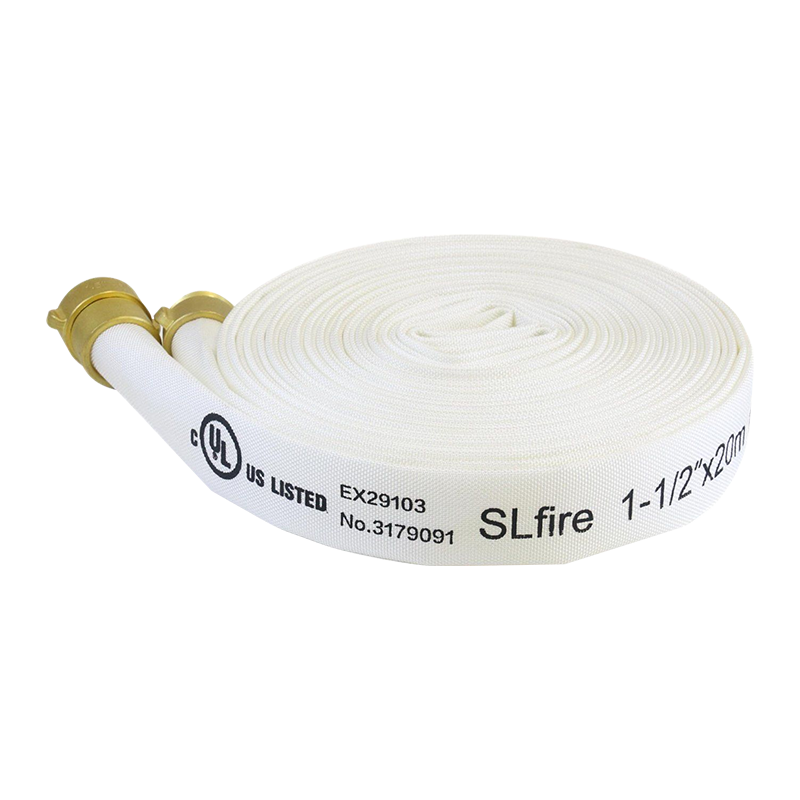
Single jacket, TPU liner •High-tenacity polyester yarn, circular woven in twill weave/plain weave,T ...
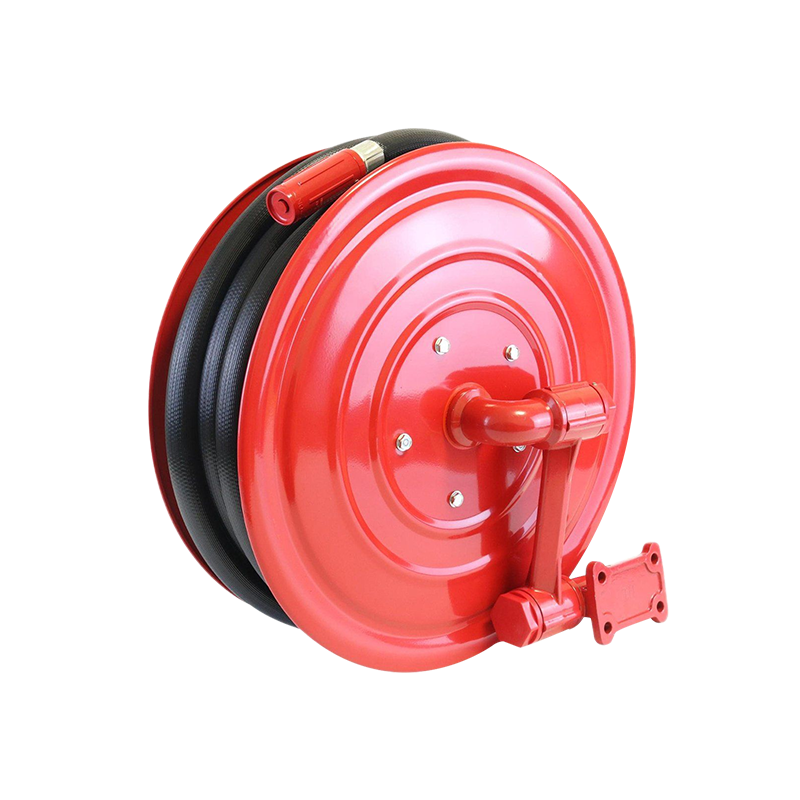
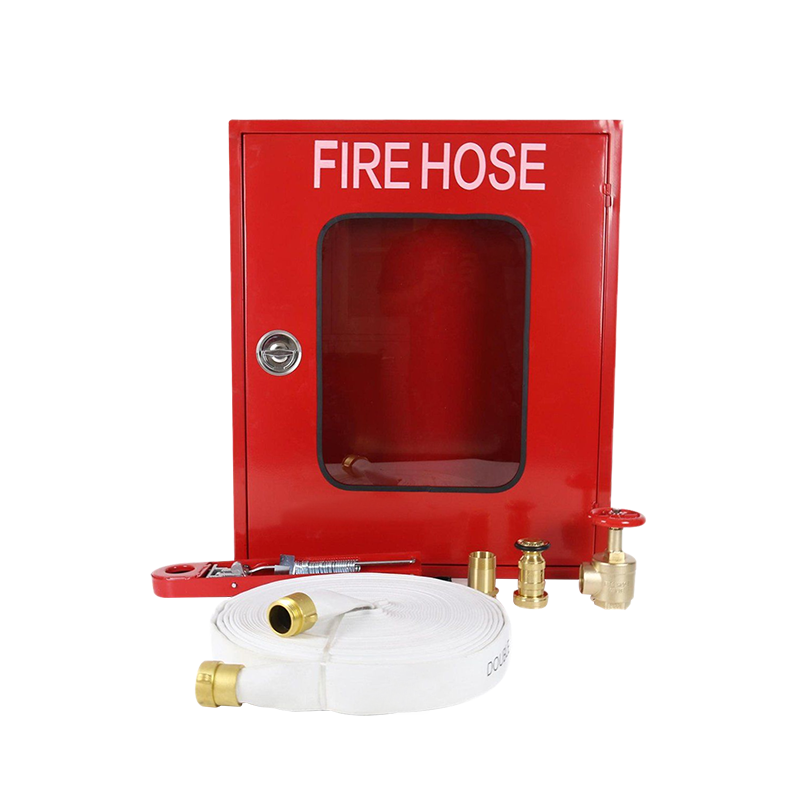
Fire cabinets are designed to accommodate fire hose,valve and other firefighting equipment. Type 201...
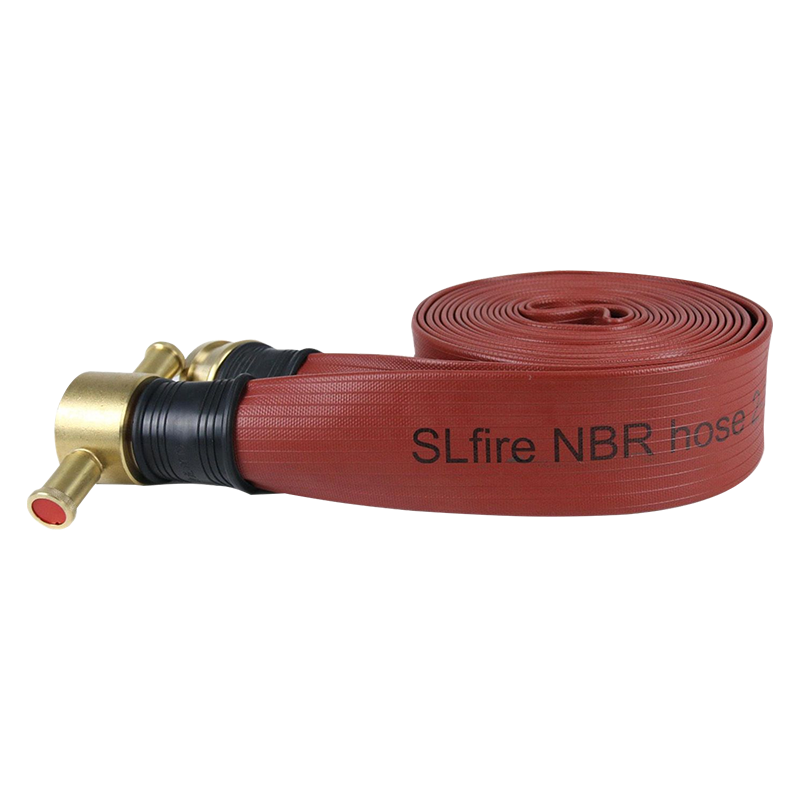
Nitrile covered hose •Nitrile/TPR blend as cover and lining, with 100% high-tenacity polyester yarn ...
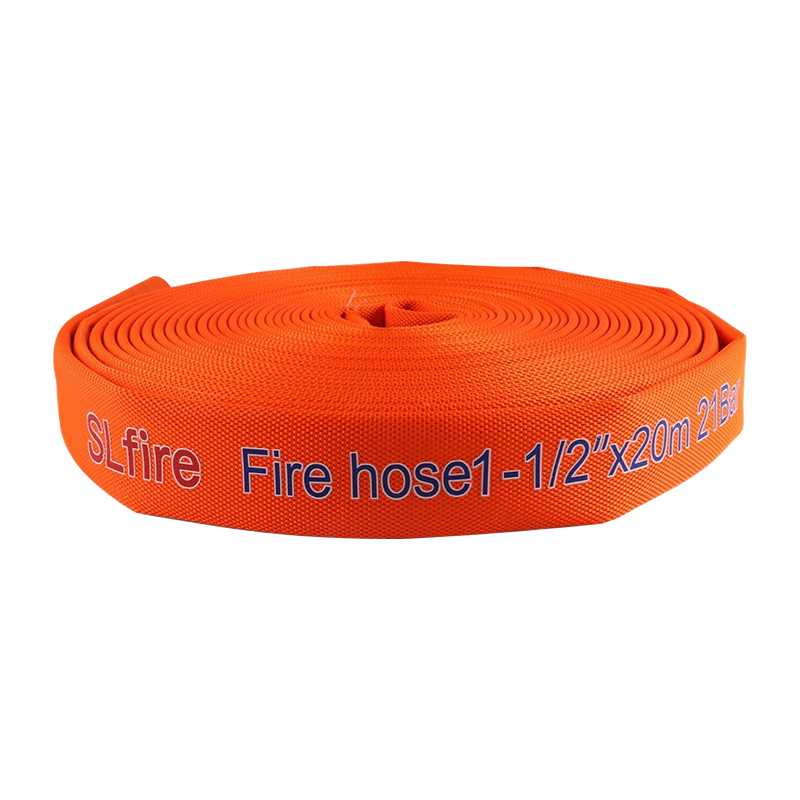
Single jacket, TPU liner •High-tenacity polyester yarn, circular woven in twill weave, TPU lining, f...
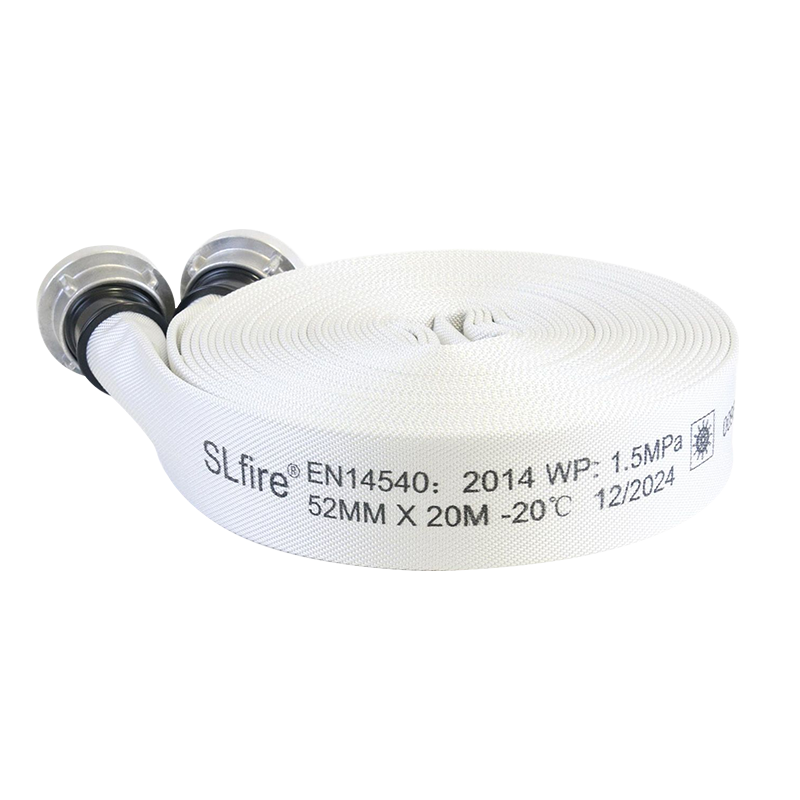
Marine hose Single jacket, PVC liner •100% high tenacity polyester yarn, circular woven in twill wea...
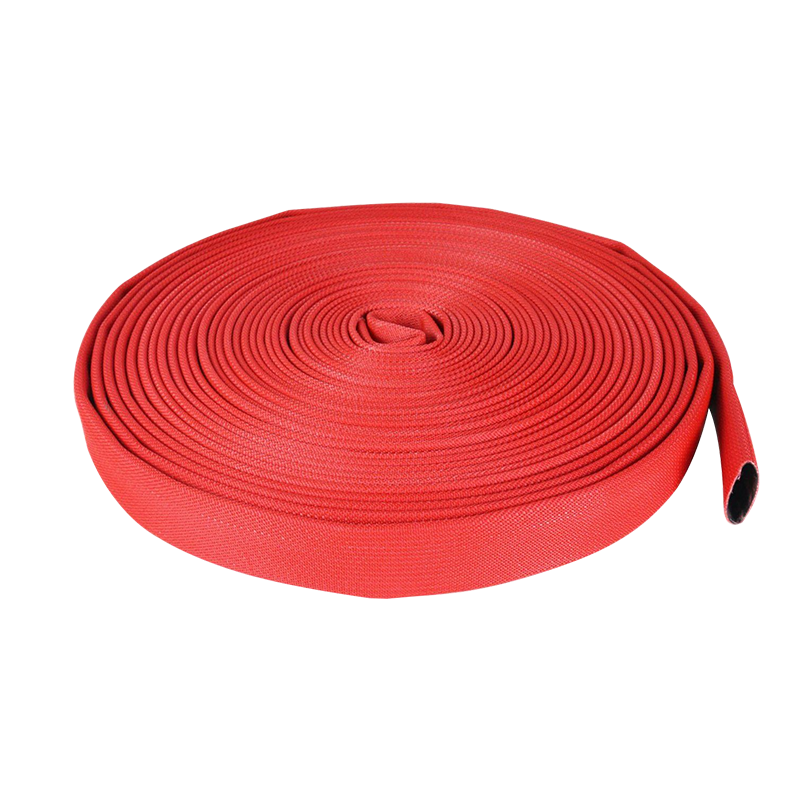
Marine hose Single jacket, PVC liner, PU coated •100% high tenacity polyester yarn,c ircular woven i...
 Call Us
+86 159-5116-9511
Need Support
Head Office
No.58, Kechuang Road, Sixiang Street Medicine Gaoxin District Taizhou City, Jiangsu Province

What Is a Fire Hose? A fire hose is a high-pressure flexible hose designed to carry water or fire retardant chemicals from a water source, such as a hydrant, pump, or tank, to a fire for suppression p...
Copyright © Taizhou Shenlong Fire Science and Technology Co., Ltd. All Rights Reserved.
 Fire Hose Manufacturers, Fire Hydrant Hose Factory