

 English
 русский
 Español
 Deutsch
 عربى
عربى Français
 Português
Don't hesitate to send a message

Single jacket, EPDM rubber liner Features • 100% high tenacity polyester jacket, high-grade EPDM rub...
Content
In modern firefighting, a nozzle is more than the final point of water discharge. It is a control device, a protection tool, a flow regulator, and often the critical interface between firefighters and an unstable emergency environment. The Hydro-Wall Nozzle is designed for professional fire suppression scenarios where direct flame attack, heat shielding, smoke isolation, and personnel protection must be achieved with dependable performance. By producing a dense, concentrated water barrier, it helps create a protective “hydro-wall” that can separate operators, equipment, and valuable assets from flame fronts, radiant heat, and dangerous smoke movement.
This article examines the product’s structure, performance advantages, manufacturing logic, application value, and competitive strengths. It also explains how experienced production capability, strict material selection, and practical engineering support the nozzle’s reliability in industrial, municipal, wildland, and high-risk emergency environments.
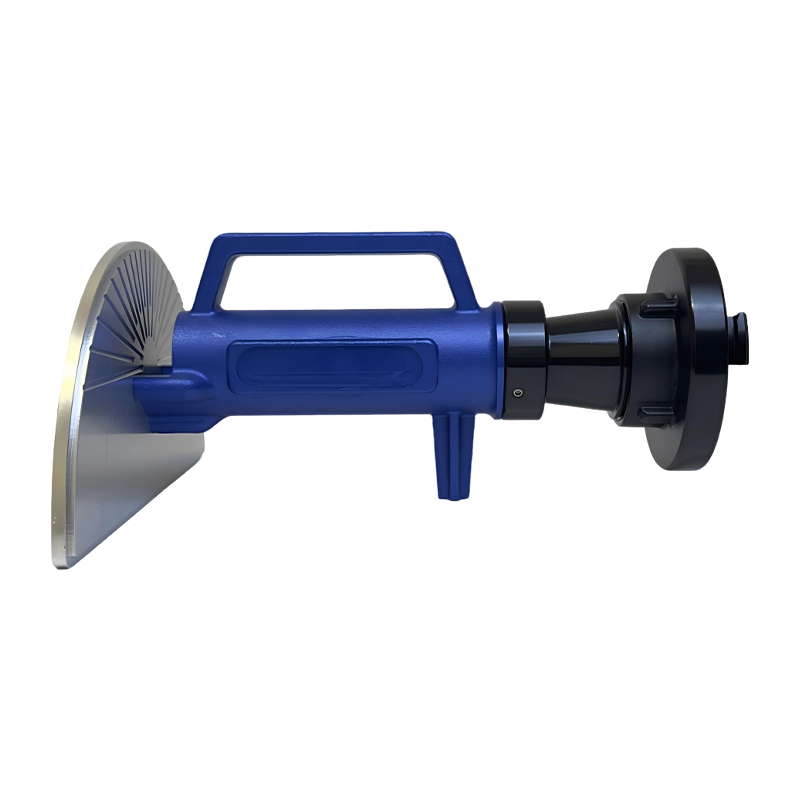
Hydro-Wall Nozzle
The Hydro-Wall Nozzle belongs to the hose nozzle category and is designed for high-flow fire control. Its core function is to deliver a continuous and concentrated water stream that forms a protective water barrier. Unlike ordinary nozzles that focus mainly on straight stream reach or general fog dispersion, this product is engineered to create a defensive wall of water that can help suppress flames while reducing direct exposure to heat and smoke.
The nozzle is especially valuable in situations where firefighters need to hold a line, protect an escape path, isolate a fire zone, cool equipment, or shield personnel during operations near high-temperature hazards. In industrial plants, chemical storage areas, refineries, power facilities, and wildland fire perimeters, the ability to create a stable water curtain can be the difference between controlled intervention and unsafe exposure.
Its design combines several practical elements: a lightweight aluminum body, a rubber bumper, permanent laser-engraved markings, a DuPont nylon pistol grip, stainless-steel spinning teeth, a stainless-steel strainer, forged hose connection components, and optional ball valve materials including stainless steel, aluminum, and brass. These details are not decorative. Each component contributes to durability, control, stability, flow quality, or operational convenience.
The nozzle operates at a nominal pressure of 6 Bar and provides a fixed flow rate of 1200 L/M. It is compatible with common firefighting hose systems through inlet sizes ranging from 1 inch to 2.5 inches, with coupling options including 1 inch, 1.5 inches, and 2 inches. With a weight of approximately 1.5 kg, it offers a balance between high-flow capability and field portability.
Traditional fire streams are often evaluated by reach, flow rate, spray angle, droplet size, and ease of handling. These remain important, but certain fireground environments require an additional capability: protective separation. A water barrier can reduce radiant heat, push back smoke, cool surfaces, and help defend a position. This is particularly useful when crews cannot immediately move closer to the fire or when nearby assets must be protected while a primary attack line is being established.
The Hydro-Wall Nozzle addresses this requirement by forming a continuous water shield. The purpose is not only to deliver water into a fire area but also to shape the discharge into a functional barrier. This “hydro-wall” can help block heat transfer, slow smoke movement, and create a safer operating zone. For firefighters working near chemical hazards or large industrial fire loads, this added layer of defense supports safer tactical decisions.
Compared with many general-purpose nozzles, the Hydro-Wall Nozzle is more specialized. A conventional fog nozzle may provide adjustable patterns, while a straight stream nozzle may provide reach and penetration. The Hydro-Wall Nozzle emphasizes water curtain formation and protective coverage. This gives it a competitive advantage in emergency response plans where exposure protection is as important as direct extinguishment.
The following table summarizes the main specifications of the Hydro-Wall Nozzle model described in the product information.
| Item | Specification | Operational Meaning |
| Type | WS1400 | Professional water barrier nozzle model for fire suppression use |
| Nominal Working Pressure | 6 Bar | Compatible with common firefighting pressure ranges and standard fireground pumping operations |
| Fixed Flow Rate | 1200 L/M | Provides high-volume water discharge for barrier creation and flame suppression |
| Weight | Approximately 1.5 kg | Light enough for practical handling while maintaining structural strength |
| Inlet Size Range | 1 inch to 2.5 inches | Adaptable to different hose systems and operational requirements |
| Coupling Options | 1 inch, 1.5 inches, 2 inches | Supports secure connection with common fire hose arrangements |
| Body Material | Lightweight aluminum | Combines corrosion resistance, impact resistance, and manageable weight |
| Key Functional Components | Rubber bumper, laser markings, nylon pistol grip, stainless-steel spinning teeth, stainless-steel strainer | Improves durability, usability, fog consistency, and clogging resistance |
A fixed flow rate of 1200 L/M gives the nozzle strong water delivery capacity. High-flow discharge is important when the goal is to cool large surfaces, suppress intense flame zones, protect exposures, or maintain a water barrier across a defined area. In industrial fires, small or inconsistent streams may be insufficient to manage radiant heat or prevent fire spread. The Hydro-Wall Nozzle is engineered for situations where water volume matters.
The fixed-flow design also offers operational simplicity. Firefighters do not need to spend time adjusting complex flow settings under stress. When the nozzle is supplied at the intended operating pressure, it delivers the designed output. This consistency is valuable for training, emergency planning, and team coordination. Operators can understand expected performance in advance and deploy the nozzle with confidence.
Competitor products may offer multiple flow selections, but adjustable designs can also introduce complexity, operator error, and maintenance concerns. For a nozzle dedicated to building a stable protective water wall, a fixed high-flow approach can be more dependable. It supports repeatable output and reduces uncertainty during critical operations.
The nozzle’s nominal operating pressure of 6 Bar reflects compatibility with many standard fireground pumping systems. Fire departments, industrial emergency teams, and facility fire brigades often prefer equipment that can integrate into existing hose lines without requiring unusual pump pressures or specialized infrastructure. A nozzle that performs effectively at a practical working pressure helps reduce deployment barriers.
In fire protection operations, compatibility is not only about whether a coupling can be attached. It also includes pump planning, hose friction loss calculation, available water supply, operator training, and predictable discharge behavior. By operating at a common pressure range, the Hydro-Wall Nozzle fits more easily into established firefighting procedures.
This gives it an advantage over products that require either very high pressure or highly specific system conditions. In emergencies, equipment must work with the resources available. A practical pressure requirement improves the nozzle’s value for municipal brigades, industrial safety teams, and emergency contractors.
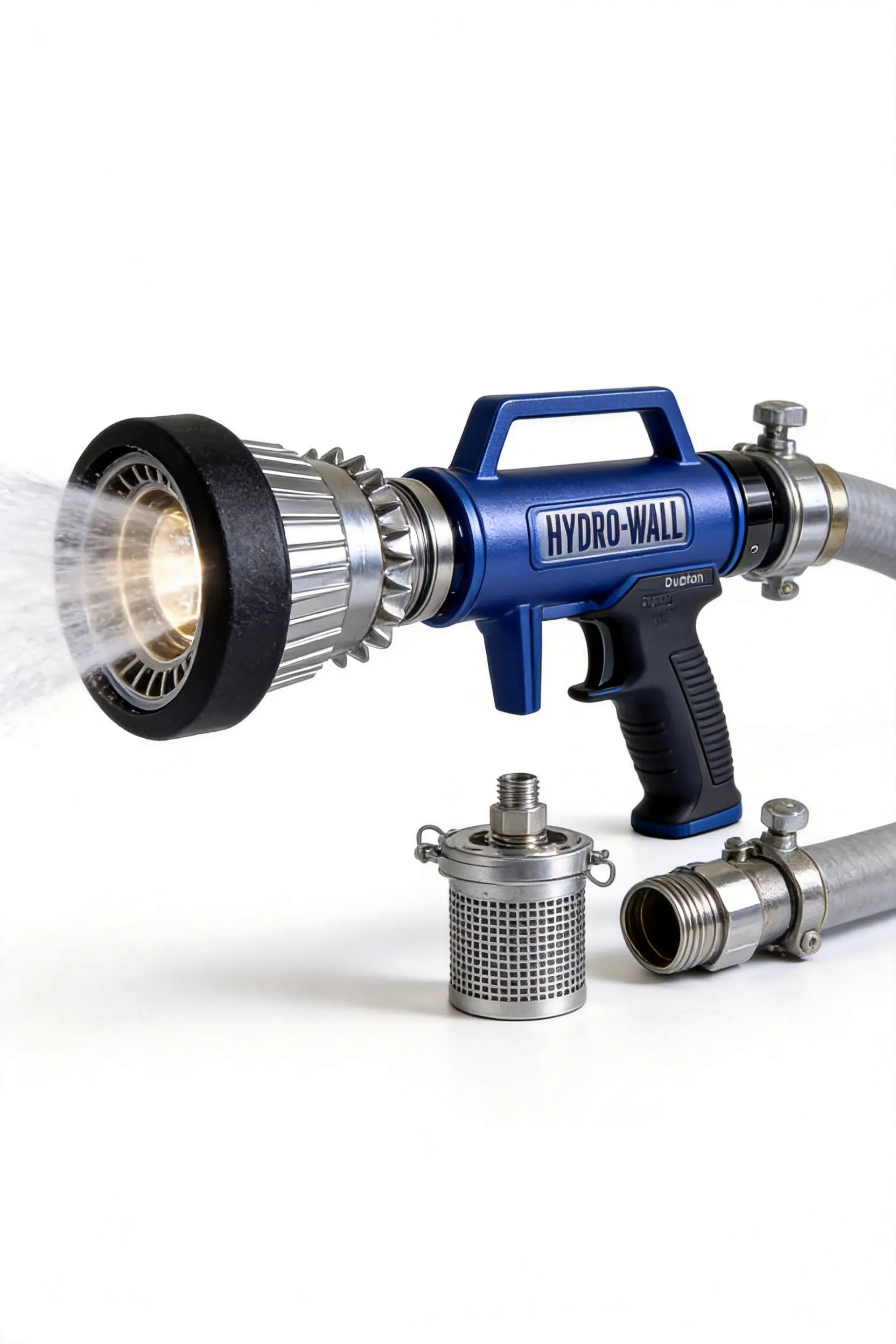
The body of the Hydro-Wall Nozzle is built from lightweight aluminum. This material choice matters because firefighting equipment must balance toughness and usability. A heavy nozzle can fatigue operators, reduce mobility, and complicate long-duration operations. A weak nozzle, however, may deform, corrode, or fail in harsh environments. Aluminum provides a practical solution by offering corrosion resistance, impact resistance, and reduced weight.
Corrosion resistance is especially important for equipment exposed to water, foam solution, outdoor storage, humidity, and industrial contaminants. Fire nozzles may remain unused for long periods and then be required to perform immediately in an emergency. A corrosion-resistant body helps preserve function and reduces maintenance problems caused by oxidation or surface degradation.
Impact resistance is also significant. Nozzles are often dragged, dropped, struck against vehicles, connected under time pressure, or used in debris-filled areas. The Hydro-Wall Nozzle’s aluminum construction supports long-term reliability in these demanding conditions while keeping the product easy to handle.
The rubber bumper is a practical detail that improves durability. Fireground equipment frequently comes into contact with concrete, metal surfaces, vehicles, hose beds, storage racks, and rough terrain. A bumper helps absorb impact and protects the nozzle body from direct damage. It also provides added protection in high-heat environments where metal surfaces may be exposed to aggressive operating conditions.
Many lower-grade nozzles focus on basic discharge performance but neglect protective outer components. Over time, repeated impacts can damage adjustment rings, edges, or outlet geometry. The rubber bumper helps reduce this risk. It makes the nozzle more suitable for real emergency service rather than only controlled demonstration use.
For buyers, this detail contributes to lifecycle value. A nozzle that resists damage and remains readable, usable, and structurally sound over many operations can reduce replacement costs and improve readiness.
Clear markings are essential during emergency operations. Firefighters may work in smoke, darkness, rain, foam residue, heat shimmer, or time pressure. Labels that fade, peel, or become unreadable can create confusion. The Hydro-Wall Nozzle uses permanent laser-engraved markings that allow operators to quickly read operational information and settings.
Laser engraving provides a durable marking method because the information is cut into or permanently altered on the surface rather than simply printed. This improves resistance to abrasion, water exposure, chemicals, and repeated handling. For emergency teams, permanent markings support training consistency and faster deployment.
Compared with competitor products using adhesive labels or surface printing, laser engraving offers a clear advantage in long-term readability. In high-risk environments, small details can influence operational confidence. Readable markings allow firefighters to verify orientation, settings, and product information more efficiently.
The nozzle includes a DuPont nylon pistol grip designed for non-slip and anti-fatigue handling. Grip design affects safety and performance more than many buyers initially realize. When water is flowing at high volume, nozzle reaction can challenge the operator. A stable grip helps maintain direction, reduce hand fatigue, and improve control during extended use.
Nylon is suitable for this component because it provides strength, durability, and resistance to wear. The pistol-grip form supports a natural hand position, helping the operator hold the nozzle securely without excessive strain. In wet, muddy, smoky, or foam-covered environments, a non-slip grip becomes especially important.
Competitor nozzles with smooth metal bodies or poorly shaped grips may be more difficult to control, especially when gloves are wet or operators are fatigued. The Hydro-Wall Nozzle’s grip design improves practical usability and supports safer handling during long fire suppression tasks.
Fog quality depends on the geometry and durability of the nozzle’s discharge components. The Hydro-Wall Nozzle uses stainless-steel spinning teeth to support consistent fog performance and precise control. Stainless steel is selected because it resists corrosion and wear, maintaining the shape and function of the discharge pattern over time.
Spinning teeth help break water into a controlled pattern, supporting the formation of a dense barrier. If these components wear down, deform, or corrode, performance can become inconsistent. A nozzle may produce uneven flow, poor coverage, or unstable spray. The use of stainless steel helps maintain reliable output across repeated operations.
In comparison, nozzles using lower-grade internal components may perform acceptably when new but degrade faster under real service conditions. The Hydro-Wall Nozzle’s stainless-steel teeth contribute to long-term pattern stability and operational dependability.
Water sources used in firefighting are not always perfectly clean. Hydrants, open water sources, tanks, temporary supply systems, and industrial networks may contain sand, rust, scale, debris, or other impurities. When these contaminants enter a nozzle, they can reduce flow, damage internal components, or block discharge paths. The Hydro-Wall Nozzle includes a stainless-steel strainer to help filter impurities and reduce clogging risk.
This feature is particularly important for high-flow operations. A partially blocked nozzle can compromise barrier formation and reduce protective capability. In emergencies, stopping to clear a clog can waste valuable time and expose personnel to greater danger. A built-in strainer helps maintain more reliable performance.
Stainless steel is again a practical material choice because it resists corrosion and maintains structural integrity in wet environments. Compared with products lacking effective debris protection, the Hydro-Wall Nozzle offers stronger readiness for imperfect water supply conditions.
A nozzle’s coupling area is one of its most critical structural points. It must withstand pressure, repeated attachment, thread wear, impact, and hose movement. The Hydro-Wall Nozzle uses a forged connection or coupling design for secure hose attachment. Forging improves material density and strength compared with weaker or less controlled forming methods.
Secure connection is essential because a nozzle failure at the coupling can cause dangerous whipping hoses, water loss, operational interruption, or injury. High-flow discharge places significant mechanical stress on the connection area. A forged component supports safer performance under pressure.
Competitor products with weak coupling construction may reduce cost but increase risk. For industrial and professional firefighting use, coupling strength should never be treated as a minor feature. The Hydro-Wall Nozzle’s connection design reflects a focus on field reliability.
The nozzle can be equipped with ball valve options in stainless steel, aluminum, or brass. This flexibility allows users to match the nozzle to different operating environments, maintenance preferences, and budget requirements. Stainless steel offers excellent corrosion resistance and strength. Aluminum reduces weight and supports easier handling. Brass provides traditional durability and good corrosion resistance in many water systems.
This choice is useful for procurement teams because not all fire protection systems face the same conditions. A chemical facility may prioritize corrosion resistance. A mobile emergency unit may prioritize reduced weight. A municipal department may prefer familiar brass valve components. Offering multiple valve material options helps the product fit broader applications.
Compared with one-size-fits-all nozzles, this adaptable configuration provides a competitive advantage. Buyers can select the version that best matches their service environment instead of accepting unnecessary compromises.
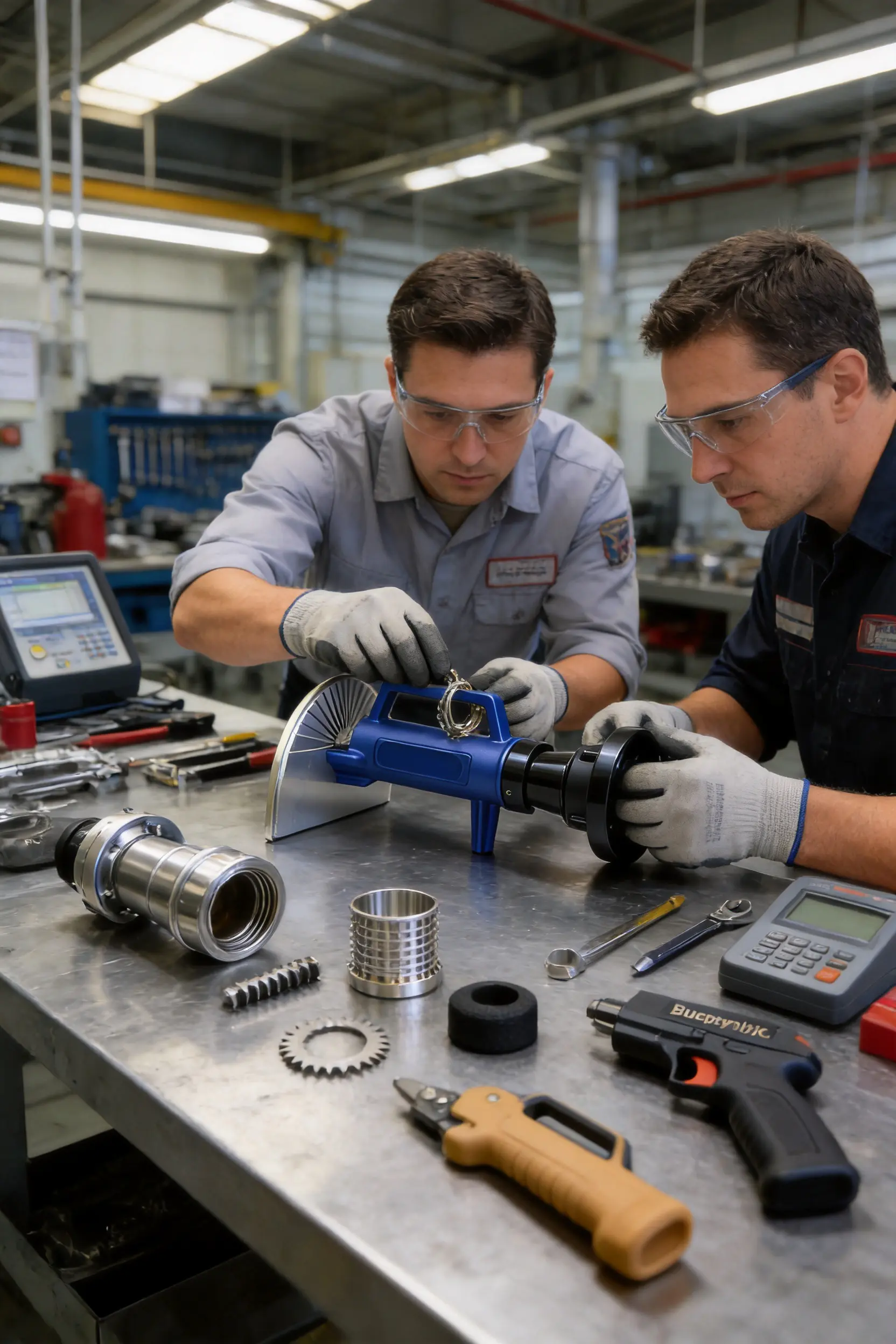
A reliable firefighting nozzle depends not only on design but also on manufacturing discipline. Taizhou Shenlong Fire Science and Technology Co., Ltd. was founded in 1995 and has developed as an enterprise integrating research and development, production, sales, and service. Its background in fire hoses and related firefighting products gives it practical knowledge of how nozzles, couplings, hoses, and water delivery systems work together in real applications.
The company’s manufacturing capability supports product consistency through material selection, component processing, assembly control, and performance verification. Experience in rubber, PVC, polyurethane, and other hose-related materials also provides a strong foundation for understanding sealing, pressure resistance, abrasion resistance, and field durability. These capabilities are important because a nozzle must not be considered separately from the complete hose system.
The company supplies products used in fire protection, construction, water conservancy, and other industries. This broad application experience helps guide product development toward practical field requirements rather than purely theoretical design. Products are sold across many regions and exported through cooperation with foreign trade partners, giving the company exposure to varied customer expectations and operating environments.
The manufacturing process begins with material selection. Aluminum for the nozzle body must meet requirements for strength, machinability, corrosion resistance, and weight control. Stainless steel components must provide suitable hardness, corrosion resistance, and dimensional stability. Rubber bumpers, nylon grips, and sealing parts must be selected for resistance to wear, heat exposure, water, and repeated handling.
Incoming material inspection is a key step in controlling quality. Materials may be checked for dimensions, surface condition, hardness, chemical consistency, and compatibility with production drawings. Although the details may vary by component, the objective remains the same: prevent unsuitable materials from entering the assembly process.
This approach gives the product an advantage over low-cost competitors that may rely on inconsistent material batches. Firefighting equipment must be ready after storage and must perform under stress. Material reliability is the first layer of product reliability.
After material preparation, precision machining shapes the nozzle body and internal flow passages. The internal geometry of a nozzle directly influences pressure behavior, flow distribution, spray quality, and barrier formation. Even small dimensional variations can affect performance. Controlled machining helps ensure that each nozzle delivers consistent output at the intended operating pressure.
Machining may include turning, drilling, milling, threading, and finishing operations. Coupling interfaces require accurate dimensions for secure attachment. Valve seats and flow paths require smooth surfaces to reduce turbulence and unnecessary pressure loss. Outlet components must be processed carefully to support the designed water barrier effect.
Competitor products manufactured with loose tolerances may show inconsistent flow rate, uneven spray, leakage, or premature wear. Precision production gives the Hydro-Wall Nozzle stronger repeatability, helping emergency teams trust that each unit will behave as expected.
The forged connection design reflects attention to structural safety. Forging can improve the strength of coupling-related parts by aligning grain structure and reducing internal defects compared with weaker forming methods. For a high-flow nozzle, this matters because the connection area experiences pressure loads, mechanical stress, twisting, and impacts during hose movement.
During production, forged components must be processed to accurate dimensions and inspected for fit. Threads or connection surfaces should be clean and consistent. A poor connection can result in leakage, difficult assembly, or unsafe separation under pressure. Strong connection manufacturing helps protect firefighters and maintain water delivery.
In the marketplace, some nozzles compete primarily on price by reducing material thickness or using less robust connection methods. The Hydro-Wall Nozzle takes a more professional approach by prioritizing secure attachment and mechanical durability.
Surface quality influences both appearance and service life. Firefighting equipment may be exposed to water, sunlight, temperature variation, chemical vapor, foam concentrates, and rough handling. Suitable surface treatment can improve corrosion resistance, reduce surface wear, and make cleaning easier after operations.
For aluminum parts, surface finishing may include cleaning, polishing, anodizing, coating, or other treatment methods depending on production requirements. The purpose is to protect the base material and maintain a professional finish. For stainless-steel components, careful processing helps avoid contamination and preserves corrosion resistance.
Competitors using poor surface treatment may show early oxidation, fading, or roughness. Over time, this can affect both appearance and function. A well-controlled finish contributes to longer service life and stronger customer confidence.
Laser engraving is a manufacturing step that reflects attention to long-term usability. Unlike printed markings, laser-engraved information remains clear after repeated handling and cleaning. This process requires precise equipment control so that markings are readable without weakening the component surface.
Permanent markings support traceability, training, and field operation. They help users identify settings, orientation, or product information quickly. In departments with multiple nozzles, consistent marking also supports inventory management and maintenance records.
Although engraving may appear minor compared with flow rate or pressure rating, it is an important professional feature. Fireground decisions are made quickly. Readability improves confidence, especially when visibility is poor or personnel are wearing gloves and protective equipment.
During assembly, each component must fit correctly: body, coupling, strainer, spinning teeth, grip, bumper, valve parts, and seals. A nozzle with excellent individual components can still fail if assembly is careless. Proper torque, alignment, seal placement, and movement checks are essential.
Sealing integrity is especially important. Leakage wastes water, reduces pressure, creates unsafe slippery conditions, and may indicate deeper mechanical issues. Assembly teams must ensure that sealing elements are correctly positioned and that valve operation remains smooth.
High-quality assembly also improves user experience. Connections should engage securely. Controls should feel reliable. The grip should be firmly attached. The strainer should remain properly seated. These details create the difference between a professional nozzle and a low-grade product.
Performance testing is the final confirmation that the nozzle meets its intended function. Testing may include pressure checks, leakage inspection, flow verification, spray pattern observation, and component operation. For a product designed to deliver 1200 L/M at 6 Bar, flow stability and barrier formation are central indicators of quality.
Testing helps identify problems such as machining deviations, poor sealing, obstructed internal passages, unstable spray, or coupling leakage. By detecting these issues before shipment, the manufacturer protects both customer safety and brand reputation.
Compared with competitors that may rely only on visual inspection, performance-oriented testing gives the Hydro-Wall Nozzle a stronger quality foundation. Fire equipment must not merely look correct; it must function correctly under pressure.
Industrial fire environments often involve high heat release rates, complex fuel loads, machinery, chemicals, electrical systems, confined spaces, and valuable assets. The Hydro-Wall Nozzle is suitable for factories, refineries, warehouses, chemical storage zones, power plants, and similar high-risk locations where exposure protection is critical.
In an industrial facility, a water barrier can be used to protect adjacent equipment, cool tank surfaces, defend access routes, shield emergency personnel, or reduce heat exposure during evacuation or shutdown procedures. The high flow rate helps establish meaningful water coverage, while the nozzle’s durable construction supports repeated use in harsh environments.
Compared with standard hose nozzles used mainly for general suppression, the Hydro-Wall Nozzle offers a more specialized defensive capability. It supports risk management strategies where the objective may include containment, exposure protection, and safe intervention rather than only direct flame extinguishment.
Wildland firefighting presents different challenges. Terrain may be uneven, water supply may be limited or variable, smoke may shift quickly, and flame fronts can move with wind. A nozzle capable of creating a water barrier can help protect structures, vehicles, equipment staging areas, or temporary control lines.
The Hydro-Wall Nozzle’s manageable weight supports field movement, while its high-flow discharge can be valuable when supplied by suitable pumps and hose systems. The stainless-steel strainer is also useful when water is drawn from sources that may contain debris, such as ponds, tanks, or temporary reservoirs.
In wildland-urban interface operations, crews often need to defend homes, industrial yards, roads, or evacuation paths from radiant heat and ember-driven fire spread. A stable water curtain can add protective value in these defensive operations.
Chemical storage areas and power facilities require carefully planned fire protection. Fires in these environments may produce toxic smoke, intense radiant heat, explosion risk, or infrastructure disruption. Personnel may need to operate at a safe distance while protecting critical assets. The Hydro-Wall Nozzle’s water barrier function is well suited to these requirements.
In chemical storage areas, the nozzle can help separate responders from smoke and heat while supporting cooling or containment tactics. In power plants, it can help protect equipment, cable areas, transformers, or access points depending on the incident type and facility procedures. The corrosion-resistant construction and secure coupling design are valuable in environments where equipment readiness is non-negotiable.
Compared with general-purpose nozzles, this product better supports emergency plans that emphasize defensive positioning, exposure protection, and controlled water application around high-value or high-risk infrastructure.
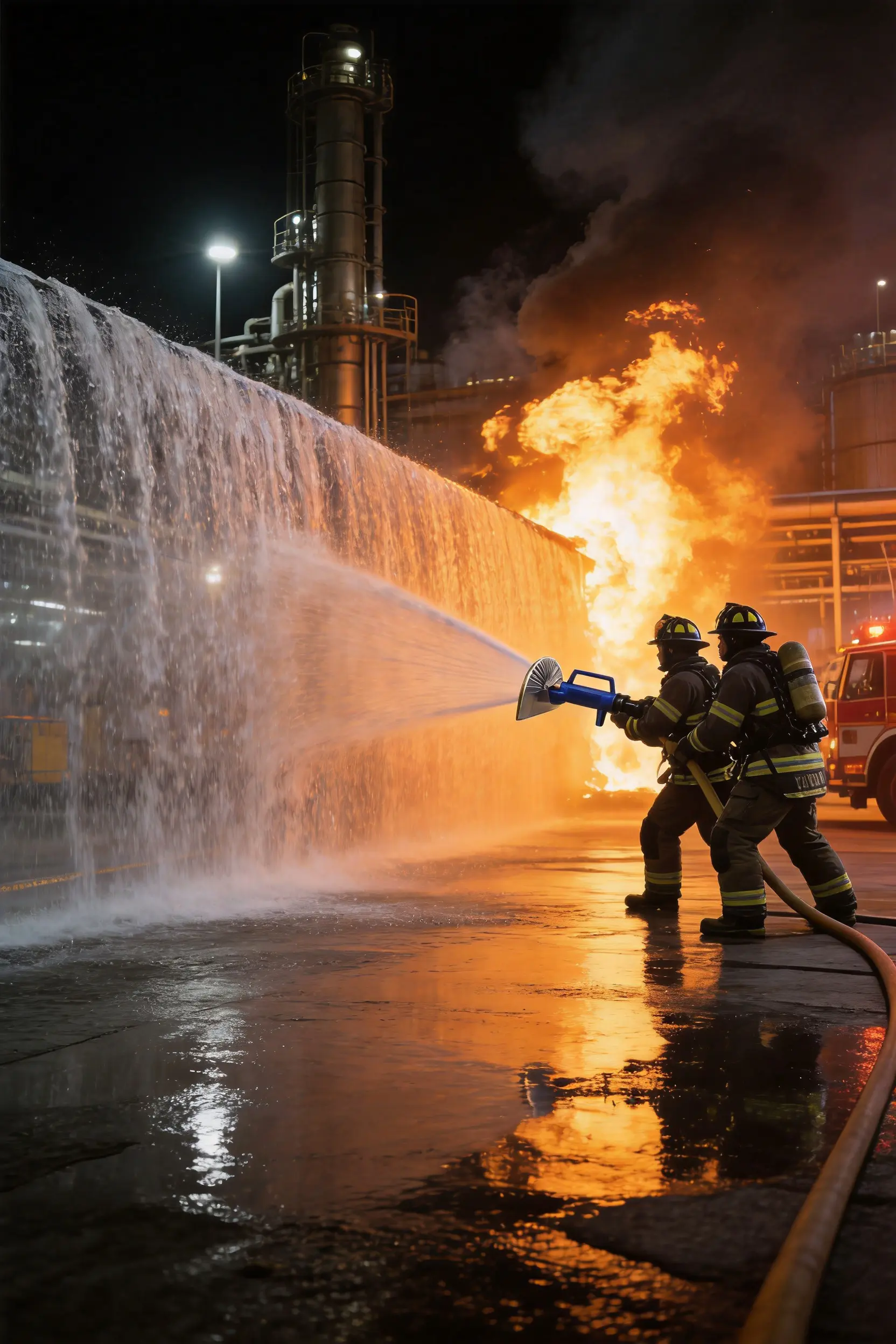
The Hydro-Wall Nozzle offers several advantages over common competing products. First, its water barrier technology gives it a specialized protective function. Many nozzles are designed primarily for direct attack, but this nozzle is designed to form a dense water wall that can block heat and smoke while supporting suppression. This makes it especially useful in high-risk environments.
Second, the fixed high-flow rate supports reliable performance. Instead of requiring multiple adjustments under stress, the nozzle provides consistent output when operated at the intended pressure. This improves predictability for training and emergency deployment.
Third, the lightweight aluminum body reduces operator fatigue without sacrificing durability. Some heavy nozzles may be robust but difficult to handle for long periods. Some lightweight alternatives may lack strength. The Hydro-Wall Nozzle balances these needs effectively.
Fourth, stainless-steel components improve service life. Spinning teeth and strainers are exposed to water, debris, and wear. Stainless steel helps maintain performance and reduce corrosion-related failures.
Fifth, permanent laser-engraved markings provide superior readability compared with printed or adhesive labels. This is a practical advantage for departments that expect long service life and repeated field use.
Sixth, forged connections support safer hose attachment. Coupling reliability is crucial under pressure, especially with high-flow discharge. A strong connection system improves safety and reduces leakage risk.
Finally, optional ball valve materials give buyers flexibility. The ability to select stainless steel, aluminum, or brass configurations allows the product to meet different environmental and operational needs.
Safety is the primary reason to choose a specialized water barrier nozzle. Firefighters and emergency personnel often work near unpredictable heat, smoke, structural hazards, chemical vapors, and moving equipment. The Hydro-Wall Nozzle helps improve safety by creating a physical and thermal separation through water discharge.
A water barrier can reduce radiant heat exposure, making it easier for crews to hold a position or protect a route. It may also help push smoke and hot gases away from a protected area depending on ventilation and wind conditions. While no nozzle can eliminate all risks, the ability to create a defensive water wall adds a valuable tool to the incident commander’s tactical options.
The nozzle’s ergonomic grip, manageable weight, clear markings, and clogging resistance also contribute to safer operation. Equipment that is easier to control, read, and maintain reduces the chance of user error during emergencies.
Fire departments and industrial safety teams evaluate equipment not only by purchase price but also by service life, maintenance frequency, reliability, and readiness. The Hydro-Wall Nozzle’s construction supports long-term value through corrosion-resistant materials, impact protection, durable markings, and debris filtration.
Routine maintenance should include rinsing after use, checking the strainer, inspecting the bumper and grip, verifying coupling condition, operating the valve, and confirming that markings remain readable. The nozzle should be stored clean and dry when possible, and it should be inspected after heavy impact or exposure to harsh chemicals.
Because the nozzle uses durable materials and practical component design, it can help reduce downtime and replacement frequency. Compared with cheaper alternatives that may corrode, clog, leak, or lose markings, a professional nozzle provides better lifecycle value for serious users.
A nozzle performs only as well as the system that supplies it. The Hydro-Wall Nozzle is designed to integrate with fire hose systems through common inlet and coupling sizes. This compatibility supports use with different hose diameters and deployment plans. However, users must still ensure adequate pump capacity, water supply, hose layout, and pressure management to achieve the intended 1200 L/M discharge.
The company’s experience in fire hose manufacturing strengthens its understanding of system integration. Fire hoses, couplings, and nozzles must work together. Hose friction loss, coupling compatibility, liner material, pressure rating, and deployment distance all influence nozzle performance. A manufacturer familiar with the complete water delivery chain is better positioned to design and supply practical firefighting equipment.
This integrated knowledge is a major advantage over suppliers that treat nozzles as isolated metal fittings. Real firefighting performance depends on system-level thinking.
The Hydro-Wall Nozzle is suitable for fire departments, industrial emergency response teams, refinery fire brigades, chemical plant safety teams, power generation facilities, construction emergency teams, warehouse fire protection units, and organizations managing high-risk assets. It is especially appropriate where exposure protection and high-flow defensive tactics are part of emergency planning.
Before purchasing, users should consider hose size, pump capacity, water supply volume, coupling standards, preferred valve material, operator training, storage conditions, and maintenance procedures. Because the nozzle provides a high flow rate, the water supply must be sufficient. A high-flow nozzle connected to an inadequate supply cannot deliver its intended barrier performance.
Procurement teams should also consider spare parts, inspection routines, and compatibility with existing equipment. Selecting the right nozzle is not only a product choice but also a system planning decision.
Taizhou Shenlong Fire Science and Technology Co., Ltd. has operated since 1995, building experience in research, development, production, sales, and service. Its main products include various material-lined fire hoses, and it can also undertake foreign trade products involving rubber, PVC, polyurethane, and double-sided tape according to customer requirements. This production flexibility supports customer-specific solutions and broader firefighting system development.
The company’s products are used in fire protection, construction, water conservancy, and other industries. Its cooperation with foreign trade companies and export production experience indicate familiarity with different market requirements. For customers, this means the manufacturer is not limited to a single local application environment but has experience serving diverse needs.
Advanced manufacturing strength is reflected in practical design choices, stable material processing, component reliability, and service awareness. A product such as the Hydro-Wall Nozzle benefits from this background because it requires both mechanical precision and fireground understanding.
The Hydro-Wall Nozzle demonstrates a quality philosophy based on practical reliability. Its features are not excessive or ornamental. The aluminum body reduces weight and resists corrosion. The rubber bumper absorbs impact. Laser engraving preserves readability. The nylon grip improves control. Stainless-steel spinning teeth maintain fog consistency. The strainer reduces clogging. Forged connections protect coupling integrity. Each feature addresses a real field problem.
This is important because firefighting equipment should not be judged only by appearance or marketing claims. It must function when visibility is poor, pressure is high, operators are fatigued, and consequences are severe. Practical reliability is the strongest competitive advantage in this market.
By combining specialized water barrier performance with durable construction and manufacturing discipline, the Hydro-Wall Nozzle offers a strong solution for professional firefighting users who need more than a standard nozzle.
The main purpose is to create a dense, high-flow water barrier that helps isolate fire zones, block heat and smoke, protect personnel, and support flame suppression. It is especially useful in high-risk environments where exposure protection is critical.
Ordinary nozzles often focus on straight stream reach or adjustable fog patterns. The Hydro-Wall Nozzle is designed around water barrier performance. It produces a concentrated protective wall of water, making it more suitable for defensive fire control, heat shielding, and emergency protection of people or assets.
The nozzle has a fixed flow rate of 1200 L/M. This high-volume discharge supports the formation of a strong water barrier and provides effective cooling and suppression capability.
The nominal working pressure is 6 Bar. This practical pressure level makes the nozzle compatible with many common firefighting systems and pumping operations.
The nozzle uses a lightweight aluminum body, a rubber bumper, a DuPont nylon pistol grip, stainless-steel spinning teeth, a stainless-steel strainer, and forged coupling components. Ball valve options may include stainless steel, aluminum, or brass.
The strainer helps filter debris from the water supply and reduces the risk of clogging. This is important when using hydrants, tanks, open water sources, or industrial water systems that may contain impurities.
It can be used in factories, refineries, chemical storage areas, power plants, wildland fire perimeters, industrial yards, emergency response sites, and other high-risk fire protection environments.
Yes. With a weight of about 1.5 kg and a non-slip nylon pistol grip, the nozzle is designed for practical field handling. Its lightweight aluminum body helps reduce operator fatigue.
Durability comes from the corrosion-resistant aluminum body, rubber impact bumper, stainless-steel functional parts, forged connection, laser-engraved markings, and careful assembly. These features support long-term use in harsh firefighting environments.
Lower-cost alternatives may reduce material quality, coupling strength, marking durability, or internal component reliability. The Hydro-Wall Nozzle offers stronger protective function, better construction, practical ergonomics, corrosion resistance, and consistent high-flow performance, making it a better long-term investment for professional users.
The Hydro-Wall Nozzle is a specialized high-flow firefighting nozzle designed for environments where protection, suppression, and operational control must work together. Its ability to form a dense water barrier makes it valuable for industrial fire control, wildland perimeter protection, chemical storage emergency response, power facility safety, and other demanding applications.
Its advantages are built into both the design and manufacturing approach. A 1200 L/M fixed flow rate, 6 Bar nominal working pressure, lightweight aluminum body, rubber bumper, laser-engraved markings, DuPont nylon grip, stainless-steel spinning teeth, stainless-steel strainer, forged coupling, and selectable valve materials all contribute to practical reliability. These features help it stand apart from common nozzles that may lack barrier performance, long-term durability, or operational convenience.
Behind the product is a manufacturer with decades of experience in fire hose and firefighting equipment production. Through material selection, precision machining, forging, surface treatment, engraving, assembly control, and performance testing, the company supports product quality from design to delivery. For professional users seeking a nozzle that can protect personnel, defend assets, and perform reliably in high-risk environments, the Hydro-Wall Nozzle offers a strong and practical solution.
National Fire Protection Association. Fire Protection Handbook.
International Fire Service Training Association. Essentials of Fire Fighting and Fire Department Operations.
National Fire Protection Association. Standard for Fire Hose Connections.
International Fire Service Training Association. Fire Streams: Practices, Principles, and Equipment.
Society of Fire Protection Engineers. SFPE Handbook of Fire Protection Engineering.
Industrial Fire Protection Engineering Guidelines for Water Application and Exposure Protection.
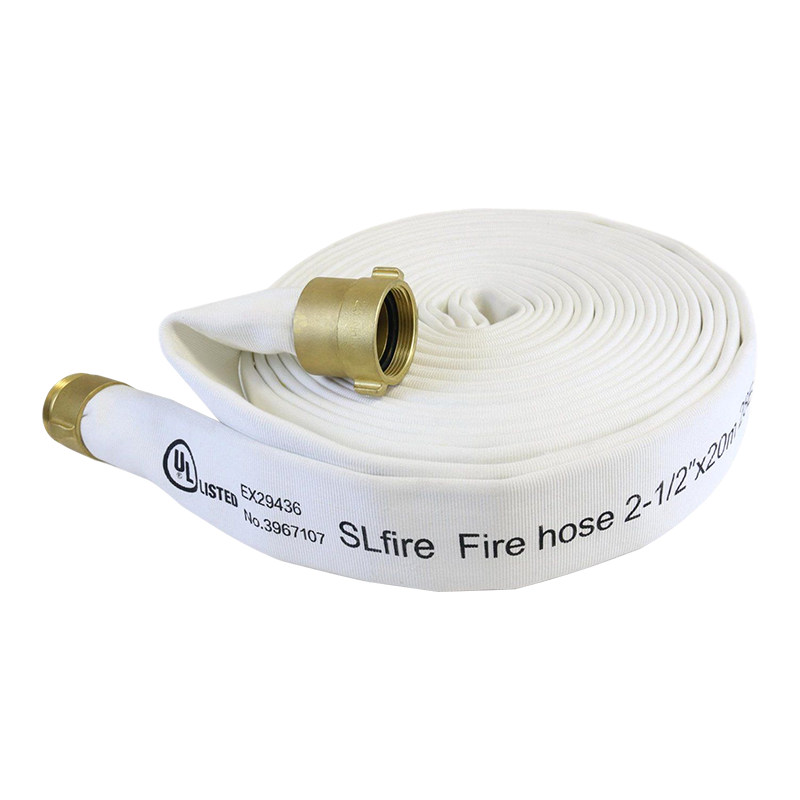
Single jacket, EPDM rubber liner Features • 100% high tenacity polyester jacket, high-grade EPDM rub...
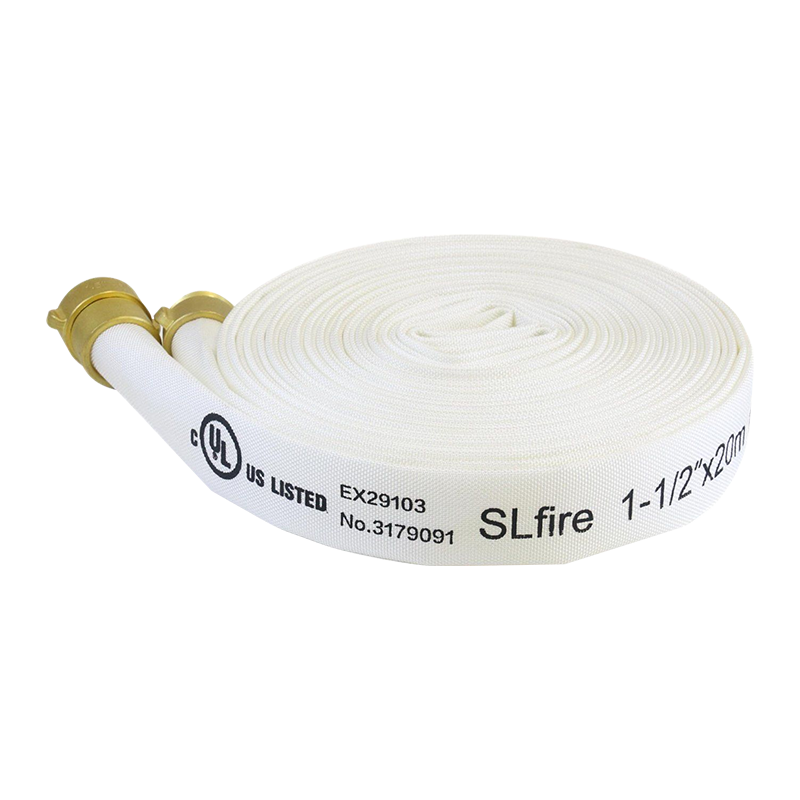
Single jacket, TPU liner •High-tenacity polyester yarn, circular woven in twill weave/plain weave,T ...
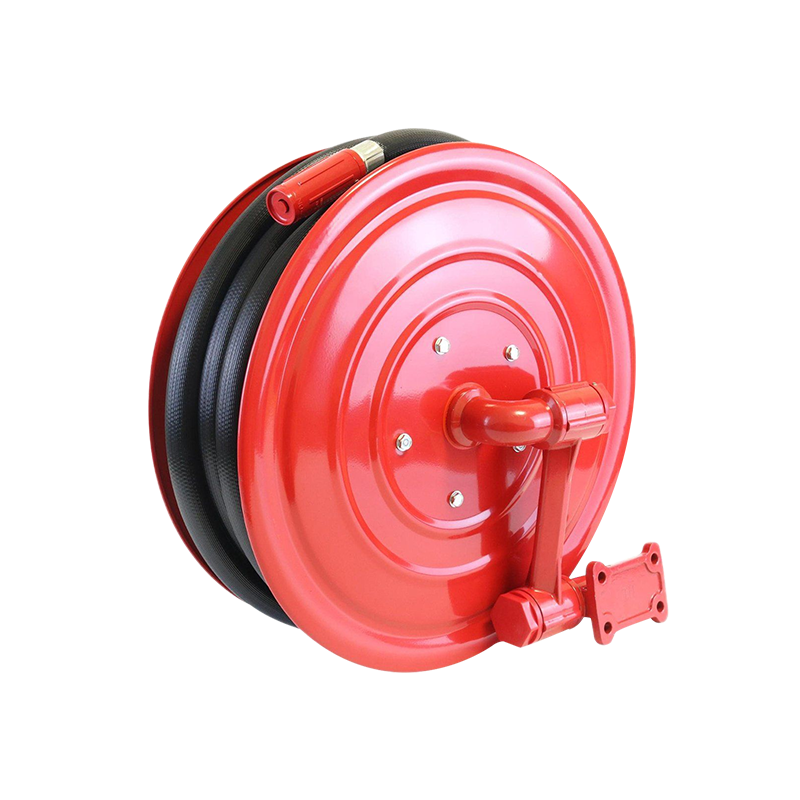
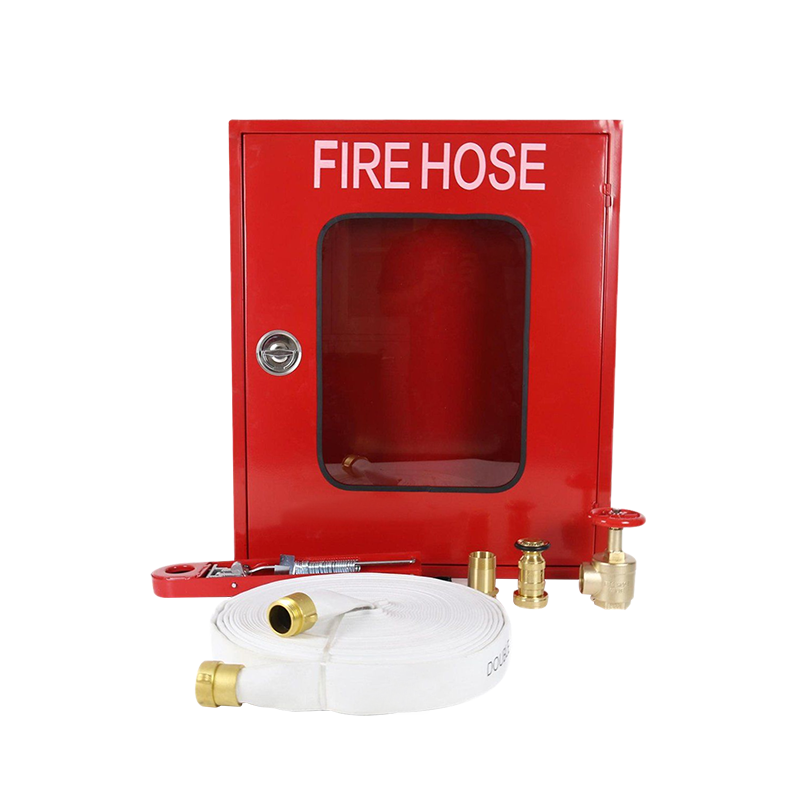
Fire cabinets are designed to accommodate fire hose,valve and other firefighting equipment. Type 201...
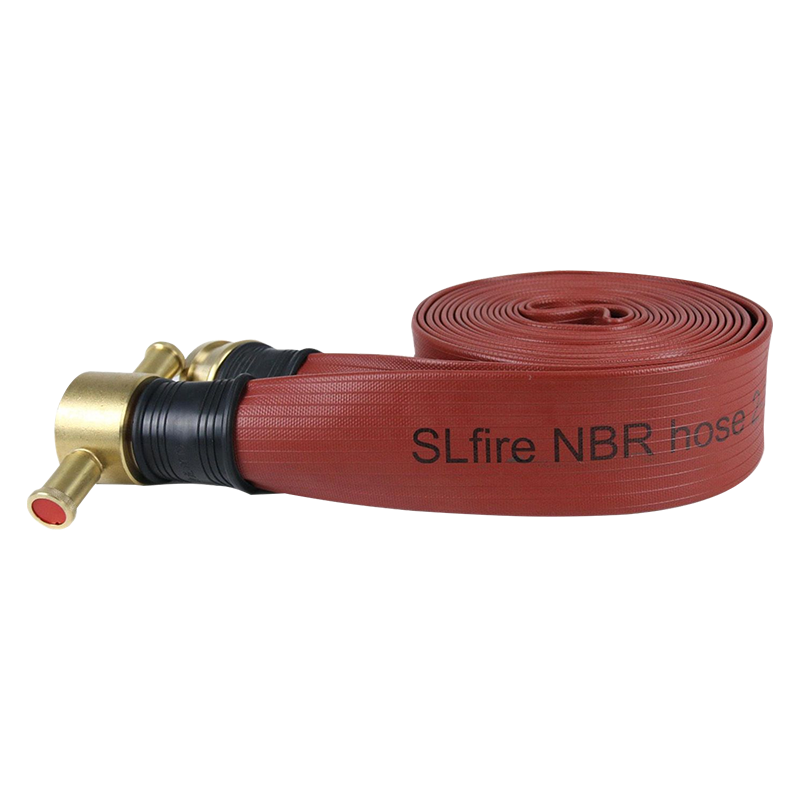
Nitrile covered hose •Nitrile/TPR blend as cover and lining, with 100% high-tenacity polyester yarn ...
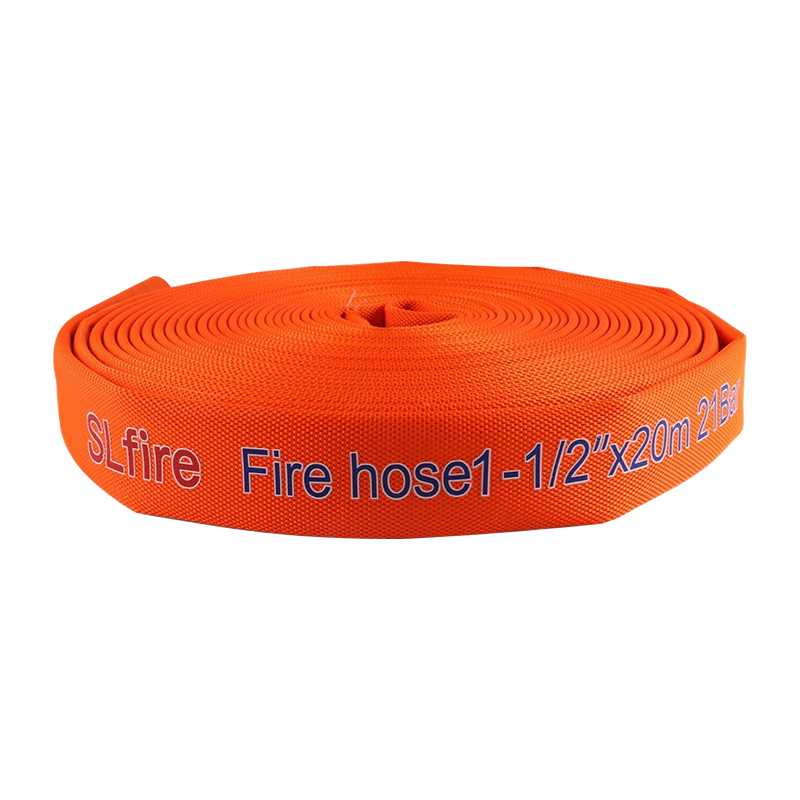
Single jacket, TPU liner •High-tenacity polyester yarn, circular woven in twill weave, TPU lining, f...
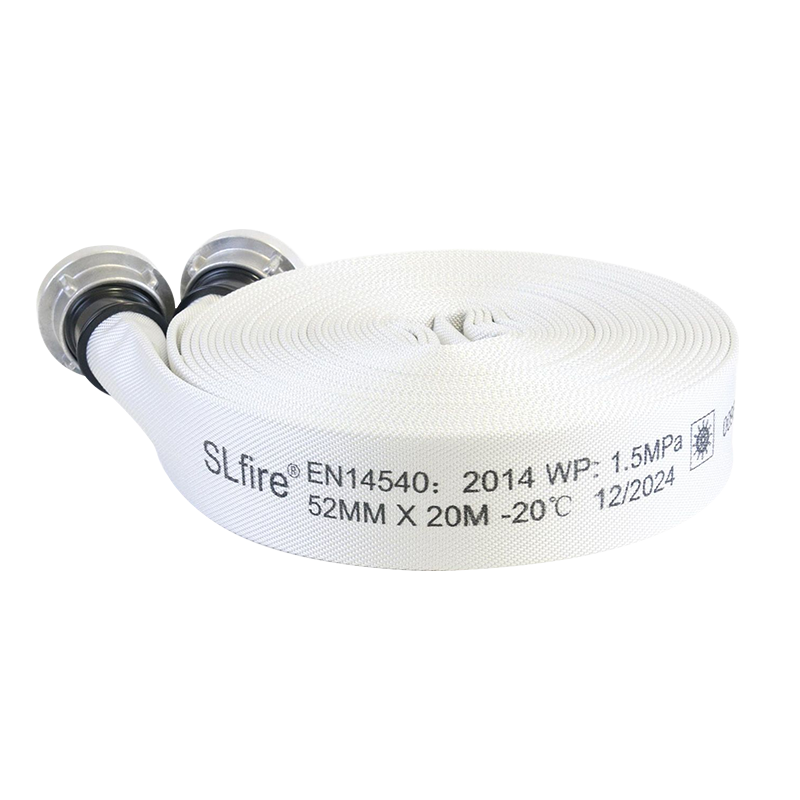
Marine hose Single jacket, PVC liner •100% high tenacity polyester yarn, circular woven in twill wea...
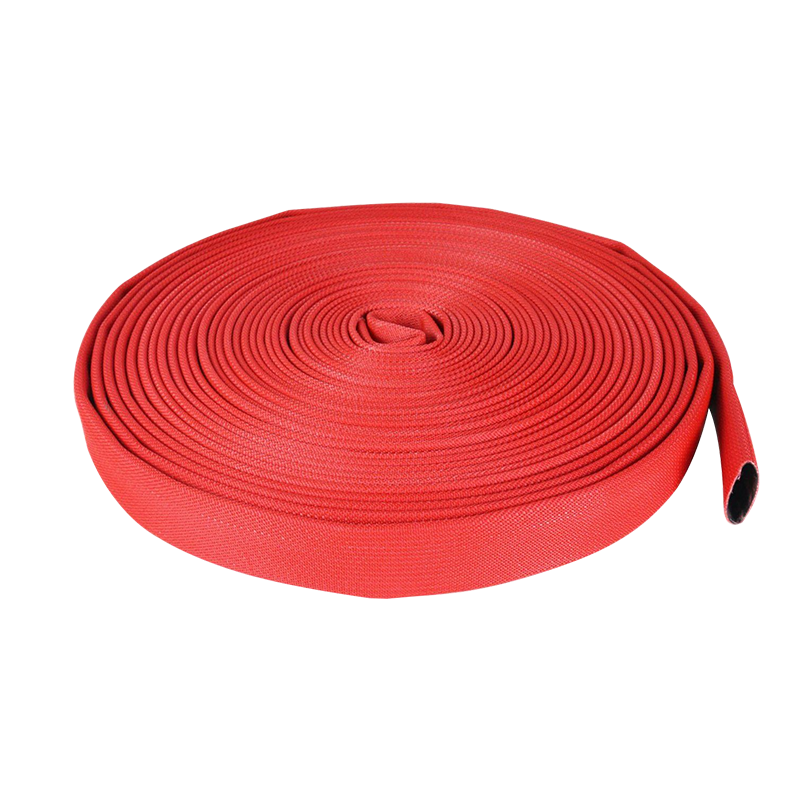
Marine hose Single jacket, PVC liner, PU coated •100% high tenacity polyester yarn,c ircular woven i...
 Call Us
+86 159-5116-9511
Need Support
Head Office
No.58, Kechuang Road, Sixiang Street Medicine Gaoxin District Taizhou City, Jiangsu Province

What Is a Fire Hose? A fire hose is a high-pressure flexible hose designed to carry water or fire retardant chemicals from a water source, such as a hydrant, pump, or tank, to a fire for suppression p...
Copyright © Taizhou Shenlong Fire Science and Technology Co., Ltd. All Rights Reserved.
 Fire Hose Manufacturers, Fire Hydrant Hose Factory