

 English
 русский
 Español
 Deutsch
 عربى
عربى Français
 Português
Don't hesitate to send a message

Single jacket, EPDM rubber liner Features • 100% high tenacity polyester jacket, high-grade EPDM rub...
Content

Reliable hose nozzles are essential components in firefighting, water delivery, industrial fluid transfer, agricultural irrigation, construction, and water-management operations. A nozzle must do more than direct a flow of water. It must connect securely to the hose, withstand repeated handling, resist impact and corrosion, maintain dependable performance in demanding environments, and remain light enough for practical operation. The 51MM, 66MM, and 77MM Russian Hose Nozzle is designed around these requirements, offering a flexible connection solution for users who need dependable equipment in different hose sizes.
Manufactured from aluminum alloy and reinforced hard plastic, this nozzle combines structural strength with reduced weight. Its available inlet sizes of 51 mm, 66 mm, and 77 mm allow customers to select a configuration that corresponds with their hose and operating requirements. This size flexibility is particularly valuable for fire brigades, industrial facilities, agricultural users, construction contractors, municipal departments, and distributors serving markets with different hose connection standards.
The nozzle is supplied by Taizhou Shenlong Fire Science and Technology Co., Ltd., an experienced manufacturer involved in research and development, production, sales, and service. The company has operated since 1995 and produces a range of lined fire hoses and related products for fire protection, construction, water conservancy, and other industries. Its manufacturing experience, product-development capability, and export cooperation provide a foundation for supplying hose accessories that are practical for professional use and adaptable to customer requirements.
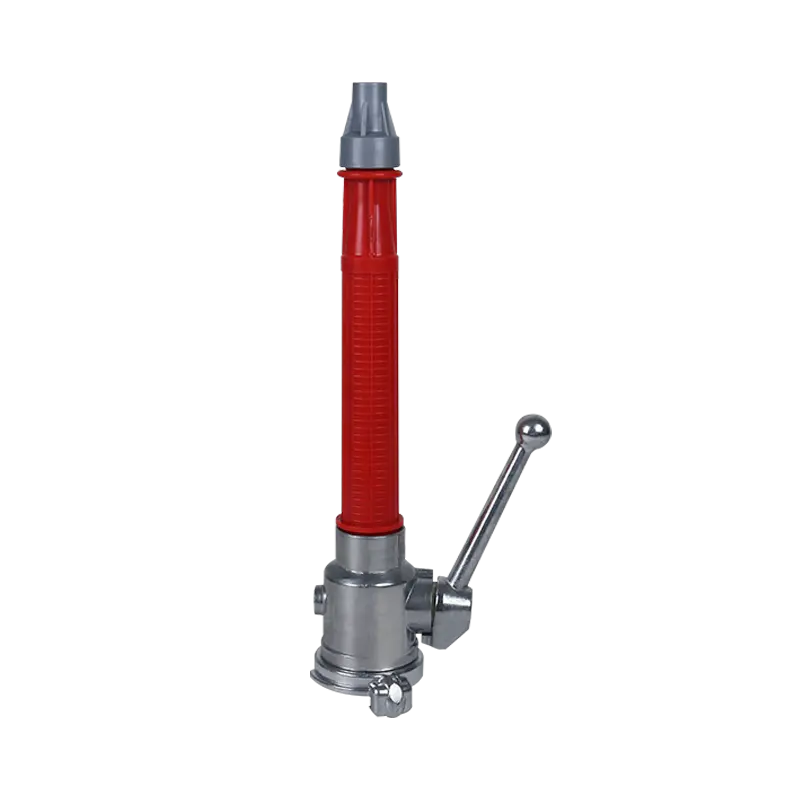
51MM 66MM 77MM RUSSIAN Hose Nozzle
The 51MM, 66MM, and 77MM Russian Hose Nozzle is a hose-end component intended to provide a controlled and reliable outlet for water or other compatible fluids. Its design incorporates an aluminum alloy body together with hard plastic components. This combination addresses two common challenges in hose equipment: the need for mechanical durability and the need to keep the product manageable during operation.
Aluminum alloy provides a strong base for a nozzle that may be exposed to impact, outdoor conditions, repeated assembly, and frequent handling. Compared with heavier metal alternatives, aluminum alloy can reduce the burden placed on operators while still offering useful resistance to ordinary service stresses. The hard plastic elements complement the metal body by contributing to a lightweight construction and by supporting comfortable handling during installation, transport, and use.
The product is offered in three inlet sizes: 51 mm, 66 mm, and 77 mm. Different hose systems, pumps, hydrants, and operating environments may require different connection dimensions. By providing several size options within one product family, the manufacturer helps buyers standardize procurement while still serving different hose configurations. Distributors can also present customers with a clear selection of commonly required sizes rather than relying on a single fixed connection.
| Product Item | Specification |
| Product name | 51MM, 66MM, and 77MM Russian Hose Nozzle |
| Product category | Hose Nozzles |
| Primary materials | Aluminum alloy and hard plastic |
| Available inlet sizes | 51 mm, 66 mm, and 77 mm |
| Typical application areas | Fire protection, industrial fluid transfer, agriculture, construction, and water management |
| Connection objective | Secure and dependable hose-end connection |
| Manufacturer | Taizhou Shenlong Fire Science and Technology Co., Ltd. |
A hose nozzle is often exposed to conditions that are more demanding than its compact size might suggest. It can be stored in vehicles, carried across rough ground, connected and disconnected repeatedly, exposed to moisture, and handled while operators are wearing gloves or protective equipment. In emergency situations, users also need components that can be installed quickly and used without unnecessary weight or complexity.
Material selection has a direct influence on these practical characteristics. A nozzle made entirely from a heavy material may provide strength but increase fatigue during extended use. A nozzle made from a material with insufficient resistance may be easier to carry but more vulnerable to cracking, deformation, or premature wear. The aluminum alloy and hard plastic combination seeks to balance these factors.
The aluminum alloy body supports the nozzle’s overall structural function. It is suitable for a product that must tolerate normal impacts, connection forces, and outdoor use. Aluminum alloy is also valued for its resistance to corrosion in many general service environments. Although all hose accessories should be cleaned, dried, and stored correctly, the material provides a useful level of protection against deterioration associated with ordinary moisture exposure.
The hard plastic components help lower the total weight and can improve handling. A lighter nozzle is easier to carry from a vehicle to a fire point, move around a worksite, or position during agricultural irrigation. Reduced weight can also be beneficial when several hose sections and accessories must be transported together. For teams that use hose equipment frequently, manageable weight can contribute to improved operator comfort and more efficient deployment.
The aluminum alloy section provides a firm foundation for connection and operation. It is suitable for applications where the nozzle may experience normal mechanical loading, vibration, and occasional contact with hard surfaces. In professional environments, equipment is rarely used under perfectly controlled conditions. A nozzle may be placed on a vehicle floor, set down on concrete, moved across a construction site, or connected under time pressure. A robust metal component helps the product remain suitable for these routine challenges.
Weight is an important consideration for hose equipment. Firefighting and industrial hose systems can already be demanding to move, especially when the hose is filled with water. A nozzle that adds unnecessary weight can make deployment more difficult and increase operator fatigue. The use of hard plastic alongside aluminum alloy helps maintain a practical balance between durability and portability.
Repeated assembly, transport, and handling can gradually wear down hose accessories. The selected materials are intended to support continued use in working environments where the nozzle is not treated as a delicate instrument. Hard plastic components can contribute to resistance against everyday scuffing and handling damage, while the aluminum alloy body supports long-term structural reliability when the product is used within its intended operating conditions.
Fire protection, agriculture, construction, and water-management activities are often conducted outdoors. Outdoor equipment may encounter humidity, dust, temperature changes, and contact with rough surfaces. The combination of aluminum alloy and hard plastic is appropriate for a broad range of such environments. Proper maintenance remains important, but the material selection gives the nozzle a practical foundation for field use.
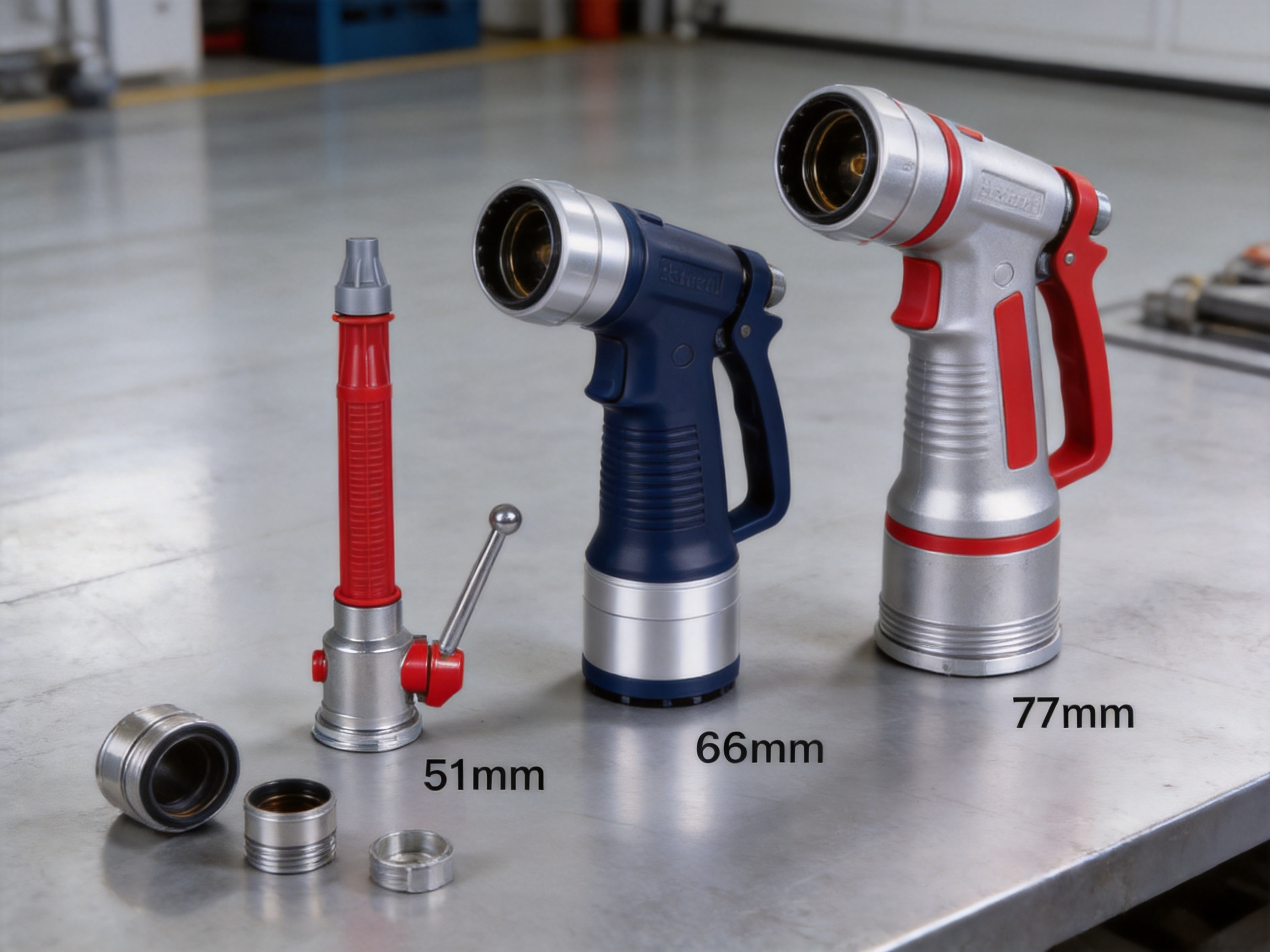
The availability of 51 mm, 66 mm, and 77 mm inlet sizes is one of the product’s most important practical advantages. Hose systems vary according to flow requirements, pump capacity, equipment standards, local practices, and application type. A small firefighting team may require one connection size, while a municipal water system or industrial operation may use a larger hose to support greater delivery capacity.
The 51 mm version can be suitable for applications where a relatively compact hose connection is preferred. It can be useful for portable firefighting equipment, smaller water-delivery systems, selected agricultural operations, and general-purpose industrial use, subject to the requirements of the complete system.
The 66 mm version provides an intermediate option for users who need a larger connection than a compact hose arrangement but do not require the largest listed inlet size. This size can support procurement flexibility for facilities and distributors that serve a variety of hose configurations.
The 77 mm version is designed for systems using a larger hose connection. Larger hose assemblies may be selected for higher-volume water delivery, industrial applications, water-management operations, or firefighting systems where the overall equipment design requires a greater inlet dimension.
Users should always confirm the actual hose diameter, coupling type, thread or connection configuration, pump performance, and application requirements before placing an order. A nozzle should be selected as part of a complete, compatible hose assembly rather than judged by inlet size alone.
| Inlet Size | General Selection Consideration | Potential Application Direction |
| 51 mm | Compact hose systems and easier portability | Portable firefighting, agriculture, light industrial transfer |
| 66 mm | Intermediate connection requirement | General fire protection, construction, and industrial systems |
| 77 mm | Larger hose systems and higher-volume delivery arrangements | Municipal, industrial, water-management, and larger firefighting systems |
The application descriptions in this table are general guidance rather than performance guarantees. Actual suitability depends on hose construction, pump pressure, fluid characteristics, coupling standards, operating temperature, and the design of the entire fluid-transfer system.
A hose nozzle is only useful when it connects securely to the hose and remains stable during operation. Loose connections can cause leakage, reduce efficiency, interrupt work, and create safety concerns. The Russian Hose Nozzle is designed with precision-engineered fittings intended to support a secure connection and help reduce the possibility of leakage when correctly matched with the appropriate hose and coupling.
Connection reliability depends on several factors. The nozzle size must correspond to the hose and coupling. Sealing surfaces must be clean and undamaged. The assembly must be tightened correctly without cross-threading or overloading the components. Operators should also inspect gaskets, seals, threads, locking elements, and hose ends before use. Even a well-manufactured nozzle cannot compensate for an incompatible or poorly maintained connection.
For professional users, a dependable connection has operational value beyond preventing water loss. A stable nozzle helps maintain a predictable flow path, reduces the need for repeated adjustments, and enables operators to focus on directing the fluid. In emergency response, these benefits can support faster deployment. In industrial and agricultural work, they can help reduce interruptions and improve routine efficiency.
Firefighting equipment must be readily available, easy to move, and dependable when needed. Hose nozzles are used at the point where the operator directs water toward a fire, affected area, structure, or cooling target. A nozzle must therefore be practical to carry and straightforward to connect to the hose assembly.
The aluminum alloy and hard plastic construction is well suited to users who value a manageable accessory that can be stored with other firefighting equipment. The three available inlet sizes also allow fire departments, industrial fire teams, and equipment distributors to select a version that corresponds with the hose system in use.
In fire protection storage, the nozzle should be kept in a clean, dry, and accessible location. It should be inspected regularly for visible damage, deformation, contamination, or connection wear. If the equipment is used with seawater, contaminated water, foam solutions, or other substances, it should be rinsed and maintained according to the requirements of the complete system and the fluid used.
The nozzle should not be viewed as an isolated product. Its performance depends on hose quality, coupling compatibility, pump capacity, water pressure, flow requirements, operator technique, and maintenance procedures. When selected and integrated correctly, it can become a practical part of a broader fire hose solution.
Industrial facilities often need hose accessories that can withstand repeated use while remaining convenient for maintenance and equipment movement. Water transfer, washdown operations, cooling systems, general service lines, construction-site supply, and selected process-support activities may all require hose-end nozzles.
The product’s material combination is advantageous in workplaces where operators regularly connect, disconnect, move, and store hose assemblies. Aluminum alloy provides a durable structural element, while hard plastic helps keep the nozzle easier to handle. This balance can be valuable in factories, warehouses, workshops, shipyards, utility projects, and other locations where hoses are moved between work areas.
Before using the nozzle for industrial fluids other than clean water, buyers should verify chemical compatibility. The product information identifies aluminum alloy and hard plastic as the primary materials, but compatibility depends on the exact fluid, concentration, temperature, exposure time, and pressure. The nozzle should be used only for fluids approved by the system designer or manufacturer.
Industrial customers can also benefit from purchasing multiple sizes from one product family. Standardizing the basic nozzle design may simplify staff training, spare-parts management, storage, and replacement procedures. A facility with several hose diameters can select the appropriate 51 mm, 66 mm, or 77 mm option while maintaining a consistent approach to inspection and handling.
Agricultural operations depend on efficient water movement. Irrigation, crop cooling, livestock-area cleaning, greenhouse maintenance, and general water distribution may all require flexible hose systems. Agricultural equipment is often used outdoors and moved over uneven ground, so a nozzle must be durable enough for routine field conditions while remaining light enough for practical handling.
The Russian Hose Nozzle can serve as a hose-end accessory in agricultural systems where its size and connection type are compatible. Its lightweight construction may make it easier for workers to carry between irrigation points. The selection of three inlet sizes also provides options for different hose layouts, pump arrangements, and water-delivery requirements.
Water-management projects may use hose assemblies for drainage support, temporary water delivery, site maintenance, or emergency response. In these situations, equipment may need to be transported and installed quickly. A nozzle that combines a metal structural element with hard plastic components can offer a useful balance between field durability and portability.
Users working with water from ponds, rivers, tanks, or other sources should take cleaning and inspection seriously. Sediment and debris can affect connection surfaces and internal flow paths. Rinsing the nozzle after use, checking the inlet and outlet, and storing it away from direct damage can help maintain serviceability.
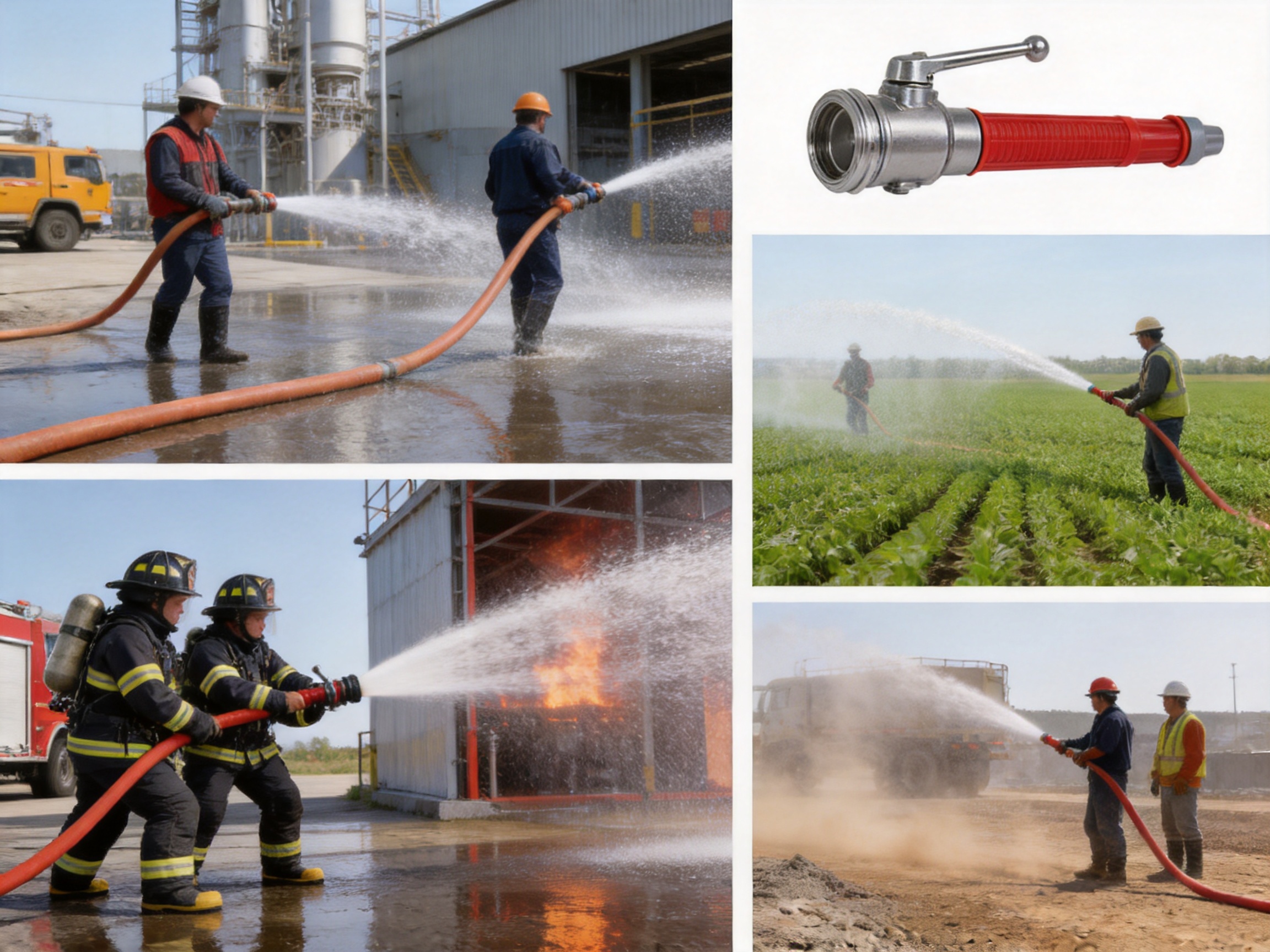
Customers evaluating hose nozzles often compare several material and design options. The most suitable choice depends on the intended application, but the 51MM, 66MM, and 77MM Russian Hose Nozzle offers several practical advantages over common alternatives.
Some all-metal nozzles are strong but can be unnecessarily heavy for portable work. Increased weight may make the equipment more difficult to carry, especially when the hose is already filled with water. The aluminum alloy and hard plastic construction seeks to reduce this burden while retaining a durable base. For fire crews, agricultural workers, construction teams, and industrial operators, a lighter accessory can support faster movement and more comfortable operation.
This does not mean that every lighter nozzle is suitable for every high-pressure application. Buyers should evaluate pressure ratings, flow requirements, connection standards, and system conditions. The advantage of the present design is its practical balance, not an unsupported claim that it replaces every heavy-duty metal nozzle.
Basic plastic nozzles may be economical and light, but some users require greater structural confidence at the connection point. The inclusion of an aluminum alloy component can provide a more robust foundation than a simple all-plastic construction. This is useful where the nozzle may be exposed to repeated connection forces, impacts, and demanding handling.
Hard plastic remains valuable in the design because it contributes to weight reduction and practical handling. The combined construction therefore offers an alternative to products that prioritize either low weight or metal strength alone.
A single-size product may limit purchasing flexibility when a company operates several hose systems. The three available inlet dimensions make it easier to choose a suitable product for different hose diameters. This can reduce the need to search among unrelated product families and may simplify inventory planning for distributors and project contractors.
Some nozzles include advanced adjustment mechanisms, special spray patterns, or application-specific controls. Those designs may be appropriate for specialized tasks, but they can also increase complexity, cost, maintenance requirements, or training needs. The Russian Hose Nozzle is positioned as a practical hose-end solution for reliable connection and fluid direction. Its straightforward construction may be advantageous for users who value ease of deployment and uncomplicated maintenance.
The product is manufactured by Taizhou Shenlong Fire Science and Technology Co., Ltd., a company founded in 1995. The company integrates research and development, production, sales, and service. This integrated structure is important for a product such as a hose nozzle because market requirements often involve more than basic manufacturing. Customers may need help selecting sizes, confirming applications, coordinating related hose products, and arranging repeat supply.
The company’s main product range includes lined fire hoses made from various materials. Its products are used in fire protection, construction, water conservancy, and other industries. This industry focus gives the manufacturer practical exposure to the requirements of water-delivery equipment and hose assemblies. A supplier that understands the broader hose system can be better positioned to provide product information and support than a general manufacturer with no specialization in fluid-transfer equipment.
Research and development capability supports continuous improvement in materials, construction, product specifications, and manufacturing methods. For hose accessories, development work may include evaluating material combinations, refining connection geometry, improving fit, reviewing handling characteristics, and responding to customer feedback. The use of aluminum alloy together with hard plastic reflects an approach focused on balancing strength, weight, durability, and usability.
Production experience is equally important. A product must be manufactured consistently so that dimensions, surfaces, fittings, and component assembly remain suitable for repeated orders. Consistency helps distributors and end users replace existing equipment with less uncertainty. It also supports project purchasing in which multiple units must work together across a facility or emergency-response team.
The company also cooperates with domestic foreign trade companies to produce export products and serves customers in multiple regions. This experience can support communication with international buyers, packaging coordination, product documentation, and shipment preparation. The company reports that its products are sold in more than 20 provinces, cities, and autonomous regions and exported to various countries through its cooperation network.
The exact production sequence may vary according to the final product configuration, but a professional hose nozzle manufacturing process generally begins with material preparation and dimensional planning. Aluminum alloy components must be formed or machined to the required geometry, while hard plastic parts must be produced with suitable molding or forming methods. Each material must be processed according to its own characteristics to achieve a reliable fit.
Material preparation is the first step in creating a consistent product. Aluminum alloy selected for the nozzle body should be suitable for the intended forming, machining, and finishing processes. Hard plastic components should be made from a grade appropriate for the expected handling, environmental exposure, and assembly conditions. Proper material control helps reduce dimensional variation and supports stable product quality.
The aluminum alloy body may be shaped and finished through suitable metalworking processes. Critical areas such as inlet geometry, connection surfaces, edges, and transitions require attention because dimensional accuracy influences assembly and sealing. Machining or finishing operations should produce smooth, uniform surfaces that are easier to inspect and less likely to interfere with hose or coupling installation.
Hard plastic components must be formed with consistent dimensions and adequate surface quality. The component design should allow correct alignment with the aluminum alloy body and should avoid unnecessary stress concentrations. Consistent molding or forming helps ensure that each unit can be assembled efficiently and that the finished nozzle maintains a uniform appearance and handling feel.
During assembly, the metal and plastic components are brought together according to the product design. Alignment is important because an improperly assembled component can affect connection stability, handling, and service life. Assembly personnel should verify that parts are seated correctly and that no visible damage, contamination, or excess material interferes with the finished product.
Inspection may include visual checks, dimensional verification, connection assessment, and examination for surface defects. Depending on the customer’s requirements and the applicable product specification, additional checks may be performed on fit, leakage resistance, mechanical integrity, or packaging. A structured inspection process helps identify unsuitable units before they are shipped.
Because the company combines research and development with production and sales, information from customers can be returned to the product-development and manufacturing teams. This feedback loop can support improvements in design, packaging, size selection, and application guidance.
For wholesalers and project buyers, product consistency is often as important as individual-unit performance. A distributor needs to know that repeat shipments will maintain the expected dimensions, material configuration, and appearance. A fire-protection contractor needs accessories that can be installed and stored consistently across multiple projects. A factory needs replacement parts that fit the existing system without unnecessary modification.
Manufacturing experience since 1995 provides a long operating history in which production, sales, and service processes can be developed and refined. The company’s focus on fire hose products and related equipment supports a clear understanding of the market. Customers can therefore evaluate the nozzle not only as an individual accessory but also as part of a broader supply relationship.
Quality should always be assessed against the requirements of the intended application. Buyers may request information about dimensions, connection details, available documentation, packaging, sampling, inspection arrangements, and compatible hose products. Clear communication before purchase helps ensure that the selected nozzle is suitable for the complete system.
Before installation, compare the nozzle inlet size with the hose and coupling specification. Do not force a 51 mm, 66 mm, or 77 mm nozzle onto an incompatible hose. Confirm that the connection surfaces are clean and free of sand, mud, metal fragments, or other debris.
Inspect the hose end and coupling before attaching the nozzle. The hose should not show severe abrasion, cuts, crushing, exposed reinforcement, or other damage near the connection. Any gasket or sealing element should be correctly positioned and in usable condition. Damaged sealing parts can cause leakage even when the nozzle itself is undamaged.
Connect the nozzle carefully and avoid cross-threading or misalignment. Tighten the assembly according to the requirements of the coupling or hose system. Excessive force can damage threads, seals, or components, while insufficient tightening can allow movement or leakage.
After connection, perform a controlled test before full operation whenever conditions permit. Observe the connection for leaks, movement, or unusual vibration. If a problem appears, stop the flow, depressurize the system safely, and inspect the assembly. Never attempt to repair or tighten a pressurized connection.
During use, operators should maintain control of the hose and nozzle. Reaction forces may increase with flow and pressure. The nozzle should not be used beyond the capabilities of the hose, pump, coupling, or other connected equipment. The system should be operated by personnel familiar with the relevant safety procedures.
Regular maintenance can help preserve the serviceability of the nozzle. After use, rinse away dirt and residue, especially when the nozzle has been exposed to muddy water, agricultural chemicals, saltwater, foam solutions, or industrial fluids. Dry the product before long-term storage whenever practical.
Inspect the aluminum alloy body for dents, cracks, severe corrosion, or distortion. Check the hard plastic parts for cracks, excessive wear, deformation, or looseness. Examine the connection area for damaged threads, worn sealing surfaces, or other signs that may affect secure installation.
Store the nozzle in a location protected from unnecessary impact, extreme contamination, and prolonged exposure to conditions outside the product’s intended environment. It is preferable to keep it with compatible hose couplings and related equipment so that the correct components are available together when needed.
Fire departments and industrial users may benefit from a documented inspection schedule. The schedule can include routine visual checks, functional connection tests, post-use cleaning, annual inventory review, and replacement of damaged accessories. Agricultural and construction users should also inspect equipment after work in harsh outdoor conditions.
When purchasing the Russian Hose Nozzle in volume, buyers should provide the supplier with clear technical and commercial information. The required inlet size should be identified, and the buyer should explain the hose type, coupling arrangement, intended fluid, expected environment, and approximate order quantity.
For export orders, packaging and labeling requirements should be discussed in advance. Buyers may need individual packaging, carton markings, pallet arrangements, inspection documents, or shipment details that vary by destination. Early communication can help reduce delays and ensure that the goods are prepared for the intended distribution channel.
Distributors should consider stocking more than one size if their market serves different hose systems. The 51 mm, 66 mm, and 77 mm options can create a practical product range for fire-equipment dealers, industrial-supply companies, agricultural distributors, and construction-equipment suppliers.
Project buyers should evaluate the nozzle together with hoses, couplings, pumps, hydrants, cabinets, and other accessories. A complete equipment list reduces the risk of purchasing components that cannot be assembled together. The manufacturer’s broader experience with lined fire hoses can also be useful when customers are sourcing several parts of a water-delivery or fire-protection system.
| Industry | Possible Use | Important Selection Factor |
| Fire protection | Hose-end water delivery and emergency response equipment | Compatibility with fire hose, coupling, pump, and operating procedures |
| Industrial facilities | Washdown, water transfer, maintenance, and general service operations | Fluid compatibility and environmental conditions |
| Agriculture | Irrigation, cleaning, and water distribution | Hose size, portability, water source, and outdoor exposure |
| Construction | Site water supply, dust control, cleaning, and temporary distribution | Resistance to handling, dirt, impact, and frequent relocation |
| Water conservancy | Temporary transfer, maintenance, and water-management tasks | Connection standard, flow requirements, and source-water conditions |
These applications are examples of possible use directions. The suitability of any nozzle must be confirmed for the specific system, pressure, fluid, temperature, connection arrangement, and safety requirements involved.
Working directly with an experienced manufacturer can provide advantages beyond the purchase of a single product. Buyers may receive clearer information about available sizes, related fire hose products, production arrangements, packaging, and repeat-order planning. A manufacturer that manages research and development, production, sales, and service internally can also coordinate different stages of the customer relationship more efficiently.
Taizhou Shenlong Fire Science and Technology Co., Ltd. has developed its business around fire hose products and related manufacturing capabilities. Its product experience covers various lined fire hoses and products used in fire protection, construction, water conservancy, and other industries. This industry specialization provides a relevant foundation for producing and supplying hose nozzles.
The company’s cooperation with foreign trade companies and its sales in domestic and international markets indicate experience with broader distribution requirements. International customers may benefit from discussing product specifications, order quantities, documentation, packaging, and shipping arrangements with a supplier familiar with export-oriented cooperation.
Customer service is also important when the product is part of a larger project. A buyer may need assistance selecting among three inlet sizes, matching a nozzle to a hose, arranging samples, or planning repeat procurement. A supplier capable of responding to these needs can contribute to a smoother purchasing process.
It is a hose-end nozzle designed for fluid transfer and water-delivery applications. It may be used in fire protection, industrial operations, agriculture, construction, and water-management activities when the nozzle is compatible with the complete hose and coupling system.
The product is made from aluminum alloy and hard plastic. The aluminum alloy contributes structural strength and resistance to ordinary handling conditions, while the hard plastic supports a lighter and more manageable design.
The available inlet sizes are 51 mm, 66 mm, and 77 mm. Buyers should select the size that matches the hose, coupling, and system requirements rather than choosing based only on the desired flow.
It is designed for hose-nozzle applications and may be used in fire-protection systems when the size, coupling, pressure, flow, and operating requirements are properly matched. Users should verify all technical conditions before placing it into service.
It may be suitable for agricultural irrigation and water distribution when the connection arrangement and materials are compatible with the system. Operators should consider the water source, hose size, pump capability, outdoor conditions, and any chemicals that may contact the nozzle.
Aluminum alloy offers resistance to corrosion in many ordinary service environments. However, no material is immune to every chemical or exposure condition. Cleaning, drying, suitable storage, and confirmation of fluid compatibility are still necessary.
Measure or confirm the hose and coupling specifications, then match them with the 51 mm, 66 mm, or 77 mm inlet option. Buyers should also confirm thread, sealing, pressure, flow, and connection requirements with the equipment supplier or system designer.
The use of hard plastic together with aluminum alloy is intended to keep the nozzle practical to handle and transport. The exact weight may vary according to the selected size and configuration, so buyers should request detailed weight information for a specific order if required.
Suitability depends on the fluid’s chemical composition, concentration, temperature, pressure, and exposure time. Users should obtain compatibility confirmation before using the nozzle with industrial chemicals, agricultural products, foam solutions, seawater, or other non-standard fluids.
Use a compatible hose and coupling, inspect the sealing components, keep connection surfaces clean, align the parts correctly, and tighten the assembly appropriately. Any pressurized connection should be depressurized before inspection or adjustment.
Inspect the nozzle body, hard plastic components, inlet, outlet, threads, sealing surfaces, and connected hose. Look for cracks, dents, deformation, contamination, or excessive wear. Test the connection in a controlled manner whenever possible.
The product is manufactured by Taizhou Shenlong Fire Science and Technology Co., Ltd., a company founded in 1995 that integrates research and development, production, sales, and service.
The company’s main product range includes various materials of lined fire hoses. Buyers requiring a complete hose system can discuss related hoses, nozzles, couplings, and other accessories with the manufacturer.
The manufacturer supplies products for domestic and international markets and cooperates with foreign trade companies. Wholesale customers should discuss quantity, size mix, packaging, documentation, inspection, and delivery requirements directly with the sales team.
The 51MM, 66MM, and 77MM Russian Hose Nozzle is a versatile hose accessory designed to combine dependable construction, practical handling, and connection flexibility. Its aluminum alloy and hard plastic materials provide a balanced alternative to products that are either excessively heavy or insufficiently robust for repeated professional use. The three available inlet sizes allow customers to select a suitable configuration for different hose systems and application environments.
Its potential uses include firefighting, industrial fluid transfer, agriculture, construction, and water management. In each application, correct matching with the hose, coupling, pump, fluid, pressure, and operating conditions is essential. Proper inspection, cleaning, storage, and safe operating procedures will also contribute to reliable service.
The product is supported by the experience of Taizhou Shenlong Fire Science and Technology Co., Ltd., which has operated since 1995 and integrates research and development, manufacturing, sales, and service. The company’s experience with lined fire hoses and products used across fire protection, construction, and water-conservancy sectors gives it a relevant foundation for supplying hose accessories. Its domestic distribution and international cooperation further support wholesale, project, and export customers.
For buyers seeking a practical nozzle family with multiple inlet sizes, a lightweight material combination, and support from an experienced hose manufacturer, this Russian Hose Nozzle provides a dependable option for evaluation and integration into compatible fluid-transfer systems.
1. Product specification information for the 51MM, 66MM, and 77MM Russian Hose Nozzle, including material and inlet-size data.
2. Company information supplied by Taizhou Shenlong Fire Science and Technology Co., Ltd., including company history, production scope, and industry applications.
3. General principles of fire hose selection, coupling compatibility, connection inspection, and hose-equipment maintenance.
4. General aluminum alloy material considerations for lightweight industrial equipment and outdoor fluid-transfer accessories.
5. General hard plastic design considerations for portable hose components and industrial handling equipment.
6. General guidance on agricultural irrigation hose systems, industrial water transfer, and construction-site water distribution.
Single jacket, EPDM rubber liner Features • 100% high tenacity polyester jacket, high-grade EPDM rub...
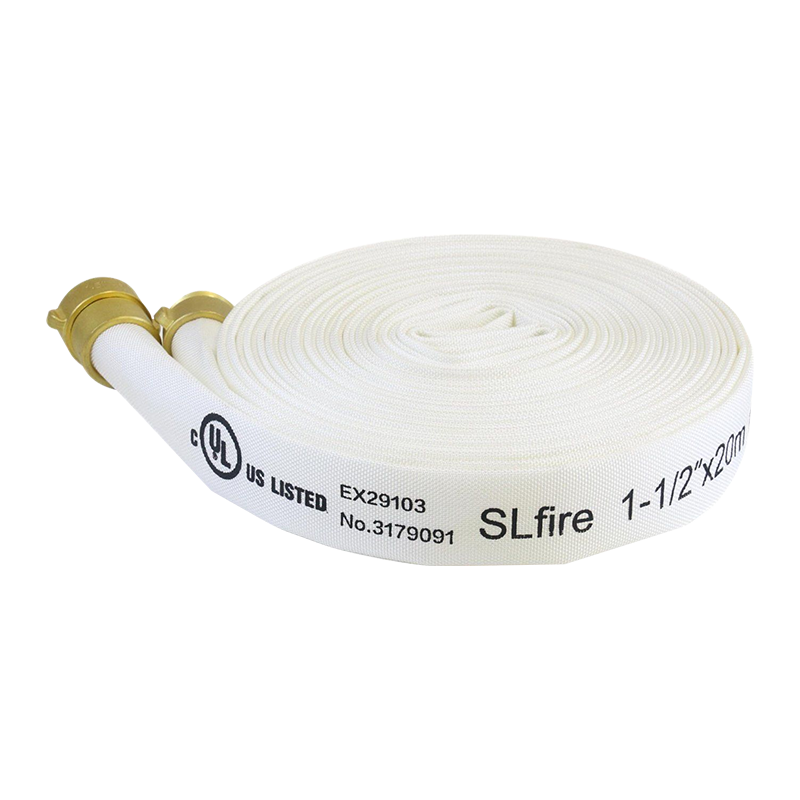
Single jacket, TPU liner •High-tenacity polyester yarn, circular woven in twill weave/plain weave,T ...
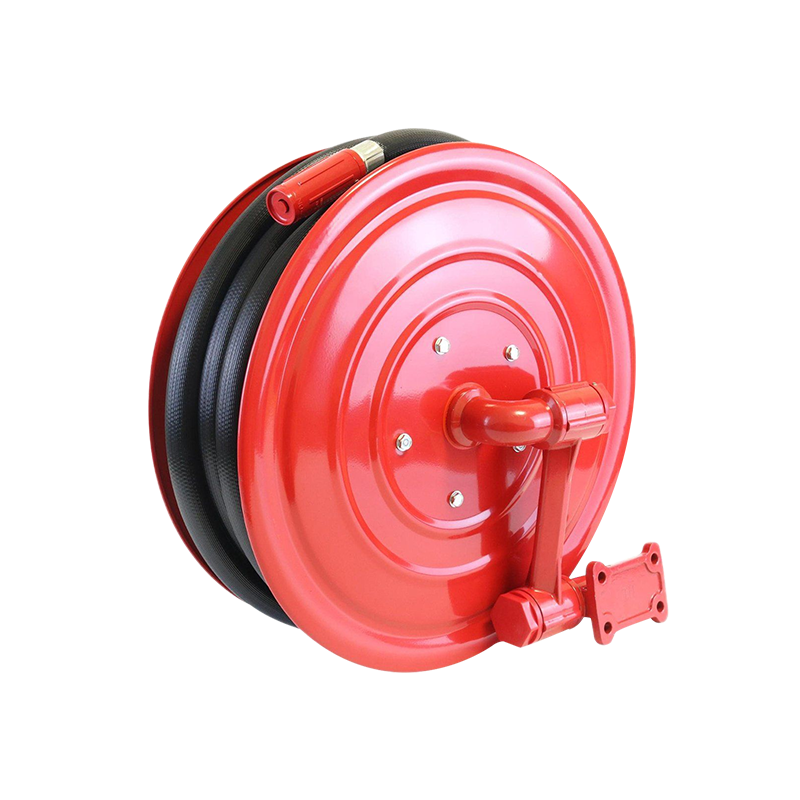
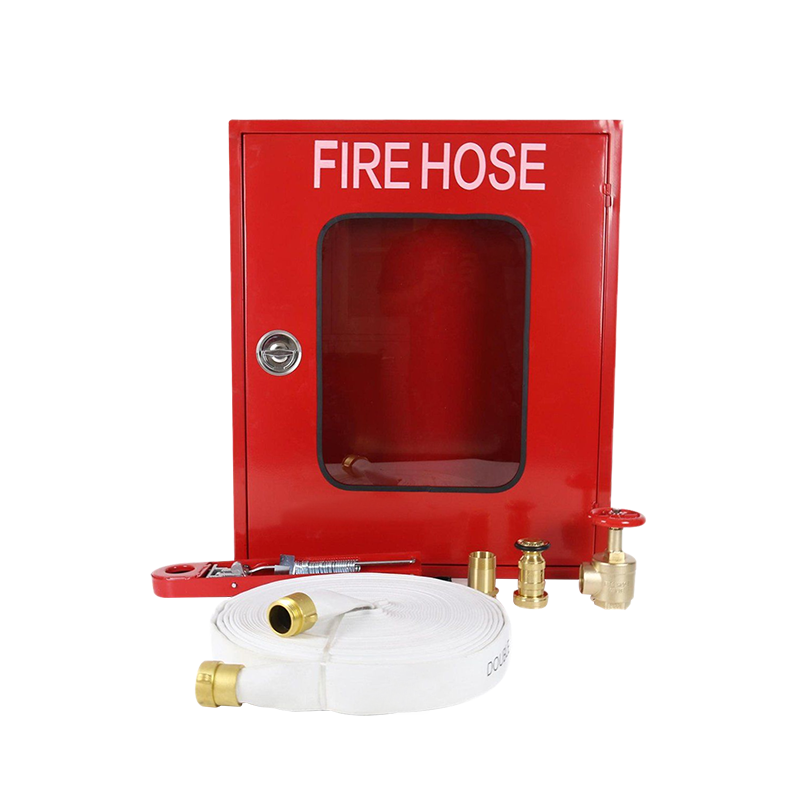
Fire cabinets are designed to accommodate fire hose,valve and other firefighting equipment. Type 201...
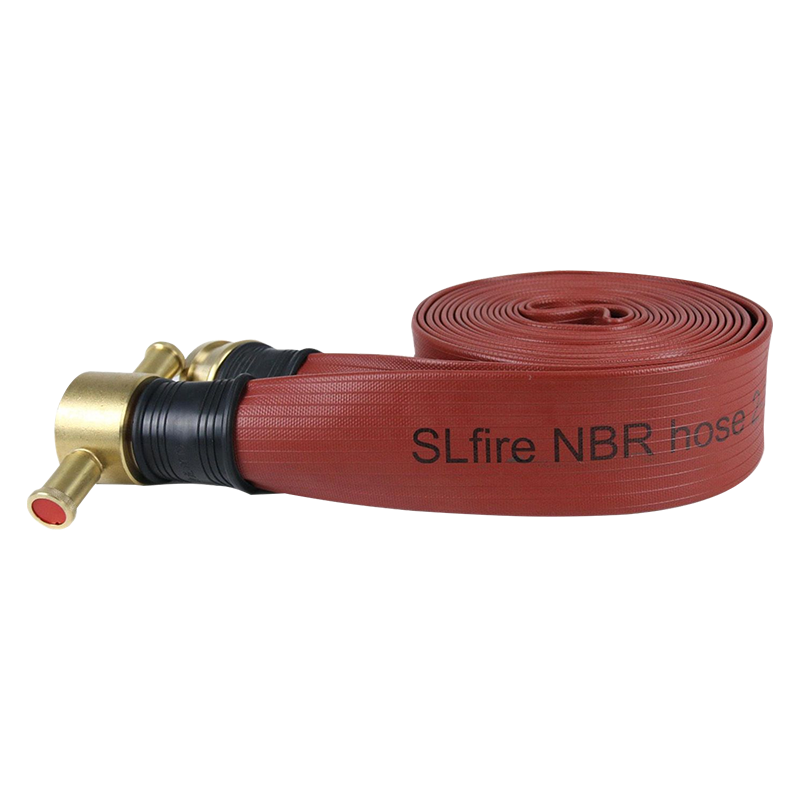
Nitrile covered hose •Nitrile/TPR blend as cover and lining, with 100% high-tenacity polyester yarn ...
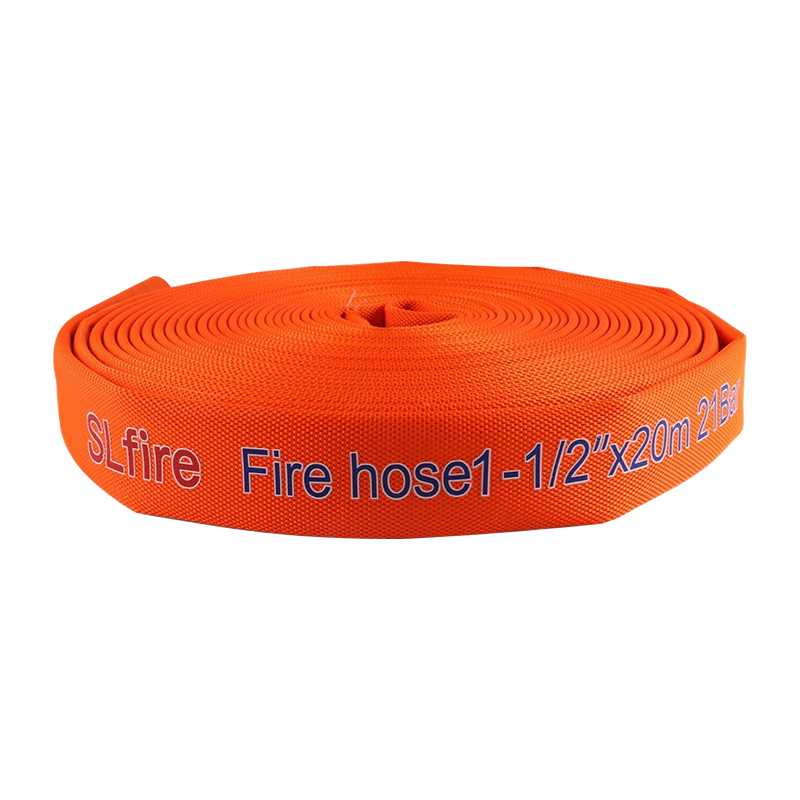
Single jacket, TPU liner •High-tenacity polyester yarn, circular woven in twill weave, TPU lining, f...
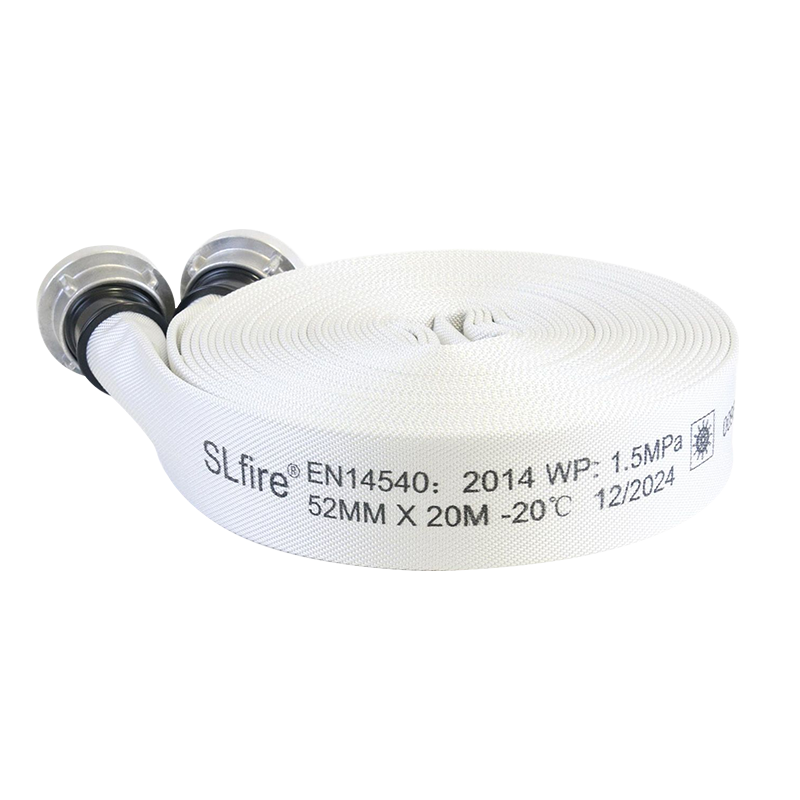
Marine hose Single jacket, PVC liner •100% high tenacity polyester yarn, circular woven in twill wea...
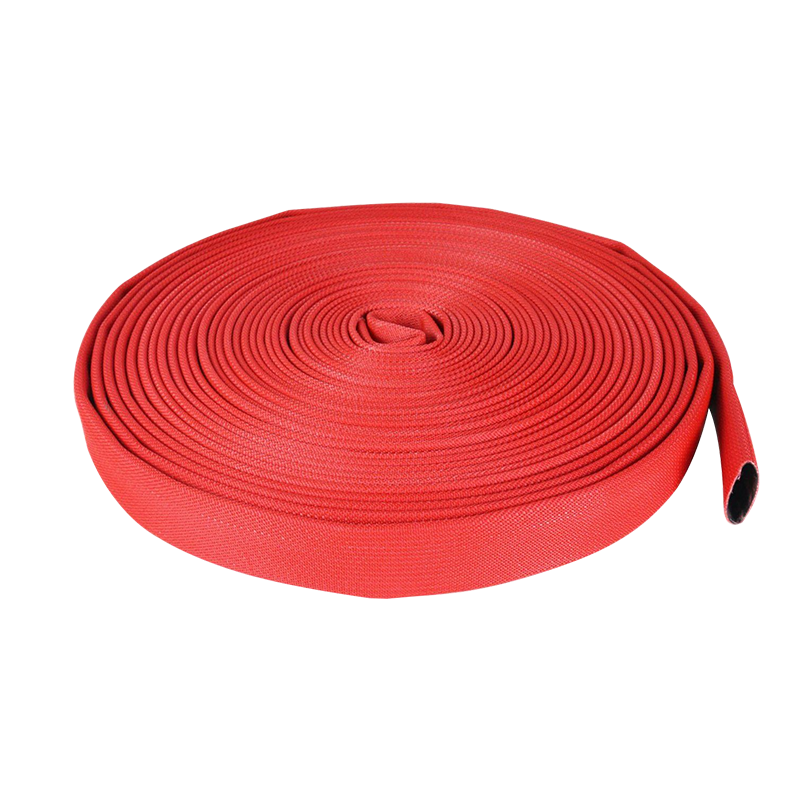
Marine hose Single jacket, PVC liner, PU coated •100% high tenacity polyester yarn,c ircular woven i...
 Call Us
+86 159-5116-9511
Need Support
Head Office
No.58, Kechuang Road, Sixiang Street Medicine Gaoxin District Taizhou City, Jiangsu Province

What Is a Fire Hose? A fire hose is a high-pressure flexible hose designed to carry water or fire retardant chemicals from a water source, such as a hydrant, pump, or tank, to a fire for suppression p...
Copyright © Taizhou Shenlong Fire Science and Technology Co., Ltd. All Rights Reserved.
 Fire Hose Manufacturers, Fire Hydrant Hose Factory