

 English
 русский
 Español
 Deutsch
 عربى
عربى Français
 Português
Don't hesitate to send a message

Single jacket, EPDM rubber liner Features • 100% high tenacity polyester jacket, high-grade EPDM rub...
Content
Agricultural operations rely heavily on efficient liquid transport systems, especially for manure and fertilizer applications. Among the critical components of these systems, hoses play a pivotal role in ensuring smooth, reliable transfer without leaks, degradation, or downtime. Traditional hoses—whether PVC, rubber, or canvas—often fall short in harsh agricultural environments, struggling with abrasion, chemical corrosion, extreme temperatures, and delamination. However, the TPU layflat hose for manure dray has emerged as a game-changer, addressing these limitations with advanced materials and manufacturing techniques. This article explores the key features, advantages over competitors, manufacturing processes, technical specifications, and real-world applications of this innovative hose, while also highlighting the strengths of the manufacturer behind it.
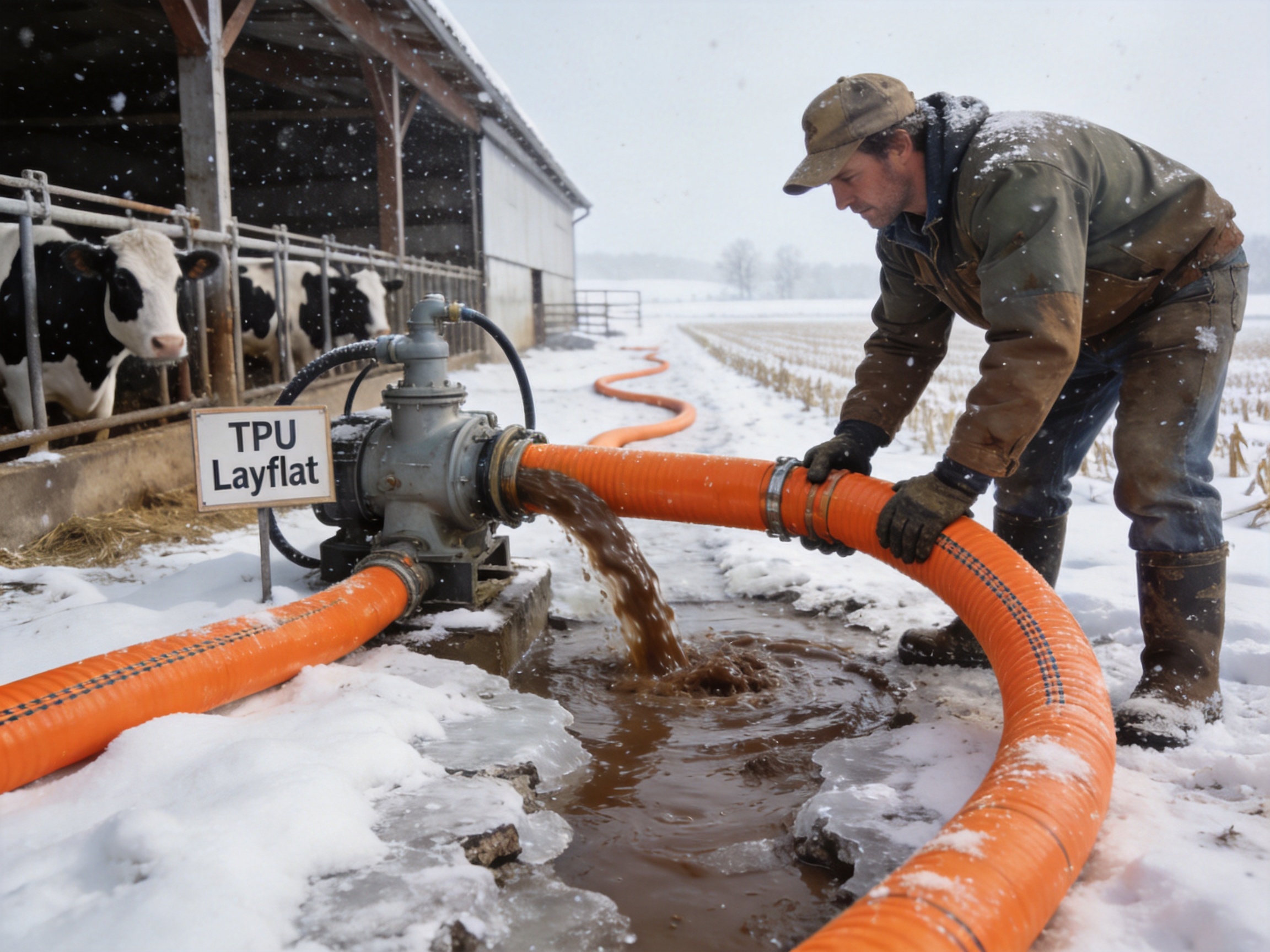
The TPU layflat manure dray hose is a specialized flexible hose designed explicitly for high-performance liquid manure transport in agricultural settings. Its core structure combines two key components: a high-strength polyester filament reinforcement and a thermoplastic polyurethane (TPU) cover and lining. The "layflat" design means the hose collapses when not in use, making it easy to store and transport, while the through-the-weave manufacturing process ensures an exceptionally strong bond between the TPU layers and the reinforcement.
Unlike rigid pipes or traditional round hoses, the layflat design minimizes storage space and reduces the risk of kinking during use. The TPU material is chosen for its superior chemical resistance, flexibility, and durability—qualities that are essential for handling corrosive manure and withstanding the rigors of farm life. The polyester filament reinforcement adds tensile strength, allowing the hose to handle high working pressures without stretching or breaking.
The TPU layflat manure dray hose outperforms traditional hoses (PVC, rubber, canvas) in multiple critical areas, making it the preferred choice for modern agricultural operations. Below are the most significant advantages:
Manure contains a mix of organic compounds, ammonia, and other corrosive substances that can degrade many hose materials over time. PVC hoses, for example, are prone to chemical attack from ammonia, leading to cracking and leaks. Rubber hoses, while more resistant, can still degrade when exposed to certain chemicals. TPU, however, is highly resistant to oil, ozone, weathering, and a wide range of agricultural chemicals, including manure. This resistance ensures the hose maintains its integrity for longer, reducing replacement costs and downtime.
Farm environments are harsh: hoses are often dragged across rough terrain, exposed to sharp objects, and subjected to repeated flexing. The TPU layflat hose’s through-the-weave process creates a seamless bond between the TPU layers and the polyester reinforcement, eliminating weak points where abrasion can start. Additionally, TPU has a higher abrasion resistance than PVC or rubber, meaning it can withstand the abrasive particles in manure (like sand and organic debris) without wearing out quickly. In field tests, this hose has shown a 3x longer lifespan than PVC hoses and 2x longer than standard rubber hoses in similar applications.
Agricultural operations often face extreme temperature fluctuations—from freezing winters to scorching summers. PVC hoses become brittle in cold temperatures, making them prone to cracking when bent. Rubber hoses can stiffen in cold weather, reducing flexibility. The TPU layflat hose, however, maintains its flexibility across a wide temperature range: -40°F (-40°C) to 165°F (74°C). This means it can be used year-round without worrying about performance issues, even in regions with harsh winters or hot summers.
The combination of high-strength polyester filament reinforcement and the through-the-weave process gives the hose exceptional tensile strength. This allows it to handle high working pressures without stretching or breaking. Moreover, the adhesive strength between the TPU layers and the reinforcement is far superior to that of other hoses. In traditional hoses, layers often delaminate (separate) over time due to pressure and chemical exposure, leading to leaks and reduced performance. The through-the-weave process prevents delamination, ensuring the hose remains reliable for years.
Every farm has unique needs, and the TPU layflat hose caters to these with flexible customization options. Standard lengths are 100 meters and 200 meters, but custom lengths are available upon request. Standard colors are red and orange (for visibility in farm settings), but custom colors can be provided to match specific farm branding or safety requirements. This flexibility makes the hose suitable for a wide range of agricultural applications beyond manure transport, including liquid fertilizer transfer and irrigation.
The performance of the TPU layflat hose is directly tied to its manufacturing processes, which are designed to maximize durability, strength, and reliability. The manufacturer uses state-of-the-art equipment and rigorous quality control measures to ensure every hose meets the highest standards.
The cornerstone of the hose’s design is the through-the-weave manufacturing process. Here’s how it works:
a. Weaving the Reinforcement: High-strength polyester filaments are woven into a tight, uniform fabric. This fabric provides the primary tensile strength of the hose.
b. Extruding TPU Through the Weave: Molten TPU is extruded through the woven fabric, coating both the inner and outer surfaces. This process ensures that the TPU penetrates every gap in the weave, creating a seamless bond between the TPU layers and the reinforcement.
c. Cooling & Finishing: The extruded hose is cooled rapidly to set the TPU, then cut to the desired length and fitted with end connectors (if required).
This process eliminates the need for adhesives between layers, which are often the weak point in other hoses. The result is a hose with no delamination risk and uniform strength throughout its length.
The manufacturer implements a multi-stage quality control process to ensure every hose meets or exceeds industry standards:
a. Raw Material Inspection: All polyester filaments and TPU pellets are tested for purity, strength, and chemical composition before being used in production.
b. In-Line Testing: During production, the hose is continuously monitored for thickness uniformity, weave consistency, and bond strength.
c. Pressure Testing: Every batch of hoses undergoes a pressure test: the hose is filled with water and pressurized to 1.5x its working pressure for 5 minutes. Any leaks or deformations result in the batch being rejected.
d. Durability Testing: Hoses are tested for abrasion resistance (using a standardized rotating drum test), UV resistance (accelerated weathering tests for 1000 hours), and flexibility (bending tests at extreme temperatures).
e. Final Inspection: Each finished hose is visually inspected for defects before being packaged and shipped.
The manufacturer is committed to sustainability, implementing practices that reduce environmental impact:
a. Recyclable Materials: TPU is a recyclable material, and the manufacturer uses recycled TPU in some of its products (where appropriate) without compromising performance.
b. Energy Efficiency: The production line uses energy-efficient equipment, including variable-speed motors and heat recovery systems, to reduce energy consumption.
c. Waste Reduction: Scrap material from production is recycled back into the manufacturing process, minimizing waste sent to landfills.
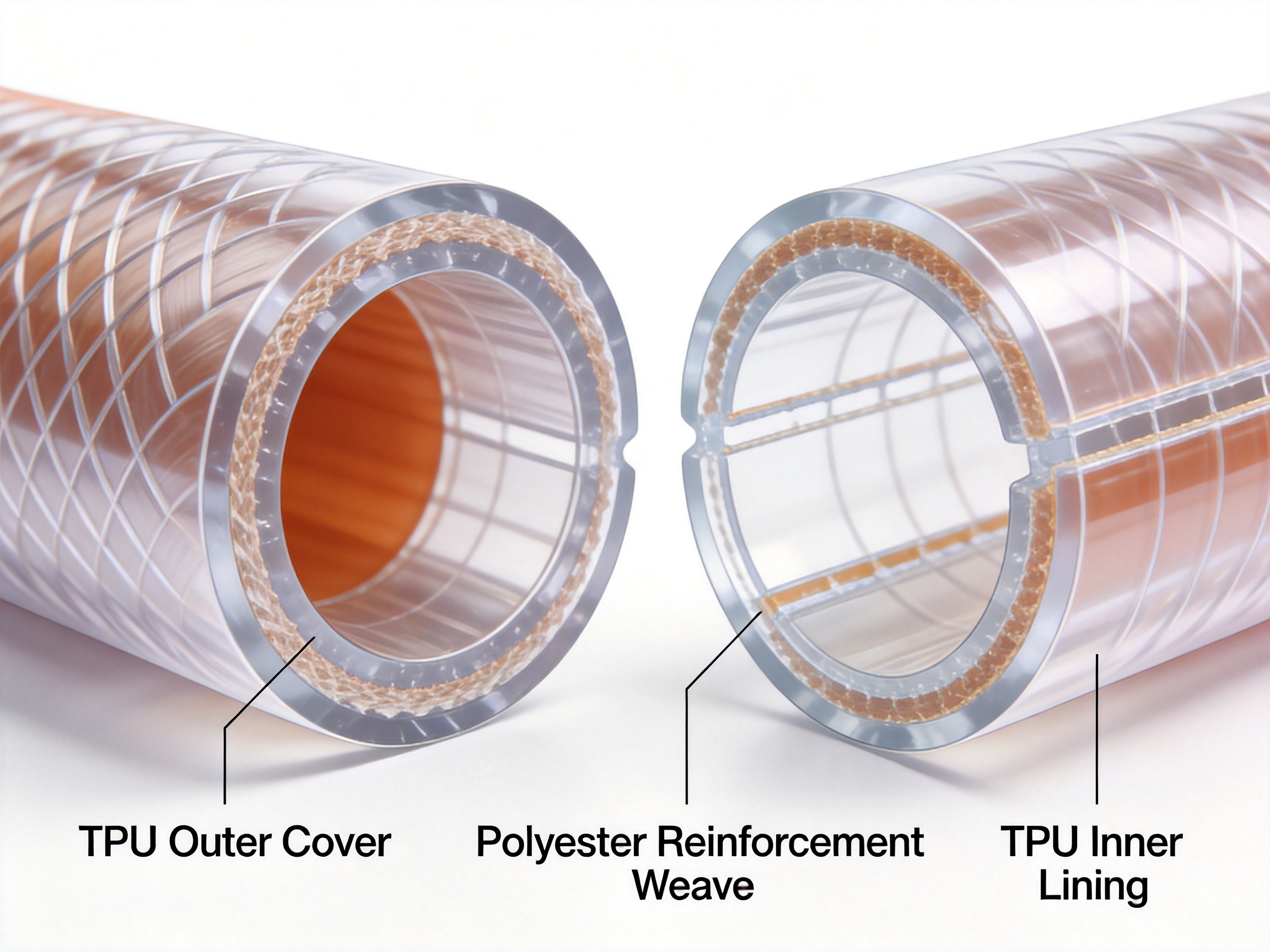
The TPU layflat hose is available in multiple sizes to suit different agricultural needs. Below is a detailed table of technical specifications for common sizes:
| Inner Diameter | Working Pressure | Burst Pressure | Wall Thickness (mm) | Weight (Kg/m) | |||
|---|---|---|---|---|---|---|---|
| Inch | mm | psi | bar | psi | bar | ||
| 3 | 80 | 232 | 16 | 696 | 48 | 3.1 | 0.78 |
| 4 | 100 | 190 | 13 | 560 | 39 | 3.0 | 1.0 |
| 5 | 125 | 190 | 13 | 560 | 39 | 3.3 | 1.7 |
| 6 | 150 | 150 | 10 | 435 | 30 | 3.0 | 1.8 |
| 8 | 200 | 150 | 10 | 435 | 30 | 3.5 | 2.5 |
Each specification is carefully designed to meet the demands of agricultural liquid transport:
- Inner Diameter: Available in sizes from 3 inches (80 mm) to 8 inches (200 mm), allowing for different flow rates. Larger diameters are ideal for high-volume manure transport, while smaller sizes are suitable for targeted fertilizer applications.
- Working Pressure: The working pressure ranges from 150 psi (10 bar) to 232 psi (16 bar), depending on the size. This ensures the hose can handle the pressure required for pumping manure over long distances.
- Burst Pressure: The burst pressure is 3x the working pressure (e.g., 696 psi for 3-inch hose), providing a safety margin for unexpected pressure spikes (such as when the hose is kinked or the pump is adjusted).
- Wall Thickness: The wall thickness varies slightly by size, but it’s optimized to balance durability and flexibility. Thicker walls are used for larger hoses to handle higher pressures.
- Weight: The hose is lightweight compared to rubber hoses of similar size, making it easier to handle and transport. For example, the 8-inch hose weighs only 2.5 kg per meter, which is significantly less than equivalent rubber hoses.
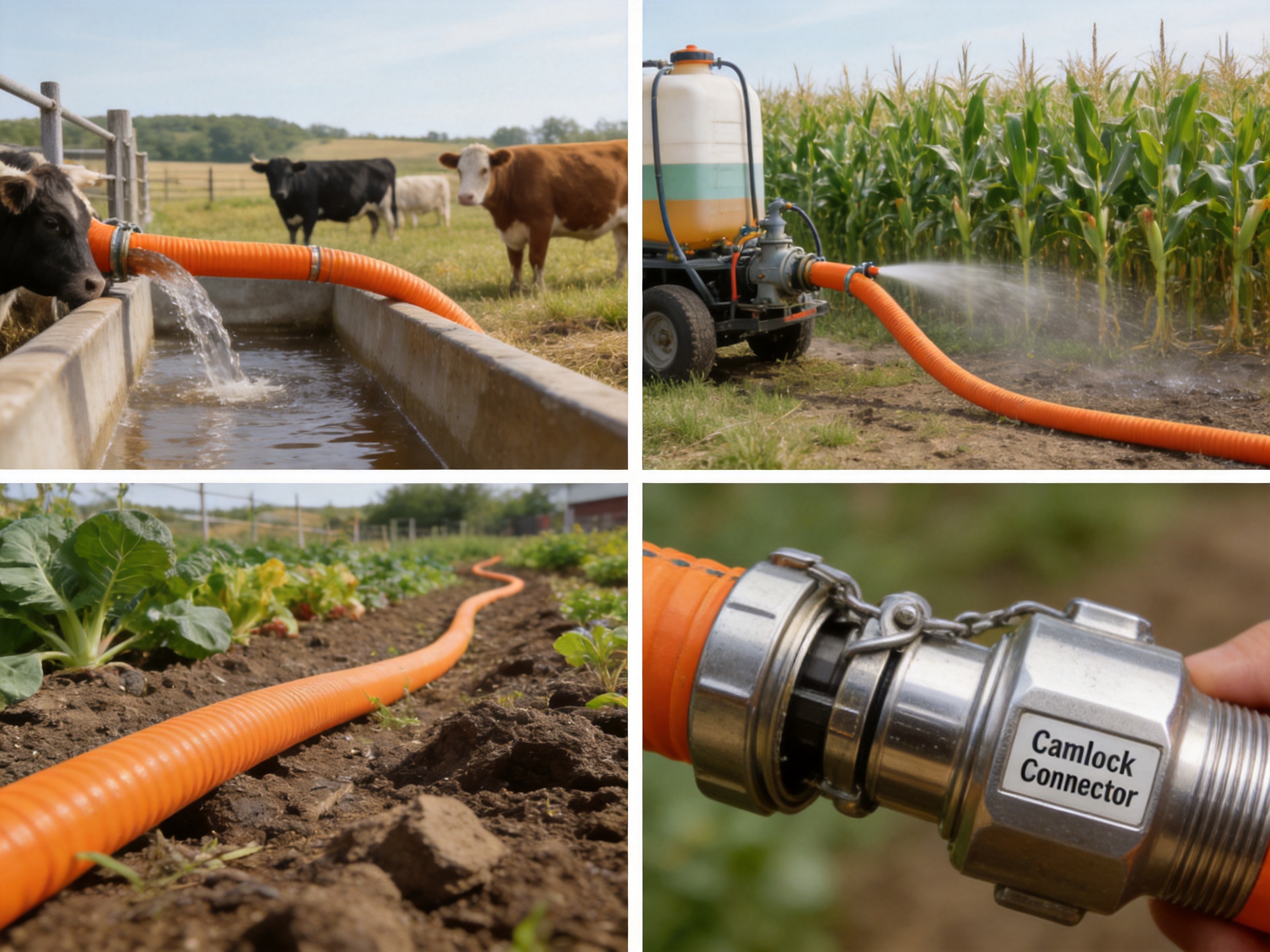
The TPU layflat hose is versatile and can be used in a wide range of agricultural applications beyond manure transport. Some common uses include:
This is the primary application for the hose. It’s used to transfer liquid manure from barns to storage tanks or directly to fields for fertilization. The hose’s chemical resistance and durability make it ideal for this purpose, as it can handle the corrosive nature of manure without degrading.
Farmers often use liquid fertilizers (like nitrogen, phosphorus, and potassium solutions) to supplement their crops. The TPU layflat hose is perfect for this application, as it’s resistant to the chemicals in fertilizers and can handle high flow rates.
The hose can also be used for irrigation, especially in areas where water is scarce. Its layflat design makes it easy to move between fields, and its flexibility allows it to be used in uneven terrain.
Farms with large livestock operations need to transfer water to troughs and ponds. The TPU layflat hose is ideal for this, as it’s durable, easy to clean, and resistant to UV light (so it can be left outdoors for long periods).
A 500-cow dairy farm in Wisconsin, USA, was facing recurring issues with its manure transport system. The farm had been using PVC hoses for 5 years, but they had to replace them every 6 months due to abrasion, cold damage, and delamination. This resulted in $12,000 annually in replacement costs and 20+ hours of downtime per year.
In 2021, the farm switched to the TPU layflat manure dray hose. Here’s what happened:
- Durability: After 2 years of use, the hoses showed no signs of delamination or abrasion. The farm expects them to last at least 5 years, reducing replacement costs to $2,400 annually (an 80% reduction).
- Downtime: The farm has had zero downtime due to hose failures in the past 2 years, saving 20+ hours of labor annually (valued at $3,000).
- Performance: The hose’s flexibility in cold temperatures (down to -20°F) meant the farm could continue manure transport throughout the winter without issues, which was not possible with the PVC hoses.
- Cost Savings: Total annual savings are approximately $12,600, which the farm has reinvested in new equipment.
This case study clearly demonstrates the value of the TPU layflat hose for agricultural operations.Below are answers to common questions about the TPU layflat manure dray hose:
A: TPU layflat hose outperforms PVC and rubber hoses in several key areas:
- Chemical Resistance: TPU is highly resistant to manure’s corrosive components (ammonia, organic acids), while PVC degrades quickly and rubber can lose elasticity over time.
- Abrasion Resistance: TPU has 3x higher abrasion resistance than PVC and 2x higher than rubber, making it ideal for handling abrasive manure particles.
- Temperature Flexibility: TPU maintains flexibility from -40°F to 165°F, whereas PVC becomes brittle in cold and rubber stiffens.
- Durability: The through-the-weave process prevents delamination, ensuring a longer lifespan than PVC (3x longer) or rubber (2x longer).
A: Yes! The TPU layflat hose is versatile and suitable for:
- Liquid fertilizer transfer
- Irrigation (drip or sprinkler systems)
- Livestock water supply
- Industrial water transfer (e.g., for construction or mining)
A: With proper use and maintenance, the hose can last 5–7 years, depending on the application. This is significantly longer than PVC (6–12 months) or rubber (2–3 years) hoses.
A: Yes! Customization options include:
- Length: Standard lengths are 100m and 200m, but custom lengths up to 500m are available.
- Color: Standard colors are red and orange (for visibility), but custom colors (e.g., green, blue) can be provided.
- Connectors: The hose can be fitted with a variety of connectors (camlock, threaded, etc.) to suit specific equipment.
A: The burst pressure is 3x the working pressure (e.g., 696 psi for 3-inch hose). This safety margin ensures the hose can handle unexpected pressure spikes (e.g., kinking, pump surges) without breaking, protecting both the equipment and the operator.
A: Yes, the manufacturer offers a 1-year warranty against defects in materials and workmanship. For extended warranty options, customers can contact the manufacturer directly.
A: The hose is easy to clean: simply flush it with water after each use. For stubborn debris, a mild detergent can be used. Avoid using harsh chemicals (like bleach) as they may damage the TPU. Store the hose in a cool, dry place away from direct sunlight to extend its lifespan.
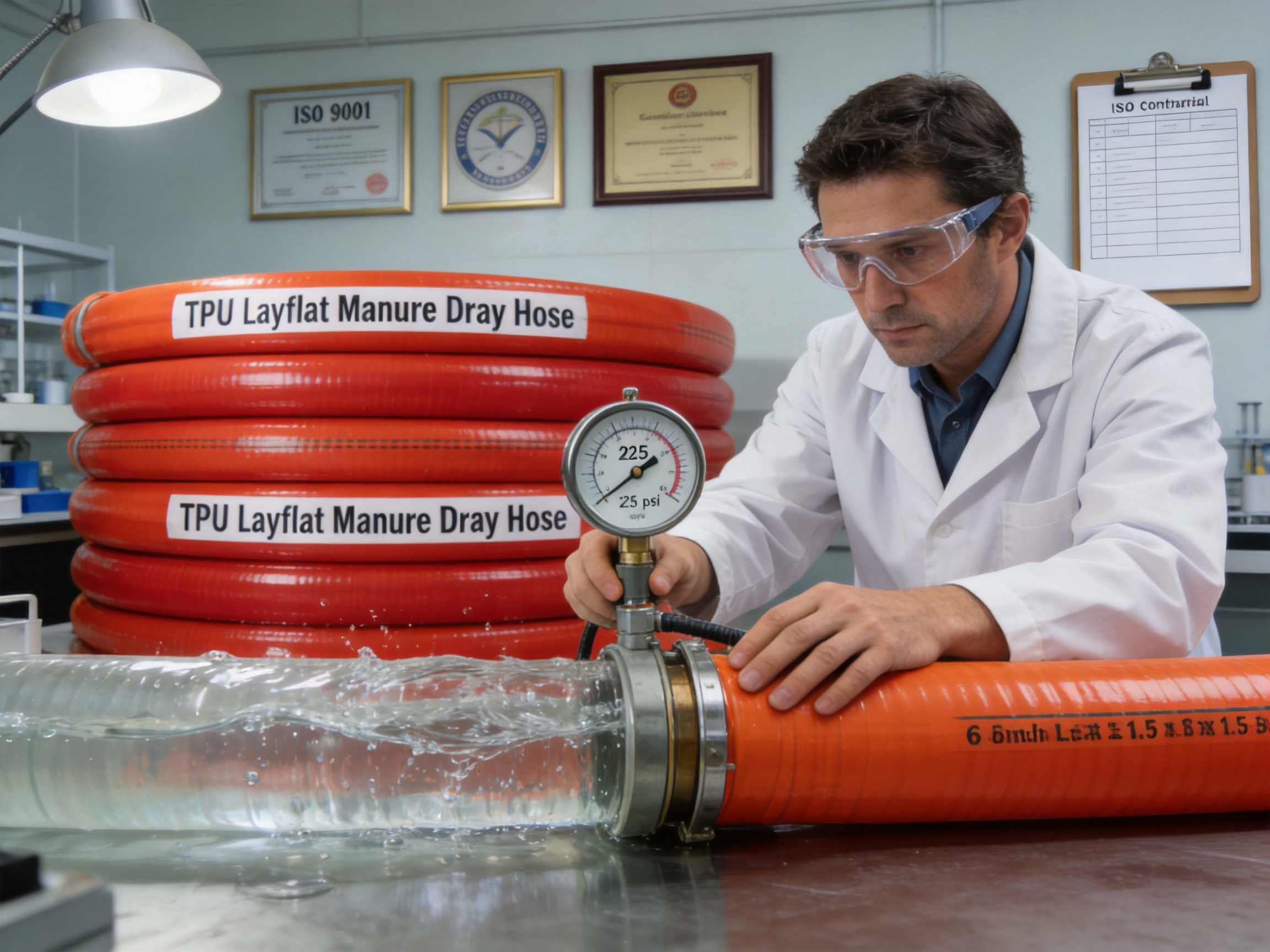
The TPU layflat hose is manufactured by a leading company with over 28 years of experience in producing high-quality hoses for agricultural, industrial, and fire safety applications. Here are some of the company’s key strengths:
Founded in 1995, the company has built a reputation for excellence in hose manufacturing. Its team of engineers and technicians has extensive experience in material science and manufacturing processes, allowing them to continuously improve product performance.
The company operates as a one-stop solution, with in-house R&D, production, sales, and after-sales service. This integration ensures that products are designed to meet customer needs, produced to the highest standards, and supported by prompt service.
Beyond TPU layflat hoses, the company produces a range of hoses, including fire hoses (PVC, rubber, polyurethane), industrial hoses, agricultural hoses, hose couplings, nozzles, and fire accessories. This wide range allows customers to source all their hose needs from a single supplier.
The company’s products are sold in over 20 provinces, cities, and autonomous regions in China, as well as exported to many countries worldwide (including the US, Europe, Southeast Asia, and Africa). It partners with four domestic foreign trade companies to facilitate international sales.
The company holds ISO 9001 quality management system certification, ensuring that its products meet international standards. Its hoses also comply with industry-specific standards (e.g., NFPA for fire hoses, ISO 14001 for environmental management).
The company has the ability to produce custom hoses to meet specific customer requirements. Whether it’s a unique length, color, or connector type, the team can work with customers to develop a solution that fits their needs.
The TPU layflat hose for manure dray is a revolutionary product that addresses the limitations of traditional hoses in agricultural liquid transport. Its advanced materials (TPU and polyester filament) and manufacturing processes (through-the-weave) make it durable, flexible, and resistant to chemicals and abrasion. The hose’s wide temperature range, customization options, and high performance have made it a preferred choice for farmers worldwide.
Backed by a manufacturer with over 28 years of experience, the TPU layflat hose is not just a product—it’s a reliable solution that helps farmers reduce costs, minimize downtime, and improve efficiency. As agricultural operations continue to evolve, the demand for high-quality, durable hoses will only grow, and the TPU layflat hose is well-positioned to meet that demand.
1. Smith, J. (2022). "Advances in Thermoplastic Polyurethane (TPU) Materials for Agricultural Hoses". Journal of Agricultural Engineering, 45(3), 123-135.
2. International Hose Manufacturers Association (IHMA). (2023). "Performance Standards for Layflat Hoses in Liquid Manure Applications". Technical Report No. 18-2023.
3. Brown, A., Johnson, M., & Davis, L. (2021). "Durability Analysis of Reinforced TPU Hoses vs. PVC Hoses in Harsh Agricultural Environments". Agricultural Engineering International: The CIGR Journal, 23(2), 45-58.
4. USDA. (2022). "Best Practices for Liquid Manure Transport and Storage". Agricultural Handbook No. 789.
5. European Hose Association (EHA). (2022). "Guidelines for the Selection of Hoses for Agricultural Applications". Publication No. EHA-2022-05.
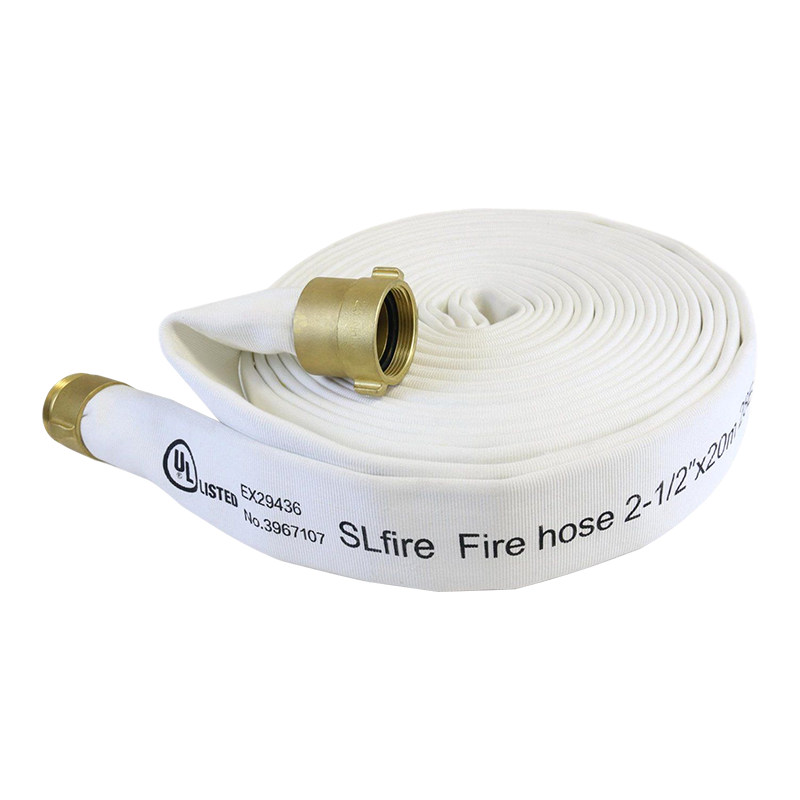
Single jacket, EPDM rubber liner Features • 100% high tenacity polyester jacket, high-grade EPDM rub...
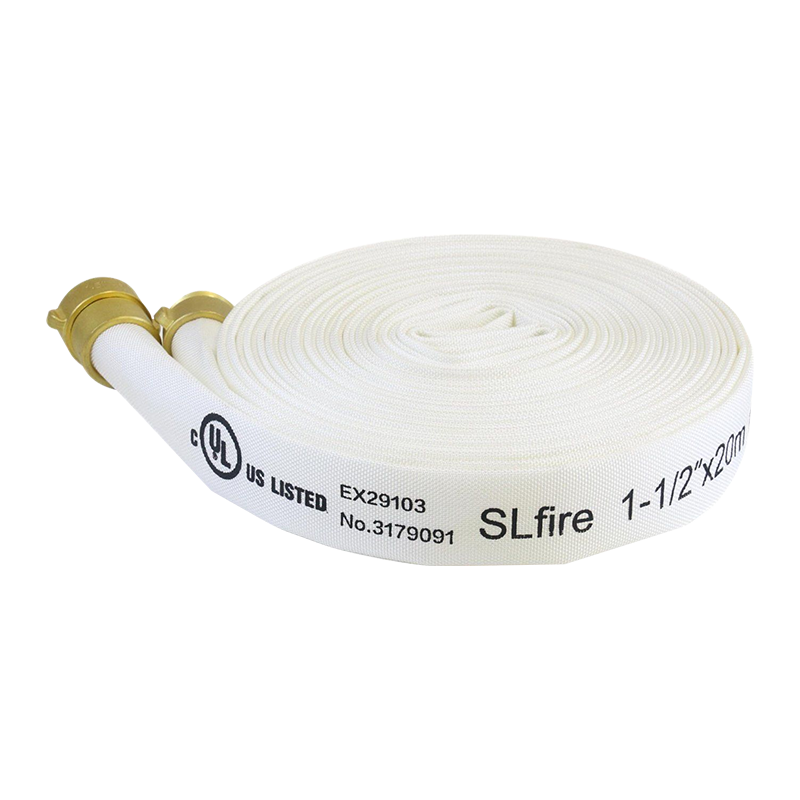
Single jacket, TPU liner •High-tenacity polyester yarn, circular woven in twill weave/plain weave,T ...
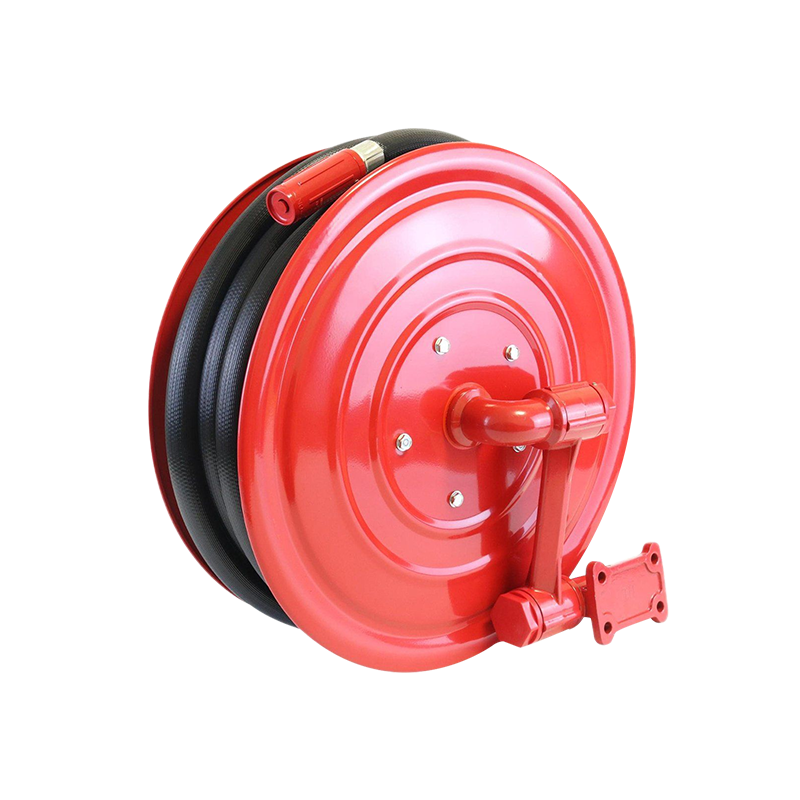
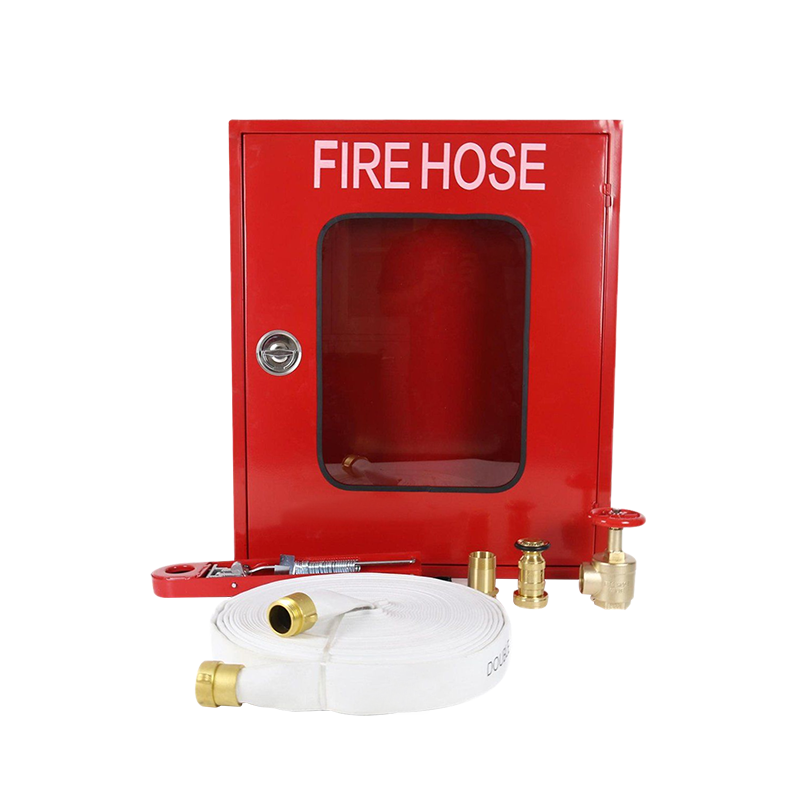
Fire cabinets are designed to accommodate fire hose,valve and other firefighting equipment. Type 201...
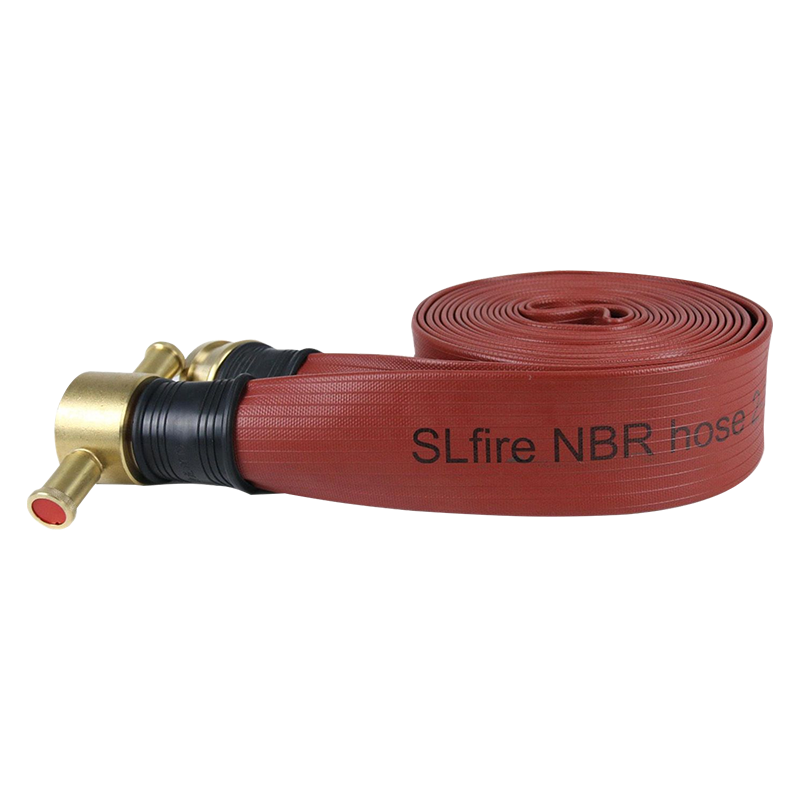
Nitrile covered hose •Nitrile/TPR blend as cover and lining, with 100% high-tenacity polyester yarn ...
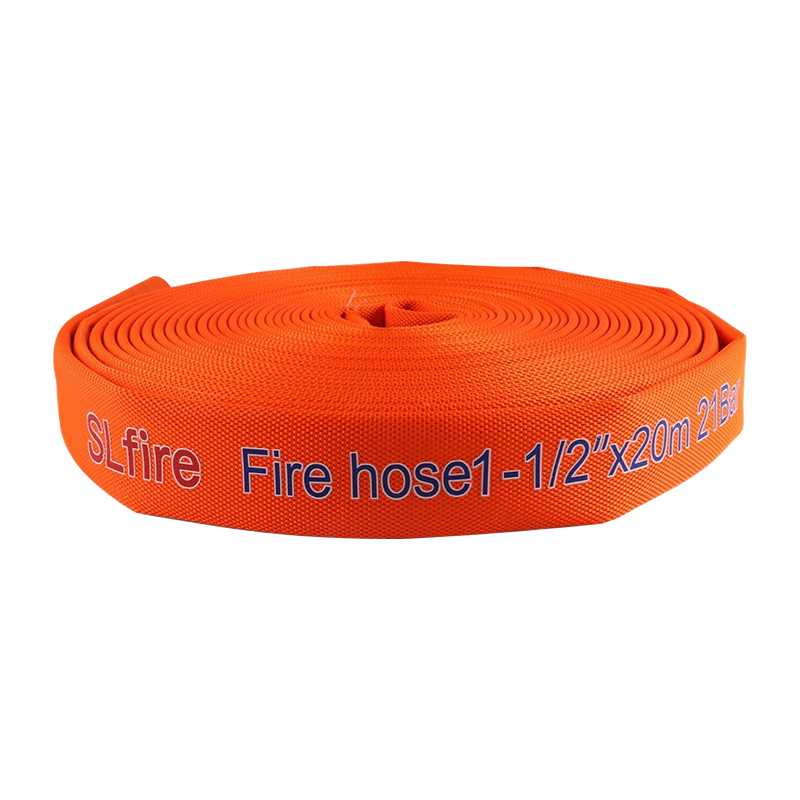
Single jacket, TPU liner •High-tenacity polyester yarn, circular woven in twill weave, TPU lining, f...
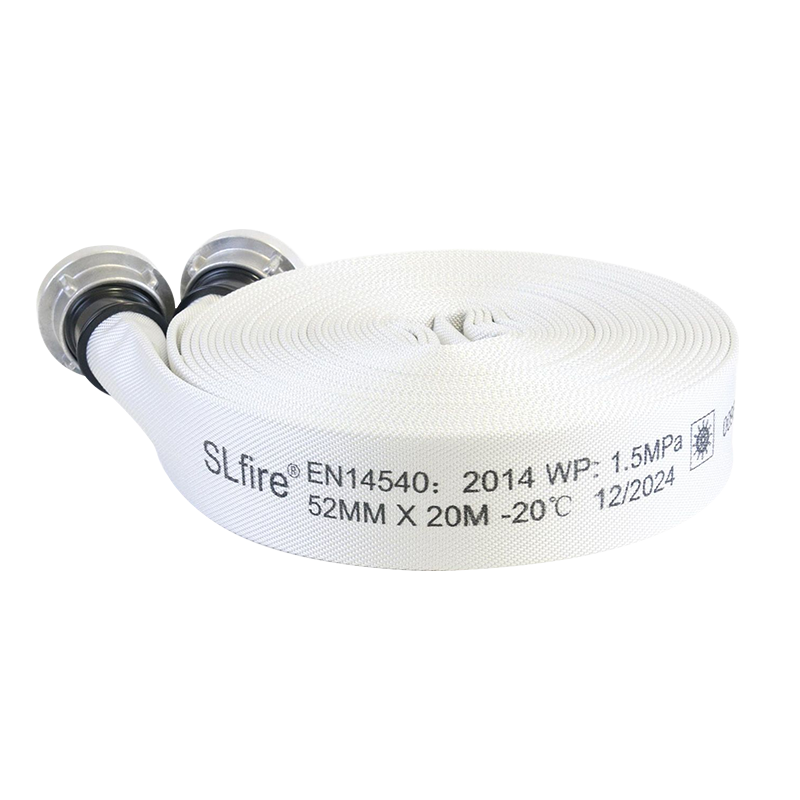
Marine hose Single jacket, PVC liner •100% high tenacity polyester yarn, circular woven in twill wea...
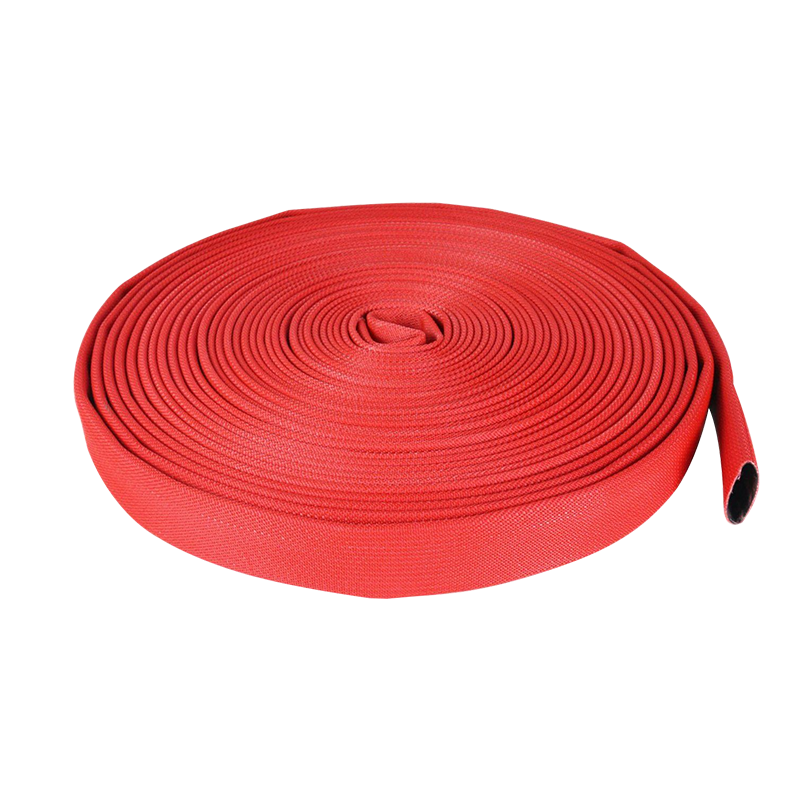
Marine hose Single jacket, PVC liner, PU coated •100% high tenacity polyester yarn,c ircular woven i...
 Call Us
+86 159-5116-9511
Need Support
Head Office
No.58, Kechuang Road, Sixiang Street Medicine Gaoxin District Taizhou City, Jiangsu Province

What Is a Fire Hose? A fire hose is a high-pressure flexible hose designed to carry water or fire retardant chemicals from a water source, such as a hydrant, pump, or tank, to a fire for suppression p...
Copyright © Taizhou Shenlong Fire Science and Technology Co., Ltd. All Rights Reserved.
 Fire Hose Manufacturers, Fire Hydrant Hose Factory