

 English
 русский
 Español
 Deutsch
 عربى
 Français
 Português
Don't hesitate to send a message

Single jacket, EPDM rubber liner Features • 100% high tenacity polyester jacket, high-grade EPDM rub...
Content
A dependable supply hose is a vital part of many water delivery systems. It must transport large volumes of water, withstand repeated handling, resist abrasion, remain flexible in changing conditions, and deliver consistent performance over a long service life. For fire protection, construction, water conservancy, agriculture, industrial cleaning, and other demanding applications, hose selection directly influences operational efficiency and safety.
The TPU Covered Hose Supply Hose is designed to address these requirements through a combination of thermoplastic polyurethane construction, high-tenacity polyester yarn reinforcement, and a ribbed exterior surface. Its structure provides a practical balance of pressure performance, flexibility, abrasion resistance, environmental durability, and reduced maintenance requirements.
Available in 3-inch, 4-inch, 5-inch, 6-inch, and 8-inch inner diameters, this supply hose can be selected for different water flow requirements. Standard length options include 50 feet, 75 feet, and 100 feet, allowing users to configure hose lines for portable operations, fixed installations, emergency response, and general industrial water transfer.
Manufactured by Taizhou Shenlong Fire Science and Technology Co., Ltd., the hose is supported by an organization with experience in research and development, production, sales, and service. Since its establishment in 1995, the company has focused on lined fire hoses and related flexible hose products while also undertaking customized production for international trade applications.
This article examines the construction, performance, advantages, applications, manufacturing strengths, installation considerations, maintenance characteristics, and selection criteria of the TPU Covered Hose Supply Hose.
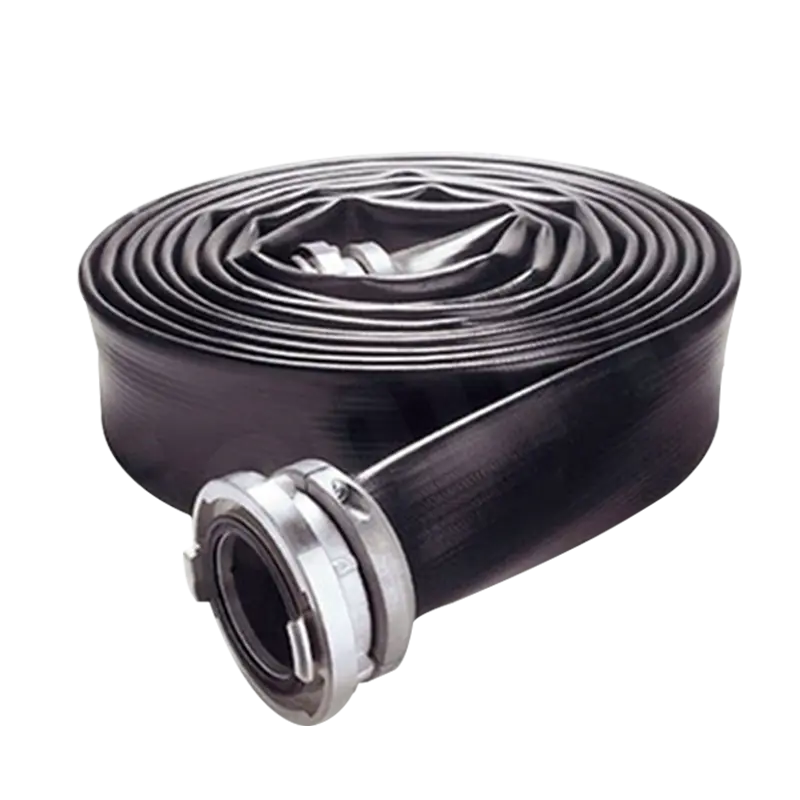
TPU Covered Hose Supply Hose
The TPU Covered Hose Supply Hose is a reinforced water delivery hose featuring thermoplastic polyurethane, commonly abbreviated as TPU, on both the cover and lining. A high-tenacity polyester yarn reinforcement layer provides the structural strength needed for pressurized operation.
Unlike a basic unreinforced hose, the product is engineered as a composite structure. The inner TPU lining forms the water-contacting surface, the polyester reinforcement supports working pressure, and the outer TPU cover protects the assembly from external damage. Ribs molded into the exterior cover add another layer of protection in areas where dragging, rubbing, folding, and repeated contact with rough surfaces may occur.
This design is especially suitable for users who need a hose that can be deployed, moved, rolled, stored, and reused without excessive maintenance. It is intended for practical operation in demanding environments rather than for single-use water transfer.
The hose is categorized as a supply hose and can serve as a water conveyance component in fire protection systems, industrial facilities, agricultural operations, construction sites, municipal projects, and water management applications. Its dimensions and pressure ratings allow it to be matched to both moderate-flow and high-flow requirements.
The principal features of the hose include a TPU cover and lining, high-tenacity polyester yarn reinforcement, a ribbed exterior surface, resistance to ozone and corrosion, resistance to mildew and petrochemicals, a maintenance-free design objective, a temperature range of -30°C to 80°C, and multiple length options.
These features work together. The TPU material provides the flexible and protective polymer structure, the polyester reinforcement carries pressure loads, and the ribbed cover helps shield the hose from abrasion. Environmental resistance supports reliable use in locations where moisture, sunlight, biological growth, chemicals, and outdoor exposure may affect ordinary hose materials.
Thermoplastic polyurethane is a versatile engineering material known for its combination of elasticity, toughness, and resistance to wear. In a hose, TPU can provide a smooth internal passage and a durable external protective layer while retaining the flexibility needed for handling and deployment.
The use of TPU as both the cover and lining creates a coordinated material system. The inner lining is designed to support efficient water flow and separate the conveyed medium from the reinforcement layer. The external cover protects the reinforcement from mechanical contact and environmental exposure.
Compared with less durable plastic coverings, TPU can offer improved resistance to repeated flexing and surface wear. Compared with some heavier rubber constructions, a TPU-based hose may provide a more manageable combination of weight, flexibility, and resistance to environmental influences. The exact service performance will depend on application conditions, operating pressure, storage practices, and compatibility with the conveyed fluid.
A supply hose often needs to pass around equipment, through access areas, across uneven ground, or into temporary operating positions. Excessive stiffness can slow deployment and make it difficult for workers to form efficient hose lines. The TPU construction supports flexibility, helping operators position the hose with less effort.
Flexibility also benefits storage. A hose that can be rolled efficiently occupies less space and is easier to organize in vehicles, cabinets, warehouses, and equipment rooms. Proper rolling and storage can also reduce sharp bends that may otherwise damage the hose over time.
The outer TPU cover is designed to resist common forms of external wear. During operation, supply hoses may be pulled over concrete, gravel, soil, metal edges, flooring, and other surfaces. The cover acts as the first protective barrier between the reinforcement and the surrounding environment.
The molded ribs on the exterior create additional protection in high-contact areas. Instead of presenting a completely smooth surface to every rough surface, the ribs help reduce direct abrasion across the main cover body. They also provide a visible structural feature that helps distinguish the hose from ordinary smooth-wall products.
The product information identifies resistance to ozone, corrosion, mildew, and petrochemicals. These characteristics are important for outdoor, industrial, and emergency applications.
Ozone exposure can affect certain elastomeric materials, especially when hoses are stored outdoors or near electrical equipment. Resistance to ozone helps support the integrity of the external cover during long-term exposure.
Resistance to mildew is useful in humid locations and in applications where the hose may be stored after contact with water. Corrosion resistance is particularly relevant because the hose itself does not depend on a metallic outer surface for protection. Petrochemical resistance can be beneficial around industrial sites, workshops, transport facilities, and equipment areas where incidental contact with petroleum-based substances may occur.
Resistance does not mean that the hose should be intentionally immersed in aggressive chemicals or used outside its stated application. Users should evaluate fluid compatibility and site conditions before handling fuels, solvents, concentrated chemicals, or other non-water media.
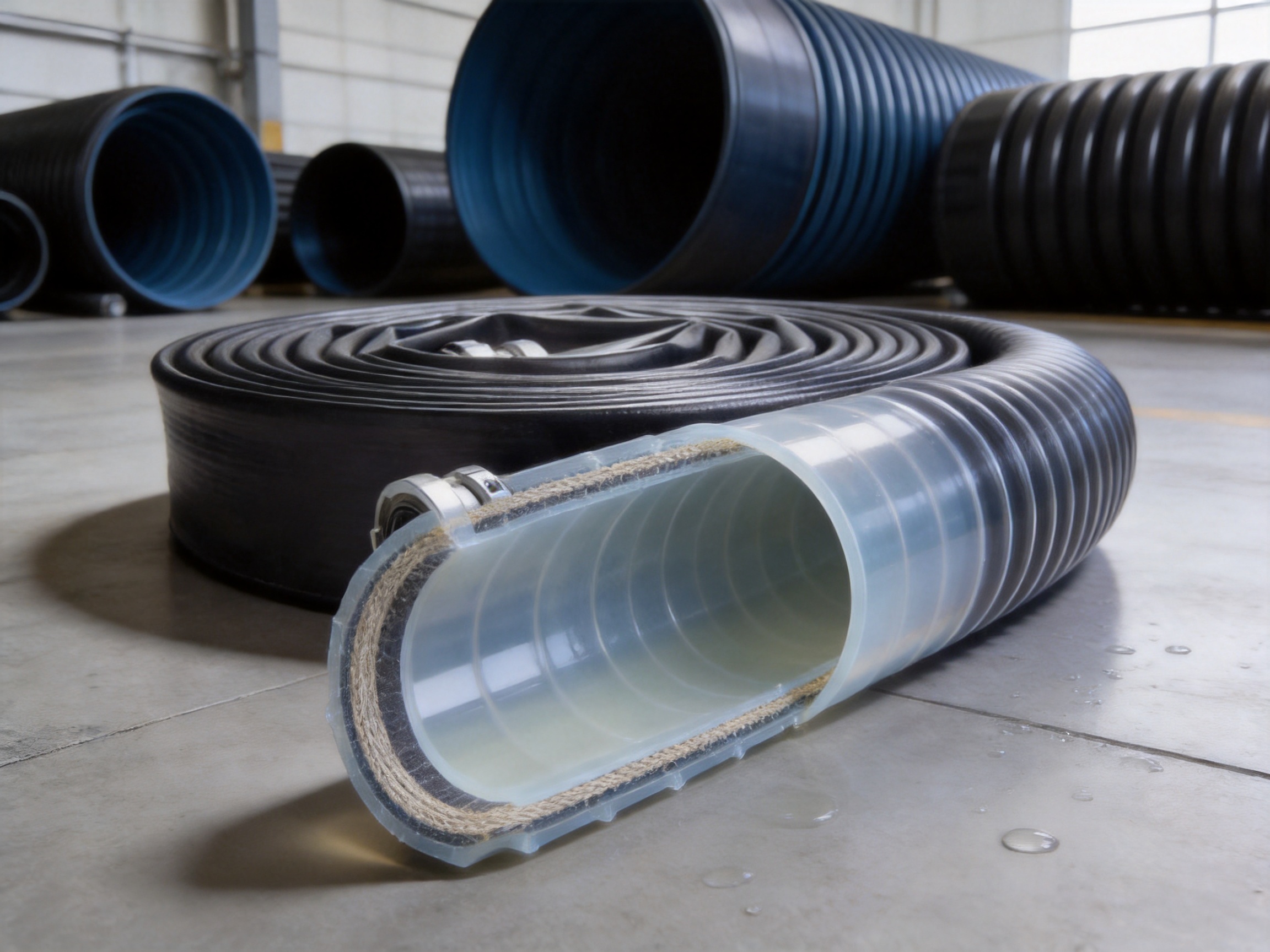
The hose uses high-tenacity polyester yarn reinforcement. This reinforcement is central to the product’s ability to operate under pressure. When water pressure acts against the inner lining, the reinforcement helps control expansion and maintains the hose’s dimensional stability.
High-tenacity polyester yarn is suitable for reinforced hose construction because it combines tensile strength with flexibility. The yarn can be arranged in a structured reinforcement layer that supports the hose while allowing it to be rolled and handled.
The hose is offered in several diameters, and each diameter has a specified working pressure and burst pressure. The working pressure is the recommended maximum operating pressure under defined conditions. The burst pressure is the pressure at which the hose may fail during a controlled test. Users should never operate the hose at or near its burst pressure.
The following table presents the supplied dimensional and pressure information. The pressure values are shown in both pounds per square inch and bar. The source data combines some adjacent values with punctuation, so the specifications below present the corresponding pressure pairs in a standardized format.
| Inner Diameter | Approximate Inner Diameter | Working Pressure | Burst Pressure |
|---|---|---|---|
| 3 inches | 75 mm | 232 psi / 16 bar | 696 psi / 48 bar |
| 4 inches | 102 mm | 232 psi / 16 bar | 696 psi / 48 bar |
| 5 inches | 127 mm | 200 psi / 14 bar | 600 psi / 42 bar |
| 6 inches | 152 mm | 200 psi / 14 bar | 600 psi / 42 bar |
| 8 inches | 203 mm | 145 psi / 10 bar | 435 psi / 30 bar |
Pressure performance is related to hose diameter, reinforcement design, material thickness, temperature, fittings, and operating conditions. As diameter increases, the pressure rating may decrease because the hose structure experiences greater circumferential loading at the same internal pressure. The values above provide a basis for product selection, but project engineers should confirm the final specification with the supplier before ordering.
Working pressure should be treated as a practical operating limit, not as a target pressure. A suitable safety margin is necessary because real-world conditions may include water hammer, pump pulsation, sudden valve closure, temperature changes, external damage, or incorrectly installed couplings.
Burst pressure is a failure threshold used for testing and comparison. It should not be interpreted as an acceptable operating level. A hose may be weakened by cuts, excessive bending, chemical exposure, ultraviolet exposure, improper storage, or repeated pressure cycling before visible damage appears.
For fire protection and industrial water transfer, system designers should consider pump capacity, static head, friction loss, elevation differences, valve operation, and coupling performance. The hose rating must be equal to or greater than the maximum expected system pressure, including transient pressure where applicable.
The TPU Covered Hose Supply Hose provides several advantages when compared with conventional supply hose constructions that may use less abrasion-resistant coverings, heavier materials, or less coordinated liner-and-cover systems.
One of the clearest competitive advantages is the ribbed TPU exterior. Abrasion is a common cause of hose damage because supply hoses are frequently dragged across the ground or moved against structural surfaces. A smooth outer cover may wear faster when exposed to repeated friction, especially in construction, firefighting, and industrial environments.
The ribbed cover helps distribute contact and adds material in exposed areas. This does not make the hose indestructible, but it improves its ability to handle normal rough-service conditions. Users can therefore expect better protection against surface wear than from a basic smooth-cover hose made for light-duty handling.
Some heavy-duty hoses achieve durability by using thick and comparatively rigid materials. While such products may resist certain forms of damage, they can be difficult to deploy, reposition, and store. The TPU construction aims to balance durability with flexibility.
This balance is valuable for emergency teams and industrial operators who need to move large-diameter hoses quickly. It can reduce the physical effort required for layout and make the hose more practical for temporary water supply lines.
The product is described as maintenance free, meaning that its durable materials are intended to reduce routine maintenance demands. The resistant cover and lining help limit problems associated with mildew, corrosion, and external deterioration.
Nevertheless, responsible inspection remains important for any pressurized hose. Maintenance-free construction should not be confused with inspection-free operation. Operators should check for cuts, punctures, exposed reinforcement, damaged couplings, severe flattening, chemical contamination, or other conditions that could affect safe use.
The stated temperature range of -30°C to 80°C allows the hose to be used in many cold and warm environments. This range supports outdoor winter operations, general industrial service, summer construction projects, and applications in facilities where ambient temperatures vary.
Temperature affects pressure performance and flexibility. At low temperatures, polymer materials may become less flexible, while high temperatures can affect strength and dimensional stability. The stated range should therefore be respected, and the operating pressure may need to be evaluated conservatively at temperature extremes.
Resistance to mildew, ozone, corrosion, and petrochemicals gives the hose an advantage in environments where ordinary textile-covered or poorly protected hoses may deteriorate more quickly. This makes it suitable for outdoor storage when proper protection is still provided, humid conditions, industrial facilities, and water-related work areas.
Product flexibility is also reflected in the available sizes. A 3-inch hose can support applications requiring a smaller flow path, while 6-inch and 8-inch hoses can support large-volume water transfer. The 4-inch and 5-inch sizes provide intermediate options.
Length options of 50 feet, 75 feet, and 100 feet allow users to balance reach, handling, storage, and pressure loss. Shorter sections may be easier to deploy and replace, while longer sections can reduce the number of connections in a hose line.
The hose is suitable for more than one industry because its core function is the reliable movement of water under pressure. Its structure and available dimensions support both emergency and routine applications.
Fire protection is a primary application for large-diameter supply hose. During emergency response, the hose may transport water from hydrants, pumps, reservoirs, or other sources to firefighting equipment. High flow capacity, pressure performance, flexibility, and abrasion resistance are all important in this environment.
The TPU cover can help the hose withstand contact with streets, pavement, building entrances, and other hard surfaces. Its flexible design supports rapid deployment, while the available 50-foot, 75-foot, and 100-foot lengths allow fire departments and industrial emergency teams to build hose lines suited to site conditions.
Because fireground conditions can be severe, users should follow applicable local standards, inspection procedures, coupling requirements, and operational protocols. Product selection should also consider the pump system and the required flow rate.
Construction projects frequently require large volumes of water for dust suppression, concrete work, dewatering, equipment cleaning, drilling, and temporary site services. Hoses may be moved over unfinished ground, aggregate, steel, concrete, and machinery access routes.
The ribbed exterior is beneficial in these conditions because it helps protect the hose against external abrasion. TPU’s resistance to mildew and environmental exposure can also support use on projects that remain outdoors for extended periods.
Water conservancy work may involve temporary pumping, drainage, irrigation support, reservoir maintenance, flood control, and water transfer. Municipal operations may require flexible hose lines for maintenance, emergency response, road cleaning, or temporary bypass systems.
The range of diameters allows project managers to select a hose according to the required flow and available pump pressure. Larger sizes can help move substantial quantities of water, while shorter lengths can be connected to create adaptable temporary systems.
Agricultural users may employ supply hose for irrigation, field drainage, water transfer, livestock facilities, equipment washing, and seasonal pumping. Outdoor agricultural environments can expose a hose to sunlight, soil, moisture, plant matter, and rough terrain.
The product’s resistance to mildew and ozone is useful in outdoor settings, while its flexible construction supports movement around fields, storage areas, and pumping stations. Agricultural users should confirm the compatibility of any fertilizers, pesticides, oils, or other chemicals that may come into contact with the hose.
Industrial facilities may need flexible hose for process water, emergency water supply, machinery cleaning, cooling support, tank transfer, and general plant maintenance. Industrial environments often include concrete floors, metal structures, vehicle traffic, and incidental contact with petroleum-based substances.
TPU’s abrasion and petrochemical resistance can make the hose a practical choice for these conditions. The product should be selected according to the actual fluid, temperature, pressure, and connection configuration used by the facility.
Equipment rental companies and portable pumping contractors need products that can be deployed repeatedly by different operators. A hose with a durable cover, flexible handling characteristics, and multiple standard lengths can simplify fleet management.
Consistent sizing also makes it easier to prepare replacement sections, organize storage racks, and maintain compatible coupling inventories. Regular inspection remains necessary because rental equipment may experience more varied handling conditions than equipment used by a single trained team.
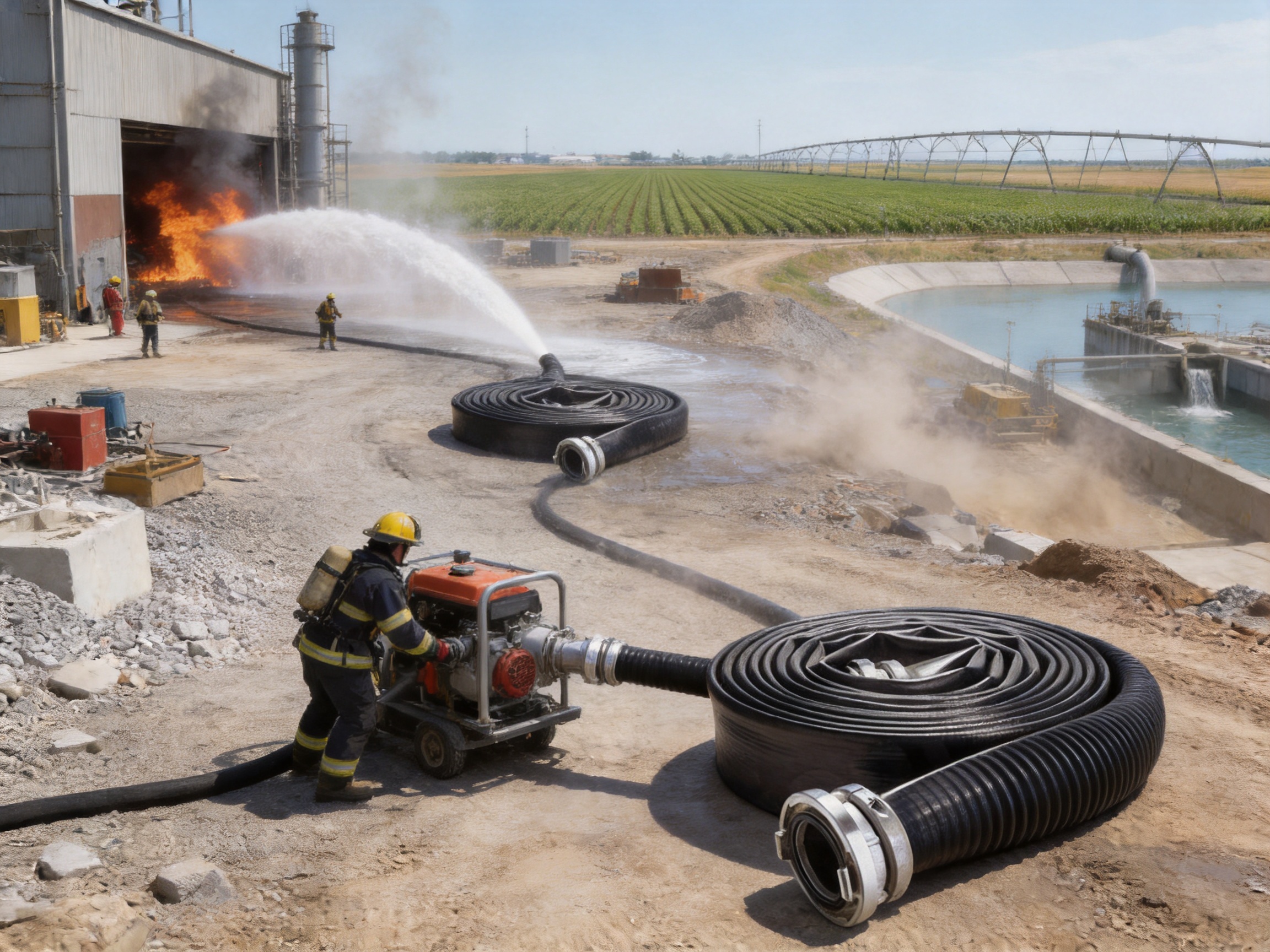
Product quality depends not only on raw materials but also on how those materials are processed, combined, inspected, and prepared for delivery. Taizhou Shenlong Fire Science and Technology Co., Ltd. operates as a research and development, production, sales, and service enterprise. This integrated structure supports product development and customer communication throughout the supply process.
The manufacturing process begins with the selection of TPU for the cover and lining and high-tenacity polyester yarn for reinforcement. Material selection must consider flexibility, tensile strength, abrasion resistance, temperature performance, and compatibility with the intended water delivery application.
A consistent raw-material program helps maintain stable hose properties from one production batch to another. The supplier’s experience in producing lined fire hoses provides a foundation for understanding how polymer layers and textile reinforcement must work together under pressure.
The inner lining is formed to create a continuous water-contacting surface. A uniform lining helps reduce flow disruption and protects the reinforcement from direct contact with the conveyed water. Careful control of the lining process is important because uneven thickness, inclusions, or surface defects can affect hose performance.
For supply hose applications, the internal passage must remain sufficiently smooth and consistent to support efficient water movement. The final result depends on material quality, processing temperature, equipment condition, dimensional control, and inspection practices.
The high-tenacity polyester yarn reinforcement is integrated around the inner lining in a controlled pattern. The reinforcement must be positioned evenly so that pressure loads are distributed around the hose circumference.
Correct reinforcement tension is important. If the yarn is too loose, the hose may expand excessively under pressure. If it is too tight or unevenly arranged, the hose may not flex uniformly. Manufacturing control helps produce a stable structure that can be rolled, deployed, and pressurized repeatedly.
The outer TPU cover is applied over the reinforcement to protect it from abrasion, moisture, ozone, mildew, and incidental chemical contact. The cover must bond or integrate effectively with the underlying structure while preserving the hose’s flexibility.
Cover thickness and surface formation influence durability. The ribbed exterior is created as part of the cover design, adding protective ridges that help reduce wear during dragging and handling. A controlled covering process supports consistent rib geometry and overall dimensional stability.
Manufacturing quality control may include checks of inner diameter, outer dimensions, surface appearance, layer integrity, length, and coupling area condition. Visual inspection can identify cuts, bubbles, incomplete cover formation, exposed reinforcement, contamination, or other visible issues.
Dimensional consistency is important for connection with couplings, clamps, pumps, hydrants, manifolds, and other equipment. A consistent inner diameter also helps users plan flow and pressure-loss calculations.
Pressure testing is an important part of reinforced hose production. Testing can verify that the hose withstands its specified working pressure and maintains an appropriate safety margin before failure. The exact test method and acceptance criteria should follow the supplier’s quality system and the requirements applicable to the intended market.
Performance verification may also consider flexibility, resistance to repeated handling, cover integrity, and dimensional stability. The company’s combined research, production, and service capabilities allow feedback from practical applications to inform future product improvement.
In addition to lined fire hoses, the company can undertake foreign trade products made from materials such as rubber, PVC, polyurethane, and double-sided tape according to customer requirements. This broader production experience can support customers who need related hose products or customized solutions for different markets.
Customization may involve dimensions, lengths, colors, markings, packaging, fittings, or application-specific construction. Any customized specification should be reviewed technically before production to ensure that the requested configuration is suitable for the pressure, temperature, fluid, and handling environment.
Taizhou Shenlong Fire Science and Technology Co., Ltd. was founded in 1995. The company combines research and development, manufacturing, sales, and service. This combination is important for industrial buyers because hose procurement often involves more than simply purchasing a standard item.
Customers may need help selecting diameter, length, pressure rating, cover material, coupling configuration, packaging method, or application-specific construction. A company that supports the complete product cycle can respond more effectively to these technical and commercial requirements.
The company reports that its products are sold in more than 20 provinces, cities, and autonomous regions. It also cooperates with four domestic foreign trade companies to produce export products shipped to multiple countries. This experience indicates familiarity with domestic distribution as well as export-oriented production and communication.
Its products are used in fire protection, construction, water conservancy, and other industries. These applications require practical product performance, reliable delivery, and the ability to adapt product information to different user requirements.
The company is located at No. 58, Kechuang Road, Sixiang Street, Medicine Gaoxin District, Taizhou City, Jiangsu Province, China. Buyers requiring technical information, quotations, customized production, or export arrangements can communicate with the company through its sales channels.
Selecting the correct supply hose requires more than choosing the largest available diameter. Buyers should evaluate flow demand, pump pressure, connection size, route length, handling conditions, temperature, storage environment, and the presence of chemicals or rough surfaces.
The 3-inch and 4-inch sizes may be appropriate where moderate-to-high flow is required within a more compact hose line. The 5-inch and 6-inch sizes provide larger flow paths for demanding transfer operations. The 8-inch size is intended for very high-volume water movement where the system can support its physical size and handling requirements.
A larger diameter can reduce friction loss for a given flow rate, but it may also require more storage space, larger couplings, stronger support equipment, and additional handling capacity. The selected size should therefore be based on a hydraulic and operational assessment.
A 50-foot length may be convenient for compact layouts, short connections, and applications where frequent repositioning is expected. A 75-foot length offers an intermediate option. A 100-foot length can extend reach and reduce the number of joints in a long hose line.
Longer hose sections may be more difficult to move when filled with water. They can also require more careful storage and deployment. Buyers should balance reach against weight, handling, vehicle capacity, and replacement logistics.
Determine the maximum operating pressure of the pump or water system, including possible pressure surges. Select a hose whose working pressure is higher than the expected operating pressure. Do not rely on burst pressure for normal system design.
Connections and fittings must have compatible pressure ratings. A high-rated hose connected to an unsuitable coupling or damaged valve does not create a safe system. All components should be considered together.
The stated operating temperature range is -30°C to 80°C. If the hose will be used near either limit, buyers should discuss the application with the supplier and consider whether pressure derating or special handling procedures are needed.
Temperature can change flexibility, pressure capacity, and material behavior. Hoses should not be placed against hot surfaces or exposed to fluids outside the specified temperature range without technical confirmation.
The hose is resistant to petrochemicals and several environmental influences, but fluid compatibility should always be confirmed. Water containing unusual additives, cleaning agents, fertilizers, oils, or industrial chemicals may require a specific liner material or a different hose construction.
Correct handling helps preserve hose performance. Before use, inspect the hose along its full length. Look for visible cuts, punctures, severe abrasion, exposed reinforcement, deformed ends, damaged couplings, and signs of chemical attack.
Lay the hose out as smoothly as practical. Avoid sharp bends, twisting, kinking, and unnecessary contact with sharp edges. If the hose must cross a road or vehicle route, use suitable protection or routing methods to prevent crushing and excessive abrasion.
Connect couplings carefully and ensure that seals, gaskets, clamps, and locking devices are correctly installed. Connections should be tightened according to the fitting manufacturer’s instructions. Over-tightening can damage seals or coupling components, while under-tightening can cause leakage or separation.
Open valves gradually where possible. Sudden valve opening or closure can create water hammer and pressure surges. Smooth operation helps reduce stress on the hose and the rest of the water delivery system.
After use, drain the hose where practical and allow it to dry before long-term storage. Although TPU resists mildew, removing trapped water helps maintain a clean and stable storage condition. Store the hose away from sharp objects, excessive heat, direct sunlight for prolonged periods, and incompatible chemicals.
Roll the hose without twisting it. Avoid tight folds and heavy objects placed on top of stored hose. Clearly mark damaged sections and remove them from service until inspected or repaired according to an approved procedure.
The TPU Covered Hose Supply Hose is designed to reduce maintenance requirements through its durable materials and environmental resistance. Even so, service life depends on use. A hose dragged daily over rough concrete will experience different wear from a hose used occasionally on a clean industrial floor.
Routine inspection should focus on the cover, lining, reinforcement, ends, and couplings. Surface scuffing may be acceptable if the cover remains intact, but deep cuts, exposed yarn, bubbling, severe flattening, or leakage should receive immediate attention.
Hoses used in fire protection should be inspected according to the organization’s established fire equipment program. Industrial and agricultural users should establish inspection intervals based on frequency of use, pressure cycles, storage conditions, and exposure to sunlight or chemicals.
Cleaning should use methods compatible with TPU. Avoid aggressive solvents or unapproved chemicals that could soften, swell, or embrittle the cover. If contamination occurs, consult the supplier or a qualified technical specialist before using a cleaning agent.
Repairs should not be improvised with materials that have unknown pressure performance. A temporary patch may conceal damage without restoring safe pressure capacity. Damaged hose sections should be evaluated by competent personnel, and replacement is often the safest option for critical applications.
For many buyers, the total value of a hose is determined by more than its purchase price. Handling time, replacement frequency, storage requirements, downtime, cleaning effort, and operational safety all contribute to lifecycle cost.
The TPU Covered Hose Supply Hose supports lifecycle value through abrasion protection, flexible handling, resistance to environmental influences, and reduced maintenance demands. A durable ribbed cover may help reduce premature replacement caused by dragging. Flexibility may shorten deployment time and reduce labor during setup. Resistance to mildew and corrosion may simplify storage and inspection in humid conditions.
The product also provides purchasing flexibility. Multiple diameters and lengths allow users to build a hose inventory matched to actual operating requirements rather than relying on a single oversized or undersized product.
For distributors, the product’s use across fire protection, construction, agriculture, water conservancy, and industrial applications can support a broader market offering. For project managers, the standardized size range can simplify planning and replacement. For emergency teams, the combination of pressure capacity and handling flexibility can support efficient response.
Reliable hose supply depends on consistent manufacturing, clear product information, responsive communication, and appropriate after-sales support. The company’s integrated R&D, production, sales, and service model is designed to address these areas.
Research and development support allows product structures and materials to be evaluated for changing application needs. Production capability supports repeat orders and standard product availability. Sales and export cooperation help connect the product with domestic and international customers. Service support helps buyers clarify specifications, packaging, applications, and customization.
When evaluating a supplier, buyers should request the technical data relevant to their project. This may include actual wall construction, tolerance information, coupling options, test procedures, packaging details, storage recommendations, and any applicable product documentation.
It is also useful to provide the supplier with complete application information. The supplier should know the intended fluid, nominal flow, working pressure, temperature, hose length, connection type, frequency of use, and environmental exposure. Better information leads to a more accurate product recommendation.
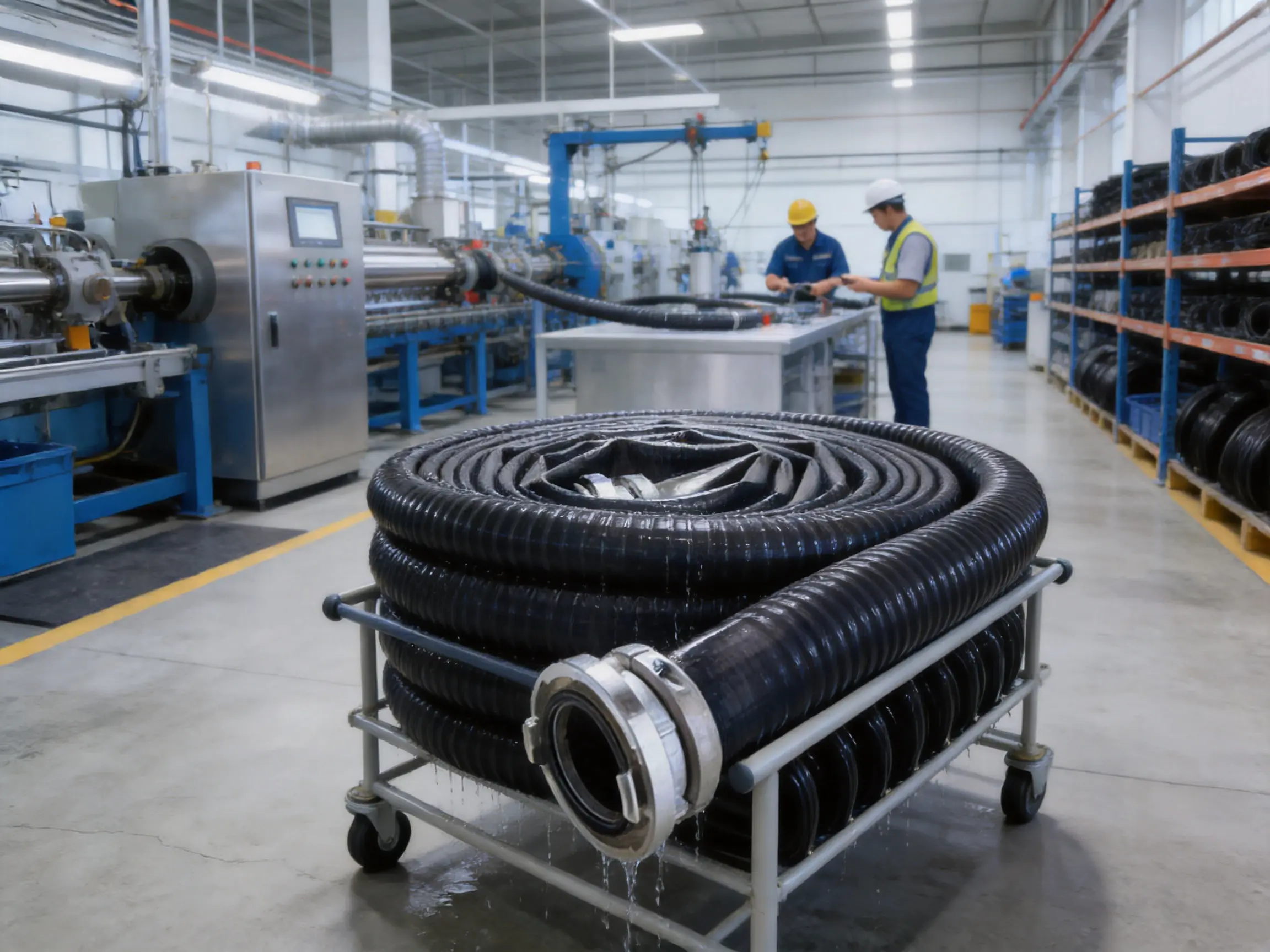
It is designed for pressurized water delivery in fire protection, construction, agriculture, water conservancy, municipal work, industrial facilities, portable pumping, and related applications. The correct size and pressure rating should be selected according to the actual system requirements.
The hose uses TPU as the cover and lining, with high-tenacity polyester yarn reinforcement. The TPU provides a flexible and protective polymer structure, while the polyester reinforcement supports pressure performance.
The available inner diameters are 3 inches, 4 inches, 5 inches, 6 inches, and 8 inches. Their approximate metric inner diameters are 75 mm, 102 mm, 127 mm, 152 mm, and 203 mm respectively.
The standard length options identified for this product are 50 feet, 75 feet, and 100 feet. Other configurations may be discussed with the supplier for specific projects or export requirements.
The stated temperature range is -30°C to 80°C. Applications close to these limits should be reviewed carefully because temperature can affect flexibility and pressure performance.
Yes. The ribs on the exterior cover are designed to provide high abrasion resistance by helping protect the hose from repeated contact with rough surfaces during handling and operation.
The product information identifies resistance to mildew. Proper draining, drying, cleaning, and storage are still recommended because good storage practice helps preserve the hose and reduces contamination.
The hose is described as resistant to petrochemicals, but users should confirm compatibility before transferring any specific petrochemical or chemical product. Resistance to incidental exposure does not automatically mean suitability for continuous chemical conveyance.
Working pressure is the recommended maximum operating pressure. Burst pressure is a much higher failure threshold used for testing and comparison. The hose should be operated within its working pressure rating and never intentionally tested at burst pressure.
The durable TPU construction is designed to reduce maintenance requirements, and the product is described as maintenance free. However, periodic inspection, correct cleaning, proper drying, and safe storage remain important for any pressurized hose.
The company can undertake various foreign trade products made from rubber, PVC, polyurethane, and double-sided tape according to customer requirements. Buyers should provide technical details so the company can evaluate the feasibility of customized hose dimensions, materials, lengths, fittings, packaging, or markings.
Choose the diameter based on required flow, pump capacity, pressure loss, connection size, physical handling, and available storage. A technical assessment is recommended for critical fire protection or industrial systems.
Drain and dry the hose after use where practical, roll it without twisting, and store it away from sharp objects, excessive heat, prolonged direct sunlight, and incompatible chemicals. Avoid placing heavy loads on top of stored hose.
The company’s products are used in fire protection, construction, water conservancy, and other industries. The TPU Covered Hose Supply Hose is also relevant to agriculture, industrial water transfer, portable pumping, and municipal operations.
The TPU Covered Hose Supply Hose is a durable and flexible solution for pressurized water delivery in demanding environments. Its TPU cover and lining provide a unified material system with resistance to abrasion, ozone, corrosion, mildew, and petrochemical exposure. High-tenacity polyester yarn reinforcement supports the hose’s pressure performance, while the ribbed exterior cover helps protect it during dragging and repeated handling.
The product’s available sizes range from 3 inches to 8 inches, with working pressures from 145 psi to 232 psi according to diameter. Standard lengths of 50 feet, 75 feet, and 100 feet allow users to configure hose lines for compact, medium, and extended layouts. Its operating temperature range of -30°C to 80°C supports use in a broad range of outdoor and industrial conditions.
Compared with conventional supply hoses, the product offers a practical combination of flexibility, surface durability, environmental resistance, and reduced maintenance requirements. These advantages make it suitable for fire protection, construction, agriculture, water conservancy, industrial facilities, municipal work, and portable pumping.
The manufacturing strength behind the product is supported by Taizhou Shenlong Fire Science and Technology Co., Ltd.’s experience in research and development, production, sales, and service. Established in 1995, the company has developed experience with lined fire hoses and related polymer and textile products, serving customers across domestic regions and international markets.
For buyers, the best results come from matching the hose diameter, length, pressure rating, temperature range, coupling system, and chemical exposure conditions to the intended application. When selected and handled correctly, the TPU Covered Hose Supply Hose can provide dependable water delivery and long-term value in challenging operating environments.
1. Product specification information for TPU Covered Hose Supply Hose, including dimensions, working pressure, burst pressure, materials, temperature range, and standard lengths.
2. Technical information concerning thermoplastic polyurethane materials and their general resistance to abrasion, flexibility requirements, and environmental exposure.
3. General engineering principles for reinforced hose construction using high-tenacity polyester yarn.
4. General guidance for pressurized hose inspection, handling, storage, coupling installation, and operational safety.
5. Company information for Taizhou Shenlong Fire Science and Technology Co., Ltd., including its history, research and development activities, production capabilities, export cooperation, and industry applications.
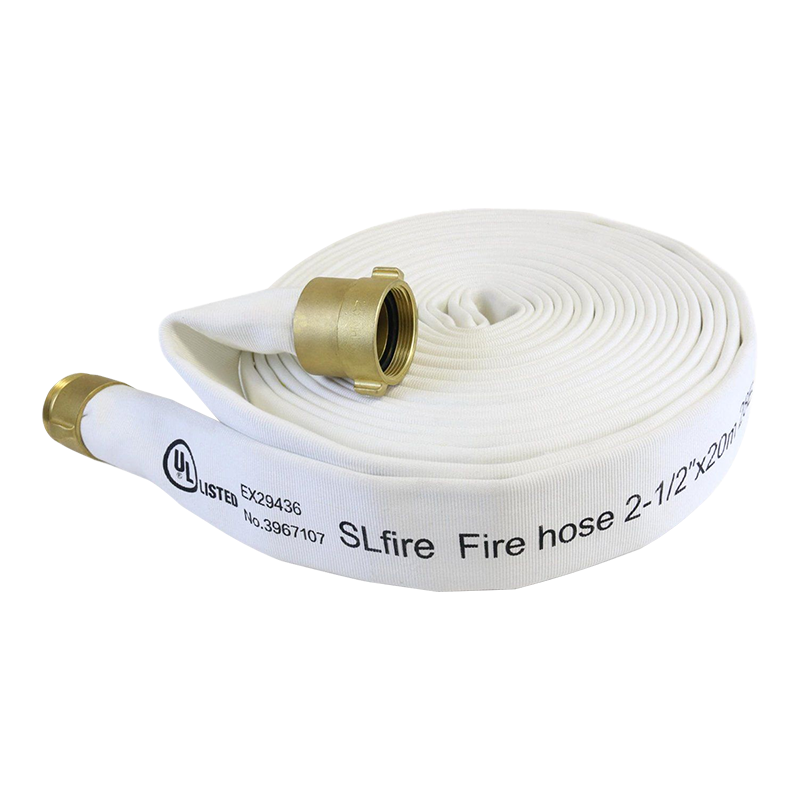
Single jacket, EPDM rubber liner Features • 100% high tenacity polyester jacket, high-grade EPDM rub...
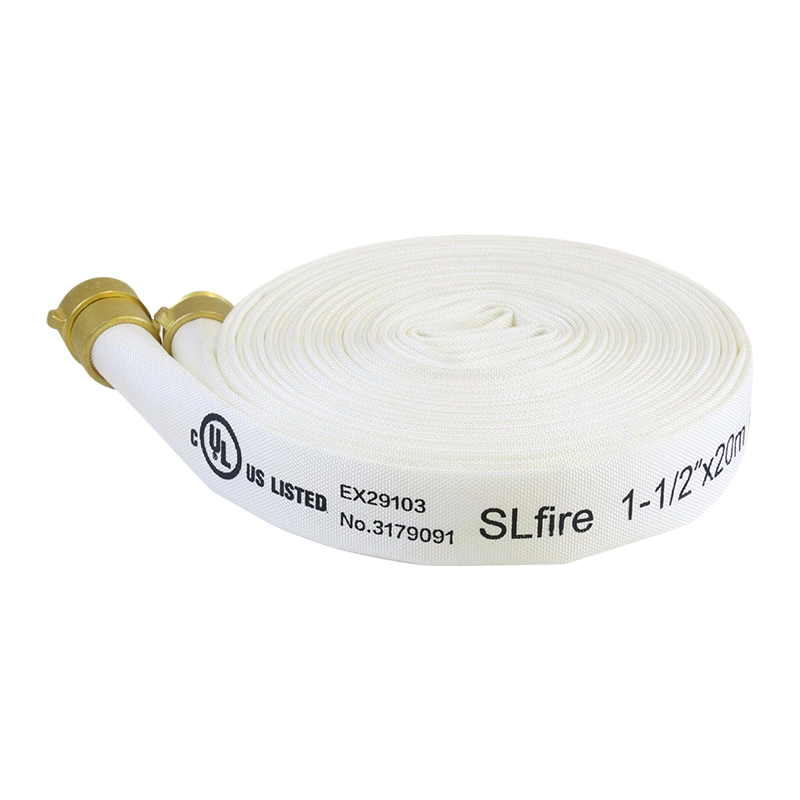
Single jacket, TPU liner •High-tenacity polyester yarn, circular woven in twill weave/plain weave,T ...
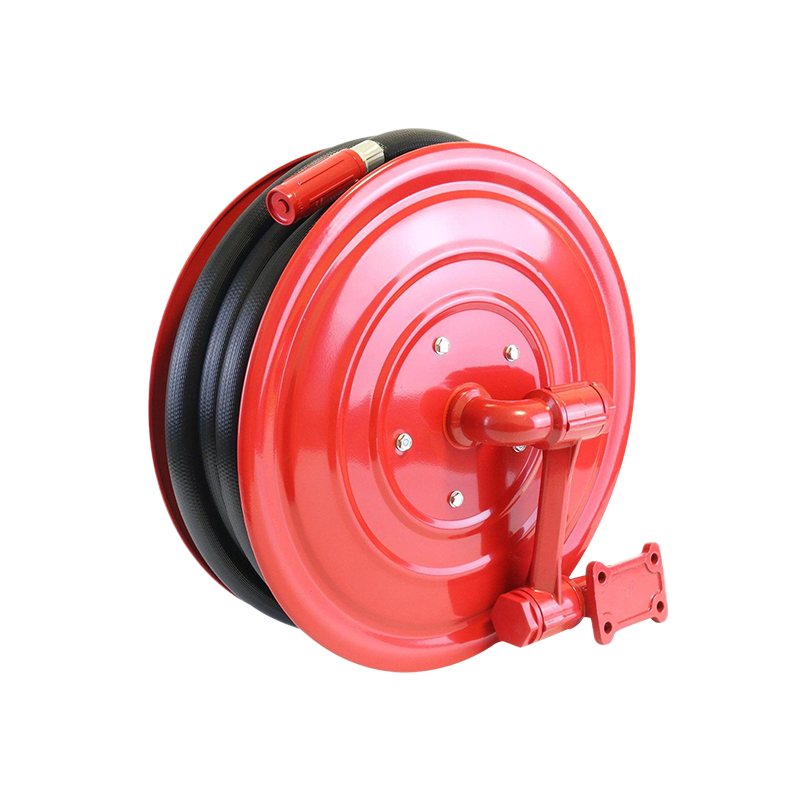
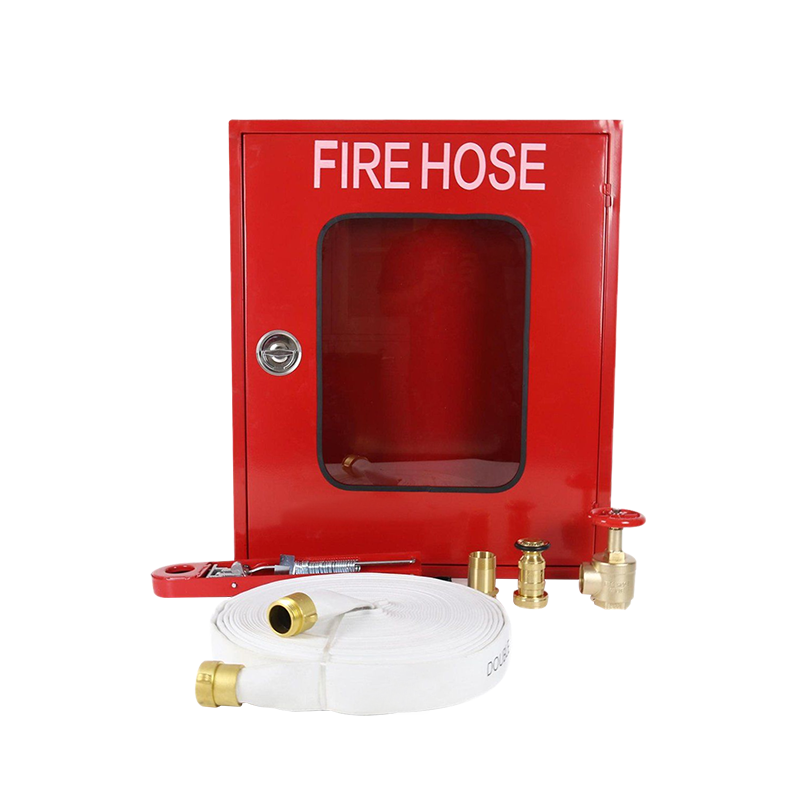
Fire cabinets are designed to accommodate fire hose,valve and other firefighting equipment. Type 201...
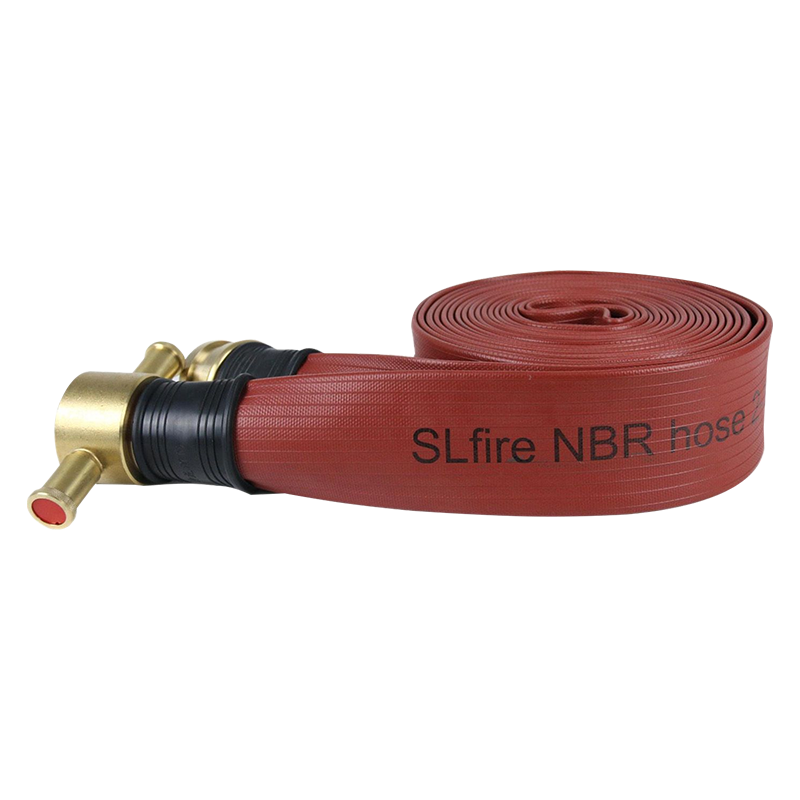
Nitrile covered hose •Nitrile/TPR blend as cover and lining, with 100% high-tenacity polyester yarn ...
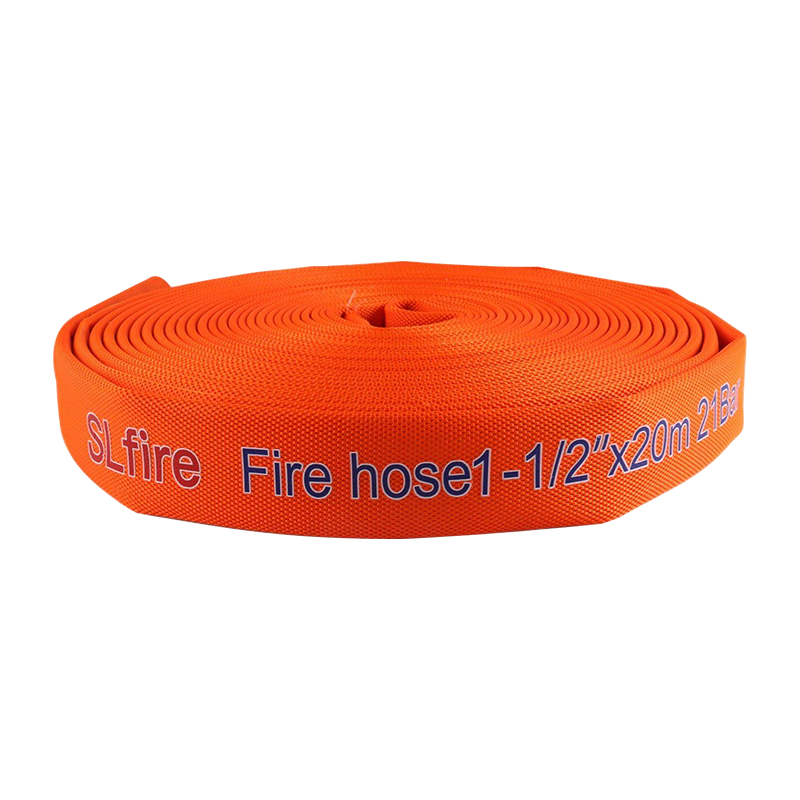
Single jacket, TPU liner •High-tenacity polyester yarn, circular woven in twill weave, TPU lining, f...
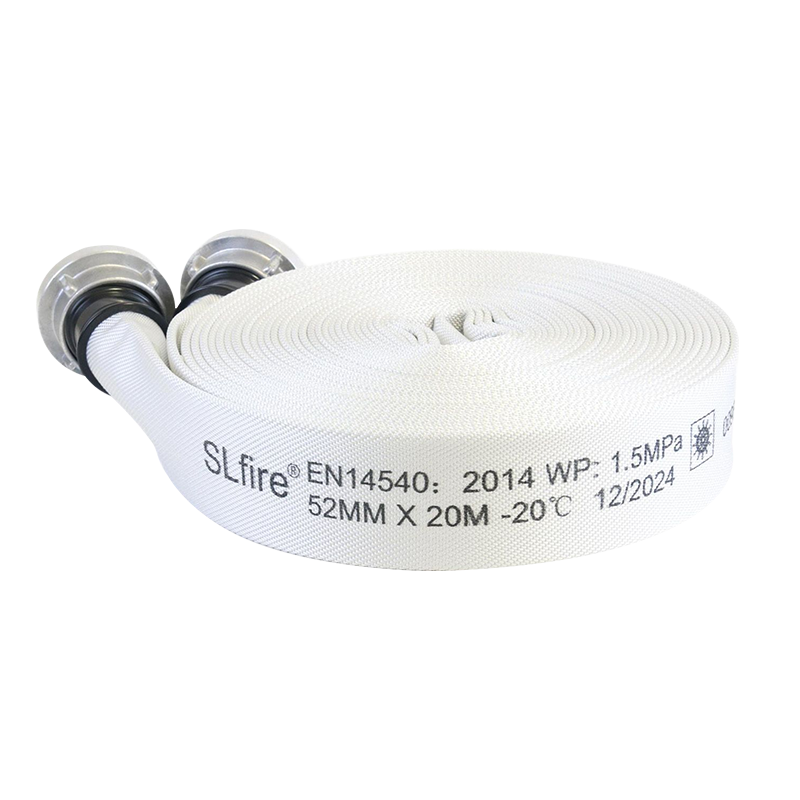
Marine hose Single jacket, PVC liner •100% high tenacity polyester yarn, circular woven in twill wea...
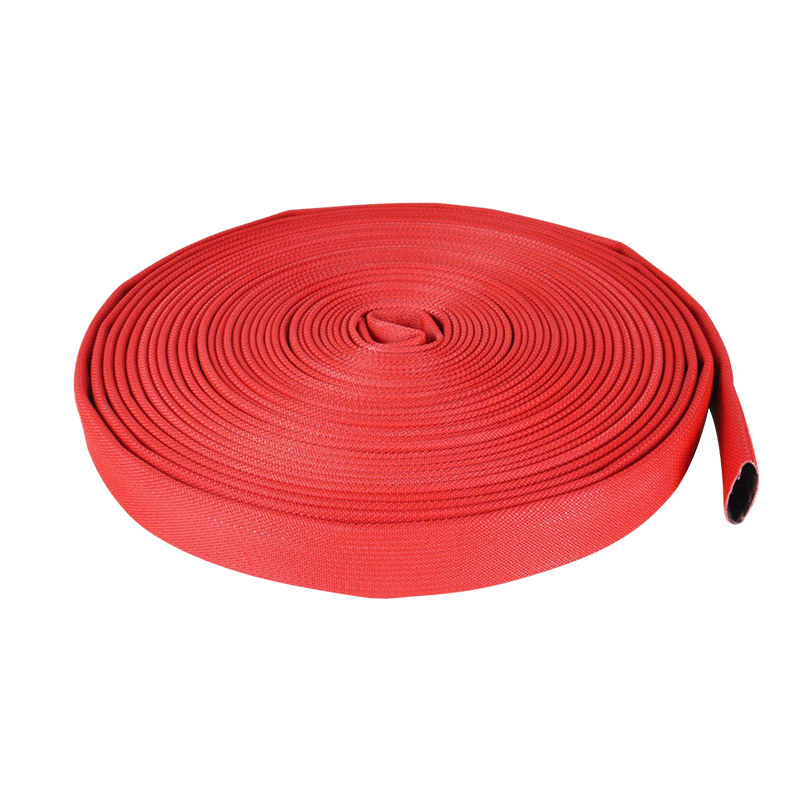
Marine hose Single jacket, PVC liner, PU coated •100% high tenacity polyester yarn,c ircular woven i...
 Call Us
+86 159-5116-9511
Need Support
Head Office
No.58, Kechuang Road, Sixiang Street Medicine Gaoxin District Taizhou City, Jiangsu Province

At a structure fire, the first line off the truck is the one that does the hardest work. Pulled around obstacles, dragged across gravel, charged with high-pressure water, and shut off at the nozzle d...
Copyright © Taizhou Shenlong Fire Science and Technology Co., Ltd. All Rights Reserved.
 Fire Hose Manufacturers, Fire Hydrant Hose Factory