

 English
 русский
 Español
 Deutsch
 عربى
 Français
 Português
Don't hesitate to send a message

Single jacket, EPDM rubber liner Features • 100% high tenacity polyester jacket, high-grade EPDM rub...
Content
Fire suppression equipment must do more than deliver water. In demanding industrial, wildland, and emergency-response environments, a nozzle must provide dependable flow, predictable handling, resistance to heat and impact, and enough protection for firefighters working close to a dangerous fire. The Hydro-Wall Nozzle is designed around this broader requirement. Instead of producing only a conventional straight stream or ordinary fog pattern, it creates a dense, continuous water barrier that can help isolate fire zones, reduce radiant heat, limit smoke exposure, and protect people, equipment, and access routes.
The Hydro-Wall Nozzle is a professional firefighting nozzle developed for applications where operators need both direct suppression and defensive shielding. Its hydro-wall barrier technology concentrates a large volume of water into a reliable protective curtain. This water wall can be positioned between personnel and a fire, around critical equipment, along a fire perimeter, or at an approach route used by emergency teams. As a result, it supports a more controlled response in areas such as factories, refineries, chemical storage locations, power plants, construction sites, and wildland fire boundaries.
With a fixed flow rate of 1,200 liters per minute, a nominal operating pressure of 6 bar, and inlet or coupling options ranging from 1 inch to 2.5 inches, the nozzle is compatible with many standard firefighting water-delivery systems. Its lightweight aluminum body, rubber bumper, laser-engraved markings, DuPont nylon pistol grip, stainless-steel spinning teeth, forged connection, and stainless-steel strainer combine to create a practical tool for professional use.
Unlike basic nozzles that focus only on water projection, the Hydro-Wall Nozzle is engineered as a protective and suppression device. Its value lies in the relationship between flow, pattern, operator control, construction quality, and field reliability. This integrated design makes it suitable for emergency situations where a failure in water distribution or handling could expose personnel and assets to unacceptable risk.
A hydro-wall is a concentrated water barrier formed by a nozzle that distributes a substantial and continuous water flow across a protective zone. The barrier is not simply a spray used to wet a surface. It is intended to establish a dynamic layer of water between the fire and the protected side of the operation. Depending on the deployment method, the water wall can help intercept heat, reduce the movement of smoke, cool exposed structures, and suppress flame activity.
The Hydro-Wall Nozzle produces a dense water pattern designed for this purpose. When positioned correctly, it can help firefighters create separation from a flame front or establish a safer working area near a hazard. The water barrier may be used to protect an operator advancing toward a fire, shield a neighboring storage tank, defend an emergency exit, or reduce the exposure of machinery and structures located near a burning zone.
This approach is especially valuable when direct entry into the fire area is unsafe or when the incident commander must protect a strategic location while suppression crews handle another part of the incident. A conventional straight-stream nozzle can deliver excellent reach and penetration, but it may not provide the same broad protective coverage. A conventional fog nozzle may create a useful pattern, but its performance can vary according to pressure, adjustment, operator technique, and nozzle design. The Hydro-Wall Nozzle is specifically intended to make the water barrier a primary operational function.
The barrier effect can support several firefighting objectives:
• Direct flame suppression through a sustained high-volume water application.
• Reduction of radiant heat reaching operators, structures, and nearby equipment.
• Temporary shielding from hot smoke and airborne combustion products.
• Cooling of exposed surfaces and adjacent assets.
• Establishment of a defensive perimeter around high-risk locations.
• Improved operational separation between emergency personnel and a hazardous fire zone.
A hydro-wall does not eliminate the need for a complete fireground plan, suitable personal protective equipment, trained operators, and correct water-supply calculations. However, it adds a specialized layer of protection that can be difficult to achieve with an ordinary nozzle. Its greatest advantage is the ability to combine high-volume suppression with a deliberate defensive screen.
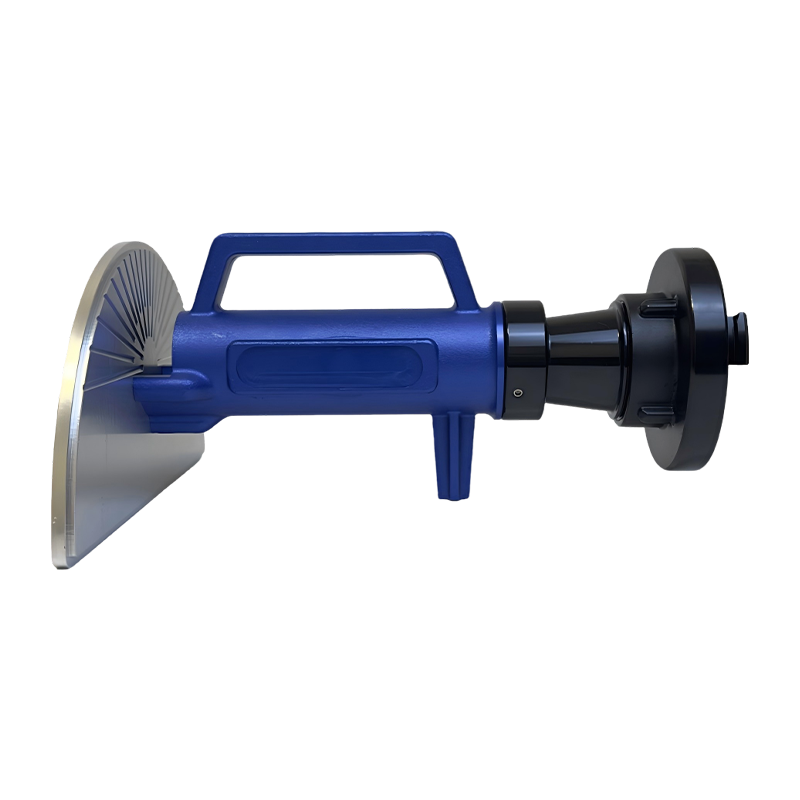
Hydro-Wall Nozzle
The defining advantage of the Hydro-Wall Nozzle is its ability to deliver a continuous, concentrated water stream for barrier formation. The specified flow rate is 1,200 liters per minute at a nominal operating pressure of 6 bar. This high-volume output gives the water pattern enough density to support a strong defensive screen and effective cooling action.
Consistent water delivery is important during an emergency because an unstable pattern can create gaps in coverage. A barrier with uneven distribution may leave operators or assets exposed at the exact moment when protection is most necessary. The Hydro-Wall Nozzle is designed to provide a stable operating pattern when supplied within its intended pressure and flow conditions. This makes the nozzle appropriate for fixed-flow systems and response teams that need predictable performance.
The fixed-flow configuration also simplifies planning. Fire departments and industrial emergency teams can calculate water demand, pump requirements, hose capacity, and tank endurance around a known nominal flow. Although actual performance depends on the complete system, including pump, hose, coupling, elevation, and supply conditions, a defined flow specification supports more disciplined preparation than an unspecified or inconsistent discharge system.
Water is highly effective at absorbing heat, and a properly formed water barrier can reduce the thermal load reaching firefighters and exposed assets. The Hydro-Wall Nozzle is designed to use this principle in a practical field tool. The water screen can help interrupt radiant heat and cool the air and nearby surfaces in the operating area.
Smoke protection is another important benefit. A hydro-wall cannot be treated as a substitute for respiratory protection, but it can help limit the movement of hot smoke across a protected position. In industrial incidents, smoke may contain corrosive, toxic, or irritating substances. Creating a water barrier between the smoke source and personnel can contribute to a safer working environment, especially when combined with ventilation control, respiratory equipment, monitoring, and appropriate incident procedures.
Protection may also extend to valuable infrastructure. Electrical installations, processing equipment, fuel-transfer systems, storage areas, and structural elements can be exposed to intense heat even when flames have not reached them directly. By applying water across the area facing the fire, operators can help reduce heat accumulation and delay fire spread while additional resources are mobilized.
The main body is made from aluminum, providing a useful balance between strength, weight, corrosion resistance, and maneuverability. A firefighting nozzle must be strong enough to withstand repeated use, pressure, impact, and rough handling, but excessive weight can cause operator fatigue and make repositioning more difficult.
A lightweight body is particularly valuable when the nozzle is handled manually, carried over uneven ground, or used with a large-diameter hose. Firefighters may need to maintain control for extended periods while wearing protective clothing and breathing equipment. Reducing unnecessary nozzle weight can improve handling and help operators maintain a stable position.
Aluminum also offers practical resistance to corrosion in many water-handling environments. Firefighting systems may be exposed to moisture, outdoor storage conditions, dirty water, foam residues, and changing temperatures. Proper material selection, surface treatment, inspection, and maintenance remain necessary, but an aluminum body provides a sound foundation for long-term service.
The integrated rubber bumper improves durability during transport, storage, and operation. Nozzles are frequently placed on concrete, vehicle decks, industrial flooring, or rough ground. They may also be moved quickly during an emergency and exposed to accidental contact with structures or equipment.
A rubber bumper helps absorb minor impacts and reduces direct damage to the nozzle body. It can also provide a degree of protection for surrounding surfaces and make the nozzle easier to place securely. In high-heat firefighting environments, durable external protection is important because equipment must continue functioning despite demanding conditions.
Operational markings must remain readable when equipment is wet, dirty, exposed to sunlight, or used in low-visibility conditions. The Hydro-Wall Nozzle uses permanent laser-engraved markings to identify operational settings and product information. Unlike temporary labels or printed markings that may fade, peel, or become difficult to read, laser engraving is designed to remain visible throughout the equipment’s service life.
Clear markings reduce uncertainty during an emergency. Operators can identify the nozzle configuration and relevant settings quickly without relying on memory or searching for a separate instruction label. This is a small but important design feature because fireground decisions often need to be made within seconds.
The pistol grip is designed to provide a secure and comfortable hand position. DuPont nylon offers a strong, lightweight material for this application, while the shaped grip helps reduce slipping and operator fatigue. A non-slip hold is especially important when gloves are wet, when the hose is producing reaction force, or when the nozzle is used on uneven ground.
Ergonomics directly influence safety. An operator who can maintain a secure grip is better able to control nozzle direction, respond to changing conditions, and communicate with the hose team. The grip also supports more precise positioning of the hydro-wall pattern, which is essential when the water screen must protect a specific route, structure, or work area.
The stainless-steel spinning teeth help produce a consistent fog or distributed water performance. Stainless steel is selected for its resistance to corrosion, wear, and repeated exposure to water. The spinning components support controlled atomization and pattern formation while maintaining reliable operation in a demanding environment.
Consistent pattern development is important because water distribution determines how effectively the nozzle can cool surfaces, suppress flames, and establish a protective screen. Components that wear quickly or become damaged may create an irregular spray and reduce operational confidence. Stainless-steel construction helps extend service life when the nozzle is used and maintained correctly.
The connection or coupling is a critical point in any hose nozzle. A weak or poorly fitted connection can lead to leakage, instability, or complete separation during operation. The Hydro-Wall Nozzle uses a forged connection designed to provide a secure attachment to the hose system.
Coupling options include 1 inch, 1.5 inch, and 2 inch configurations in the listed product specification, while the general product range supports inlet sizes from 1 inch to 2.5 inches. This range allows the nozzle to be matched with different hose assemblies, pump systems, and regional connection standards. Buyers should confirm the exact coupling size, thread or fitting standard, gasket arrangement, and system compatibility before ordering.
Different ball valve materials are also available, including stainless steel, aluminum, and brass. This gives users flexibility when balancing corrosion resistance, weight, budget, and system requirements. Stainless steel may be preferred for severe environments, aluminum for weight-sensitive applications, and brass for established systems that require a familiar and durable valve material.
Water supplies used during firefighting may contain rust particles, sediment, scale, or other impurities. If these materials enter the nozzle, they can obstruct internal passages, affect moving components, and reduce the quality of the water pattern. The stainless-steel strainer helps filter impurities before they interfere with nozzle performance.
The strainer is particularly useful when water is drawn from temporary tanks, open reservoirs, industrial process systems, or sources that may not have the same cleanliness as a municipal supply. It does not eliminate the need to flush the hose and inspect the equipment, but it adds an important layer of protection against clogging. Stainless-steel construction supports durability and resistance to corrosion.
Product comparisons should be based on application rather than a single specification. Conventional straight-stream nozzles, adjustable fog nozzles, and fixed-pattern nozzles each have their own strengths. The Hydro-Wall Nozzle is differentiated by its specific purpose: creating a protective, concentrated water barrier while supporting flame suppression and cooling.
A straight-stream nozzle is often selected for reach and penetration. It can be effective when operators need to deliver water deep into a burning compartment or onto a distant target. However, its narrow pattern provides limited lateral shielding for personnel and neighboring assets. The Hydro-Wall Nozzle is more suitable when the incident requires a wider defensive screen and heat protection.
An ordinary fog nozzle can provide a broad spray, but broad coverage alone does not always create a dense or stable barrier. Some fog patterns are highly dependent on pressure and adjustment. The Hydro-Wall Nozzle is designed around a dedicated hydro-wall function, helping users establish a predictable protective pattern rather than treating the barrier as an incidental result of nozzle adjustment.
Lightweight general-purpose nozzles may be easy to carry, but they may not include reinforced impact protection, a dedicated strainer, durable engraved markings, or a specialized barrier pattern. The Hydro-Wall Nozzle combines these details into one professional system. This integrated construction can reduce the need to adapt general-purpose equipment for a task it was not designed to perform.
Compared with heavier industrial monitors, the Hydro-Wall Nozzle can offer greater portability and easier manual positioning. A monitor may provide high output and mechanical stability, but it can require a fixed mounting point, additional installation time, or a larger support structure. A handheld or hose-connected hydro-wall device can be deployed more flexibly in changing incident conditions.
The main competitive advantages can be summarized as follows:
• A purpose-built water barrier rather than a basic discharge pattern.
• A high nominal flow of 1,200 liters per minute for substantial cooling and suppression.
• A lightweight aluminum body that supports manual handling.
• A rubber bumper for improved resistance to impact and rough placement.
• Permanent laser-engraved markings for rapid identification.
• An ergonomic DuPont nylon pistol grip for secure handling.
• Stainless-steel spinning teeth for consistent fog performance.
• A forged connection for secure hose attachment.
• A stainless-steel strainer to reduce the risk of clogging.
• Multiple coupling and ball valve material options for system flexibility.
These advantages do not mean that one nozzle is appropriate for every fire. Selection must consider fire type, water availability, required reach, personnel training, hose size, pump capacity, and the incident commander’s strategy. The Hydro-Wall Nozzle is strongest in situations where protective separation and heat shielding are as important as direct flame application.
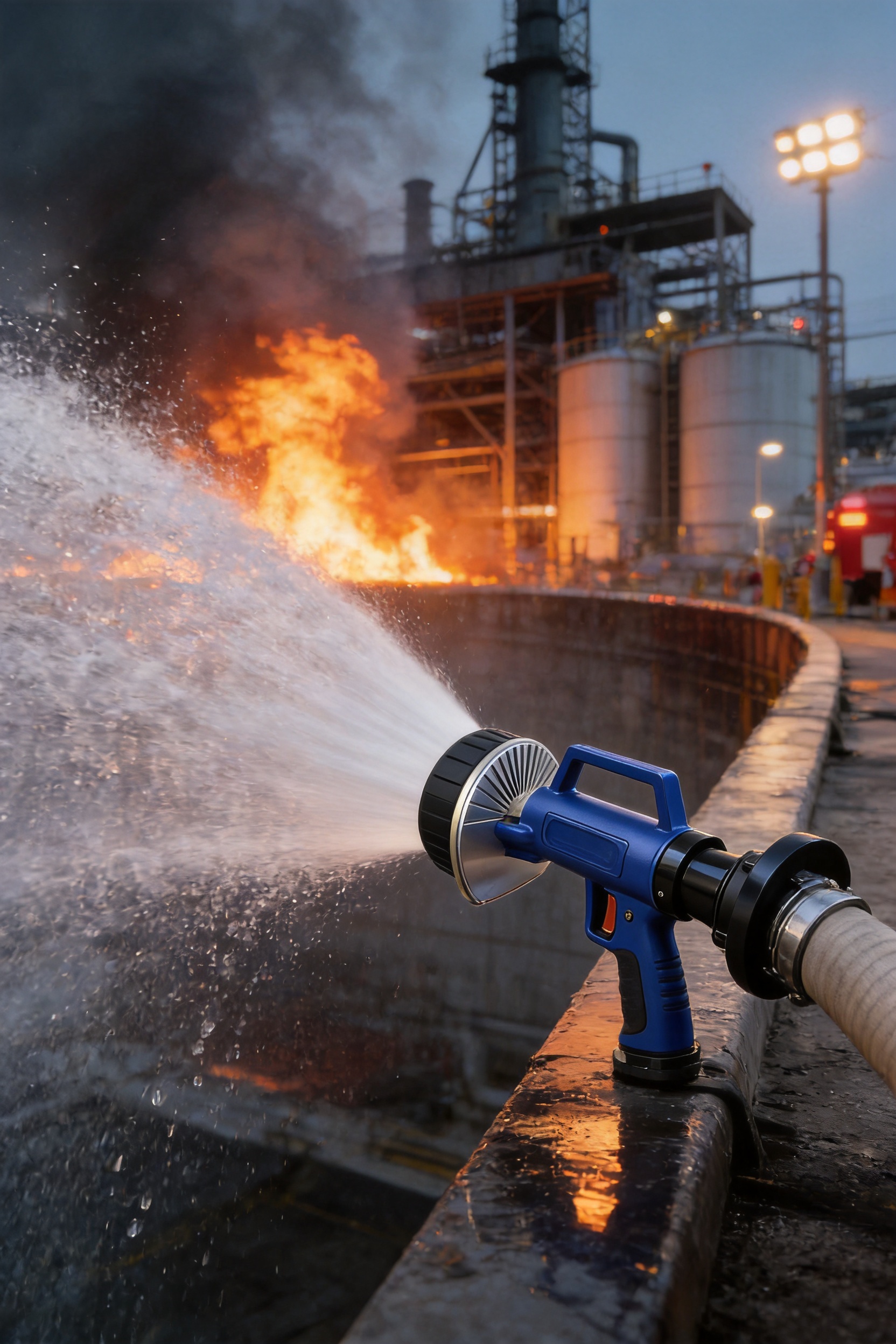
The following table summarizes the listed specifications for the WS1400 configuration. Buyers should verify final configuration details with the supplier before purchase, especially when selecting a coupling size or valve material.
| Specification | WS1400 Configuration |
|---|---|
| Product type | Hydro-Wall Nozzle |
| Working pressure | 6 bar |
| Flow rate | 1,200 liters per minute |
| Flow distance | Not specified |
| Approximate weight | 1.5 kg |
| Listed coupling options | 1 inch, 1.5 inch, and 2 inch |
| General inlet range | 1 inch to 2.5 inches |
| Body material | Lightweight aluminum |
| Grip material | DuPont nylon |
| Pattern components | Stainless-steel spinning teeth |
| Filtration component | Stainless-steel strainer |
| Valve material options | Stainless steel, aluminum, or brass |
The approximate weight of 1.5 kilograms is a major practical advantage for a nozzle delivering this level of flow. Even though a high-volume water stream generates reaction force and requires proper hose-team technique, a lighter nozzle body can make positioning and adjustment less tiring. Users must still ensure that hose diameter, coupling strength, pump output, and operator training are suitable for the specified flow and pressure.
Factories may contain combustible materials, pressurized systems, electrical equipment, packaging, solvents, or hot production lines. A fire can spread quickly through open production areas and may expose workers to intense heat before fire services arrive. The Hydro-Wall Nozzle can be used to protect evacuation paths, cool machinery, and establish a defensive line while direct suppression takes place.
In a large production hall, operators may position the nozzle near a doorway or access point to reduce heat movement into an adjacent area. It may also be deployed to shield a team working on a nearby hose line. The water barrier can help separate a burning section from equipment that has not yet been affected, buying time for isolation, shutdown, or additional firefighting resources.
Refineries and chemical plants present complex hazards, including flammable liquids, vapor clouds, high-temperature equipment, storage tanks, pipe racks, and process systems operating under pressure. In such environments, firefighters may need to control exposure rather than immediately approach the source of the fire.
A hydro-wall can support defensive cooling and help protect personnel positioned near critical infrastructure. It may be used around access roads, process units, transfer points, or neighboring equipment threatened by radiant heat. Because chemical incidents can involve toxic smoke and corrosive substances, the nozzle should always be used as part of a comprehensive plan involving atmospheric monitoring, appropriate respiratory protection, foam or specialized agents where required, isolation procedures, and trained hazardous-materials personnel.
Power plants contain turbines, transformers, cable systems, fuel supplies, control rooms, and other high-value infrastructure. A fire near one component may threaten the continuity of the entire facility. The Hydro-Wall Nozzle can help cool exposed structures and protect emergency access routes while the response team determines the safest extinguishing method.
Electrical hazards require particular care. Water application must follow site procedures and the instructions of qualified personnel. The nozzle should not be assumed to make water application safe around energized equipment. Its use must be integrated with electrical isolation, safe approach distances, suitable agents, and the facility’s emergency response plan.
Storage areas often require defensive protection for tanks, drums, containers, pipework, and transfer equipment. A water barrier can help reduce heat exposure to neighboring containers and slow the escalation of a localized incident. It may also provide a safer route for personnel who must perform isolation or emergency shutdown actions.
Water compatibility must be evaluated carefully. Some chemicals react dangerously with water, while others require foam, dry chemical, or another specialized agent. The Hydro-Wall Nozzle is a water-delivery tool, so the incident commander must determine whether water is suitable for the specific material involved.
Construction sites may lack permanent fire protection systems and can contain temporary electrical supplies, fuel, insulation, timber, plastics, and partially completed structures. A portable hydro-wall nozzle can provide flexible protection where fixed suppression equipment is not yet installed.
It may be used to protect cranes, access routes, temporary offices, neighboring buildings, or stored materials. Its relatively low weight supports movement across changing site conditions, although hose routing and ground stability must be assessed before deployment.
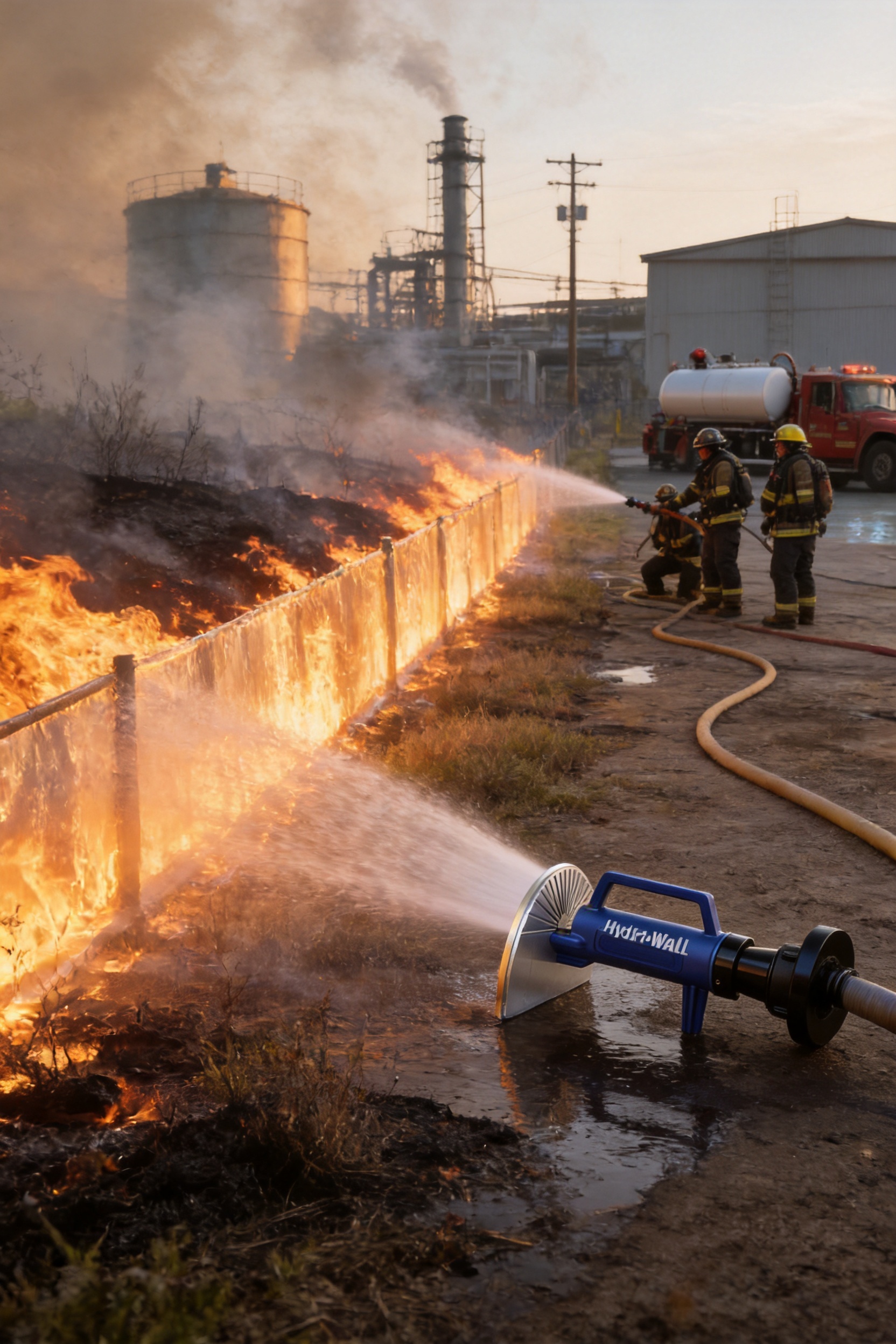
Wildland fires can threaten industrial sites, rural facilities, utility assets, storage yards, and communities. The Hydro-Wall Nozzle can support perimeter protection by creating a water barrier along a vulnerable boundary or by cooling structures exposed to radiant heat.
Water availability is a major limitation in wildland operations. The specified flow rate requires a substantial and reliable supply, so users must calculate tank duration and establish a replenishment plan. Where adequate water is available, the nozzle may help protect an evacuation corridor, a pump position, a building edge, or critical equipment while the fire front is managed.
The quality of a professional firefighting nozzle depends on more than the final appearance of the product. Reliable performance is developed through material selection, dimensional control, component manufacturing, assembly discipline, inspection, and service support. The manufacturer behind this product has operated since 1995 and combines research and development, production, sales, and service within one enterprise.
This long operating history provides practical experience in the fire hose and firefighting equipment sector. The company’s main products include lined fire hoses made from various materials, while its broader production and trade capabilities include rubber, PVC, polyurethane, and double-sided tape products made according to customer requirements. This material experience is relevant because hose and nozzle performance depends on compatibility across the complete water-delivery system.
An integrated research and development function allows product design to respond to practical fireground requirements. The Hydro-Wall Nozzle demonstrates this design approach through the combination of barrier performance, lightweight construction, ergonomic handling, durable markings, filtration, and flexible connection options.
Rather than treating the nozzle as an isolated metal component, the design addresses the real conditions in which firefighters work. Operators need to read settings quickly, hold the device securely, connect it to a hose without hesitation, and maintain performance when the water supply contains impurities. Each of these requirements has been reflected in the product configuration.
Material selection is central to reliability. Aluminum is used for the body to reduce weight while maintaining practical durability. Stainless steel is applied to the spinning teeth and strainer where resistance to corrosion and wear is important. DuPont nylon is used for the pistol grip to provide a lightweight, secure, and fatigue-reducing handhold. Rubber is used for the bumper to improve impact protection.
The use of different materials for different functions shows an application-based engineering approach. No single material is ideal for every nozzle component. Combining aluminum, stainless steel, nylon, and rubber allows the product to balance weight, strength, corrosion resistance, grip, and impact protection.
A forged connection is designed to provide structural integrity at one of the most important points in the product. The coupling must withstand pressure, mechanical loading, repeated attachment, and handling during emergency deployment. Forging can help produce a dense and durable connection when the process is properly controlled.
Connection quality also depends on accurate machining, correct fitting, suitable sealing elements, and final inspection. A professional production process must therefore control not only the forging operation but also the dimensions and tolerances of the finished interface. This is particularly important when products are supplied with different coupling standards or customized connection requirements.
Firefighting equipment should be evaluated through a structured quality-control process. Relevant checks may include visual inspection, dimensional verification, coupling fit, valve operation, strainer installation, component security, surface condition, and pressure or flow testing. The exact inspection program depends on the product configuration and applicable customer requirements.
For a hydro-wall nozzle, functional testing is especially important. A product may appear satisfactory while still producing an inconsistent pattern if internal components are misaligned, damaged, or obstructed. Inspection should therefore consider the behavior of the assembled nozzle, not only the quality of individual parts.
Traceability is another valuable manufacturing strength. Product identification, permanent markings, batch information, inspection records, and controlled assembly procedures can help customers manage inventory and maintenance. The use of laser-engraved markings supports this objective by keeping key information attached to the product rather than relying only on packaging or paperwork.
The manufacturer’s products are sold across more than 20 provinces, cities, and autonomous regions, and the company cooperates with several domestic foreign-trade companies for export production. This distribution experience indicates familiarity with different customer requirements, regional applications, packaging expectations, and export coordination.
Experience across fire, construction, water conservancy, and related industries can help inform product development and customer support. These sectors often require equipment that can tolerate outdoor exposure, variable water sources, demanding transportation, and frequent field handling. A manufacturer serving such markets must understand that reliability includes delivery, documentation, communication, spare parts, and after-sales support in addition to the product itself.
Customized production is another potential strength. The company can undertake certain foreign-trade products according to customer requirements, and this broader manufacturing capability may support projects requiring special materials, packaging, private labeling, coupling arrangements, or coordinated hose-and-nozzle supply. Any customization should be confirmed through technical drawings, samples, performance requirements, and written approval before production.
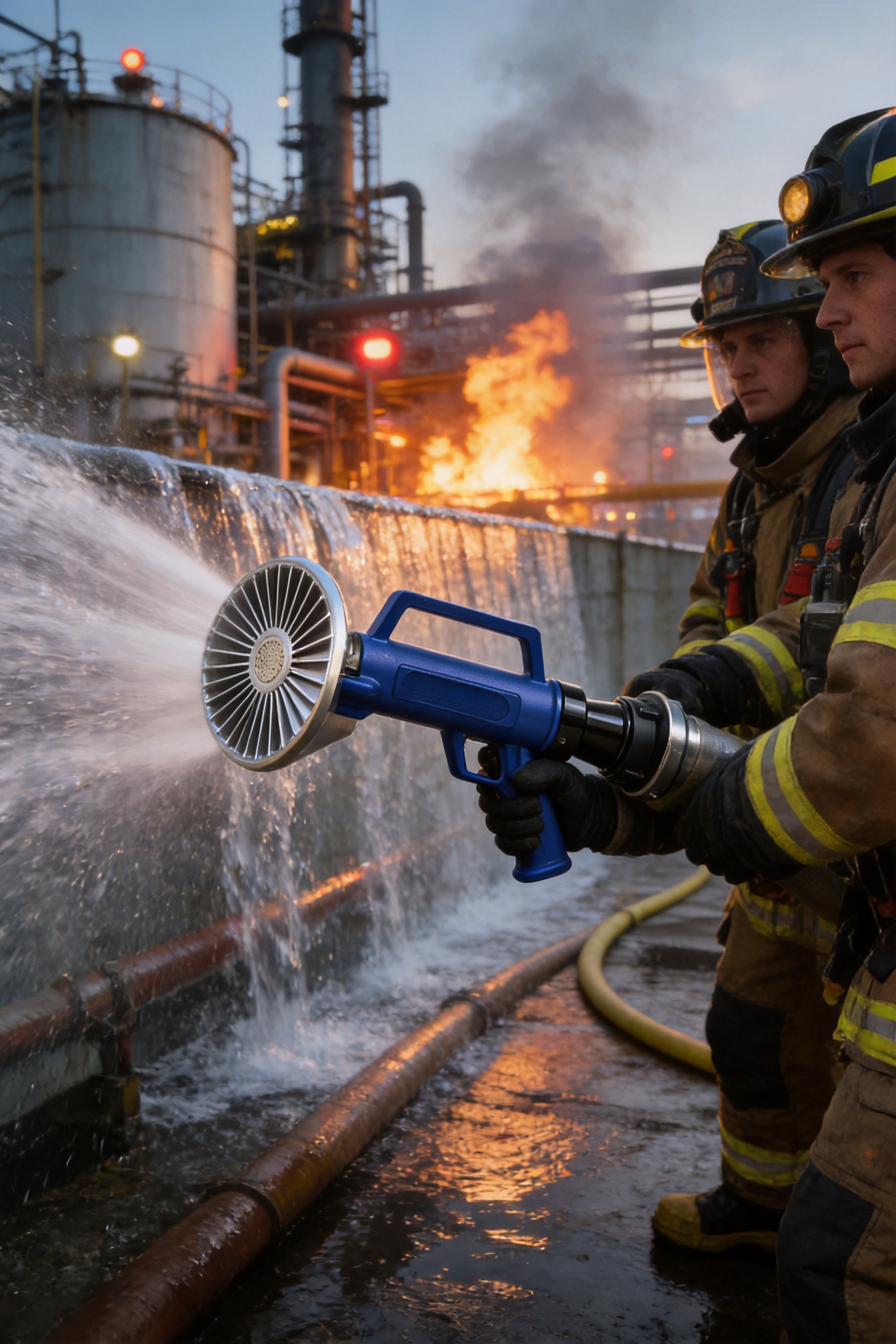
The Hydro-Wall Nozzle should be deployed by trained personnel following the site’s firefighting plan. Before use, the team should verify the water supply, pump capacity, hose condition, coupling compatibility, valve position, strainer condition, and safe operating location. The nozzle should be connected securely, and the hose should be managed to prevent sharp bends or uncontrolled movement.
Because the flow rate is 1,200 liters per minute, the reaction force may be significant. Operators should use a stable stance and coordinate with the hose team. The nozzle should not be handled casually or pointed toward people, live electrical equipment, fragile structures, or areas where water application could cause additional hazards.
The protective screen should be positioned according to the fire’s direction, wind, terrain, heat intensity, and the location of personnel and assets. Operators may need to adjust the angle to cover an access route, create a separation line, or cool an exposed surface. Communication between the nozzle operator, hose team, pump operator, and incident commander is essential.
Water barriers are most effective when they are continuous. Interruptions in flow can create gaps in protection and allow heat or smoke to pass through. The team should monitor the water supply and communicate immediately if pressure drops, the hose shifts, the nozzle becomes obstructed, or the pattern changes unexpectedly.
The nozzle can be used in several deployment modes:
• A handheld protective screen for advancing or defensive firefighting.
• A barrier positioned near an entrance, corridor, or evacuation route.
• A cooling line protecting tanks, machinery, or structural elements.
• A perimeter device for wildland or facility-edge fire protection.
• A temporary defensive unit used while fixed systems are isolated, damaged, or unavailable.
Each mode requires a separate assessment of water demand, personnel, anchoring, hose routing, and escape options. The Hydro-Wall Nozzle enhances a response plan, but it does not replace an established command structure or a complete fire protection system.
Regular maintenance helps preserve the product’s flow performance and operating reliability. After use, the nozzle should be flushed with clean water to remove sediment, foam residues, chemicals, and other contaminants. The strainer should be inspected and cleaned according to the site’s maintenance procedure.
The coupling should be checked for thread damage, deformation, cracks, corrosion, and contamination. Sealing elements should be inspected for wear and replaced when necessary. The ball valve should move smoothly without excessive force or looseness. The pistol grip and rubber bumper should be checked for damage that could affect safe handling or impact protection.
The spinning teeth and internal pattern components should be inspected for blockage, wear, or distortion. A nozzle that produces an irregular stream, reduced flow, or unexpected spray pattern should be removed from service until it has been examined. Operators should never attempt unauthorized modifications to internal components because changes may affect pressure, flow, reaction force, and barrier performance.
Storage should take place in a clean, dry, and protected location. The nozzle should be shielded from unnecessary exposure to chemicals, extreme temperatures, direct sunlight for prolonged periods, and mechanical impact. It should not be stored with heavy objects placed on the grip, bumper, coupling, or pattern components.
Inspection records can include the date of use, cleaning status, observed defects, pressure or flow test results, replacement parts, and the person responsible for inspection. For industrial facilities and emergency organizations, documented maintenance supports readiness and helps identify recurring problems before an emergency occurs.
When purchasing a Hydro-Wall Nozzle, the first consideration is system compatibility. Buyers should confirm the hose size, coupling type, pressure rating, pump capacity, water source, and required flow. A nozzle rated for 1,200 liters per minute must be supported by a water-delivery system capable of maintaining the required operating conditions.
The coupling should match the hose assembly exactly. Where regional or site-specific connection standards are used, the buyer should provide technical drawings, thread details, or a sample connection if necessary. The selected ball valve material should also match the expected water quality, chemical exposure, temperature, maintenance plan, and weight requirements.
Users should consider whether the nozzle will be handheld, mounted, carried in an emergency vehicle, positioned on a fixed stand, or used as part of a temporary perimeter system. The 1.5-kilogram approximate weight supports portability, but the complete hose assembly may still be heavy and require more than one operator.
Buyers should also request product documentation covering operation, maintenance, inspection, recommended pressure, flow characteristics, coupling details, and available replacement components. For major industrial projects, sample testing or an application review may be appropriate before large-volume procurement.
Finally, purchasers should evaluate the supplier’s manufacturing experience and service capability. A product used in emergency response should be supported by clear communication, reliable production, consistent quality, and access to technical assistance. A manufacturer with experience in fire hoses, related materials, export coordination, and multi-industry applications can provide useful value beyond the individual nozzle.
The primary purpose is to create a dense, continuous water barrier that helps suppress flames, reduce heat exposure, limit smoke movement, and protect firefighters, structures, and nearby assets. It is intended for professional fire suppression and defensive protection.
The listed WS1400 configuration has a fixed flow rate of 1,200 liters per minute at a nominal operating pressure of 6 bar. Actual field performance depends on the complete hose, pump, coupling, elevation, and water-supply system.
The listed approximate weight is 1.5 kilograms. This lightweight construction supports portability and reduces unnecessary handling fatigue, although the reaction force from the water flow still requires trained operation and proper hose management.
The main body is made from lightweight aluminum. The spinning teeth and strainer are stainless steel, the pistol grip is made from DuPont nylon, and a rubber bumper provides impact protection. Ball valve options include stainless steel, aluminum, and brass.
The listed specification identifies 1 inch, 1.5 inch, and 2 inch coupling options. The general product information indicates inlet sizes from 1 inch to 2.5 inches. The exact connection should be confirmed for each order and matched to the hose system.
The stainless-steel strainer helps filter impurities and reduce the risk of clogging, but it does not make every water source suitable. The nozzle should be flushed and inspected after use, and water quality should be evaluated for the specific application.
Water application around energized electrical equipment can be hazardous. The nozzle should only be used in accordance with the site’s electrical safety procedures, after suitable isolation where required, and under the direction of qualified firefighting personnel. The product itself does not remove electrical hazards.
It may be used for cooling and defensive protection when water is compatible with the material involved. Some chemicals react dangerously with water or require foam, dry chemical, or another agent. A qualified incident commander must select the appropriate extinguishing method.
The Hydro-Wall Nozzle is designed specifically to create a concentrated protective water barrier. A conventional fog nozzle may provide a broad spray, but its coverage and barrier behavior depend on its design and adjustment. The Hydro-Wall Nozzle combines barrier performance with a fixed high-volume flow and dedicated protective features.
Recommended maintenance includes flushing after use, cleaning and inspecting the strainer, checking the coupling and seals, testing valve operation, inspecting the spinning teeth and internal passages, and examining the grip and bumper. Damaged or irregularly performing equipment should be removed from service for inspection.
It can support wildland perimeter protection and structure defense when an adequate water supply is available. Because the nominal flow is 1,200 liters per minute, users must carefully calculate tank capacity, pump output, replenishment requirements, hose routing, and operating duration.
Coupling sizes and ball valve materials can be selected for different system requirements. Other customization requests should be discussed with the manufacturer and confirmed through technical documentation, samples, and written specifications before production.
The Hydro-Wall Nozzle is a specialized firefighting tool for situations where water must do more than reach a flame. Its central function is to form a dense and continuous hydro-wall that supports suppression, cooling, heat shielding, smoke reduction, and defensive separation. With a 1,200-liter-per-minute flow rate at 6 bar, it provides substantial water delivery for industrial and emergency applications.
The product’s advantages come from its integrated construction. A lightweight aluminum body improves maneuverability, while the rubber bumper helps withstand impact. Permanent laser-engraved markings support fast identification. The DuPont nylon pistol grip improves control and reduces fatigue. Stainless-steel spinning teeth help maintain consistent fog performance, while a forged connection provides secure hose attachment and a stainless-steel strainer helps reduce clogging.
Its suitability for factories, refineries, chemical storage areas, power plants, construction sites, and wildland perimeters makes it a flexible addition to professional fire protection equipment. However, successful operation depends on correct water supply, compatible couplings, trained personnel, safe deployment, regular inspection, and integration with a complete incident command plan.
The manufacturer’s long operating history since 1995, combined research and development, production and service capabilities, experience with lined fire hoses and multiple materials, broad domestic market coverage, and export cooperation provide a solid foundation for supplying firefighting equipment. These strengths support not only product manufacturing but also technical coordination, customized requirements, and long-term customer service.
For organizations seeking a portable, high-volume nozzle capable of creating a protective water barrier, the Hydro-Wall Nozzle offers a practical combination of performance, durability, ergonomics, and application flexibility. Properly selected, maintained, and deployed, it can help emergency teams protect people, control heat, defend critical infrastructure, and improve operational safety in high-risk fire environments.
1. Product specification information for the Hydro-Wall Nozzle, including WS1400 flow, pressure, weight, and coupling data.
2. Manufacturer-provided product information concerning aluminum construction, stainless-steel components, pistol grip design, strainer protection, and valve options.
3. General principles of professional water-spray fire suppression, defensive cooling, and emergency hose-line operation.
4. General industrial fire protection practices for factories, refineries, chemical storage facilities, power plants, construction sites, and wildland interface areas.
5. General equipment maintenance principles for firefighting nozzles, hose couplings, strainers, valves, and water-delivery components.
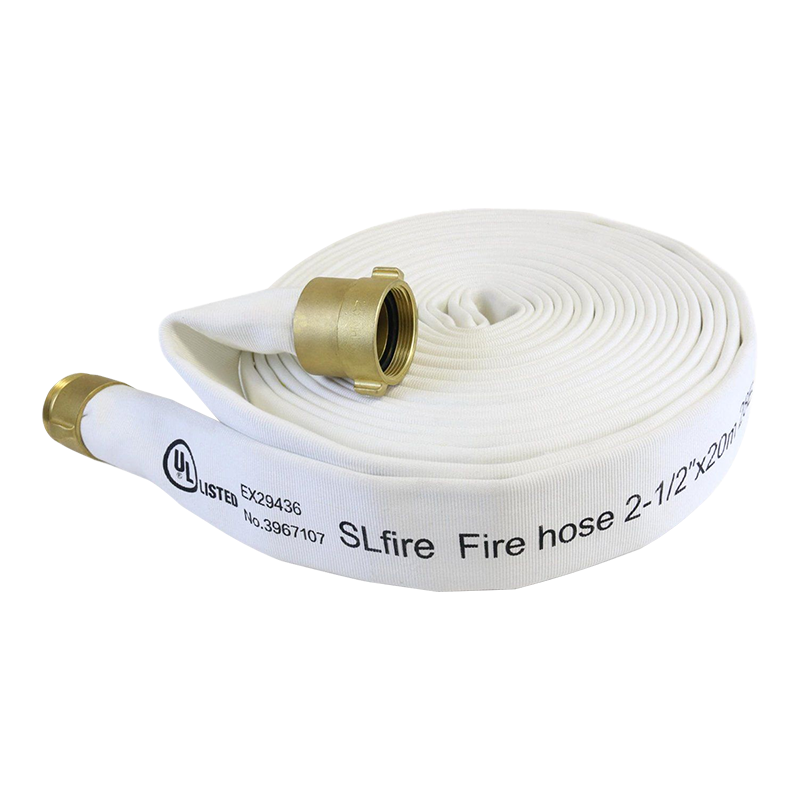
Single jacket, EPDM rubber liner Features • 100% high tenacity polyester jacket, high-grade EPDM rub...
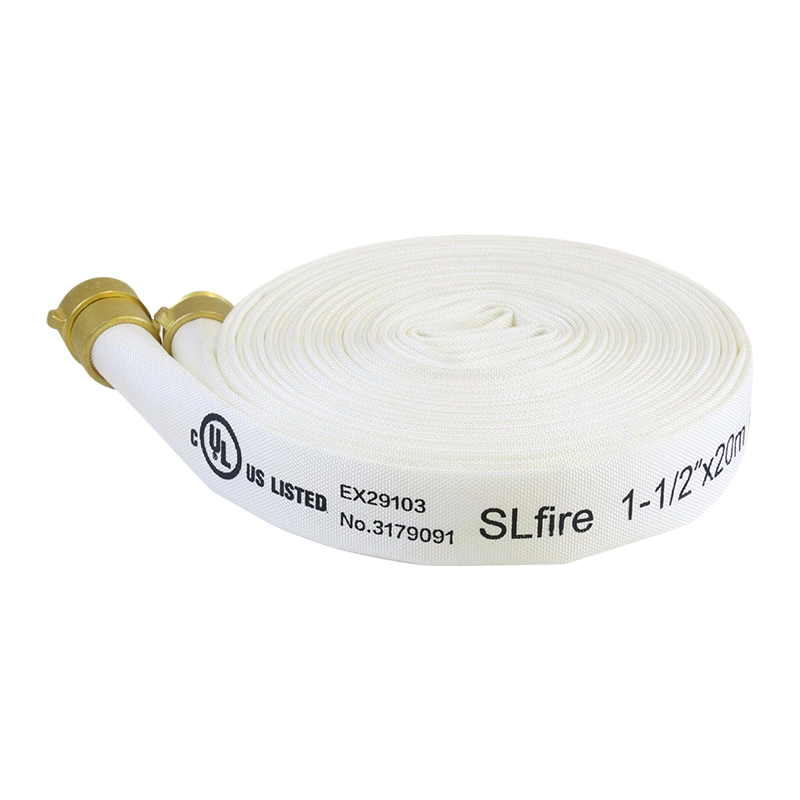
Single jacket, TPU liner •High-tenacity polyester yarn, circular woven in twill weave/plain weave,T ...
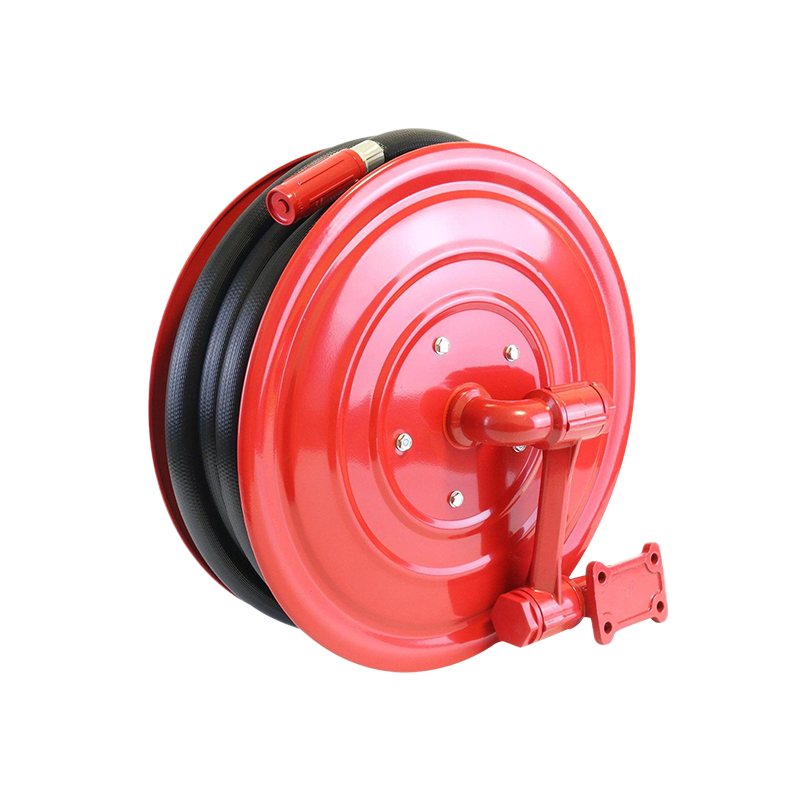
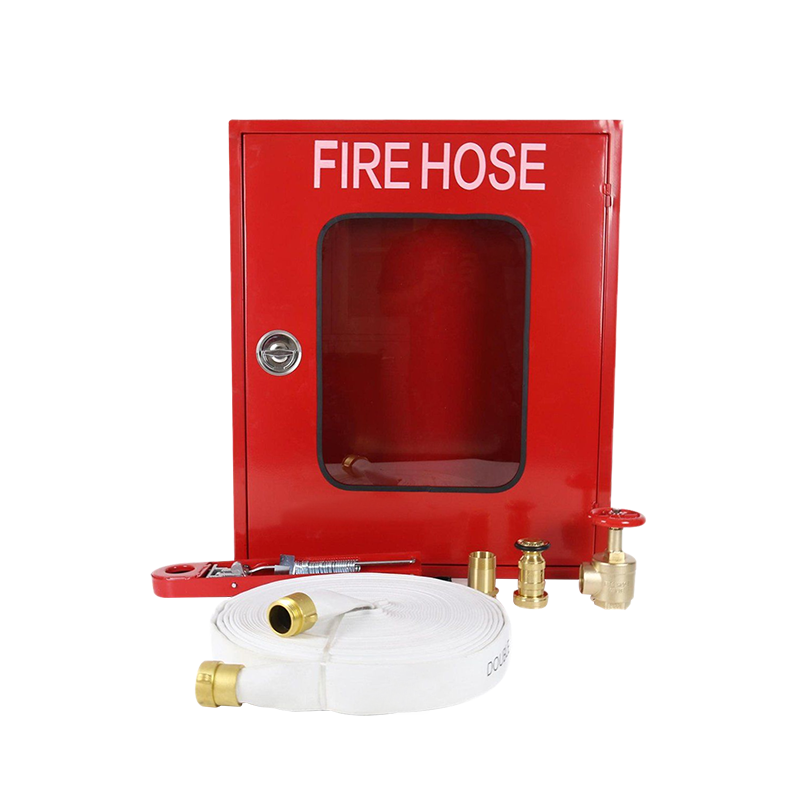
Fire cabinets are designed to accommodate fire hose,valve and other firefighting equipment. Type 201...
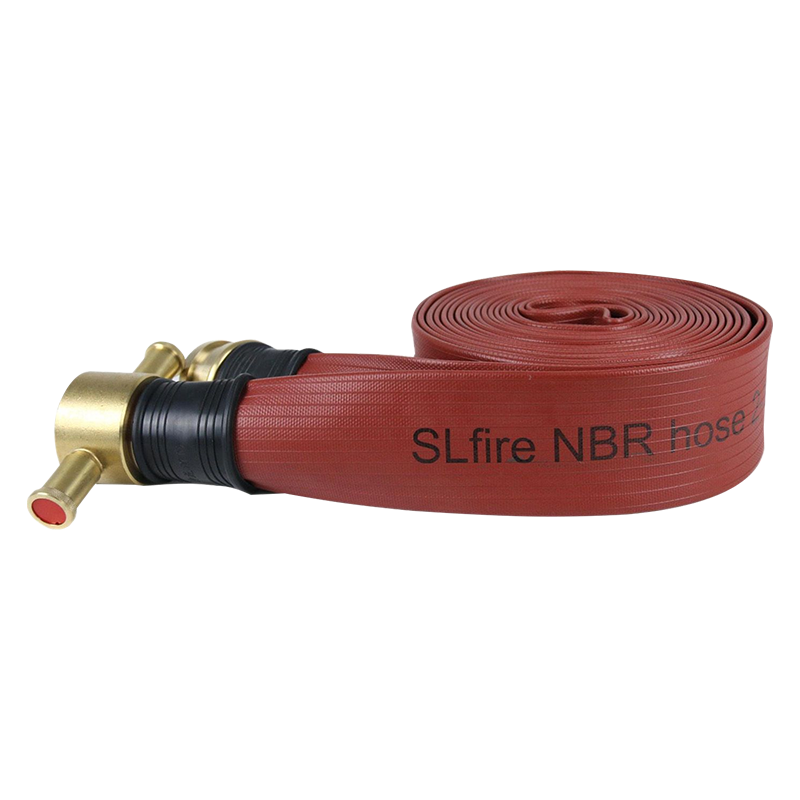
Nitrile covered hose •Nitrile/TPR blend as cover and lining, with 100% high-tenacity polyester yarn ...
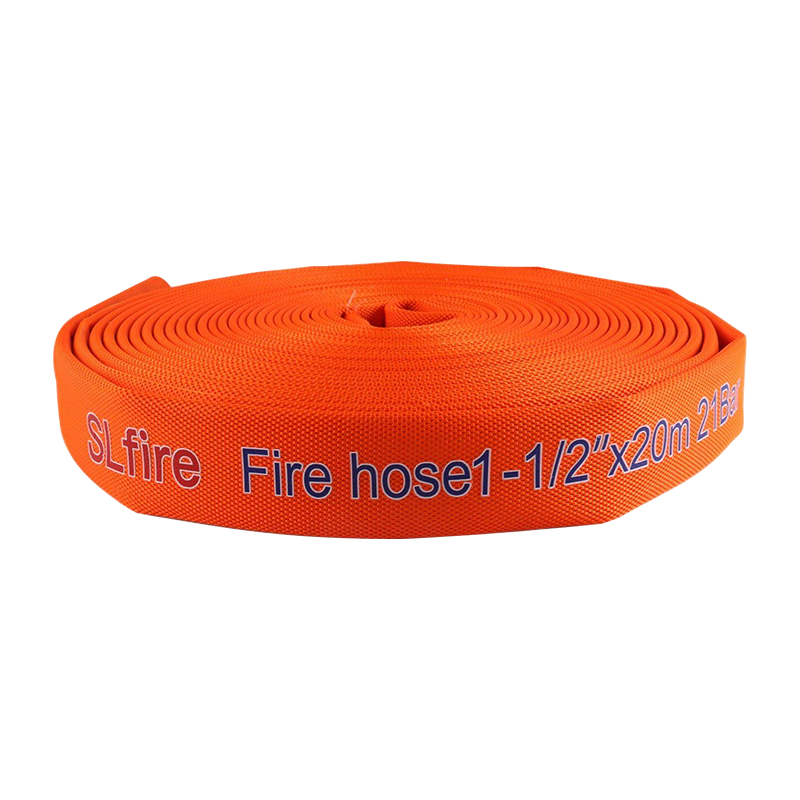
Single jacket, TPU liner •High-tenacity polyester yarn, circular woven in twill weave, TPU lining, f...
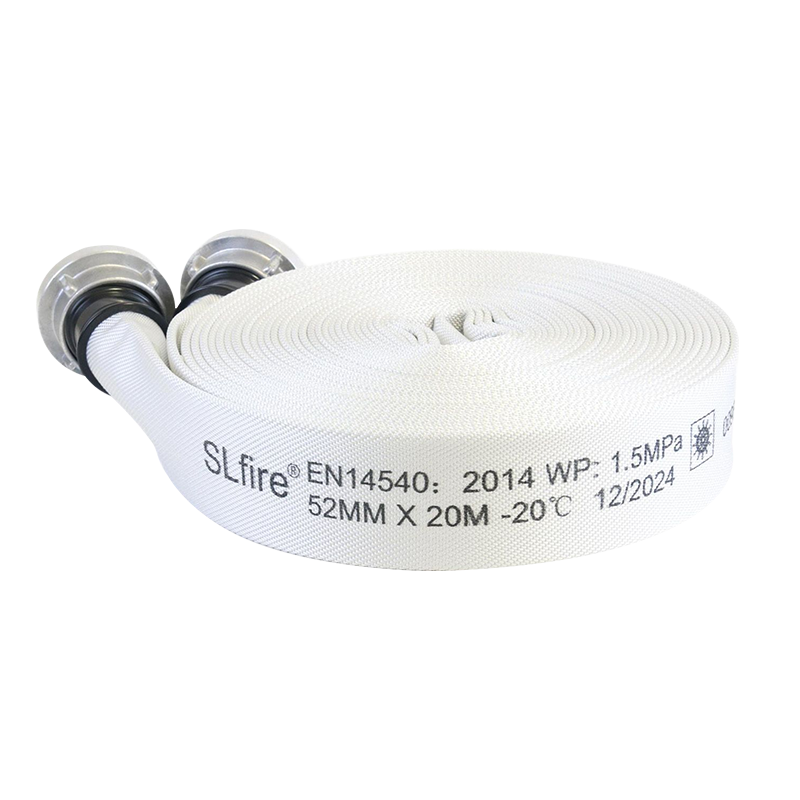
Marine hose Single jacket, PVC liner •100% high tenacity polyester yarn, circular woven in twill wea...
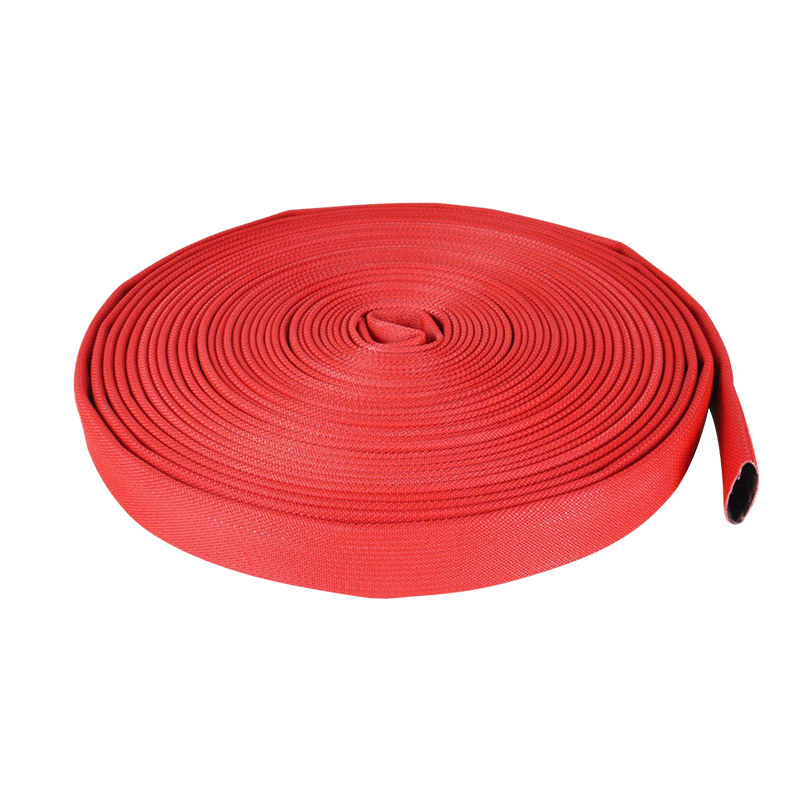
Marine hose Single jacket, PVC liner, PU coated •100% high tenacity polyester yarn,c ircular woven i...
 Call Us
+86 159-5116-9511
Need Support
Head Office
No.58, Kechuang Road, Sixiang Street Medicine Gaoxin District Taizhou City, Jiangsu Province

At a structure fire, the first line off the truck is the one that does the hardest work. Pulled around obstacles, dragged across gravel, charged with high-pressure water, and shut off at the nozzle d...
Copyright © Taizhou Shenlong Fire Science and Technology Co., Ltd. All Rights Reserved.
 Fire Hose Manufacturers, Fire Hydrant Hose Factory