

 English
 русский
 Español
 Deutsch
 عربى
 Français
 Português
Don't hesitate to send a message

Single jacket, EPDM rubber liner Features • 100% high tenacity polyester jacket, high-grade EPDM rub...
Content
Marine hose systems must perform reliably in environments where water, salt, abrasion, repeated handling, and changing temperatures place continuous demands on hose materials. A hose used on a vessel, at a port, in a shipyard, or near coastal infrastructure must be flexible enough for fast deployment while remaining durable enough for regular use. It must also be easy to transport, simple to store, and dependable when connected to pumps, hydrants, nozzles, or other water-discharge equipment.
The PVC Liner PU Coated Marine Hose is designed to meet these practical requirements through a single-jacket construction that combines high-tenacity polyester yarn, a PVC lining, and an external polyurethane coating. This combination provides a useful balance of low weight, flexibility, abrasion resistance, and water-handling capability. It is available in 50-foot, 75-foot, and 100-foot lengths, giving users several options for installation, emergency response, maintenance work, and marine service operations.
Manufactured by Taizhou Shenlong Fire Science and Technology Co., Ltd., the hose reflects the company’s long experience in lined hose production and its broader capabilities in research, development, manufacturing, sales, and service. Founded in 1995, the company has developed a product range serving fire protection, construction, water conservancy, and related industries. Its experience with different hose materials, including rubber, PVC, and polyurethane, supports the development of products for customers with varied technical and operating requirements.
The PVC Liner PU Coated Marine Hose is a single-jacket marine hose built around a woven textile reinforcement and a smooth PVC waterway. The outer polyurethane coating adds protection to the jacket and helps the hose withstand the friction and contact associated with handling, dragging, coiling, and deployment.
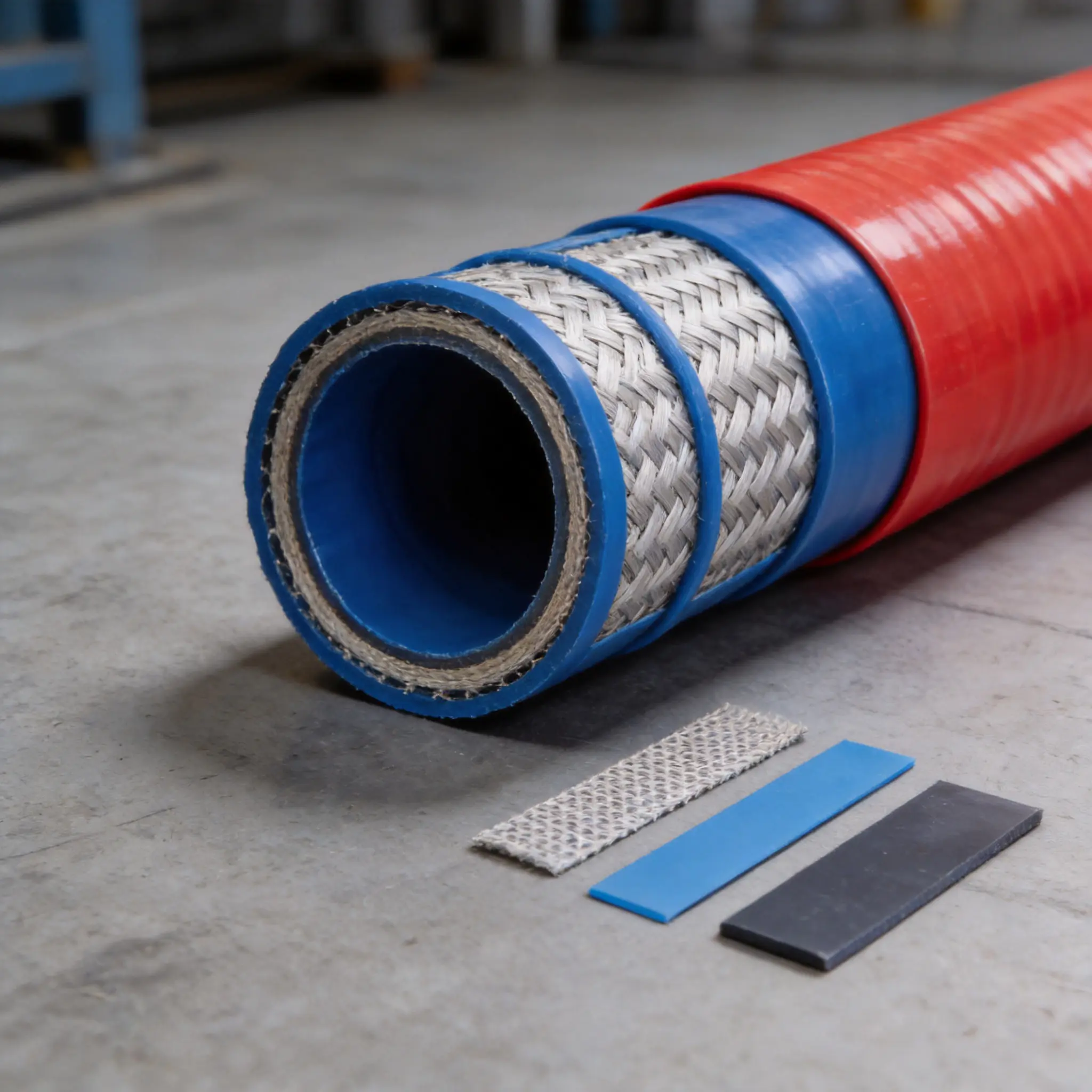
Its construction includes 100% high-tenacity polyester yarn. The yarn is circular woven using either twill weave or plain weave, depending on the required design and production specification. The woven jacket provides the hose with tensile support, while the PVC liner creates the internal passage for water. The polyurethane coating forms an additional protective layer on the outside.
This structure is important because no single material provides every characteristic required in a marine hose. Polyester reinforcement contributes strength and dimensional stability. PVC supplies a continuous lining for water transfer. Polyurethane improves the external resistance of the hose and helps protect the woven jacket during repeated use.
The result is a hose intended to be practical rather than unnecessarily heavy. Compared with many traditional rubber hose designs, a PVC and PU construction can reduce overall weight. Lower weight is particularly valuable in marine environments, where operators may need to move equipment across decks, stairs, corridors, gangways, docks, or confined service areas.
| Item | Specification |
|---|---|
| Product type | PVC liner PU coated marine hose |
| Hose construction | Single jacket with PVC lining and PU coating |
| Reinforcement material | 100% high-tenacity polyester yarn |
| Weaving method | Circular woven twill weave or plain weave |
| Primary characteristics | Lightweight, flexible, and abrasion-resistant |
| Operating temperature range | -10°C to 60°C |
| Available lengths | 50 feet, 75 feet, and 100 feet |
| Referenced compliance | EN 14540, MED, and CCS requirements |
| Typical application areas | Marine service, shipboard water delivery, port operations, and related water-handling work |
The product specifications provide a foundation for selecting the hose according to operating conditions. However, installation requirements, working pressure, coupling configuration, storage conditions, and local regulations should also be reviewed before use. The appropriate hose length and connection method will depend on the layout of the vessel or facility and the distance between the water source and the discharge point.
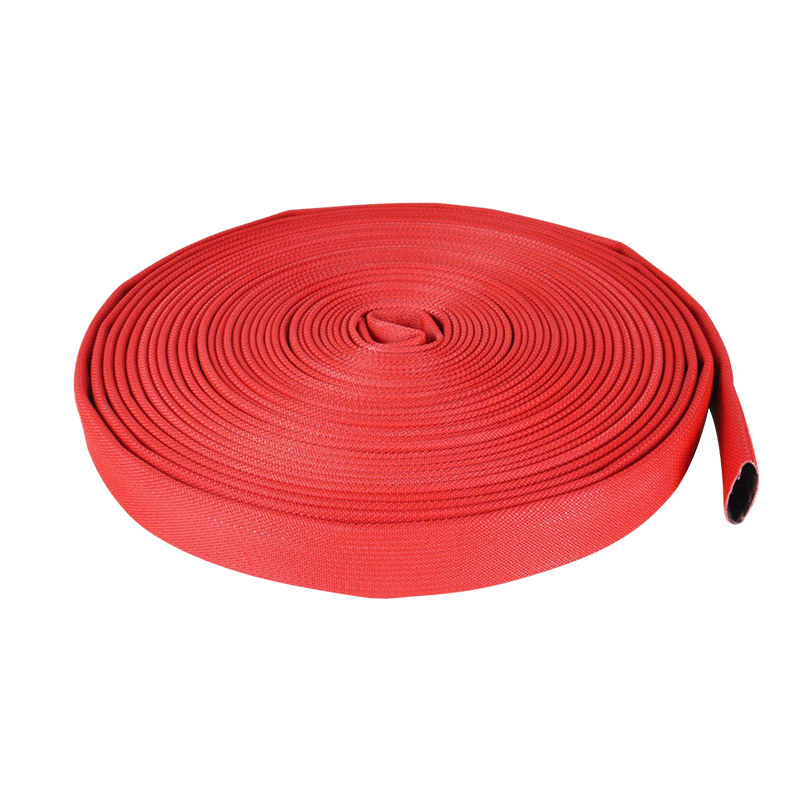
PVC Liner PU Coated Marine Hose
The liner is the internal layer that comes into direct contact with the conveyed water. A well-formed liner helps maintain a continuous water passage and reduces the effect of the woven jacket on internal flow. PVC is widely used in hose manufacturing because it can be formed into a consistent lining while maintaining a relatively low product weight.
A PVC liner also supports easier cleaning and maintenance. The internal surface is intended to provide a more uniform passage than an unlined textile hose. This can be useful when the hose is used for water delivery and must be drained, flushed, or inspected after operation. A smooth and continuous lining can also reduce the accumulation of contaminants compared with a rough or exposed textile interior.
Another advantage is material balance. A PVC-lined hose can deliver the benefits of a lined construction without the mass associated with some heavier rubber designs. For marine users, this balance can improve handling efficiency. Crew members and maintenance teams often need to deploy hoses quickly and then return them to storage. A hose that is easier to lift and coil can reduce the physical effort required for these tasks.
The temperature range of -10°C to 60°C gives the product flexibility for many ordinary marine and industrial water-service conditions. The stated temperature range should always be considered together with the fluid type, pressure, exposure time, and operating environment. The hose should not be used outside its defined conditions without confirmation from the manufacturer or a qualified technical professional.
The polyurethane coating protects the outside of the hose and contributes to its resistance against abrasion. Marine hoses are frequently exposed to contact with decks, dock surfaces, fittings, railings, storage racks, and other equipment. During deployment, the hose may be pulled across a surface or moved around obstacles. The outer coating helps protect the woven jacket from direct wear.
Polyurethane is also valuable because it can support flexibility while providing a protective surface. A hose that is too rigid may be difficult to position, particularly in narrow passageways or around fixed equipment. The PU-coated construction is intended to remain maneuverable, allowing operators to bend, coil, and route the hose according to the requirements of the work area.
Flexibility is especially significant at lower temperatures. When equipment is used outdoors or on vessels operating in cool climates, hoses may become less easy to handle. The product information identifies the PU coating as contributing to flexibility even at lower temperatures within the specified operating range. This characteristic can assist with deployment and storage when the hose is exposed to cold conditions.
The coating should not be viewed as a substitute for proper handling. Sharp edges, excessive dragging, contact with hot surfaces, aggressive chemicals, and improper storage can damage any hose. Nevertheless, the PU outer layer gives the product a useful level of protection for routine marine service and helps extend its practical service life when correct procedures are followed.
The hose uses 100% high-tenacity polyester yarn in its reinforcement layer. The purpose of this material is to provide the textile strength needed to support the hose structure during pressurization, movement, and repeated handling. Polyester yarn is commonly selected for hose reinforcement because it offers a favorable combination of strength, weight, flexibility, and resistance to ordinary environmental exposure.
Circular weaving produces a continuous tubular jacket around the hose. This construction distributes the reinforcement around the circumference rather than relying on a limited number of separate strips. The selected weaving style may be twill or plain weave. Each method can be used to achieve different balances of surface texture, flexibility, density, and production requirements.
Plain weave is formed through a straightforward interlacing pattern and can provide a stable textile structure. Twill weave uses a different interlacing arrangement that may support a distinctive balance of flexibility and surface performance. The specific weave selection can be adapted to the required product design and customer specification.
High-tenacity yarn is important because the hose must retain its structural integrity during normal water-service operation. The textile jacket is not merely a cover; it is a functional reinforcement system that works with the liner and outer coating. The liner controls the internal water passage, the jacket provides mechanical support, and the PU coating protects the external surface.
Some hose products prioritize heavy construction to achieve durability, but excessive material can create disadvantages. A heavier hose may require more personnel to move, occupy more storage space, and take longer to deploy. It may also be more difficult to coil tightly after use. The PVC Liner PU Coated Marine Hose is positioned as a lighter alternative that seeks to provide durability without unnecessary bulk.
This balance is one of the product’s main advantages over traditional heavy rubber hoses. Rubber hoses can offer strong resistance in certain conditions, but their weight may become a significant operational issue when long lengths must be transported or manually handled. The PVC and PU combination helps reduce this burden while retaining a reinforced construction suitable for marine water-service work.
Light weight can also improve logistics. A supplier, vessel operator, contractor, or maintenance department may need to move hose assemblies between warehouses, workboats, docks, and service areas. Reducing the weight of each hose length can simplify loading and unloading and may lower the effort required for routine inspection and replacement.
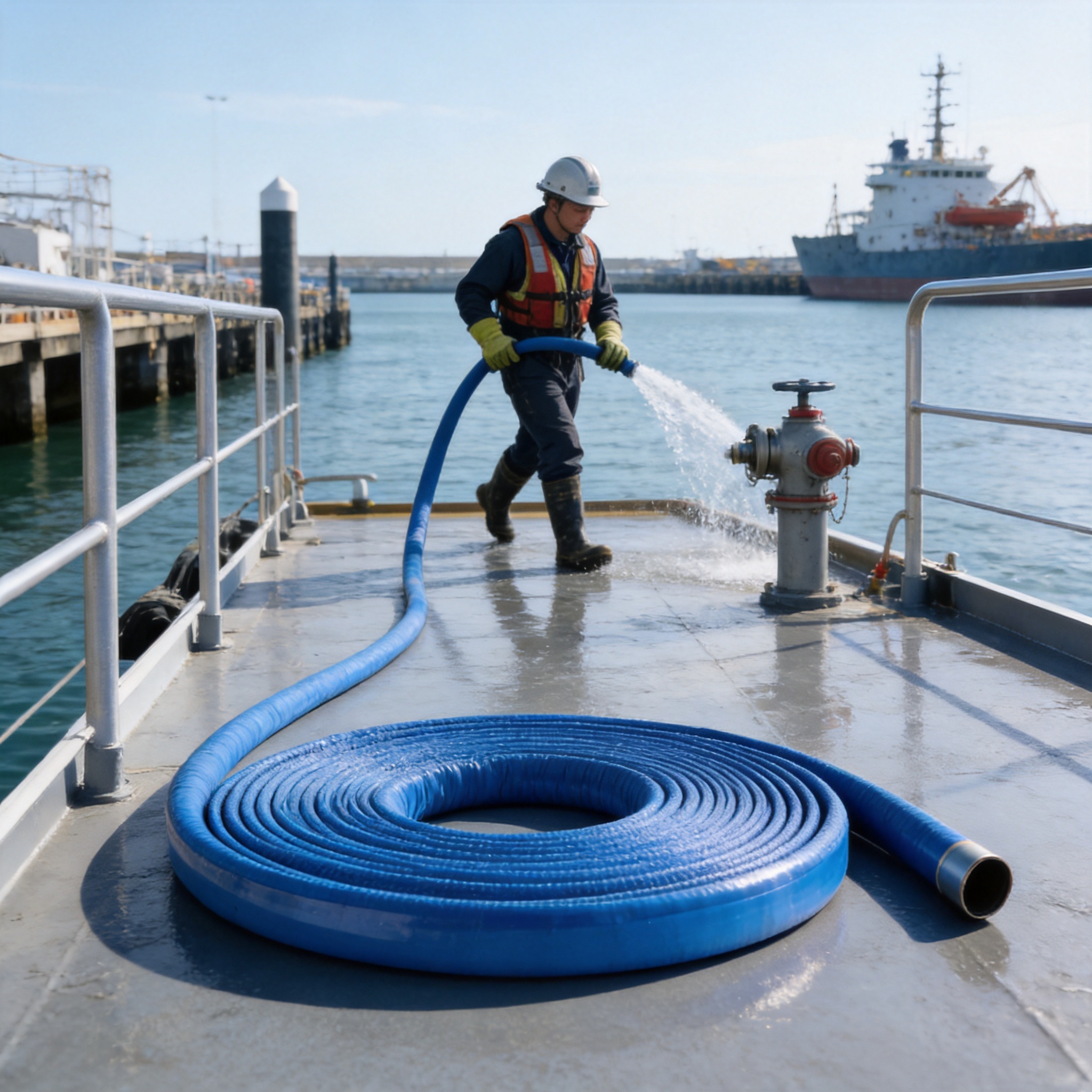
Marine environments create a distinctive set of demands. Space is often limited, surfaces can be wet or uneven, and equipment may need to be moved around fixed structures. Salt air, humidity, and frequent contact with hard surfaces can accelerate wear. A hose must therefore be easy to control while providing reliable water delivery.
The lightweight design is advantageous when hose is stored on a vessel or in a marine facility. Storage areas may be located far from the operating point, and personnel may need to carry the hose up or down stairs. A product that is easier to lift and coil can help reduce handling time and make equipment more accessible.
Flexibility is another important advantage. On a vessel, the hose may need to pass around machinery, deck fittings, partitions, corners, or access points. A flexible hose can be positioned more easily than a rigid hose and can be adjusted as work conditions change. The ability to coil the hose also supports compact storage.
Abrasion resistance helps the hose endure routine contact with surfaces. When a hose is deployed on a dock or deck, it can encounter friction from movement and pressure. The PU coating is intended to protect the external textile layer and reduce the effect of ordinary abrasion. This is especially useful for hoses that are deployed and retrieved frequently.
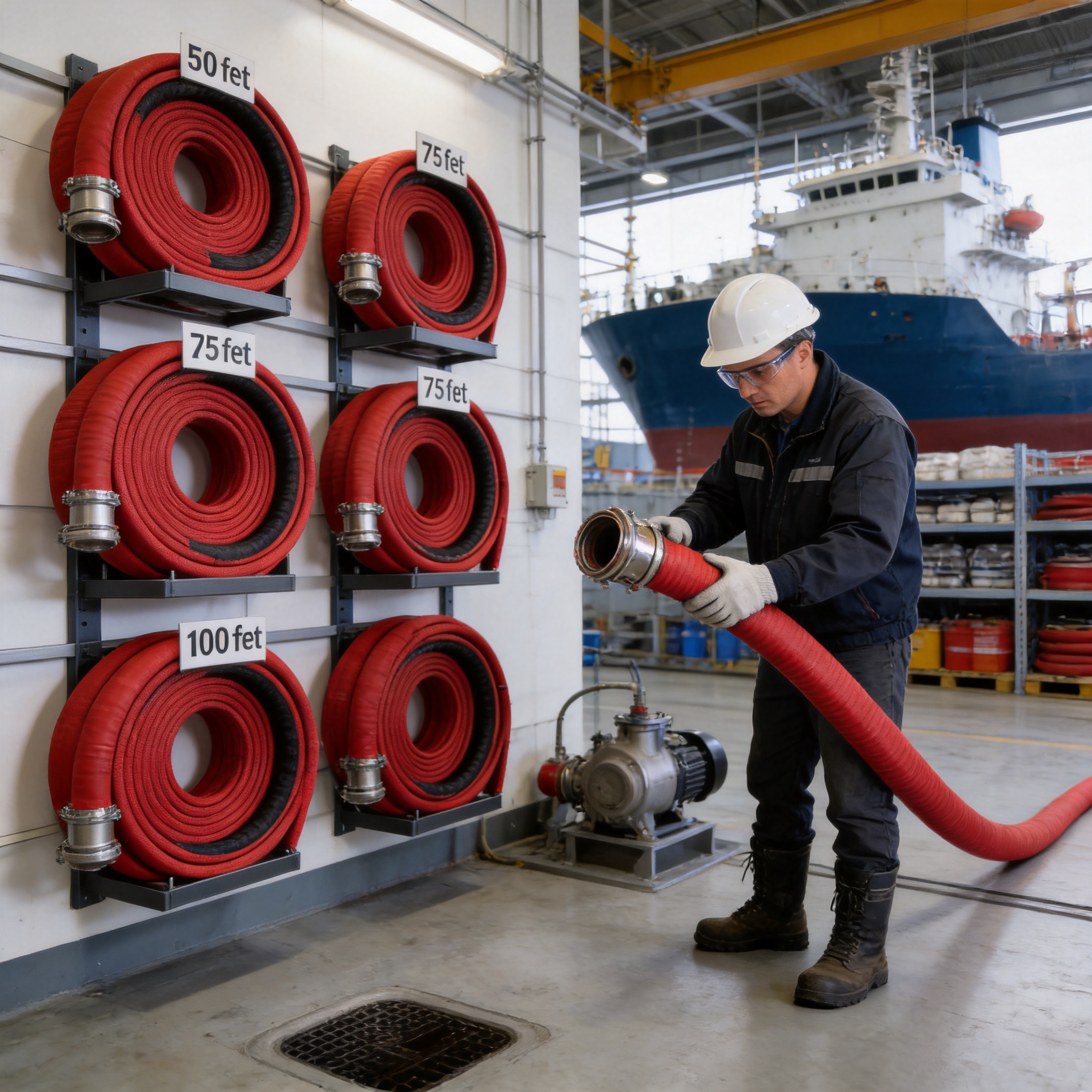
The available 50-foot, 75-foot, and 100-foot lengths support different installation and operating layouts. A 50-foot length may be suitable for compact spaces or short-distance water delivery. A 75-foot length can provide additional reach without requiring the storage volume of a longer assembly. A 100-foot length can support broader coverage where the water source and work area are separated by a greater distance.
Hose handling is a major factor in practical performance. A technically capable hose may still be inefficient if it is too heavy or difficult to maneuver. The PVC liner and PU coating help create a construction that is lighter than many conventional rubber alternatives. This can make it easier for one or more operators to transport, unroll, position, and return the hose to storage.
Reduced handling burden may also contribute to safer work practices. When personnel can control a hose more easily, they may be less likely to drop it, drag it over unsuitable surfaces, or leave it in an unsafe position. Easier coiling can reduce loose loops and help maintain orderly equipment storage.
These benefits are not limited to emergency situations. Marine maintenance teams, shipbuilders, port operators, and industrial users may use water hose systems during cleaning, equipment servicing, testing, and general water transfer. A lightweight hose can provide value during every stage of its operating life.
The PVC Liner PU Coated Marine Hose is intended for marine hose applications involving water delivery and related service requirements. Its construction is suitable for use where flexibility, transportability, and external abrasion resistance are important considerations.
On ships and workboats, the hose can be incorporated into water-service arrangements where a flexible connection is needed. It may be used in conjunction with suitable couplings, valves, hydrants, pumps, or nozzles, provided that the complete assembly is correctly selected and rated for the intended duty.
In ports and shipyards, hoses are often moved across open working areas and exposed to repeated deployment. The PU-coated surface can help protect the hose during routine movement on decks, platforms, and other working surfaces. The available length choices allow users to select a configuration appropriate for the distance between the water supply and the operating location.
Marine maintenance contractors may also value the product for temporary or semi-permanent water-service operations. Its ability to be coiled and transported makes it practical for projects where equipment must be moved between several locations. The hose can be stored when not in use and deployed when required.
Other potential applications may include coastal facilities, water conservancy projects, industrial sites near marine environments, and general water-handling operations that fall within the product’s technical limits. The specific application should always be evaluated based on pressure, temperature, fluid compatibility, connection method, and expected exposure to abrasion or chemicals.
Rapid deployment requires more than a long hose. Personnel must be able to lift the hose, carry it to the operating area, uncoil it, connect it, and place it without unnecessary delay. The lightweight and flexible design supports these steps by reducing the physical difficulty of handling.
The hose’s available lengths can help organizations prepare equipment for different response zones. Shorter assemblies may be kept in compact storage locations, while longer assemblies may be positioned where greater reach is required. An organization can combine different lengths according to the layout of its vessels, buildings, docks, or service areas.
After use, the hose should be drained, cleaned when appropriate, inspected, and properly coiled. Correct recovery is essential because trapped water, sharp bends, contamination, and poor storage can affect hose condition. A lightweight product makes this process less demanding, which may encourage more consistent maintenance practices.
Taizhou Shenlong Fire Science and Technology Co., Ltd. was founded in 1995 and has developed its business around research and development, production, sales, and service. This integrated structure is important for hose manufacturing because product quality depends on more than the selection of raw materials. It also depends on process control, inspection, technical communication, customer support, and continuous improvement.
The company’s principal product experience is in various types of lined fire hoses. This background is closely related to the manufacture of a PVC-lined marine hose because both product families require careful coordination between textile reinforcement, internal lining, external protection, dimensional control, and connection requirements.
The company also undertakes foreign trade products using materials such as rubber, PVC, polyurethane, and double-sided tape according to customer requirements. Experience with multiple materials can help a manufacturer understand how different compounds and constructions influence flexibility, abrasion resistance, temperature performance, and application suitability.
An advanced manufacturing process for this type of hose begins with the controlled selection of high-tenacity polyester yarn. Yarn quality influences the strength and uniformity of the woven jacket. The yarn must be prepared and fed into the circular weaving equipment in a manner that supports consistent construction throughout the hose length.
During circular weaving, the polyester yarns are interlaced to form a tubular jacket. The production team must control factors such as yarn tension, weaving density, alignment, surface uniformity, and dimensional consistency. Any variation can affect the hose’s flexibility, appearance, strength, or ability to accept the liner and coating.
The use of twill weave or plain weave provides production flexibility. Different customers and applications may require different jacket characteristics. A manufacturer with experience in both weaving methods can adjust the construction to suit the required balance of handling performance and mechanical protection.
After the jacket is formed, the PVC lining process must create a continuous internal layer. The liner needs to be evenly distributed and securely integrated with the textile reinforcement. Proper processing can help avoid thin areas, wrinkles, pinholes, or other inconsistencies that could reduce the reliability of the finished hose.
The PVC lining and PU external coating are central to the product’s performance. The lining creates the internal waterway, while the coating protects the outside. Each layer must be applied under controlled conditions so that the final hose remains flexible and structurally consistent.
Production control may include monitoring material preparation, coating thickness, curing or drying conditions, surface appearance, and adhesion between layers. The exact process parameters depend on the formulation and equipment used. The important principle is that the finished hose must combine the properties of all three components rather than allowing one layer to compromise the others.
A coating that is too thin may not provide sufficient external protection. A coating that is excessively thick may increase weight or reduce flexibility. Similarly, an uneven PVC liner may affect water flow and structural performance. Balanced processing is therefore essential to achieving the intended lightweight and flexible product profile.
Quality control for a lined marine hose should include inspection of raw materials, woven jacket construction, liner integrity, coating condition, dimensions, and finished appearance. Depending on the customer specification and applicable standard, testing may also address pressure performance, leakage resistance, flexibility, adhesion, and resistance to relevant environmental conditions.
A manufacturer with an integrated production and service structure can use customer feedback to improve product design and process control. Information from marine operators, distributors, contractors, and export customers can reveal practical issues that may not be evident during laboratory evaluation. This feedback can support improvements in packaging, length selection, coupling arrangements, and application guidance.
The company’s cooperation with domestic foreign trade companies and its export experience also demonstrate an ability to serve customers beyond the local market. Products are reported to be sold in more than 20 provinces, cities, and autonomous regions, while export products are supplied to multiple countries through cooperation with foreign trade partners. Such market exposure can help a manufacturer develop familiarity with varied documentation, packaging, quality, and customer-service expectations.
The product information states that the hose meets or exceeds EN 14540, MED, and CCS standards. These references are significant for marine and fire-related markets because standards provide a framework for evaluating product construction and performance.
EN 14540 is associated with non-percolating layflat fire hoses for fixed systems. MED refers to the Marine Equipment Directive framework used for certain marine equipment within applicable regulatory contexts. CCS refers to China Classification Society requirements and certification systems. The relevance of each standard depends on the precise product configuration, application, certification scope, and market.
Buyers should request current technical documentation and certification information for the exact hose model, size, pressure rating, coupling arrangement, and intended application. Compliance should be verified against the requirements of the vessel, classification society, flag administration, end user, or local authority.
Standards are valuable because they help purchasers compare products using recognized performance criteria rather than appearance alone. A hose may look similar to another product but differ in liner construction, reinforcement density, coating adhesion, pressure capability, or quality consistency. Documentation and traceability help users make a more informed decision.
Traditional rubber hoses remain useful in many applications, particularly where their specific material properties are required. However, they may be heavier than textile-reinforced PVC and PU hose designs. Weight becomes increasingly important as hose length increases and when operators must move the hose manually.
The PVC Liner PU Coated Marine Hose offers a lighter alternative for users who prioritize portability and flexibility. Its single-jacket construction can be easier to coil and transport. This may reduce storage demands and simplify deployment in areas where access is limited.
Rubber can also have a different bending behavior from PVC and PU constructions. Depending on the formulation and reinforcement, a rubber hose may feel more rigid or may require greater effort to reposition. The flexible construction of the PVC-lined product is intended to support easier maneuvering around marine equipment and confined spaces.
Abrasion resistance must be evaluated in relation to the actual environment. The PU coating provides external protection, but users should still avoid unnecessary dragging over sharp or abrasive objects. The most suitable product depends on the specific balance of pressure, temperature, chemical exposure, flexibility, weight, and durability required by the application.
An uncoated textile hose may offer low weight and flexibility, but it may have less external protection against abrasion and surface contamination. The PU coating on this marine hose adds a protective barrier around the woven jacket, helping it withstand routine contact with working surfaces.
The coating can also make the hose easier to clean externally. Marine equipment is often exposed to mud, salt deposits, oil residues, and general industrial dirt. Cleaning requirements depend on the actual contaminant and the hose manufacturer’s guidance, but a protected outer surface can be more practical than an exposed textile jacket.
The PVC liner also distinguishes the product from hoses that rely only on a textile structure. A lined hose provides a defined internal waterway and is intended for controlled water delivery. The combination of lining, reinforcement, and external coating creates a more complete construction for demanding service conditions.
Before installation, the hose should be inspected for visible damage, contamination, deformation, or irregularities. Couplings and accessories should be compatible with the hose size and intended pressure. Connections should be assembled correctly and secured according to the manufacturer’s instructions.
The hose should be routed away from sharp edges, hot surfaces, moving machinery, and areas where vehicles or heavy equipment may pass over it. If the hose must cross a traffic route, suitable protection should be used. Avoiding unnecessary mechanical stress helps preserve the outer coating and woven reinforcement.
During deployment, the hose should be uncoiled without excessive twisting. Kinks can restrict flow and create concentrated stress in the liner and jacket. The hose should be laid out in broad curves rather than forced into tight bends. Operators should not exceed the recommended bending radius or operating pressure.
After use, the hose should be drained as thoroughly as practical. Residual water can increase weight during storage and may contribute to deterioration if the hose is stored wet for long periods. If the hose has been exposed to salt water, mud, chemicals, or other contaminants, it should be cleaned using a method compatible with PVC, PU, and polyester materials.
Hoses should be stored in a cool, dry, and well-ventilated area away from direct sunlight, ozone-producing equipment, oils, solvents, sharp objects, and excessive heat. They should not be stored under heavy loads that can permanently deform the structure. Proper coiling helps maintain orderly storage and makes future deployment easier.
| Inspection area | What to check | Recommended action |
|---|---|---|
| Outer coating | Cuts, deep abrasion, peeling, blistering, or exposed yarn | Remove from service for technical evaluation if damage affects the protective layer |
| PVC liner | Leaks, soft spots, visible deformation, or unusual water flow | Stop use and inspect the hose assembly |
| Jacket | Broken yarns, fraying, excessive wear, or distortion | Record the condition and obtain replacement guidance |
| Couplings | Looseness, corrosion, damaged threads, or gasket wear | Repair or replace defective connection components |
| Length and coiling | Twisting, severe kinks, or improper storage shape | Recoil correctly and avoid forced bends |
| Cleanliness | Salt, oil, mud, chemicals, or biological contamination | Clean using an approved method before storage |
The product is available in 50-foot, 75-foot, and 100-foot lengths. Selection should be based on the distance between the water source and the intended operating point, while allowing enough length for routing around equipment and maintaining safe bends.
A 50-foot hose can be practical in compact marine spaces, near fixed water outlets, or where minimizing storage volume is important. It may also be useful as part of a modular hose arrangement in which several shorter sections are connected when greater reach is needed.
A 75-foot hose provides an intermediate option. It can offer greater coverage than a 50-foot length while remaining easier to transport and store than a longer assembly. This length may be useful for shipyard work areas, moderate-sized decks, or facilities with changing operating distances.
A 100-foot hose is suitable where greater reach is necessary. Longer hose sections can reduce the number of connections in a water-delivery route, but they may require more storage space and additional handling effort. Buyers should consider the available personnel, storage configuration, pressure loss, and connection requirements before selecting the longest option.
In some installations, a combination of lengths may be more efficient than using only one standard length. The final arrangement should account for pressure requirements, coupling compatibility, access routes, and the need for inspection and replacement.
Product performance is only one part of a successful hose purchase. Customers also need dependable communication, appropriate documentation, stable production, and responsive after-sales service. The company’s combined research, development, production, sales, and service structure supports a coordinated approach to these requirements.
Taizhou Shenlong Fire Science and Technology Co., Ltd. has experience serving fire protection, construction, water conservancy, and other industries. This broad market experience can be useful for marine customers because many hose requirements overlap across sectors, including pressure management, abrasion resistance, coupling selection, packaging, and storage.
The company’s capability to produce products made from rubber, PVC, polyurethane, and double-sided tape according to customer requirements indicates a flexible manufacturing background. For buyers with special specifications, this may support discussions about material selection, hose length, color, marking, packaging, and accessory configuration.
Export cooperation and sales across more than 20 provinces, cities, and autonomous regions indicate an established distribution and supply network. For international purchasers, supplier experience with foreign trade products can help simplify communication about product information, shipping preparation, packing requirements, and commercial documentation.
Customers evaluating the product should communicate the intended operating environment clearly. Important information includes the application, water type, working pressure, temperature, required length, connection standard, storage conditions, certification requirements, and expected frequency of use. Clear technical communication helps the manufacturer recommend the most appropriate configuration.
The initial purchase price is not the only factor that determines hose value. Handling time, transport effort, storage requirements, maintenance frequency, and replacement intervals can all influence total operating cost. A lightweight hose may reduce labor requirements during deployment and recovery.
Flexibility can also support operational efficiency. If a hose is easier to position and coil, workers may spend less time preparing equipment. In applications where hoses are moved repeatedly, small savings in each operation can accumulate over the service life of the product.
Abrasion resistance can help reduce premature replacement caused by ordinary surface contact. The PU coating is intended to protect the jacket during routine handling. Its value is greatest when users combine the coating’s protective properties with correct routing, cleaning, inspection, and storage.
Standardized lengths can simplify inventory management. Organizations may be able to maintain a planned stock of 50-foot, 75-foot, and 100-foot sections according to their operational needs. Consistent hose specifications can also make training and maintenance procedures easier to organize.
It is a single-jacket marine hose made with 100% high-tenacity polyester yarn, a PVC internal lining, and an external polyurethane coating. The woven polyester provides reinforcement, the PVC creates the water passage, and the PU coating helps protect the outer surface against abrasion.
The PVC and PU construction can weigh less than many traditional rubber hose designs while still providing a reinforced textile structure. Lower weight makes the hose easier to lift, carry, deploy, coil, and store.
The product information identifies circular woven twill weave and plain weave construction. The appropriate weaving method may depend on the required product design, flexibility, surface characteristics, and customer specification.
The stated temperature range is -10°C to 60°C. Users should operate the hose within this range and evaluate the effects of pressure, fluid type, exposure duration, and environmental conditions before use.
The hose is available in 50-foot, 75-foot, and 100-foot lengths. The correct length depends on the required reach, storage space, handling resources, and installation layout.
It is designed for marine hose applications and offers a combination of flexibility, low weight, and abrasion resistance that is useful on vessels, in ports, shipyards, and related water-service locations. The precise suitability should be confirmed against the operating pressure, connection system, marine certification requirements, and environmental exposure.
The PU coating provides an external protective layer over the woven jacket. It is intended to improve resistance to routine abrasion and support flexibility during handling, including in lower temperatures within the specified range.
Its principal advantages over many traditional rubber hoses are lower weight and easier flexibility. Rubber hoses may be preferred for some specialized conditions, so the final choice should consider pressure, temperature, chemical compatibility, durability, and the handling requirements of the application.
It may be used with suitable couplings when the size, connection type, pressure rating, gasket, and assembly method are compatible. Existing fittings should be checked carefully before installation, and the complete assembly should be tested according to applicable procedures.
The product information states that it meets or exceeds EN 14540, MED, and CCS standards. Customers should request current documentation for the exact product configuration and verify that the certification applies to their intended marine application and market.
It should be drained, cleaned when necessary, properly coiled, and stored in a cool, dry, ventilated area away from direct sunlight, excessive heat, oils, solvents, ozone sources, and sharp objects. Heavy loads should not be placed on the stored hose.
Inspect the outer PU coating, PVC liner, woven jacket, couplings, gaskets, and general hose shape. Look for cuts, deep abrasion, exposed yarn, leakage, severe kinks, loose fittings, or other damage. A damaged hose should be removed from service until it has been evaluated.
The product is manufactured by Taizhou Shenlong Fire Science and Technology Co., Ltd., a company founded in 1995 with capabilities in research and development, production, sales, and service. Its product experience includes lined fire hoses and other products made from rubber, PVC, and polyurethane.
The PVC Liner PU Coated Marine Hose brings together several characteristics that are important in professional water-handling operations. Its single-jacket design is reinforced with high-tenacity polyester yarn, lined with PVC, and protected by PU. This layered construction is intended to provide an efficient balance between strength, flexibility, low weight, and abrasion resistance.
Its lightweight profile can simplify transportation and deployment. Its flexible construction can make routing and coiling easier. Its PU coating can help protect against ordinary external abrasion. Its PVC liner provides a dedicated internal passage for water. Together, these features distinguish the hose from heavier rubber products and from uncoated textile hoses that may offer less external protection.
The product is also supported by a manufacturer with long-term experience in lined hose production. Since 1995, the company has combined development, production, sales, and service activities. Its experience across fire protection, construction, water conservancy, and other industries provides a broad technical foundation for serving marine customers.
For buyers, the most important advantage is the combination of product design and manufacturing support. A hose must perform correctly in the field, but it must also be available in appropriate lengths, produced consistently, documented clearly, and supported by a supplier capable of responding to technical and commercial requirements.
The PVC Liner PU Coated Marine Hose is designed for users who need a flexible, lightweight, and abrasion-resistant hose for marine and related water-service applications. Its 100% high-tenacity polyester circular-woven jacket provides reinforcement, the PVC liner supports water delivery, and the PU external coating adds protection during handling and contact with working surfaces.
The temperature range of -10°C to 60°C, combined with available lengths of 50 feet, 75 feet, and 100 feet, allows the product to serve a variety of operating layouts. Its construction can reduce the handling burden associated with heavier rubber hoses while offering greater external protection than an uncoated textile hose.
Manufacturing experience is another important strength. Taizhou Shenlong Fire Science and Technology Co., Ltd. has operated since 1995 and maintains capabilities covering research and development, production, sales, and service. Its experience with lined fire hoses and materials including PVC, polyurethane, and rubber supports a practical approach to product design and customer requirements.
When selecting the hose, users should confirm the intended pressure, temperature, fluid, coupling system, certification requirements, storage conditions, and expected frequency of deployment. With correct selection, installation, inspection, and maintenance, the PVC Liner PU Coated Marine Hose can provide a practical solution for marine operators, shipyards, ports, contractors, and other professional users seeking efficient water-handling equipment.
EN 14540, Non-Percolating Layflat Fire Hoses for Fixed Systems, applicable edition and manufacturer documentation.
Marine Equipment Directive requirements and related conformity assessment guidance, applicable edition.
China Classification Society rules and certification guidance for applicable marine equipment.
Technical product information for PVC Liner PU Coated Marine Hose, including construction, temperature range, available lengths, and material specifications.
Manufacturer information for Taizhou Shenlong Fire Science and Technology Co., Ltd., including company history, product range, manufacturing capabilities, and industry applications.
General hose handling, inspection, storage, and maintenance practices for textile-reinforced lined hoses.
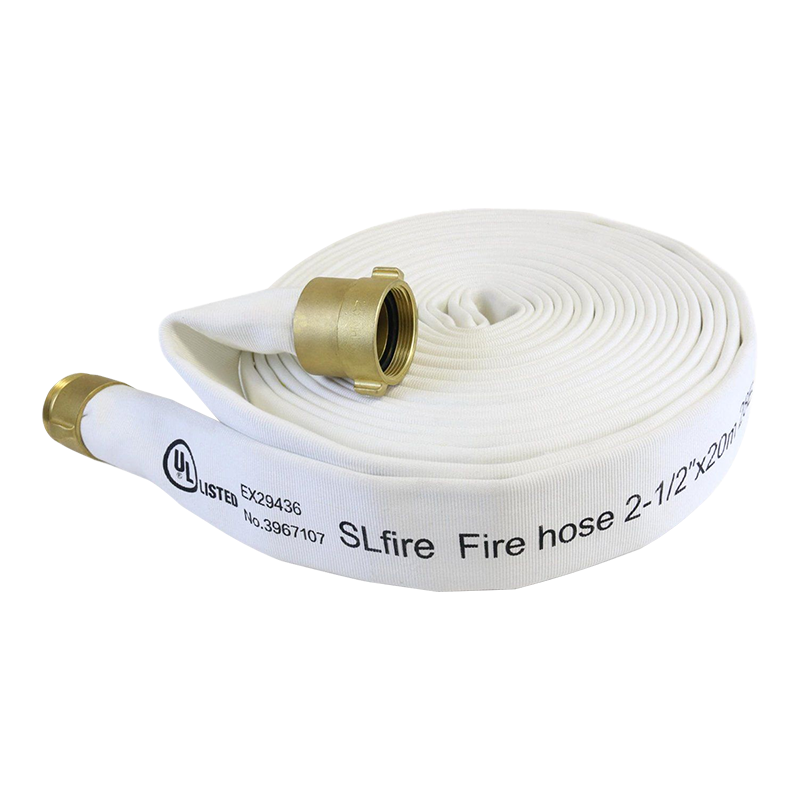
Single jacket, EPDM rubber liner Features • 100% high tenacity polyester jacket, high-grade EPDM rub...
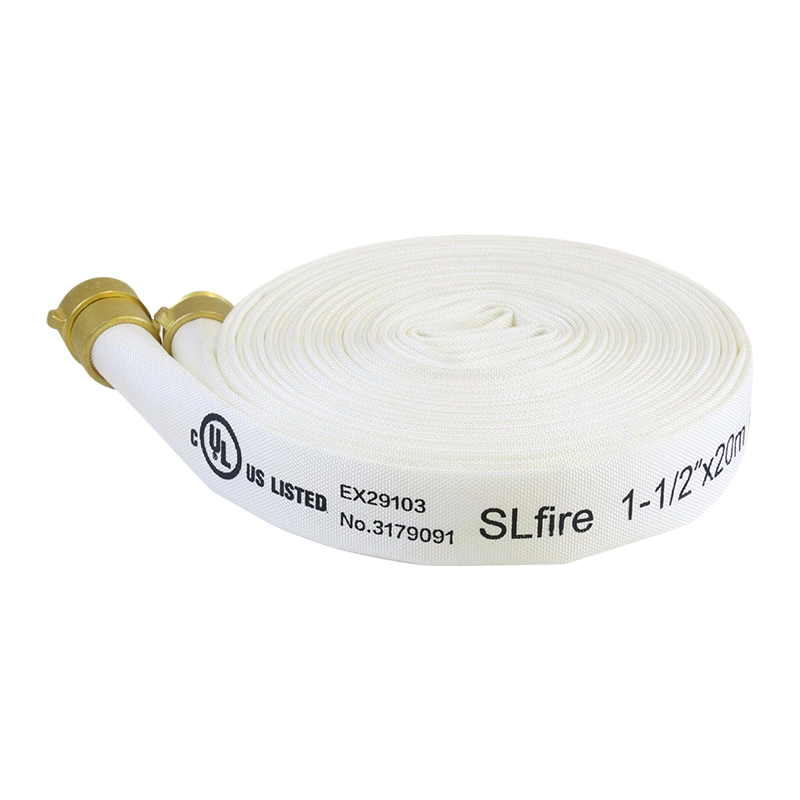
Single jacket, TPU liner •High-tenacity polyester yarn, circular woven in twill weave/plain weave,T ...
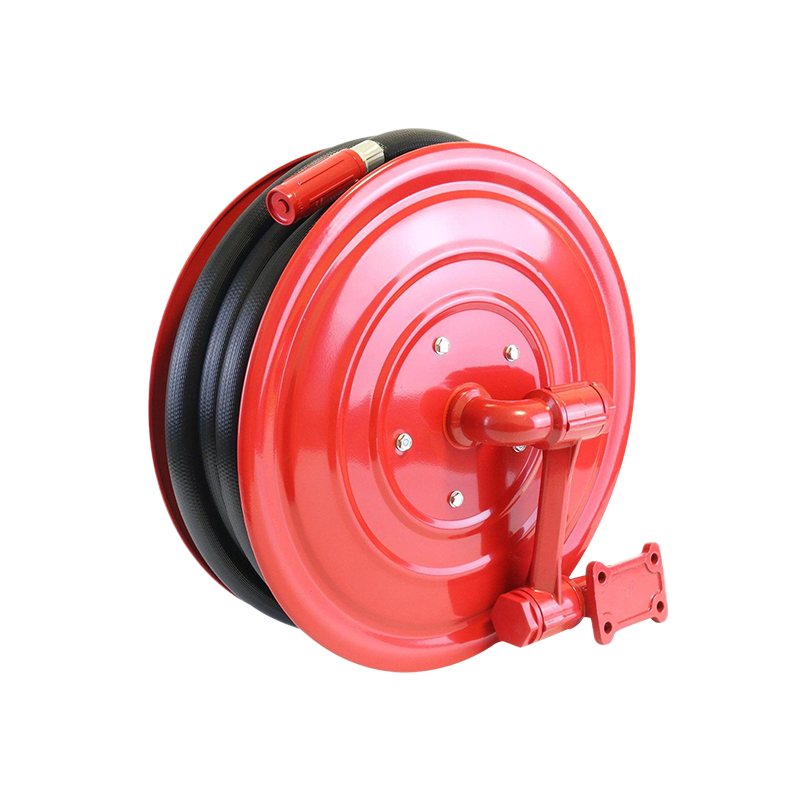
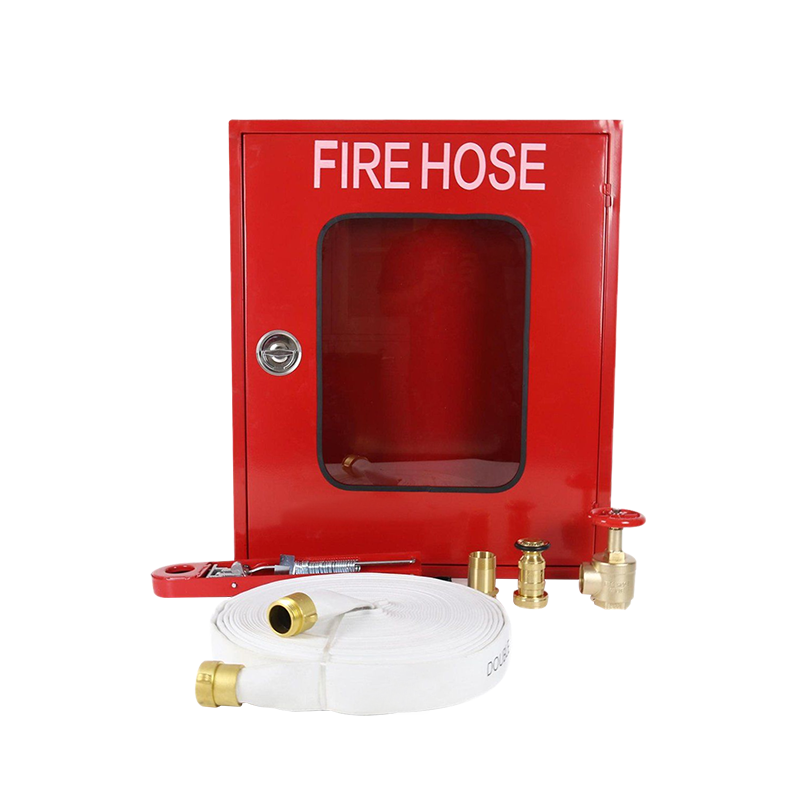
Fire cabinets are designed to accommodate fire hose,valve and other firefighting equipment. Type 201...
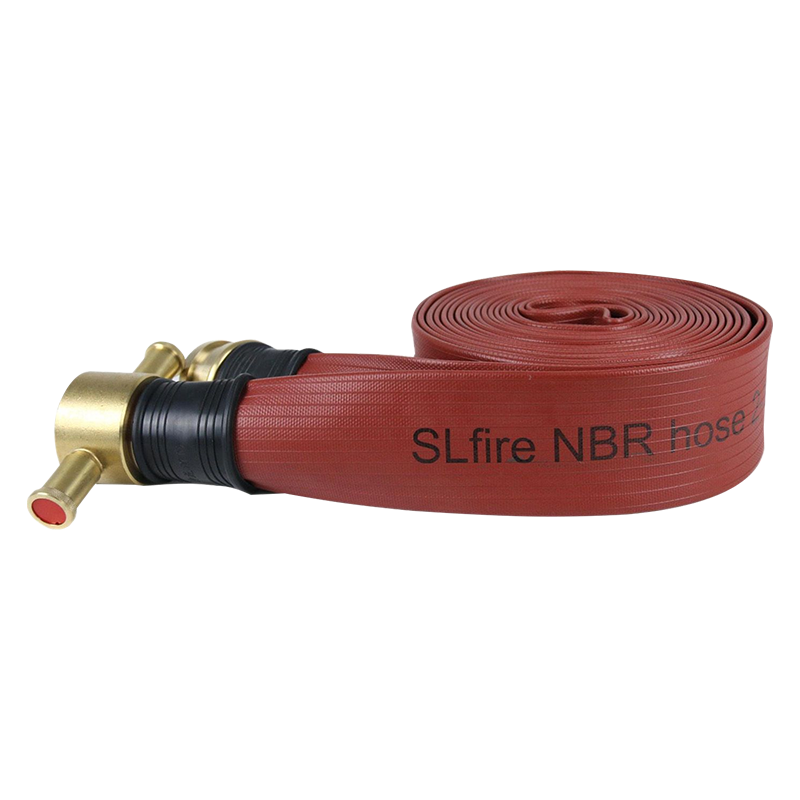
Nitrile covered hose •Nitrile/TPR blend as cover and lining, with 100% high-tenacity polyester yarn ...
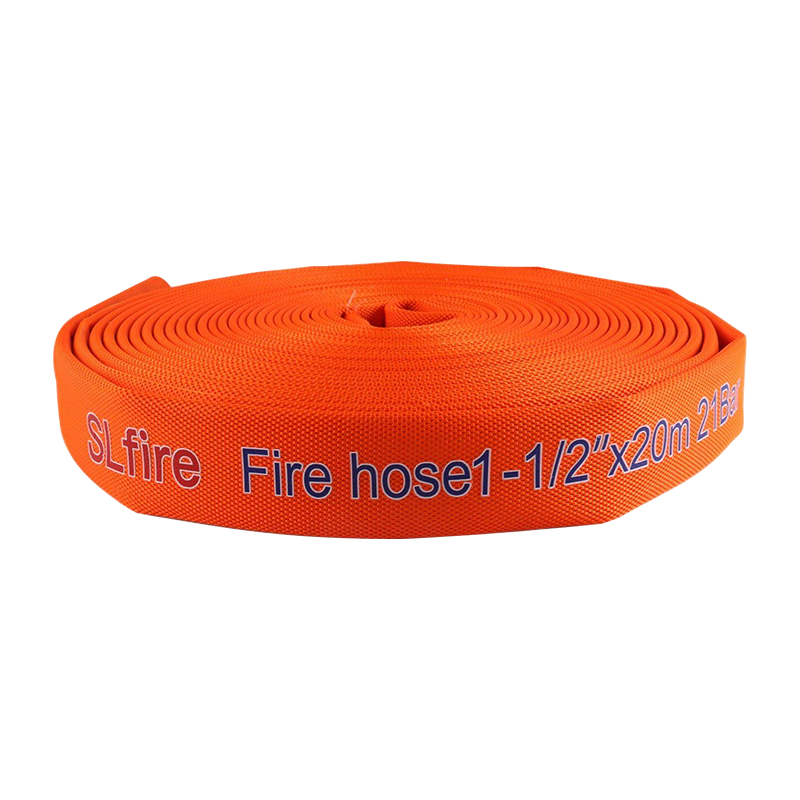
Single jacket, TPU liner •High-tenacity polyester yarn, circular woven in twill weave, TPU lining, f...
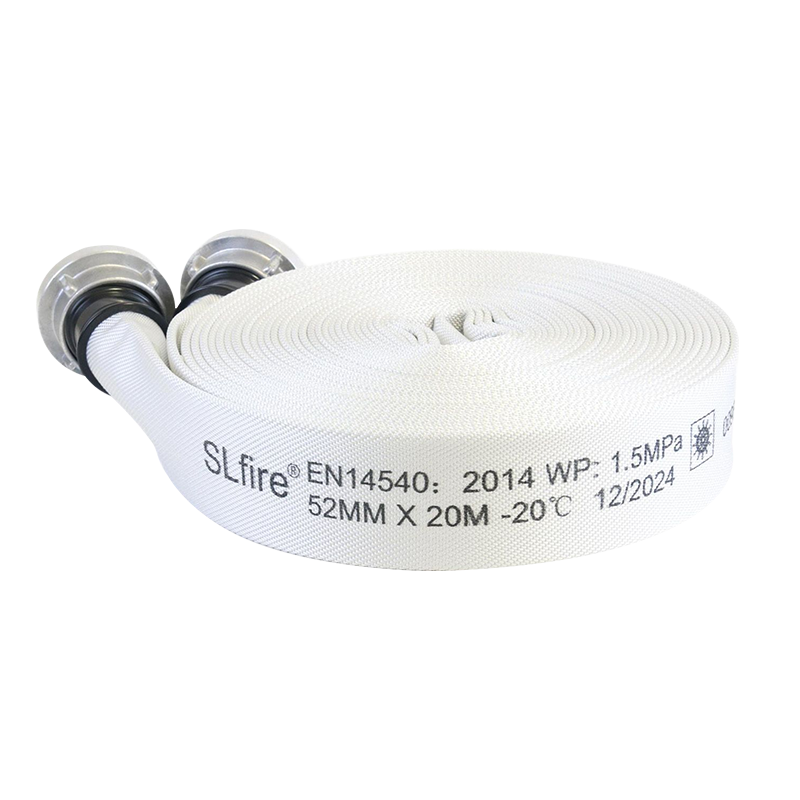
Marine hose Single jacket, PVC liner •100% high tenacity polyester yarn, circular woven in twill wea...
Marine hose Single jacket, PVC liner, PU coated •100% high tenacity polyester yarn,c ircular woven i...
 Call Us
+86 159-5116-9511
Need Support
Head Office
No.58, Kechuang Road, Sixiang Street Medicine Gaoxin District Taizhou City, Jiangsu Province

At a structure fire, the first line off the truck is the one that does the hardest work. Pulled around obstacles, dragged across gravel, charged with high-pressure water, and shut off at the nozzle d...
Copyright © Taizhou Shenlong Fire Science and Technology Co., Ltd. All Rights Reserved.
 Fire Hose Manufacturers, Fire Hydrant Hose Factory