

 English
 русский
 Español
 Deutsch
 عربى
عربى Français
 Português
Don't hesitate to send a message

Single jacket, EPDM rubber liner Features • 100% high tenacity polyester jacket, high-grade EPDM rub...
Content
In industrial water transfer, construction dewatering, mill washdown, agricultural discharge, and general-purpose pumping operations, a hose must do more than simply carry water from one point to another. It must remain flexible under pressure, resist abrasion during dragging and repeated deployment, tolerate temperature variation, survive weather exposure, and deliver dependable performance with minimal downtime. The Single Jacket EPDM Rubber Liner Mill Discharge Hose is engineered for these practical demands. Built with a high-tenacity polyester jacket and an EPDM rubber lining, it combines strength, flexibility, and weather resistance in a compact and manageable single-jacket construction.
This hose is designed for users who need a lightweight but durable discharge solution for water and compatible fluids in industrial and field environments. It is available in common lengths such as 50 feet and 100 feet, and it covers widely used inner diameters including 1-1/2 inch, 2 inch, 2-1/2 inch, 3 inch, and 4 inch. With working pressure options up to 300 psi for selected sizes and a temperature range from -40℃ to 100℃, it can serve in cold climates, hot working areas, temporary pumping installations, factory sites, and outdoor operations where conventional low-grade hoses may crack, harden, delaminate, or fail prematurely.
The product is manufactured by Taizhou Shenlong Fire Science and Technology Co., Ltd., a company founded in 1995 with long-term experience in the research, development, production, sales, and service of lined hoses. The company’s background in fire hose manufacturing gives it a strong technical foundation for producing discharge hoses that require reliable textile reinforcement, lining adhesion, pressure performance, and consistent dimensional quality. Because the company also manufactures hoses using rubber, PVC, polyurethane, and double-sided tape solutions according to customer requirements, it has broad material knowledge and flexible production capability.
For buyers comparing mill discharge hoses, the difference is often found in details that are not visible at first glance. Jacket yarn quality, weaving density, liner compound stability, heat resistance, lining smoothness, adhesion, pressure testing, coupling compatibility, and quality control procedures all determine whether a hose performs reliably over time. A hose that looks similar on the outside may behave very differently after exposure to sunlight, pressure cycling, abrasion, mud, temperature changes, and repeated rolling. The Single Jacket EPDM Rubber Liner Mill Discharge Hose is positioned as a practical, balanced solution that delivers dependable pressure capability without unnecessary bulk.
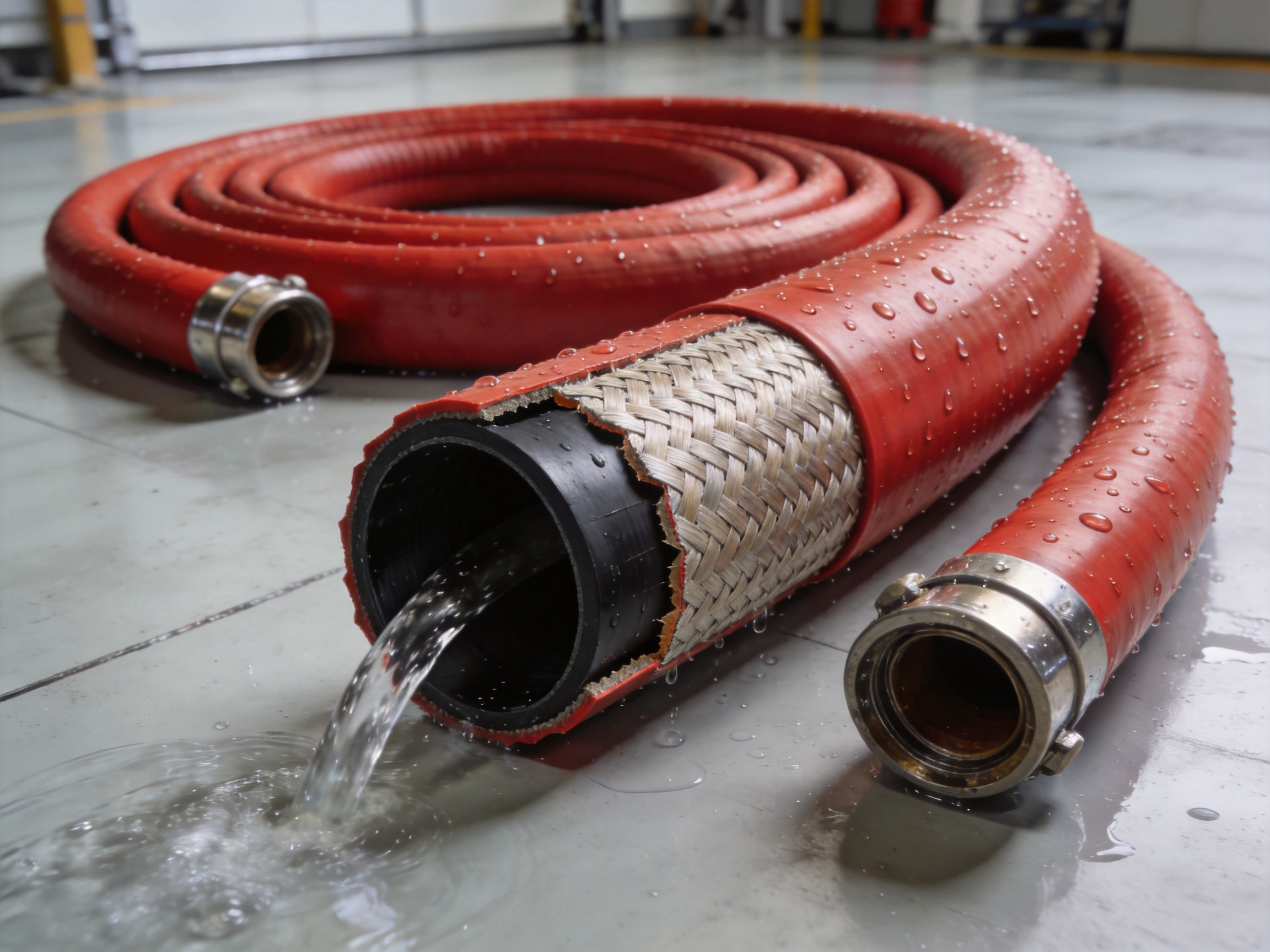
The Single Jacket EPDM Rubber Liner Mill Discharge Hose is a flat-lay discharge hose constructed with one woven jacket layer and an EPDM rubber inner lining. The high-tenacity polyester jacket provides mechanical reinforcement, while the EPDM liner forms the fluid-contact surface. This construction makes the hose suitable for many water discharge applications where users need flexibility, abrasion resistance, and resistance to environmental exposure. Compared with heavy rigid pipe or bulky multi-layer hoses, this hose is easier to handle, transport, roll, deploy, and store.
The term “mill discharge hose” is commonly associated with industrial service, plant water transfer, and general discharge operations around mills, factories, processing facilities, construction sites, and pumping systems. In such settings, hoses may be dragged across rough floors, exposed to water, dirt, sunlight, temperature variation, and pressure surges. A suitable mill hose must therefore be strong enough to tolerate jobsite abuse but manageable enough for workers to use quickly. The single-jacket design helps reduce weight while maintaining the strength needed for controlled discharge service.
The EPDM rubber liner is one of the product’s core advantages. EPDM, or ethylene propylene diene monomer rubber, is valued for its resistance to heat, ozone, weathering, and aging. These properties are particularly important for hoses stored outdoors or used in environments where sunlight, moisture, and changing weather conditions are unavoidable. EPDM also remains flexible over a broad temperature range, which helps the hose perform consistently in cold and hot conditions. The stated operating temperature range of -40℃ to 100℃ gives the hose broad adaptability for many climates and industrial situations.
The high-tenacity polyester jacket is another important feature. Polyester yarn is strong, dimensionally stable, and resistant to many environmental conditions. When woven into a jacket, it provides reinforcement against internal pressure and external abrasion. High-tenacity polyester helps the hose resist stretching, bursting, and surface wear. It also contributes to the hose’s ability to remain lightweight and flexible, which is a major advantage for operators who need to move and reposition hoses frequently.
The hose uses a single-jacket construction, which means one woven textile layer surrounds the EPDM liner. In many applications, a single-jacket hose provides an ideal balance of performance and convenience. Double-jacket hoses may offer additional abrasion resistance, but they are also heavier and bulkier. For many mill discharge and water transfer tasks, the single-jacket structure is more efficient because it lowers handling effort while still delivering reliable pressure ratings.
The jacket is made from high-tenacity polyester yarn. The quality of the yarn affects the hose’s strength, flexibility, pressure resistance, and service life. High-tenacity polyester is selected because it offers good tensile strength and can be woven into a compact but durable structure. The jacket helps the hose withstand working pressure and burst pressure requirements while resisting surface damage from dragging and handling.
The inner liner is made from EPDM rubber. This liner creates a smooth internal passage for water or compatible discharge media. A smooth liner can reduce friction loss compared with rougher internal surfaces, helping maintain flow efficiency. EPDM also provides excellent resistance to ozone, mold, mildew, heat, and weathering. These properties reduce the risk of cracking and degradation during storage and operation, especially in outdoor or humid environments.
The hose is designed to be lightweight and easy to handle. This is a practical advantage in real working conditions. Operators often need to carry, unroll, connect, relocate, drain, and roll hoses many times during a job. A heavy hose can slow down work, increase labor fatigue, and require more people for deployment. A lighter single-jacket hose supports faster operation and easier storage, while still providing dependable performance for its intended pressure range.
The product is available in 50-foot and 100-foot lengths. These lengths are widely used because they suit many pumping and discharge layouts. A 50-foot length is convenient for short runs, equipment connections, and compact sites. A 100-foot length is useful when water must be discharged farther from the pump or working area. The hose can be paired with suitable couplings and nozzles according to application requirements.
The following table summarizes available sizes and pressure options. Actual configuration should be selected according to the application, pump output, coupling requirements, and safety factors. The burst pressure values indicate the hose’s pressure capacity under test conditions and should not be treated as normal operating pressure. Users should always operate within the rated working pressure and follow appropriate safety practices.
Inner Diameter |
Inner Diameter |
Working Pressure |
Working Pressure |
Burst Pressure |
Burst Pressure |
inch |
mm |
psi |
bar |
psi |
bar |
1-1/2 |
38 |
150, 200, 250, 300 |
10, 14, 17, 21 |
450, 600, 750, 900 |
30, 42, 51, 63 |
2 |
52 |
150, 200, 250, 300 |
10, 14, 17, 21 |
450, 600, 750, 900 |
30, 42, 51, 63 |
2-1/2 |
64 |
150, 200, 250, 300 |
10, 14, 17, 21 |
450, 600, 750, 900 |
30, 42, 51, 63 |
3 |
75 |
150, 200, 250 |
10, 14, 17 |
450, 600, 750 |
30, 42, 51 |
4 |
102 |
150, 200 |
10, 14 |
450, 600 |
30, 42 |
The pressure range gives buyers flexibility. Smaller diameters can be supplied with higher working pressure options, while larger diameters are commonly selected for higher flow and moderate pressure service. This reflects practical hose engineering: as diameter increases, pressure stress on the structure increases, so the appropriate rating must match the intended application. Selecting the correct size and pressure class helps maintain safety, flow efficiency, and service life.
For general discharge service, a 150 psi hose may be suitable when pump pressure is moderate and the application is not severe. A 200 psi option provides additional safety margin for stronger pumping systems or longer runs. A 250 psi or 300 psi option may be selected when higher pressure capability is necessary, especially in smaller diameters. Users should evaluate pump pressure, elevation change, flow demand, coupling type, and surge potential before choosing a specification.
The EPDM liner is one of the main reasons this hose stands out from ordinary discharge hoses. EPDM is widely recognized for excellent resistance to ozone and weathering. Ozone cracking is a common failure mode for some rubber materials, particularly when hoses are stored outdoors or near electrical equipment. Over time, cracks can form on the rubber surface, reducing performance and increasing the risk of leakage. EPDM helps reduce this risk, making the hose more suitable for long-term use and storage.
Heat resistance is another major benefit. The hose is designed for a temperature range from -40℃ to 100℃. Many lower-grade hoses become stiff in cold weather or soften excessively in heat. Either condition can reduce ease of use and service reliability. EPDM maintains more stable properties across a broad temperature range. This gives the hose an advantage in regions with seasonal temperature changes, outdoor industrial sites, and applications where water temperature or environmental heat may be elevated.
EPDM also provides good resistance to mold and mildew. In wet industrial and agricultural environments, hoses may remain damp after use or be stored in humid conditions. Mold and mildew can affect appearance, odor, and material condition. Resistance to these biological factors helps the hose remain cleaner and more dependable during repeated use. This is particularly helpful for users who store hoses in cabinets, vehicles, warehouses, pump rooms, or temporary field shelters.
The smooth EPDM liner also supports efficient flow. In water transfer applications, internal surface quality affects friction loss. A smoother liner can help water move with less turbulence, especially compared with rough or degraded internal surfaces. Efficient flow can reduce pump workload and improve discharge performance. While flow depends on many factors, including diameter, length, coupling design, and pump capacity, a well-formed liner is an important part of the overall system.
Compared with some PVC-lined hoses, an EPDM-lined hose may offer better heat and weather resistance. PVC can be economical, but it may become stiff in cold environments and may not match EPDM’s resistance to ozone and long-term outdoor aging. Compared with some general rubber compounds, EPDM offers stronger resistance to weathering and heat. This makes it particularly suitable for users who need a durable hose for outdoor and industrial environments rather than a low-cost hose intended only for light-duty temporary use.
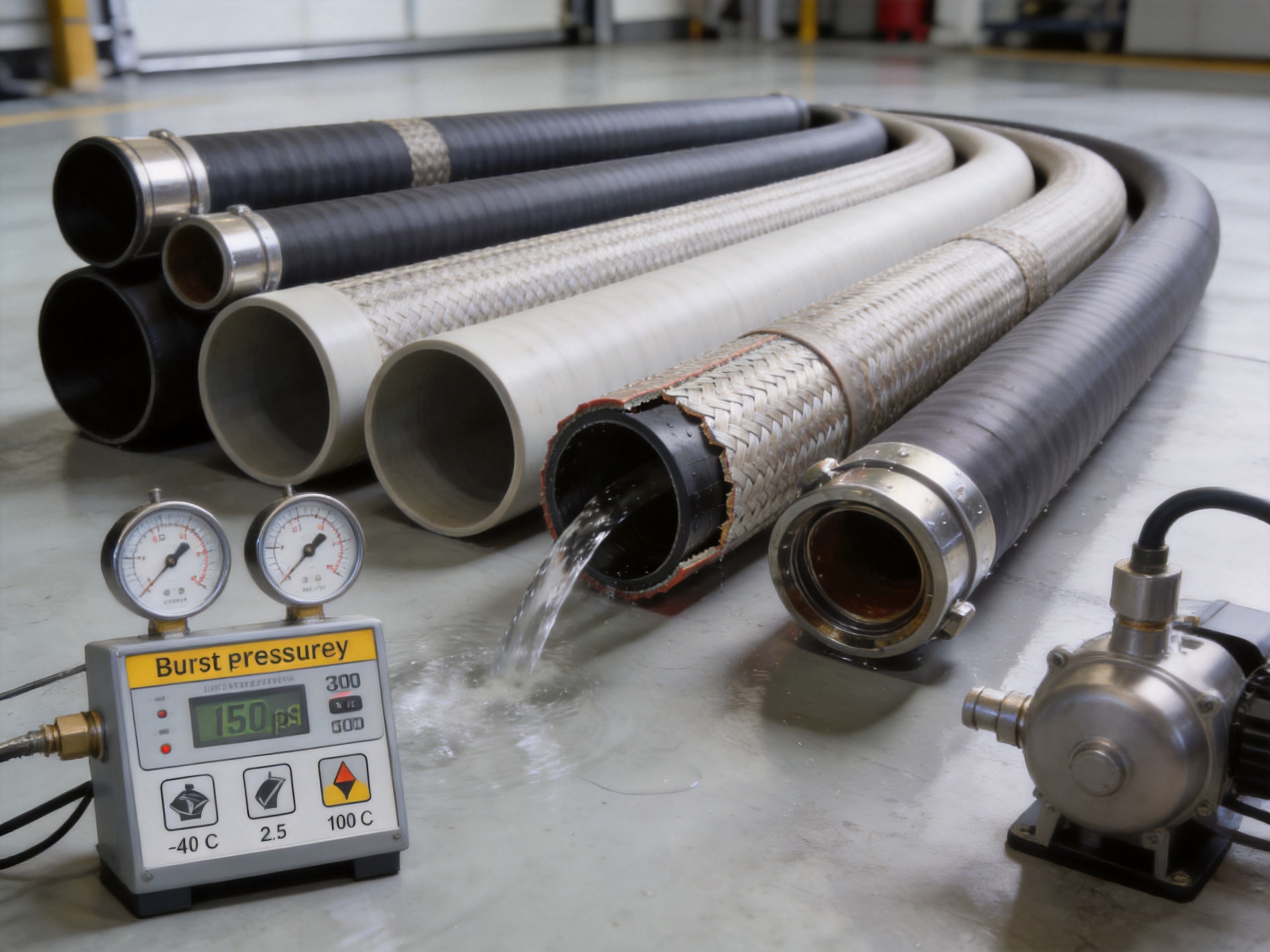
The outer jacket is responsible for much of the hose’s mechanical strength. High-tenacity polyester yarn is selected because it combines tensile strength, flexibility, and durability. In a discharge hose, the jacket must withstand internal pressure forces while also resisting external abrasion. When the hose is pressurized, the woven jacket controls expansion and helps maintain dimensional stability. When the hose is dragged, rolled, or handled, the jacket protects the liner and supports overall hose integrity.
Polyester is also valued for its resistance to moisture absorption compared with some natural fibers. Lower moisture absorption helps the hose dry faster and reduces weight gain after use. In environments where hoses are repeatedly exposed to water, mud, and humidity, this characteristic is important. A hose that dries more easily is easier to store and less likely to develop odor or mildew-related problems.
The weaving structure matters greatly. A properly woven jacket offers consistent wall strength and pressure performance. Uneven weaving may create weak spots, inconsistent expansion, or premature wear. Taizhou Shenlong Fire Science and Technology Co., Ltd. applies manufacturing experience from lined fire hose production to control jacket quality, yarn tension, and weaving uniformity. This contributes to stable performance across production batches.
Compared with ordinary textile jackets made from lower-strength yarns, high-tenacity polyester provides better pressure resistance and wear performance. Compared with heavier double-jacket structures, the single high-quality polyester jacket reduces weight while still delivering practical strength. This balance is valuable for users who prioritize both durability and portability. The result is a hose that can be used confidently without excessive bulk.
Handling efficiency is often underestimated when selecting a discharge hose. In the field, weight affects productivity. Workers may need to carry hoses over uneven ground, up stairs, across factory floors, through agricultural fields, or around machinery. A hose that is too heavy can delay setup, increase fatigue, and reduce safety. The single-jacket structure makes this hose easier to deploy than heavier alternatives while maintaining the pressure capability needed for many discharge tasks.
The flat-lay design also improves storage efficiency. When not pressurized, the hose can be drained, flattened, rolled, and stored compactly. This is useful for mobile pumping teams, construction crews, maintenance departments, farms, and emergency water transfer operations. Compact storage reduces transportation volume and makes it easier to keep multiple hose lengths ready for use.
Ease of handling also supports faster response. If a facility needs to remove water quickly, transfer process water, clean an area, or set up temporary discharge, a lightweight hose can be deployed rapidly. In some operations, minutes matter. A hose that connects easily and rolls out smoothly helps workers complete tasks more efficiently. This advantage is not only about convenience; it can also reduce labor cost and downtime.
Because the hose is available in 50-foot and 100-foot lengths, users can plan layouts with practical flexibility. Shorter lengths can be used near equipment or in confined spaces, while longer lengths can extend discharge paths. Multiple hoses can be connected with suitable couplings when longer distances are required. Selecting manageable lengths also makes maintenance easier because individual sections can be inspected, cleaned, replaced, or rotated as needed.
The stated temperature range of -40℃ to 100℃ is a major performance advantage. In cold conditions, some hoses become rigid, difficult to unroll, and more vulnerable to cracking. This can be a serious problem for outdoor pumping, mining support, winter construction, municipal work, and agricultural operations in cold climates. The EPDM liner helps maintain flexibility at low temperatures, allowing the hose to be handled more reliably when temperatures drop.
In hot environments, hoses face different risks. Heat can soften materials, accelerate aging, reduce pressure performance, and cause liner degradation. EPDM’s heat resistance supports stable service in warmer conditions and near hot working areas. This does not mean the hose should be exposed to conditions beyond its rating, but it does provide confidence for operations where temperature variation is expected.
Temperature resistance also matters during storage. Hoses may sit in warehouses, containers, vehicles, or outdoor storage areas where temperatures fluctuate. A hose that tolerates both cold and heat is less likely to suffer from seasonal degradation. This improves long-term value and reduces the risk of discovering failure only when the hose is needed.
Compared with many conventional low-cost discharge hoses, this broader temperature adaptability offers a practical competitive advantage. Buyers who operate in only mild conditions may not immediately notice the difference, but users in demanding climates often recognize the value quickly. A hose that remains flexible and dependable over multiple seasons can reduce replacement frequency and operational uncertainty.
The Single Jacket EPDM Rubber Liner Mill Discharge Hose is suitable for a range of water discharge and compatible fluid transfer applications. In industrial facilities, it can be used for washdown, equipment drainage, temporary water transfer, pump discharge, maintenance operations, and process support where a flexible lay-flat hose is preferred. Its combination of strength and manageable weight makes it useful for plant maintenance teams that need a hose ready for multiple tasks.
In construction, the hose can support dewatering, water removal, foundation work, site drainage, and temporary discharge from pumps. Construction sites are harsh environments with abrasive ground, debris, mud, and frequent movement. The polyester jacket helps resist wear, while the EPDM liner supports long-term durability under outdoor conditions.
In agriculture, the hose can be used for water transfer, irrigation support, drainage, pond pumping, and general farm operations. Farms often require hoses that can be moved across fields and stored seasonally. Resistance to weather, mold, and mildew is valuable in these settings. The flat-lay format also helps farmers store hose lengths efficiently when not in use.
In water conservancy and municipal work, the hose may be used for temporary pumping, drainage, flood response support, and maintenance tasks. Its pressure options allow users to choose a configuration that matches the pump system. The product’s roots in fire hose manufacturing expertise also support confidence in pressure-bearing textile hose design.
In mill and factory environments, the hose can be used for water discharge around equipment, cleaning, cooling water handling where appropriate, and temporary fluid routing. Mills often require hoses that tolerate repeated dragging and exposure to wet floors. The single-jacket polyester construction offers a practical combination of abrasion resistance and mobility.
One of the main advantages of this product is its material combination. Ordinary discharge hoses may use lower-grade textile reinforcement or less weather-resistant liners. Such hoses may be acceptable for light-duty tasks, but they can wear out quickly under frequent use. The combination of high-tenacity polyester and EPDM rubber gives this hose stronger resistance to pressure, abrasion, weather, ozone, mold, and mildew.
Another advantage is the balance between strength and weight. Some users assume that a heavier hose is always better. In reality, the best hose is the one that delivers the needed performance without unnecessary handling burden. A heavy hose may reduce productivity and increase labor requirements. The single-jacket design provides sufficient reinforcement for many discharge applications while keeping the hose manageable.
The broad pressure range also gives buyers more choice. Instead of using a one-size-fits-all product, users can select working pressure ratings that match their requirements. This helps avoid both under-specification and over-specification. Under-specification can create safety risks and premature failure. Over-specification can increase cost and weight unnecessarily. The available range from 150 psi to 300 psi in selected sizes allows practical application matching.
The temperature range from -40℃ to 100℃ is another point of differentiation. Many cheaper hoses may not perform well across such a wide temperature window. Cold stiffness, hot softening, and accelerated aging are common problems in lower-grade products. EPDM’s stability helps this hose remain useful in more diverse environments.
The manufacturer’s experience also gives the product an advantage. Taizhou Shenlong Fire Science and Technology Co., Ltd. has operated since 1995 and specializes in lined fire hoses and related hose products. Fire hose production requires careful control of pressure performance, textile reinforcement, liner quality, and coupling compatibility. This experience supports the company’s ability to manufacture reliable mill discharge hoses with consistent quality.
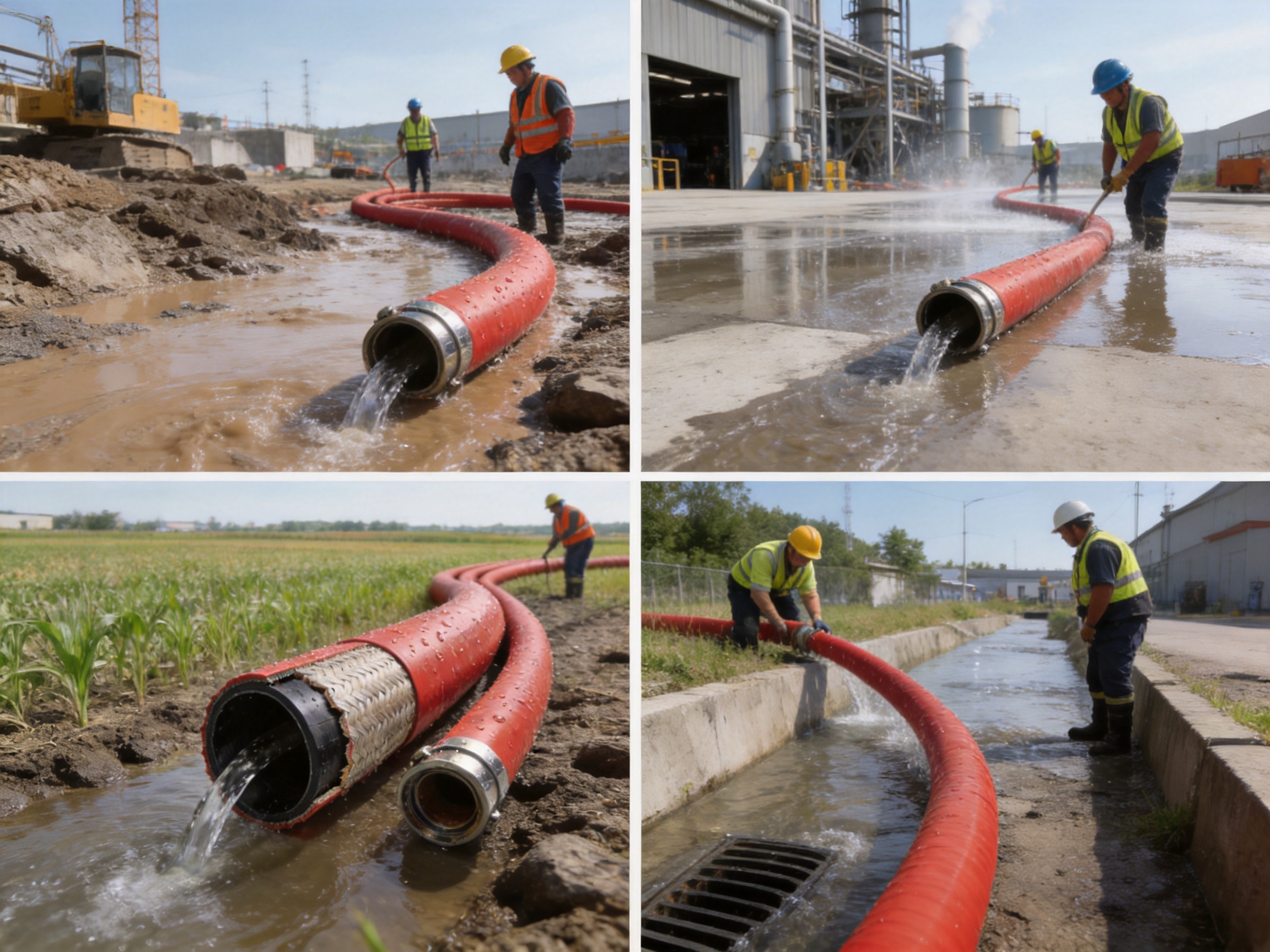
Advanced hose performance begins with controlled manufacturing. A discharge hose may appear simple, but it depends on multiple carefully managed production steps. Material selection, yarn preparation, jacket weaving, liner formulation, lining application, bonding, curing, finishing, pressure testing, and inspection must be coordinated. If any step is poorly controlled, the final hose may suffer from weak spots, poor adhesion, leakage, inconsistent diameter, or reduced pressure capacity.
Taizhou Shenlong Fire Science and Technology Co., Ltd. applies long-term production experience to develop and manufacture lined hoses for fire, construction, water conservancy, and other industries. The company’s product range includes hoses made with different materials, including rubber, PVC, polyurethane, and double-sided tape structures. This broad production capability helps the company understand how material selection affects flexibility, pressure resistance, weathering, cost, and service life.
The jacket weaving process is fundamental. Polyester yarn must be selected and prepared to meet strength requirements. During weaving, yarn tension and density must be controlled to form a uniform jacket. A consistent jacket supports stable pressure resistance and reduces the risk of localized weakness. Proper weaving also contributes to a smooth hose profile and good handling characteristics.
The EPDM liner must be compounded and processed for the required performance characteristics. Rubber formulation affects heat resistance, flexibility, aging resistance, and adhesion. The liner must be smooth, continuous, and compatible with the jacket structure. Any defects in the liner, such as thin spots, contamination, air pockets, or uneven curing, can affect durability. Controlled liner production helps ensure that the hose performs reliably in real service.
Bonding between the liner and jacket is another critical factor. A hose can fail if the liner separates from the jacket during pressure cycling, bending, or storage. Proper process control helps create a stable relationship between the textile reinforcement and rubber lining. This improves resistance to delamination and supports long service life.
Testing and inspection are essential. Pressure testing verifies that the hose meets working and burst performance requirements. Visual inspection checks for surface defects, weaving issues, liner irregularities, and dimensional problems. Consistent quality control helps ensure that customers receive hoses that match specified requirements. For industrial buyers, this consistency is often as important as the initial specification because it reduces operational risk.
Quality assurance should not be viewed as a final step only. It must be built into the entire manufacturing process. The reliability of a mill discharge hose depends on incoming materials, production conditions, operator skill, equipment stability, and inspection discipline. A manufacturer with long-term experience is better positioned to manage these variables and deliver consistent results.
The company’s background in fire hose manufacturing is especially relevant. Fire hoses must be dependable under pressure and must be constructed with careful attention to reinforcement and lining. Although a mill discharge hose may be used in different applications, many of the manufacturing principles are similar. Textile strength, pressure capability, liner quality, coupling connection, and resistance to external wear are all important.
For buyers, reliable quality means fewer leaks, fewer unexpected hose failures, fewer job interruptions, and lower replacement costs. A low-priced hose that fails early may cost more in the long run than a better-made hose that lasts longer. Downtime, labor, pump interruption, and emergency replacement can all add hidden costs. Choosing a hose with quality materials and controlled manufacturing helps reduce these risks.
Practical reliability also means the hose performs as expected in daily use. It should roll out smoothly, connect securely with appropriate couplings, carry water without excessive expansion, resist normal abrasion, and roll back for storage after draining. These everyday qualities determine customer satisfaction. The Single Jacket EPDM Rubber Liner Mill Discharge Hose is designed to deliver that balance of usability and durability.
To select the correct hose, users should first identify the required inner diameter. Diameter affects flow capacity and pressure loss. Larger diameters move more water at lower velocity, which can be beneficial for high-volume discharge. Smaller diameters are easier to handle and may support higher pressure ratings. The available sizes from 1-1/2 inch to 4 inch cover many common discharge needs.
Next, users should determine the required working pressure. The working pressure must exceed the actual system pressure with an appropriate safety margin. Pump pressure, elevation change, valve closure, and pressure surges should be considered. A hose should not be operated at burst pressure; burst pressure is a test-related value that indicates safety margin, not a normal operating condition.
Users should also consider the environment. If the hose will be used outdoors, exposed to sunlight, stored in damp conditions, or operated in temperature extremes, the EPDM liner and polyester jacket offer important advantages. If the hose will be dragged over sharp surfaces or used in highly abrasive conditions, operators should take care to protect it and consider whether additional abrasion protection is needed.
Length should be selected according to the job layout. A 50-foot hose may be easier to handle in compact areas. A 100-foot hose reduces the number of connections for longer runs. In many operations, keeping both lengths available gives maximum flexibility. Couplings should be selected to match pump outlets, discharge points, and local standards.
Compatibility with the discharge medium should also be evaluated. The hose is designed primarily for mill discharge and water transfer applications. If the fluid includes chemicals, oils, solvents, or abrasive slurry, users should confirm compatibility before use. EPDM has strong resistance to many environmental factors, but no single liner material is suitable for every chemical or fluid.
Proper use helps extend hose life. Before installation, the hose should be inspected for visible damage, cuts, abrasion, coupling problems, or liner irregularities. The hose should be laid out as straight as practical, avoiding sharp bends and kinks. Kinking can restrict flow, increase pressure stress, and damage the liner or jacket.
When connecting the hose, couplings should be properly matched and secured. Loose or incompatible couplings can leak or disconnect under pressure. Operators should confirm that gaskets and connection surfaces are in good condition. If multiple hose sections are connected, each connection should be checked before pressurization.
Pressure should be increased gradually when possible. Sudden pressure surges can stress the hose and couplings. Valves should be opened and closed carefully to reduce water hammer. The hose should be operated within its rated working pressure, and users should avoid exceeding the recommended temperature range.
During use, the hose should not be dragged unnecessarily over sharp metal edges, broken concrete, or abrasive surfaces. Although the polyester jacket provides abrasion resistance, all textile hoses benefit from careful handling. Hose bridges, rollers, sleeves, or protective mats may be used in severe areas. Avoid placing heavy vehicles or equipment on the hose unless suitable protection is provided.
After use, the hose should be drained and cleaned if necessary. It should be allowed to dry before long-term storage, especially if used in muddy or contaminated environments. Proper rolling prevents twisting and makes the hose ready for the next use. Storage in a cool, dry, ventilated location away from sharp objects and excessive chemical exposure will help preserve service life.
Regular inspection helps identify problems before failure occurs. Operators should check the jacket for cuts, fraying, burns, severe abrasion, or exposed liner. The liner should be checked where visible near the ends for cracking, separation, or deformation. Couplings should be inspected for looseness, corrosion, gasket wear, or mechanical damage.
Hoses used frequently or in demanding applications should be pressure tested periodically according to site safety procedures. Pressure testing can reveal weakness not visible during a basic inspection. However, testing should be performed safely by trained personnel using appropriate equipment. A hose that fails inspection should be removed from service until repaired or replaced.
Cleaning is also important. Dirt, mud, chemicals, or biological material left on the hose can accelerate wear or create storage problems. For water discharge applications, rinsing and drying are often sufficient. If the hose contacts unknown substances, compatibility and cleaning requirements should be reviewed carefully.
Proper storage reduces aging. The hose should not be stored under heavy loads that cause permanent deformation. It should not be placed near sharp objects or high-heat sources. If stored outdoors, protection from direct sunlight and severe weather is recommended even though EPDM offers good weather resistance. Good storage habits extend the value of any quality hose.
Taizhou Shenlong Fire Science and Technology Co., Ltd. was founded in 1995 and has developed as an enterprise integrating research and development, production, sales, and service. The company focuses on various materials of lined fire hoses and related hose products. This integrated structure allows the company to respond to market needs, customer specifications, and practical application feedback.
The company can undertake foreign trade products according to customer requirements, including products involving rubber, PVC, polyurethane, and double-sided tape structures. This customization capability is important because different markets and applications may require different materials, pressure levels, lengths, colors, couplings, packaging, or performance standards. A manufacturer with flexible production capability can better support distributors, contractors, industrial users, and international buyers.
The company’s products are used in fire, construction, water conservancy, and other industries. This broad application base provides practical insight into real-world hose performance. Hoses used in these sectors must be reliable, easy to handle, and durable under challenging conditions. Experience across industries strengthens product development and production decision-making.
The company cooperates with domestic foreign trade companies to produce export products for many countries. Export experience can improve awareness of different market requirements, documentation needs, packaging expectations, and quality consistency. For international buyers, working with an experienced manufacturing partner can simplify procurement and reduce risk.
The company is located at No.58, Kechuang Road, Sixiang Street Medicine Gaoxin District, Taizhou City, Jiangsu Province. Its contact email is [email protected], and its phone number is +86 159-5116-9511. Buyers seeking mill discharge hose, fire hose, industrial hose, agricultural hose, hose couplings, hose nozzles, fire accessories, fire cabinets, or trenchless rehabilitation hose solutions can communicate requirements directly for product selection support.
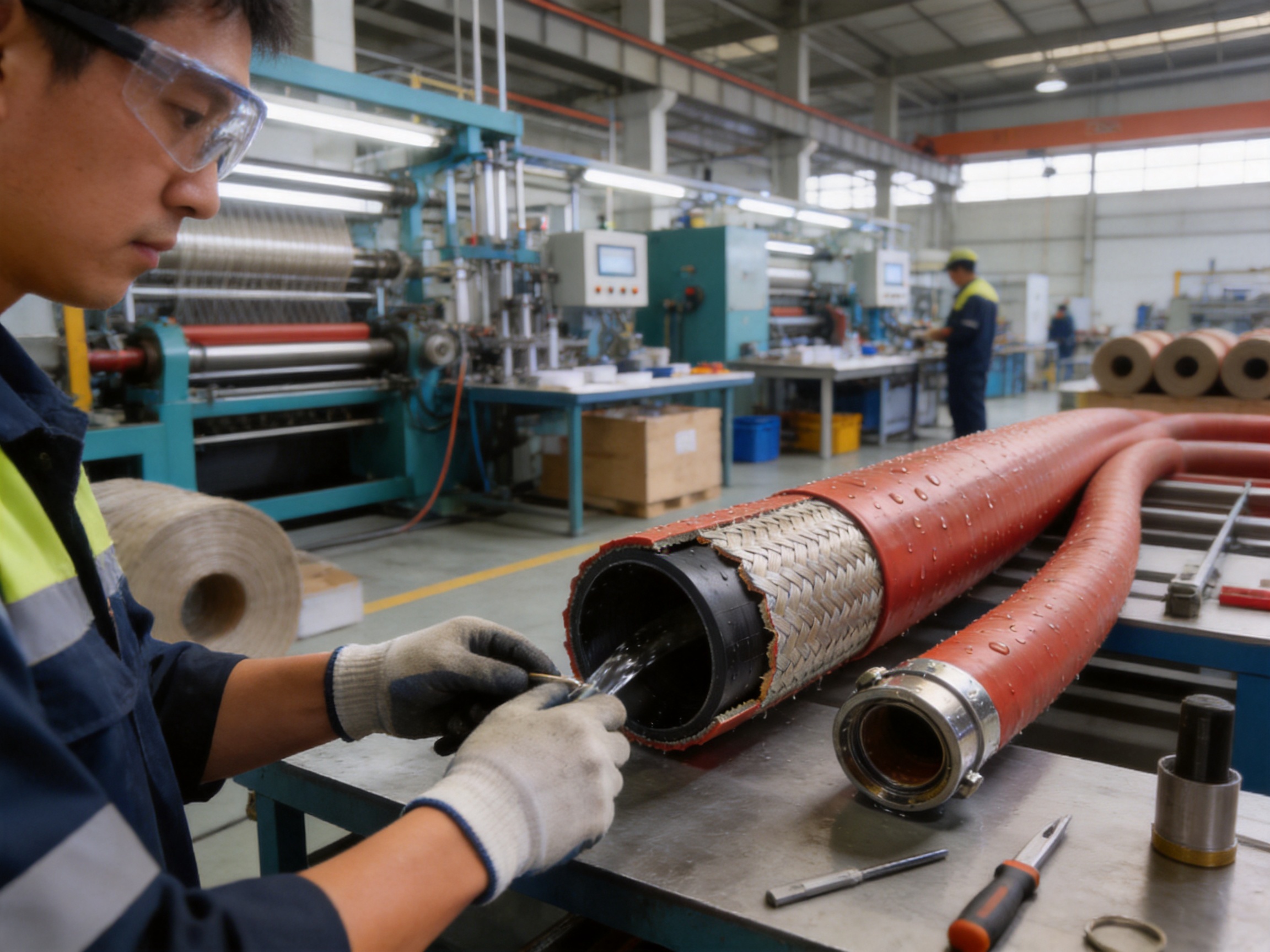
Long-term value is not determined only by purchase price. It is determined by service life, safety, labor efficiency, downtime reduction, storage convenience, and application suitability. The Single Jacket EPDM Rubber Liner Mill Discharge Hose delivers value by combining durable materials with practical handling advantages. Its EPDM liner resists heat, ozone, mold, mildew, and weathering. Its high-tenacity polyester jacket provides strength and abrasion resistance. Its single-jacket format keeps weight manageable.
For distributors, the product offers a marketable balance of performance and practicality. It can serve customers in industrial, construction, agricultural, and municipal sectors. The available sizes and pressure options cover common requirements, making it suitable for inventory planning. The product can be presented as a dependable alternative to low-grade discharge hoses that may fail prematurely.
For end users, the hose can reduce daily frustration. It is easier to carry and roll than heavier hoses, more resistant to environmental aging than many basic alternatives, and capable of operating across a wide temperature range. These qualities improve user experience and can reduce replacement frequency. When a hose is needed for urgent water transfer, reliability matters more than small savings on initial cost.
For project managers and maintenance teams, the hose supports operational readiness. A compact, durable hose stored properly can be deployed quickly when needed. This is valuable for planned maintenance and unexpected water movement tasks. The ability to choose suitable pressure ratings also helps align equipment with safety requirements.
The hose is mainly used for mill discharge, industrial water transfer, construction dewatering, agricultural pumping, washdown support, drainage, and other compatible discharge applications. It is designed for situations where users need a flexible, lay-flat, pressure-rated hose with good weather and temperature resistance.
EPDM rubber offers excellent resistance to heat, ozone, weathering, mold, and mildew. These qualities help the hose remain reliable in outdoor, humid, hot, and cold environments. EPDM also supports flexibility across a wide temperature range, which is important for practical field use.
Many ordinary PVC discharge hoses are economical but may become stiff in cold weather and may not offer the same long-term resistance to ozone, heat, and weathering. The EPDM rubber liner provides stronger environmental durability, while the high-tenacity polyester jacket supports pressure resistance and abrasion performance.
A single-jacket hose is lighter and easier to handle. For many discharge applications, it provides enough strength while reducing labor effort and storage space. A double-jacket hose may be preferred in extremely abrasive environments, but it is usually heavier. The single-jacket design is ideal when users need both durability and mobility.
The hose is available in common inner diameters including 1-1/2 inch, 2 inch, 2-1/2 inch, 3 inch, and 4 inch. These sizes cover many industrial, construction, agricultural, and general discharge requirements.
Depending on size, working pressure options include 150 psi, 200 psi, 250 psi, and 300 psi. Smaller diameters have more high-pressure options, while larger diameters are typically used for higher flow with moderate pressure. Users should select a pressure rating based on actual pump output and safety margin.
Yes. The hose is designed for a temperature range from -40℃ to 100℃. The EPDM liner helps maintain flexibility in cold conditions, making it suitable for many cold-weather water transfer and discharge operations.
The hose has good resistance to ozone and weathering, but proper storage is still recommended. For best service life, store it in a cool, dry, ventilated place and protect it from prolonged unnecessary exposure to severe weather, sharp objects, and chemical contamination.
The hose is primarily intended for water discharge and compatible fluids. EPDM has specific chemical resistance characteristics, but it is not suitable for every chemical or oil-based medium. Users should confirm compatibility before transferring chemicals, oils, solvents, or aggressive fluids.
The hose is available in 50-foot and 100-foot lengths. These lengths are practical for common field and industrial layouts. Multiple sections may be connected with suitable couplings when longer discharge distances are required.
After use, drain the hose, clean off mud or debris, allow it to dry when possible, and roll it properly for storage. Inspect the jacket, liner ends, and couplings regularly. Avoid dragging it over sharp surfaces and do not operate it above its rated working pressure.
Hose performance depends on material selection, weaving quality, liner formulation, bonding, curing, testing, and inspection. A manufacturer with long-term experience in lined hose production is better able to control these factors and provide consistent quality. Taizhou Shenlong Fire Science and Technology Co., Ltd. has manufacturing experience dating back to 1995.
The Single Jacket EPDM Rubber Liner Mill Discharge Hose is a strong, lightweight, and practical hose solution for users who require reliable water discharge performance in industrial, construction, agricultural, and general pumping environments. Its high-tenacity polyester jacket provides reinforcement and abrasion resistance, while its EPDM rubber liner delivers excellent resistance to heat, ozone, mold, mildew, and weathering. The result is a hose that performs well across a wide temperature range and remains manageable for everyday use.
Compared with ordinary discharge hoses, this product offers a better balance of durability, flexibility, temperature resistance, and handling efficiency. Compared with heavier hose constructions, it reduces labor burden and improves deployment speed. With multiple diameters, pressure ratings, and standard lengths available, it can be matched to a wide range of pumping and discharge requirements.
The manufacturing strength behind the product further enhances its value. Taizhou Shenlong Fire Science and Technology Co., Ltd. brings decades of lined hose production experience, material knowledge, customization capability, and export support. Its background in fire hose and industrial hose manufacturing supports consistent quality and practical performance. For buyers seeking a dependable mill discharge hose that combines proven materials with efficient handling, the Single Jacket EPDM Rubber Liner Mill Discharge Hose is a compelling choice.
ASTM International. Standard test methods and practices for rubber hose pressure and performance evaluation.
International Organization for Standardization. Rubber and plastics hoses: general guidance for selection, storage, use, and maintenance.
Handbook of Rubber Technology. Technical discussion of EPDM properties, heat resistance, ozone resistance, and weathering performance.
Industrial Hose Engineering Guide. Principles of hose construction, textile reinforcement, pressure rating, and application selection.
Fire Hose Manufacturing and Testing Manual. Overview of woven jacket hose production, lining processes, inspection, and hydrostatic testing.
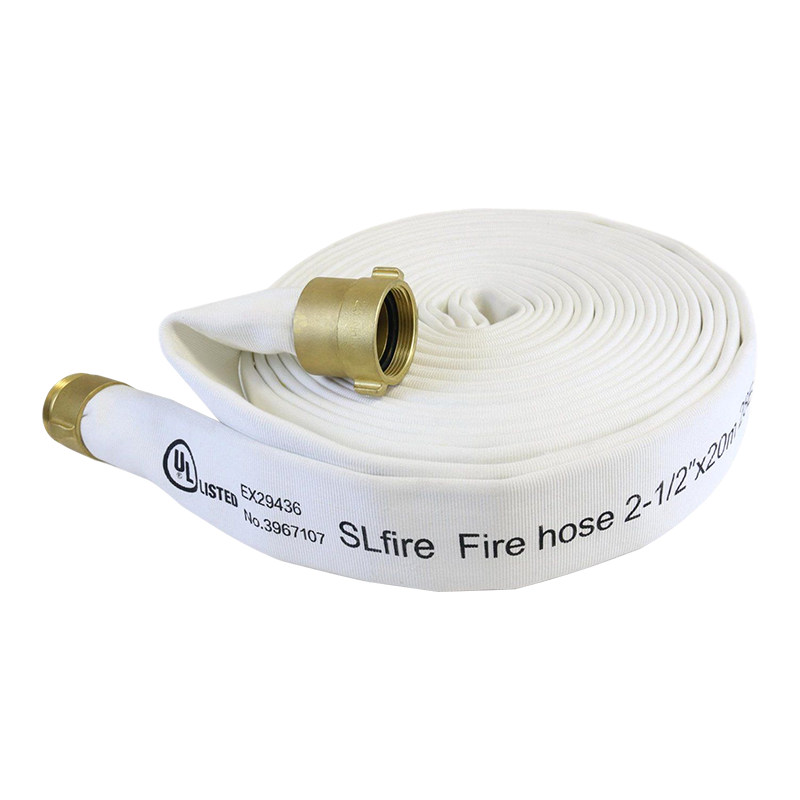
Single jacket, EPDM rubber liner Features • 100% high tenacity polyester jacket, high-grade EPDM rub...
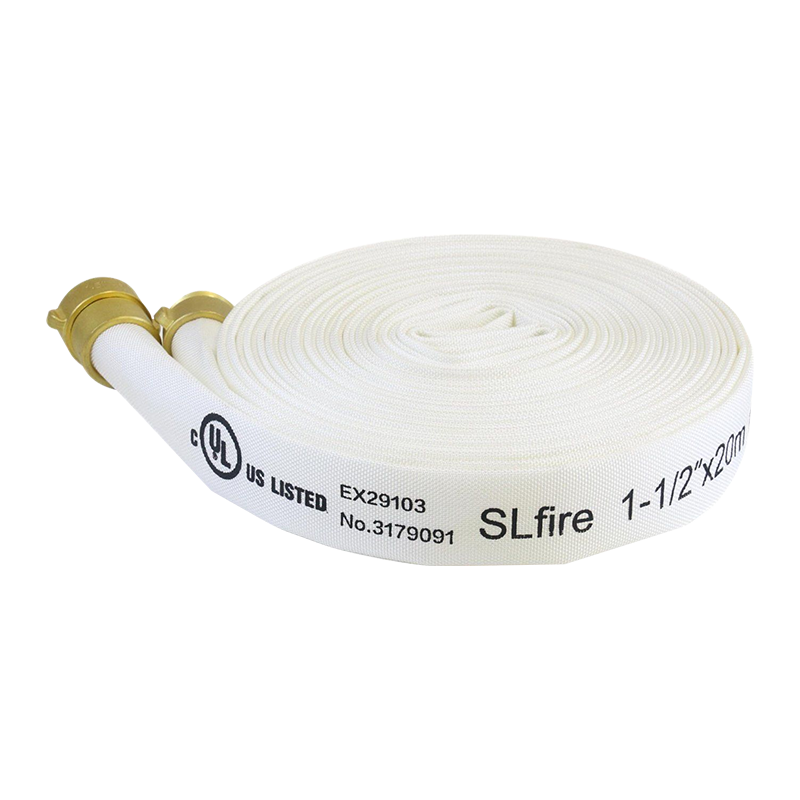
Single jacket, TPU liner •High-tenacity polyester yarn, circular woven in twill weave/plain weave,T ...
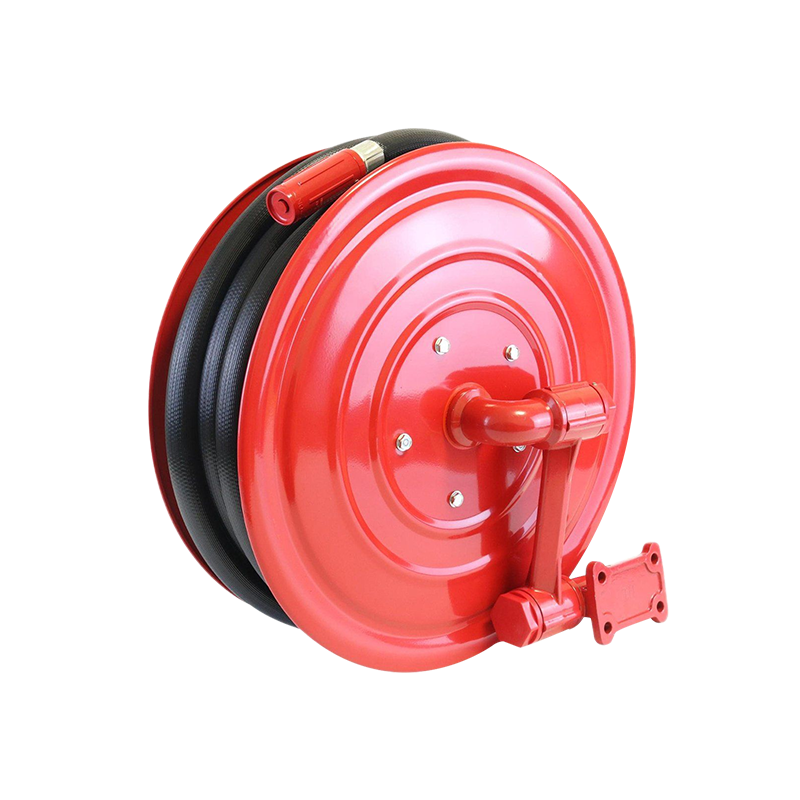
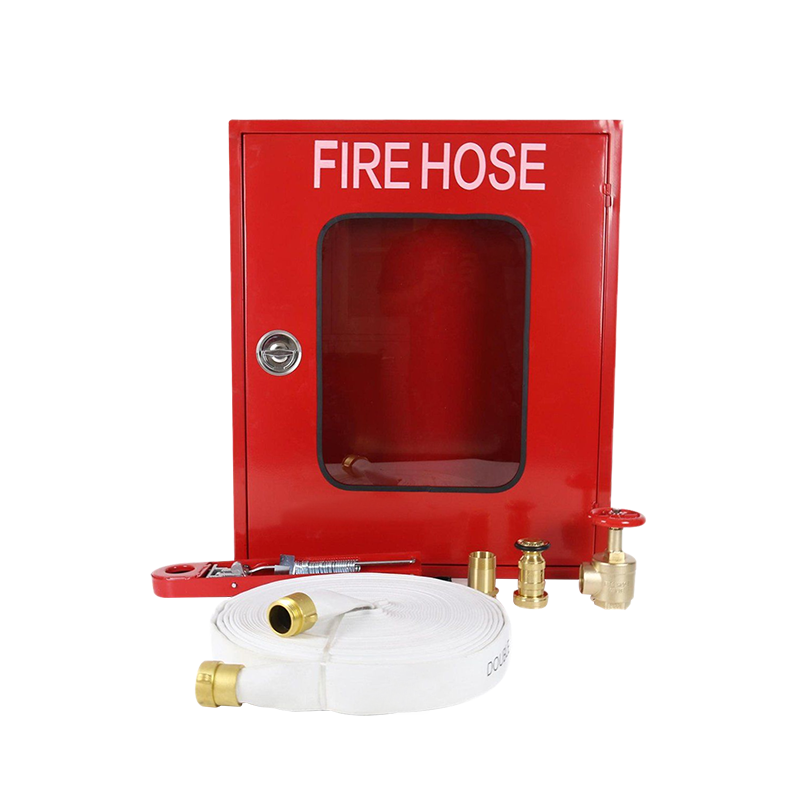
Fire cabinets are designed to accommodate fire hose,valve and other firefighting equipment. Type 201...
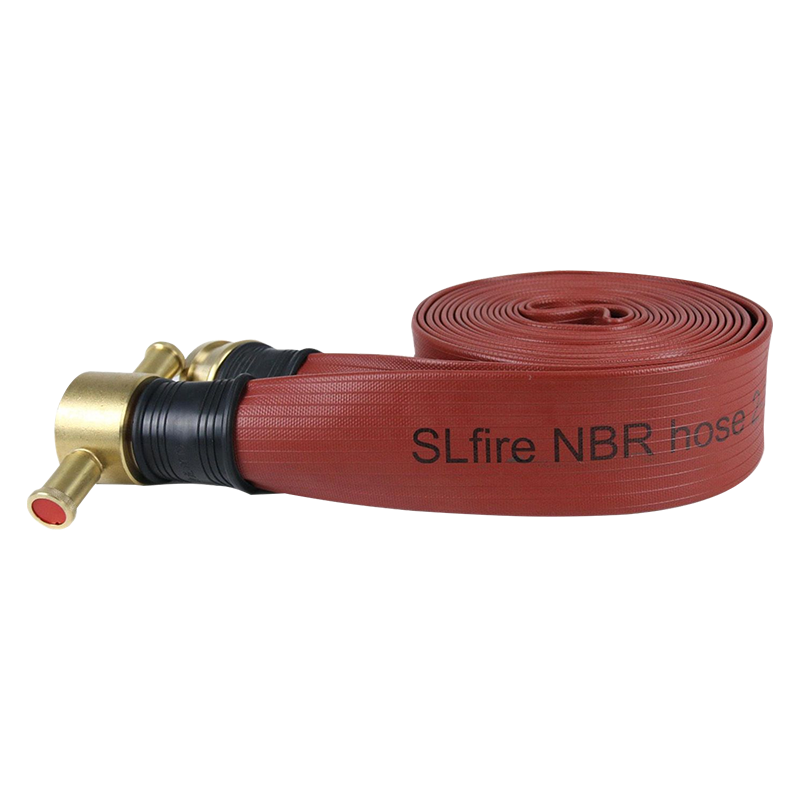
Nitrile covered hose •Nitrile/TPR blend as cover and lining, with 100% high-tenacity polyester yarn ...
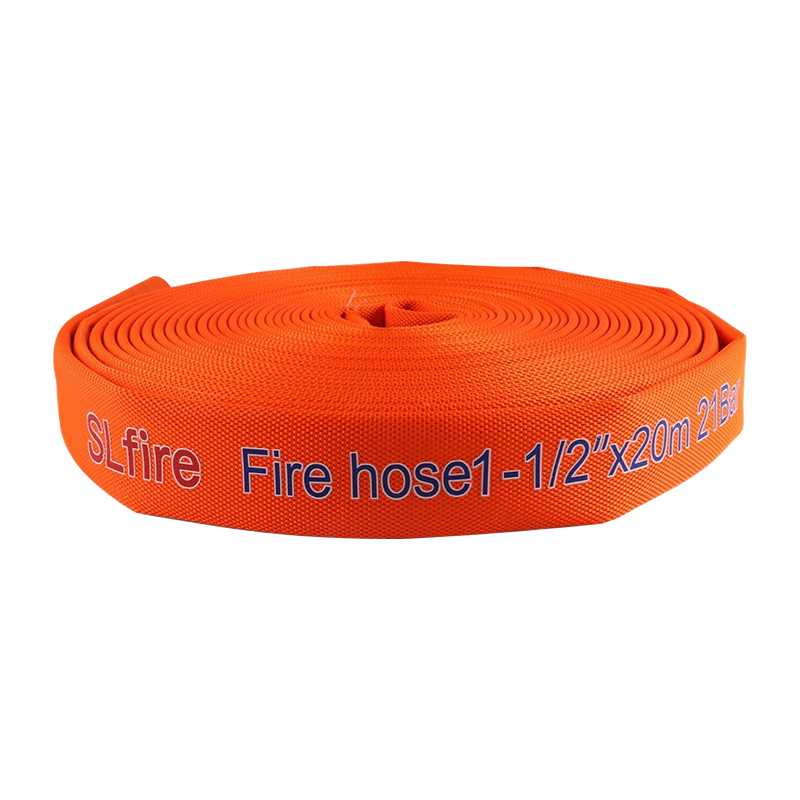
Single jacket, TPU liner •High-tenacity polyester yarn, circular woven in twill weave, TPU lining, f...
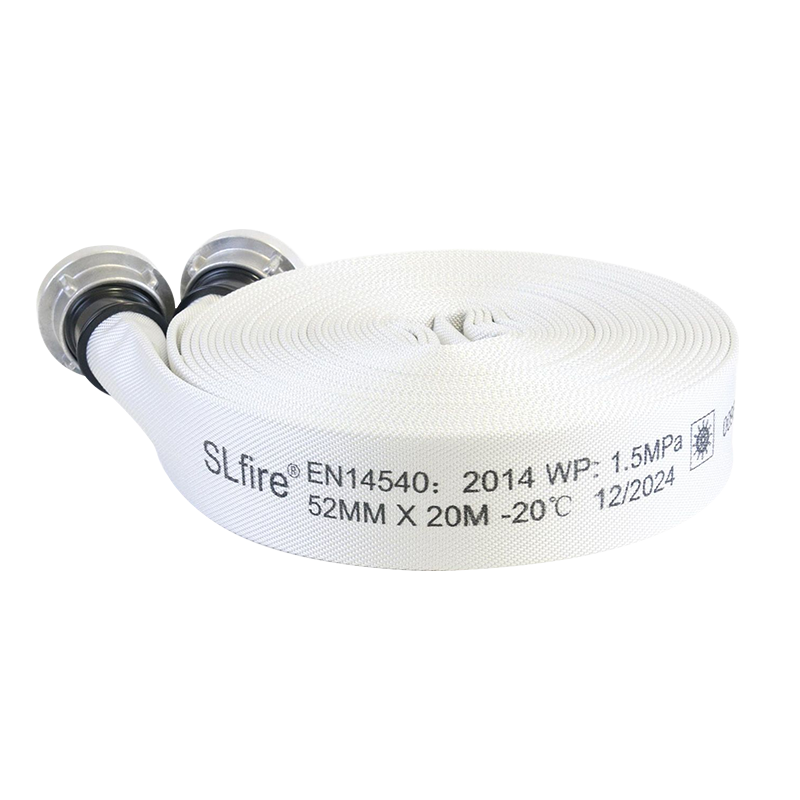
Marine hose Single jacket, PVC liner •100% high tenacity polyester yarn, circular woven in twill wea...
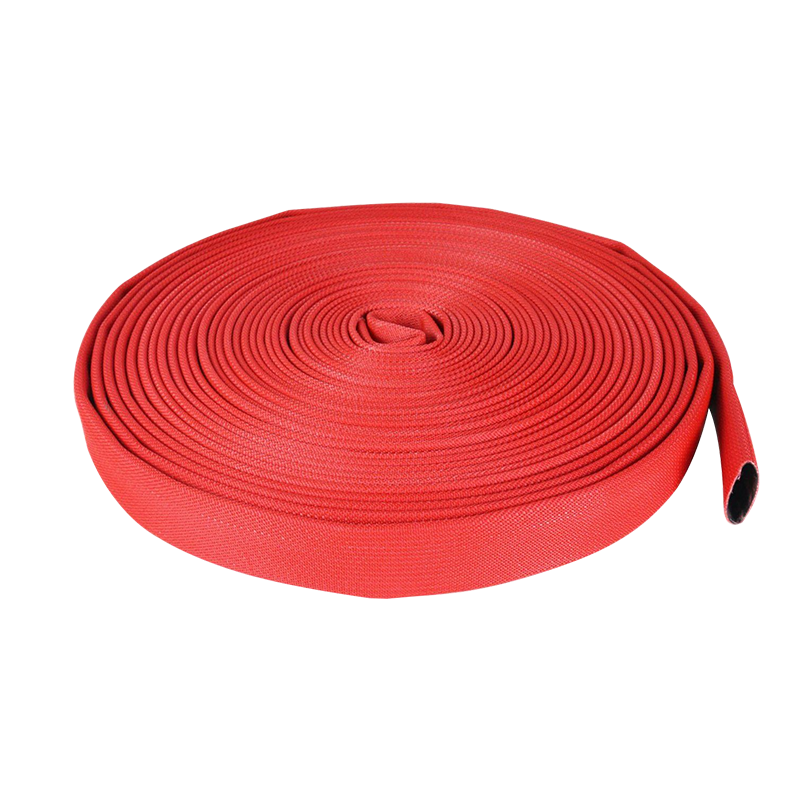
Marine hose Single jacket, PVC liner, PU coated •100% high tenacity polyester yarn,c ircular woven i...
 Call Us
+86 159-5116-9511
Need Support
Head Office
No.58, Kechuang Road, Sixiang Street Medicine Gaoxin District Taizhou City, Jiangsu Province

What Is a Fire Hose? A fire hose is a high-pressure flexible hose designed to carry water or fire retardant chemicals from a water source, such as a hydrant, pump, or tank, to a fire for suppression p...
Copyright © Taizhou Shenlong Fire Science and Technology Co., Ltd. All Rights Reserved.
 Fire Hose Manufacturers, Fire Hydrant Hose Factory