

 English
 русский
 Español
 Deutsch
 عربى
عربى Français
 Português
Don't hesitate to send a message

Single jacket, EPDM rubber liner Features • 100% high tenacity polyester jacket, high-grade EPDM rub...
Content
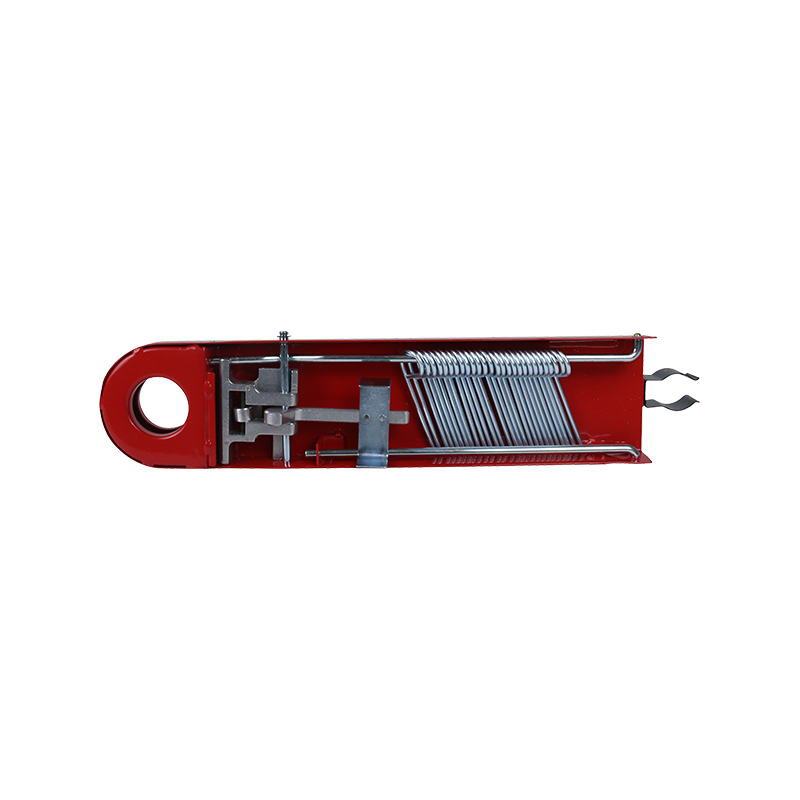
In every building fire protection system, readiness is not an abstract concept. It is the difference between a delayed response and immediate action, between disorganized equipment and a smooth deployment, and between a hose that is damaged in storage and a hose that performs when water pressure is applied. A fire hose rack is a practical yet essential fire safety device designed to store, support, and organize folded fire hoses so they remain accessible, protected, and ready for emergency use.
Unlike loose hose storage or improvised brackets, a well-engineered fire hose rack keeps the hose in a controlled position, reduces tangling, minimizes bending stress, and allows firefighters or trained building personnel to pull out the hose quickly. When installed inside a fire cabinet or mounted on a wall near a hydrant valve, the rack becomes part of a complete fire protection station. It helps ensure that the hose, nozzle, valve, and related accessories are positioned in a logical and user-friendly way.
The fire hose rack discussed in this article is designed for building fire protection, industrial facilities, commercial spaces, warehouses, public institutions, and other locations where reliable hose storage is required. It can be supplied in different sizes for common hose diameters and lengths, including rack hose and fire hose reel configurations. Materials such as galvanized steel and SS304 stainless steel provide strength, corrosion resistance, and long service life, while customized cabinet sizes allow the product to fit project-specific installation requirements.
A fire hose rack is more than a storage frame. Its core purpose is to maintain the hose in a ready-to-deploy condition. Fire hoses are flexible, heavy, and often stored under demanding environmental conditions. If they are placed on the floor, thrown into a box, or hung incorrectly, they can twist, mildew, flatten, crack, or become difficult to extend during an emergency. A properly designed rack solves these problems by offering ordered support and controlled folding.
In a typical installation, the hose is folded back and forth over the rack arms. This folding arrangement keeps the hose compact while allowing it to be pulled out efficiently. When the hose is needed, the user opens the cabinet, reaches for the nozzle or hose end, and deploys the hose along the path toward the fire. The rack’s structure helps the hose leave the storage position in a smooth sequence rather than falling as a tangled bundle.
Some rack designs can swivel, giving the hose additional freedom to deploy from different angles. This is particularly helpful in corridors, factories, and service rooms where the user may need to pull the hose toward the left, right, or straight ahead. The reinforced arms support the hose weight and reduce sagging, while the mounting structure keeps the rack stable during handling.
Many fire hose rack systems are installed close to a water source and can be pre-connected to a valve. This configuration shortens response time because the hose does not need to be attached manually before use. Once the hose is deployed and the water source is opened, water can flow quickly through the line. In emergency fire response, saving even a few seconds can be valuable.
Fire protection systems are often judged by their major components, such as pumps, hydrants, cabinets, alarms, and extinguishers. However, the condition and accessibility of the hose are equally important. A fire hose that cannot be found quickly, cannot be unfolded properly, or is damaged due to improper storage may compromise the entire response process.
Organized hose storage provides several direct benefits. First, it improves visibility. The hose remains in a known location, usually inside a designated fire cabinet or on a clearly accessible wall-mounted rack. Second, it supports fast deployment. Users can remove the hose without fighting knots, twists, or obstructions. Third, it protects the hose from unnecessary wear. Proper support prevents the hose from being crushed, dragged across rough surfaces during storage, or bent sharply in one place for extended periods.
In facilities with regular safety inspections, a fire hose rack also makes inspection easier. The hose can be visually checked for condition, completeness, and readiness. Maintenance teams can confirm whether the nozzle, coupling, valve, and rack are intact. If a hose is stored chaotically, inspection takes longer and defects are more likely to be missed.
For building owners and safety managers, organized storage also communicates professionalism. A clean, orderly fire cabinet suggests that the fire protection system is maintained seriously. This matters in commercial properties, industrial plants, schools, hospitals, hotels, transportation facilities, and residential complexes where emergency equipment must remain dependable.
The fire hose rack offers a combination of structural reliability, convenient access, and adaptable installation. Its design is based on the practical realities of fire hose use: hoses are heavy when stored, heavier when charged with water, and must be deployed quickly by people working under pressure. The rack must therefore be strong, simple, stable, and easy to operate.
The rack is designed to hold folded fire hoses securely. Reinforced arms help maintain the hose in position and reduce the risk of slipping or uneven sagging. Proper support protects the hose layers and keeps the folds orderly. When the rack is loaded with a 30-meter hose, structural stability becomes especially important because the combined weight of the hose and fittings can be significant.
The rack can be installed on a wall or inside a fire cabinet. Cabinet installation offers additional protection against dust, accidental impact, and unauthorized handling. Wall mounting can be suitable in locations where open access is required or where a cabinet is not necessary. In either case, the rack is designed for clear access and practical positioning near a fire water source.
A strong rack is not enough if the hose is difficult to remove. The product is designed to support smooth pull-out from the storage position. Swiveling models can improve deployment angle and reduce drag when the hose is pulled in different directions. This helps make operation easier, especially in narrow corridors or complex interior spaces.
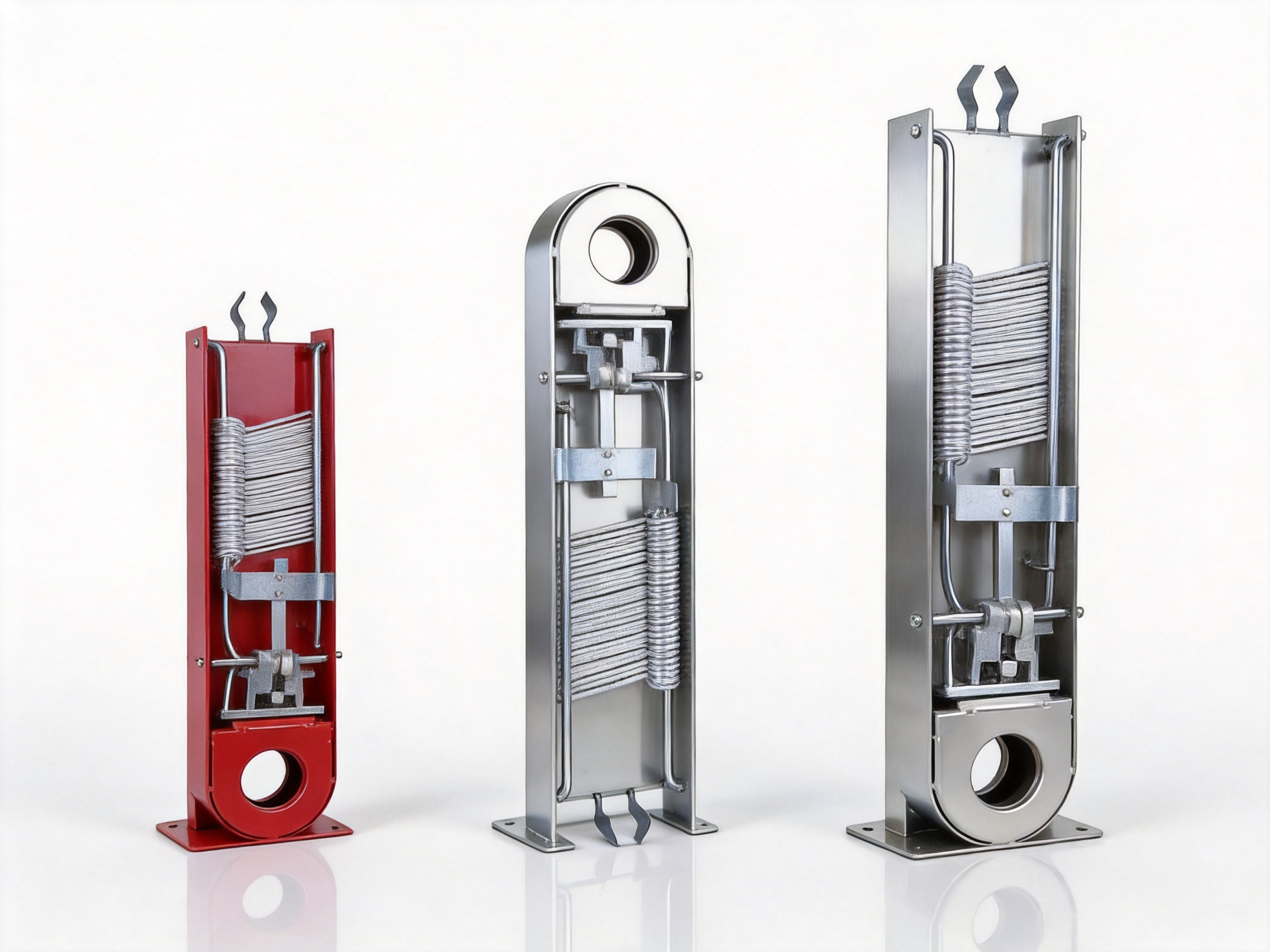
The fire hose rack can be made from galvanized steel or SS304 stainless steel. Galvanized steel provides reliable strength and economical corrosion protection for many indoor applications. SS304 stainless steel offers enhanced corrosion resistance, making it suitable for more demanding environments, including humid areas, industrial locations, and facilities where longer service life and cleaner appearance are priorities.
The rack is available for common hose configurations, including 1.5-inch and 2.5-inch rack hose sizes, as well as 25 mm fire hose reel applications. This flexibility allows project designers and procurement teams to choose a rack and cabinet arrangement that matches the required flow capacity, building code needs, and available installation space.
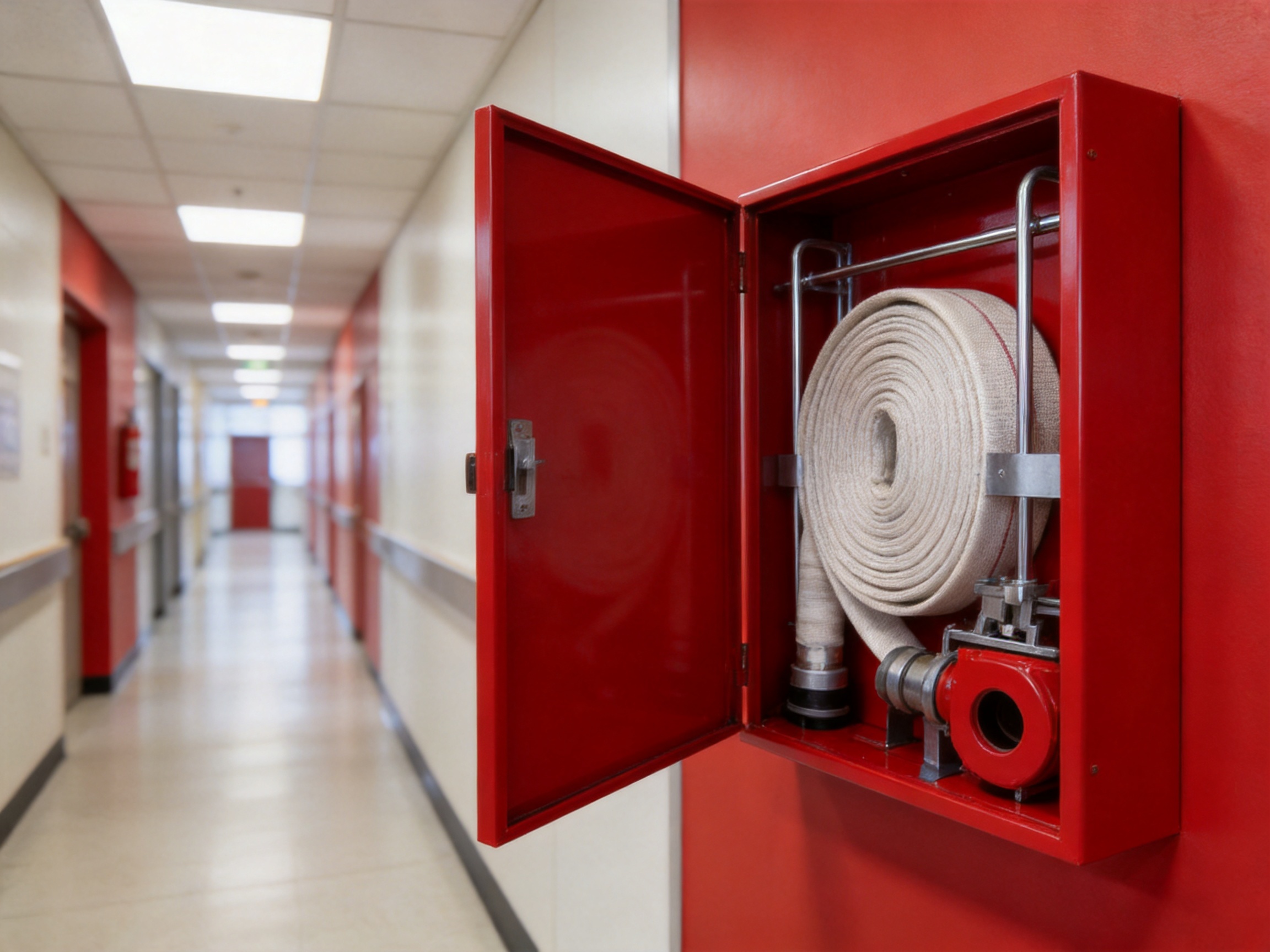
The following table summarizes typical configurations. Cabinet sizes can be customized according to project requirements, installation space, and user preference.
| Type | Hose Diameter and Length | Height | Width | Depth | Cabinet Size | Material |
| Fire hose reel | 25 mm x 30 m | 600 mm | 600 mm | 230 mm | 760 x 720 x 300 mm, customized | Galvanized steel or SS304 |
| Rack hose | 1.5 in x 30 m | 688 mm | 550 mm | 160 mm | 600 x 720 x 200 mm, customized | Galvanized steel or SS304 |
| Rack hose | 2.5 in x 30 m | 798 mm | 700 mm | 180 mm | 760 x 800 x 220 mm, customized | Galvanized steel or SS304 |
In the market, hose storage equipment can vary widely in strength, finish, accuracy, and usability. A low-quality rack may look acceptable at first glance, but weaknesses often appear during installation, inspection, or emergency use. Common problems include thin arms, poor welding, rough edges, insufficient corrosion resistance, inaccurate dimensions, weak mounting points, and limited compatibility with cabinets or hose sizes.
This fire hose rack is designed to solve these issues through robust construction and practical engineering. Its reinforced arms are intended to carry the hose weight without deforming easily. A stable mounting structure helps the rack stay secure when users pull the hose outward. The use of galvanized steel or SS304 stainless steel provides improved durability compared with untreated or poorly coated metal. Smooth finishing reduces the chance of damaging the hose jacket during storage or deployment.
Another important advantage is customization. Standard cabinets are useful in many projects, but real buildings often have space restrictions. A corridor may be narrow, a wall recess may be shallow, or a hydrant station may need to match an architectural requirement. Customized cabinet sizes help the rack integrate into a complete fire cabinet assembly without forcing the project team to compromise safety or appearance.
The product also offers a balanced approach between strength and simplicity. Fire equipment must be easy to understand. In an emergency, complicated mechanisms can delay action. A well-made rack keeps the hose accessible with minimal moving parts, while optional swiveling functionality improves convenience without making the system difficult to operate.
Because this product belongs to the fire cabinet category, it is commonly used as part of a complete cabinet system. A fire cabinet may contain a hose rack, hose reel, folded fire hose, hose coupling, nozzle, valve, and other accessories. The cabinet protects equipment and keeps it in a designated location. The rack provides the internal organization that makes the cabinet functional.
When a fire cabinet is well designed, every component has a clear position. The hose is folded neatly on the rack, the nozzle is reachable, the valve is accessible, and the user can understand the flow of operation immediately. This arrangement reduces confusion. It also prevents the hose from blocking the valve or nozzle, which can happen when equipment is stored without internal organization.
In public buildings, cabinets must also maintain a professional appearance. A fire hose rack inside a clean, properly sized cabinet supports both safety and visual order. Stainless steel options can be especially attractive for locations where hygiene, appearance, and corrosion resistance are important, such as hospitals, laboratories, food processing areas, airports, hotels, and office complexes.
Taizhou Shenlong Fire Science and Technology Co., Ltd. was founded in 1995 and has developed into an enterprise integrating research and development, production, sales, and service. The company’s long-term focus on fire protection products gives it practical knowledge of how hoses, couplings, nozzles, cabinets, and storage systems must work together. This experience is important because a fire hose rack is not an isolated bracket; it is part of an emergency system that must be compatible, durable, and dependable.
The company’s product foundation includes various material-lined fire hoses, and it can also undertake foreign trade products based on customer requirements, including rubber, PVC, polyurethane, and double-sided tape products. This background supports a deeper understanding of hose behavior, hose weight, hose flexibility, and hose storage needs. A manufacturer that understands hoses can design racks that protect them more effectively.
Advanced manufacturing begins with material selection. For rack and cabinet products, metal quality affects strength, corrosion resistance, and long-term appearance. Galvanized steel and SS304 stainless steel are selected according to application requirements. Galvanized steel is valued for its protective zinc coating and cost-effective performance, while SS304 stainless steel provides higher resistance to oxidation and corrosion in demanding environments.
Processing accuracy is also essential. Cutting, bending, welding, drilling, polishing, and assembly must be controlled so that the final rack fits the cabinet and supports the hose correctly. Poor dimensional control can cause installation difficulties, uneven hose support, or interference with cabinet doors. Consistent manufacturing processes reduce these risks and help deliver products that are easier to install and maintain.
Welding quality is another critical factor. The arms and frame must remain stable under load, including repeated inspection handling and emergency deployment. Strong welds help prevent loosening or cracking. Proper finishing after welding removes sharp points and improves both safety and appearance. In fire protection equipment, small finishing details matter because the hose jacket can be damaged by rough edges over time.
A reliable fire hose rack must perform throughout years of standby service. Unlike many industrial products that are used daily and replaced when worn, fire protection equipment may remain unused for long periods and then be required to function immediately. This creates a special quality challenge: the product must resist aging, corrosion, misalignment, and accidental damage while staying ready for instant use.
Quality control for a fire hose rack should include dimensional inspection, material verification, surface finish checks, load-related evaluation, and assembly confirmation. The rack should hold the specified hose size without excessive bending or instability. Cabinet fit should be checked so that the door can close properly and the hose does not interfere with valves or accessories.
Surface treatment is also important. For galvanized steel, coating quality affects corrosion protection. For SS304 stainless steel, polishing and finishing help maintain appearance and cleanliness. In both cases, edges should be smooth enough to protect users and hoses. The product should not have burrs, sharp corners, or rough weld spatter in areas that contact the hose.
The company’s experience in producing fire hoses and related products helps support practical quality expectations. Since the products are widely used in fire, construction, water conservancy, and other industries, manufacturing must account for different environments and performance requirements. Fire protection equipment is not decorative hardware; it must be built for reliability.
Choosing the right material depends on the installation environment, budget, maintenance plan, and project specifications. Both galvanized steel and SS304 stainless steel are suitable options, but each has its own advantages.
Galvanized steel is steel coated with a protective zinc layer. It is widely used in fire cabinets and racks because it offers a strong structure at a reasonable cost. For many indoor environments, galvanized steel provides adequate corrosion resistance and long-term usability. It is a practical choice for schools, office buildings, residential buildings, warehouses, and general commercial facilities.
The main advantage of galvanized steel is value. It allows projects to achieve reliable fire hose storage without excessive cost. When properly formed, welded, and finished, galvanized steel racks provide a strong and stable solution for standard fire protection installations.
SS304 stainless steel offers higher corrosion resistance and a cleaner appearance. It is especially useful in humid environments, coastal areas, industrial plants, food-related facilities, hospitals, and locations where hygiene or long-term aesthetics are important. Stainless steel is also easier to clean and maintains its appearance well over time.
Although SS304 may cost more than galvanized steel, it can reduce maintenance concerns in demanding environments. For projects where durability, corrosion resistance, or premium appearance is a priority, SS304 is often the better choice.
Fire hose racks are used in a wide range of environments. Their main function remains the same, but the installation details may vary according to building type, fire risk, hose size, and local safety requirements.
Office buildings, shopping centers, hotels, and entertainment venues require accessible fire protection systems. A hose rack inside a cabinet keeps equipment organized in public areas while protecting it from damage or misuse. Neat storage is especially important in buildings with high daily foot traffic.
Factories, workshops, production plants, and storage areas often require more robust fire protection equipment because of higher fire loads and operational risks. A strong rack for 1.5-inch or 2.5-inch hose can support fast access to firefighting water. Stainless steel or heavy-duty galvanized options may be selected depending on the environment.
Warehouses often contain combustible packaging materials, pallets, and stored goods. Fire hose stations must be easy to locate and operate. A rack system prevents hose tangling and keeps the hose ready for use in long aisles or loading areas.
Schools, hospitals, government buildings, stations, and sports venues need fire equipment that is reliable and easy to inspect. A fire hose rack provides a clear, standardized storage method, helping maintenance teams confirm equipment readiness.
The company’s products are widely used in construction, fire, and water conservancy industries. Hose rack systems may be applied in permanent building installations or in facilities that need organized hose management for emergency water delivery and safety control.
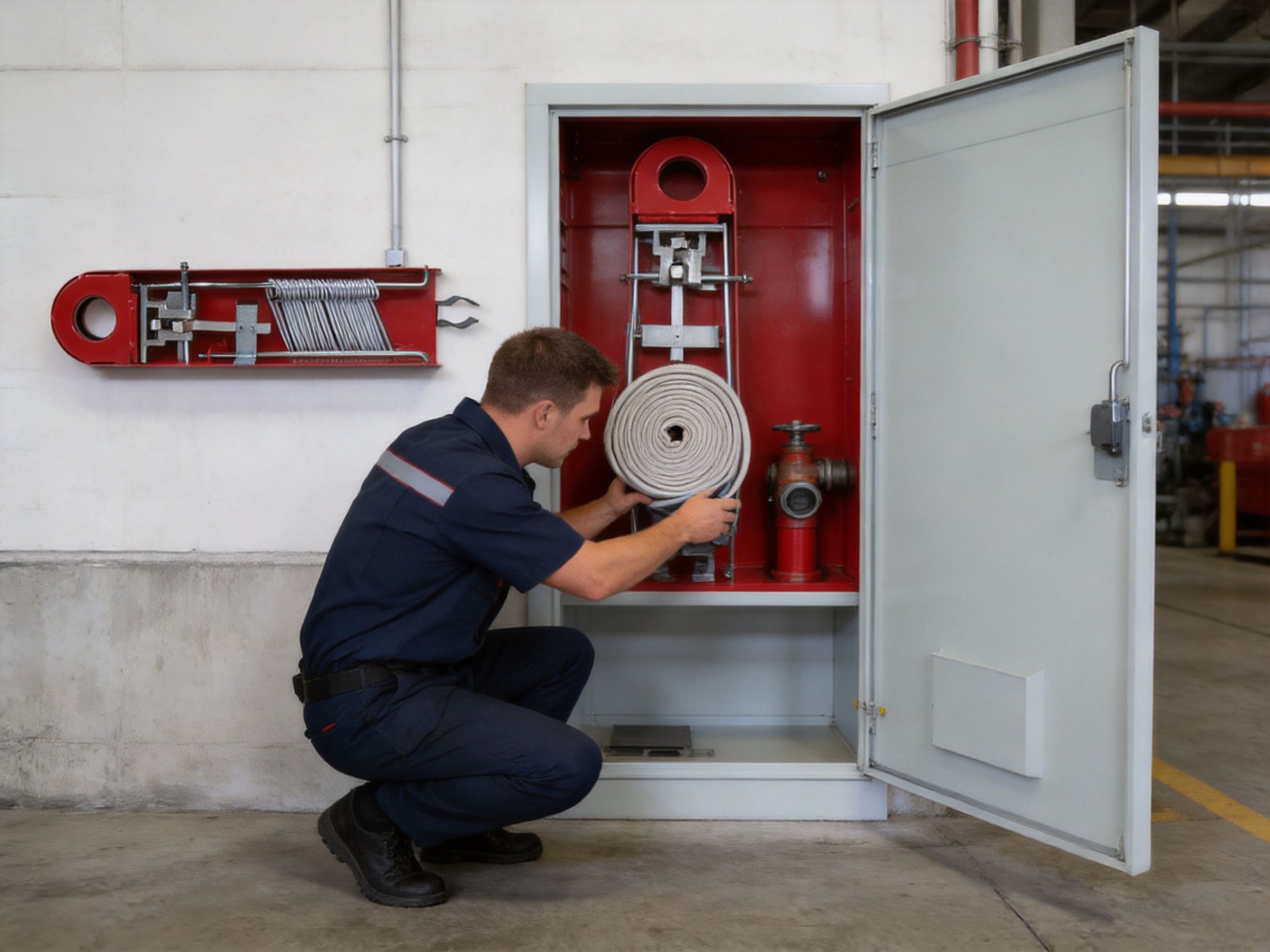
Correct installation is essential to ensure the fire hose rack performs as intended. Even a well-made rack can underperform if it is mounted incorrectly, positioned poorly, or paired with the wrong hose size. Installation should follow applicable fire protection standards, project design documents, and local regulations.
The rack should be installed at a height that allows users to reach the hose and nozzle conveniently. If installed inside a cabinet, the cabinet door should open fully without obstruction. The rack should be aligned so the hose can be pulled out smoothly. It should also be installed close enough to the water source to support efficient connection or pre-connected operation.
The mounting wall or cabinet structure must be strong enough to bear the load. Fire hoses can be heavy, and the rack may experience pulling force during deployment. Secure fasteners and proper anchoring are important. In concrete or masonry walls, suitable expansion bolts or anchors may be used. In cabinet installations, the cabinet structure must be designed to support the rack load.
The hose should be folded correctly on the rack. Poor folding can lead to tangles even with a good rack. Maintenance personnel should be trained in the proper folding pattern and should restore the hose to its correct position after inspection or testing.
Fire hose racks require relatively simple maintenance, but regular inspection is still necessary. The goal is to confirm that the rack remains secure, the hose is in good condition, and all related equipment is ready for immediate use.
During inspection, check whether the rack is firmly mounted. Look for loose fasteners, bent arms, corrosion, sharp edges, or signs of impact damage. Confirm that the hose remains properly folded and that couplings and nozzles are not trapped or hidden behind the hose. If the rack is installed in a cabinet, check that the cabinet door opens easily and that no objects block access.
The hose should also be inspected according to applicable maintenance procedures. Look for cuts, abrasion, mildew, stiffness, coupling damage, or other signs of deterioration. If the hose has been used, it should be cleaned, dried, inspected, and refolded properly before being returned to the rack.
For galvanized steel racks, inspect the surface coating. If scratches or damaged areas appear, they should be addressed to prevent corrosion. For SS304 stainless steel racks, regular cleaning helps maintain the surface finish, especially in industrial or humid environments.
Selecting the correct rack requires understanding both the hose specification and the installation environment. The first factor is hose diameter and length. A rack for a 1.5-inch hose may not be suitable for a 2.5-inch hose because the larger hose requires more support space and stronger load-bearing capacity. The product specifications include options for 25 mm x 30 m, 1.5-inch x 30 m, and 2.5-inch x 30 m configurations.
The second factor is cabinet size. If the rack will be installed inside a cabinet, the cabinet must allow enough clearance for the hose, rack, nozzle, valve, and door movement. Customized cabinet sizes are valuable when standard dimensions do not match the building design.
The third factor is material. Choose galvanized steel for standard indoor applications where cost efficiency and reliable strength are priorities. Choose SS304 stainless steel for humid, corrosive, high-visibility, or hygiene-sensitive environments.
The fourth factor is deployment direction. If the hose may need to be pulled from multiple angles, a swiveling design can improve usability. If the hose will always deploy in a straightforward direction, a fixed rack may be sufficient.
The fifth factor is compliance. Fire protection equipment should be selected in accordance with project requirements and relevant standards. Procurement teams should confirm that the rack size, hose size, cabinet arrangement, and installation method align with local safety expectations.
For contractors, distributors, and building project managers, product selection is influenced by reliability, delivery consistency, customization, and supplier support. A fire hose rack may seem like a small item compared with pumps or alarm systems, but large projects may require many units. Consistent quality across batches becomes important.
The manufacturing strength of Taizhou Shenlong Fire Science and Technology Co., Ltd. supports project supply because the company integrates production, sales, and service. Its long operating history since 1995 gives it industry experience and production knowledge. The company’s cooperation with domestic foreign trade companies and export production background also reflects its ability to serve different market requirements.
Compared with generic suppliers that only trade finished hardware, a manufacturer with fire hose expertise can better understand how racks interact with hoses. This results in more practical product design, better size matching, and improved usability. The ability to produce related fire protection products also supports coordinated procurement for customers who need hoses, couplings, nozzles, cabinets, and accessories.
Customization is another advantage. Fire protection projects are not identical. Some require compact cabinets, some need stainless steel construction, some require specific hose sizes, and some must match architectural dimensions. A supplier with manufacturing capabilities can respond more effectively to these needs than a supplier limited to fixed stock products.
In an emergency, equipment must be intuitive. People may be under stress, visibility may be reduced, and time may be limited. A fire hose rack improves user-friendliness by presenting the hose in an orderly and predictable way. The user does not need to search for the hose end within a tangled pile. The hose is supported, visible, and ready to deploy.
This user-friendly design is particularly important in buildings where trained occupants may operate first-response equipment before professional firefighters arrive. While fire hose use should follow safety rules and local procedures, the storage system should not create unnecessary difficulty. A simple, stable rack reduces operational confusion.
The same principle applies to professional firefighters and maintenance teams. Equipment that is stored consistently is easier to evaluate and use. In large facilities with many fire cabinets, standardized rack systems help create consistency from one location to another.
Long-term value is created by details that may not be obvious at first purchase. Arm strength, weld quality, surface smoothness, cabinet compatibility, corrosion resistance, and accurate dimensions all influence service life. A cheaper rack that bends, rusts, or damages the hose may cost more in the long run through maintenance, replacement, or reduced emergency readiness.
The fire hose rack’s reinforced support structure helps preserve hose shape and storage order. Material options allow customers to match durability to environment. Customized cabinet sizes reduce installation conflicts. Smooth pull-out performance improves emergency usability. These features combine to create a practical safety product that supports both daily inspection and emergency response.
When evaluating competing products, buyers should not focus only on the initial unit price. They should consider the cost of installation problems, premature corrosion, hose damage, difficult deployment, and inconsistent quality. A reliable rack is an investment in readiness.
Fire hose racks may be installed in many environments, from clean indoor corridors to humid service rooms and industrial workshops. Temperature, humidity, dust, chemical exposure, and frequency of inspection all influence material choice and maintenance requirements.
In dry indoor environments, galvanized steel is often sufficient. In humid or corrosive environments, SS304 stainless steel is usually preferred. In dusty environments, cabinet installation helps protect the hose and rack from contamination. In high-traffic areas, a cabinet also reduces accidental contact and improves appearance.
Operational conditions also matter. If equipment is inspected frequently, the rack should tolerate repeated handling. If the hose station is located near machinery or vehicles, the cabinet and rack should be positioned to avoid impact. If the rack is part of a pre-connected system, valve access and hose orientation must be carefully planned.
A fire hose rack works best when integrated with the correct hose couplings and nozzles. The hose must connect securely to the water source, and the nozzle must be easy to reach. If couplings are too large for the cabinet layout or the nozzle is stored behind the folded hose, deployment can be delayed.
During system design, the rack should be considered together with all accessories. The folded hose should not press hard against the nozzle or valve. Couplings should be positioned to avoid sharp bending. If the hose is pre-connected, the connection should be protected from strain. A well-planned arrangement improves both performance and equipment life.
Because the company’s product categories include fire hose, hose couplings, hose nozzles, fire accessories, and fire cabinets, customers can coordinate related components more efficiently. This helps reduce mismatch risks and supports a more complete fire protection solution.
A fire hose rack stores and organizes a folded fire hose so it remains protected, visible, and ready for quick deployment during an emergency. It helps prevent tangling, reduces storage damage, and improves access inside a fire cabinet or wall-mounted station.
Yes. The rack is commonly mounted inside fire cabinets. Cabinet installation protects the hose and accessories from dust, impact, and unauthorized handling while keeping the complete fire hose station neat and accessible.
Typical configurations include 25 mm x 30 m fire hose reel applications, 1.5-inch x 30 m rack hose, and 2.5-inch x 30 m rack hose. Cabinet sizes can be customized according to project requirements.
Galvanized steel is suitable for many standard indoor installations and offers strong value. SS304 stainless steel is recommended for humid, corrosive, high-visibility, or hygiene-sensitive environments where higher corrosion resistance and long-term appearance are important.
A swiveling rack allows the hose to be pulled out more smoothly from different angles. This can be helpful in corridors, industrial areas, and spaces where the user may need to deploy the hose toward more than one direction.
It supports the hose in a controlled folded position, reducing tangling, sharp bending, abrasion, and compression damage. Smooth rack surfaces and reinforced arms help preserve the hose jacket and maintain proper storage shape.
Yes. Cabinet sizes can be customized, and material selection can be adjusted based on application needs. Customization helps the product fit different building layouts, project specifications, and installation spaces.
Routine maintenance includes checking fasteners, inspecting for corrosion or damage, confirming that the arms remain straight, ensuring the hose is properly folded, and verifying that the cabinet door and accessories are accessible.
A specialized manufacturer understands how hoses, racks, cabinets, couplings, and nozzles work together. This experience supports better compatibility, practical design, consistent manufacturing quality, and more reliable project supply.
It can be used in commercial buildings, factories, warehouses, schools, hospitals, public facilities, construction-related sites, water conservancy facilities, and other locations requiring organized fire hose storage.
A fire hose rack is a simple-looking but highly important component of a fire protection system. Its value lies in readiness: keeping the hose organized, protected, and accessible when every second matters. By supporting proper folding, preventing tangles, allowing smooth deployment, and integrating with fire cabinets, the rack improves both emergency response and routine maintenance.
The product’s available configurations for 25 mm, 1.5-inch, and 2.5-inch hose applications make it suitable for different building and industrial needs. Galvanized steel and SS304 stainless steel material options allow customers to balance cost, durability, corrosion resistance, and appearance. Customized cabinet sizes further enhance project adaptability.
Backed by the manufacturing experience of Taizhou Shenlong Fire Science and Technology Co., Ltd., a company founded in 1995 with expertise in fire hoses and related products, the fire hose rack reflects practical design and reliable production capability. For distributors, contractors, building owners, and safety managers, choosing a well-made rack helps ensure that fire hose equipment remains ready, organized, and dependable throughout its service life.
In fire safety, reliability is built through details. A strong arm, a smooth surface, an accurate cabinet fit, a corrosion-resistant material, and a logical storage layout all contribute to emergency readiness. A quality fire hose rack brings these details together in a product that supports fast response, long-term durability, and professional fire protection management.
National Fire Protection Association. NFPA 14: Standard for the Installation of Standpipe and Hose Systems.
National Fire Protection Association. NFPA 1962: Standard for the Care, Use, Inspection, Service Testing, and Replacement of Fire Hose, Couplings, Nozzles, and Fire Hose Appliances.
International Organization for Standardization. ISO 9001: Quality Management Systems Requirements.
International Organization for Standardization. ISO 9227: Corrosion Tests in Artificial Atmospheres.
Society of Fire Protection Engineers. SFPE Handbook of Fire Protection Engineering.
British Standards Institution. BS 5306: Fire Extinguishing Installations and Equipment on Premises.
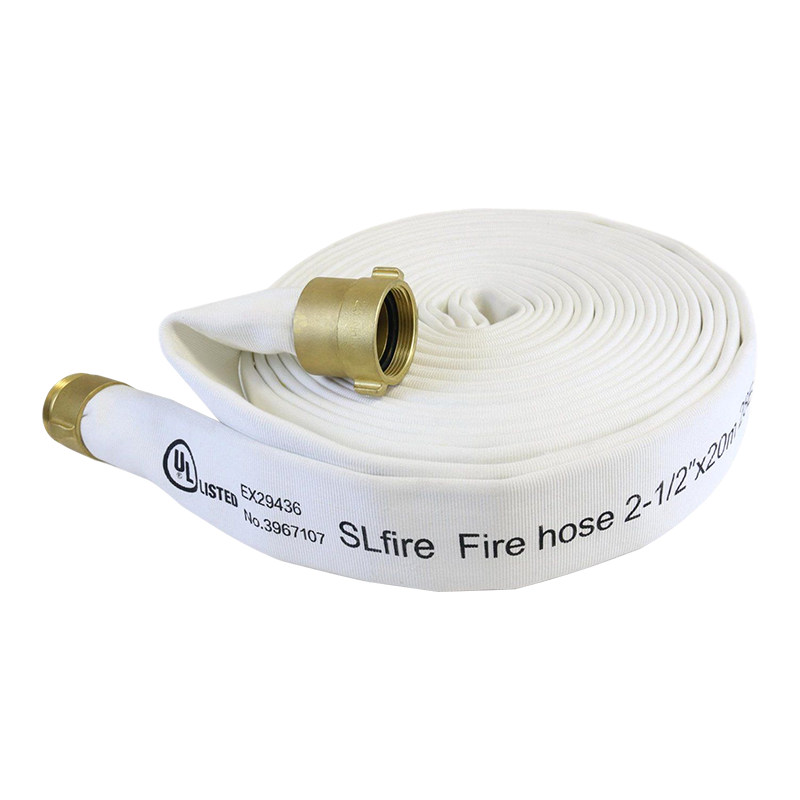
Single jacket, EPDM rubber liner Features • 100% high tenacity polyester jacket, high-grade EPDM rub...
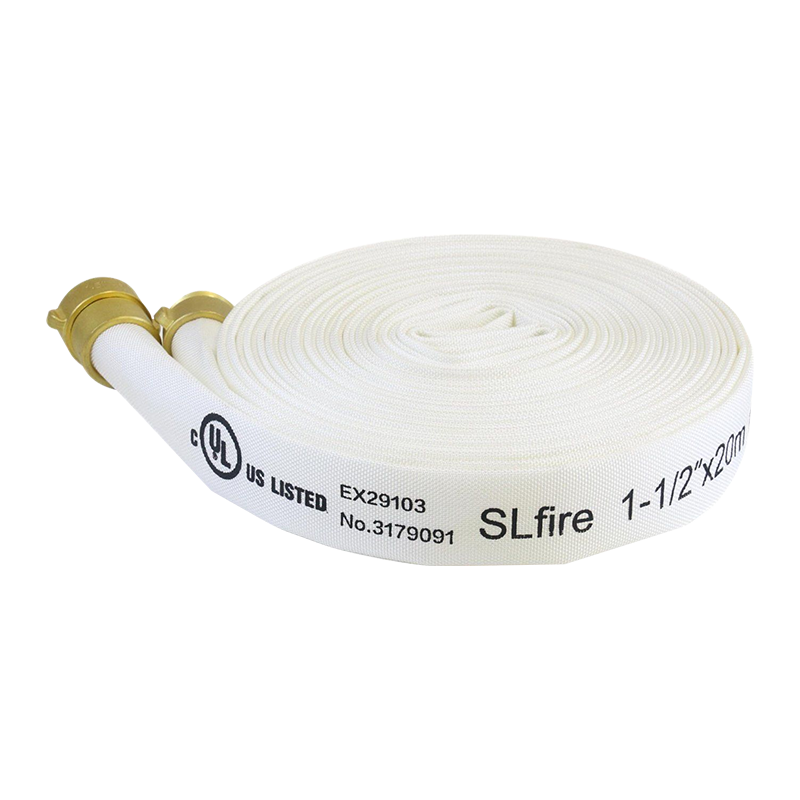
Single jacket, TPU liner •High-tenacity polyester yarn, circular woven in twill weave/plain weave,T ...
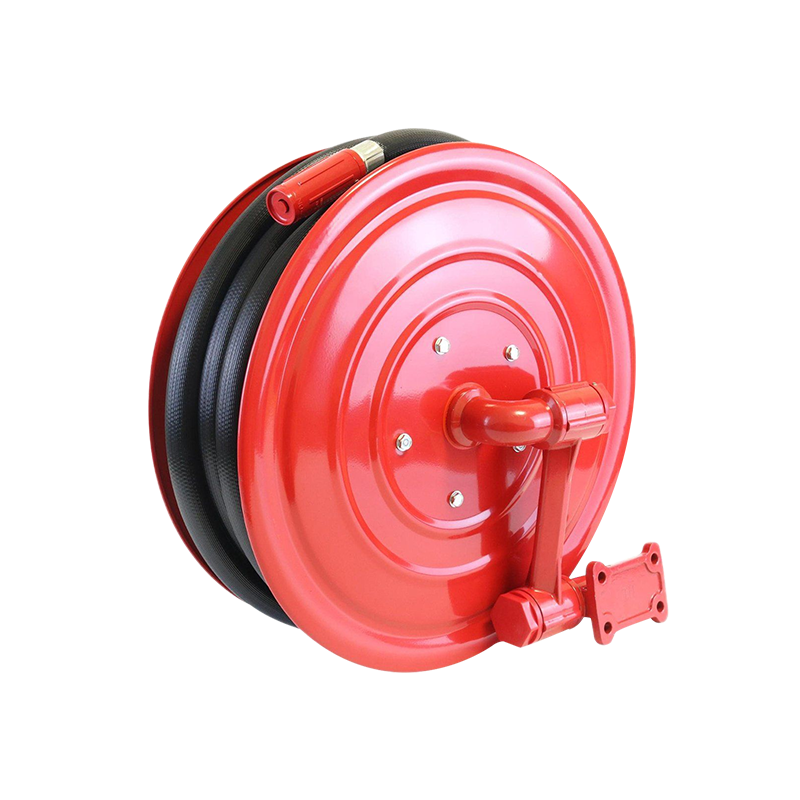
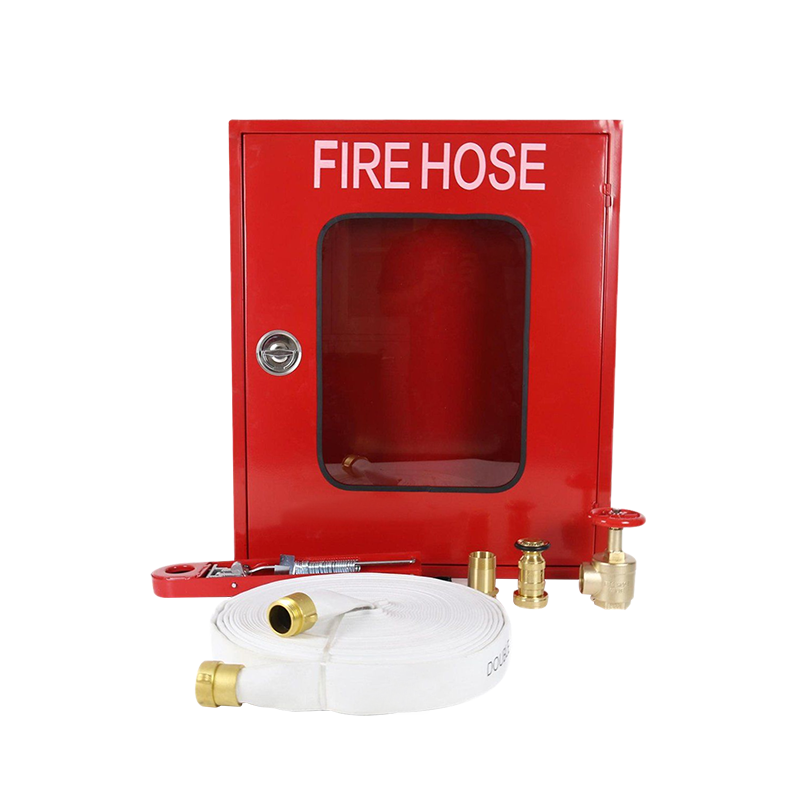
Fire cabinets are designed to accommodate fire hose,valve and other firefighting equipment. Type 201...
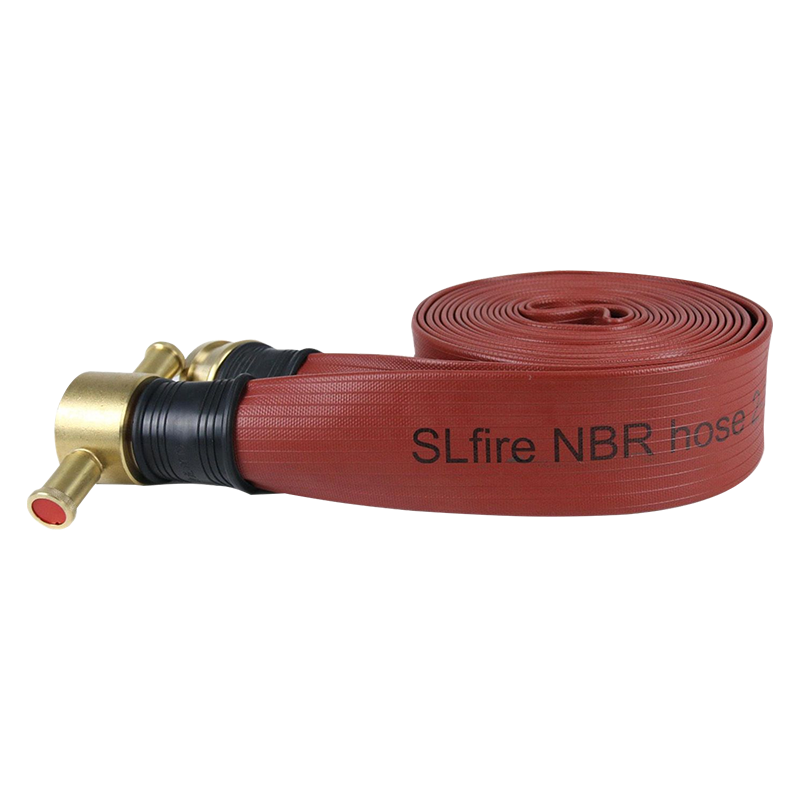
Nitrile covered hose •Nitrile/TPR blend as cover and lining, with 100% high-tenacity polyester yarn ...
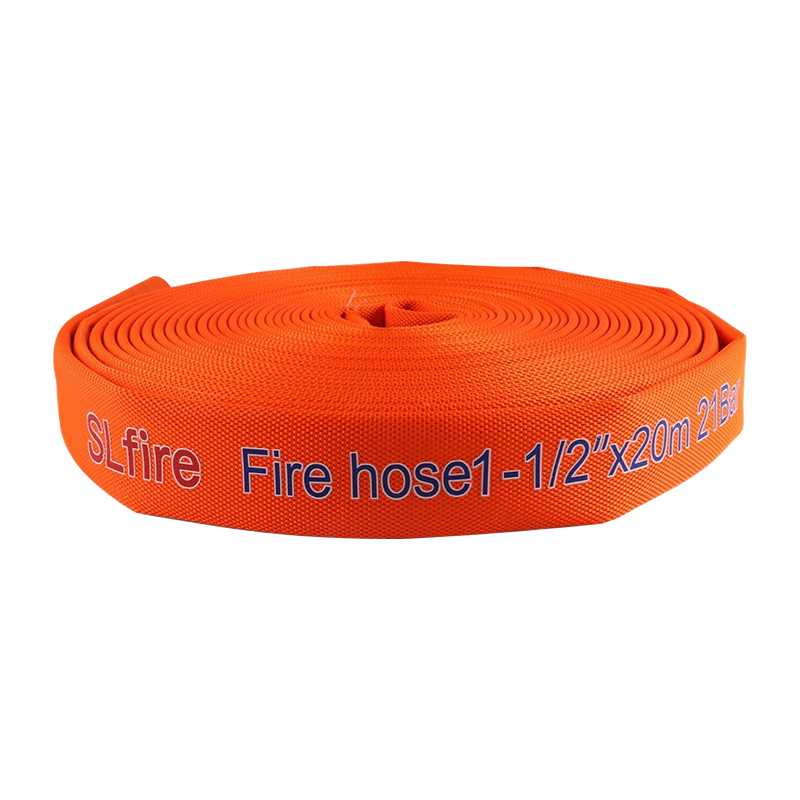
Single jacket, TPU liner •High-tenacity polyester yarn, circular woven in twill weave, TPU lining, f...
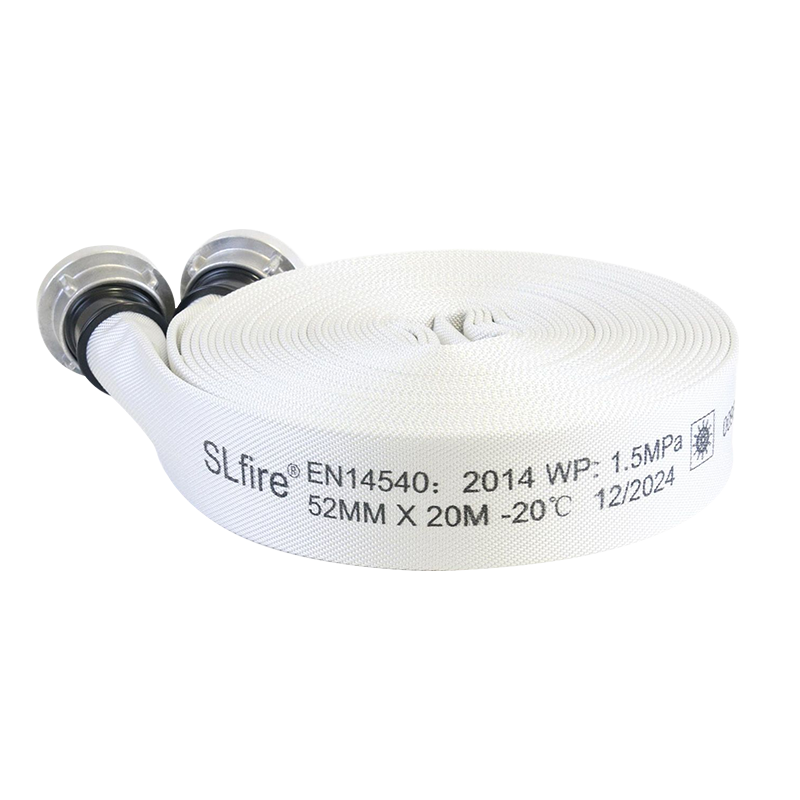
Marine hose Single jacket, PVC liner •100% high tenacity polyester yarn, circular woven in twill wea...
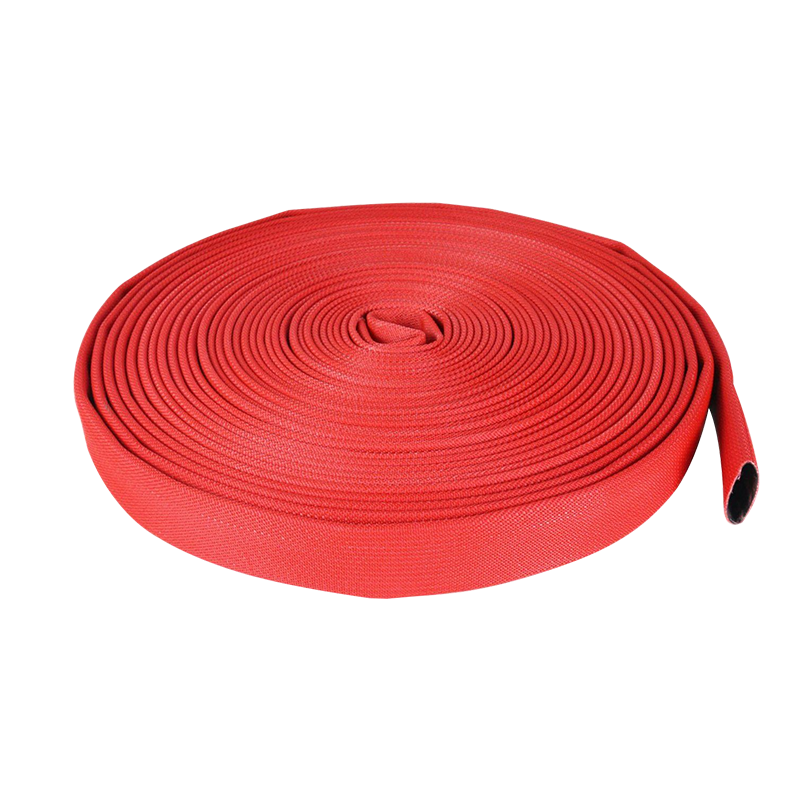
Marine hose Single jacket, PVC liner, PU coated •100% high tenacity polyester yarn,c ircular woven i...
 Call Us
+86 159-5116-9511
Need Support
Head Office
No.58, Kechuang Road, Sixiang Street Medicine Gaoxin District Taizhou City, Jiangsu Province

What Is a Fire Hose? A fire hose is a high-pressure flexible hose designed to carry water or fire retardant chemicals from a water source, such as a hydrant, pump, or tank, to a fire for suppression p...
Copyright © Taizhou Shenlong Fire Science and Technology Co., Ltd. All Rights Reserved.
 Fire Hose Manufacturers, Fire Hydrant Hose Factory